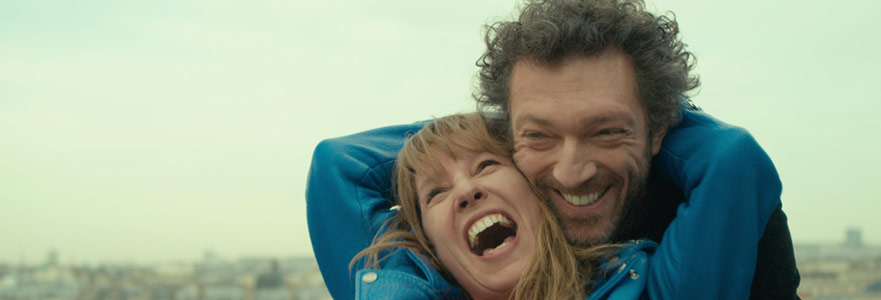
What was it about Mon Roi that made you feel attracted to it?
I didn’t choose the role, it chose me. Maïwenn chose me. I always thought that she was a really interesting director. And in a very different way: she’s not a technician but there’s a lot of sensibility in what she does. She’s very specific about what sounds real to her and what doesn’t, and to be in a movie where the director is so demanding is always a good thing. Also, she was a very unusual way of working. She uses two cameras at once, all the time; and she shoots very long takes, 25 to 40 minutes each. That gives you a lot of freedom as an actor.
Do you mean there was a lot of improvisation in the film?
Yes, but I don’t like that word. It’s not like Maïwenn let us do what we wanted. There was a script, and the situations were very specifically written. But she likes accidents, and she encouraged us to find a new way to express ourselves within the limits of the character and the scenes.
How much of yourself is there in Georgio?
I think we all share similar experiences when it comes to romantic relationships. I remember during the shooting, in between scenes, I could hear the people from the crew talking to each other and saying: “Man, this is just the same situation I went through with my partner”. We all go through the same lack of communication in our private lives.
Would you say that love is addictive, as the movie seems to suggest?
Of course! Love is the most powerful drug that ever existed. And the most destructive too. Problem is, you really don’t choose who you love, and maybe the person you love will hurt you. But at the end of the day I think it’s better to love and suffer than to not love. If you don’t love, life is empty.
So you believe in love… but what about long-term love?
I think we are born to perpetuate the species, we are meant to have sex and procreate, and in the process we create emotional bonds. But I’m not sure if we are genetically equipped to live in long-term relationships. I don’t know if I’d be able to stay married for a lifetime, but I do think we need love. That’s why I don’t think my character in Mon Roi is a shark, or a miserable man, or a manipulative narcissistic as many people say about him. He really loves Tony, but perfect love stories exist only in novels. Reality is much more complicated.
Would you say men’s approach to love is different than women’s?
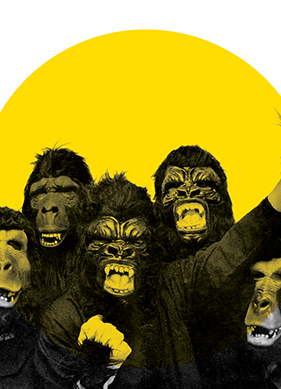
Definitely. When a man loses control of a woman he starts acting as a gorilla, and that’s a sign of weakness. We are weak. And I have my own explanation for that. Women create life, and by virtue of that they become like God. On the contrary, men don’t. We are a bit sterile as beings. Girls are deeper, they have an understanding of life much earlier than men. Men are stupid, and we should get more in touch with our feminine part. But we usually can’t.
Because we don’t want to look like faggots. We have a strong idea about our own image and how it should be. We want to look manly, tough… It’s bullshit. Maybe it’s because for ages we needed to be respected for our strength, who knows. But let me tell you that there’s something feminine about being an actor. There’s always seduction in our work: we live in the desires of others, we need to be desired. Richard Burton once said: “An actress is a little more than a woman, and an actor is a little less than a man”. I agree.
Are movie sets a good place to seduce and be seduced?
Yes, of course they are. Many actors sleep with the people they work with. But I don’t. For me it’s a question of health. Mixing things is not good. As Mon Roi makes clear, relationships are already difficult enough. If you put them in the middle of a movie set, they can become hell! It only happened to me once, 20 years ago, with Monica [Bellucci, to whom Cassel was married with for 14 years]. I think you can understand why I couldn’t stop myself.
But you describe yourself as an impulsive person?
I’d say I’m instinctive. I really believe that instinct is much stronger than thinking. Your gut feeling, if you dare listening to it, tells you a lot about your environment and the people you meet. I listen to my guts a lot. Of course I did some stupid things in the past, but my understanding of people and situations through the guts is usually better than when I try to analyze them.
Was becoming an actor also a matter of instinct?
Not really, because my father was already an actor and I grew up in the business. But I’d say my decision to be an actor was something like a reaction. When I was a kid everyone loved the French Nouvelle Vague. And the Nouvelle Vague was wonderful but, as Polanski said once, it actually hurt many generations of French filmmakers. They took the minimalistic approach of the Nouvelle Vague as a license to be formally poor. So when my generation came out, people like Mathieu Kassovitz, Jan Kounen, Gaspar Noé and myself, we wanted to shake things a little and be much more formal and bigger than life.
How much have you changed as an actor since you started?
I accept who I am more easily. And I accept that, the further I go, the less I feel I know. I've realized that I can play contradictory things in the same scene. I don’t try to be consistent when I play a scene, because we are not consistent in real life: we can say one thing and do the opposite 30 seconds later. But, first and foremost, I have less modesty now, and I'm not afraid of being ridiculous.
;