ÖNCEKİ
21 KASIM, CUMARTESİ, 2015
SONRAKİ
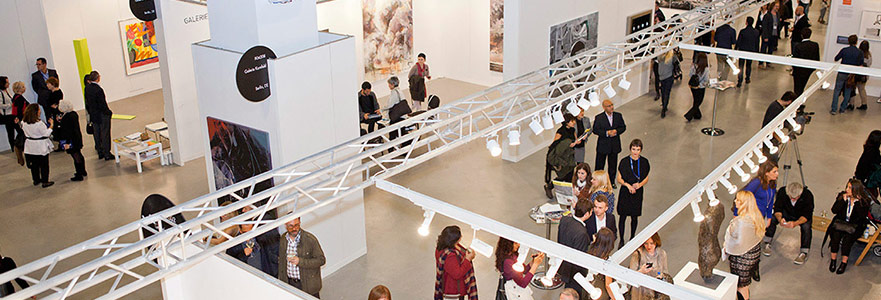
The ninth of Contemporary Istanbul Art Fair -in other words Istanbul Contemporary Art Fair- (as the name "CI" that is possibly used to create a brand value) has just completed. Galleries spread two floors, a side corridor and another wide hall reached by the corridor in Istanbul Lütfi Kırdar International Congress and Exhibition Centre and Istanbul Congress Centre, a few thousand artefacts, hundreds of artists-art professionals and of course thousands of guests... While many daily words on art are reduced to remnant numbers under the pretext of neutrality, let us skip these and try to make rather a subjective assessment with a concious decision.
It can be easily said that this is the first CI, which has made the understanding of fair in Turkey to international standards. If the most important proof of this is the increase in the foreign participants, then it was beyond being a platform uniting the art buyer with its merchant and was aiming the participation of art audience. Compared to previous fair examples, CI has carried the matter to a step ahead. Therefore, when the last fair is being assessed, it should be looked from the point of present situation.

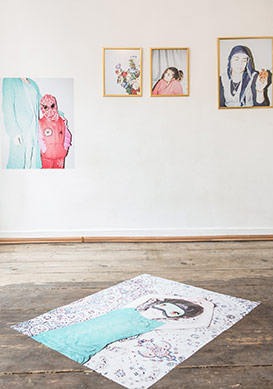
Putting away the relationship with the actors from all areas of art, having different expectations from the fair as well as the production itself, let us try to evaluate the art, which is primarily presented during that four days. This is a fact: Just like a language of biennial and it is now tried to go beyond this, a language for fair is also established and -it may sound like a short-cut approach- as far as I observed, nobody is trying to go beyond this existing fair language - at least that is what it was like in CI. Roughly speaking, object based art language formed by young British Artists, who picked up Pop's method from America and determine the character of contemporary art by interpreting once more, shook the contemporary art market in 90s. These artists such Damien Hirst, Chapmen Brothers, Gilbert&George, Tracey Emin as well as including names such as Jeff Koons, Takashi Murakami, aimed to attract attention, surprise and even shock, sometimes startle, make angry with an ironic and humorous language. Being quite significant a plastic language that is not really giving a chance for elusiveness, is what they share in common. Instead of avoiding, they especially aim "decorative", which is focused on human and animal bodies and one of the biggest negation that art critic can make. This is a kind of art existed at least one in each booth of almost every gallery in CI... I don't know how truthful it would be to think that this is to attract the attention of the crowd in the fair; it is debatable.

Taking the chance to make yet another generalization, another style that became prominent, was photo-manipulation. In other words, based on photography as medium, it is a working style, which tries to move away from photography sometimes by disrupting presentation qualities, which are necessary for photography and sometimes with another medium. So in that case, did “the medium is the message” really happen?1 These two styles, which we have in fact determined by generalization, dominate all productions made in the name of contemporary art and maybe just because of this, comments like "it is blocked" is frequently made for contemporary art, which is the another topic for discussion.
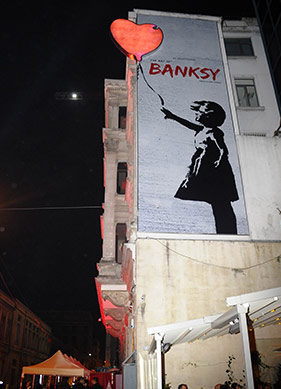
We can for sure include the exhibition politics of foreign galleries coming from various countries to these generalizations. We can also add self-orientalist sauce on top of this for the galleries coming from Far-East and Arabic countries. The most eccentric of all galleries is White Chapel Gallery from London, which can counted as successful due to qualified works as well as their sales worth with at least eight-ten red dots showing that they sell their editions. On top of that - if I haven't missed anything - while there wasn't any price list in any gallery, it was only in White Chapel Gallery that the prices were written on the stickers next to the works. Berlin Art Project was among the attention attracting galleries; but it was interesting to see that the exhibition of Pınar Yoldaş's work called "Vulva Caterva" with "bio-structure" statement behind the booth as if the work is hidden. In Andipa Galley, Londoner artist Slinkachu, who includes concepts to his questioning while playing with scales in his installations, in which the artist deals the small people with constants of the city, was attracting attention. On the other hand, it was possible to see star names such as Takashi Murakami, Banksy, Damien Hirst, Francis Bacon, Richard Serra, Calder, Picasso, Wesselmann, Rirkrit Tiravanija, John Baldessari, Marc Quinn, Jannis Counellis, Fernando Botero, especailly in foreign booths.
Surely there were many works, which are realized with formal material such as oil paint, of which the quality should be evaluated free from materials. In any case, artists with a lot of "good" works, galleries that are not many in number, but they still exist and all-in-all deserving a "good", numerous independent entities and initiatives deserving admiration just because of their existence, a lot of domestic and foreign publications had taken their place in the fair. Galleries, which do not concede in exhibition and sales politics such as Galerist, Rampa, Krampf Gallery, Galeri Milk with its unique language, were manifesting themselves It can be claimed that Gallery 77, which was creating a chance to see the works of Armenian artists and provoking the spectators to get to know Daron Mouradian especially with his paintings, has realized one of the most interesting exhibitions of the fair. While some galleries were making it hard percepting and touring around in order to squeeze more works, some others were making the compelled perception more tired through their booth with unlimited decorations. From "Anatolian" artists, who are trying to get into Turkish art market all the way from New York to the artists, whose works are sold with that much of a high price in the opening day and yet nobody understood why and how... Galleries, which did not hesitate to put a pink carpet on the floor, to the gallery announcing with pride that they were" the only gallery attending from Australia" (1)... The things spoken in the backstage were the part of fair.
Situated on the floor below the main entrance as well as in the other hall, the number of initiatives seemed increased when compared to past years. Also, entities independent from this focus of main capital by continuing their main necessities such as aiming, questioning the polyphony of contemporary art, forcing the explicits and limits, existing in the market, have started to gather galleries, which "have seen the light", and this should be interpreted as something good.

Led by the museums, it was hard to understand the institutional standards; because most of them seemed like being content with getting their names written on the booth and putting a table inside. It wasn't even always possible to find the attendant of the booth. Does this mean that it is important to participate in the fair only as name?
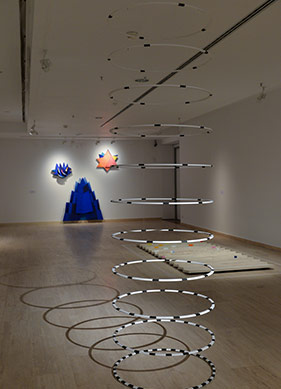
Curator and art theorist Marcus Graf, who has done important works in Turkey on behalf of contemporary art, was the Programme Director of CI this year. Talking again in off-limits: It could have felt that Graf wasn't planning to be the director of an art fair; yet his success in curatorial works that have proven themselves many times before, could have been observed in this fair. For instance, The New Media section called Plugin, which was realized second time this year, has a fulfilling content and presentation. Discussions on new media realized on the Plugin stage were rather necessary and important. On the other hand, Now You See exhibition presenting works of video artists from China was another event that was providing new media art, which is still a bit distant from art market due to its ontology, to become prominent. Another newness in the fair was CI Editions, which was aiming to be a communication platform by producing art editions with various printing technique and their distribution. However, it can be said that 90 Minute Shows was the real difference that Graf has brought, rather than fair in general. This 50 m2 box shaped container work, which was providing artists with 90 minutes solo exhibition, presentation space as well as space of existence for 90 minutes, was inspired from container exhibition that Graf has realized before; but this time it was a project carried to further level in idea. It would not be fair on the project, which was spread in time and became a stage for different productions under various names, if it was left in a fair, that wasn't possible to tour in one day in respect to its size. I hope art audience would have a chance to see 90 Minutes Shows again.

CI Dialogues and Sunday Seminars were two beneficial programmes, which were asking a lot of questions on Turkish and international art practices, theories, market and looking for answers with its panellists in a great scale. Prepared daily by Artfulliving, CI Daily was followed as yet another application increasing literally the quality of the fair.
I would like to say the last words by adding some more generalizations we make when we are trying to assess such a big organization with market targeting as its main purpose. The most important galleries were not in this fair. Everybody, from primary school student to curious art lover, has ran to see contemporary art; yet they looked as if they were there to take pictures and share rather than see and try to understand. The problem of mixing purpose of sales emerging with the attendance of a wide audience and presentation has a bit overcome through exhibitions with curators and events.
When we look at the history of fairs' short history, we see that these events are organized to meet both with local and international buyers and yet even to form this buyer. Therefore, these are the places, in which art and money are reconciled. However, it is a fact that not necessarily the best will sell or the most sold one is the best. In other words, the theory of art and the practice aren't always consistent. It was sometimes possible to see this in CI 2014. Contemporary Istanbul, a.k.a. CI, has been a fair, which was unique with its common sense, sincerity and its own language, and was definitive its issues and attitude that the "good" artist is good and no gallery has managed to add or remove anything from it... Nobody knows the profit of the galleries or the fair organization in an economical stagnation environment, which everybody is aware, yet hesitate to mention. On the other hand, we hope that the art audience were the ones who have got the real profit.

[1] "Medium is message" is the main slogan of Canadian literature professor Marshall McLuhan (1911-1980) that has gained a mutual meaning especially in art.
;