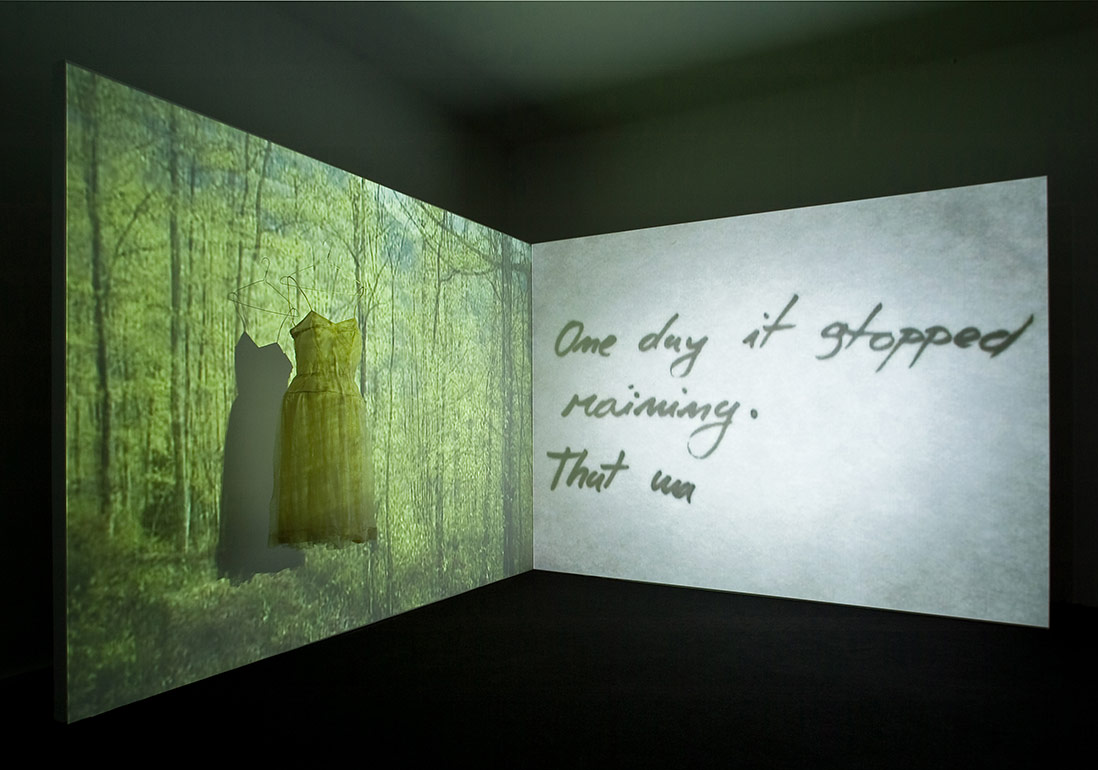
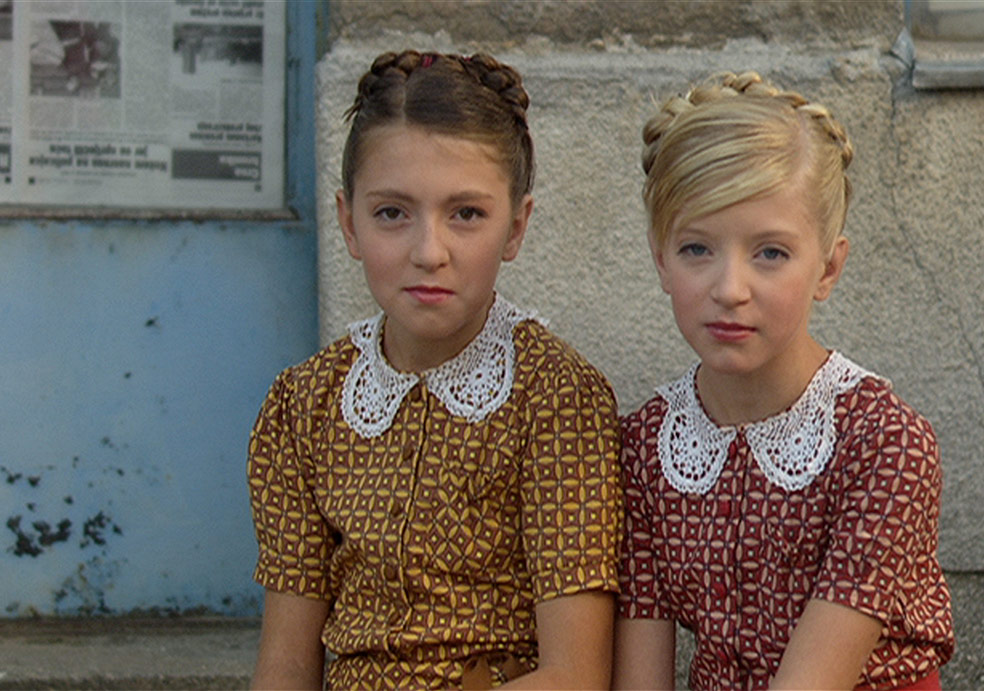
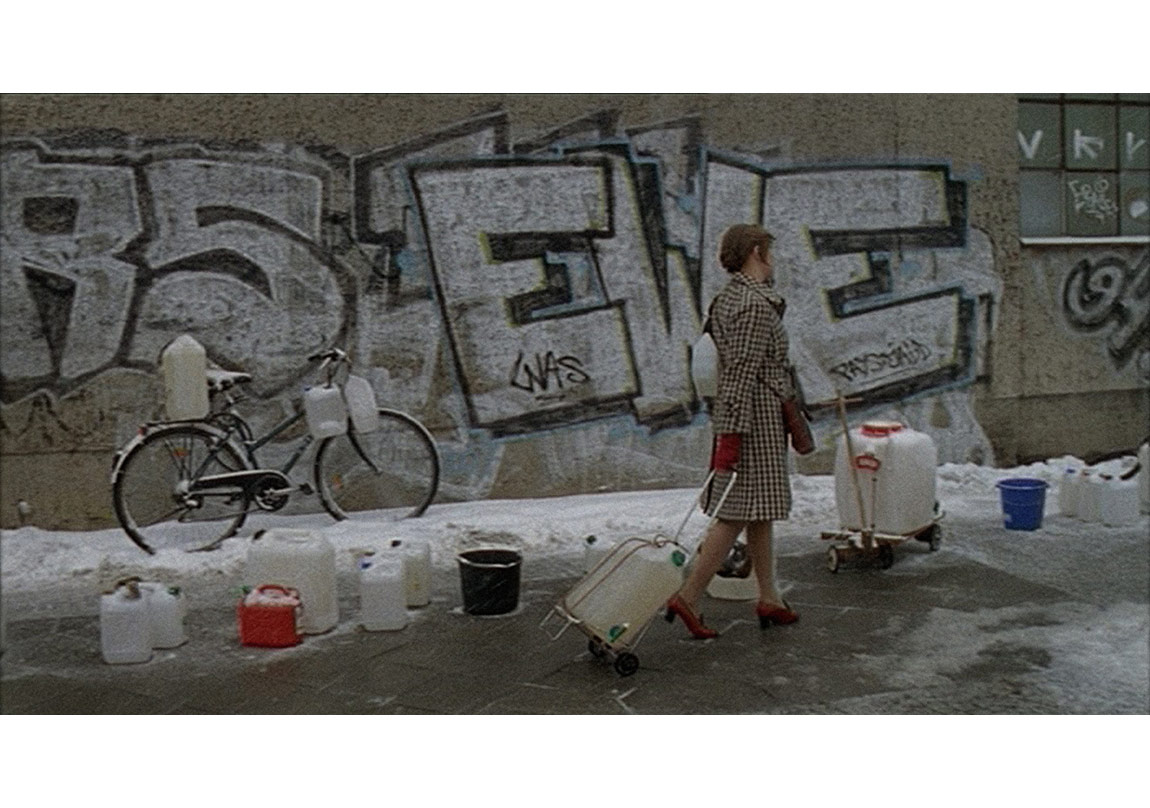
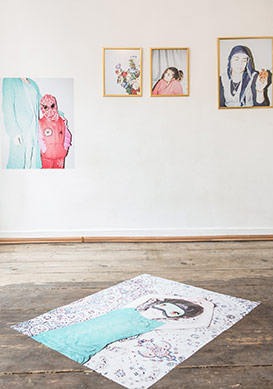
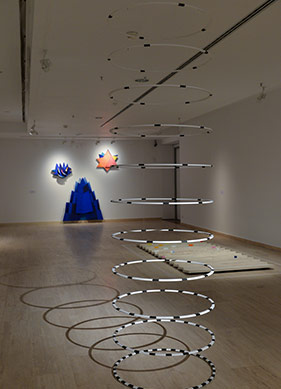
The exhibition includes many works by Sejla Kameric, brought together in Turkey for the first time; it creates a climate of ominous peace. Perhaps this is why the viewer is defeated by the sincere truth of the emotional coalition of Kameric’s works, not able to make a peep. Kameric conceals humanity, conscience and war crimes behind camouflage and a simple aesthetic in most of her works. The interventions are simple, but when you dig deeper, they reveal acutely cultural and social references; the works move a step beyond scratches on the viewer, opening knife wounds.
On the window display of the exhibition, curated by Başak Doğa Temür, the “sculpture” of a giant teddy bear, BFF, appears shredded, covered by furs, which had at one point become the “skin” of the bourgeoisie, having produced a serious industry in the area, but is now stripped of its value metaphysically due to the deconstruction of the cultural codes it carries. The artist also used leather, fabric, used plastic bottles, and second hand clothes in this work. Cambric deals with the freedom of expression for all individuals who have been othered by the “Western” armor of Europe, their victimhood and all of the physical and symbolic harassments that are inflicted upon them. As the artist does this, she does not fall into the hole of producing metas from the elements that she is dealing with, obscuring or cheapening them. On the contrary, her work sadly and troublingly reminds viewers of a quote Baudrillard often uses in his texts, “Everybody lives with the trap they set up for the other,” promising a feeling of thorny wisdom.
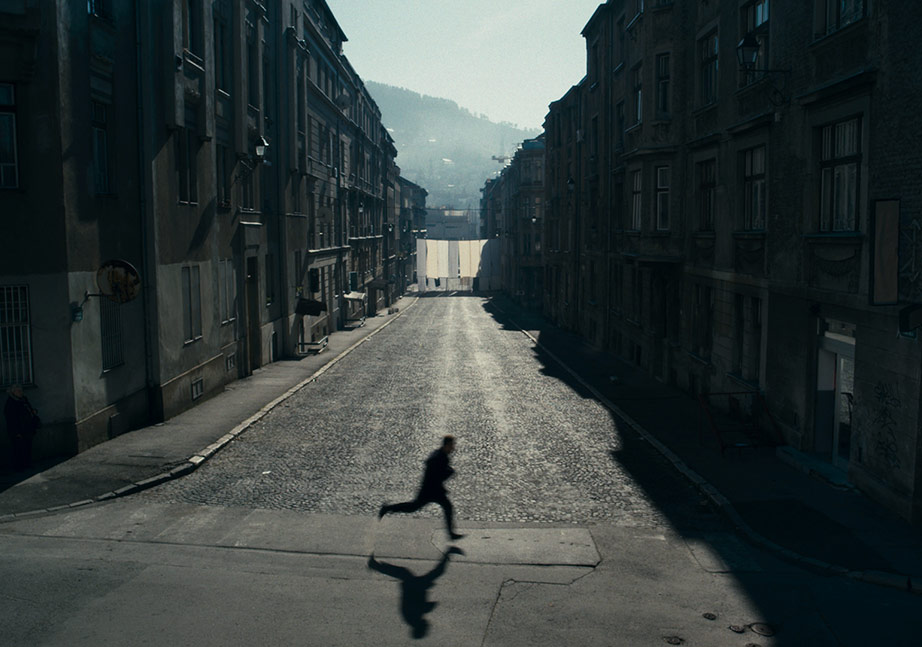
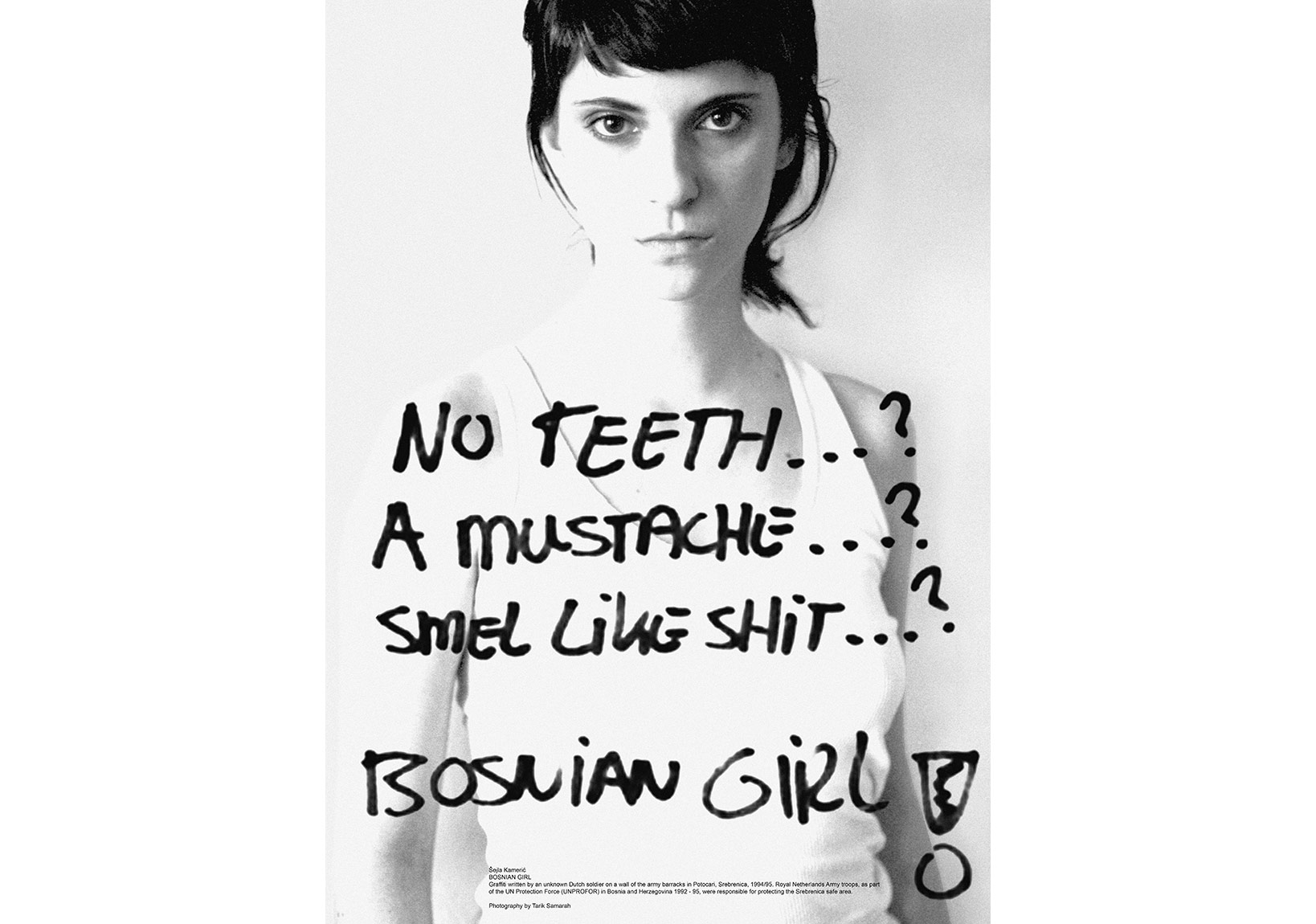
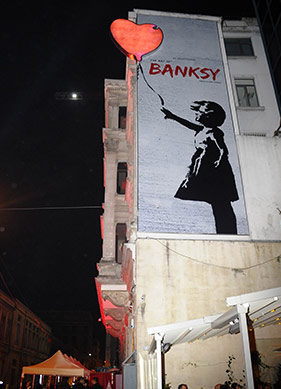
Bosnian Girl on the streets of Sarajevo
One of the most recognizable works by Kameric is her black and white portrait based on the words “No Teeth…? A mustache?… Smell like shit?… Bosnian Girl!” This work refers to the graffiti written on a wall by a Dutch soldier who was part of the United Nations Security Force in Bosnia-Herzegovina during the war. The artist devised Bosnian Girl as a public space project, exhibited on the streets of Sarajevo on bulletin boards and posters. At the Arter exhibition, it is possible to see an edition of this work from the Vehbi Koç Foundation Contemporary Art collection. The publication prepared on the occasion of the exhibition has archival and documentary value independently of the exhibition and presents a layered perspective. Included in the publication are numerous public space works such as EU/Others by Kameric that are all worthwhile to learn about and to see. In Cambric’s works, “public reality”s sensual and socio-political perception is tested, completely civic and aesthetic gestures combined with the mind and the emotion, used together in harmony. For example, Copy-Paste from 1997, which we see in the publication, presents a real plant that emerges from a wall and their image simultaneously.
Kameric presents an intensified mode of working, visually, manually, and mentally to relay the schizophrenic deformities of the quotidian reality, creating an important threshold where art historical references intersect with her personal history. Sejla Kameric questions the functionality, the practicality of art and witnessing through clashing the inside and the outside with each other; in her 2004 public intervention Frei, the entry stamp for a night club Frei, is reinterpreted in a frame that is emotionally charged.
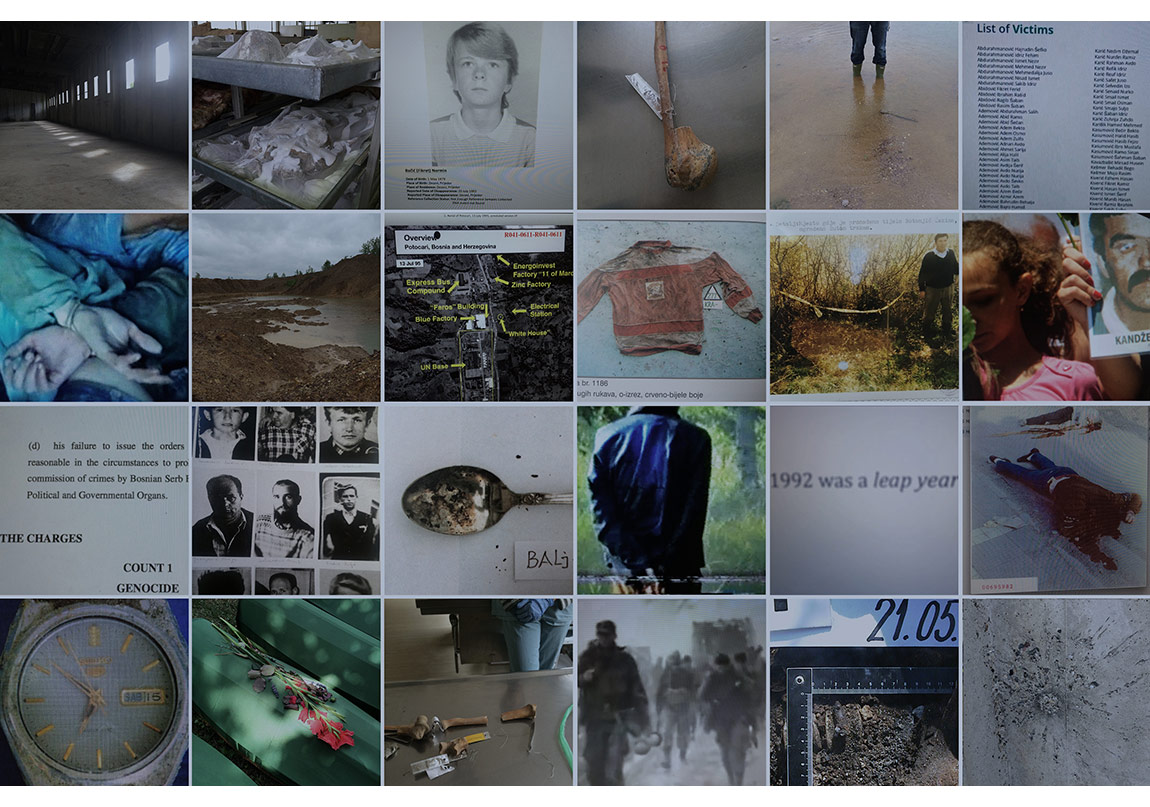
Another must-see work by the artist, who visualizes the fruitfulness and drought of the distorted relationships between concepts and people, paying homage to Joseph Kosuth and with hard work and sophistication, is Missing (2013), again acquired by the Ömer M. Koç Collection and which has traces of an art historical triptych. In these works, small, round “canvases” are presented with the intensity and simplicity of the feeling of mother, father, and child; the embroidery pins emerging from them and cascading down, reminiscent of the civilians, old and young, who died when trying to run away from the kanases in Sarajevo or those who barely escaped these bullets. It is important to underline that the cost of beauty, knowledge, peacefulness, or rather the cost of everything that we see, that we experience, the cost of being human, of being alive or dreaming are all felt in the exhibition with very small visual gestures. On the other hand, the exhibition also hosts another touching work that tests the idea of documentation with a performative responsibility on the ground floor of Arter. In this work, thousands of genocide images, portraits are placed in a cold metal room called “Ab uno disce omnes”, placed side by side, like a memory morgue. This accumulation, which could take hours to experience as a whole, can also be experienced over the Internet. In her interview with Temür on the occasion of the publication for the exhibition, the artist emphasizes that this work enabled them to make a list of over five thousand locations for graves and for them to be shared with the public. She summarizes what this room represents, “[…] Ab uno disce omnes was designed as an interactive database that the viewers could learn from or that they could contribute to. The database expands with the information that the website visitors share. Anybody who wants to can add new documents.”
Kameric “always does this”
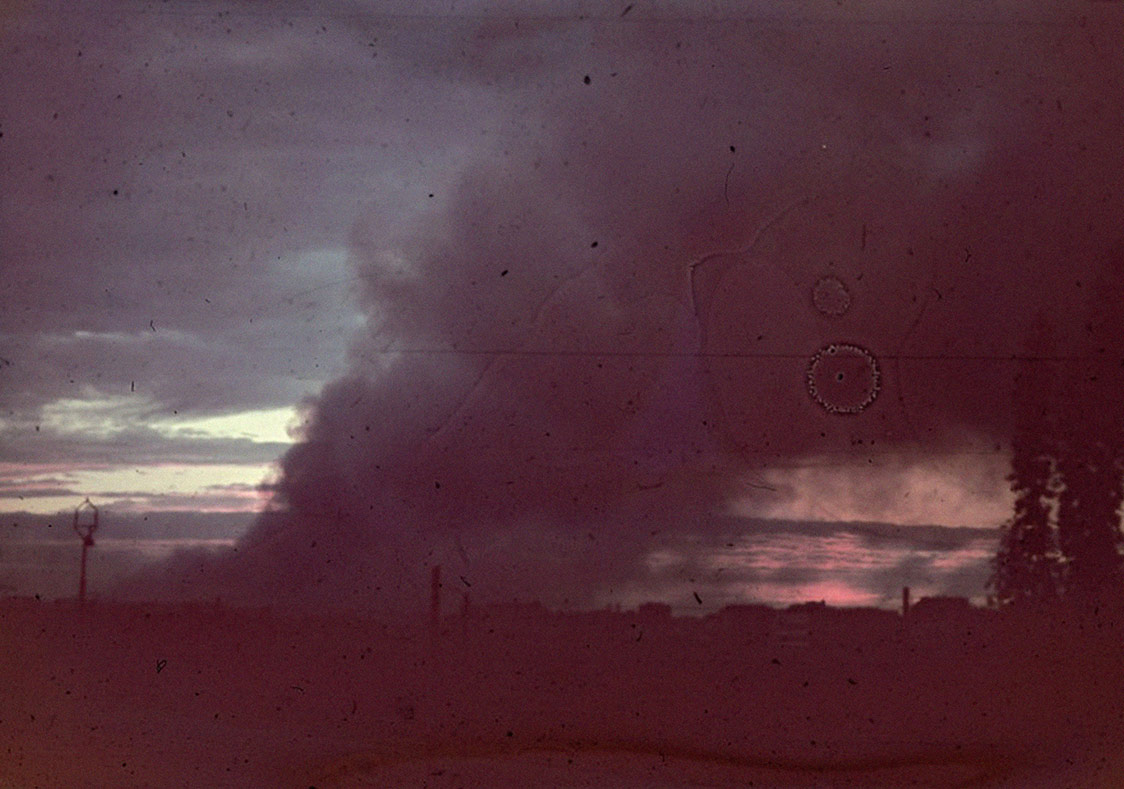
Within this framework, it is also important to mention June is June Everywhere from 2013. Kameric has taken photographs of the bullet marks on the building where she lives, enlarged the negatives of the images in black and white, producing a vast fabric, which she then places under a blood-red light. She presents this work as a self-portrait, which can be interpreted as a representation of the sorrow that has been entrenched into Kameric’s skin and memory. Actually, material and spiritual elements that she subverts in her works are collected with a constantly “recycling” attitude, confronting us with pain to heal us—Kameric “always does this.”
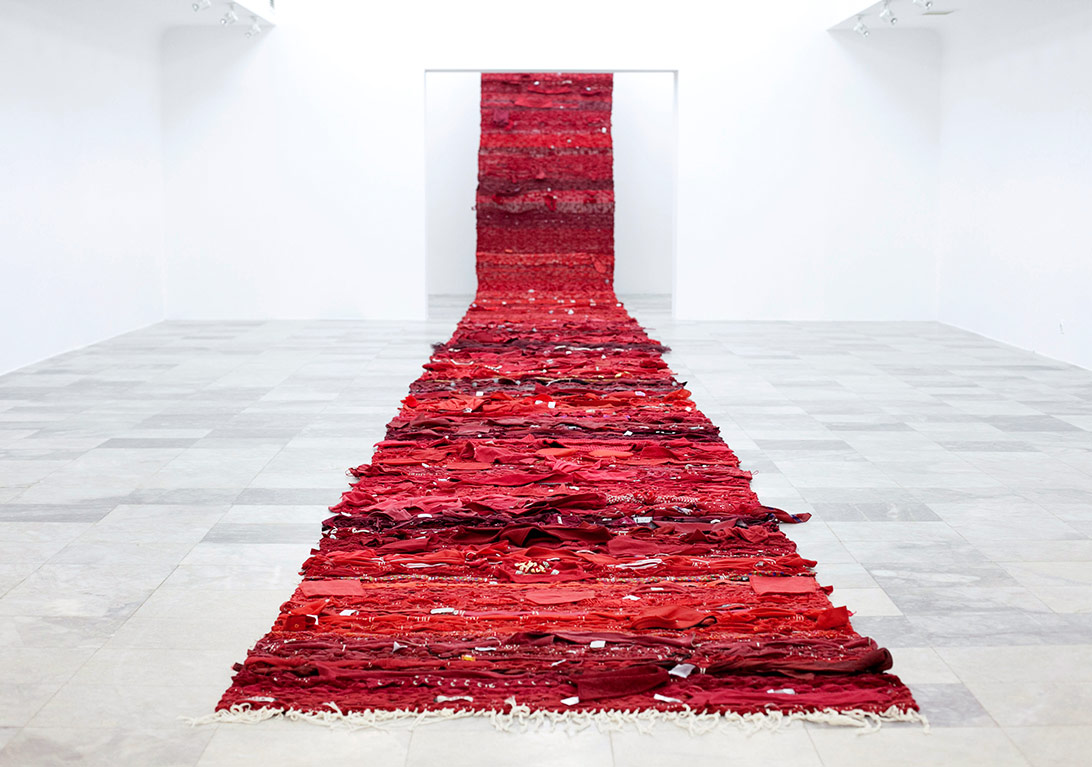
A photograph in the exhibition, based on the drawing of a woman by Vincent Van Gogh, Sorrow now in the Garman Ryan Collection, is a reflection of this. Kameric identifies with this work (and its historicity) and tries to liberate the identity of the image once again and I believe that she was very successful in achieving this. Another series of works from 2013-2015 is under the title Fragile Sense of Hope; the artist converges sensibility and violence on the same ground. Sejla Kameric’s work takes as a point of departure the tape that civilians used to protect the windows from exploding during WWII; these simple forms open up to spiritual and religious references with their gold-foiled and ever-shifting forms. The artist sustains the constant contradiction and hierarchy of power between the existence of concept and truth; Liberty, combining LED lights, plexiglass, metal bird repellers, harsh white light, which she places in the window of the exhibition, facetiously nod to Istiklal Avenue where people are hurt because of their struggles for freedom every other day. The overlaps produced by cultural distortions can also be seen in Nigel Sen Git, combining embroidery and black graffiti. Red Carpet, expertly disguised on the top floor of the exhibition, also open up who we overlook, whose lives and belongings we threaten, bringing into question whether it is worth walking on. The exhibition brings together a variety of materials, without ever failing to fulfil its narrative capacity, managing to “tell its story”; as the late İsmail Tunalı would say, the polyphonic aesthetic produces a cohesion of works, revealing crucial clues about Turkey where we experience very similar things. Candles, water, bread, canned food, pillows, and newspapers are stored to “survive”, as in Care 1, 2, 3 (2015, installation), leave behind a historic satire and warning in regards to information and image as they are flushed of meaning through brutal, material excuses, carrying a lesson in humanity and conscience.
;