It wouldn't be coincidence to use "Vision and Conception or View and Opinion" for the process of generating ideas. Therefore, the act of seeing is a subjective fact. Just as the things we see, think, believe effect our opinion, the image that the artist, who is the executer of art, creates is shaped by the things that effect the artist- in other words it is shaped by every event, fact, human, object, knowledge etc. that is included in the artist's life consciously or unconsciously. Also, if the effecting issue is a civil war that has expanded over a period of time, is there a way for the production of an artist, who is from the environment, in which the war was lived, to be out of the fact dominating the entire life? Or else does it have to out of it? The answer to this second question is related to another judgement. If you approach to the productions of an artist, whose personality-identity is shaped by the country he is from that he feels belonging to, and who declares clearly this situation, with judgements such as "is using/making it material/showing off to cultural capital" -with all its negative connotations-, then the answer can be "yes". But I can assure you that this answer has got no reality in this world.
In fact, a discussion on the issue in conceptual dimension was carried out on the periphery of "identity" problem that is set on the agenda of contemporary art in the 1990s. Realized in Salt Beyoğlu and Galata, The Pixelated Revolution exhibition of Lebanese artist Rabih Mroué merely revitalized the discussion based on this subject matter. However, it should be approached to artists such as Mroué, who through emanate from micro levels and reach wide mediums with their strong visual language, without categorization and by keeping their uniqueness in mind.
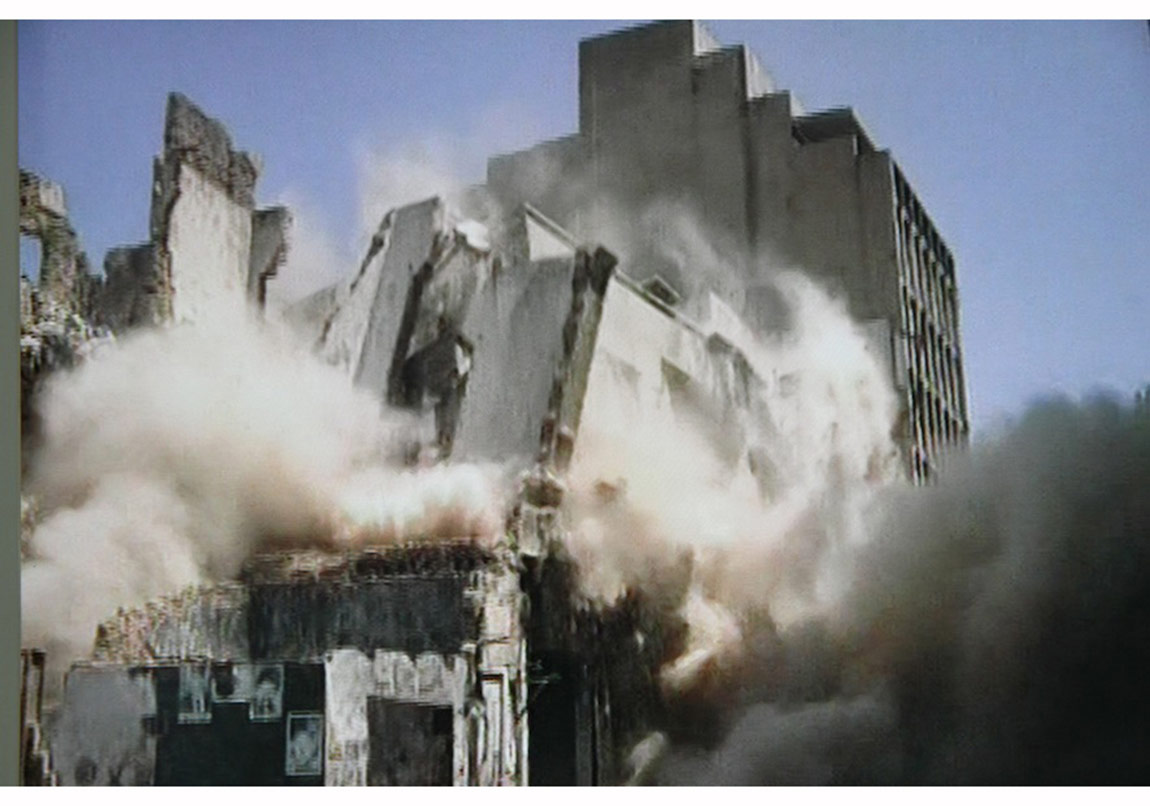
Mroué is a director, play write and an actor who is coming from a theatre tradition. Convening with contemporary art is quite a recent history. Although it is understood that the artist is coming from a different discipline, in the exhibition, it is also clear that he forms a style from this distinction by mastering mediums such as photography-video-voice recording etc. Mroué focuses on Lebanese Civil War, which lasted for fifteen years causing hundred thousands of people die and almost a million people flee from the country, on the periphery of destructions-losses-struggles in his own life story. As a matter of fact, the only visible thing -if we go back in the article and remember- is his own life that is a life story mixed with war. The artist is surely not doing this with a theatrical or cinematical language; yet he focuses on image and representation facts with the things he has borrowed from those elements. Thus photography, as a lens-revealing cinema, is coinciding the reality of war with eye and look. The work called People are Demanding in Salt Beyoğlu welcomes the visitors with sounds of slogans from the rebellions in Arabic countries. They mix up with the slogans of people, who gather in İstiklal Street almost everyday now, and this can also reveal feelings in you on the underwhelming state of our country.
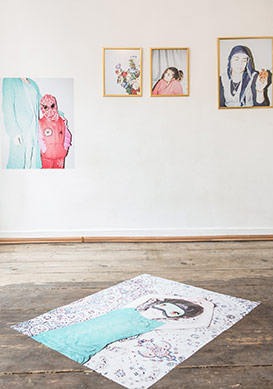
Some parts of the works of his The Pixelated Revolution project, dated 2012, are exhibited as a part of the exhibition's Beyoğlu step in Documenta. A wall installation was made in Double Shooting, which was made with frames that are fixed on the wall and shape according to the point of view. In the 72 piece installation of a video, which makes us aware on the civil war in Syria, it is being instructed to walk the device in 18 seconds and thus you become the person, who is shooting the scene with a 16mm. camera and shot by a sharpshooter. The moment of being shot coincides with the sound of gun burst. "Double Shooting" is a name referencing both to film and gun! Structured as in Flipbook idea, the work is accompanied with flipbooks on the table called Thicker than Water.
A friend of Mroué told him "Syrian protesters are recording their own deaths". Recording a video and publish it in internet environment in order to let the world know is being risked at the cost of one's life. The artist is analysing the tense relationship in between image and reality either with the things he fictionalized in the whole Pixelated Revolution project that is giving the name of the exhibition, or in first part of The Fall of a Hair that is focused on narration. When he is explaining all from the researches made on retina, illusion, discovery of looking and seeing to devising the reality and thus the ontological change, it is in fact understood that the artist has made all these his own issues, from the whole of two phased exhibition. For example in his work called Eye vs. Eye, an old movie camera is working with all its power and shows two images that gets into each other or get out of each other by being pixelated: two men - one's eye is on the lens of his mobile phone and the other one's is on the gun tube.
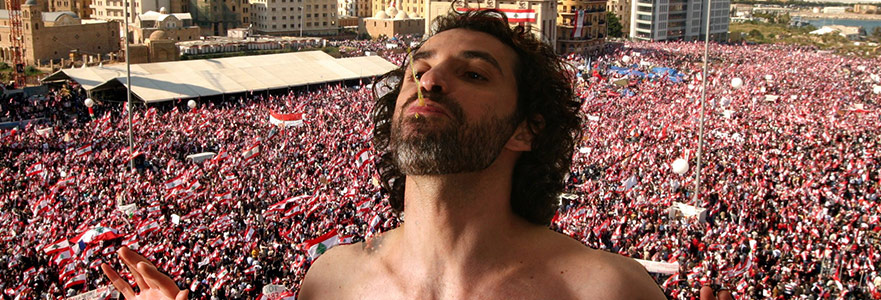
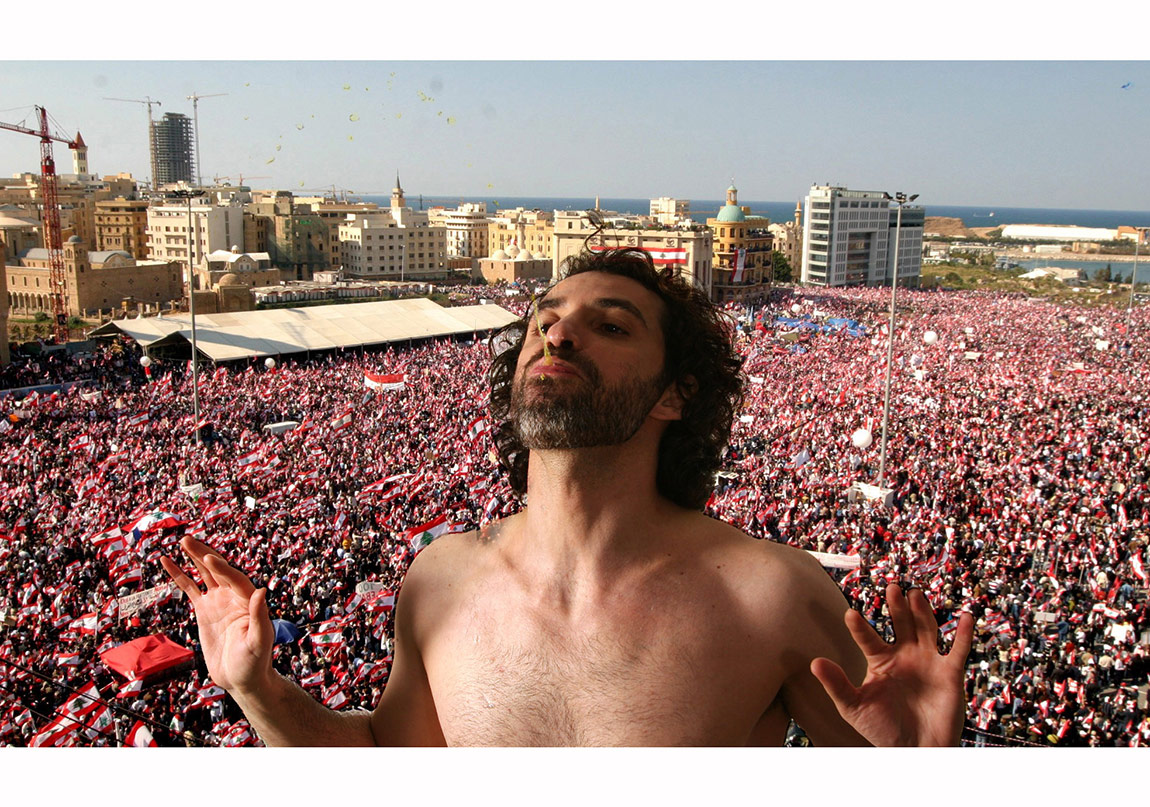
The works in the Salt Galata section of the exhibition are the ones, which emerge mostly from the personal mythology of the artist. Formed out of Mroué, who is making a direct eye contact with the spectator, on the bottom and a double screen on top with writings flowing by and an article on the wall next to those explaining the artist's intention, I, the Undersigned is one the most impressive work of the exhibition. Because, the artist is apologizing here. For the things he did or he didn't in the years of war that occupied his life... This sentence is quite striking: "I am (sorry) to be proud of being Lebanese, when I was trying to get another country's citizenship..."
Grandfather, Father, and Son and Old House as well as Face A/Face B, in which he narrates how he can't bring photography with sound recording together as well as the war and the moods at home forms the time and place, are his memory focused works of the artist, which have the "we exist as much as we remember" statement. It is certain that the identity is possible with what is coming from outside and the personality is possible with what is coming from inside. Face A/Face B is making the personality-identity construction process questioned with "the silent photos" as well as many other sound of photograph of his own childhood, who records an anthem that he sings as "hey communist warrior".
Focused on the censorship fact that the artist expressed in the periphery of the things he has been through, Don’t Spread Your Legs and Between Two Battles; talking on the lost-can't be found fact, Je Veux Voir (I Want To See), Noiseless and his impressive video installation The Mediterranean Sea are must-see works of the artist. One particular work in this part of the exhibition called On Three Posters: Reflections on a Video Performance is formed of his statement on -as can be guessed from the name- before-after a performance and the things the artist asks - questions. The importance of this statement is originating from being the work that is expressing the artist explicitly relying on his distance with the war, his artistic language and his subjective questionings. Mroué is analysing On Three Posters performance dated back to the year 2000, which is realized together with Elias Khoury and travelled to many countries. The performance itself is quite impressive and is based on the non-edited recording of a suicide activist in Lebanese Civil War reading a text, which will be given to the televisions, three times in order to get the perfect version before he realized his act. The fait accompli -in other words the recording of a dead one- in the performance is making the video medium upside down. As in the original, the actor (Mroué himself) is reading the text in a room and in costume three times; yet the audience realizes that this act is realized in its own time when the closed door opens. The fiction is mixed with reality; the past is mixed with today; the life is mixed with death. We, as the audience, are driven to mixed meanings and questions with details such as the fear of the activist, who is not afraid to die, from the camera, the interview with political character, who encouraged him for this act and the disappearance of his face by extreme brightening, the questioning of performance's quality as a result of intense interest in it in many countries in the West. The language and the editing that he has formed as a trilogy completing one another is also acquiring a different working quality to this depictive video. "Game" being the last word he uses in the last sentence he says[1] corresponds to his intention for completion that can't be explained with the coincidence.
[1] "This is a game that is not going have any return for us"
;