ÖNCEKİ
08 ARALIK, PAZARTESİ, 2014
SONRAKİ
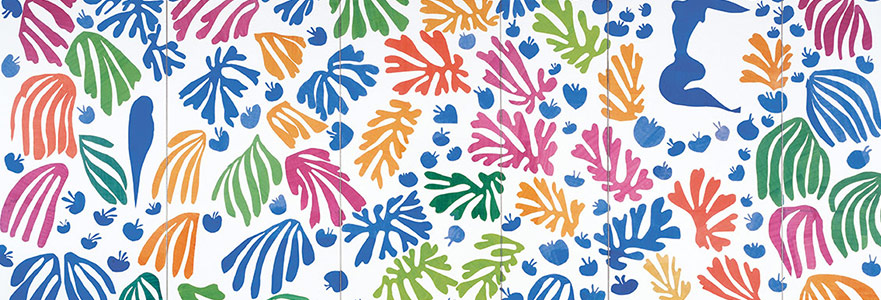
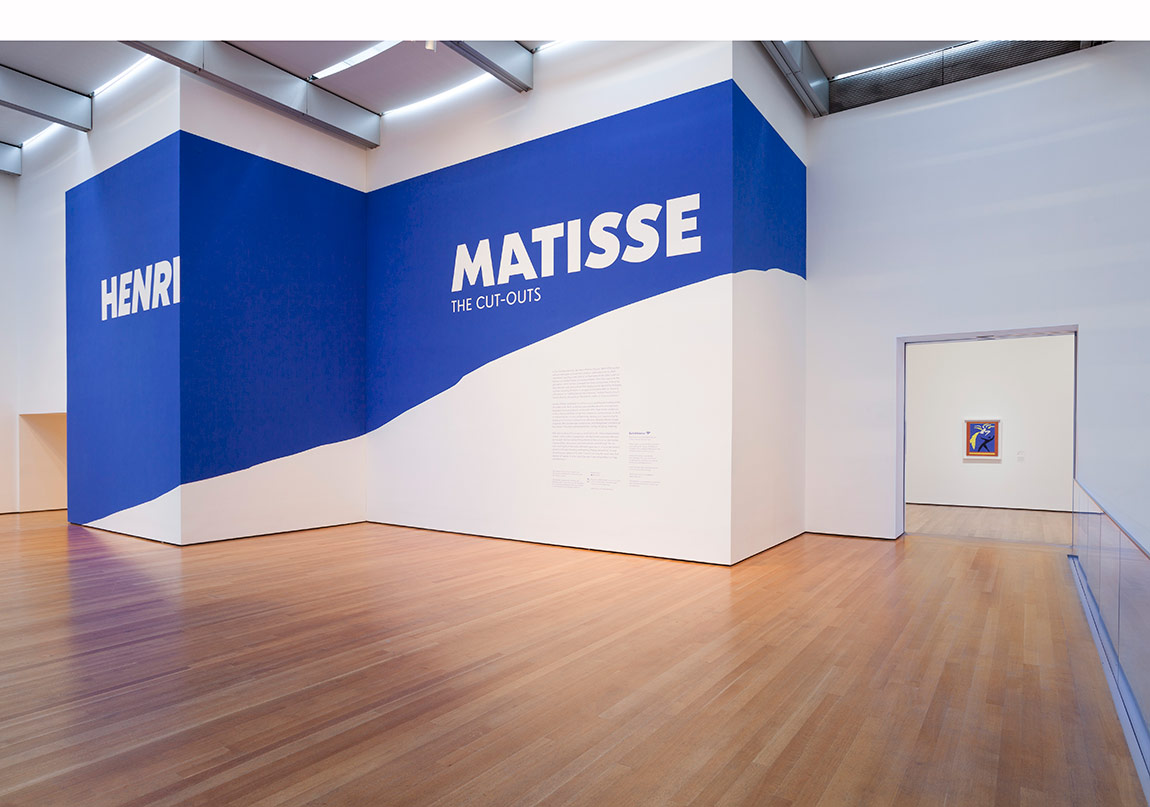
It is before 1940s that the paper cut outs started to emerge in Matisse's works. The costumes he designed for Chant du Rosignol Bale in 1919, the models of mural called "Dance", which he has designed upon the request of Barnes Family in between 1931-1933, the costumes he designed for “Rouge et Noir” bale in between 1937-1939 form the entrance of exhibition in MoMA as the first works of Matisse, in which he uses painted papers and cutting technique. It is also possible to add numerous number of book and magazine covers that he would be designing upon the request of an art critic and magazine editor called Tériade, with whom Mattisse worked for years. The lithograph covers that Matisse actualized in between 1937-48, such as Henri Cartier Bresson's The Decisive Moment, which is about the nature of photography, Verve magazine including the reproductions of Paris artists' reproductions of time and the cover of Cahiers D’Art magazine in the editorial of Christian Zervos, can be seen in the first section of the exhibition.

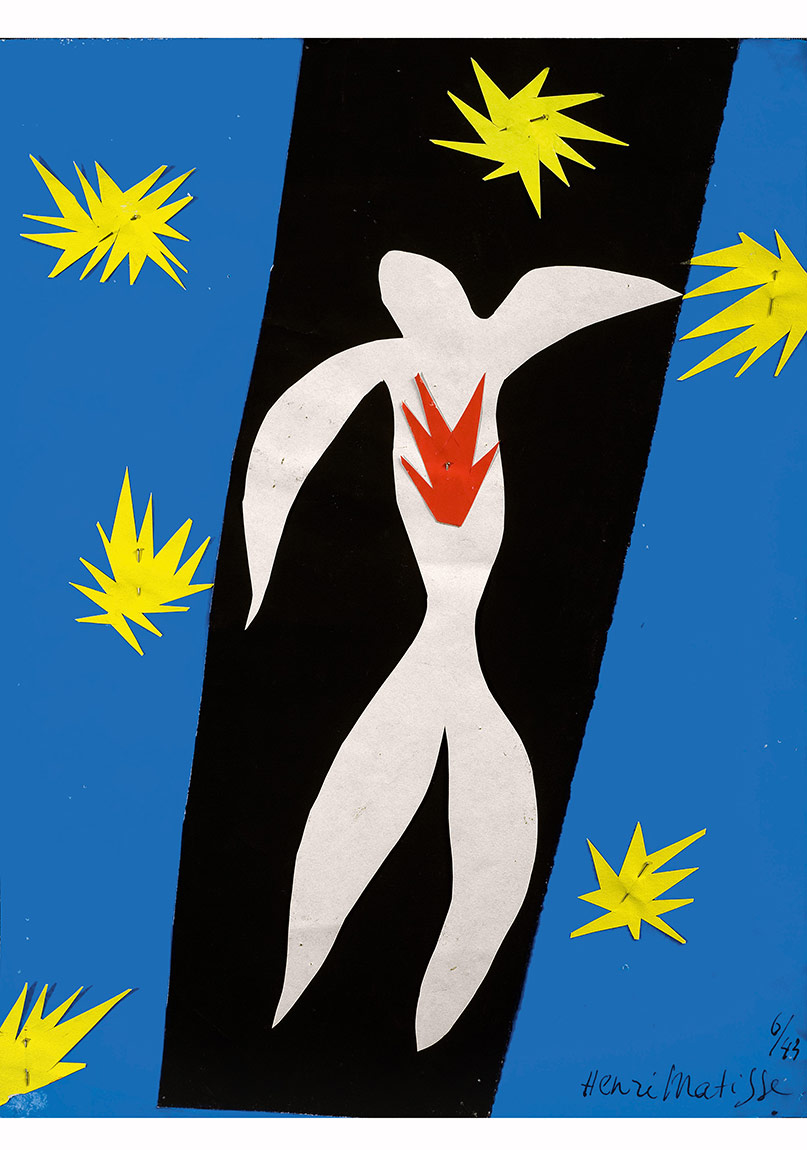
The lithograph book named "Jazz" (1947), which was published in a limited edition around the same period, should not be missed. The editor of Verve magazine Tériade tries to convince Matisse in order to actualize the "Jazz" project from the beginning of 1940s. Postponing the project continuously, Matisse manages to concentrate on the models of "Jazz" in the last years of the II. World War. Made during the German invasion, the book is formed out of 20 lithograph prints. The patterns and symbols (see also "The Fall of Icarus"), as well as a handwritten note of Matisse, give us clues on the process of the book under the influence of II. World War.Inspired by the symbiotic relationship of Jazz music with improvisation, Matisse is fictionalizing a new world, which is highlighting the dominance of imagination despite all the realities of war, by using mythological war symbols together with fantastical elements of circus life.
Matisse's works exhibited around that time are not very positive anyway. The artist's' first works involving cut papers are all first exhibited in a retrospective organised in Paris Modern Art Museum in 1949.The founder and the art critic of Cahiers d’Art magazine Christian Zervos react severely for Matisse leaving oil painting technique and Fauvism movement, which Matisse was the leader. In his criticism he wrote on the exhibition, Zervos says that "I can say that Matisse is using this technique, which he started as magazine cover in 1936, to pass off his sleepless nights and to preoccupy himself". But Matisse is going to say that his works from this period is beyond a simple preoccupation in his interview with Andre Verdet in 1952. " These works I do by cutting with scissors should be seen in the same direction with my oil painting. This new quest is not an accusation or rejection of my oil painting." Matisse's quest for abstraction beyond painting and sculpture gains a new meaning when the exhibition in MoMa is looked thoroughly in the light of the artist's works that he made with cut out papers towards the end of his life.
Matisse's works in the period, which has started after his operation for cancer and moved to Nice, are exhibited in the second half of the exhibition. Although Matisse gets better after his operation in 1941, he had to use a wheel chair. Moving from Paris to Nice in order to get away from the effects of the war, he dedicates himself to work on the cut out papers. Sister Jacques, who has taken care of him in the period following his illness and became friends the artist over the time, presents her drawings that she has done for a new church in the town called Vence. When Matisse was conveying his thoughts to the nun on her drawings, he would start to work on some artefacts himself.
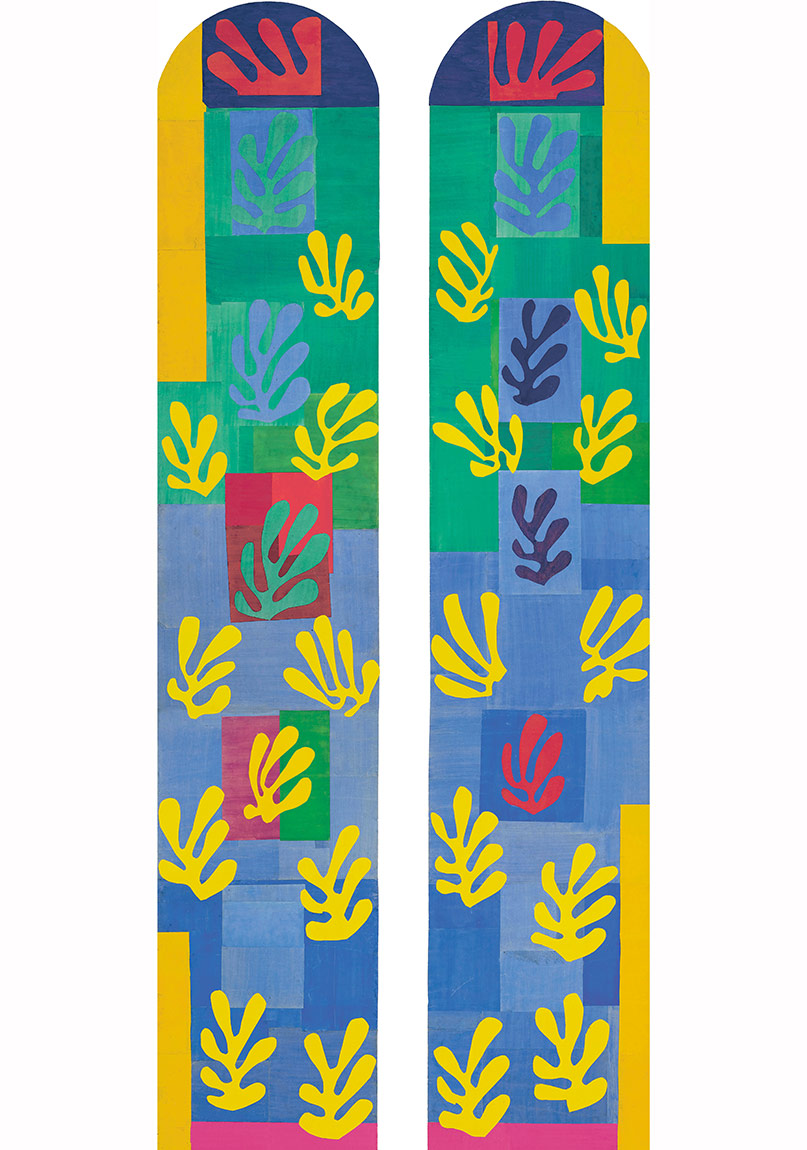
The visit of Sister Jacques is also the start of an adventure that he will be constructing the whole Chapel de Rosarie de Vence with his artefacts. As a result of project ran jointly with Stained-glass artist Paul Bony and the Reverend Rayssiguier in between 1947-1952, Matisse designs the church entirely from the stained-glass to porcelain wall reliefs, prints of the fabric in the preaching area and even the design of reverend's surplice. The aim of the works in the church is perceived as a turning point in the aesthetic search in Matisse's last period rather than creating a clerical attraction. Matisse says in the foreword that Matisse has written for the catalogue prepared for Vence Church's opening that he has searched for an intersection of drawing, pattern, colour and stain balance, but the hardest part of this search was to avoid the purity of one element over the other. Saying that it is necessary to go through a balanced purification without compromising from the essence of elements such as form, colour and pattern in plastic arts' historical mobility, Matisse describes his works in Vence church as the most mature point that this mobility has reached in his own art life. Matisse died 2 years after the opening of Vence church.
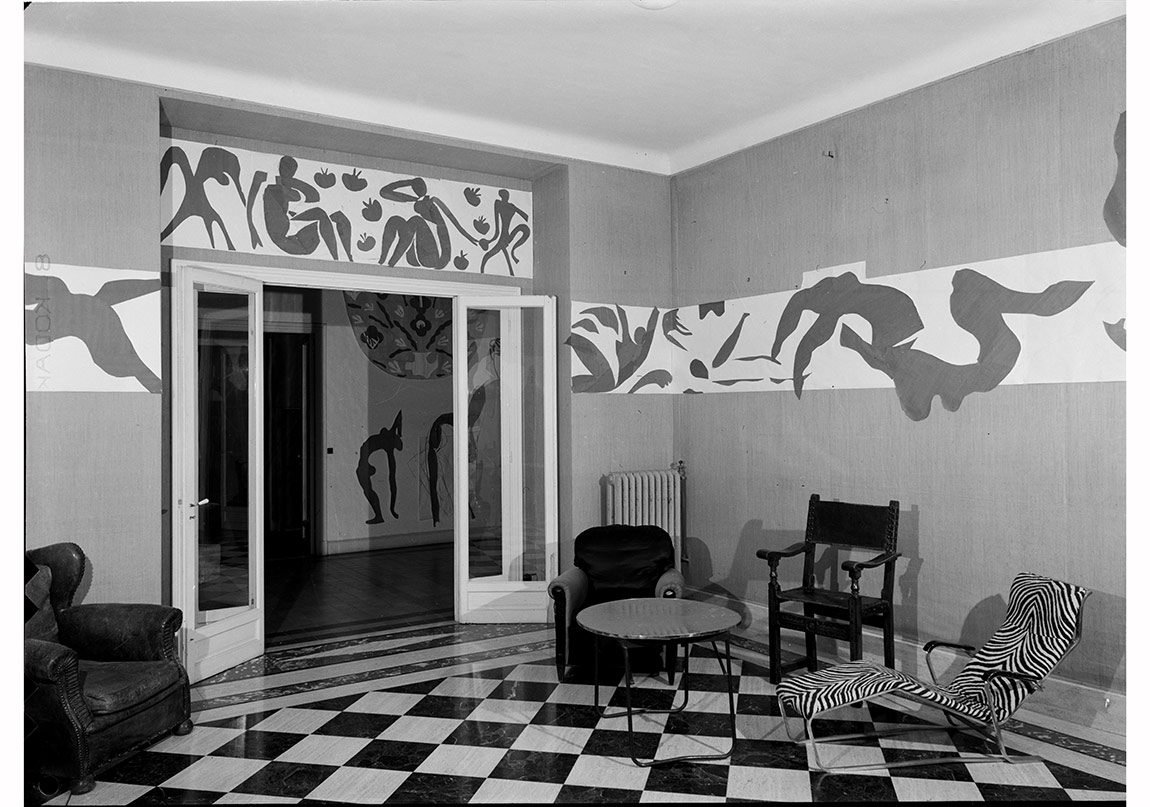
Another important piece of the exhibition is a room called Swimming Room made in the same period as Chapel de Rosarie de Vence. Matisse, who goes to a public swimming pool in Nice on a hot day with his assistant Lydia Delectorskaya, says that "I can create my own swimming pool here!" and fills his living room in Hotel Regina with the figures that he cut out. The artefact remains in Matisse's living room in his home in Nice until his death and then goes into the archives of MoMA.
Taken into MoMA's archive in 1975 and renovated in 6 years starting in 2008, the new form of artefact is meeting with an audience first time in this exhibition after a endeavour process of restoration such as scraping of burlap fabric that has paled over the time and on which there were blue figures, and change with a new one, the transformation of blue colour on the models into its original and installation of the artefact onto the new fabric. Producing a same size replica of Matisse's living room in Hotel Regina for the exhibition, the MoMA team remained true ro the height of Matisse's living room walls and the initial hanging style of the artefact for the audience to expereinece the same as it was designed.
The video, explaining the history of Swimming Room, which met with its audience as renovated in the exhibition, and its restoration process of MoMA archive team can be seen from this link below: http://www.moma.org/interactives/exhibitions/2014/matisse/the-swimming-pool.html
;