The exhibition, of which Bora Kantürk is the curator, is trying to analyse the subject matter deeply by getting together artists working in different styles. The book 'Sayfiye (Summer Resort)', which is published independently by İletişim Yayınları synchronously with the exhibition and edited by Tanıl Bora, is in the character of a guide book for the ones, who are curious on this matter more.
Aksu Bora and Tanıl Bora stated the dictionary meaning of the word sayfiye(summer resort) in the introduction of the book as "Summer resort, summer house, place to live in the summer. It is as if an invitation, a hospitality is effusing from the word. It evokes pleasure and joy - like it is a mix of these two." Sayfiye (summer resort) is a concept taking part in the mind of an urban person. Sayfiye (summer resort) is a place to escape, where after a year long suffering, joyous moments will be spent until the next hustle and bustle, and, where people are going to rest, have fun and fill themselves up with energy. It surely needs to be underlined that sayfiye (summer resort) is little bit of an old fashioned concept. Sayfiye (summer resort) concept has transformed into holiday with the change of life style in Turkey. The significant difference of sayfiye (summer resort) from having a holiday can be stated as the place to go for holiday demonstrates change from one year to the next, despite the sayfiye (summer resort) remains the same.
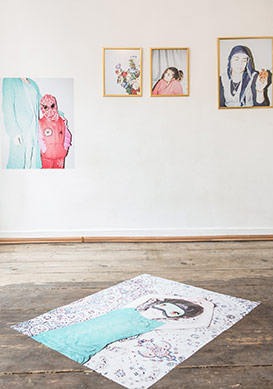
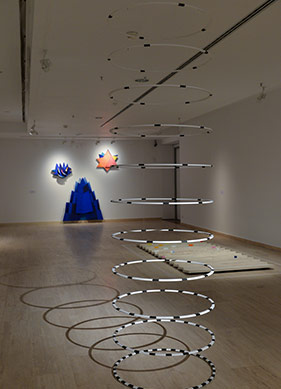
Based on this difference, the exhibition is bringing somewhat a nostalgic point of view to sayfiye (summer resort). Almost exhausted sayfiye (summer resort)s, involvement of summers resorts located on the verge of the cities within the city over the years and disesteem of near distanced sayfiye (summer resort)s have effect on the disreputation of sayfiye (summer resort) areas. ‘Kışlık Şemsiye (Umbrella For Winter)’ work -the work taking place in the ' Sayfiye Raporu (Summer Resort Report)’ series, which Özge Calafato brings new meaning to Borga Kantürk's photography- in the entrance of the exhibition is a good example of photography and text unity and can be a sign for how 'sayfiye (summer resort)' is going to be dealt with in the exhibition. In fact, the series that this work takes place is a proof of sayfiye (summer resort) changing into a nostalgic concept. Coming right after him, Sıtkı Kösemen's Gökçeada public beach photographs in his 'Öteki Sayfiye (Other Summer Resort)' photography series is an indication of how today's neo-liberal period is restraining to live freely as this beach is also closed to public, after its transformation to private. While 5 paintings of Leyla Gediz called 'Buenos Aires’te 5 gün (5 Days In Buenos Aires)' that are hanged somewhere near the ceiling of the gallery are giving the feeling as if they are hanging there freely above, 'Kelebek (Butterfly)' installation, which shows a disposable storage box turned into a canvas, is reflecting the effects of consuming society.
While continuing to talk about the works, it is necessary to mention Hüseyin Bahri Alptekin's videos -the source of the soothing music that is filling the whole hall- called ‘Incident-s Ipanema’ and ‘Incident-s Bombay’, which are composed of swiftly flowing photographs from two different beaches in the world with music. These two beaches, which most of us would consider exotic, are maybe the symbol for transformation of sayfiye (summer resorts) into a life style. When you go in the corridor behind the main area of the exhibition, two of Vahit Tuna's works on either edge of the corridor attracts attention as small details, which will remain from a sayfiye (summer resort). When you walk down the corridor, Metehan Özcan's ‘Resimli Bilgi, tarifler (Pictorial Information, descriptions)' installation, which creates evocations on the past of sayfiye (summer resort), and his 2008 dated work called 'Sahibinden habersiz satılık (For Sale By The Owner Without A Notice)’, in which the indoor photographs of an old sayfiye (summer resort) that is an indication of experience as well as dereliction, are situated. The works of Tufan Baltalar at the end of the corridor are made out of two adjacently presented paintings, which resemble the indistinct traces of sayfiye (summer resorts) in our memory. Corridors ends with Levent Şentürk's three photographs called 'Doğu’dan Batı’ya Güney (The South: From East To West)', which the artist took in Mardin Antakya nad Yalıkavak, and an artist book, which he produced by all the works of that series. The photographs, which are trying to document how sayfiye (summer resort) are percepted and lived in changing environments, are making this discussion virtually far from our usual way with its route from eat to west.
If you visit the exhibition spirally as I did, then you come across with two photographs of Seçil Yersel on sayfiye (summer resorts), which are not so far away from Istanbul. The panoramic photographs, showing the state of people waiting for ferry to go to island and people, who are fishing on a subsequently made, flimsy shore, make you feel these two situations by rectifying them. Hale Tenger's work, in which she shows a man shooting on the balloons in İzmir, Kordon, makes multiple discussions possible both with its content and its presentation. The photograph is exhibited with a slightly blueish coloured wooden frame in a way that is leaving quite a wide black passe-partout on the edge, and thus it is percepted as a fixed video image at first glance. Moving of sayfiye (summer resort) into the city evokes the possibility that the city is being percepted a big sayfiye (summer resort) for the ones looking İzmir.
Placed right in the middle in the exhibition, Balca Ergener's 'Recreation' series is reflecting the feeling of abandonment in a recreation center, which made an impression on most people's childhood memories and dying slowly away now, during the period of not being used or not as used as much. Exhibiting print outs of the news that is published on internet about these centers, with some parts underlined in order to emphasize is interesting since it reflects current situation of public administration of 20-30 years back. The photography series concerning today, is in fact important since it brings a new perspective that is not nostalgic, when looking back to flamboyant camps of past.
Small sized anonymous photographs, which are placed in a way in order to make us examine various memories and details, are located on two tables right in the middle of exhibition venue. These photographs, which look as if taken from family albums and shared with us, are trying to complete some missing pieces of the exhibition.
Although 'Sahibinden Sayfiye (Summer Resort For A Song)’ enables an extensive discussion with the artists, who approach the concept of sayfiye (summer resort) from different perspectives, it is not bringing a wide perspective as it does in the synchronously printed book. The exhibition is focused on deprival of sayfiye (summer resort) from its owner in concurrence with changing time and life accompanied with a more cruel consuming society model. This causes an inevitable feeling of nostalgia. As a matter of fact, if the exhibition was diversified with other reflections of sayfiye (summer resort) by going out of the definition of sayfiye (summer resort) that has been lived by urban middle class until the end of 1980s, then it could have had a more multi-layered structure. Except the works of Hüseyin Bahri Alptekin and Levent Şentürk, who provided this opportunity, only the different dimensions of that known sayfiye (summer resort) is being expressed in the exhibition.
Nevertheless, this exhibition focusing on the deprival of sayfiye (summer resort) opportunity, which used to relax people and present a chance to escape from suffocating city life, as a result of fast change in our country, is a result of an important determination. Although the topic of this exhibition is sayfiye (summer resort), the audience is obliged to think the reasons and the the background of this change. A couple of moves, which could have gone beyond determination, could have enabled the exhibition to be more multi-layered. Even so, we should accept this as a start and need to evaluate ‘Sahibinden Sayfiye (Summer Resort For A Son)’ as a forerunner of a bigger exhibition, which will derive from this topic.
;