Do not get me wrong, I am not an enthusiast of renewals or revivals, neither am I an anachronistic fighter for permanent progress and evolution in the arts, as I value postmodernism’s critique of modern art’s outdated search for originality. Still, writing on art and curating exhibitions since the mid of the 1990’s, even I have already realized that the longer you work in our field the more you start encountering similar forms and concepts, and the less you get excited. Yes, currently we have more artists than ever on this planet, and I believe that in general this is a good thing. Though, we also have more weak art than ever.
Remembering Baykam’s “This has been Done Before”, it seems obvious that the character of contemporary art, the language of its current scene, although heterogeneous and pluralistic, on a basic level, is often foreseeable. Artists today work with certain matrixes, patterns and textures, which are common in contemporary pop culture. Remember that Warhol used to stress that “Pop is everything and everything is Pop”. Yes, that is true, but when everything is pop, what difference does it make? Today, contents and topics in our art world come and go according to trends and common preferences regarding form, aesthetic, technique and medium. In the end, current tendencies and methods are inflationary, and change nearly seasonally according to fashionable movements. Remembering Einstein’s “Everything is Relative”. So, does the story of art really end like Danto claims?
Nevertheless, in spite of so much stylish but conventional art today, every now and then, I still get excited like a kid when I discover an artist that is strong, alternative, radical, experimental, critical, absurd, challenging. Often, it hits you from corners, where you expect it the least. I do not have a certain preference when it comes to visual art. Of course, also I favour some styles and aesthetics as well as notions and approaches, but in the end, I believe that art should be radical and extreme: It should be extremely loud or absolutely silent, heavily over-loaded or nihilistic empty, childishly colourful or minimal monochrome, as well as extensive and complex or reduced and simple.
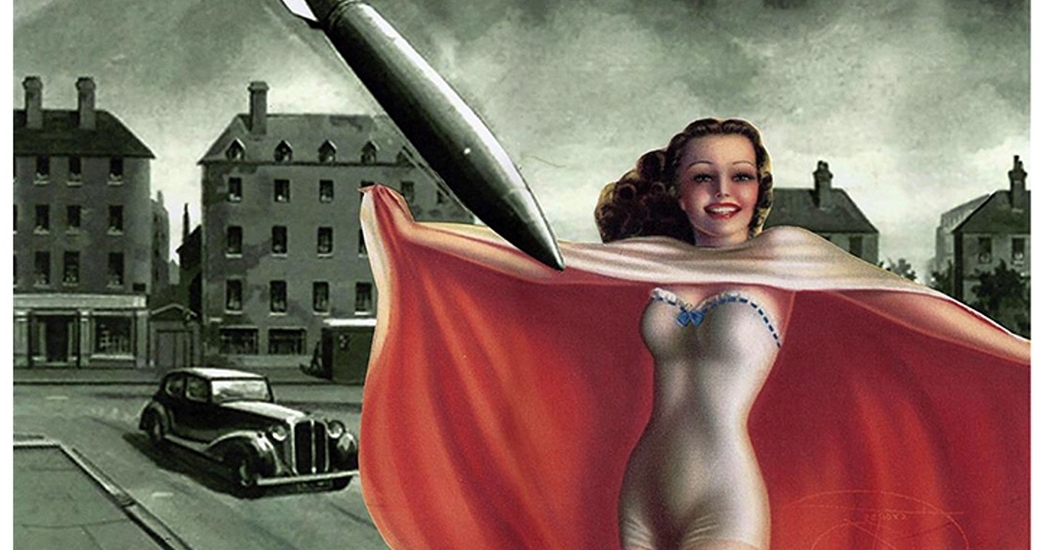
In this context, I value the work of Deniz Ayral very much. It strikes the spectator with a fascinating visual syntax, as he plays with various remix-aesthetics and retro-styles, and sets them inside a conceptual framework, which is based on a critical awareness and attitude towards today’s life and art. Ayral’s strategy is formally and contentual based on the art of collage, where he mostly out of parts of Victorian etchings, illustrations and drawings creates an absurd, engaged and critical reflection on our world today. Always, a fragmental character prevails in the works. This fragmentarily plus the surreal dramaturgy of the incidents within the pictures give his work an outstanding character, which invites the spectator to enter a world where dreams and nightmares get mingled in a universe full of apocalyptic promises.