ÖNCEKİ
14 AĞUSTOS, PERŞEMBE, 2014
SONRAKİ
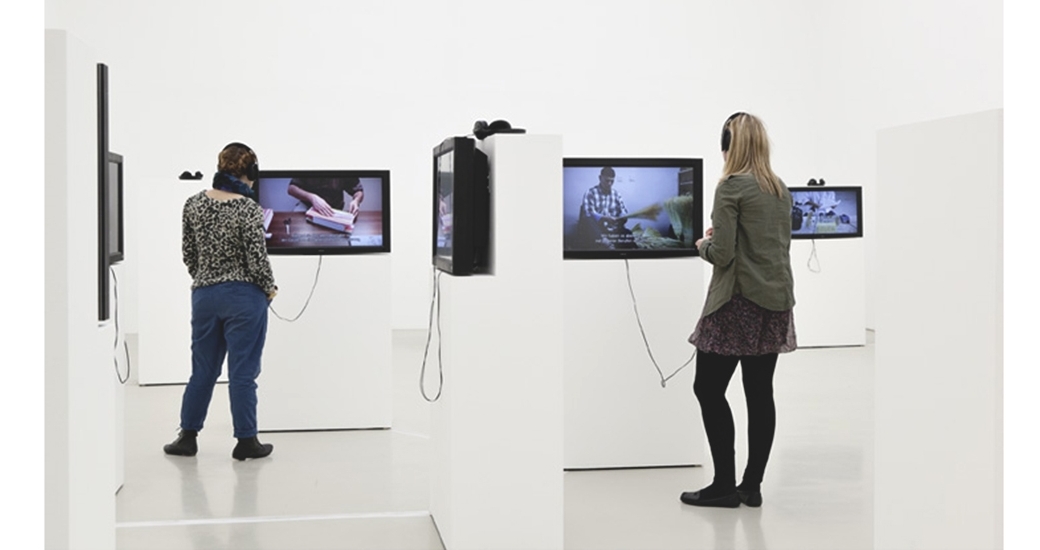
In this text, I would like to discuss the conceptual meaning of memory in contemporary art, and for contemporary artists. Here, I will shortly differentiate between dealing with individual memories of personal stories, and reviewing the reminiscence of collective memories and official history.
Personal Memory is always settled between individual story and common history. First, we remember things the way we think they were or the way we believe we have experienced them. Here, the images of the past in our mind are mingled with feelings and thoughts that we have about yesterday’s and today’s world. So, memory is always blurred, as it is mixed with emotional and rational understandings of the past and the present. The present plays an important role, as it forms the conceptual framework of our ideas of the past. Besides this, memory is always exposed to the negative impact of the continues flow of time. It is threatened by the destructive power of time, which constantly weakens the visual images representing the past in our mind. Increasingly the time span between the memory of an incident and the actual experience of it becomes bigger and bigger until it resembles just a quite echo of reality, which gets overrun by the thoughts and presumptions of the present. The more time has passed the weaker the image of the past occurs in our mind. In the end it can vanish forever. That is why time is the greatest enemy of memory, and this is the reason that there cannot exist any absoluteness or objectivity regarding the memory of our world. Just like the present is an illusion, the past is a lie.
This, of course, makes any public or common memory and its recollection problematic. When uncountable stories get squeezed in one official history, society’s heterogeneity and pluralism always loose against political ideology and national interests. That is why history telling, although claiming academic and scientific proof, every now and then is corrected and rewritten. This is also the reason for the current new notion of history saying that it consists of uncountable personal stories.
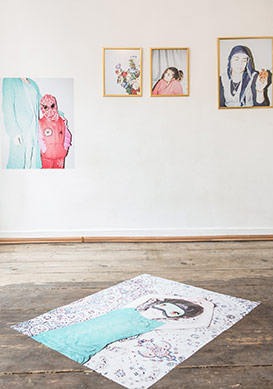
This idea of a fragmental memory is commonly accepted by current artists and widely reflected in contemporary art, where no absolute proclamation of memory can exist. Otherwise art would become propaganda. The artist’s memory can never function as a mirror of society, otherwise he would become a demagogue and his recollection of the past an ideological doctrine. In art, roughly divided, two kinds of approaches towards the issue of memory exist. Some artists, like Nan Golding, Christian Boltanski, Wolfgang Tillmans or Taner Ceylan here in Turkey use their memories of friends, spaces and incidents as the starting point of the artistic work. In these oeuvres, people, certain environments and locations, as well as important acts and situations prevail and constitute the conceptual outline of the pieces. The notion of memory in these works is mostly fragmental, subjective and highly personal. The stories in Nan Goldin’s photos e.g. are visual relicts of her personal life. Her photographic approach is based on improvisation, snapshot aesthetic, as well as drama and expression.
Although highly subjective, her work became a document of a certain social group and generation, so that an interconnection between personal memory and collective one becomes occurred. Especially, since her oeuvre gained worldwide recognition, the works also became part of the art lover’s memory. And here, the memory issue becomes tricky, and gains another dimension. Now, the spectator remembers the photos, and so they become part of his memory. Though, how real is this memory, as it is the memory of a representation of someone else’s memory? It becomes somehow a recollection of a recollection. What meaning can it have for the person carrying it in his mind? Can the photographic representation of someone else’s reality have a real value? Art works are to a certain degree always visual products of an artist’s memory, as his pieces result from a thinking process, in which the artist organizes recollections into form and concept according to a certain notion of art and aesthetic. For the audience’s though, with which the artist shares his memories, the observation of this memory processing is due to the mediation process rather passive. The reception and evaluation requires a certain degree of intellectual engagement of course, but the actual impact of the work on his memory can only be relatively weak as it is communicated experience.
Though, let us get back to our main topic, and have a look at the second approach to memory, where artists like Anselm Kiefer, IRWIN, or from a younger generation here in Turkey Özlem Sulak e.g. research public, common or collective memory with their personal methods and strategies. The oeuvre of these artists is not about how history is understood in general, but how they individually experience its impact on their personal life. Often, experienced real or fictional made-up stories get intertwined with common history. Like in the portrait series of Felix Gonzales Torres, memories of individual life’s get mixed with important incidents of national history. For these artists, no common memory, and no recollection of the past can exist that is not influenced by people’s decisions based on emotions, pseudo-rational considerations, and socio-political interests.
As you see, the two artistic approaches towards personal and public memory draw on similar strategies. Contemporary artists claim the individual power of memory, in which collective recollection only exists as conglomerates of uncountable stories, which in the end build a liquid form of memory. In the end, memory is just a construct that is shaped according the formal and contentual parameters that we design it with. That is why memory only can be subjective, and due to the impact of time, changeable. This understanding is common knowledge in the art world today, which favours rather liquid and dynamic models of memory telling over traditional rigid forms. It seems that to a certain degree, all recollections of life are only sweet lies, and art finds the most appealing forms to reveal the falseness of our memory constructions, just to expose its own illusionary and representative being at the same time. It is like the blind leading the blind in the full darkness, laughing at the seeing which hit their heads and knees at every object they are surrounded with.
;