With his last exhibition, "Timemaker", Ali Kazma has showed that the relationship that he has with "time" is one of production. You can call this producing time or producing with those who produce time. If the matter of time is the limiting of the finite being, the only thing that can transcend this limitation and what can reproduce time is production itself, which requires labor in its billions of forms and Ali Kazma, through the language that he has adapted from cinema, focuses on production—an essential condition of being—and more precisely on those who produce. Kazma, through the exhibition realized at Arter and the first exhibition of this breadth, including 22 videos, proves that he is a world-class artist.
It could be claimed that the central problematic of the medium of video art since it was first used, is its relationship with time. Ranging from how long a video work should be—since the viewer who sets aside at least a second to an object-based work of art needs to always and under any circumstances spend more than one second with a video work—to how it should begin and end present problems. Ali Kazma's artistic language is based on the reproduction of time through a constructed rhythm that corresponds to the subject, which was filmed over many hours. In this story, the "Timemaker" is Ali Kazma himself.
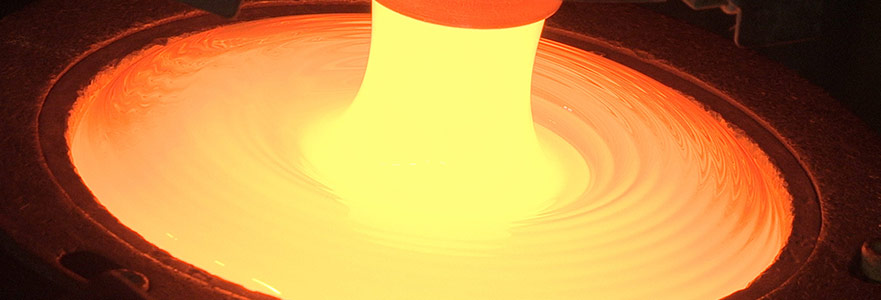
Production is an endless process and a field of focusing and pushing the boundaries of skills: Ali Kazma, in his works Watchmaker (2006) or Jean Factory (2008), if we use the language of photography, utilized production itself as a focal point to relay the individual. Thus viewing different capacities of people in various combinations means to witness the producing person's production of themselves as well. The issue of production becomes an issue of being, a truth. Spaces such as schools, prisons, laboratories or actions such as fixing watches, sewing a pair of jeans, tattooing... Kazma does not make a claim to define these activities or to provide us with documentary information. He opens up subjective fields in which each person can make their own definitions. What sets apart Kazma's videos is his depiction of a person producing life through this perspective, with a by-now expert language—even reproducing at the site of art. Thus, it is impossible not to admire the unique performance of the movements of the laborer's body ironing almost the same pair of pants for perhaps the thousandth time at the Jean Factory or the synchronized dance of the manmade machines that the Automobile Factory or the civil servant who has become like a machine when stamping papers.
The artist has placed new layers of meaning in his work through arriving at different forms over time via the making of small parts of a larger whole, which brings with it alienation. For example, the style focusing on the body, starting with the Dance Troops was furthered by his addition of work on plays, depicting the rehearsal period of the play Hamlet by The Wooster Group and the work on film that was based on a creative interpretation of a film with marionettes. Just like the surgeon who can perform a surgery on themselves or the object that can shape itself, by transforming the body into an object, the artist exhibits the expertise of someone who can shape it really well. On the other hand, Kazma approaches the tense relationship between art and craft through his 2013 video on calligraphy, creating an aestheticized process of perception-sensation. After this tactic by the artist is revealed, most of the works, constructed with clear, net, comprehensible images and a structure that facilitates the relay of meaning, the viewer approaches the works with a similar positive prejudice. The process of tattooing to the point of not having a blank spot on the body starts to become poetic; eye surgery becomes a meticulous form of craftsmanship, the making of a robot a form of jeweler elegance. The artist enables the viewers to cross an aesthetic threshold.
"Witnessing" is an important notion in talking about Kazma's art. The position that the artist assumes when displacing a moment from life and including it in art has strategic significance. Even the smallest form of "looking from afar" holds the capacity to shift the ground completely and to deviate the work from its purpose, diminishing from its strength. Ali Kazma looks at the people he is showing the way he looks at himself and believes that it is possible to exist as such as a person. In his words, "...as soon as I enter the factory, I try to really exist in the factory."[1]
The curator of the exhibition, Emre Baykal, has been working with the artist for a long time and had shown Kazma's project, Resistance, when he was the curator of the Pavilion of Turkey at the 55th Venice Biennale. The existence of a common denominator between these two people is self-evident in the successful installation of the exhibition. Kazma has the boldness to show different installation configurations of his videos, chasing after different meanings and with Baykal, he has done this again in "Timemaker"; the two constructed a dynamic dialogue in relation to the specifics of the particular architecture of the space.
The problem of exhibiting video works—the risk of sound not being perceived well, the intermixing of the sounds from different videos, and the solution of headphones, which prevent this from happening but also detach the viewers from the work—is preserved in this exhibition as a positive form of response to the artistic language, just like in other exhibitions by Kazma. The Prison work, which looks at the soul of the space, the video that focuses on Füsun Onur's house, which envelope her like a cocoon, which we had seen previous as part of Onur's exhibition Through the Looking Glass, again at Arter, become one with the creation of the fantastic world created in Film with the sounds from behind the camera. Or the sound of the fluorescent light almost going out at School, which reminds us of all traumatic pasts in school, exposing the surprisingly old face of Galatasaray High-School merges with the disturbing sound of the pencil rubbing against the paper in Calligraphy. On the other hand, as all the works are different lengths, both the images and the sounds permutated endlessly.
Most of the selected videos are from the series "Obstacles" and "Resistance", works such as Today, Absence, Past, Written as well as his artist's book Recto Verso are also included in the exhibition. In none of the 22 works is Ali Kazma himself is included. Only in Robot do we see suddenly see Kazma through the few seconds of an image in the robot's eye. Curator Emre Baykal, in his essay for the catalogue talks about how the artist chooses to be alone when producing works, "to protect his production process from any types of excess, from the beginning of his artistic production, except for a few exceptions, he [Kazma] enters the space alone with his camera."[2] This again shows how much the production of art is included in what the artist shows. The artist is a part of the production process, or in other words, the time of art. Perhaps this labor itself will one day become a video work.
[1] http://www.radikal.com.tr/kultur/saatci_cerrah_dansci_ali_kazmadan_videolar-973701
[2] Emre Baykal, “Zamanın Seyri”, Timemaker exhibition catalogue, Arter, Istanbul 2015, pg. 8.
;