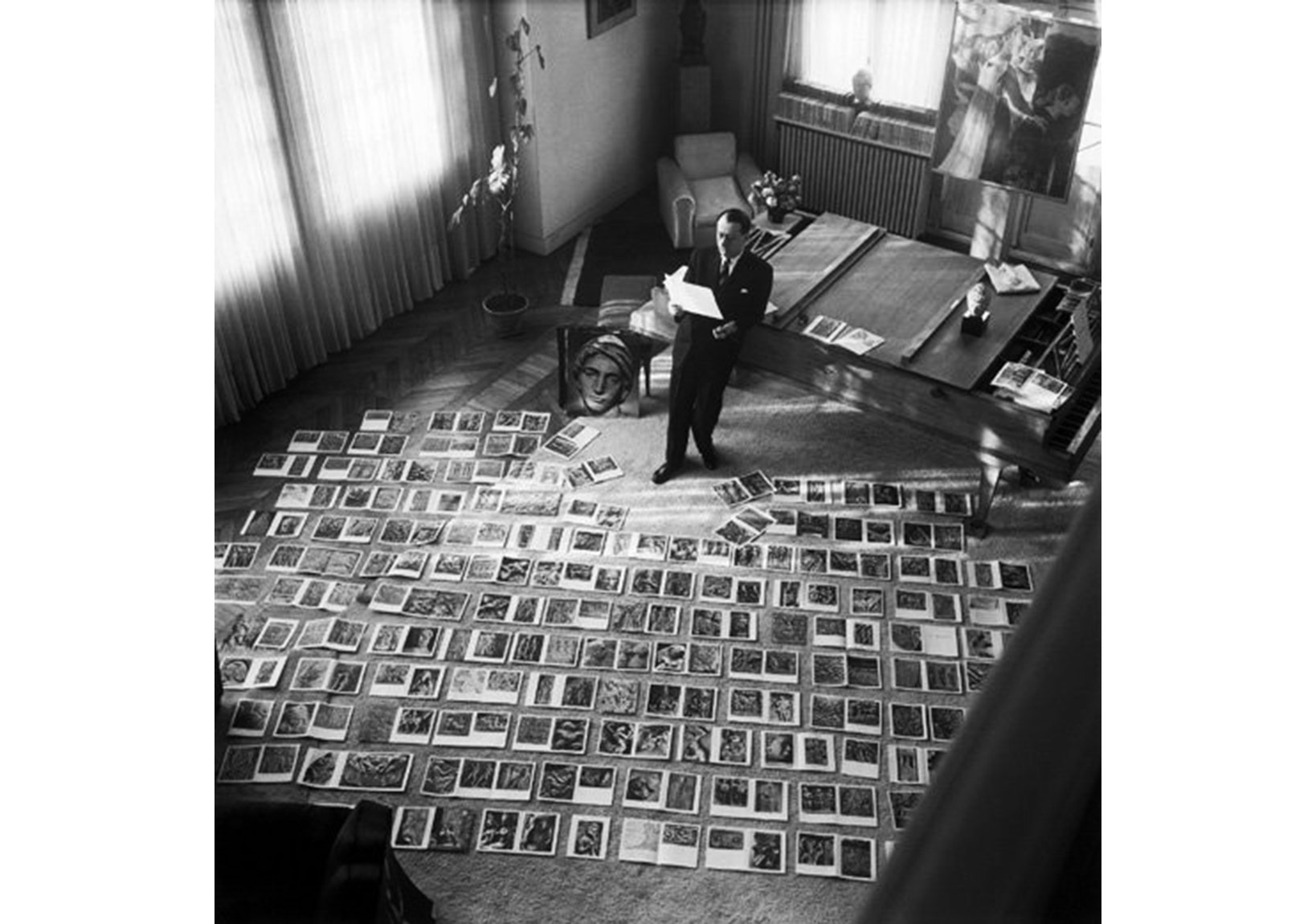
French literary and cultural figure André Malraux exposed to the public an interesting proposal for something he called the "Imaginary Museum" in 1947. According to this project, anybody with an interest in art could freely create their own museum, bringing together art works that fit their thoughts, knowledge and taste—in other words, relying on their own cultural and intellectual capital. With the possibilities afforded by the photocopy machine, anybody could bring together art works from different historical eras and styles, thus establishing their own museum and overstepping any public/canonical limitations of the art museum. Needless to say, Malraux was thinking of this as being positive.
What made this situation possible? It seems that with Malraux, we were entering a period of time, accepting "[in art history] there is no progression from one style to the next, but in which each style has points of competencies that could not be compared to any other style."[1] Thus, any thing could be next to anything else, works, which had nothing to do with each other, could easily co-exist. Needless to say, while this notion was specifically developed to overcome the historic and museological impositions and necessities of the public museum, within a broader perspective, Europe of the day, which had suffered from authoritarian and totalitarian political regimes, defending a democratic culture that was based on individuality and awareness was crucial. As a matter of fact, Malraux's Imaginary Museum seems to have formed a predecessor to the postmodern condition that emerged in the 1970s and afterwards.
Then, what do we mean by the postmodern condition? First of all, postmodern condition is the title of Jean François Lyotard's book from 1979. Lyotard's book, which was incredibly influential for contemporary thought, is founded on the thesis that "as societies entered the post-industrial and cultures entered the post-modern era, the position of knowledge has shifted."[2] Now, it is the end of the extensive modern history of the presentation of (Western) scientific knowledge as the only valid truth in the practice of the individual understanding the universe and himself/herself. According to Lyotard, with the postmodern condition, scientific knowledge and all other knowledge forms that were constructed within the time and space, became a narrative and their claims to universality lost its legitimacy. This notion can be formed and comprehended through the "transformations that changed the rules of the game in literature, plastic arts and sciences of the Western culture since the end of the 19th century."[3] But looking at all of this, as it is expressed by science fanatics, "knowledge is no longer important within the postmodern discourse," is not true. In contrast, nobody has denied the successes of scientific knowledge.[4] The objection is against the hegemonic claims formed by seeing itself as superior to other discourses or narratives of knowledge and lustfully detaching the organic connection between the individual and nature. According to Lyotard, science is not a meta-narrative that is superior to and which surrounds other forms of knowledge. Lyotard leans on Wittgenstein's (heterogeneous) linguistic games and says that science plays its own game and is not capable of legitimizing other games.[5] Then, every form of knowledge has a legitimiacy within its own discourse. At this point, we encounter a pragmatist construction of knowledge. Knowledge's degree of truth will be measured by its degree of utilitarian value. As Paul Feyerabend wrote: "then, with a description that is not so narrow, we can say that science has many forms, it always has strong and weak points and all cultures will successfully use knowledge in areas that it deems important."[6] Today, alternative medicine's application in our hospitals largely owes to scientific knowledge's postmodernist pragmatic criticism: if a traditional method is working, why not use it!
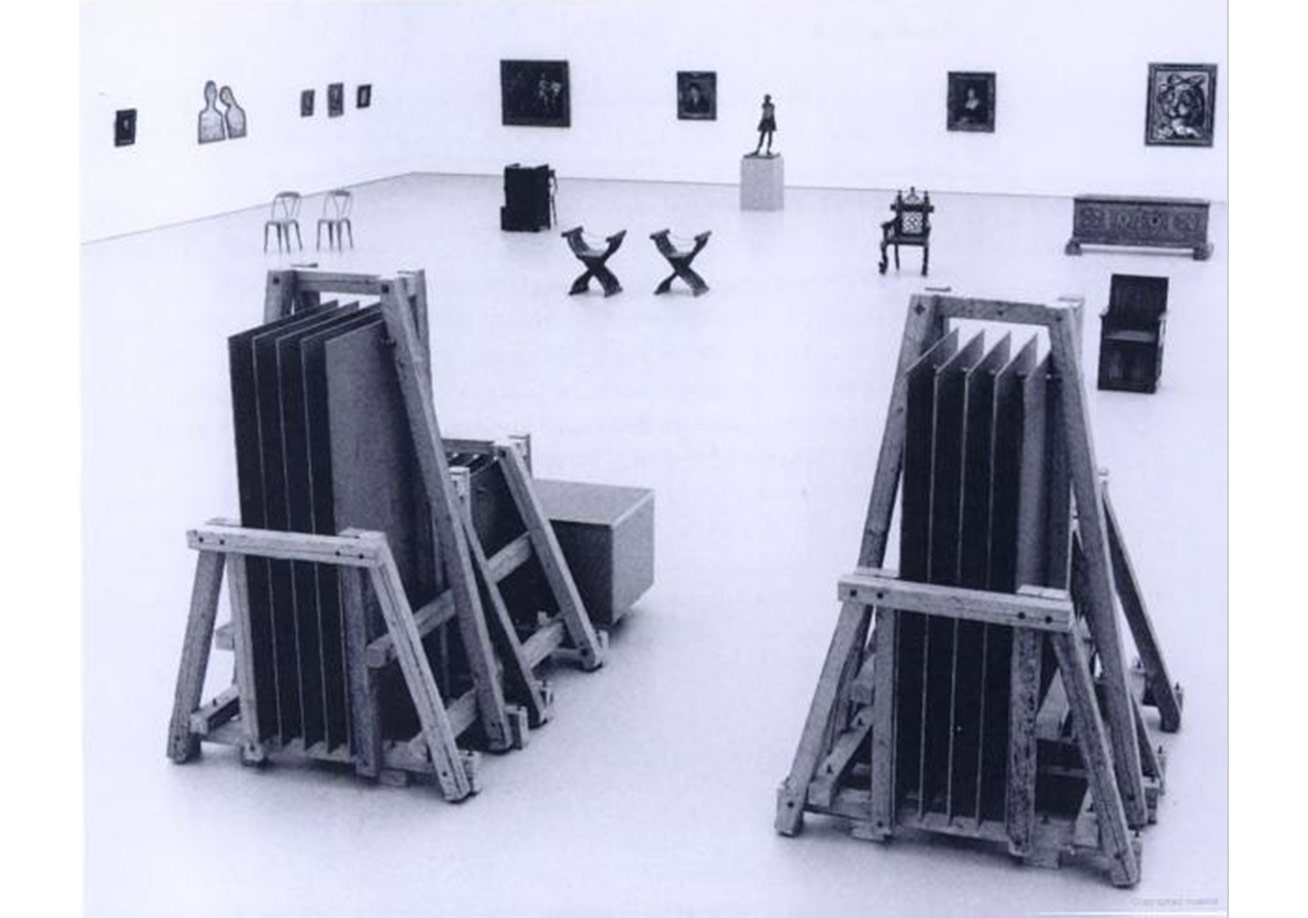
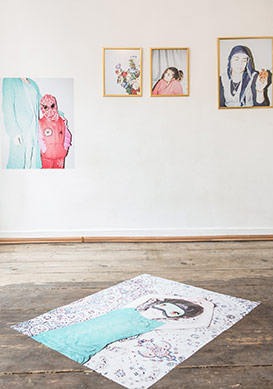
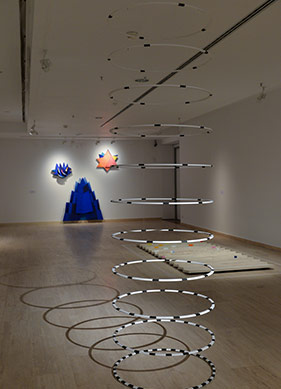
The famous Swiss curator Heralde Szeeman organized an exhibition called "Undated Voices" at Rotterdam Boymans–van Beuningen Museum in 1988 and in this exhibition; he applied the postmodern condition and the claims of this attitude, which we loosely framed above, to the exhibiting of art works. Art historical hierarchy aimed the curator's claim in this exhibition towards art historical hierarchy's extortion of rights. Thus, no artwork would be considered as superior to or more precious than another. Joseph Beuys's installation or a painting by Picasso or an ordinary chair or an antique table or stool from the 15th century would be on the same level. Such an exhibition method was called "ahistorical exhibition" and different eras, styles and objects that were both artistic and not, were placed together simultaneously within the empathic gaze.[7]
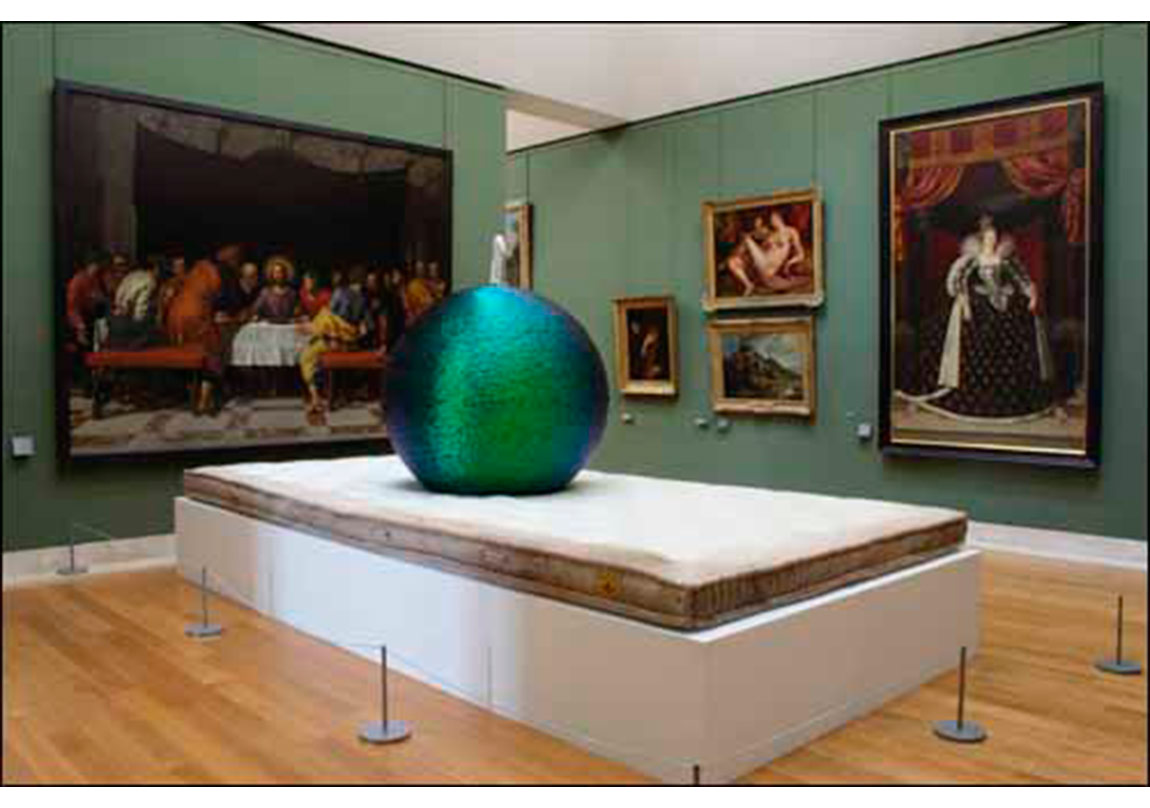
This empathic gaze would later influence a cultural institution that is as traditional and organized hierarchically as the Louvre Museum. In 2008, the museum exhibited contemporary Belgian artist Jan Fabre's conceptual sculptures made up mostly of dung beetle shells in the same space as canonic art works of Western art history. Thus, (probably) the most important cultural temple of French and European history were employing a postmodern method to catch up with the spirit of the times. Needless to say, the Louvre is not the only example. The museum's postmodern attitude has expanded since the 90s.
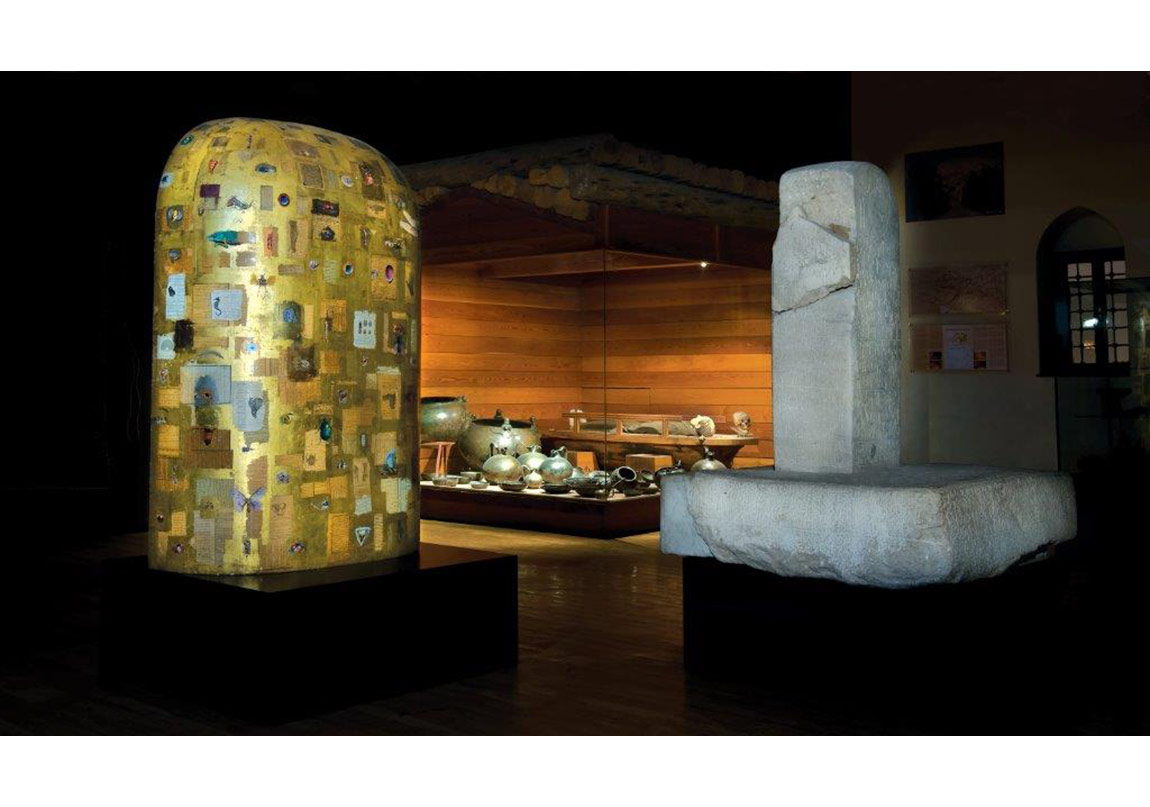
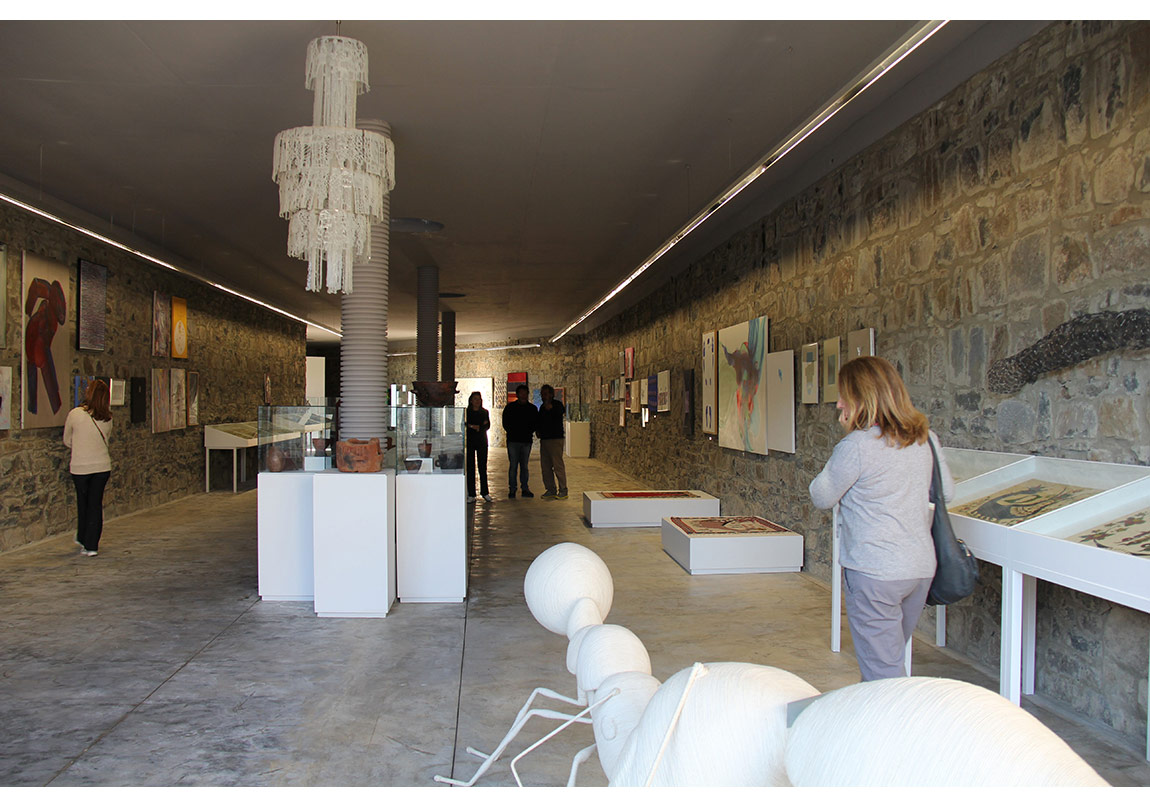
In fact, a gallery in Turkey has preserved itself for a long time both as a gallery and as a museum, following this undated exhibition model. But the museum that Galeri Artist has taken as an example is not the Louvre Museum, but the Hombroich Museum in Düsseldorf. "I visited the Hombroich Museum in Düsseldorf... They were exhibiting works from antiquity next to contemporary works. I was very impressed. I found what I was looking for. When I came back to Istanbul, I immediately changed the structure of the gallery. While before, each floor of the gallery brought in money; I was going to spend my own resources to form my own museum. I applied the idea without even thinking. I exhibited the contemporary works that I had together with the Antiquity-Islamic collection to form a cohesive whole."[8] These sentences belong to the founder of Galeri Artist, Dağhan Özil. Özil later applied this model to the exhibition "War, Power, and Faith" at the Ankara Anatolian Civilizations Museum. A selection of works from Galeri Artist's contemporary art collection was exhibited next to the Museum's precious works from antiquity.
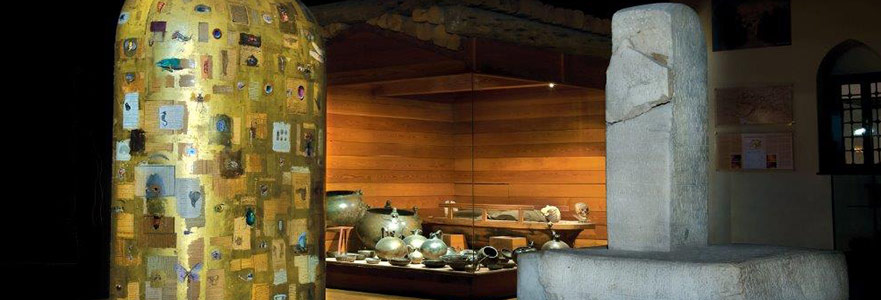
Another important example from Turkey is the Baksi Museum that was established in Bayburt by the artist and academic Hüsamettin Koçan. The Baksi Museum has taken on a difficult task of loosening the hierarchy between art (the present) and craft (the past) to establish a differential relationship in the periphery of Turkey. When you visit this museum, you are struck by the harmonious atmosphere created by the works of contemporary artists next to the productions of local artisans.[9] Thus, the Baksi Museum was awarded the 2014 Museum Award by the Parliamentary Assembly of the Council of Europe.[10]
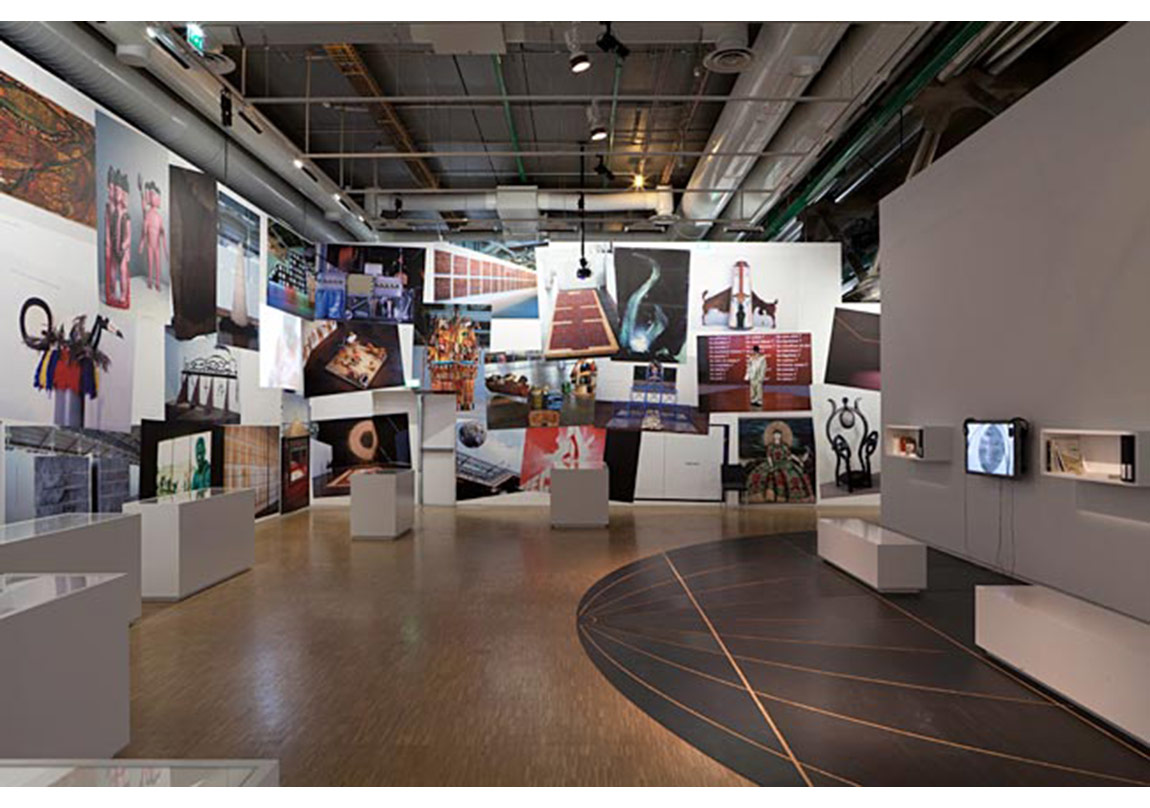
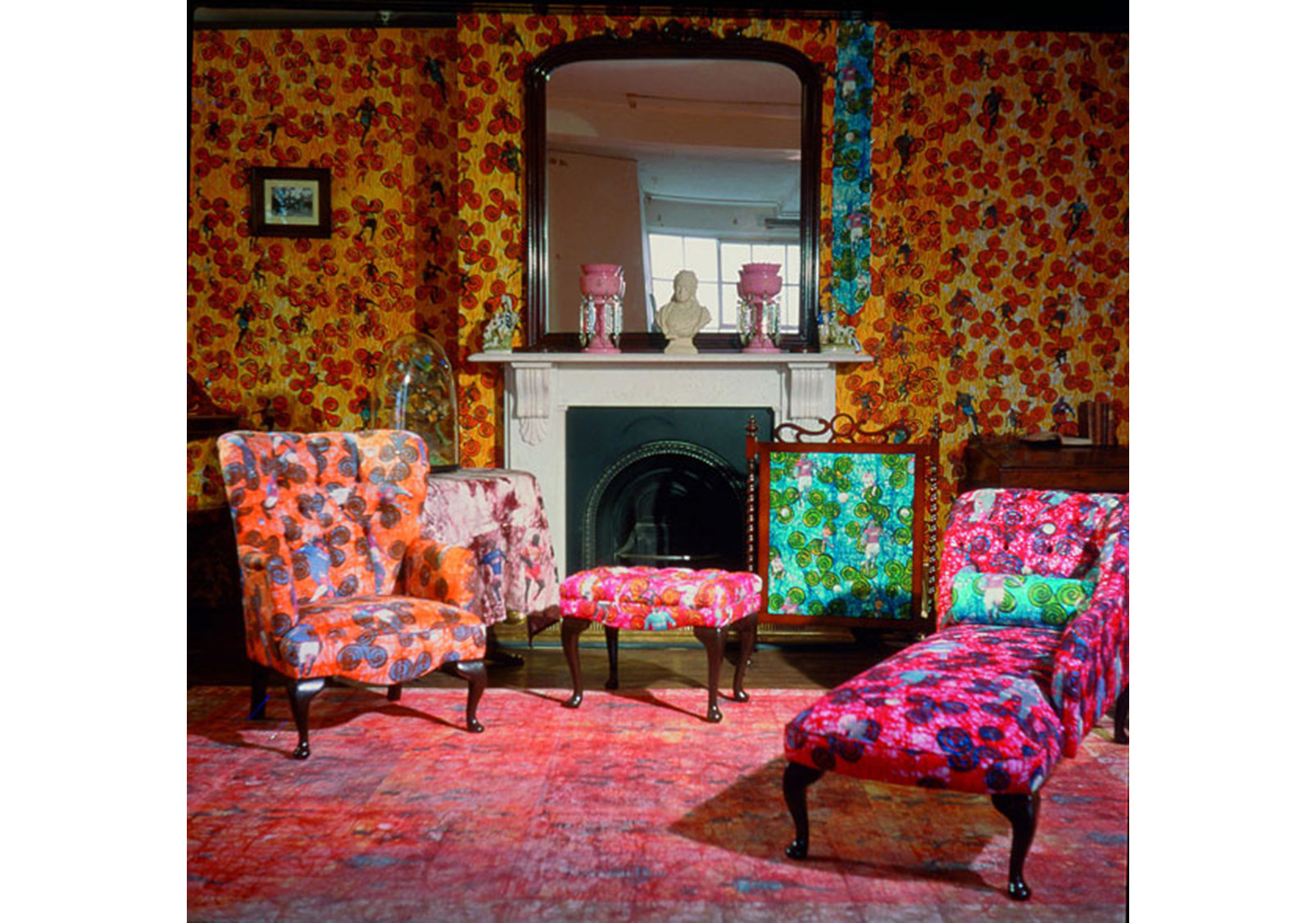
These postmodern contemporary exhibition methods essentially emerged through thinking about and placing together arts from Europe and arts that are not from Europe. In 1989, the exhibition organized in Paris at the Centre Pompidou, "Magiciens de la Terre" was organized with this goal in mind. The exhibition was realized after four years of extensive research and efforts and its fresh claim, which feels quite familiar to us now, was this: "It is time to transcend the boundaries and categories of geography and cultural clichés that separate and askew conceptions of the relationships between different cultures of the world."[11] Realized in 2004, the exhibition Africa Remix and which traveled to Düsseldorf, Paris, London, and Tokyo, could be seen as an expression of the gratitude of modernist and/or postmodernist art to the African culture. Africa was self-represented fully for the first time in this exhibition both through its contemporary culture and art. But this culture and art now have taken on a cosmopolitan culture. In fact, as art historian Seda Yörüker has written: "The exhibition Africa Remix, through the 'remix' metaphor referred to Africa's multi-identity, hybrid cultural structure, the mixing of the traditional and the contemporary in itself as well as the direct reference to mixing in music, on other hand, the reference was to the migration of this culture from its own motherland and the consequent hybridity with Western culture."[12]
The background of these exhibitions is the European avant-garde's intimate interest in primitive cultures (an utterance of the day) in late 19th and early 20th centuries. A strong arm of modernist art wanted to take the relationship between the modern and the primitive not as a superior-inferior cultures. Primarily, the interest in the "other" and especially in Africa moved towards a more democratic ground at least in terms of culture. It is very clear that there is a strong claim of rights behind this cultural and artistic interest. In the midst of the modern times (exploitative violence to the genocide committed by Nazis), the Europeans became increasingly barbarian, while a European (intellectual and) artist generation demanded sensibility and justice, intertwined. Thus, it is important not to underestimate art's dimension of justice. From Picasso to Beuys, Munch to Kirshner and Nolde, Jean Dubuffet to Karel Appel, an arm of European (artistic) modernism judged and convicted Europe (scientifically, politically, and economically) with the cultural choices they made. The emotions and thoughts emanated to the time and space and the aforementioned large exhibitions found their most positive expressions in the post-modern style. All of this "other" gazes or the empathy in the gaze are made possible through the most precious legacy of Enlightenment era from the European intellectual culture. In other words, the activity of "critical thinking" that is not only directed at others and other things, but also to themselves.[13] Without self-critical thinking, nobody or no culture can be open to thoughts and cultures that are different from them and thus cannot make a claim for democracy. Taking this point into consideration, we have found a way o think of the relationship between Enlightenment and post-modernism through positive terms. 
[1] As Feyerabend would say, since all of us have been shaped by positivist education, we all have a tendency to only knowledge's major successes. Paul Feyerebend, "Yönteme Hayır," pg. 25, trans. Ertuğrul Başer, Ayrıntı Yayınları, İstanbul, 2014.
[2] Jean François Lyotard, ibid., pg. 90.
[3]Paul Feyerabend, ibid., pg. 10.
[4] Paul Riceour, "Eleştiri ve İnanç – F. Azouvi ve M. De Launay ile Söyleşi," pg. 240, trans. Mehmet Rifat, YKY, İstanbul, 2010.
[5] Jean François Lyotard, "Postmodern Durum," pg. 16, trans. Ahmet Çiğdem, Vadi Yayınları, Ankara, 1994.
[6] Jean François Lyotard, ibid., pg. 11.
[7] For more information on the concept of the dateless exhibition rfr. Deborah J. Meijers, "Müze ve Tarihsiz Sergi: Üslup Hakemlerinin En Son Numaraları ya da Önemli Bir Kültürel Olgu," trans. Nusret Polat, Plato Güncel Sanat Dergisi, no: 1., pg. 110-118, 2005.
[8] Dağhan Özil, introduction for the catalogue of "Savaş Güç ve İnanç" exhibition, pg. 11.Galeri Artist Yayınları, 2011.
[9] But in all of these three examples (Louvre, Galeri Artist, Baksi Museum), the exhibition method is different from Szeeman's. Szeeman does not care much for institutional spaces in which we can trace the flow of historic time. What interests him more is empty extension of a space. For the curator, empty extension gives the opportunity to create pluralist and heterogenous spaces in which different times and styles can be intertwined.
[10] For more information on the Baksi Museum, you can refer to: Nusret Polat, "Baksı Müzesi Miro’yu Ağırlıyor," part of the exhibition catalogue, pg. 35-39. Baksı Kültür Sanat Vakfı, 2014.
[11] Resource: https://www.centrepompidou.fr/media/imgcoll/Collection/DOC/M5050/M5050_A/M5050_ARCV001_CMP-2009124.pdf
[12] Seda Yörüker, Afrika Remix, Plato Güncel Sanat Dergisi, no: 1., pg. 109, 2005.
[13] Needless to say, this critical thinking activity has been partially removed from militancy and destructiveness and through deconstruction, taken on a more constructive and tolerant dimension. The relationship between enlightenment and post-structuralism and postmodernism should not be seen as a friend/enemy relationship. Both in Derrida and in Foucault, there is a way of thinking that sympathizes with Enlightenment. In particular, we can refer to Foucault's famous article What is Enlightenment?, which is an homage to Kant.
;