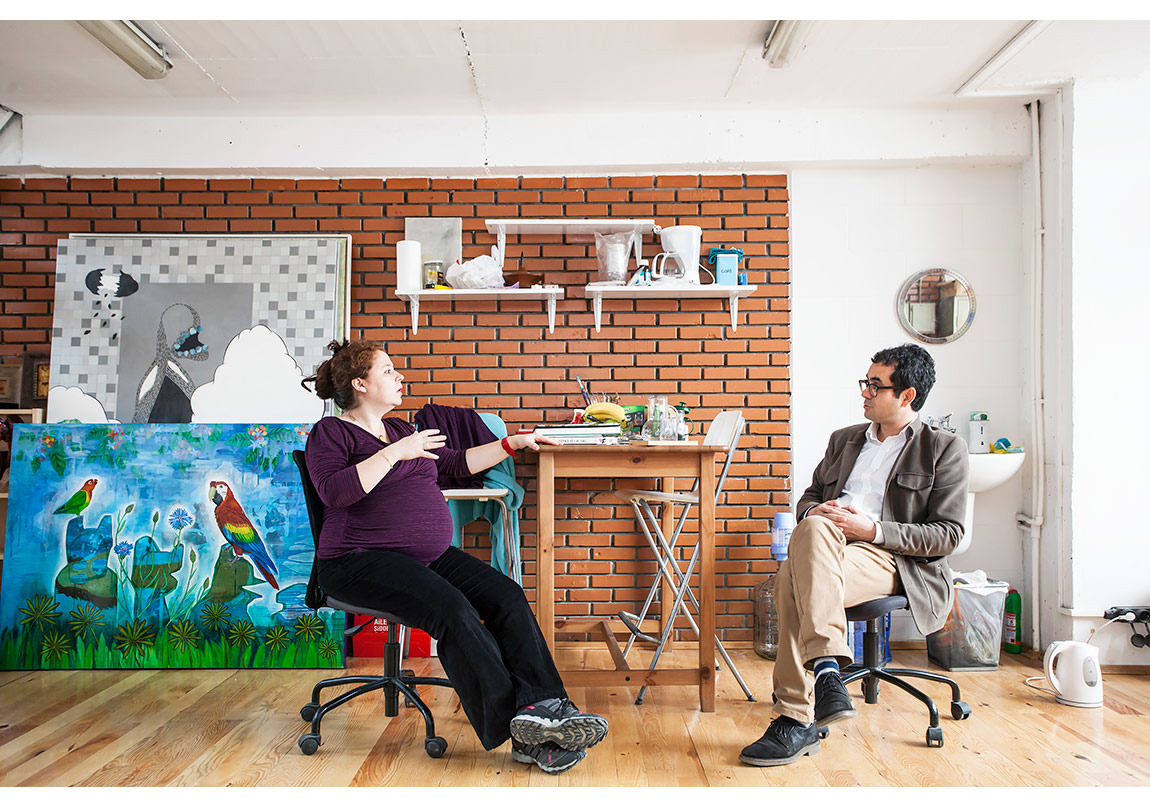
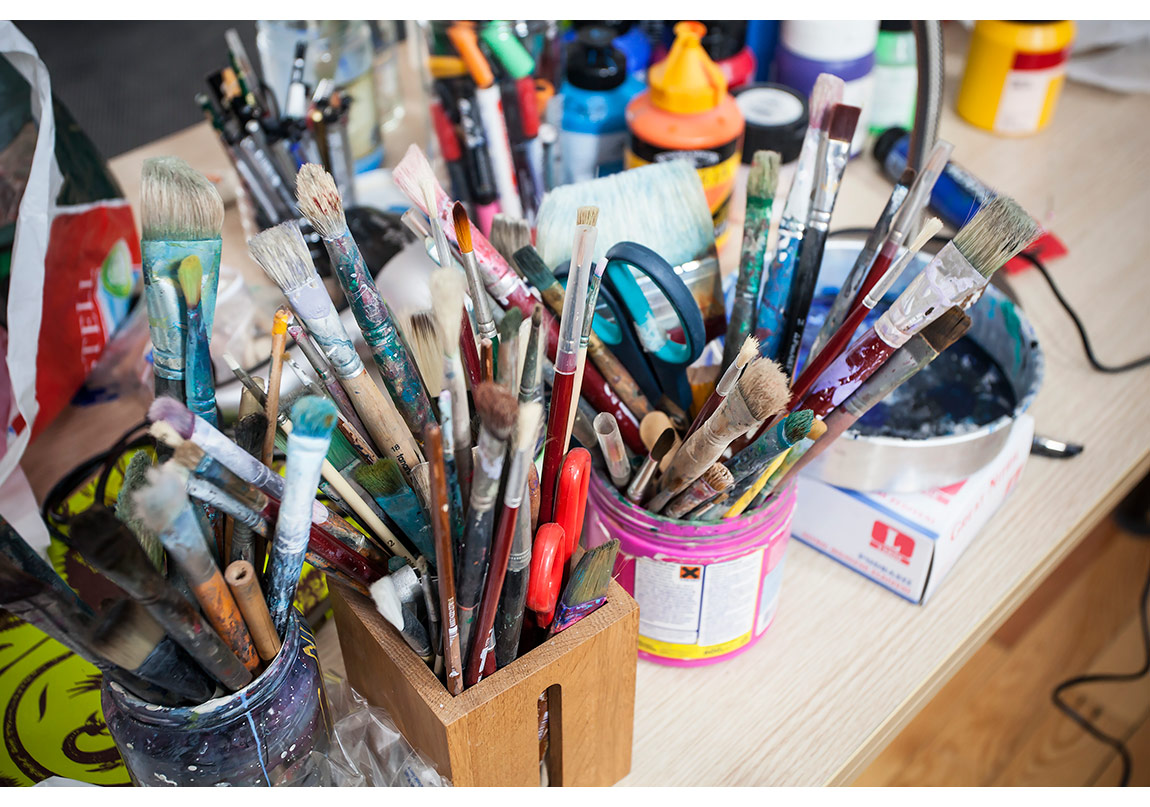
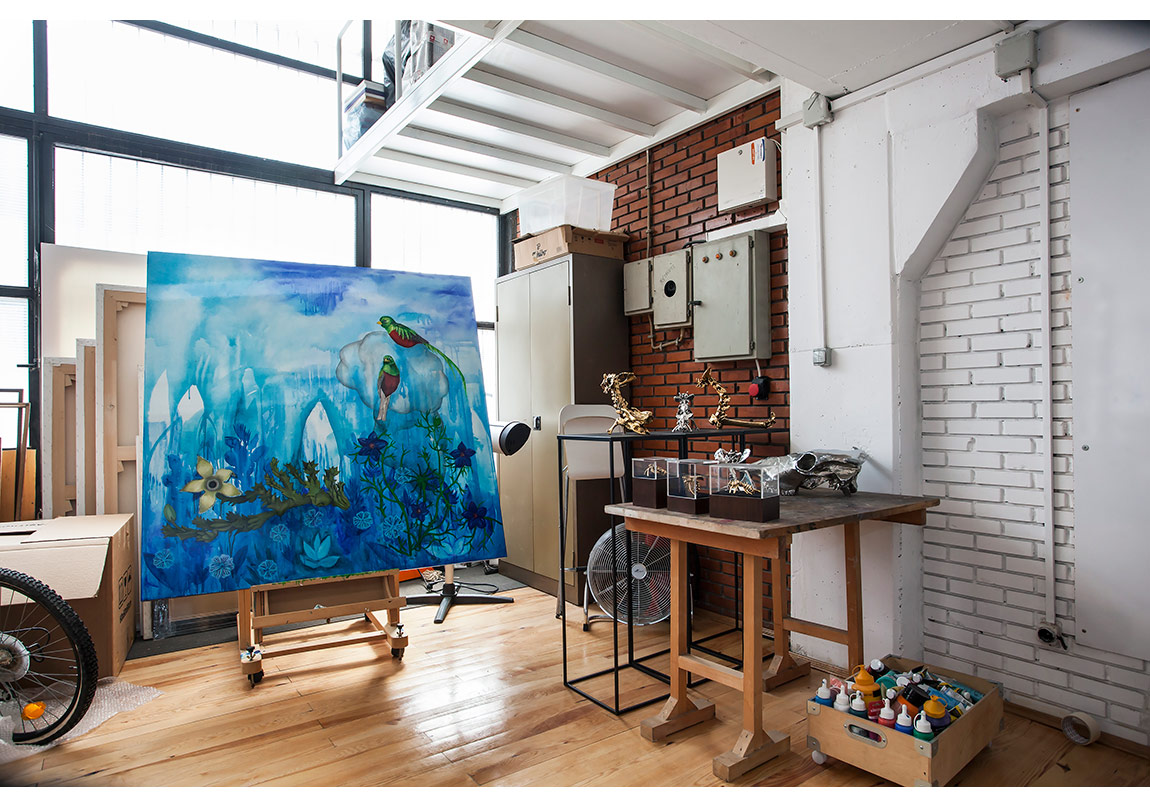
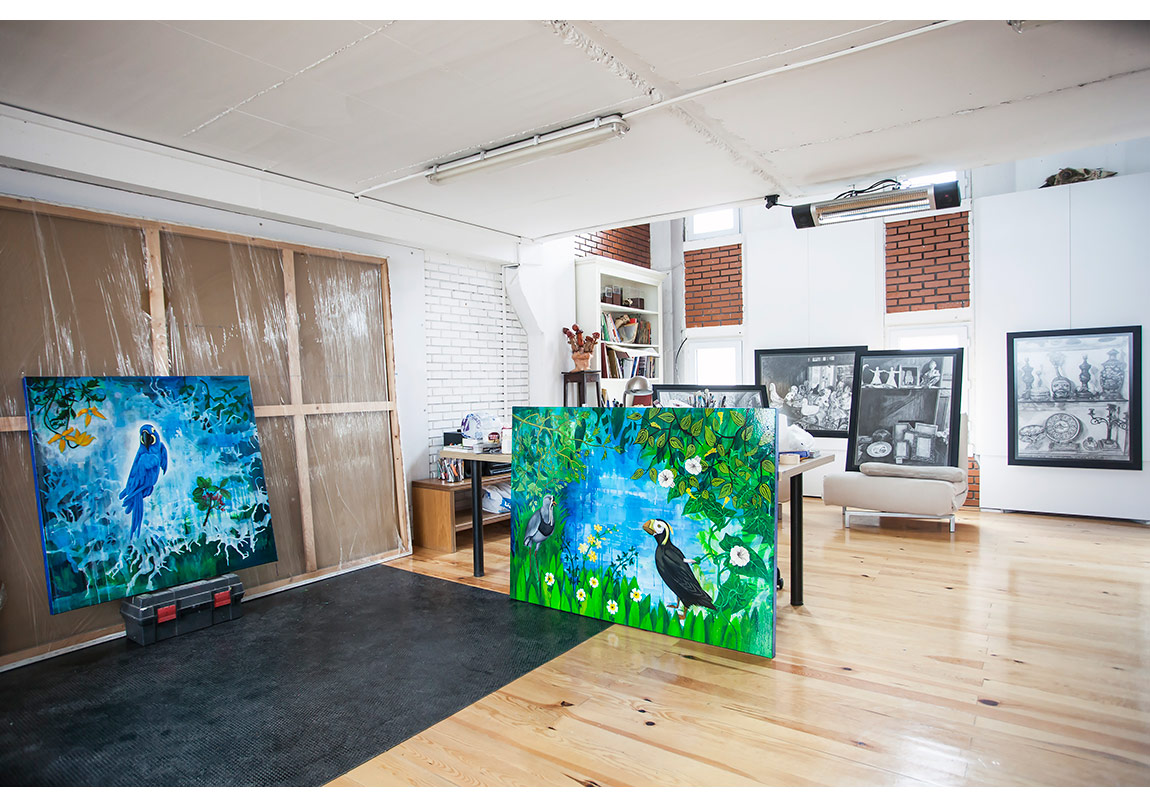
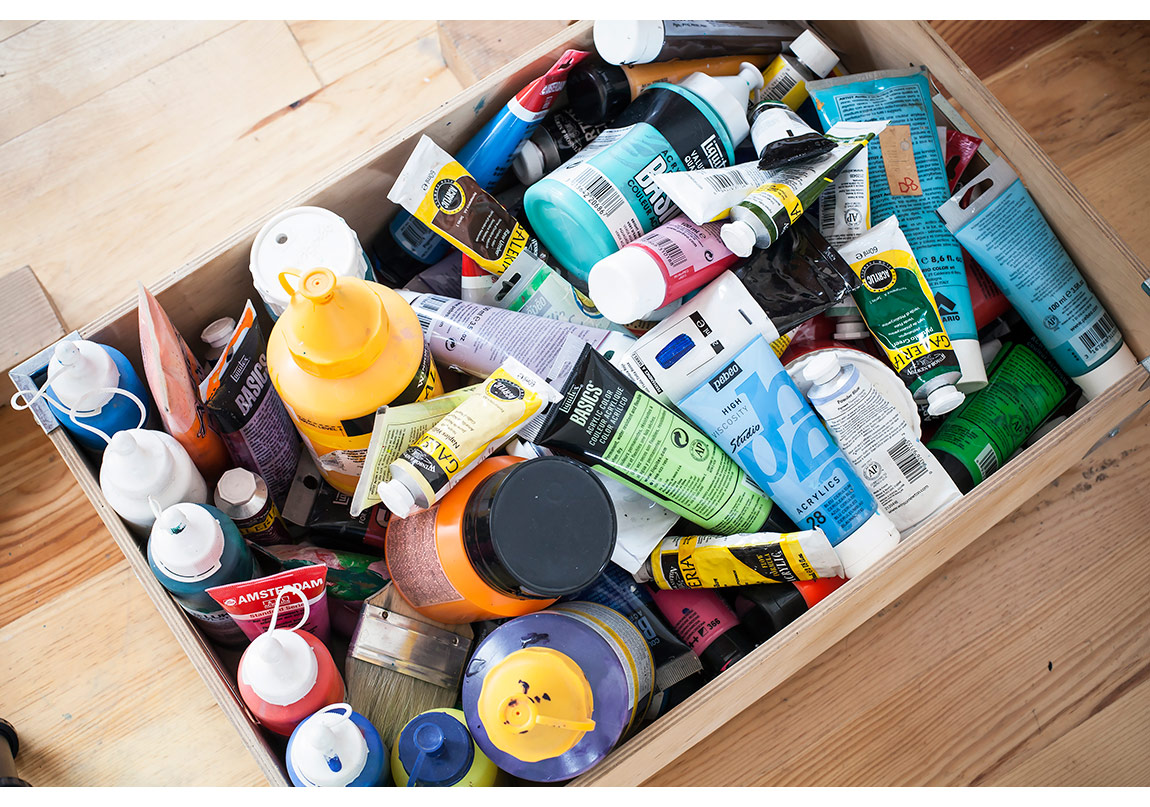
My first visit is with Ekin Saçlıoğlu, whom I had met in an atelier. We had met in Ömer Uluç's famous atelier in Tünel. Saçlıoğlu opened numerous exhibitions in the last ten years. I was certain that they she had an atelier where she produced all of these paintsings and sculptures. Yes, this was true and the atelier was located in Maslak Ataturk Industrial District, preferred by many other artists.
When you first hear it, it's a bit strange, art in the industrial district. Or mechanics and artists. Actually, these things are not so absurd together. Or rather, everybody needs large, uninterrupted spaces and this is only possible in industrial areas. Thus, there are many artists here. Young and established... It has not been that long since Ekin Saçlıoğlu moved here. She explains that she worked from home for a long time. Actually, one of the rooms was her studio. When she got pregnant for the first time, as she would not be able to work while pregnant (which she disproved during her second pregnancy), they used her atelier room for the baby. A short while after the birth, she started painting again, taking over half of the living room. Things worked out as such for a while and then at one point, she moved into this atelier.
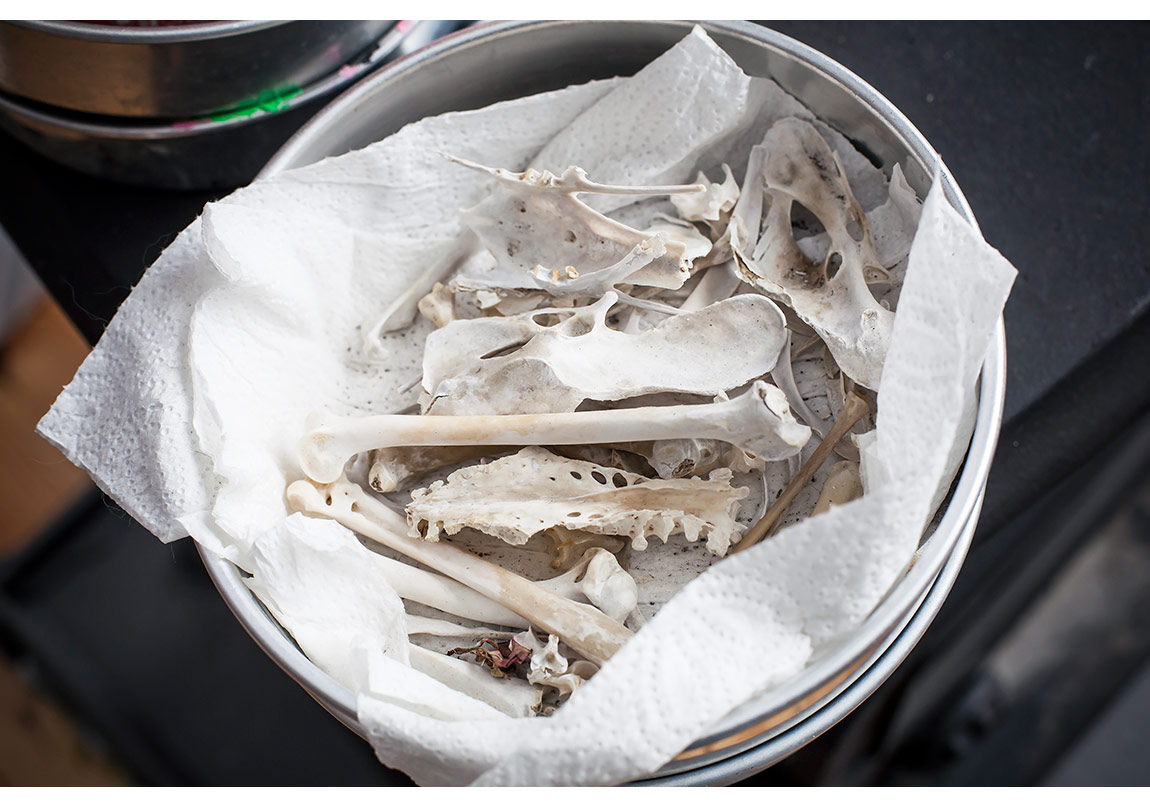
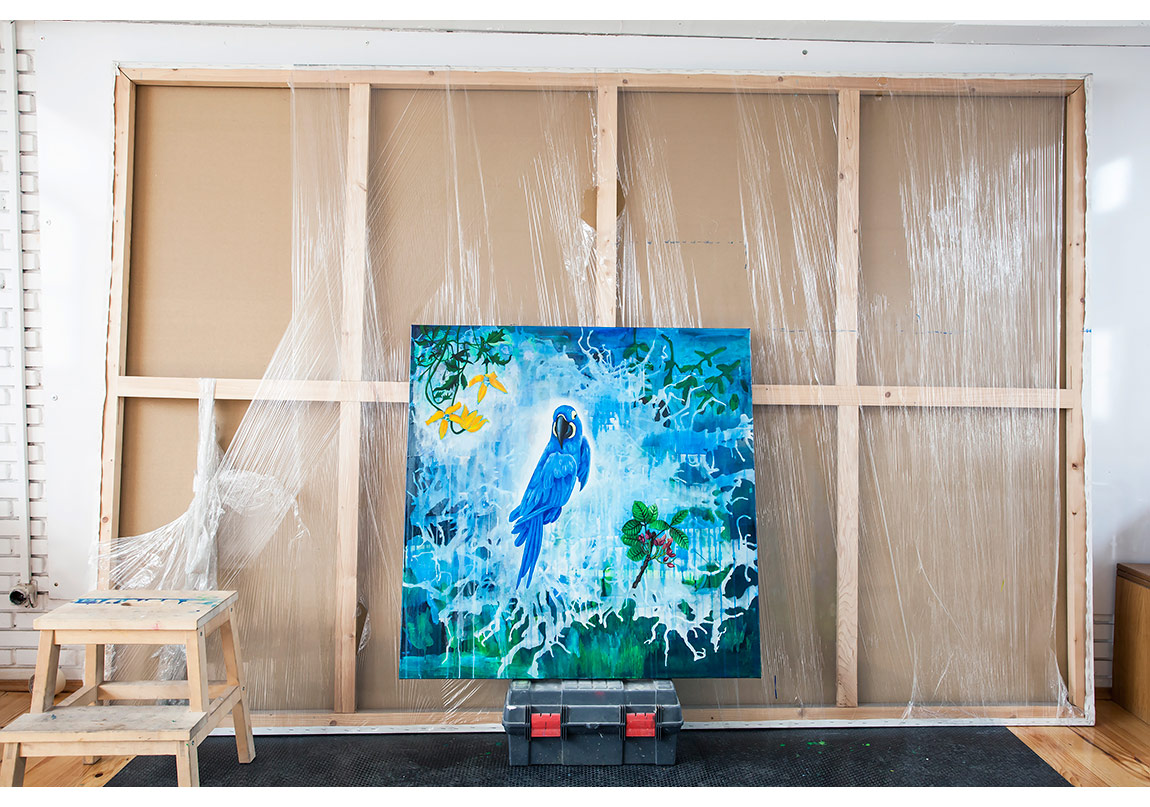
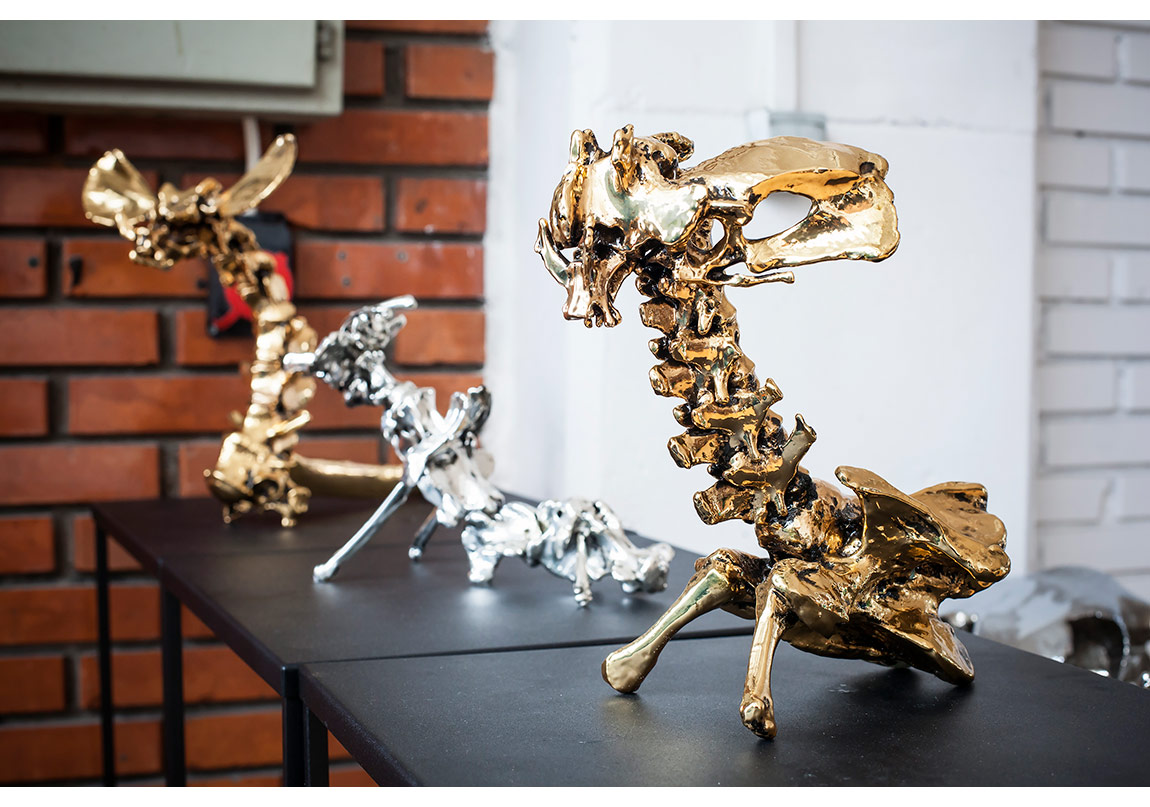
Maslak Industrial District is a familiar space for Ekin Saçlıoğlu. Because her husband Serkan Ağırgöl, who produces worlds for the television and cinema sectors, have worked from here for years. "Serkan's atelier" that she visited from time to time, is an interesting space for Ekin Saçlıoğlu, in which miracles are created. The materials used, the solutions found are of interest to her. "I'm always curious about materials... Perhaps this was why I worked with Ömer Bey..." she says. She is an artist who uses epoxy, natural hair in sculptures, sycon, metal plating; we are familiar with this material curiosity. In this realm, Serkan Ağırgöl is one of her primary aides. For example, the real bones that she uses in Pick-Keep took a long time to be transformed into sculpture material. (Pick-Keep can be seen at Galeri X-ist until June 20th). In boiling the bones for hours and then washing them with acid, she sought Serkan's help. And of course, there is the three-dimensional printing of a human sacrum, which she also could not have done by herself. When we are talking about all of this, the doorbell rings. Serkan brought the fourth of those lively bird paintings. He places them next to the others. All of them are going to the gallery in a few days. We chat for a little bit and then he leaves to go to his own atelier.
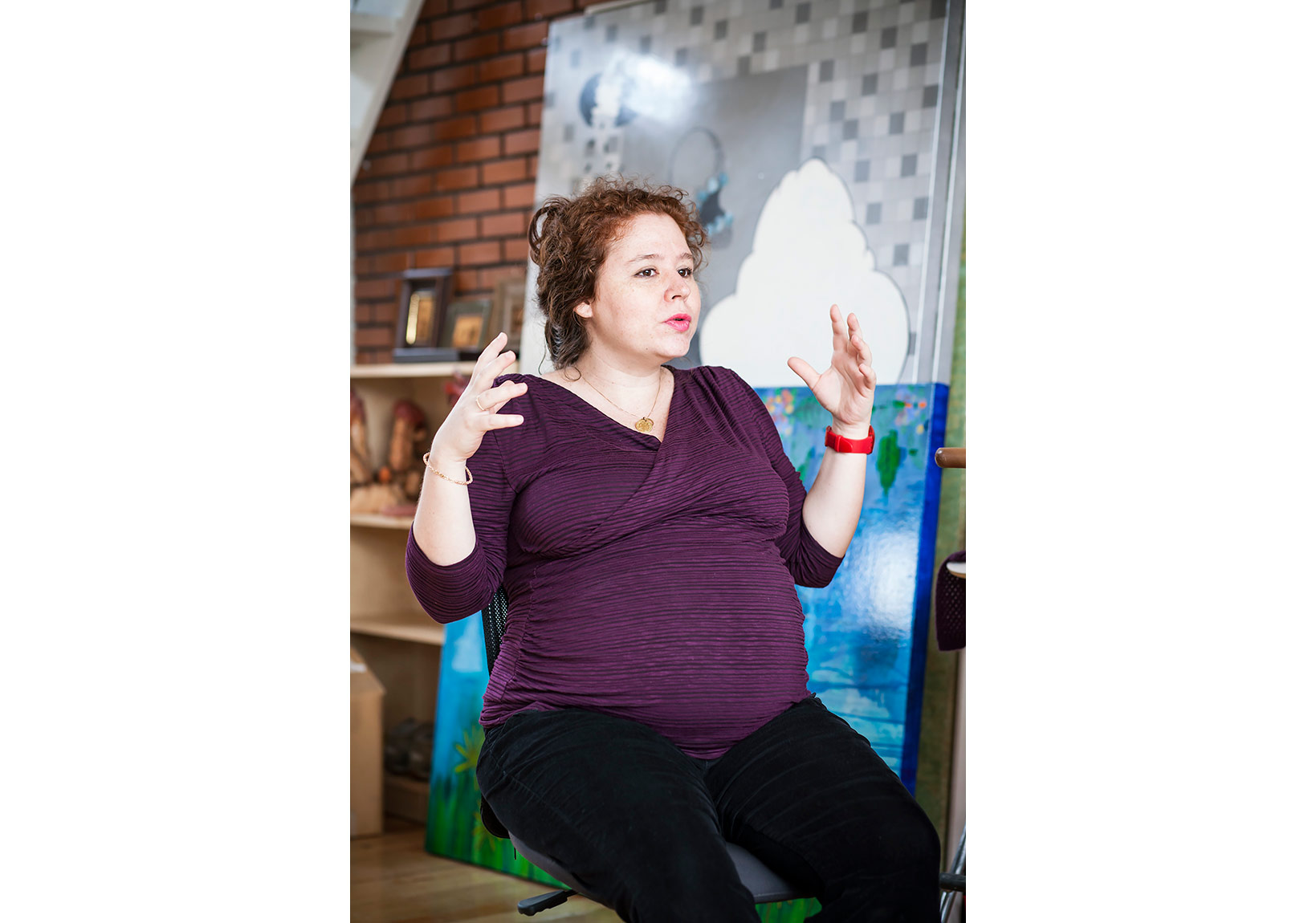
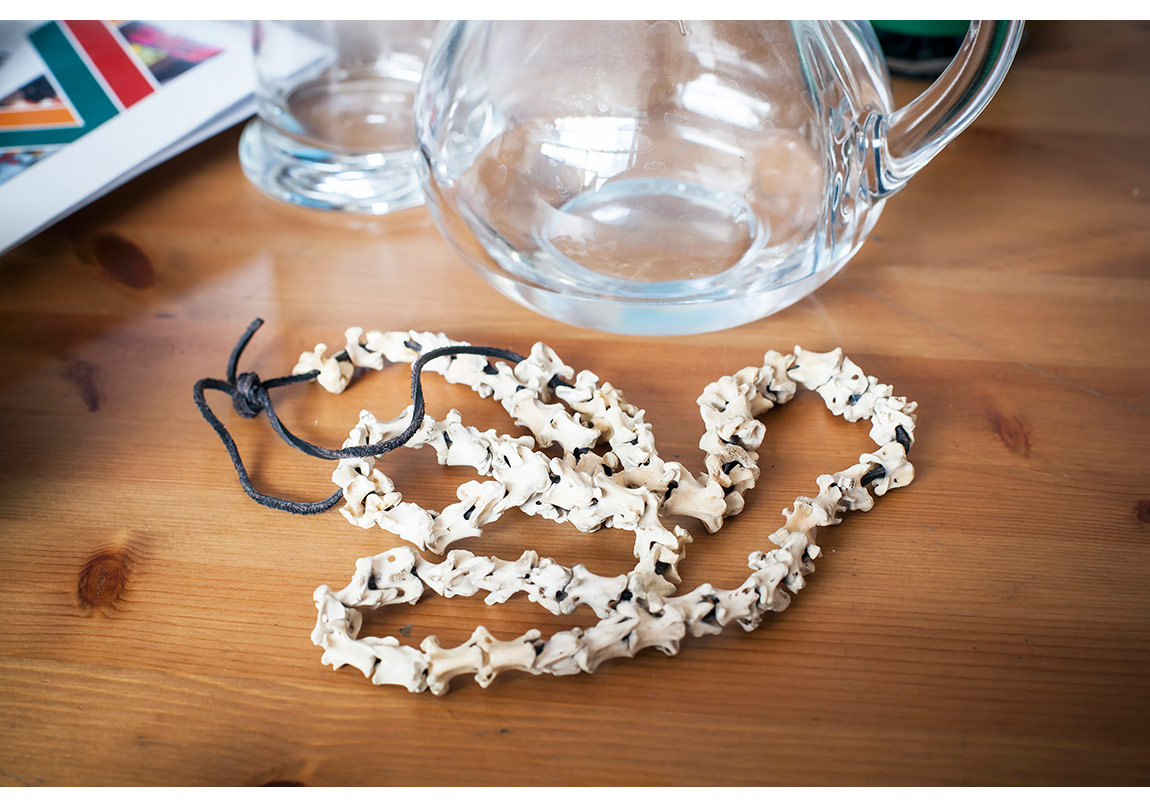
We start to talk about the bones again. There is something eerie about this bone thing. Those who know her could testify; Ekin is a congenial person—intelligence exudes from her red hair. For a moment, I become uncomfortable about being alone with a woman 8.5 months pregnant, who creates imaginary beings with animal bones and I wonder what I'm doing there in an oto sanayi shop. And then I think of how I'm trying to produce fantasies to make the article more interesting, shooing the thoughts. Right around that time, I see a necklace of chicken bones that is on top of the table where we are having coffee. Ekin says, "I made that when I was a kid." I tell her about this uncanny encounter. She accepts it, it is obvious that she thought about it: "We could call this irony or subversion." Subversion and duality always existed in her life. When she is talking to her friends, always approaching the issue from an unexpected perspective, turning the issue upside down. "It is a type of breaking through boredom and also of humor," she explains. OK. I prefer to call the humor in the paintings irony. Not because it is a more artistic word, but because it also evokes an eerie, ominous atmosphere.
She dug out the chicken bone necklace from her childhood treasures. There is a cabinet in the atelier, inherited from her grandmother. With this cabinet came "kid Ekin's treasures" that were preserved in her grandmother's house for years. We encounter a Sarkisian situation. But the atelier is not yet filled with memory. Ekin Saçlıoğlu brings out a memory box from the cabinet and starts showing me: her baby teeh, her dog Topak's teeth, colorful beads that she made with UHU, hair pins, pencils and all sorts of other things that could belong to a little girl... She likes showing these things and talking about them.
I ask her to talk about the works that she prepared for the new exhibition. The spirit of the exhibition is reminiscent of Darwin, of old discoveries, seeking those things, the encounters and gatherings. For example, the birds are based on the books of birds and botanics that she was interested in at one point. Each one of the leaves that form the forest is a real plant. (Or I remember it as such) Because right around then, she takes out colorful, hardcover books on birds and plants. The best were published by NTV Publishing at the time, we talk about that. I realize that I'm pressing the plastic buttons on a book with sounds, listening to the bird sounds.
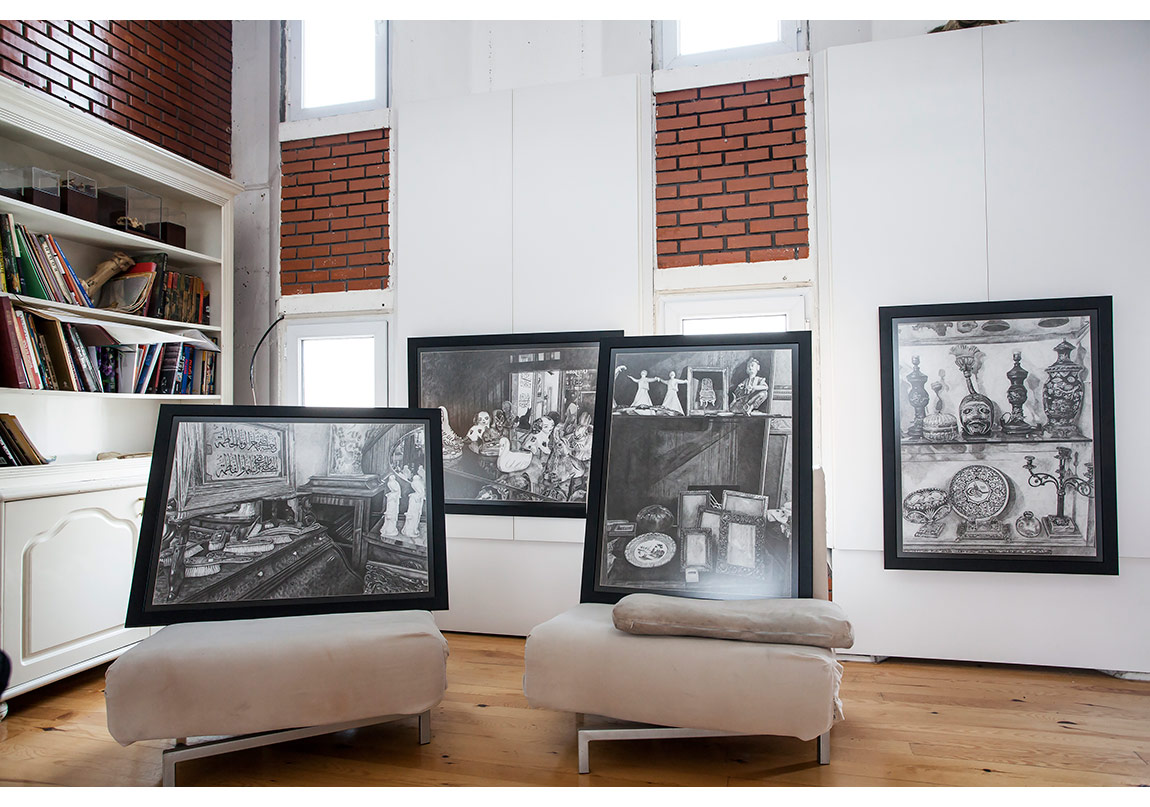
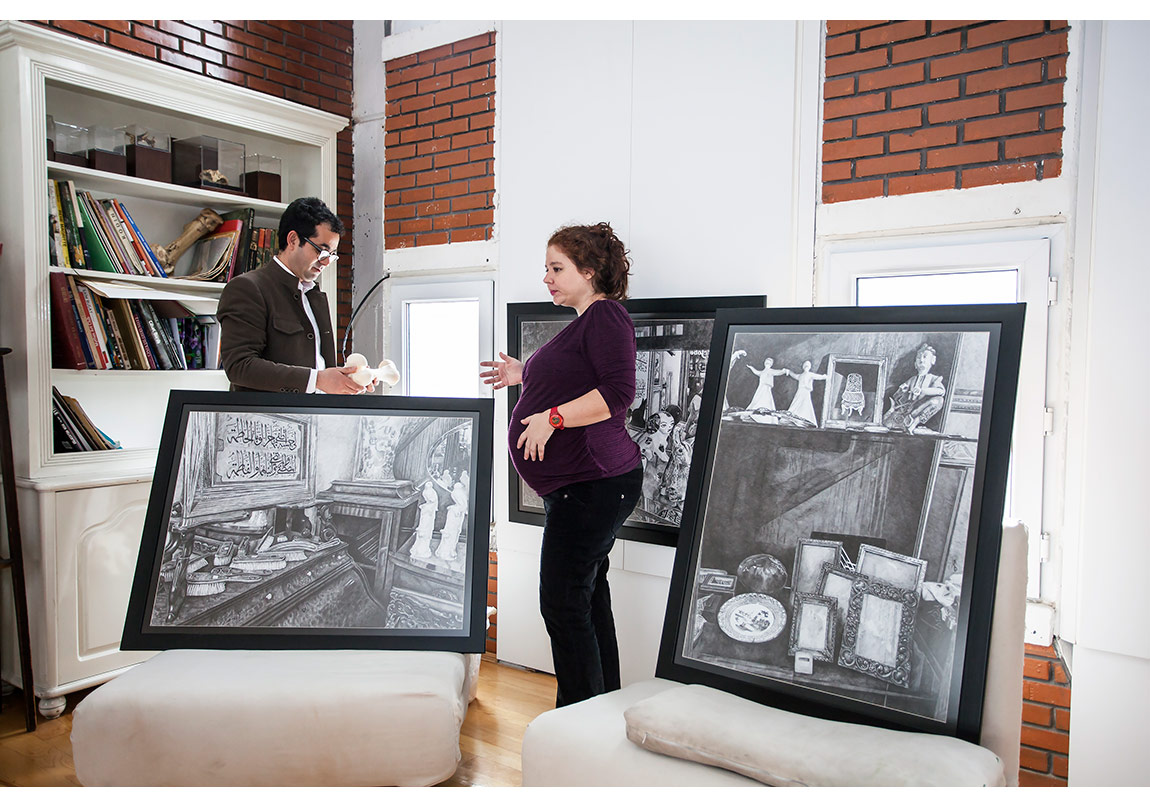
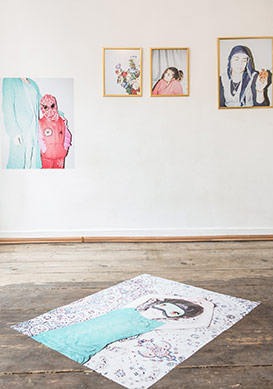
The framed large-scale drawings on the other end of the atelier symbolize an imaginary collection. She set aside a modest budget and went to antique stores with her mother—who is knowledgeable in such things—, with the intention of forming a collection. She took photographs of the glass cases where four pieces of antiques she bought were in and placed them on paper. "I like tedious works like this," she says. She speaks of meticulously made paintings, just like therapy. But these paintings really fatigued her. We speak of the importance of labor and craftsmanship.
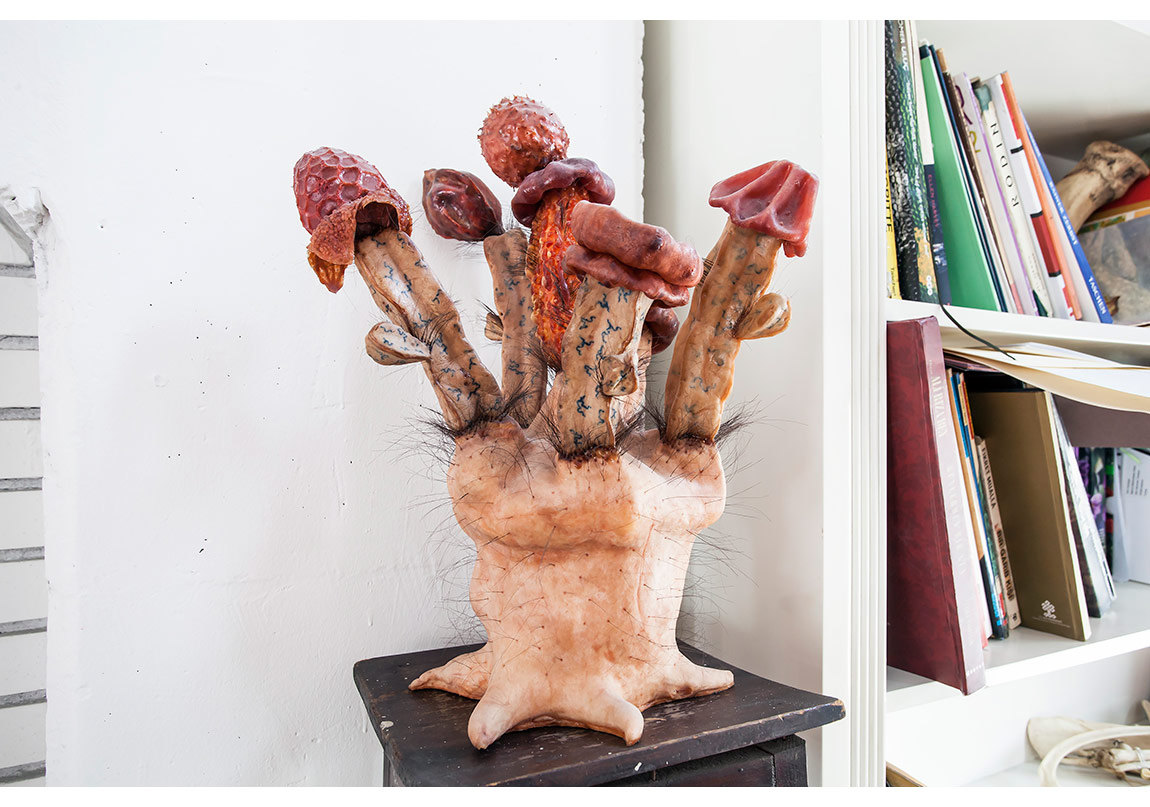
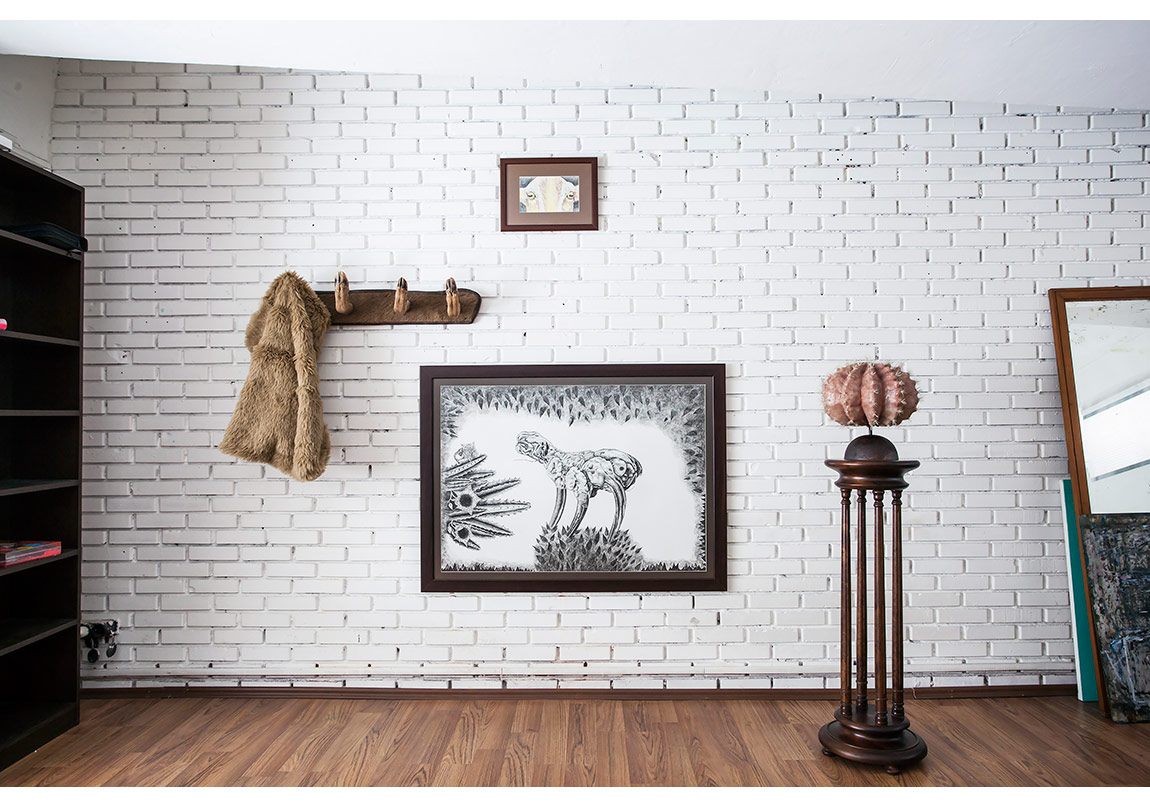
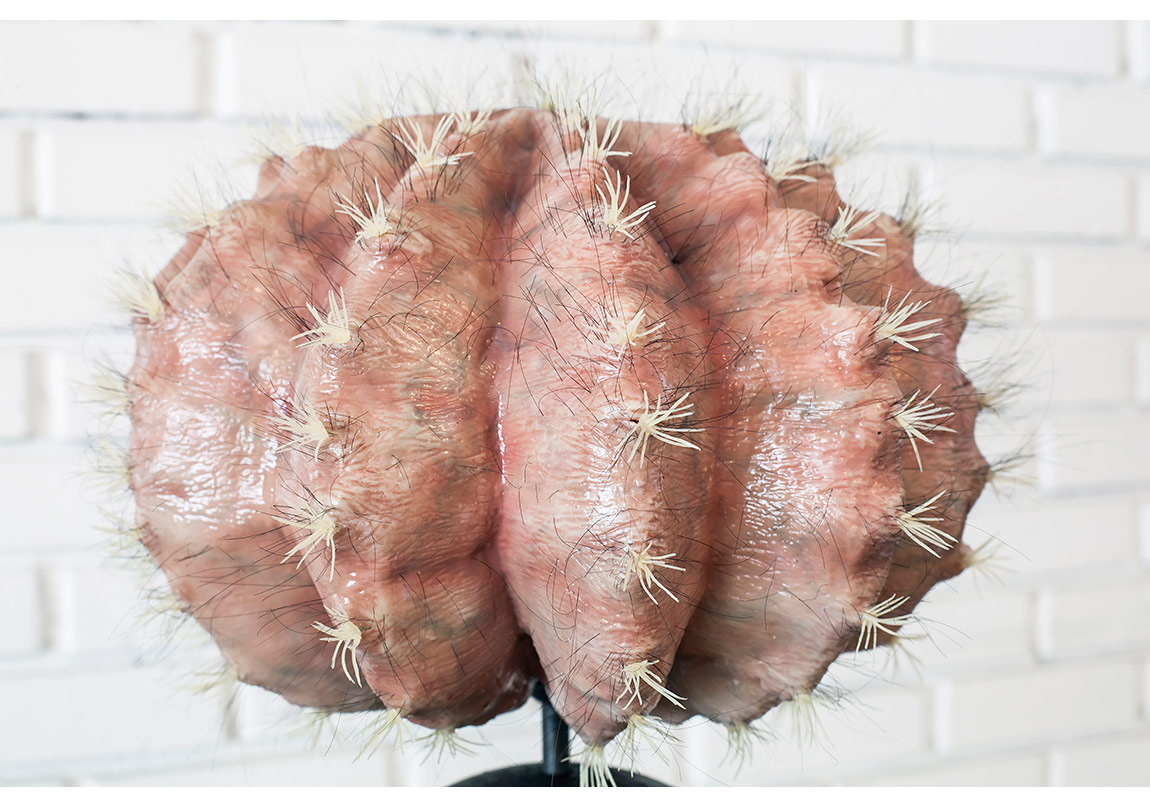
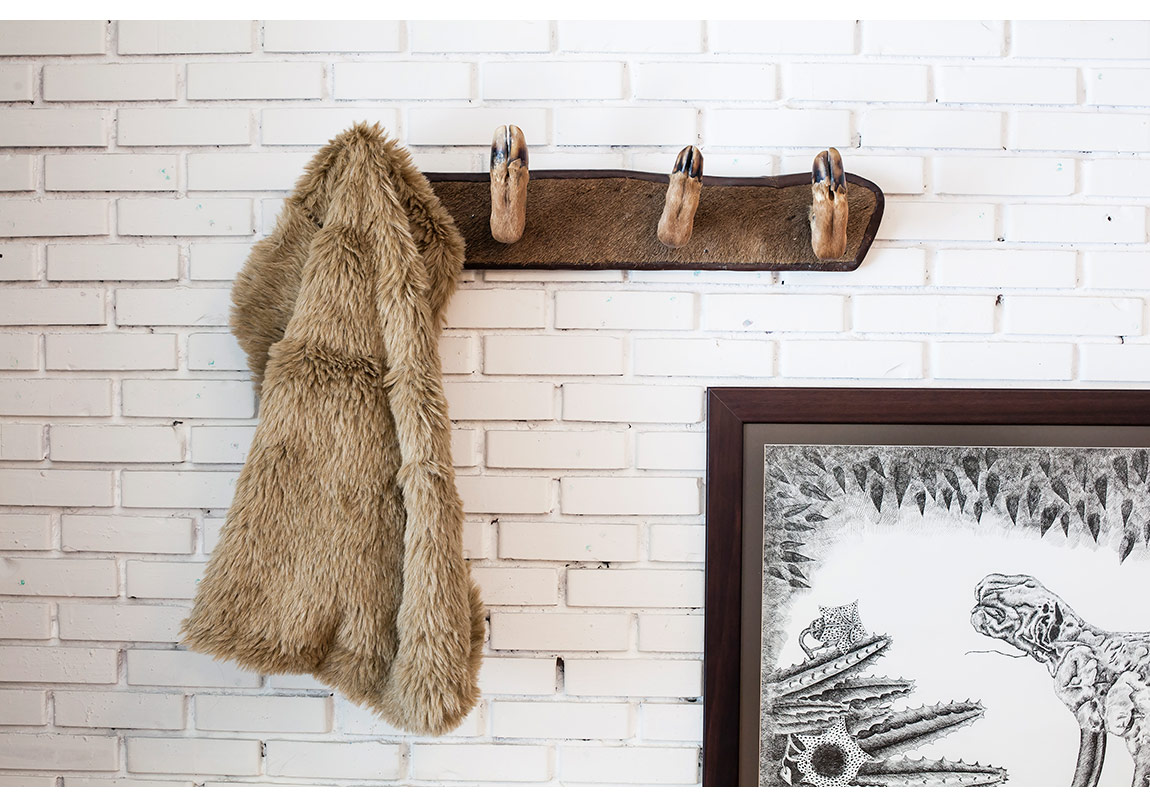
The atelier also has mezzanine. This second floor is organized like an office and becomes the primary space especially in the winter. Because it is not so easy to heat this hundred per cent concrete, large space. The second floor also hosts the strangest work of the Pick-Keep exhibition, the installation Barometz. The gallery's photographer came a few days before. I stare at the cloth hanger that is made up of goat or deer hooves and not the drawing of the sheep plant. She found it while looking at antique stores. Yes, this complements an installation of myths really well, but who placed their jackets on deer hooves and why? We do not talk about this for much longer, because I see the "meat plant" that connects all of the works in this installation by Ekin Saçlıoğlu. "This time it is a better material, it is silicone," she says. The hair on it is real. It looks like a brain plant. A hairy brain. The table underneath obviously carried a globe or something before. When we were about to talk on "in-between species" my phone rings. The owner of the garage that I parked my car in front of says, "Could you please pick up your car immediately?" I rush out of the atelier saying that "I thought you were closed." To be honest, I was lying.
;