ÖNCEKİ
02 ARALIK, ÇARŞAMBA, 2015
SONRAKİ
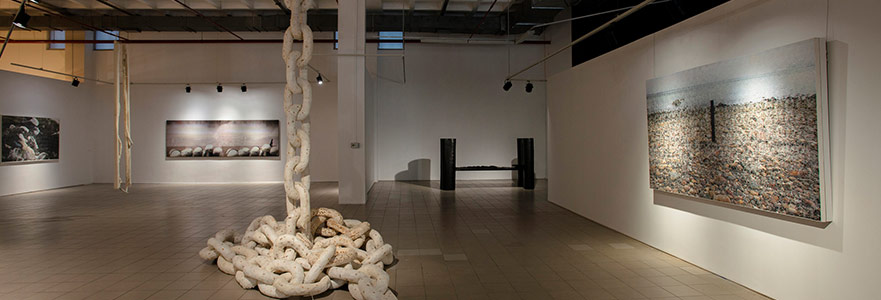
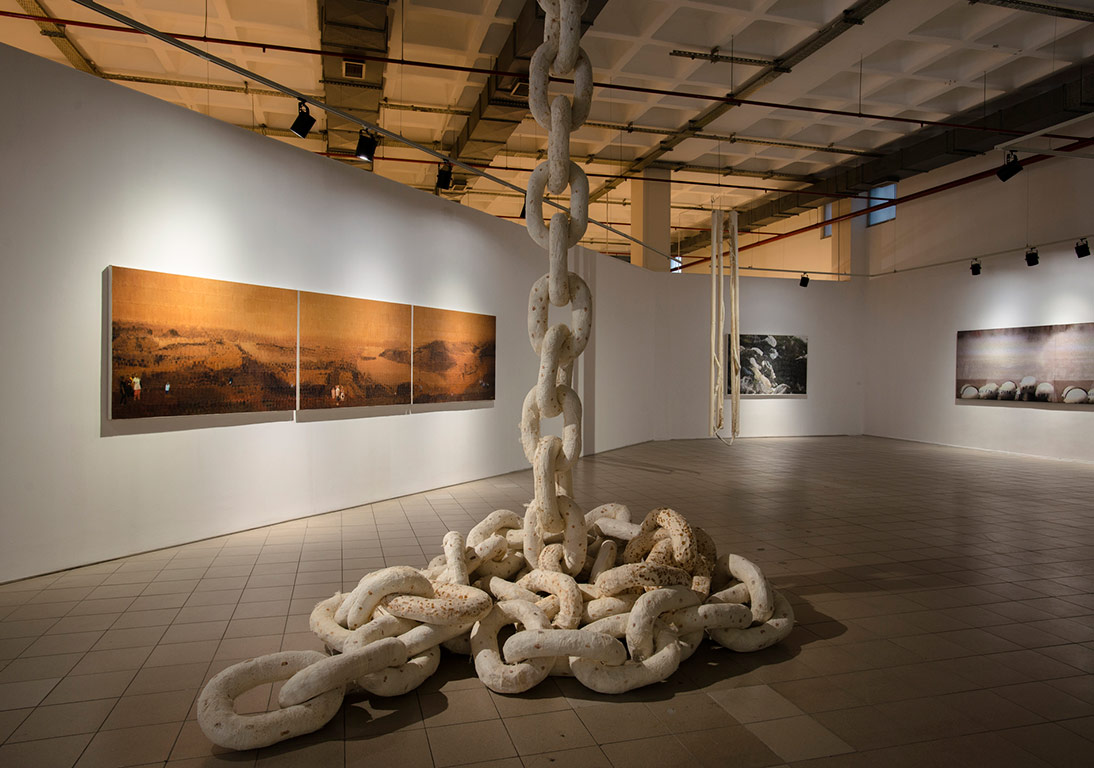
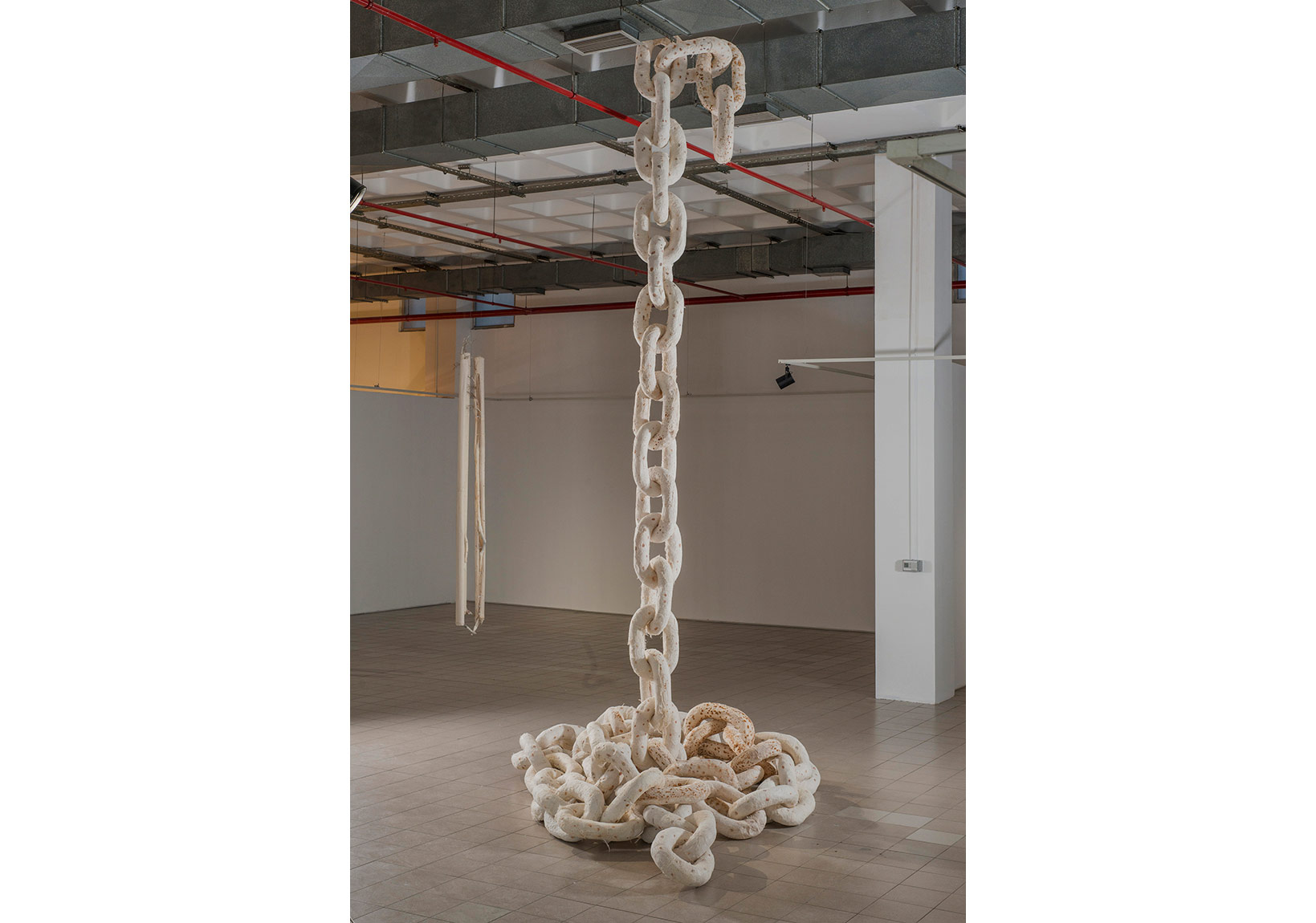
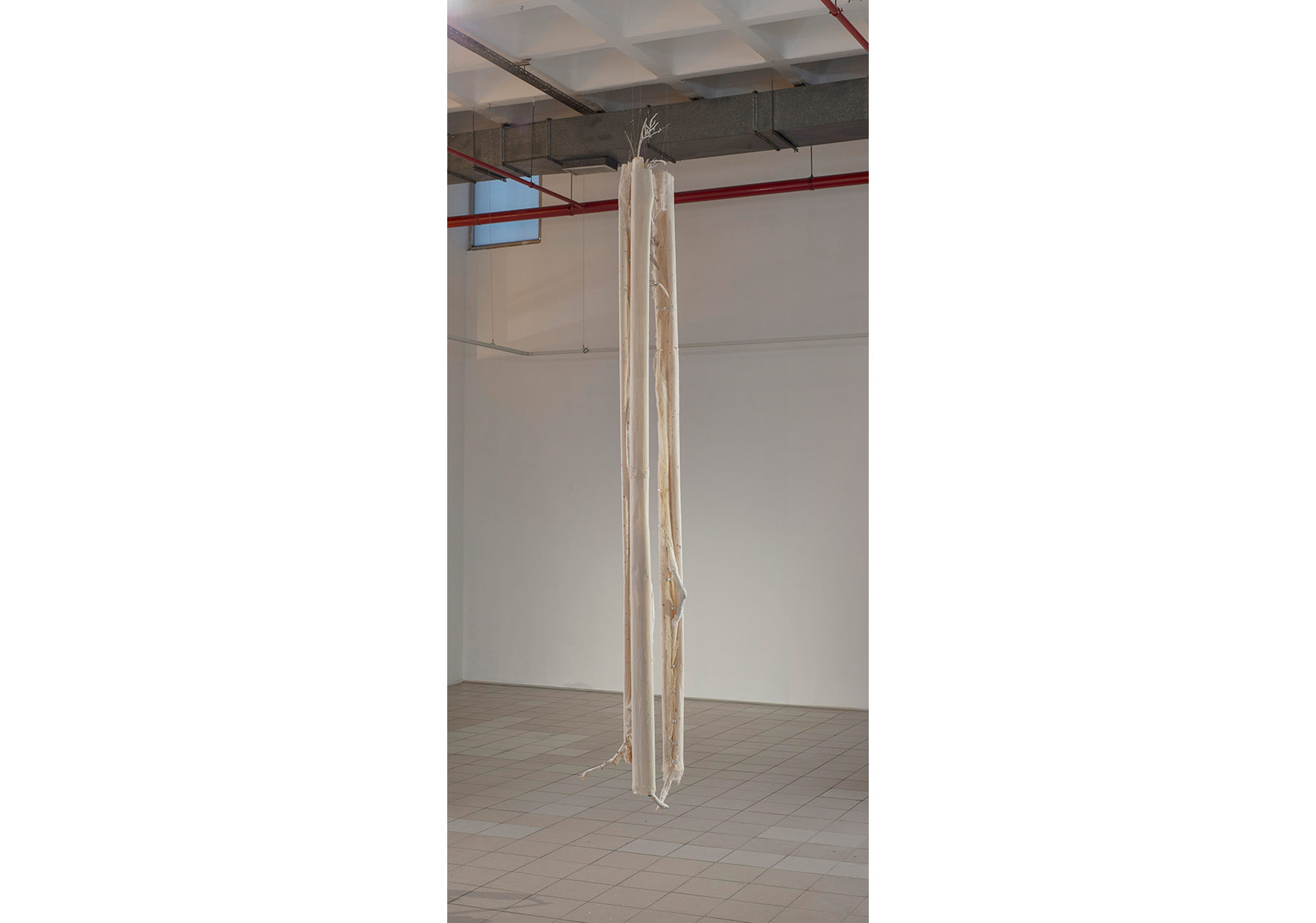
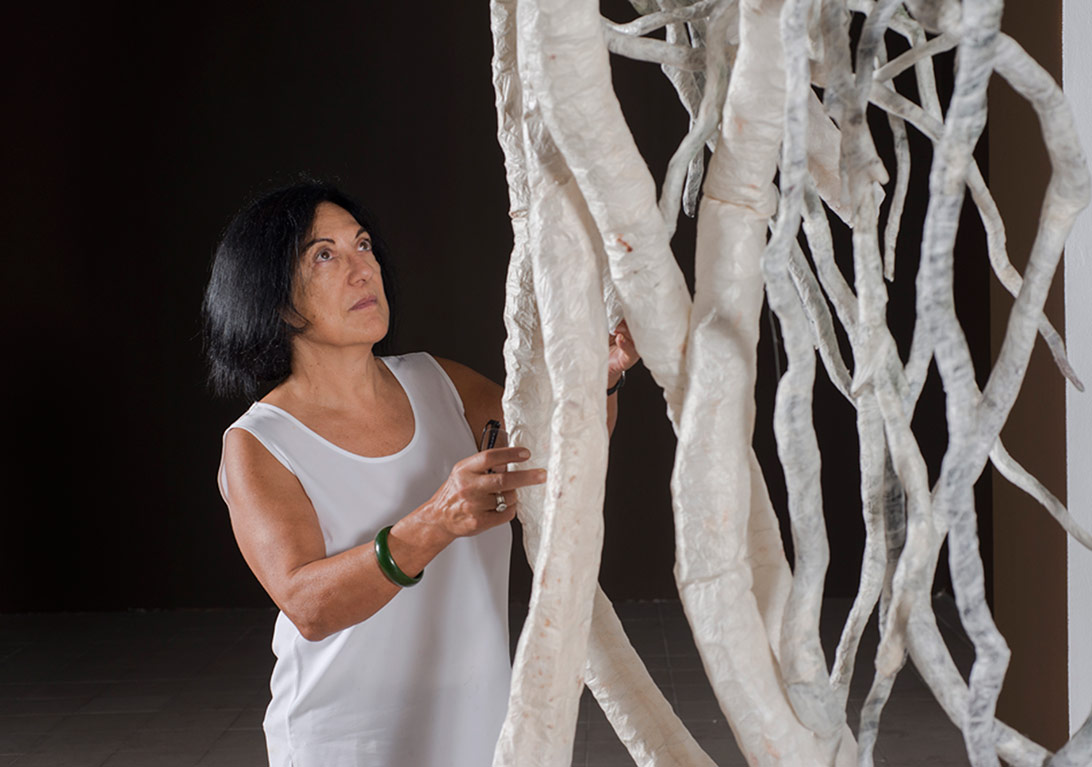
Azade Köker’s exhibition at the Elgiz Museum, “Entkettet,” tends to try to dress our wounds. Especially when so many new wounds are opened up every day, constantly expanding. Entkettet (2015) is in the middle of the gallery, a chain of paper anchors extending from the ceiling to the floor; could Entkettet both initiate the unfolding that it exposes and pick up the wounds that it dresses from where it is anchored?
Azade Köker presents in tandem the harmony of material and form in her artistic production, connecting the topic and concepts that she has taken up over the years. Her new exhibition connects questions to each other within this harmony. Köker has always been concerned with issues of identity and belonging, impositions of power structures through cities and bodies using different forms and media. She traces hybrid situations that run rampant in our acutely overlapping lives and shows the deep holes in her transparent yet layered language of production.
Chain of life and chain of captivity
When we enter Elgiz Museum, we immediately encounter Azade Köker’s words on the wall across from us: “The links of the huge chain that connect one process to another are sometimes dissolved and collapse on the floor; thoughts lose their flow; connections between time and space might be ruptured; all of these might mean the end. But perhaps this end is an end to the habit, the memorized forms of being. The flow and sustainability of all beautiful things, the negativity and captivity of being addicted are as powerful as the links of the chain that carry them. Chain of life and chain of captivity. The exhibition Entkettet demands of you to question these two counter formations.”
The web between the processes that Köker deals with between the spatial and temporal existence, reveal the tension between disintegration and accumulation. If we return to the beginning of this article, would the potential strength of the paper chain and the accumulation on the ground, the possibility of the single link to break or not break the order carry us to the shore? While we are talking about the shore and as the chain connect us to water, people who have been torn away from their homeland, who are trying to migrate within a physical disintegration, their deeply entrenched screams and desire to heal are impossible to ignore! The chain of life and the chain of captivity are interconnected through the same pieces of gauze and the traces of wounds and rust.
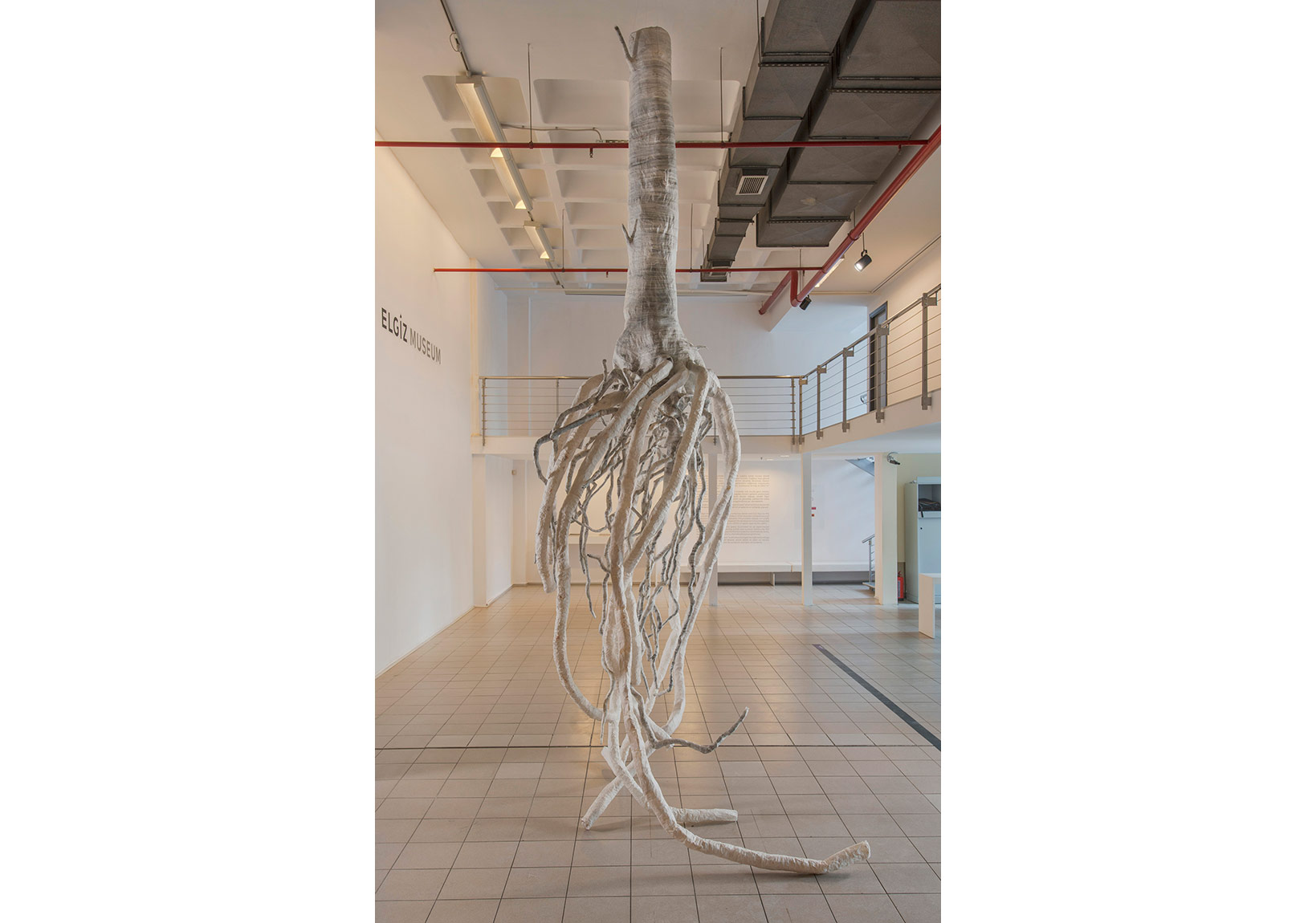
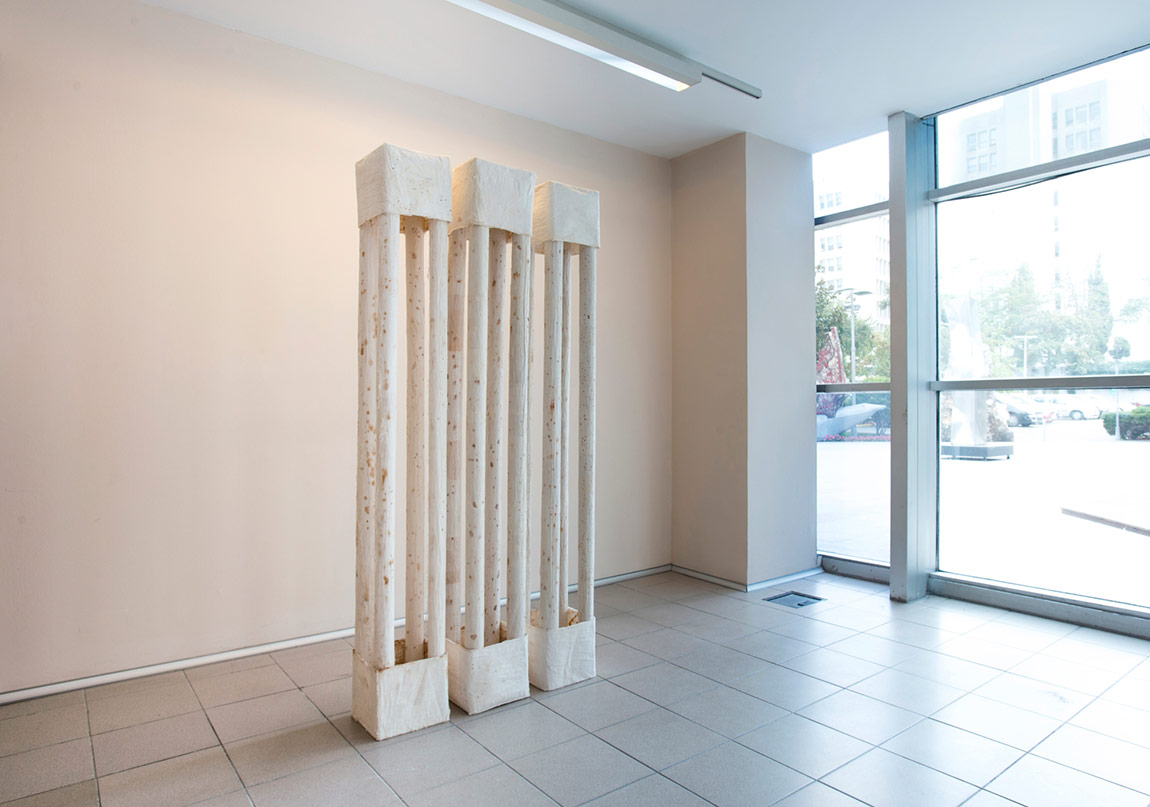
Rhizom (2015) is another paper installation in the exhibition. Rhizom confronts us with the roots of a tree by subverting the gaze; Rhizom first trigger the viewer to shift uncomfortably, releasing itself from the underground to earth with its giant arms. The source of being alive, which we call roots, is embodied under these new circumstances in its fullness and touches upon our faith and knowledge of roots. And new questions emerge. How come fife, which continues because nature protects roots, become chaotic and subverted when the being in question is the human?
It will be important here to look at Zeynep Direk’s A feminist perspective on violence and civilisation. In her article, Zeynep Direk touches on the words of Fethi Benslama and continues, “As Benslama has pointed out, the condition for massacres and genocides is not just being chased out of the geography that one was born in and has been settled on, to be torn out of the community, the nation or all of the communal ties that they had, to be deprived of the citizenship of the country they belong to. Those experience are also chased out of belonging to the human kind; they are dismissed from being human. An individual under such circumstances is immediately bodiless as they do not belong to a society nor humanity.”[1] If we look at both Rhizome and Entkettet from this perspective and from a distance, we can see that both works make contact with transparent touches the wounds that are inflicted by the acts of disintegration and breaking off. Azade Köker has chosen to tell the story of what has happened to people and what people have done to nature through a two-sided performance in an uninterrupted dialogue with nature. She has softened the harshness of this narrative with the lyric language that emerge from the paper works, but this has not diminished the work. The representation of bodilessness become visible in the links of the chain or in the tree roots in a metaphorical sense.
The hybrid spirit of the bodilessness created by not having roots
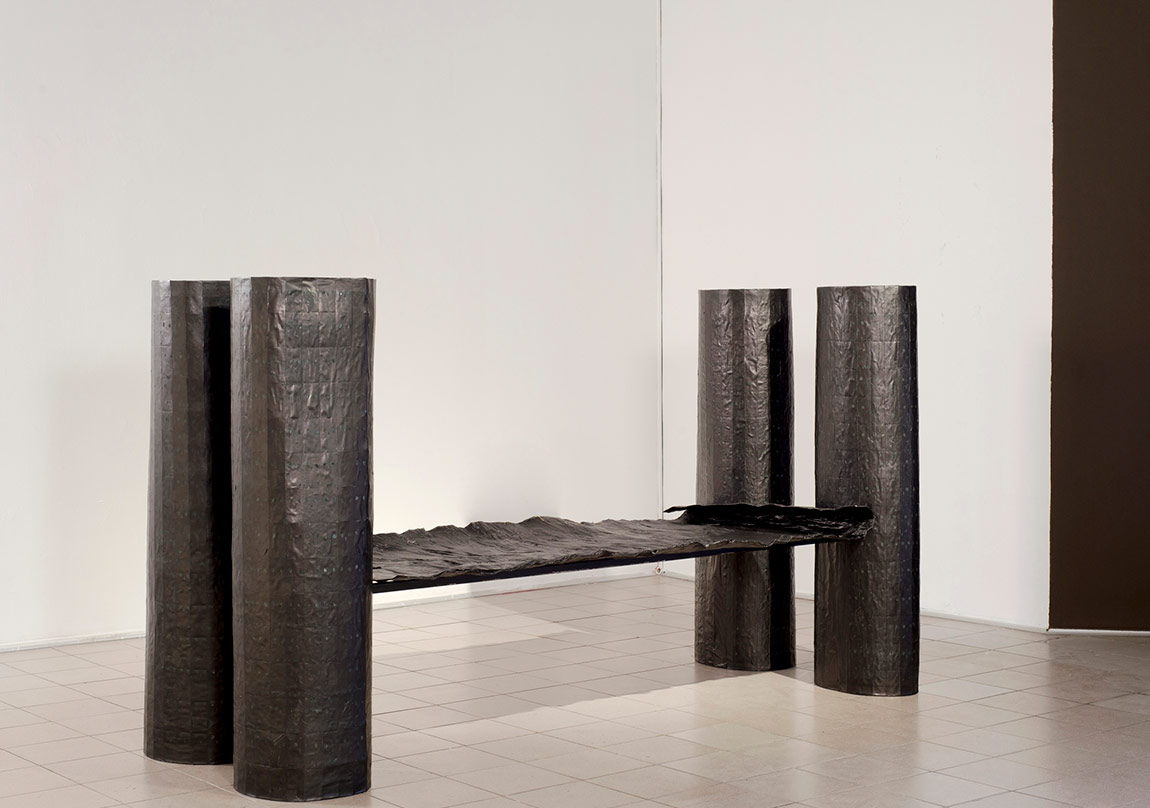
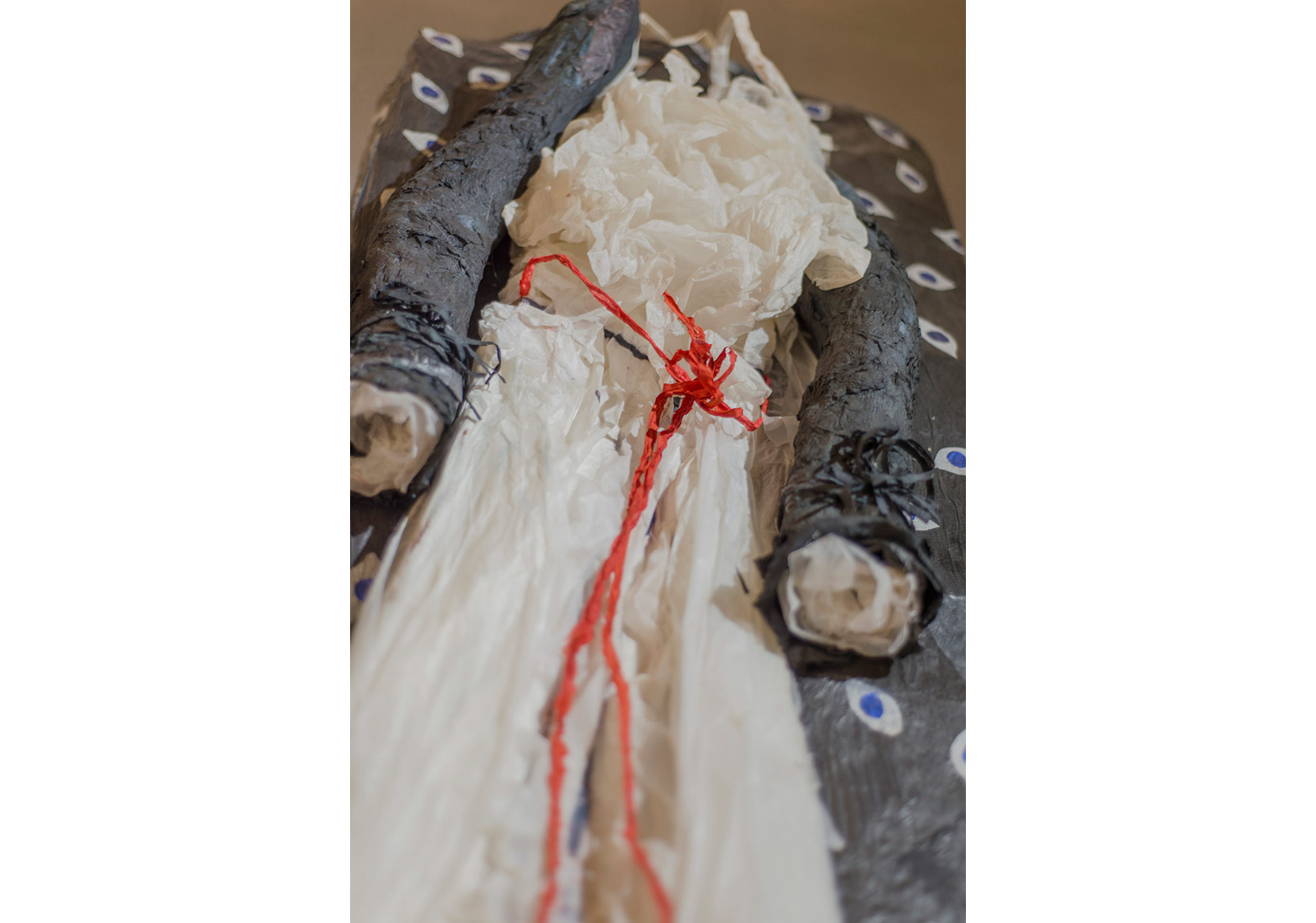
The artist further simplifies in her sculpture made of paper, paper clips and pieces of gauze what she has already marked with feelings, tree roots or anchors. Willpower, that transforms pain from an unknown source into a sculpture, aims to make possible another form of the pain marked by the exhibition. The fractures concealed by the ominous affiliations reveal clues about the captivity of immobility. The hybrid spirit of the bodilessness created by not having roots is clearly visible in this sculpture.
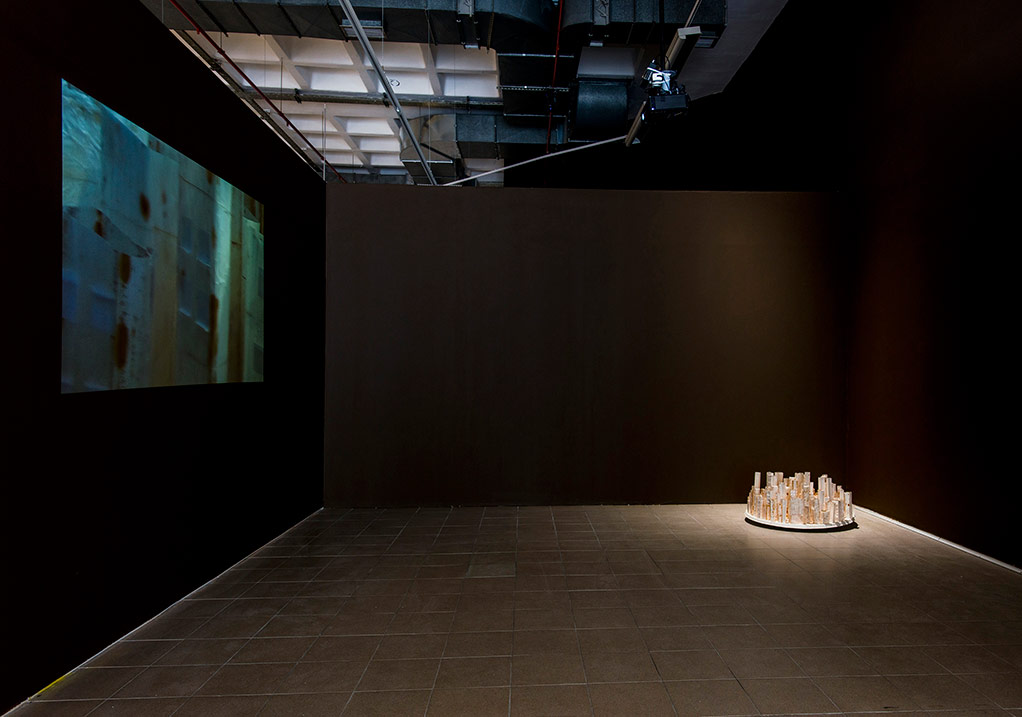
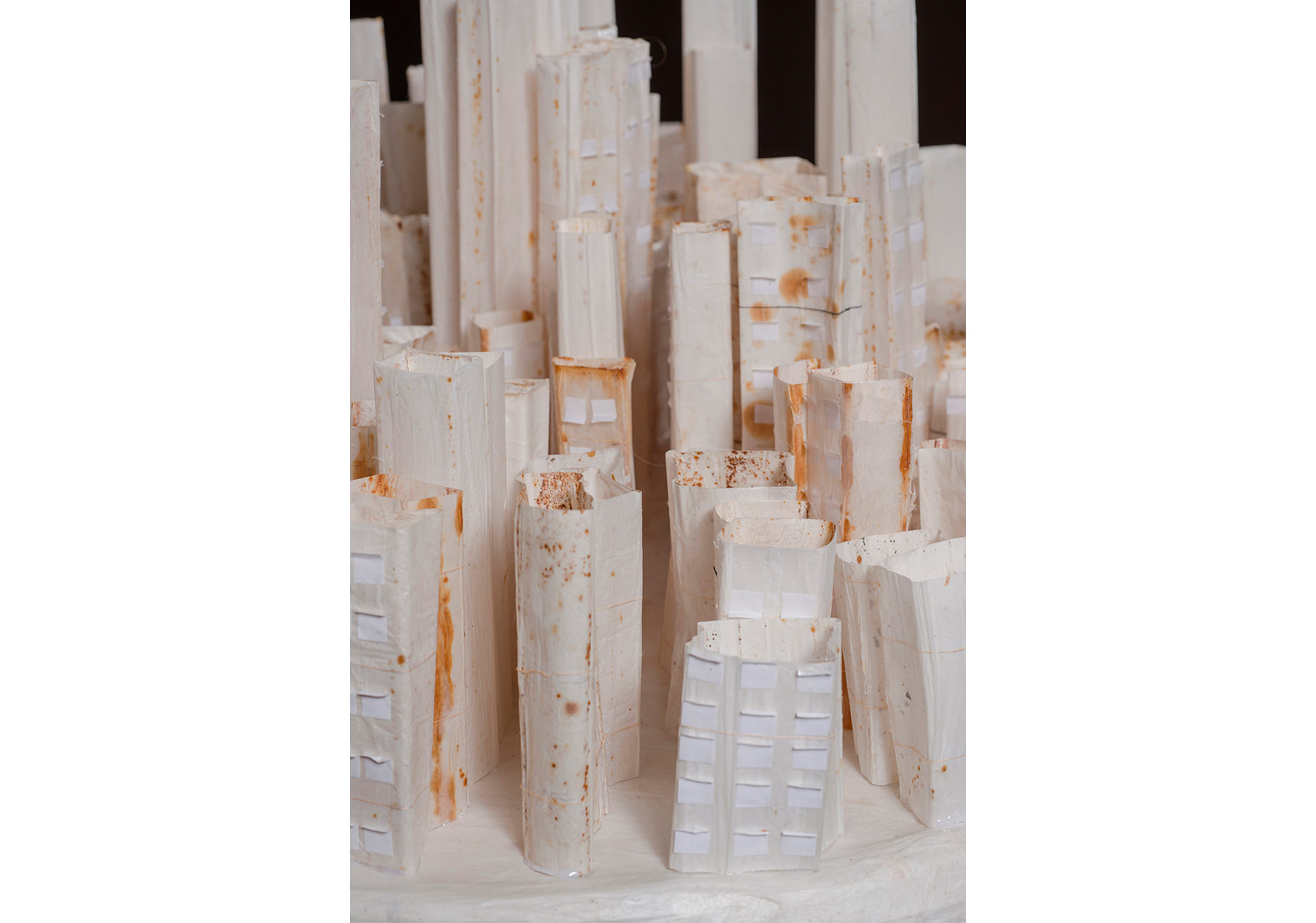
One of the new works in the exhibition, Abandoned City (2015), attempts to conceal in transparency all of the traces that are left behind by people who have been forced to leave their homeland where they were born—whom I talked about above. Azade Köker, in this installation that is not even a meter in diameter, creates a ghost city using transparent paper and rust/scars to construct blocks of different heights and lengths. For those eyes that are curious about what happens inside, she prepares a video that wonders through the city. Both the video and the installation tell us things that make us re-confront the whole exhibition. The wounds that never heal although they are dressed over and over again, looking from a bird’s eye perspective at the cities where these wounds happen or while being lost in the video, Köker captures the viewer at their most vulnerable moment.
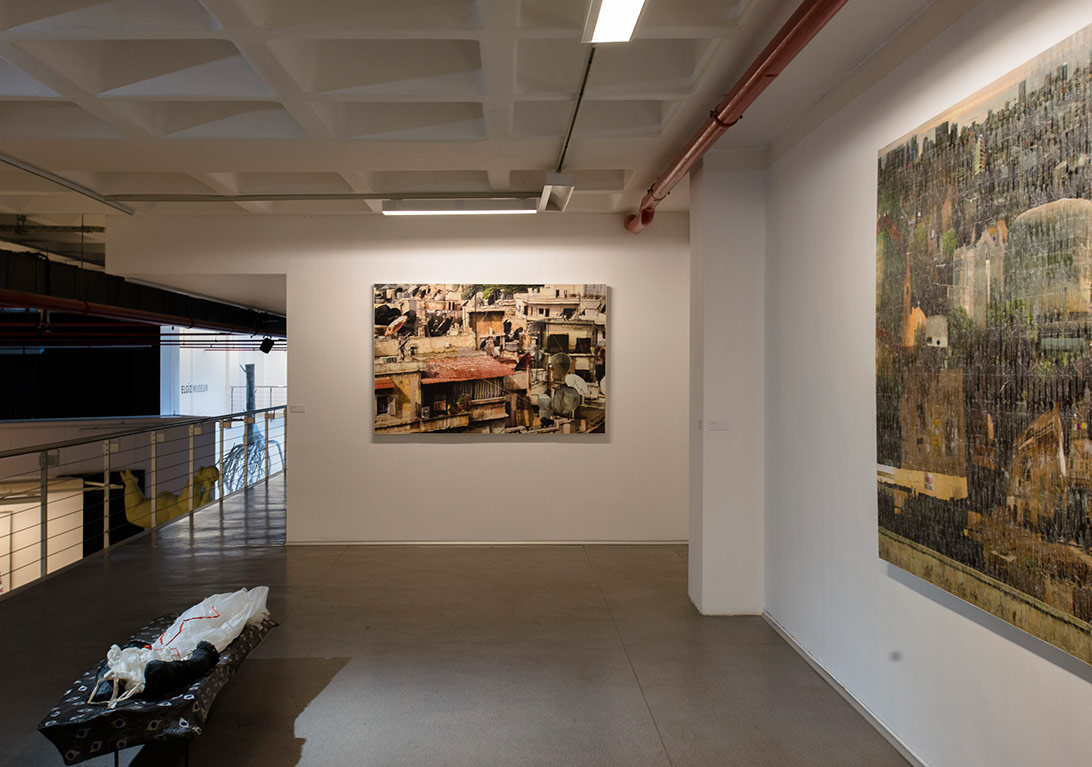
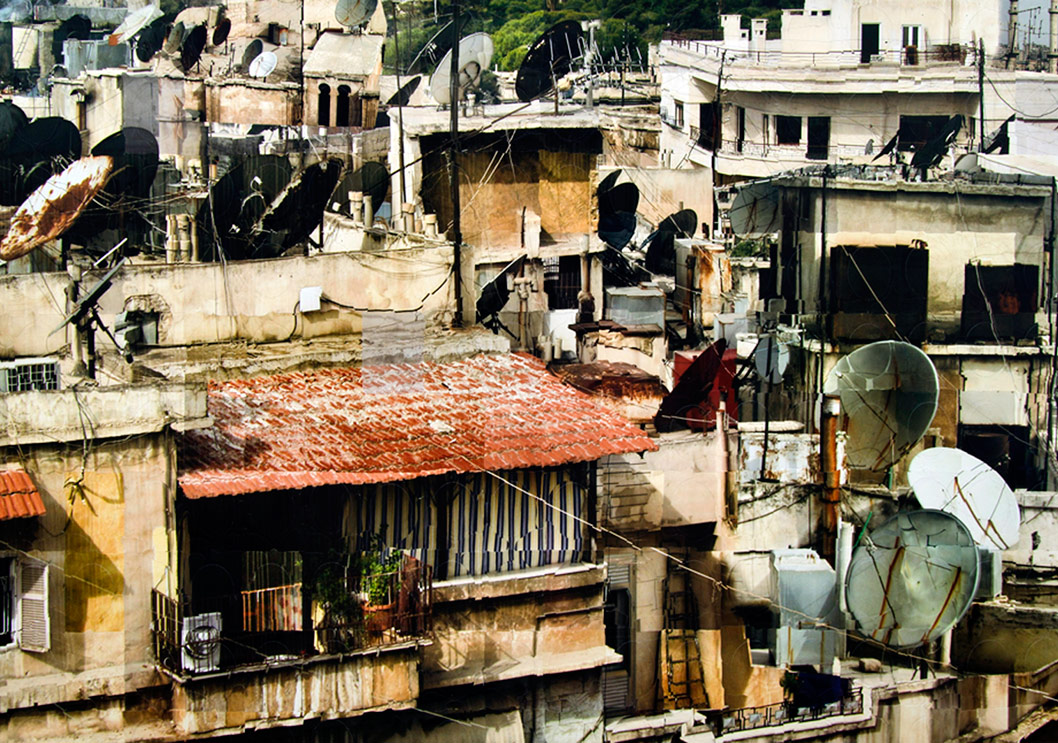
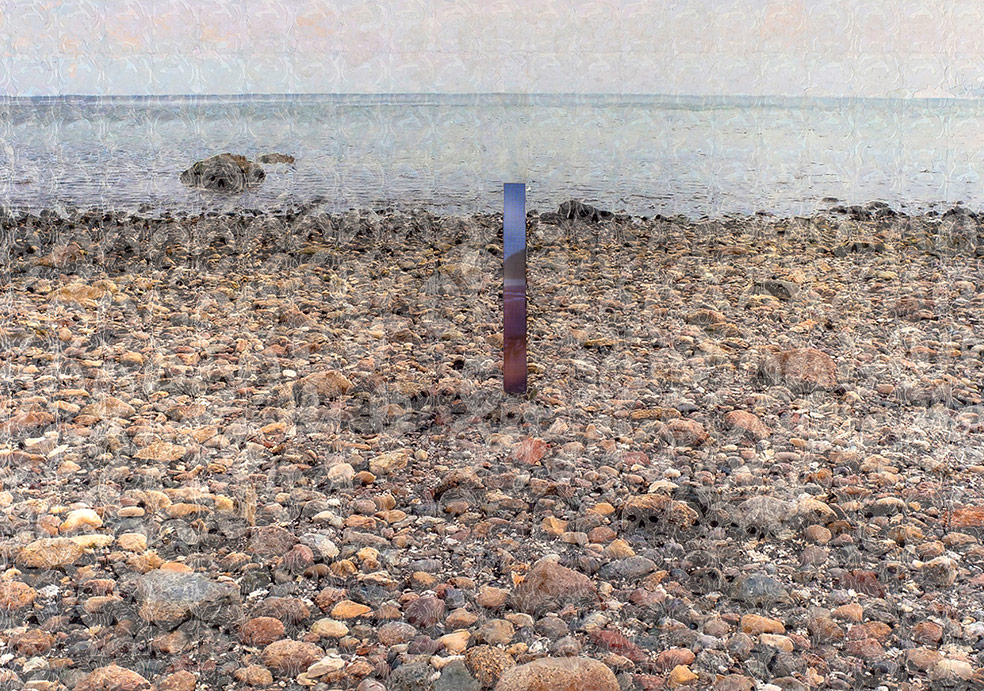
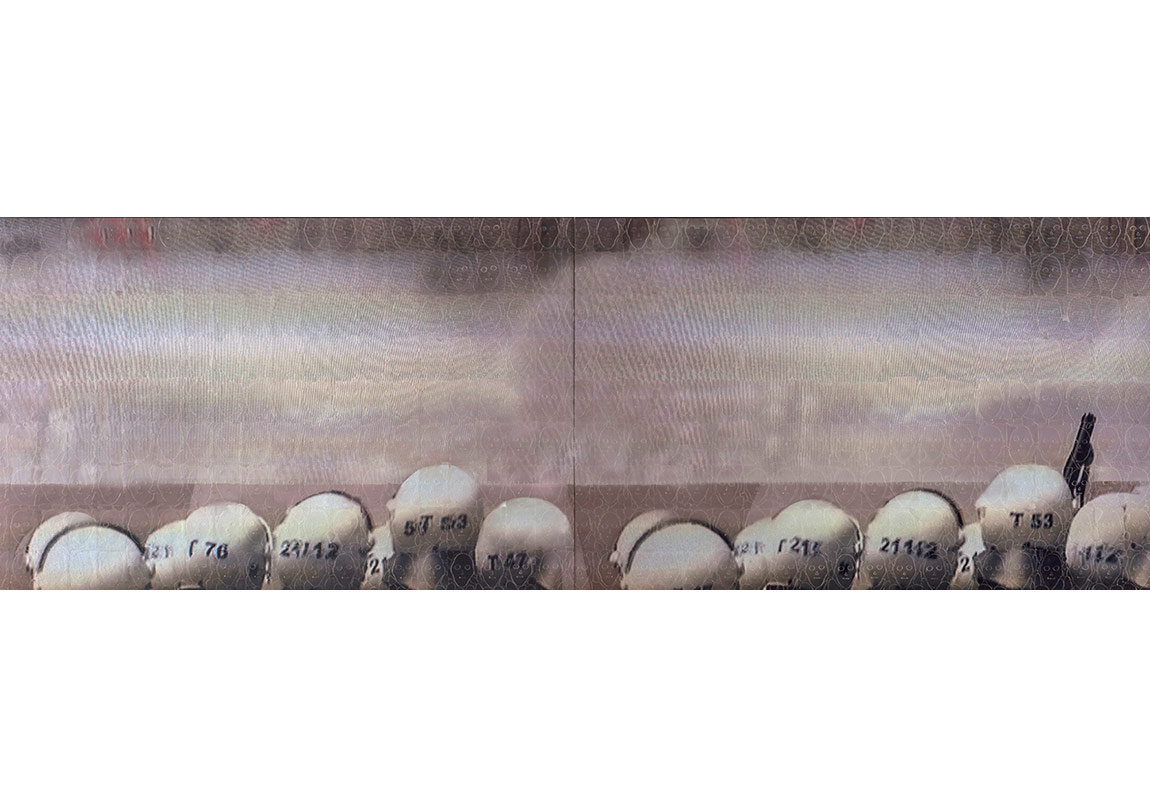
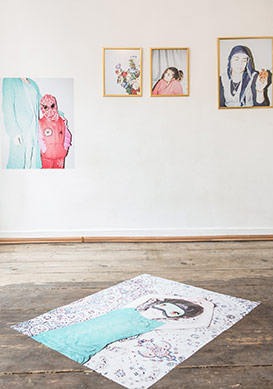
Köker, who has been combining various stories with hybrid urban landscapes for many years, shows Mardin, Beirut, Aleppo in her Crescendo in the City series through the photo-collage technique that she frequently employs in her works. In Palace of Justice II, she looks at the palace where justice is supposed to be at work through the eyes of those who suffered from injustice. In Bodrum Trash Mountains II, she exposes the trash bags that have taken root in the bushes. In both old and new works in which she uses the photo-collage technique, Köker covers the stage with layers of human figures, skulls, and faces (in some works, she uses war planes and spiders). The relationship of existing/not existing between the city, nature, and the individual, which is increasingly blurred in our daily life, is once again shown through the multi-layered images.
Azade Köker’s work is on the positive possibilities that would be produced by a strong chain created amongst the orders/planes of things, increasingly hardened under the rule and willpower of others. The layered forms and images transparently present the existence of the signified as being able to shift completely in meaning through a weak link in the relationship between the signifier and the signified. To stand side by side can heal the deeply entrenched wounds of captivity.
[1] https://zeynepdirek.wordpress.com/page/2/ 29.10.2015
;