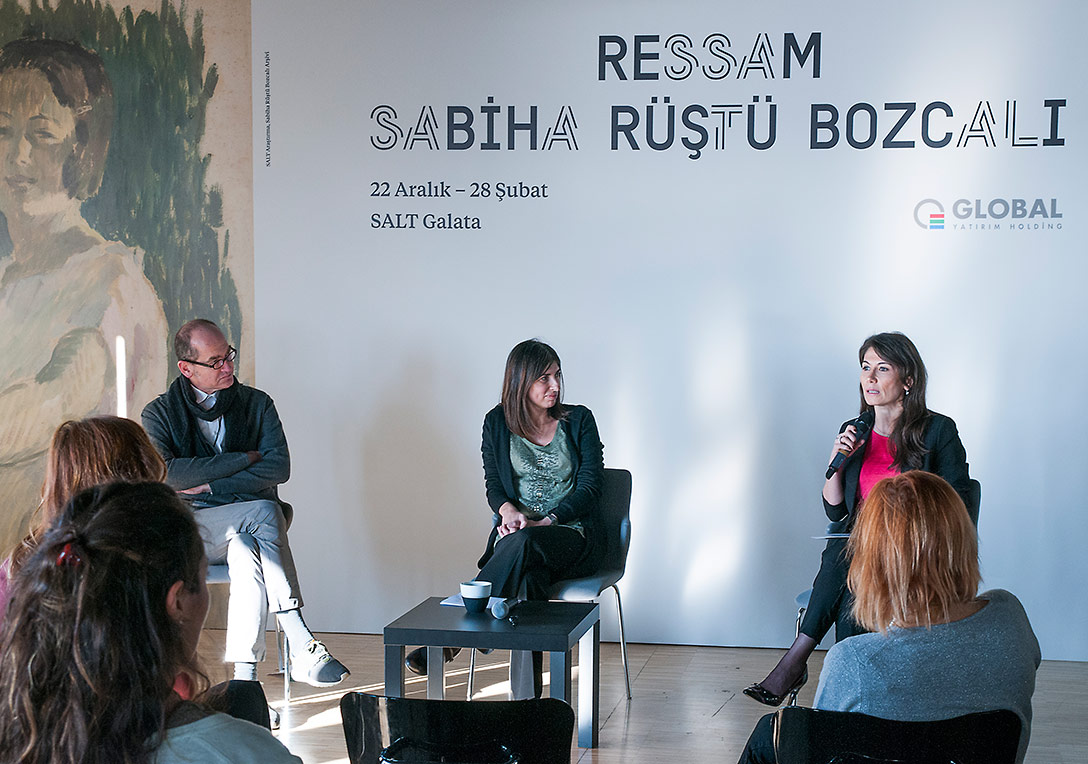
Sabiha Rüştü Bozcalı, born in 1904, is one of the first generation of woman artists in Turkey. Men making art in the Western sense have been referred to as the “first generation” way before woman artists, placing them on the stage through a much more difficult process, as we know… While the small number of woman artists could have become an advantage through positive discrimination in the writing of art history, but unfortunately, this has not been realized until now and Bozcalı has remained one of the many artists who were not studied on an individual level. This situation has finally changed thanks to the “Painter Sabiha Rüştü Bozcalı” to the advantage of Bozcalı, whose work we saw most recently at the “Dream and Reality” exhibition a few years ago at the Istanbul Modern.
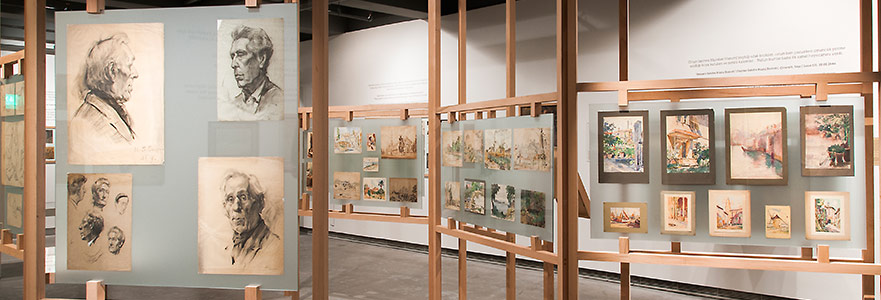
There is limited information on Bozcalı in the few reference books on Turkish art history. For example, in History of Contemporary Turkish Painting, she is referred to in tandem with Hikmet Onat as “their connection to the nature was obvious”[1] for their work in the last exhibitions of the Association of Fine Arts or as one of the artists “who dealt with impressionism using freer palettes”[2]. Sezer Tansuğ refers to Bozcalı as “one of the most recognised woman artists” in the list of almost 90 names that participated in the 11th Galatasaray exhibition.[3] The foundations of the exhibition at SALT Galata is the family archive that the artist’s niece Melahat Behlil donated to SALT Research in 2014. In addition, a box with Bozcalı’s name emerged from the archive of Taha Toros that has been placed online by the Istanbul City University. Thus, the exhibition is not a traditional exhibition per se, but rather is an archive exhibition that deals with the artist’s life and her parallel production and the exhibition is meaningful first and foremost for its making. The exhibition is further made valuable with the inclusion of drawings that outnumber the oil paintings and it should not be seen just as an archive exhibition.
The daughter of a well-respected family who grew up in a seaside mansion
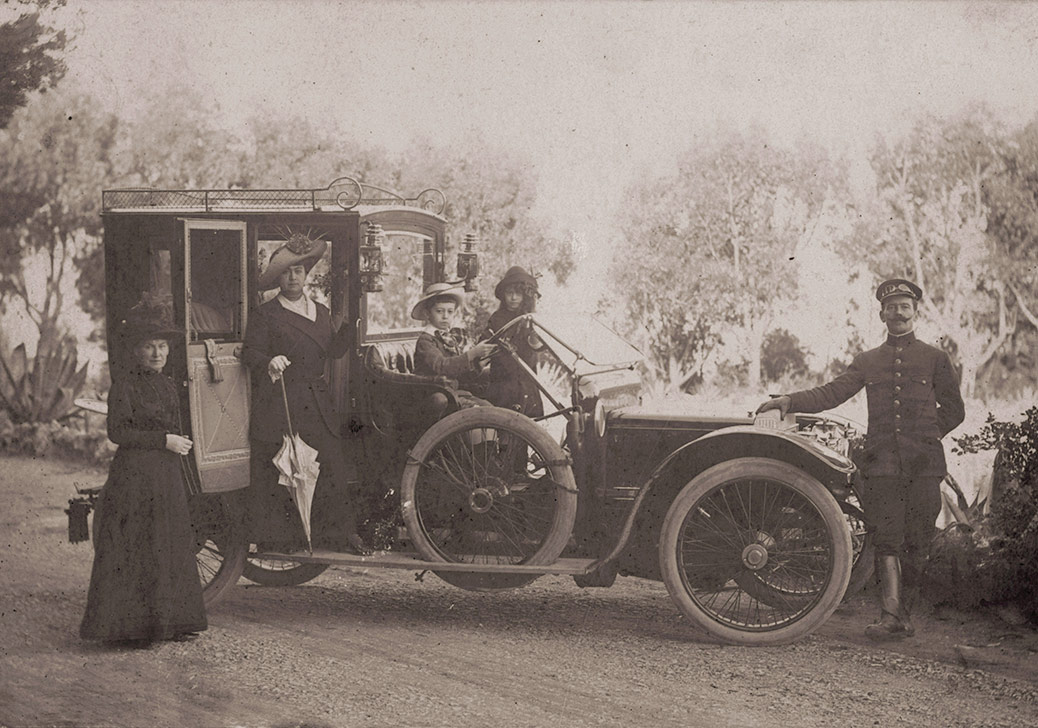
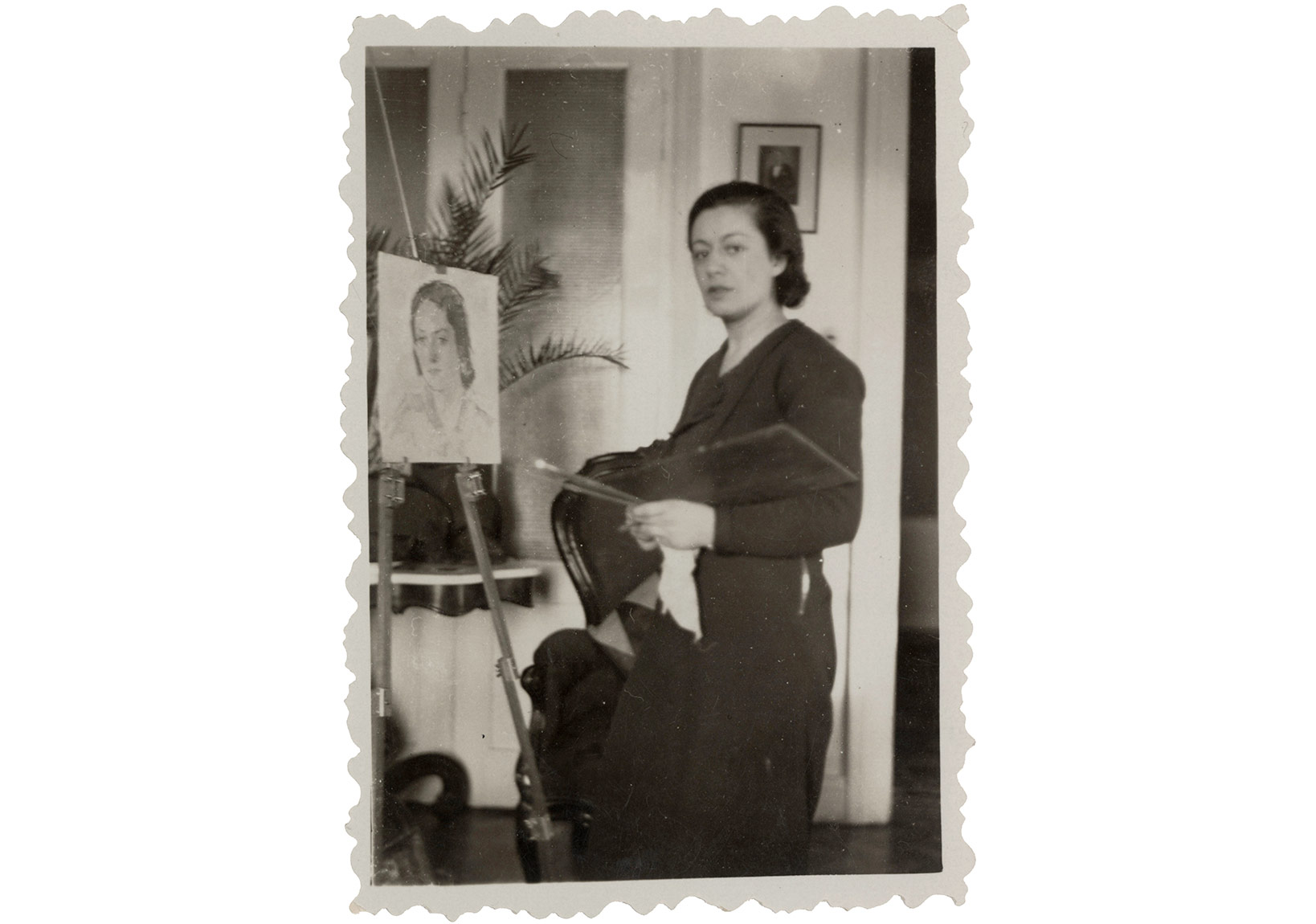
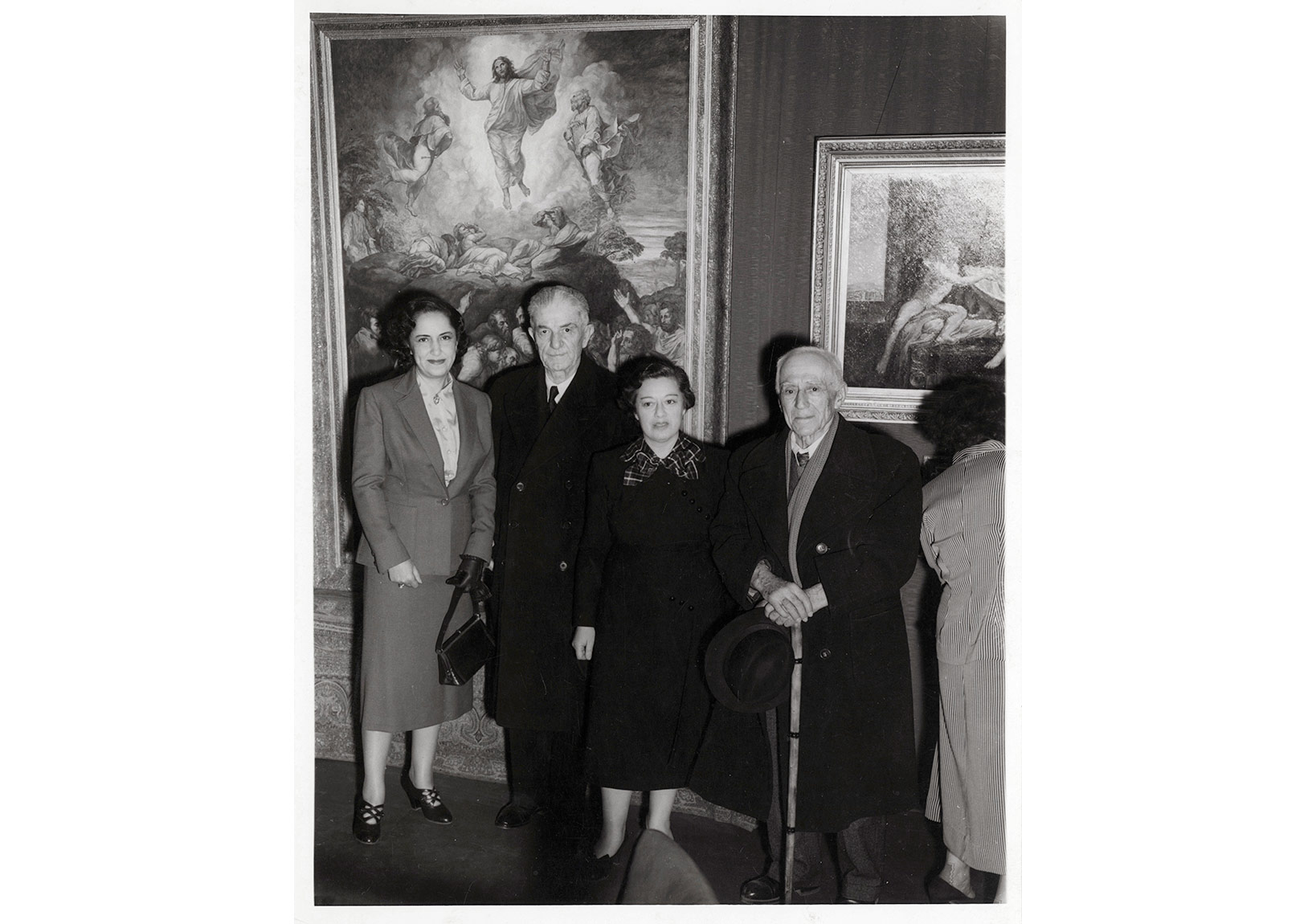
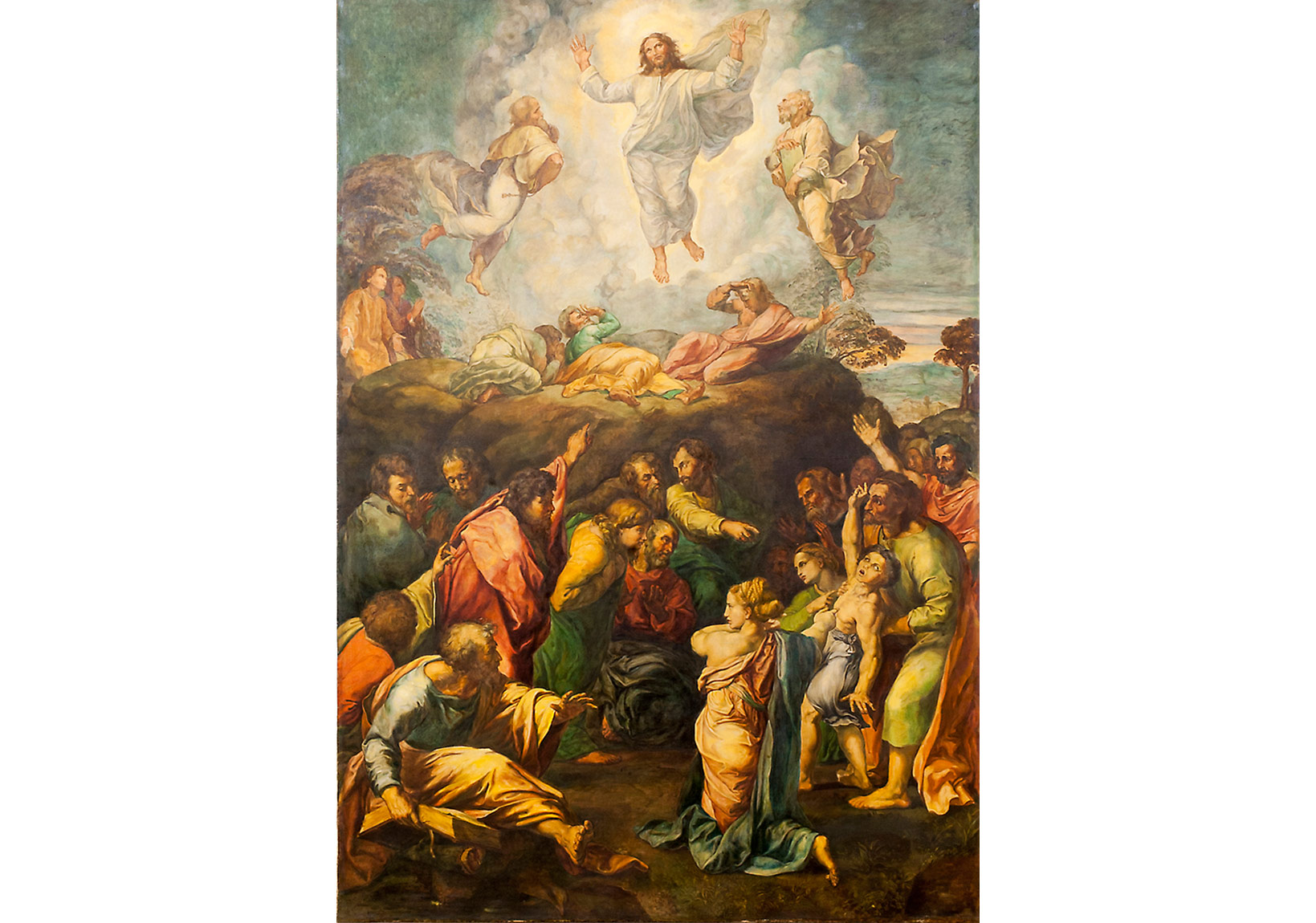
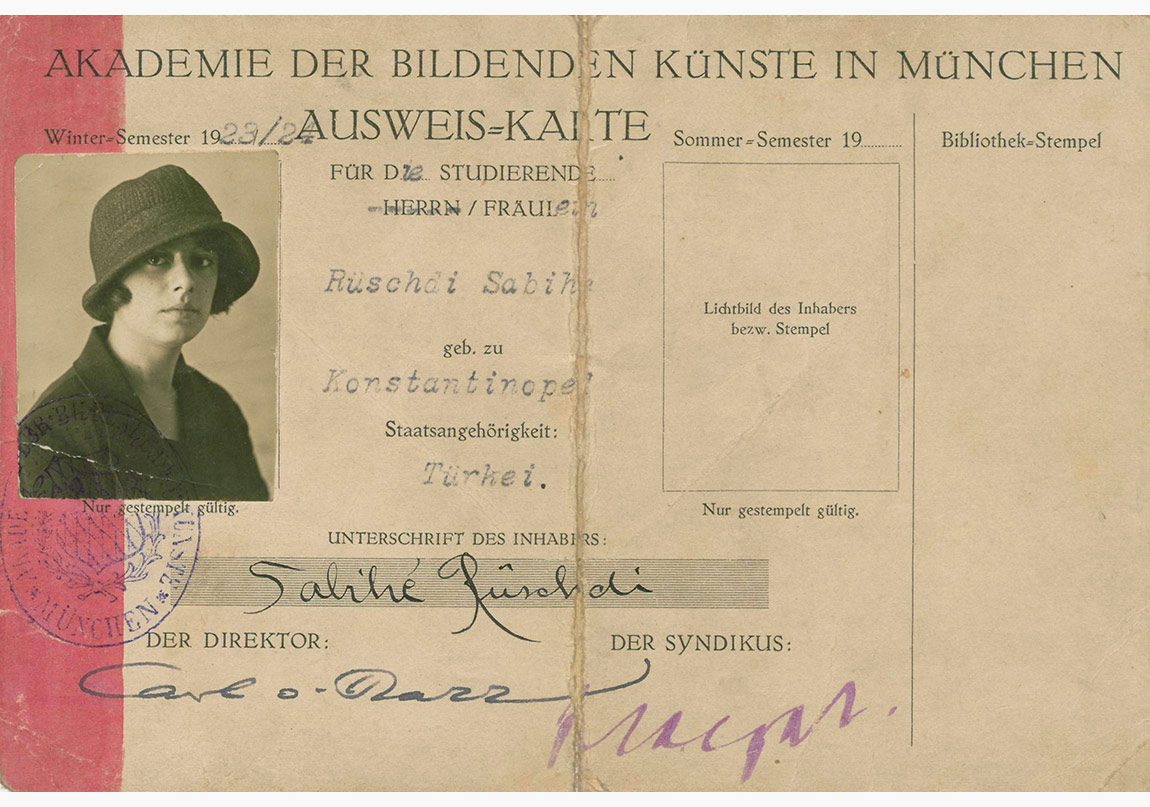
Sabiha Rüştü is the granddaughter of two Ottoman ministers from both the mother’s and father’s side, daughter of a well-respected family who grew up in a seaside mansion and who received a good education. We learn through the photographs, documents, and letters included in the exhibition that she studied painting at an early age with her mother’s influence, alongside many other bits of information. Bozcalı’s biography, which she wrote herself most probably on the occasion of an exhibition/catalogue or another such publication, provide us with indisputable pieces of information. Thanks to her family’s financial support, she travels abroad at the age of 15 to receive an art education. She works in Berlin, in Munich, she studies painting with Paul Signac in Paris, she spends three years in Chirico’s atelier in Rome. She makes copies of works at the Louvre, in Villa Borghese, at the Vatican with special permissions. For example, included side by side in the exhibition is her oil painting copy of Raffaello’s Transfiguration and the permission documents from 1947-1948 in order to be able to make this copy. These things are quite difficult for a painter from Turkey and even more difficult for a woman painter from Turkey. The artist participates in numerous exhibitions. Documents in the exhibition show that she exhibited her work with Société des Artistes Français in Paris.
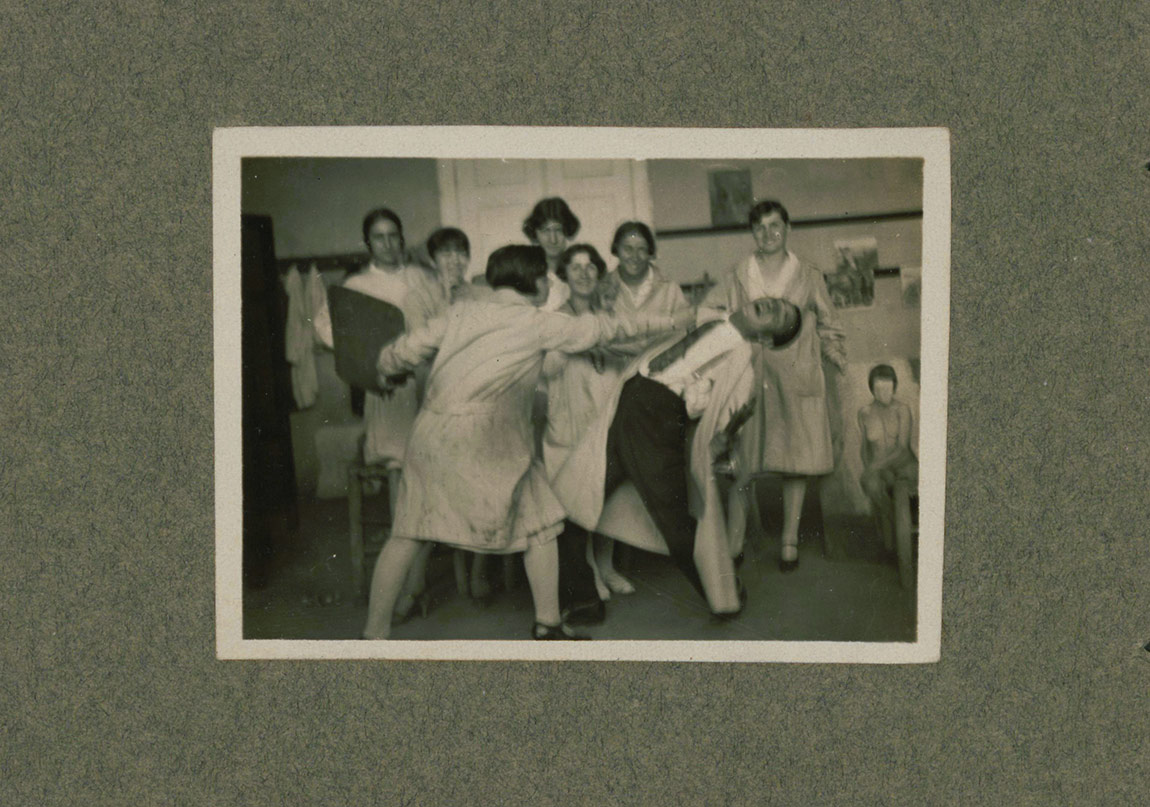
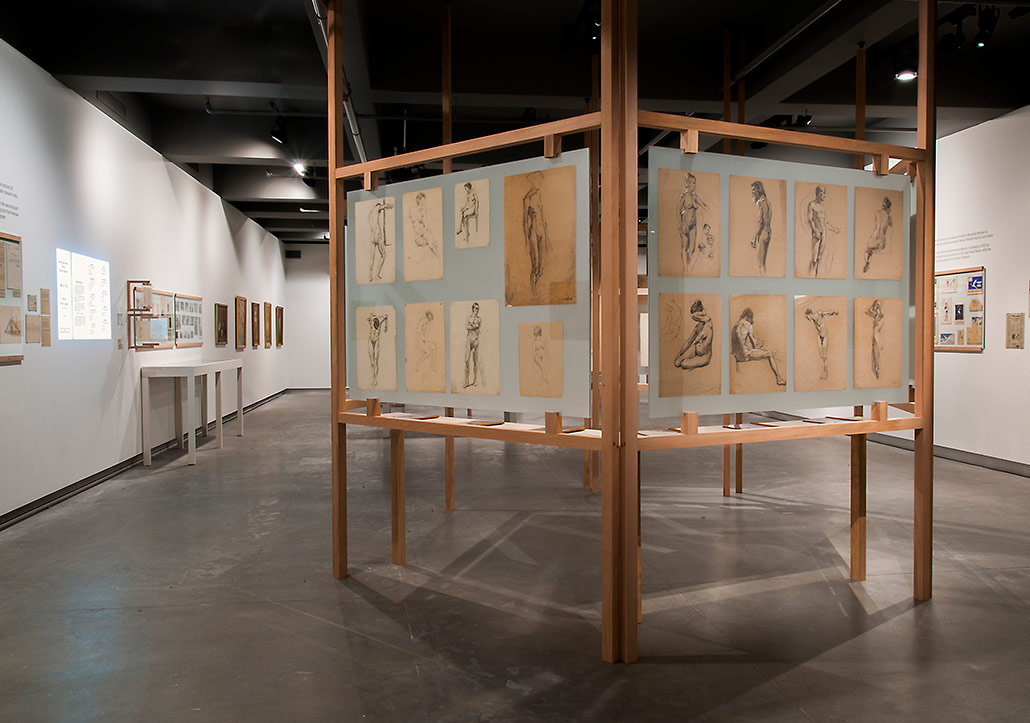
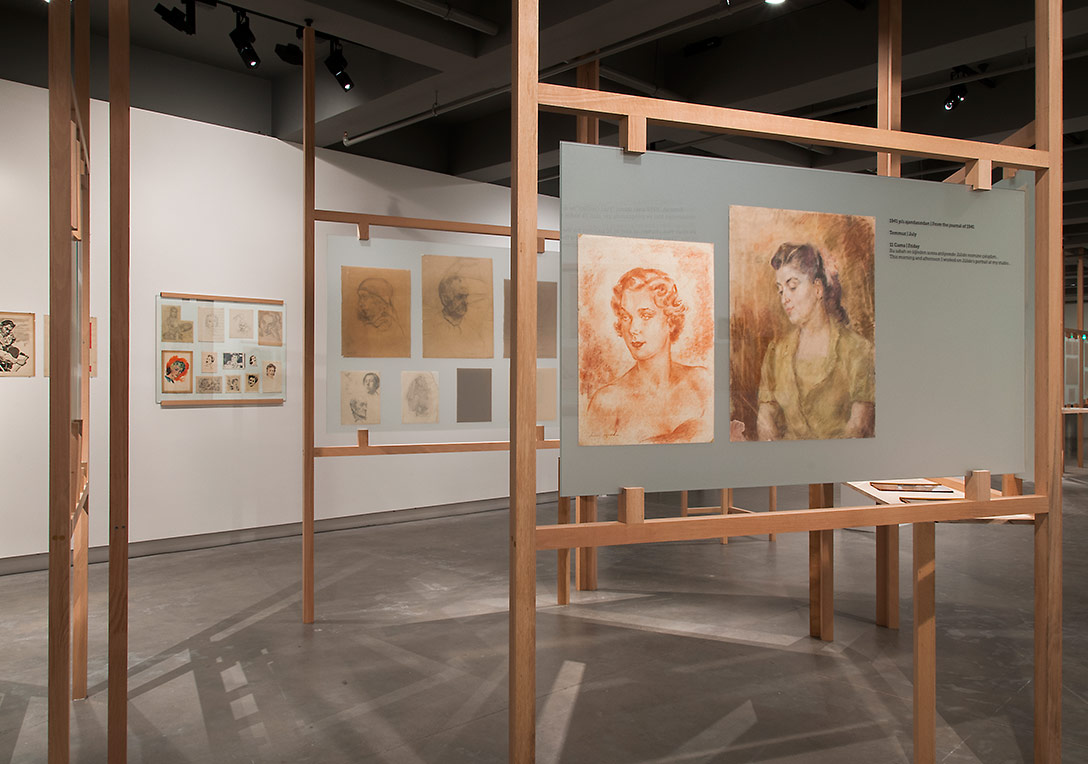
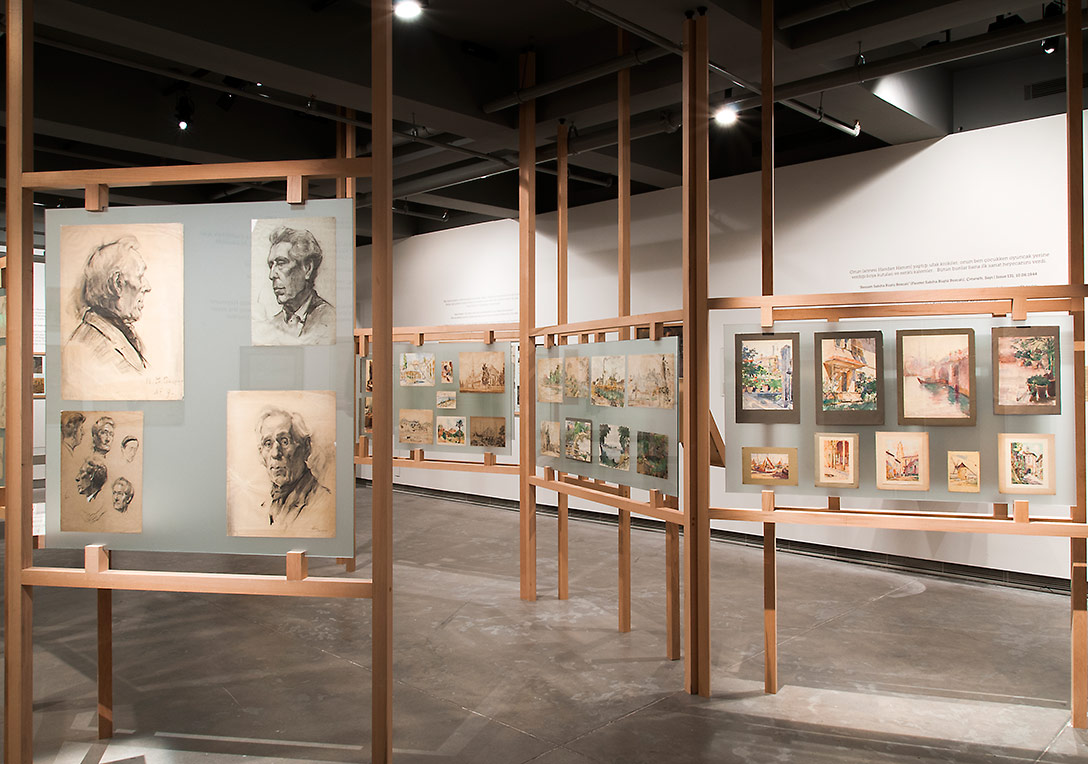
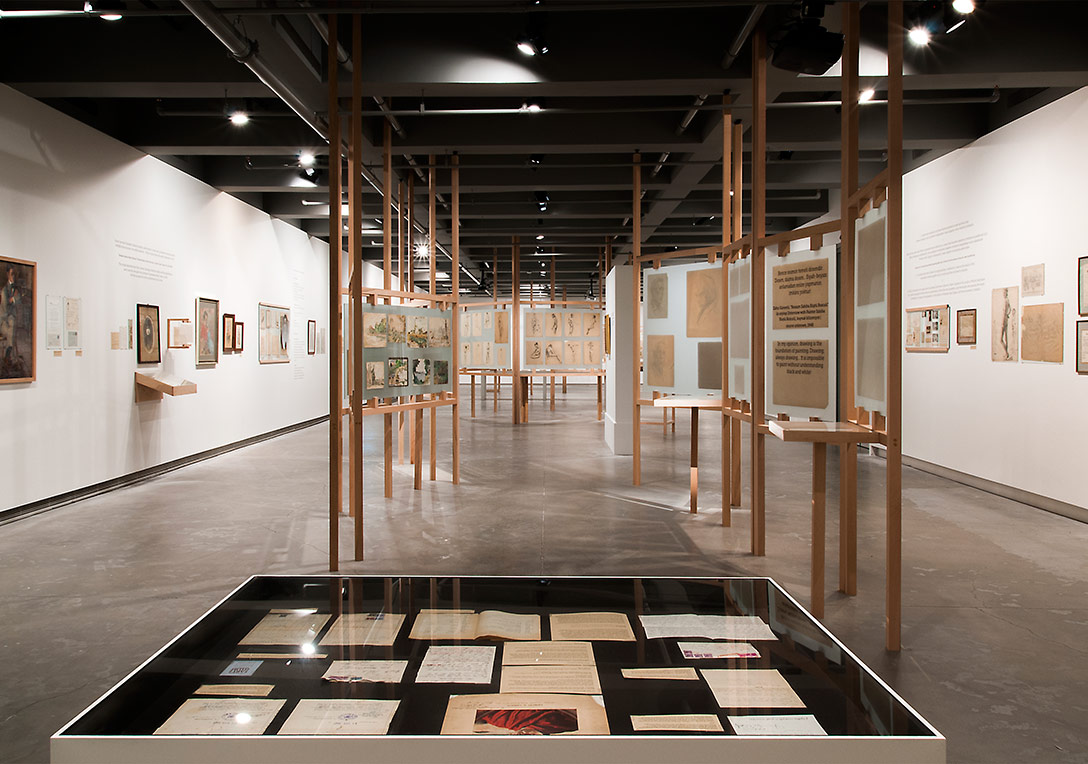
The exhibition avoids a chronological organization as a method and such an organization is also made impossible by the relatively small size of the space. The documents are organized and accompanying texts are exhibited in a balanced manner. Some of the texts on the wall are more headlines for different periods of the artist’s oeuvre than texts. This is a logical decision, because the exhibition is easy to see—a contrary approach that constructed the exhibition as a book would have deemed the exhibition heavy and tiring. Thus, photographs and of course paintings are exhibited alongside letters, identification documents, permission slips, diaries, a book that Paul Signac referred her to in a letter and the invoice of painting supplies that her brother bought for her in Paris, taking the viewers on a journey in her life and practice. It is up to the viewers to decide which page of the diary they will read or which part of her life they will pay special attention to.
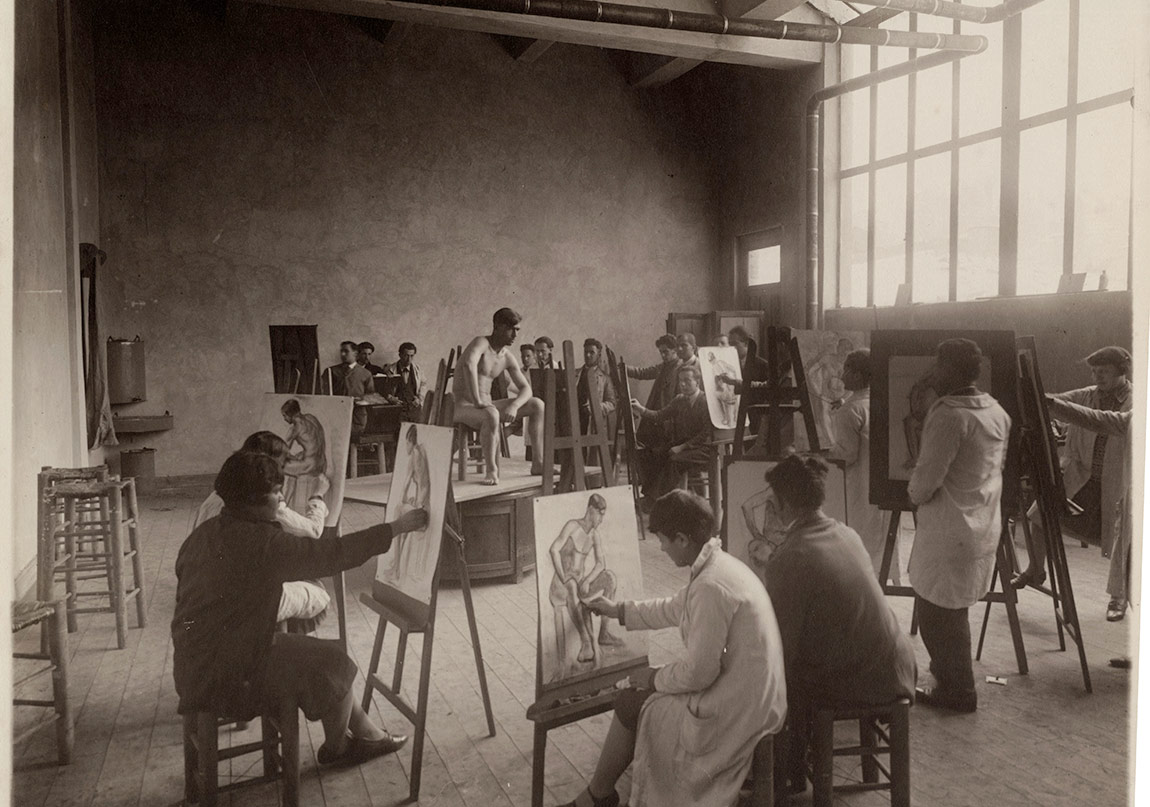
We know that Bozcalı was a guest student at the Academy in 1929-1930 in Namık İsmail’s atelier and simultaneously received painting instruction from Ali Sami Boyar. She participated in the Galatasaray Exhibitions, which were very important, and many other group exhibitions. Also included are invitations, brochures and newspaper/magazine clippings from the two solo exhibitions she had in Istanbul. While tracing Sabiha Rüştü Bozcalı’s life in the documents, it is also possible to see the adventure of art beginning in the early years of the Republic. For example, she is one of the 10 painters selected for the 2nd Country Expedition in 1939 and actually, she is the only woman painter participating in these expeditions. These years when she was sent to Zonguldak is another intense and of course, difficult stage in her life. This mission that was defined for the artist by the development policy of CHP directed Bozcalı to work with subjects such as power plants, elevators, and Semkok factory.
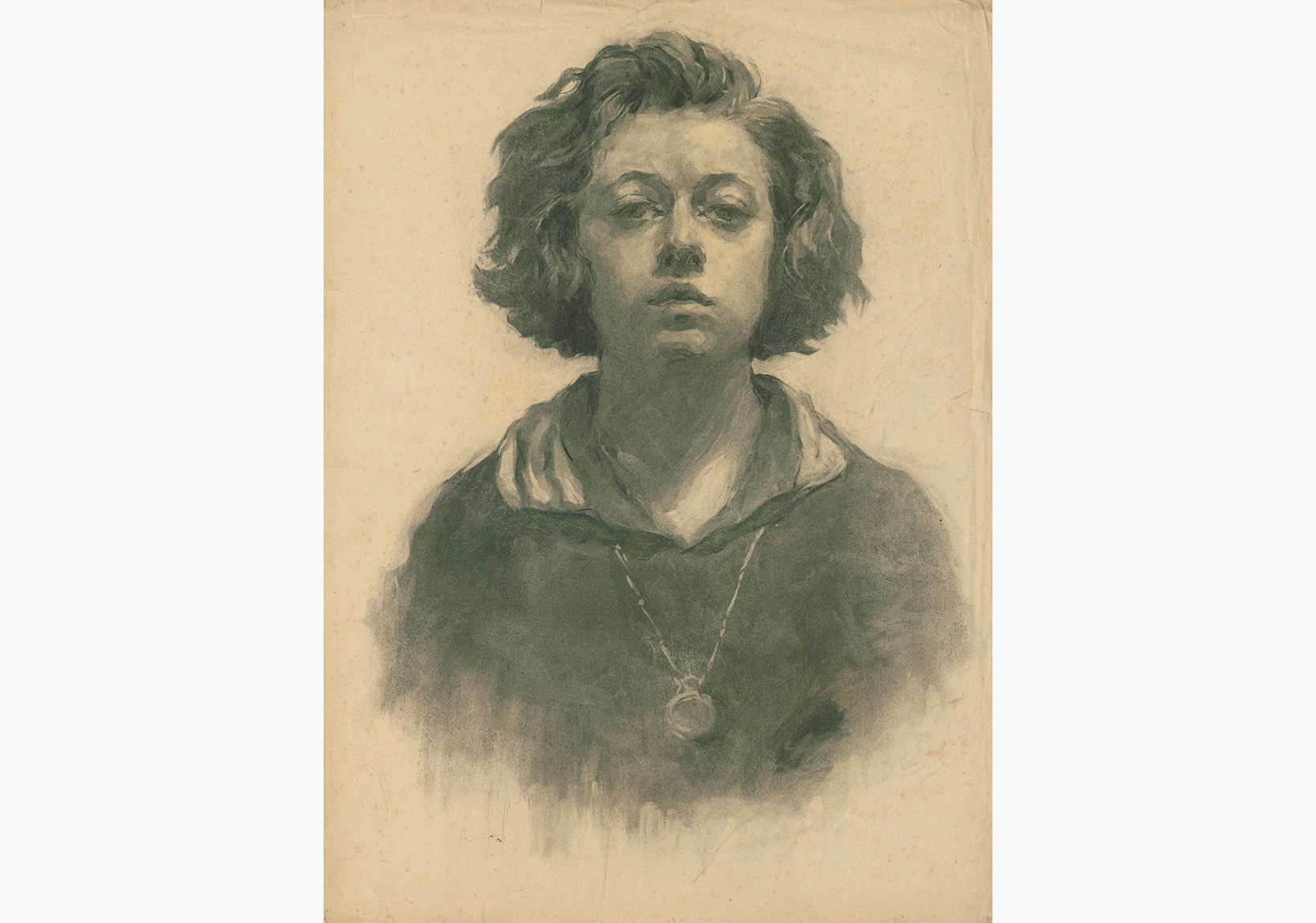
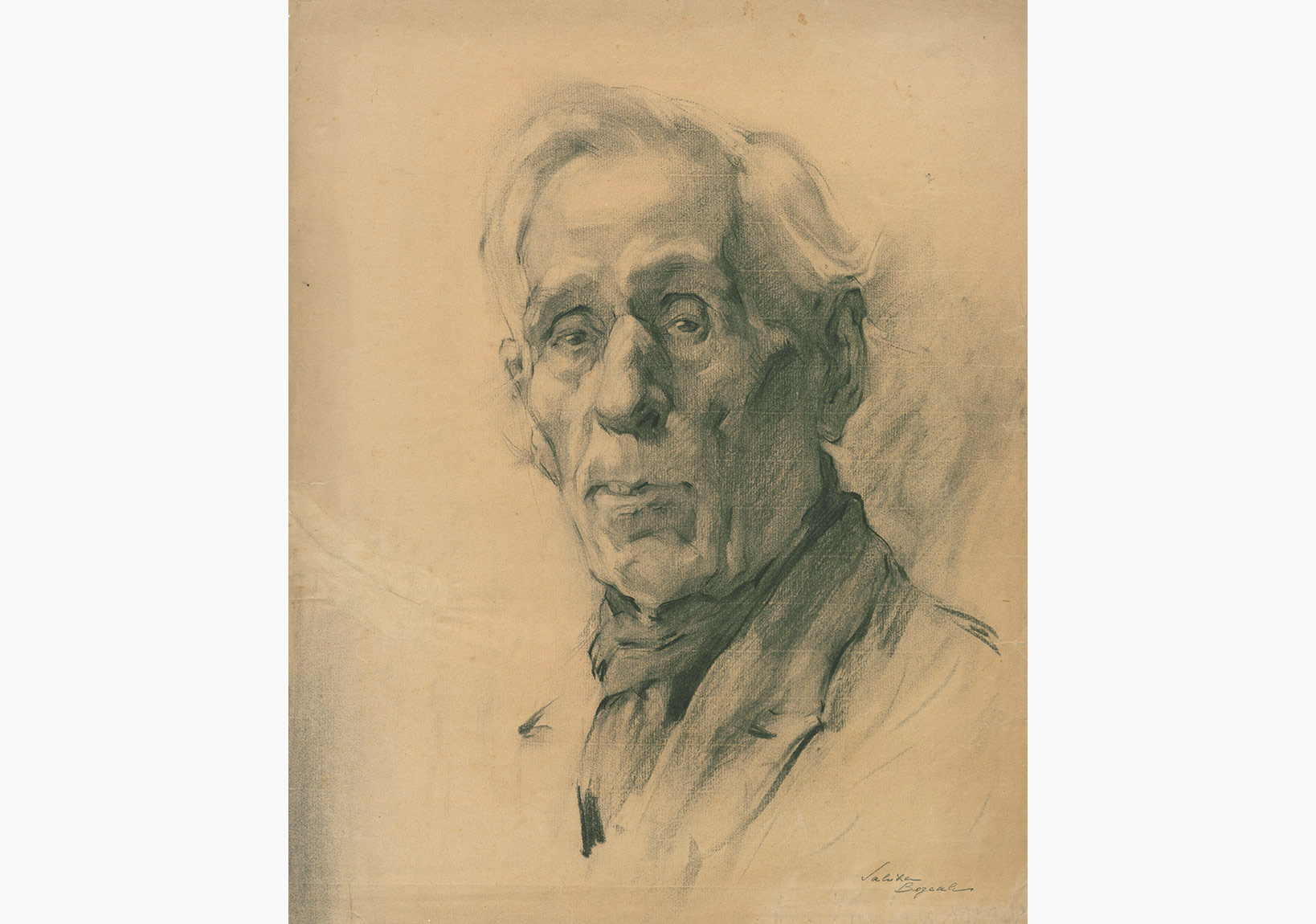
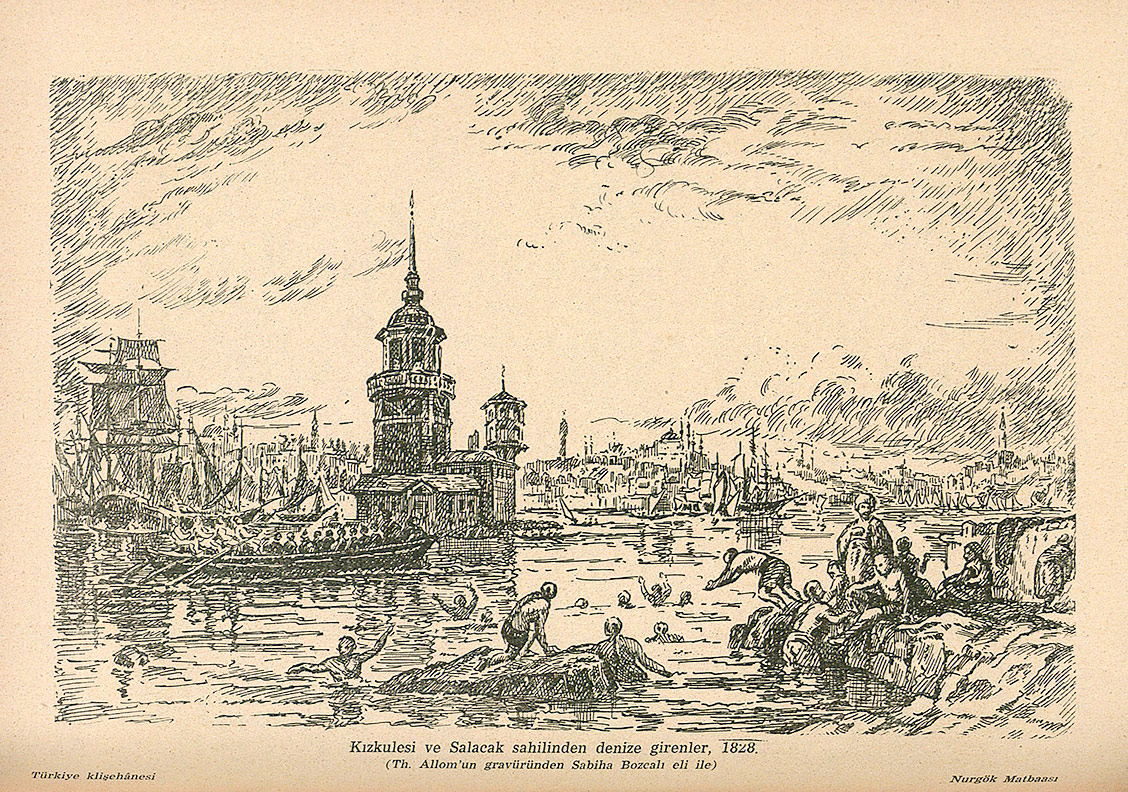
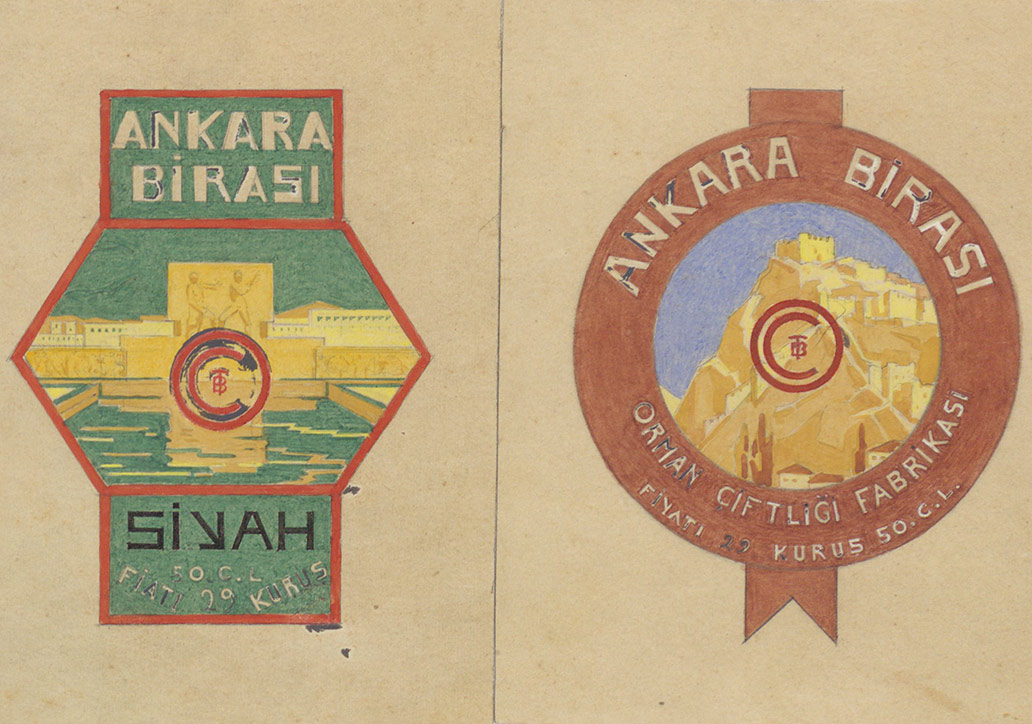
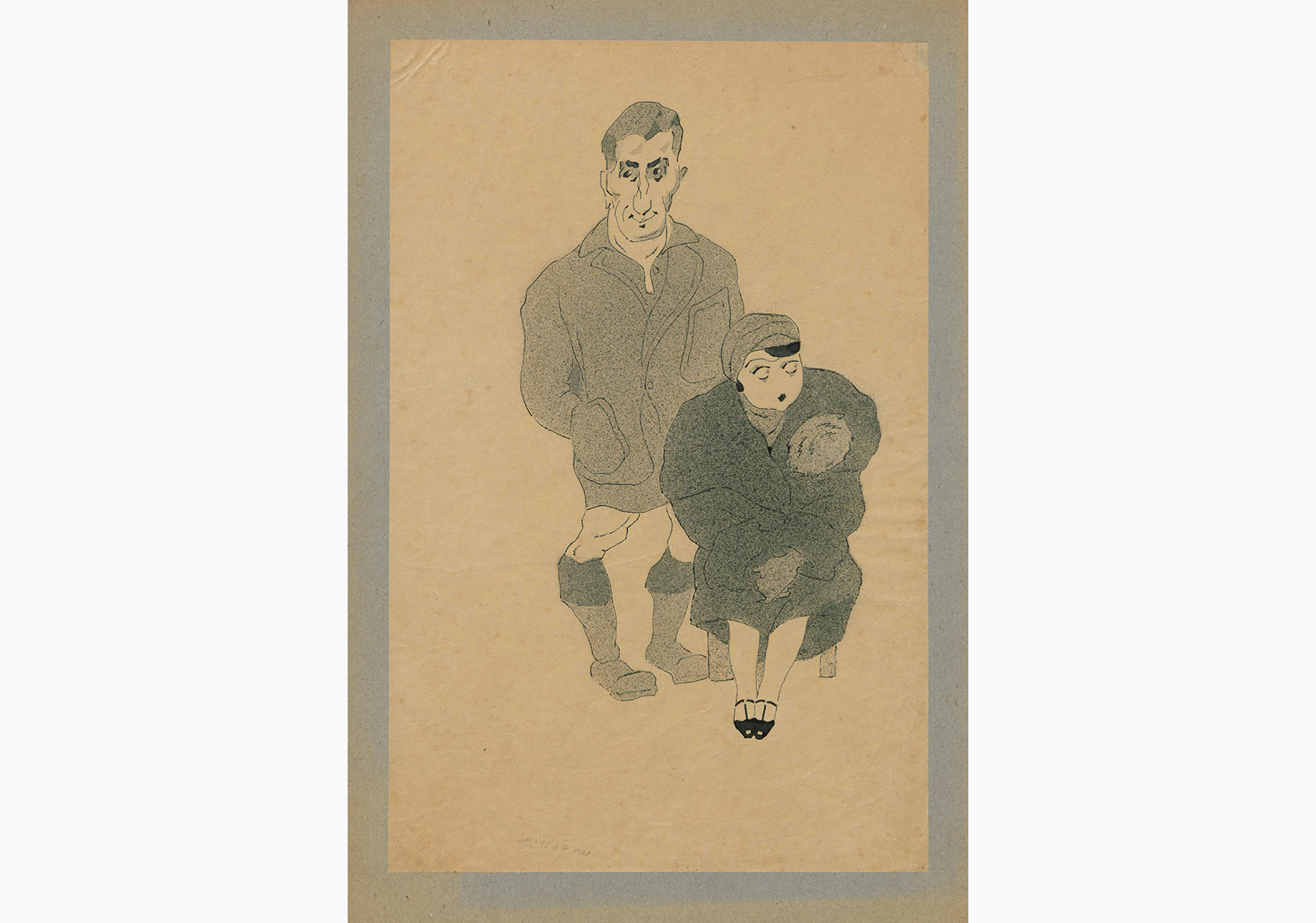
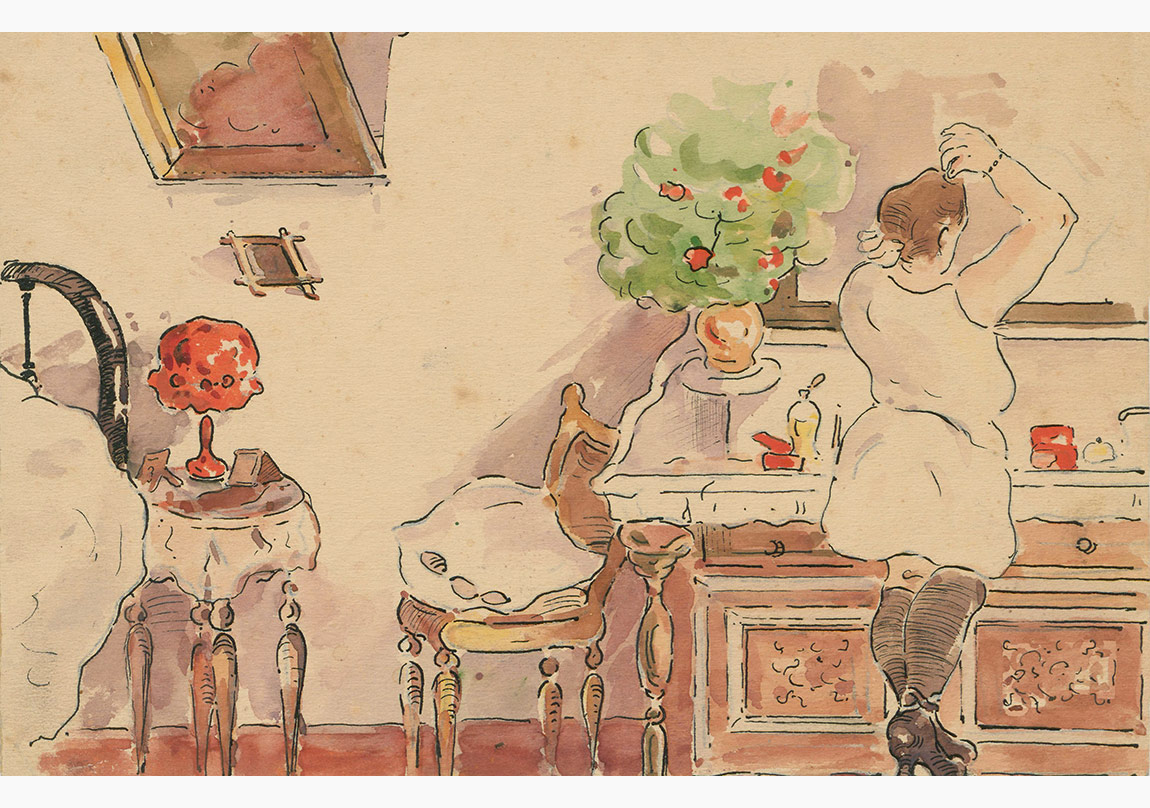
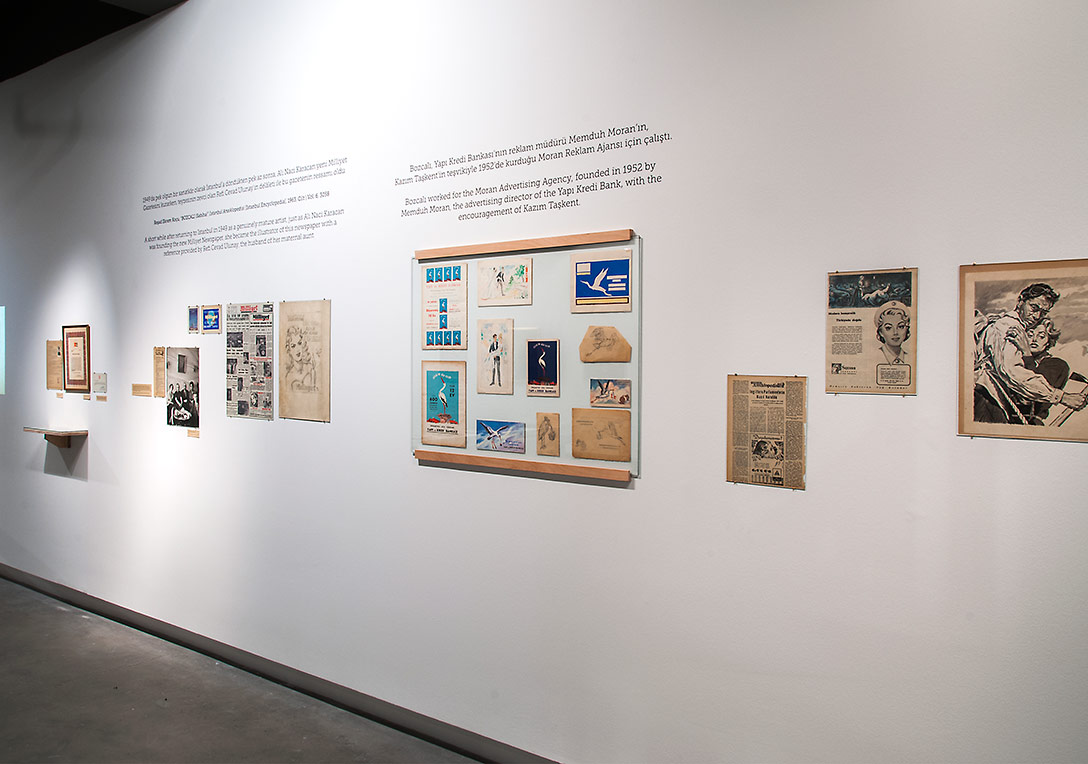
According to the artist herself, she works in the impressionistic style, most probably during her early period under Signac’s influence. Bozcalı made drawing her central concern and it is possible to see in this exhibition just how strong her drawing works are. The emphasis she placed on drawing must have directed her to illustration, graphic design, and advertising works later on in life. She was the head painter at Milliyet and illustrates serial writing and art works in newspapers including Cumhuriyet, Yeni Sabah, Ulus, and Tercüman. She also worked on Reşat Ekrem Koçu’s Istanbul Encyclopaedia, which is one of the most interesting examples of Turkish publishing; here, she is honored with her own article: “…this Istanbul encyclopaedia’s friend, indispensable contributor…”
She produced prolifically all her life
Bozcalı kept Namık İsmail’s advice, who wrote to her a letter when he was the head of the Academy, “… I beseech you, work constantly,” and produced prolifically all her life. The artist’s works are included in numerous collections including the Akbank Collection and the Naval Museum Collection; three portraits that she did as studies of the Signac family are still with her family. However, while we learn from Lorans Tanatar Baruh[1] that they tried to get a hold of the works, there are very few works by Bozcalı included in the exhibition. Most of the works included in the exhibition are from the family collection. For example, Bozcalı’s works that were included in her solo exhibition at the American News Center, which are mentioned in the exhibiton brochure, are not only unavailable at the exhibition at SALT, but their whereabouts are unknown. This is disappointing on the one hand, but on the other hand, there is a provocative amount of things to be studied by art historians.
The exhibition is titled after the artist: Painter Sabiha Rüştü Bozcalı. If we accept that we are having difficulties recognizing artists for their work, appreciating them for what they do, the title is only appropriate. However, it is interesting that the artist’s vocation as an illustrator is prioritized over her artistic identity in full, both in print and in other publications, emphasising her being “the first woman illustrator.” Of course, Sabiha Rüştü Bozcalı has put her signature on very important and pioneering works both in illustration and graphic design. It thus makes sense for this to be the point of emphasis in the press release and in the exhibition. In organizing and prioritising information, this is a point that is open to misinterpretation.
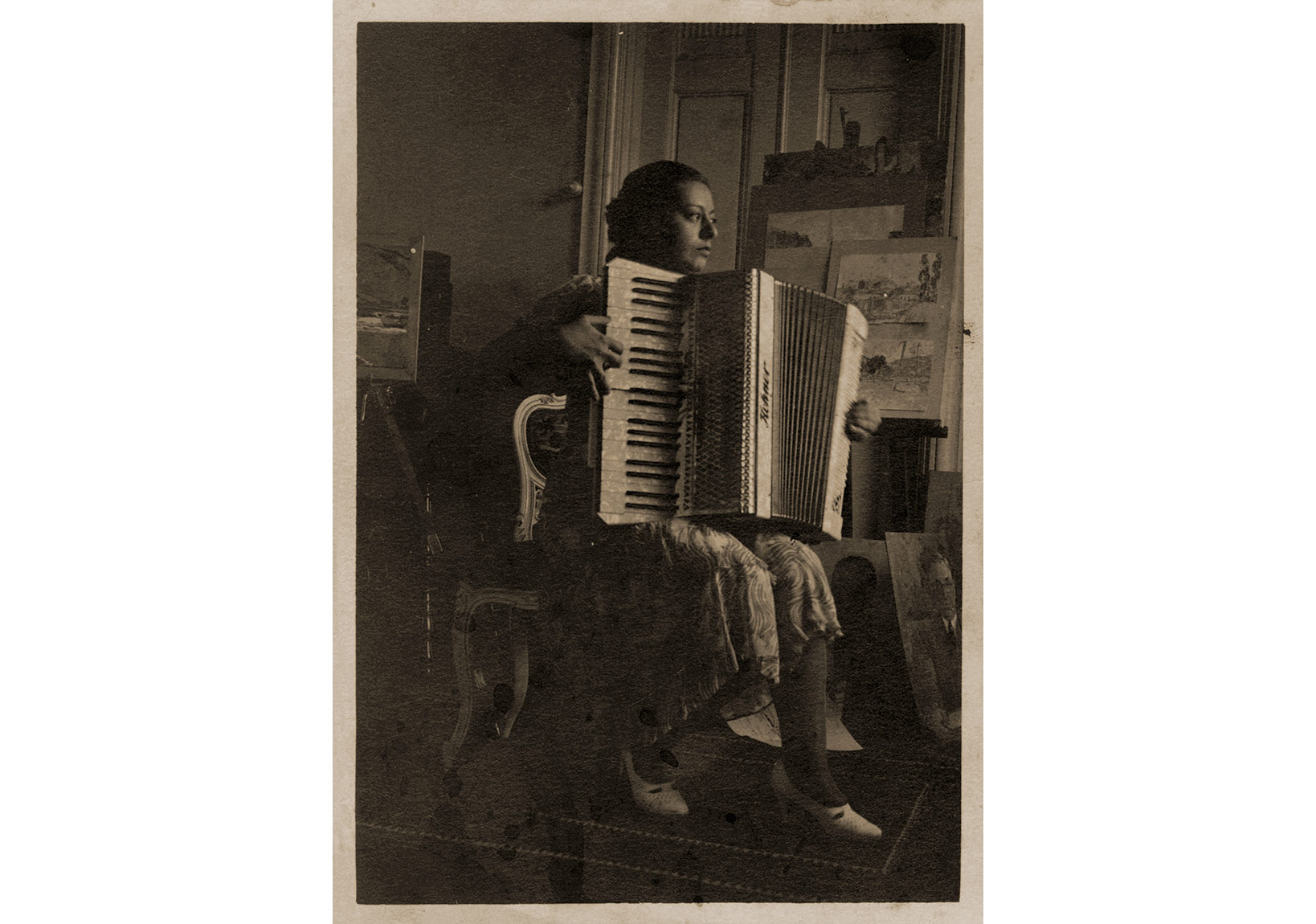
As an added element in the space, the music accompanying Bozcalı’s life and works is delightful. It is an anonymous tango piece, edited for the artist, who received accordion lessons herself. Of course, a photograph of the artist with her accordion and a letter from her accordion instructor are presented in the exhibition, befitting such archive-based research.
The exhibition is on view at SALT Galata until February 28
[1] Nurullah Berk-Adnan Turani, Çağdaş Türk Resim Sanatı Tarihi, C. 2, İstanbul, Tiglat Yayınları, Ekim 1981, s. 126.
[2] Kaya Özsezgin-Mustafa Aslıer, Çağdaş Türk Resim Sanatı Tarihi, C. 4, İstanbul, Tiglat Yayınları, 1989, s. 15.
[3] Sezer Tansuğ, Çağdaş Türk Sanatı, İstanbul, Remzi Kitabevi, 4. bs., Ağustos 1996, s. 163.
;