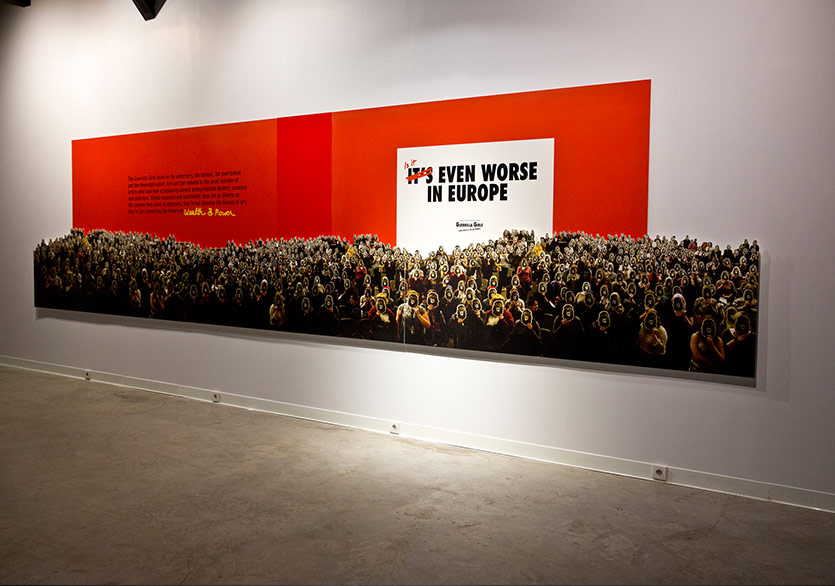
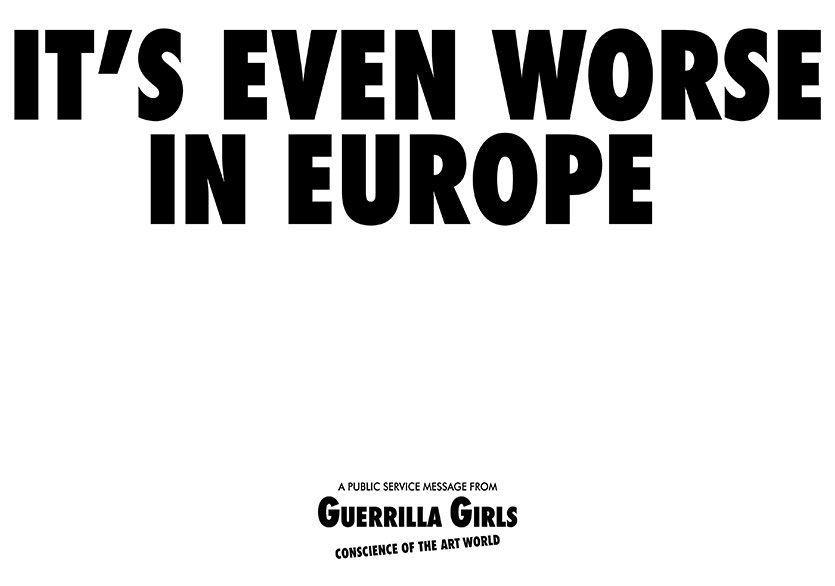
In 1986, the girls released a portfolio called "Guerrilla Girls Talk Back". In the portfolio that focuses on gender and race discrimination in the art world, one of the 30 posters is "It’s even worse in Europe". Thirty years after that, the campaign was repeated at the Whitechapel Gallery in London, calling it " Is it worse in Europe?". Only a few months later, the exhibition met Turkish audience in GAIA gallery İstanbul. We had an interview with Guerilla Girls for their latest exhibition.
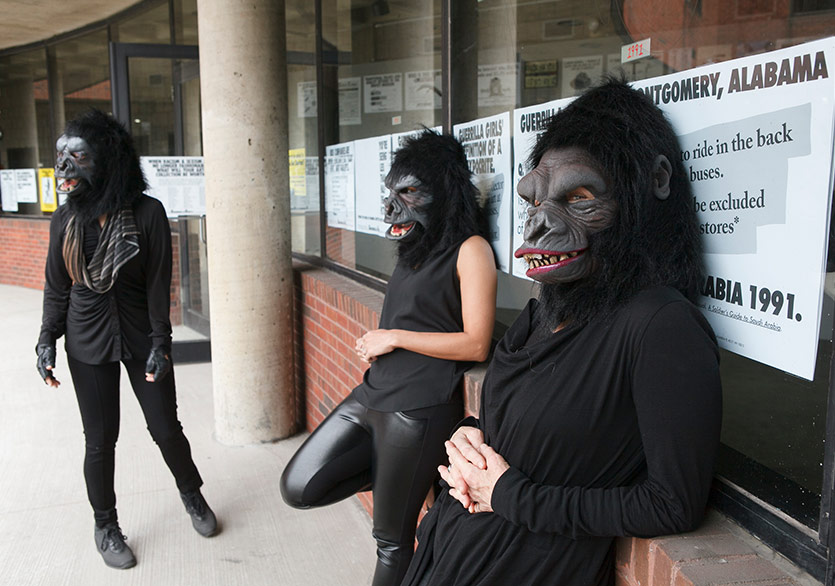
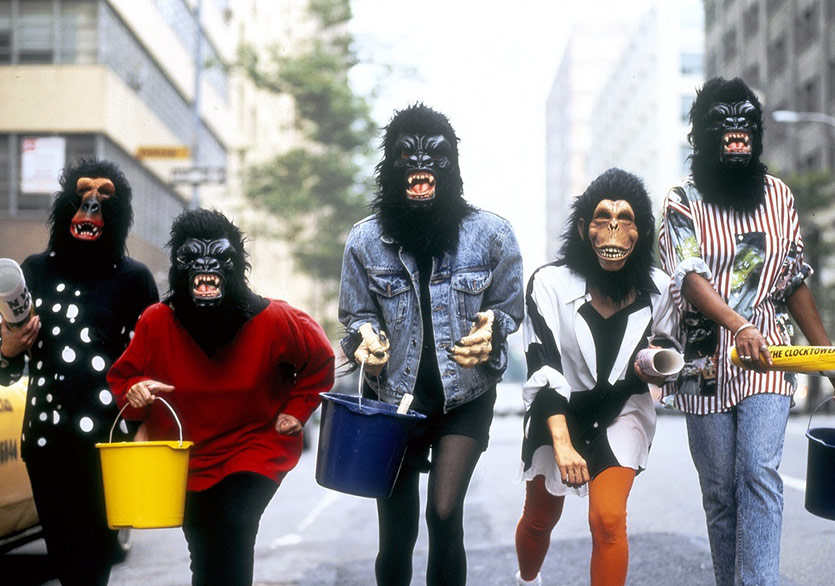
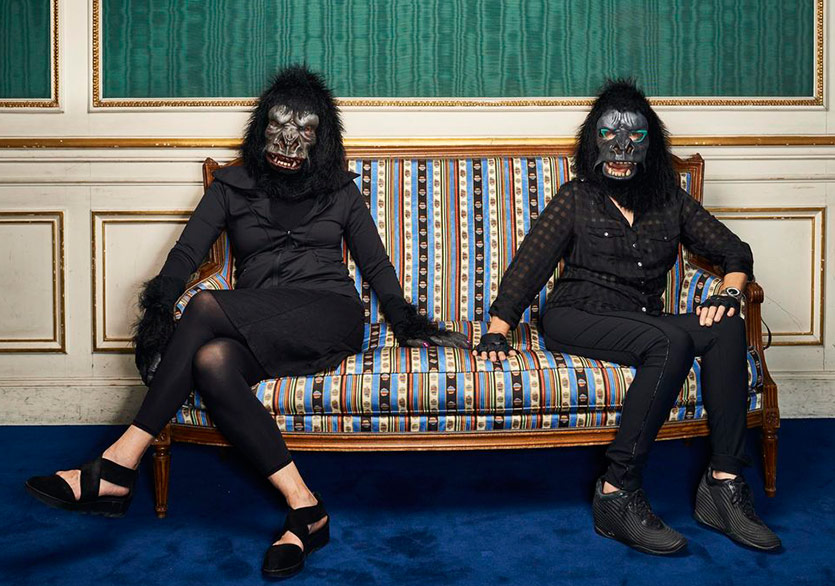
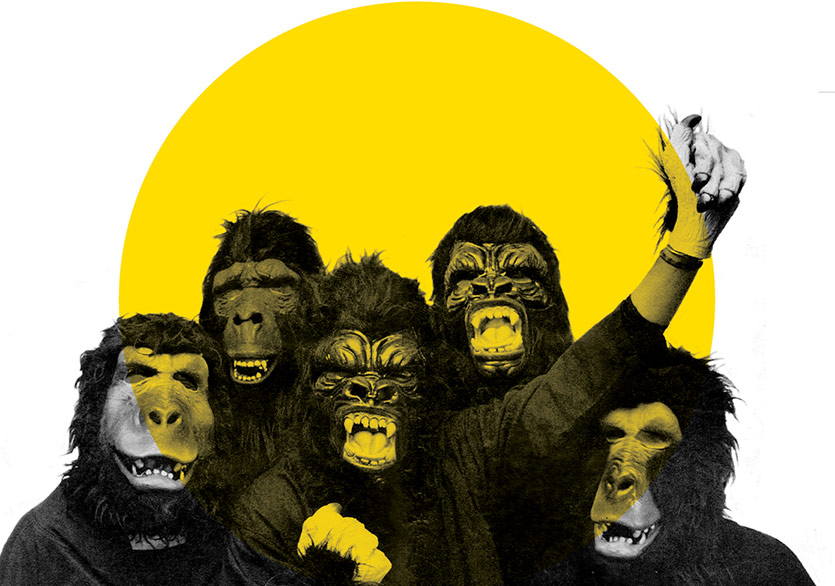
Guerilla Girls, a feminist and secret identity activist group founded in the US in 1985, wears gorilla masks to hide their identities in the public, finds nicknames of art history, and exhibits their activism with materials they have created, the exhibits they have made and interventions to meet the public . They criticize issues that settled on art, politics and culture such as reality, sexism, racism, and corruption in the institutions with humor, masks and fake furs, posters, posters, banners, billboards, projections, and public projects.
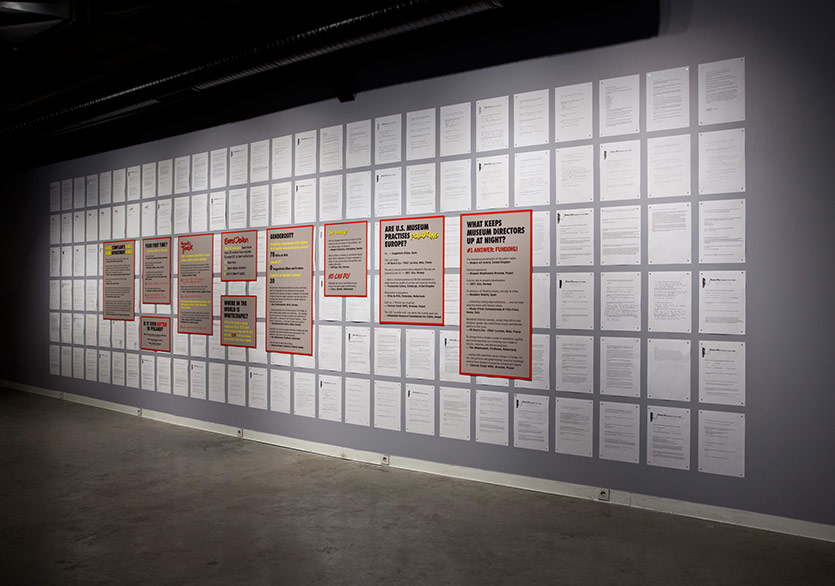
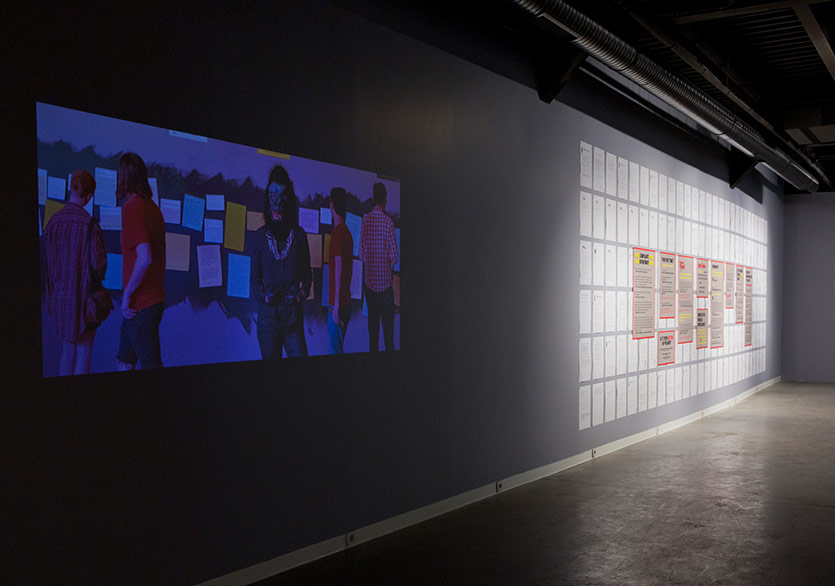
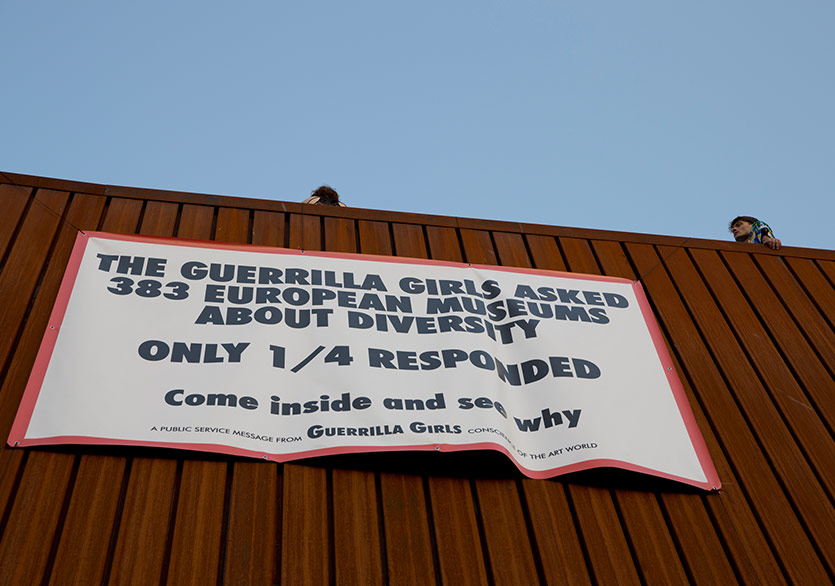
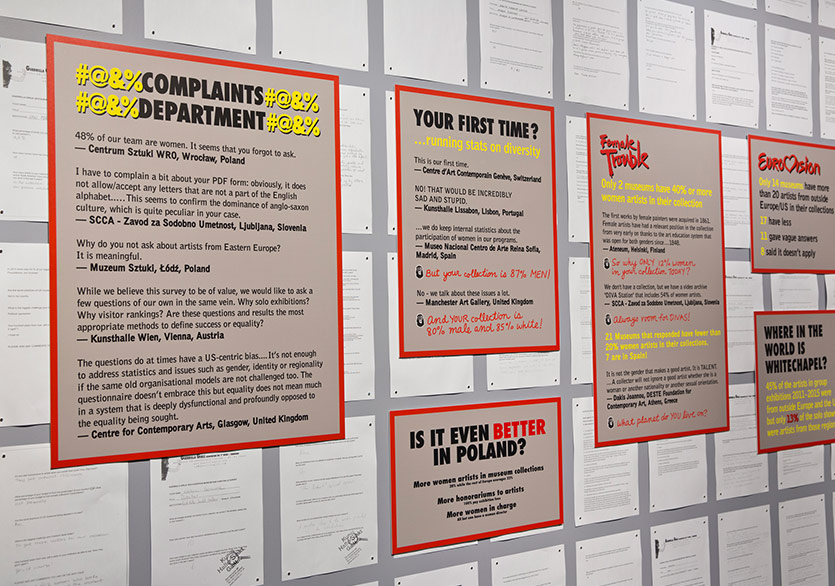
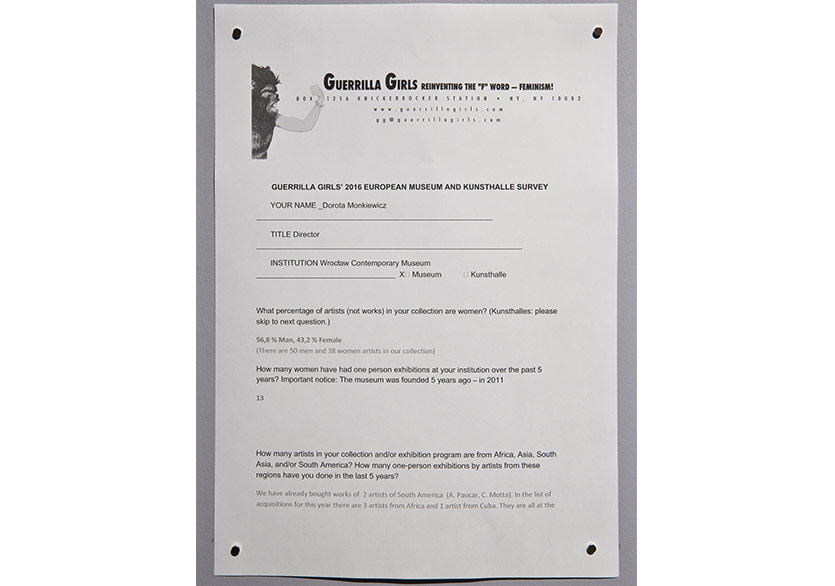
In GAIA, Guerilla Girls is shown for the second time in a gallery in Europe. In the questionnaire on museum applications, only a quarter of 383 art institutions responded to the questionnaire, and their responses are hanging on display. The non-responding art institutions, on the other hand, are somewhere "on the ground" where you can walk on their names. The exhibition suggests that cultural institutions have two main reasons to be in this state, namely their own representation practices and the problem of financing.
I must say we are so excited to welcome your works here again in İstanbul. What is the first thing you want to say? How do you feel about this exhibition?
It’s great to have our work shown again in Istanbul. In 2005 we were invited by Rosa Martinez, then director of the Istanbul Modern, to do a project examining the working conditions of Turkish women artists. It is especially important at this time in history for our work to enter the discourse about culture in Turkey as well as in the US and in Europe.
“Is it worse in Europe?” was first exhibited in London, Whitechapel gallery. What should we expect from the İstanbul exhibition at GAIA? What are we going to find?
The Whitechapel Show is restaged in its entirety at GAIA Gallery. In response to a questionnaire we sent out you will find statistics and comments about diversity submitted by museums from all over Europe. We didn’t do the stats ourselves, we let the institutions tell it in their own voices. They give lots of reasons, lots of excuses for their programs. In some cases, they think they are doing better than they really are. The institutions that did not answer the questionnaire are all in the exhibition, too, on a list on the floor where everyone will walk over them.
The fact that women artists from Turkey started to focus on women's roles and identities only after 1990s and considering only 28% of Turkish women participate in the workforce, what does it mean to have an exhibition in such an environment?
Your movement is now out of USA, it has spread over Europe, first in London and second destination in Turkey. Are we going to see this exhibition again somewhere in the east? In the context of institutional questioning, is this a global turning point of Guerrilla Girls?
We hope so! We’ve been showing in Europe since 2002 when Arakis first organized an exhibition of our posters in Bilbao. We think that Europeans like to see Americans criticizing the US and they don’t seem to mind it when we criticize them, too. Most European art institutions, run by the government, are slightly more democratic than US museums, which are mostly run by rich art collectors/investors. A lot of European art professionals are afraid that this US system, which is ripe for corruption, is starting to infest Europe. It’s not a turning point for us. It’s a continuum.
With your exhibition at GAIA gallery on the first floor, there is another group exhibition of only female artists at the second floor of the gallery. Apart from this, many institutions are making female only exhibitions to address the problem gender inequality in the art world. Are female artist exhibitions helping to correct inequality in the art world or are they perpetuating inequality? Does it give women the visibility to adapt to the wider art world, or is it keeping them separate and inequal in the name of it and positioning them as excluded forever from the art world?
There’s no one answer to that. All-women shows can do both, depending on context.
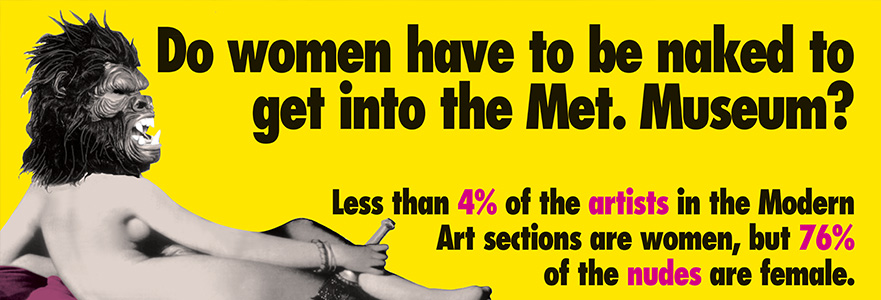
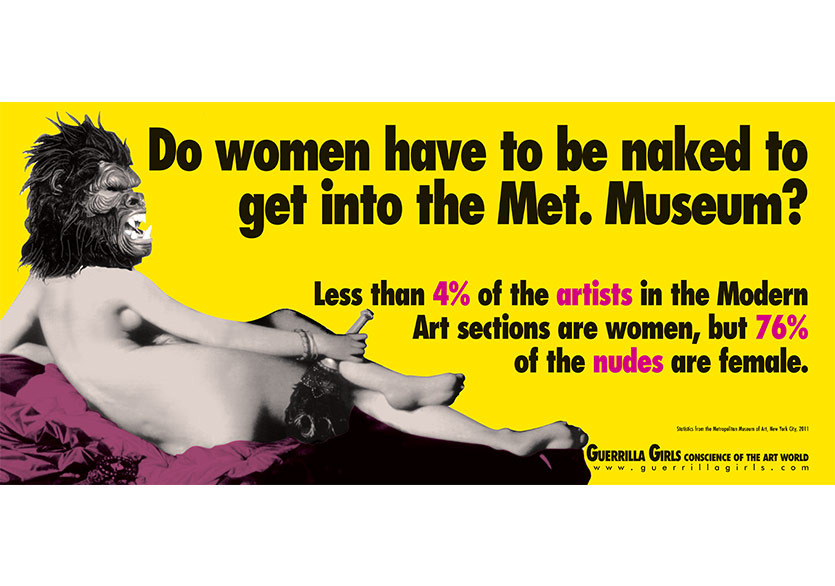
If we look at the permanent collections of famous museums, the sales figures of auctions, the rate of female and men in solo exhibits also the representation rate in international galleries, the main problem is based on gender inequality, and such exhibits mentioned above are still caused by the anxiety of the inequality that women are facing. You have always worked on that issue. One of your most famous works is “Do women have to be naked to get into the met museum?” Which is pointing out that whilst 85% of nudes in the New York Metropolitan Museum were female, only 5% of artists exhibited were women. For “Is it worse in Europe?” you are bringing up an issue much wider and from the past, questioning invisibility of women in museums and cultural institutions. It was included in your 1986 portfolio, and it’s brought up today for this exhibition. What has changed and has not changed over 30 years from your perspective?
Women have always made art whether the culture they live in has allowed them to call themselves artists or not. The same is true of artists of color in the US and in Europe. Today, when we know history is not a simple story, it’s not possible to tell the full history of culture without including all the voices of the culture in that the history. Otherwise it’s just a history of wealth and power.
You have always produced your art in accessible and affordable ways to access – we can download your stickers from your website and you have more than 102.000 followers on Facebook. Can we say today’s technology and social media is a positive factor spreading your words?
We’ve developed our own way to survive. Instead of making a few large exchanges for lots of money we make lots of small exchanges. For 20 euros you can own one of our posters the same one that just so happens to be in an art history book or a museum collection. Sure technology and social media help us.
You have started your journey in the art world 30 years ago, officially, and it probably takes it’s origin from far back. Exhibiting in art galleries but not having any works there available for selling, how is your relation with the art market today?
We have lots of things for sale, it is sold from our website. We also sell complete portfolios of our work to public collections because we want our critique to be part of the historical record. Funny that not many private collectors are interested in our portfolios. Wonder why?
Tate Modern had many female artist exhibitions in recent years such as Sonia Delaunay, Agnes Martin and Marlene Dumas, solo exhibitions dedicated to female artists. Solo shows of Joan Jonas (14 March-5 August 2018) and Anni Albers (11 October 2018–13 January 2019) will follow in the upcoming season of the museum. Your exhibition at Whitechapel Gallery had also a parallel event at Tate. Tate is now presenting a female Turkish artist retrospective of Fahrelnissa Zeid (b. 1901, Istanbul, d. 1991, Amman). She also was one of the first women to go to art school in Istanbul. Do you think these exhibitions are promising to other other female artists around the world? Can we say things have started to change?
Frances Morris and the other curators at Tate Modern have made a conscious effort to show and collect women and artists of color as well as to present a perspective than is not exclusively European or based on an idea of a mainstream. This approach is one way to present the story of a global world and not a Eurocentric patriarchy. But considering the rise of nationalism everywhere, including in our own country, we all have to be vigilant to resist backsliding.
In Linda Nochlin’s essay written in 1971, “Why have there been no great women artists?”, Nochlin quotes that male artists have more comfortable working conditions than female artists. After 46 years, today, does the idea still apply?
Of course! Look at who gets most of the money in the art world? Men. Usually white men. There’s a big argument going on between the world of critical thinking and the market about what art is most significant. And we hope the market loses.
;