Could we talk about how you approach performance as an artistic practice? In your performances, does the action start when you are on stage or before?
Of course the action starts way before. Actually, the process begins when I start thinking about how to realize an idea, before the performance has fully formed as an idea. This is because finding the material for the performance, to think about it, to conceive the whole process of the performance is a part of it as well. In all these stages, I try to reach this idea with my soul and body. Of course the moment of the performance is the moment of the action, but the performance begins with all these preparations.
During the performance, how do you define the end of the performance? "I reached the end and the performance is over" feeling comes when? What are the conditions for making this decision?
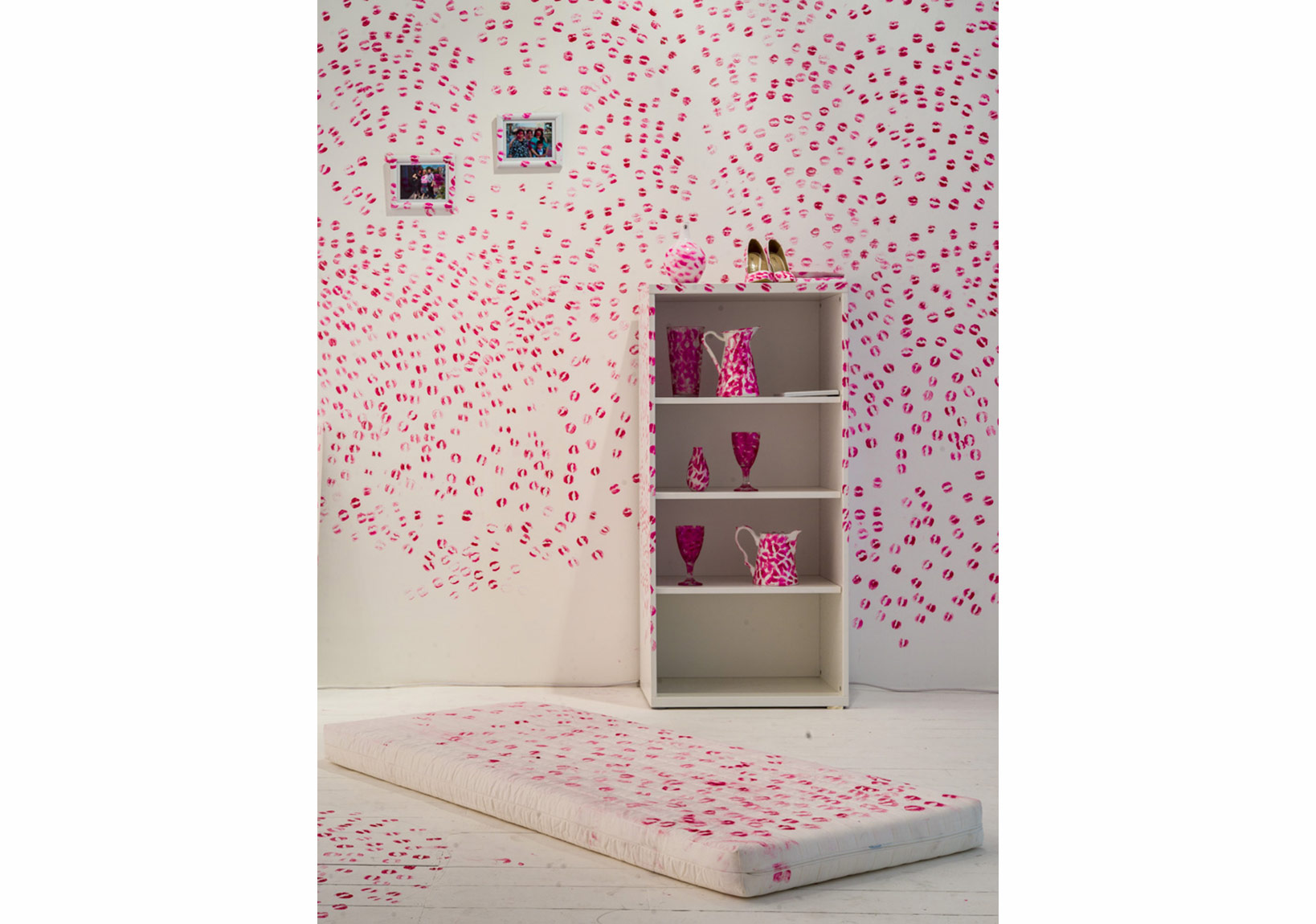
It depends on the situation; sometimes the material determines this. For example, my work "Emotion in Motion" is limited spatially. When the whole space is filled with kisses, the performance is over. Sometimes, I just know. I feel the energy of the viewer and the energy of the space and I understand automatically that it is time to stop. Sometimes, I start to feel pain physically and my body says, "Now is enough." I think this is also the best moment to stop. For example, Marina Abramovic's perspective is more dogmatic; she continues from beginning to end, for hours at end, no matter what. I'm not like that. For me, what is important is that people feel the intense tension during the performance and once that point is reached, I think it is necessary to stop. If the viewer experiences too much tension, the work could dissipate within this tension. In certain cases, I enjoy stopping right when the excitement and the tension are heightened. When I do longer performances, people come and go to the space that I am in; it is something that lasts, which they watch for a while and then continue.
But at this point, I have a question. In order to feel the right moment and to end the performance, you need experience, right? Because otherwise, by focusing too much on yourself and perhaps because of excitement, you cannot hear yourself nor feel the tension of the viewer.
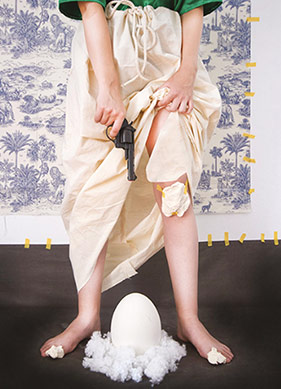
You are right. I have been doing this for fifteen years. During this time, I realized performances for a variety of audiences, so I can feel the different dynamics. During a performance, I really give a lot from myself. There is energy in the space—I can feel it. In order not to disrupt my concentration, I do not look at the viewer, but I can definitely feel the tension in the space. Then there is a moment and I get this feeling that is not pleasant and I say to myself, "I need to slowly end here." At other times, for example, during my performance with the apples, (Imagine, Pi Artworks Istanbul 2012), even if I want to continue, my body doesn't move any more. In that performance, the goal is not to reach the final apple, but to present the flamenco dance together with the apples.
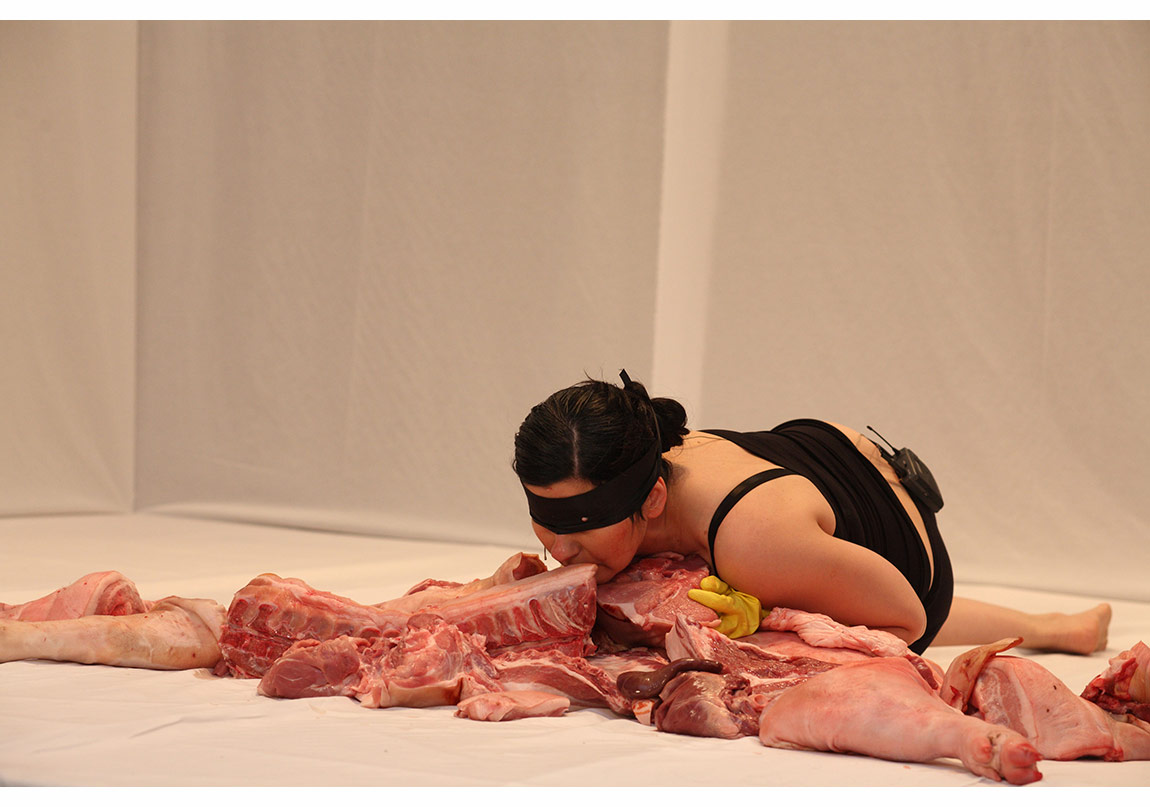
So you sometimes listen to your body and sometimes to the space. On the other hand, there are some works in which you resist your own body, pushing its boundaries. “Flesh (no pig but pork)” is one of these…
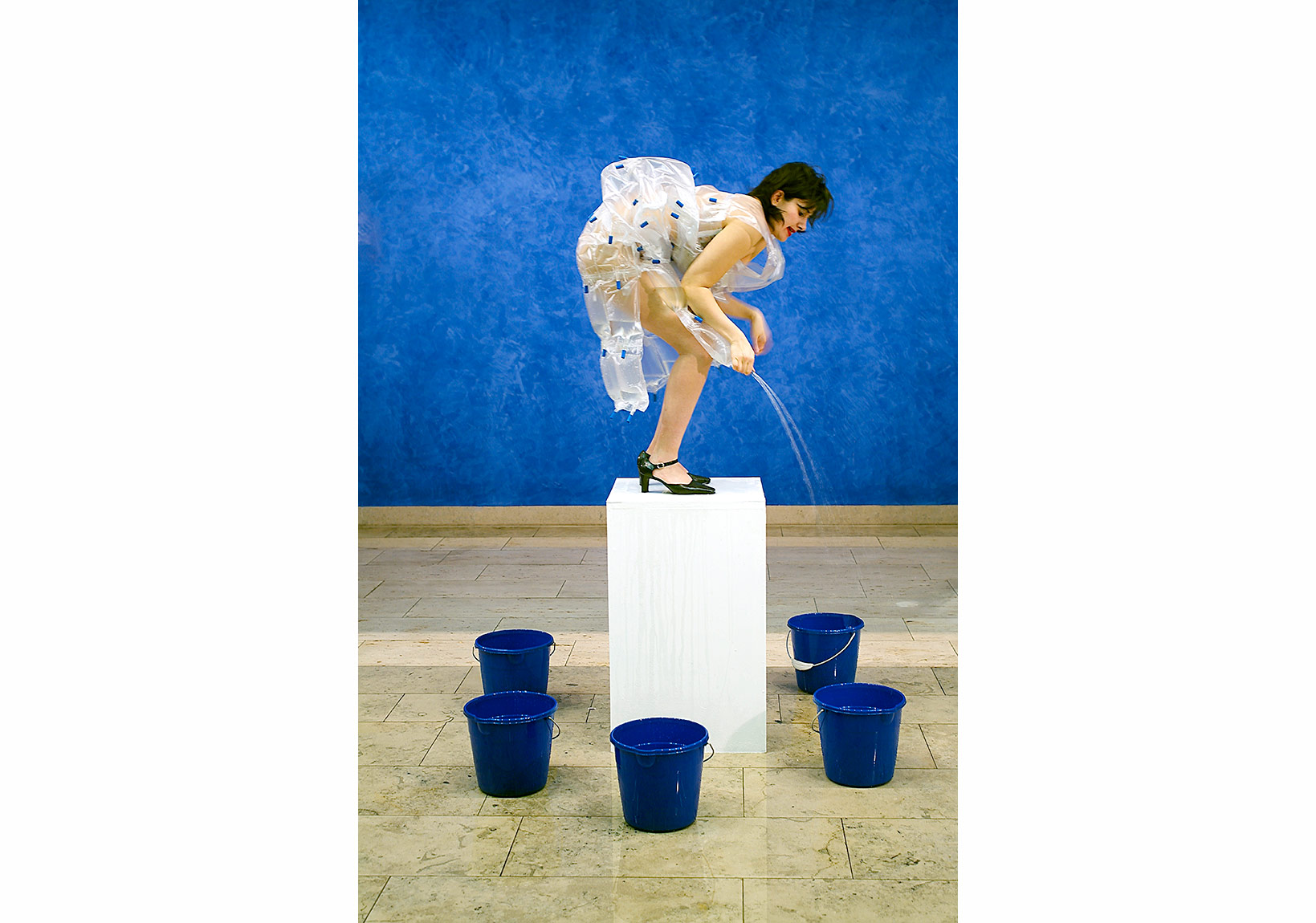
It's true, I'm a performance artist, I want to present to the viewer what I'm feeling in that moment. Perhaps how I start and how I end are very planned, but the part in-between is very free. Sometimes, new things occur to me during a performance and I move in that direction. For example, although I have performed "Fountain" perhaps fifteen times by now, every time I think of new things. Thus, none of the performances are the same. Every time, people change, the space changes and I change…
Of course being able to feel these differences relates to experience. At the end of the day, there is muscle memory; your body knows a work you performed 15 times and this enables you to add to what you are doing without having to pay too much attention to what you are doing. Then, how do you enter the performance state of mind? Do you float out of your body, looking at what you are doing from above or are you completely in your body?
I'm completely in my body. If I don't concentrate, the viewers will know. If I think about how I look from the outside, the performance is not successful.
How long was your longest performance?
A week long, every day for ten hours. We were invited to the Van Gogh Museum as Marina Abramovic's class and we each did a work up against the Egon Schiele exhibition. It was physically very difficult.
I'm curious; those who do Parkour and graffiti on the streets do sports every day. They do this to be able to run away from the police or to be able to write on the difficult parts of the wall. Are you doing things to strengthen your body for your performances?
I would like to talk about your exhibition at the Haus am Waldsee in Berlin. The exhibition titled “Everything we possess possesses us, too” is based on the theme of the house. At the entrance, you greet the viewers with photographs from your family. Here, are you talking about ownership within the family?
When you enter this house, my family is behind the door, yes. But this is more about the intimacy formed with the viewer. It is more like opening the door to somebody.
You placed a work that relates to the space conceptually in each room of the house.
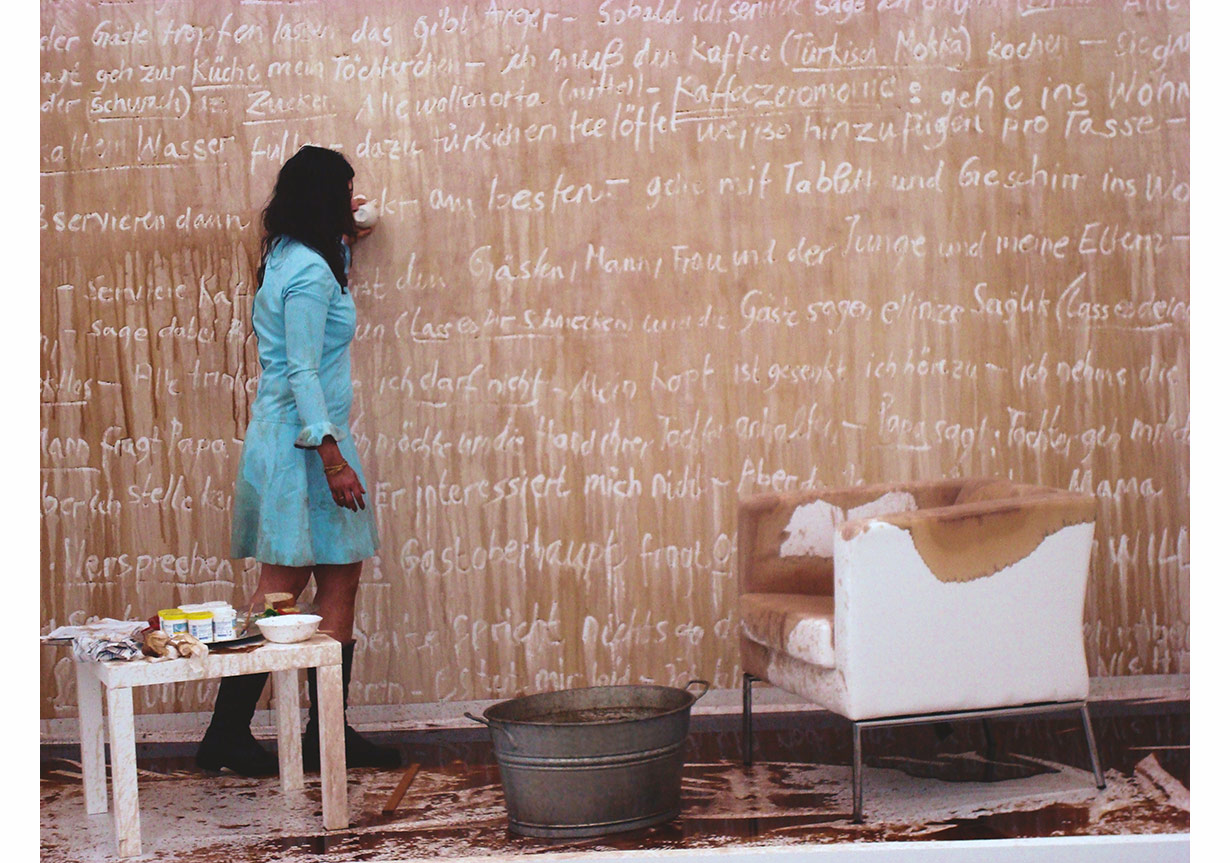
I thought about how the house used to belong to a Jewish family before. A very wealthy family who owned a factory lived here. They went to Argentina in 1925. In the past, each room had a name. In this framework, I put "Emotion in Motion" in the "Damenzimmer" (women's room). In the "Herrenzimmer" (men's room), "Asking for the bride's hand." "Lifting a Secret" became about eating in the "Speisezimmer" (dining room).
You did a new performance for this exhibition, right?
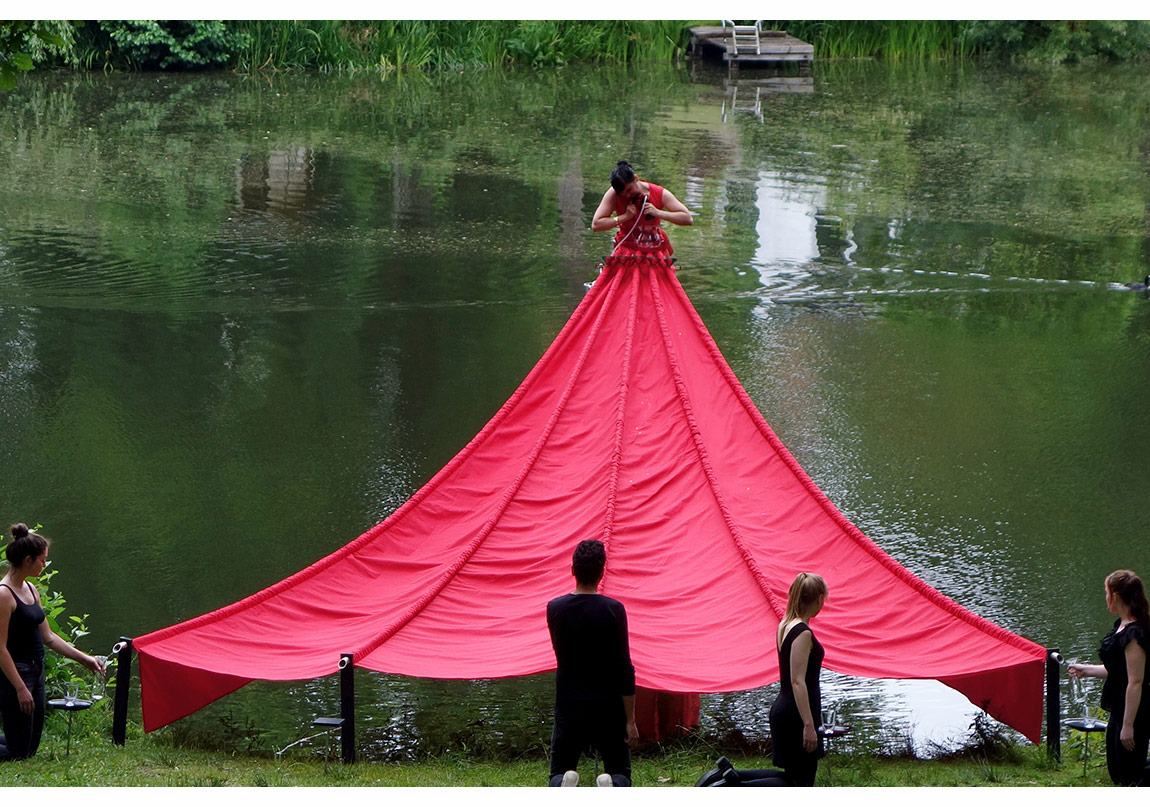
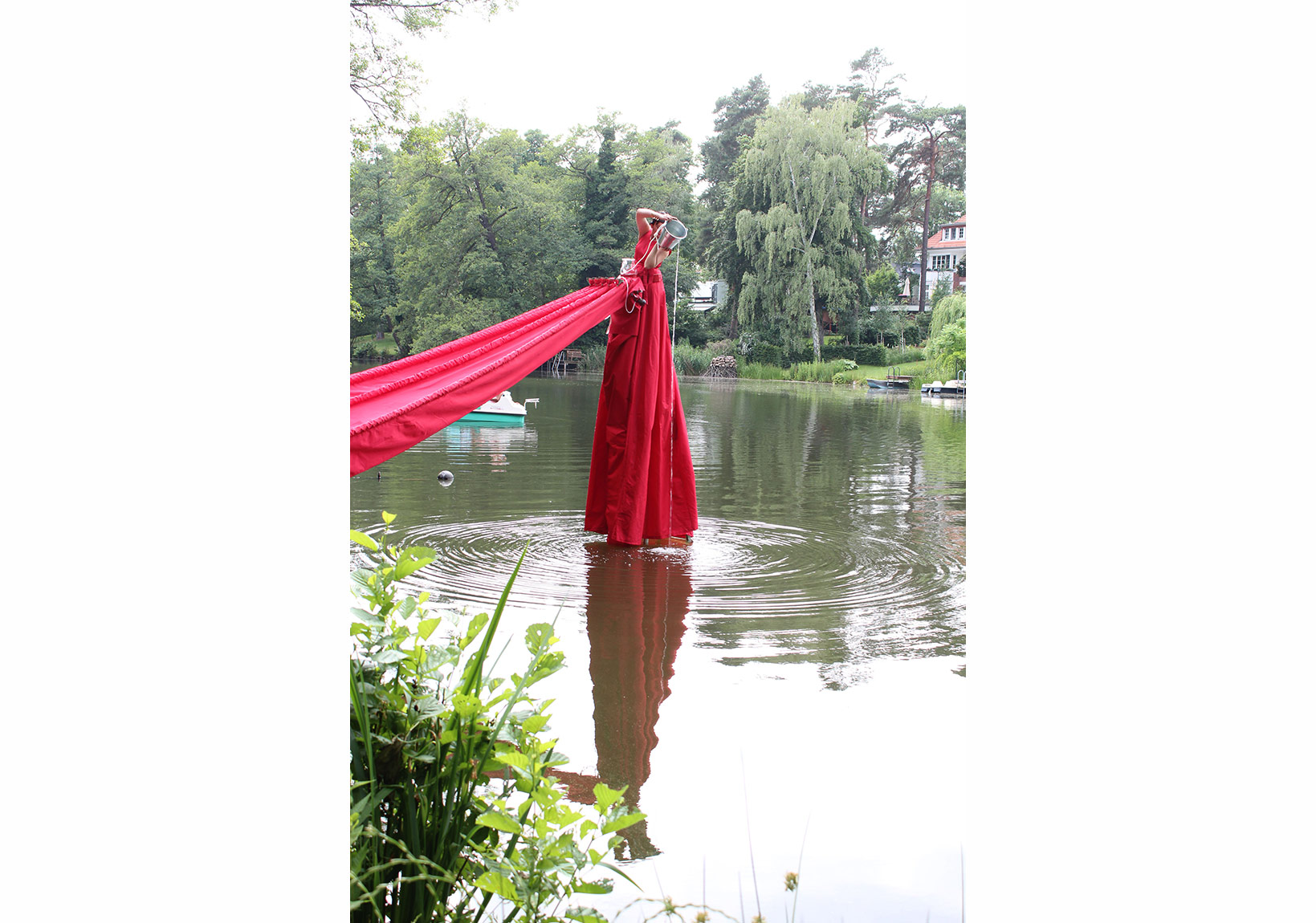
"Water to Water" was a performance I never tried before. I stand on a hill constructed for me in the middle of the lake, wearing a long red apron. The water I pump from the lake are filtered and through the pipes connected to my apron, they reach the shore where my helpers fill glasses with them, serving this water to the viewers as drinking water.
The materials that you use in your performances are like extensions of your body; I see equality between your existence and their existence. You could just use a material and put it to the side, but they are always placed alongside you.
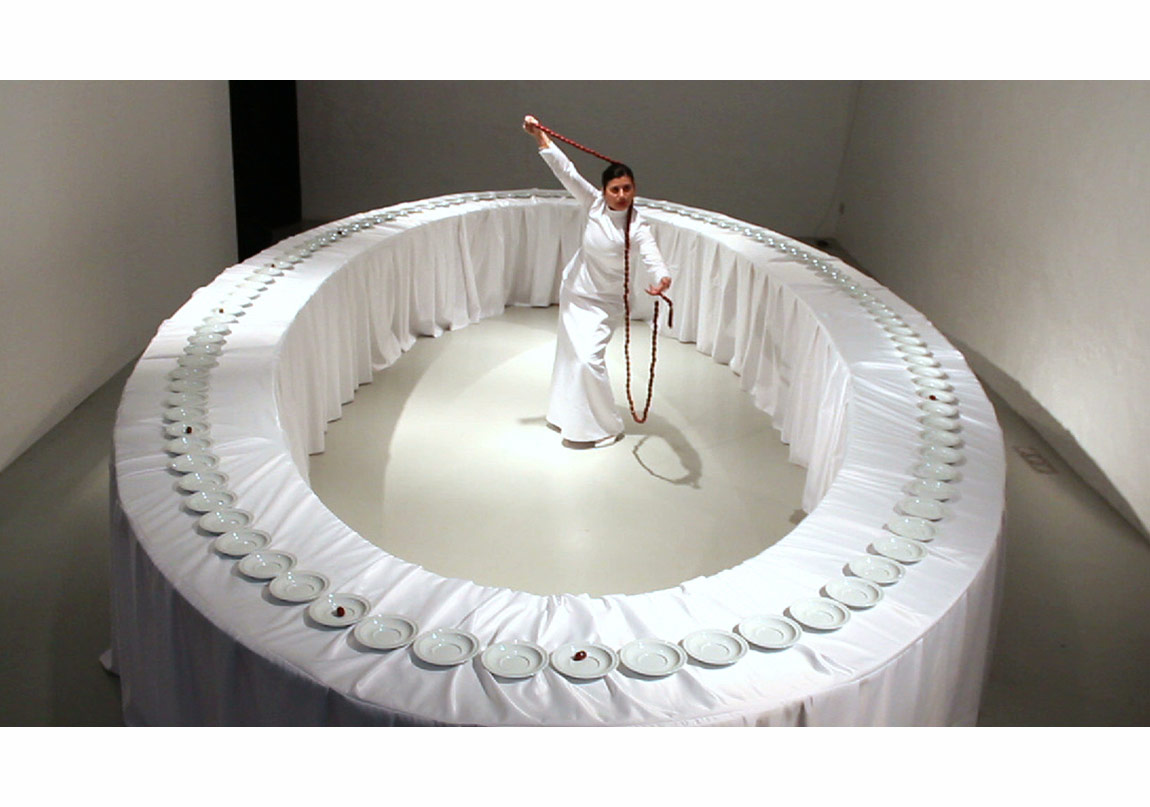
Some performance artists only use their bodies. I find the objects that use to say something very important. My concepts are formed with the object and thus there needs to be equality. I could not realize the performance o "99 Commandments" without prayer beads, for example. The costumes that I use are also like the objects in my performances.
When your performances are over, the objects and costumes that you have used continue the life of the performance even though the performances are physically over, could we say this?
Yes, my last exhibition at Haus am Waldsee is like this. The prayer beads of "99 Commandments," the costume in a gold cage continue the life of the performances even when I'm not there. These objects live in a sense and they have stories.
You have always placed emphasis on catalogues, the archiving of your performances. In a way perhaps this is about the performances existing in a different form after they are finished, which is different for objects. What would you say about this?
Documentation is very important. I archive my works as videos as well and I sometimes show this material in exhibitions. For example, Tino Sehgal does not want any of his works to be documented in any form. I don't think like that. For me, what is important is to work to be spread to as wide of an audience as possible. I care about more people seeing the work. This enables me to develop my ideas and to find new ideas.
Is there a project that you always wanted to do but could never realize?
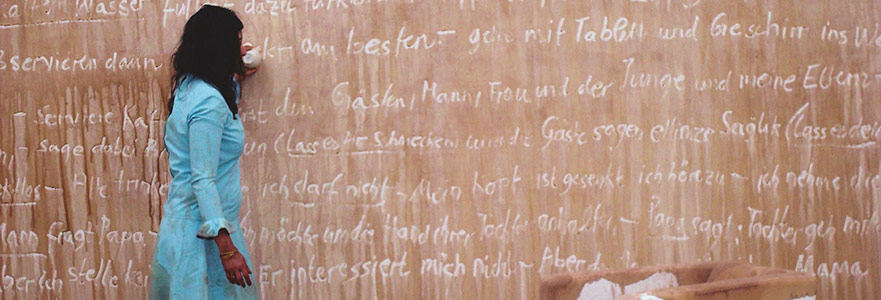
There is many. But there is a project that I've wanted to do since 2006, "Crossing Wonderland." I'm showing this work as "Ich bin eine Pflanze" as my contribution to a group exhibition in Kunstmuseum Ravensburg in Germany. I stand on top of a slightly high platform. There will be hands and arms that come out of the holes that form the grass platform. These "flowers" that belong to other performers will be tired and I will start kissing these hands, caressing them, massaging them. This will be a project in which my helpers will be fatigued instead of me.
;