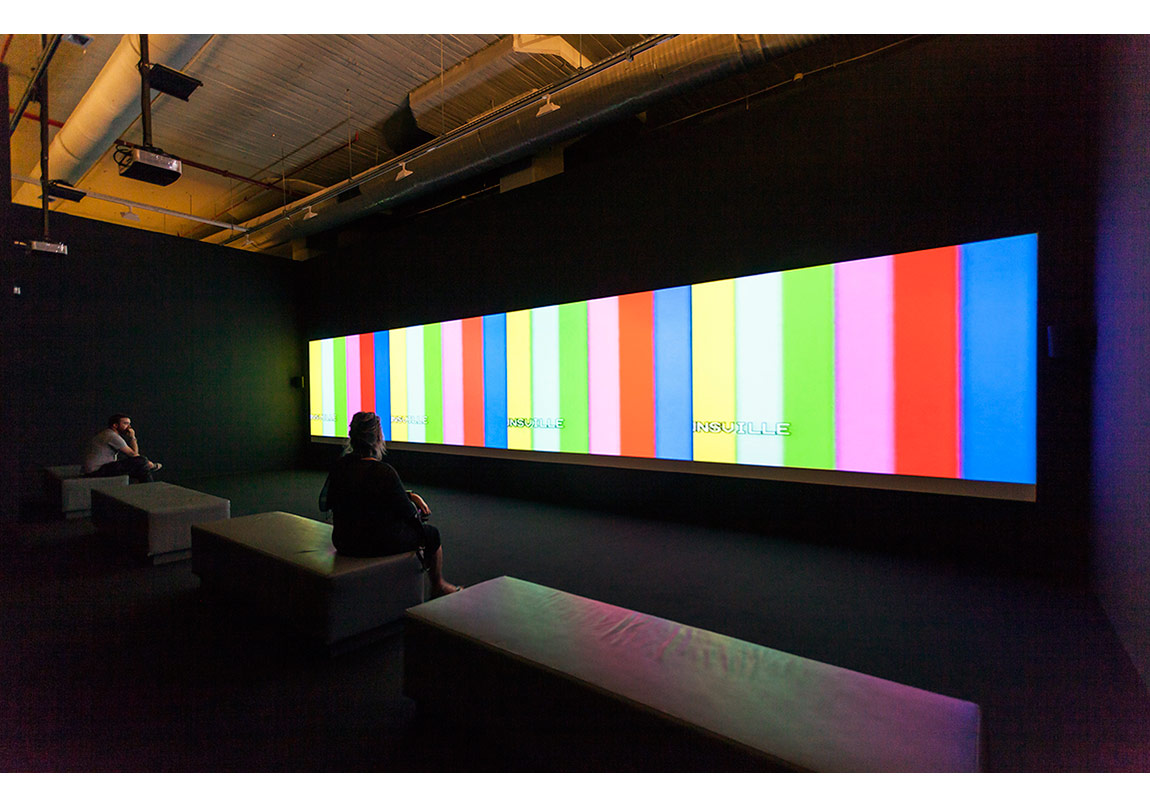
Your video installation provokes the audience to reflect salty water as a means of a social action, or a social wave rather. How would you relate the saltiness of water travelling in and out the ocean with regards to the theme of the biennale?
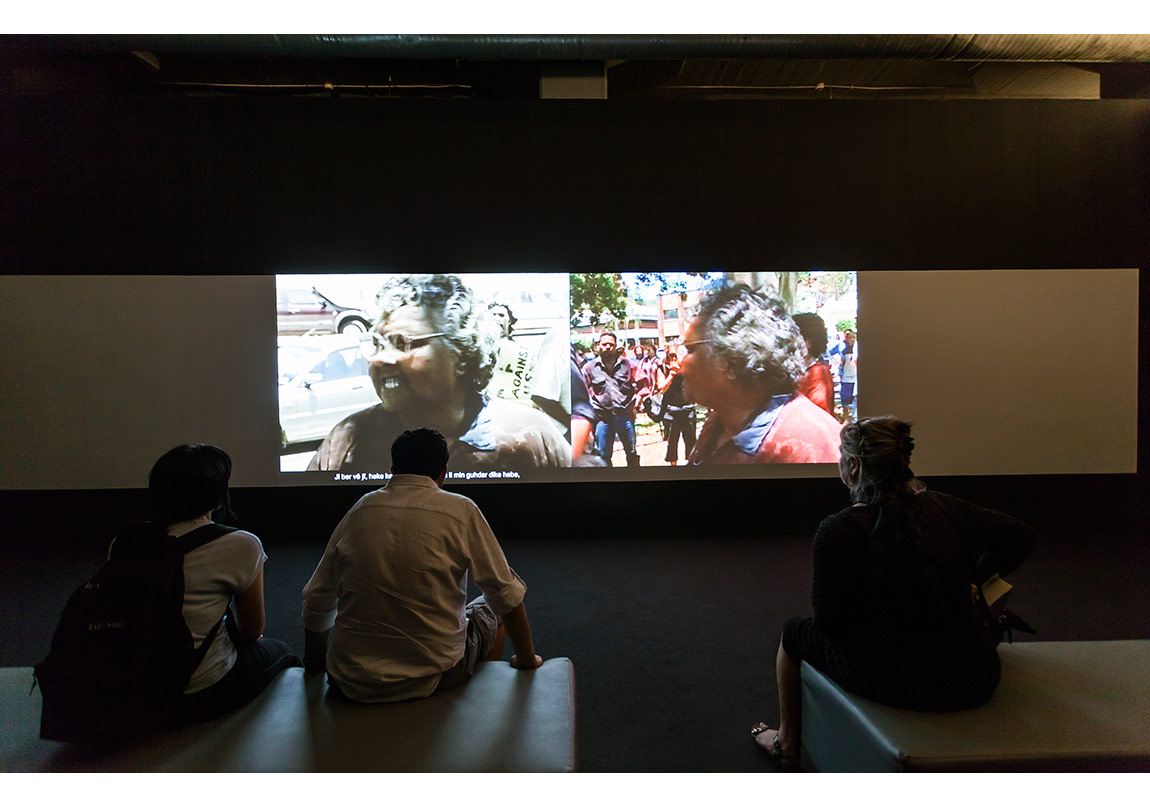
I have had a few conversations about this with Carolyn, the curator of the biennale. A lot of them were about the side theme - water force as a thought form. But one of the main ideas was the underlying premise of waves. And how waves of ideas, waves of people in terms of vibrations and how vibrations organically move from one place to another and follow each other through different generations. So, that’s the idea of waves in movement as well. When Carolyn actually asked for the video, I thought it’d fit in. Because it’s the idea of the waves of people travelling, but the new ideas as an action, as well.
Now that you mentioned ‘action’, do you think it’s possible to impose the idea of the ongoing cycle of action toward the reaction of people to new ideas? Because when there’s an action, there’s going to re-action…
Yes, exactly. And this also reflects on generations, too. This applies to the generational changes in the idea of taking action to both existing and new ideas. So, there was that idea of always moving, more like a renewal. But also washing over the same ground, washing the same trouble. Having to face same trouble with different people.
Almost like watching the same play over and over again with different actors each time. What is the process of your interpretation on that idea?
On one hand, it’s the idea of washing over ground that is always troubled. And it’s only washing over it. When the waves subside, the trouble is still there. But also, that idea of a stable ground, a stable society for people and waves of unrest washing over it. When you see it from that position, I see a lot of synergy between what my people have experienced historically, and what’s going on here historically. Particularly, with the Kurdish, Armenian and the other minority groups here. If you think about what happened within the Greek populations in Istanbul, in these neighborhoods in the sixties. That’s only fifty years ago. It’s truly troubling. 60s was a period of political arrest and protests all over the world. But, it should be a lot more disturbing than it is. In Australia, we’ve experienced the same thing.
So, if we take the continuous motion of the waves as a metaphor, would it be possible to say that generations not-knowingly carry on the rage as well as the brutality? How would you relate that genetically coded fear and rage towards ethnicity in terms of what’s happening in the world these days?
It’s clearly an issue of privilege and power. The people who have privilege never give it away willingly. The powerful get to maintain system that keeps them powerful. But also, they get power through the same system. Because it’s the same people who support that system. More like people moving within their comfort zones. So, you see that everywhere. Particularly, in Australia.
Talking about Australia and waves brings me to our next question; do you see any connection with your works of the brutality in Turkey with your former pieces showcased in 2009 Venice Biennale?
Oh, you’re asking about the one with the surfboards and a video. They’re connected in the sense that Australia had experienced one of the largest race riots in the history. It happened in Cronulla in 2005. It happened exactly a year after the Palm Island riots. It was right before Christmas. There were huge race riots. There were thousands of people on the streets. But it was white people. This was only about a few hundred people. But in Cronulla, Sydney, it’s thousands of people causing lots of damage and they were all drunk. There was no alcohol involved in the riot that took place in 2004. As soon as that started, the police came down in force really hard. And so you can see that there’s a lot of ethnic residency from where the police are coming through. Unless of course, it’s white people going crazy where the police took a little action. And with this riot, things got out of hand, until the police realized they’ve focus on one group and forgotten the rest. They decided to prosecute anyone who wasn’t white. In Australia, so many politicians and media denied it was even a race riot. Seriously. In Sydney, people don’t want to talk about it.
This is just like the Gezi Park riots in Istanbul that took place almost two years ago. Some groups in Turkey are in total denial of what’s been happening and what happened.
Pure denial. So, you can see why Carolyn asked for this video. I told her that I wanted subtitles in Kurdish, Turkish and Armenian to make sure everybody understands the gravity of the situation. And I wanted to exclude English subtitles since it’s a conversation that has nothing to do with white people or the history of English language. Also it is these three languages that have to find a middle ground right now. Clearly, they have had no middle ground up until now. You have one position that is most powerful leaving the rest as weak. I wanted to express the idea to the people that we’re in Istanbul, not in Canada or Australia where it’s easy for people to take in English. But if there’s no English going on, people will have to investigate what is actually happening in the video with a more objective view.
It’s more like the big waves of the ocean eating up the rest of the small ones. Creating deepened borders in between the edges. The history of language also echoes similarities to the waves of the water. Language always travels without physical movement. Rather, it moves through oral communication and evolves in that cycle sometimes creating barriers between people and cultures. How would you interpret the brutality of the waves of language historically?
Well, this is interesting. I grew up in Australia. So, my English is kind of Australian.
But, I understand the advantage I have in speaking English. Particularly since I’m used to hearing different kinds of accents of English as well. So, I can work that out. Wherever we go, English is the most spoken language. So, if I can speak English I kind of make my way in the world. Also when you’re travelling, I you go to any international airport English seem to be the only language there, too.
Let me rephrase. Wouldn’t you describe the brutality of the language as a privilege? Don’t you think that people within the major wave of English language share the same privilege in the same way powerful people direct the system considering language as a power tool?
Well, of course. Language is the most brutal action that you can exercise. I was in eastern Turkey last year. I went to a couple of Kurdish villages. And we were asking them if they could speak English. But these are poor people. They can’t afford to learn Turkish, let alone English. So, we asked a couple of people “are you Turkish? Or are you Kurdish?”
But they all said “oh, we’re Turkish not Kurdish but they don’t know us”. So, there’s always an atmosphere of fear. The army has surrounded everywhere. There were signs of you can’t take photos, not even as a police. This reminds of the situation in Montreal, the French part of Canada. The French have come and taken over the land, not to mention the language and culture, too. They don’t even learn English at school. They are learning French only. That is cruel and totally brutal.
So, that’s how you made these four pieces. After travelling around Anatolia and eastern Turkey. What were your sentiments while reflecting brutality?
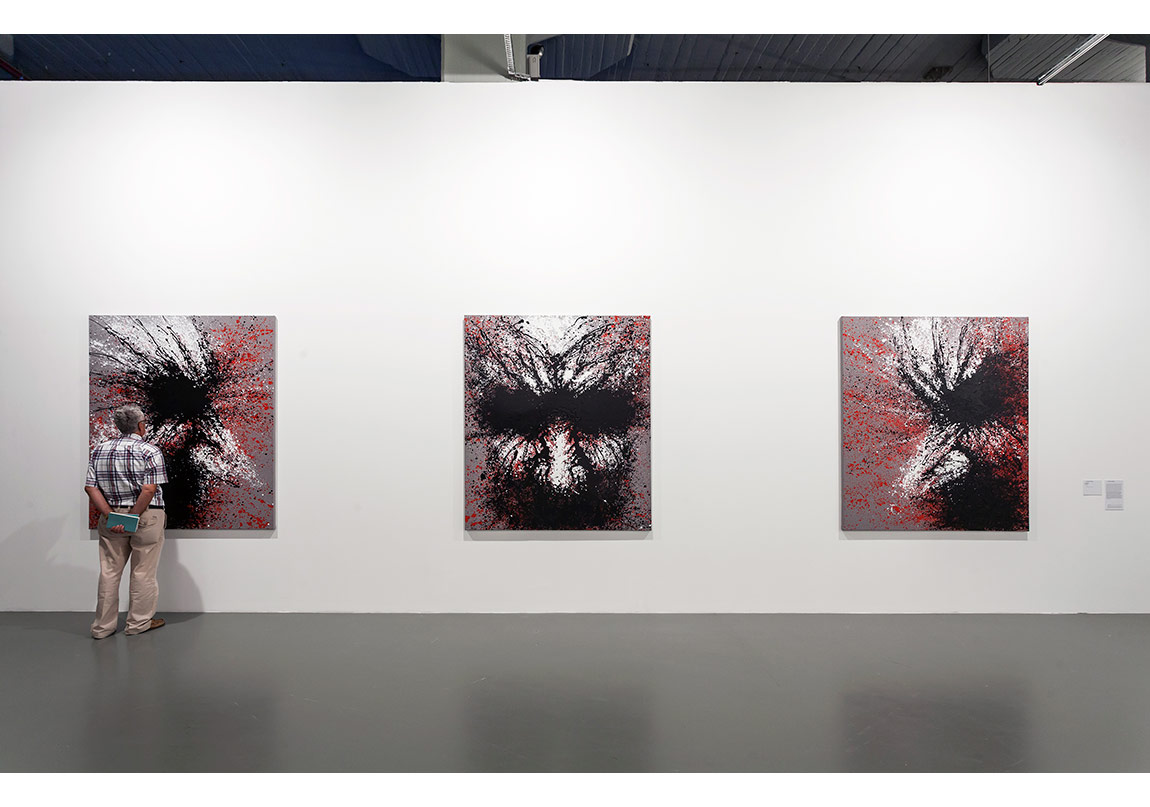
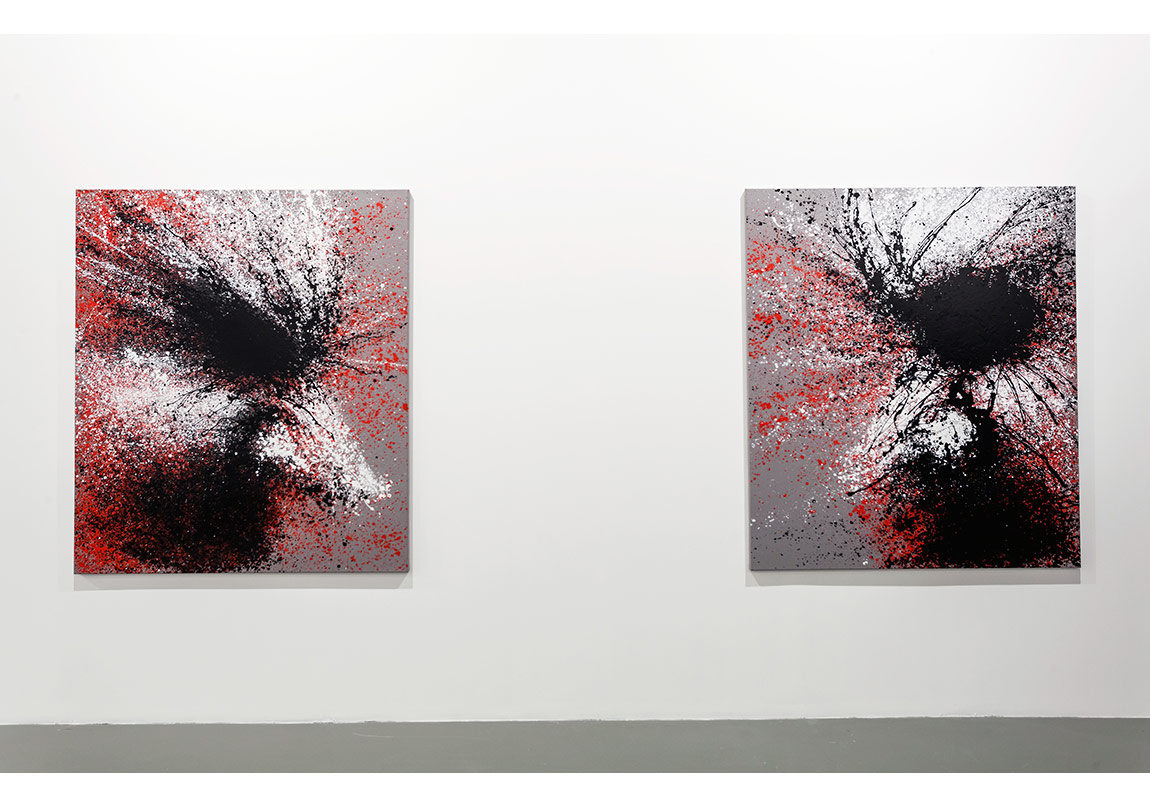
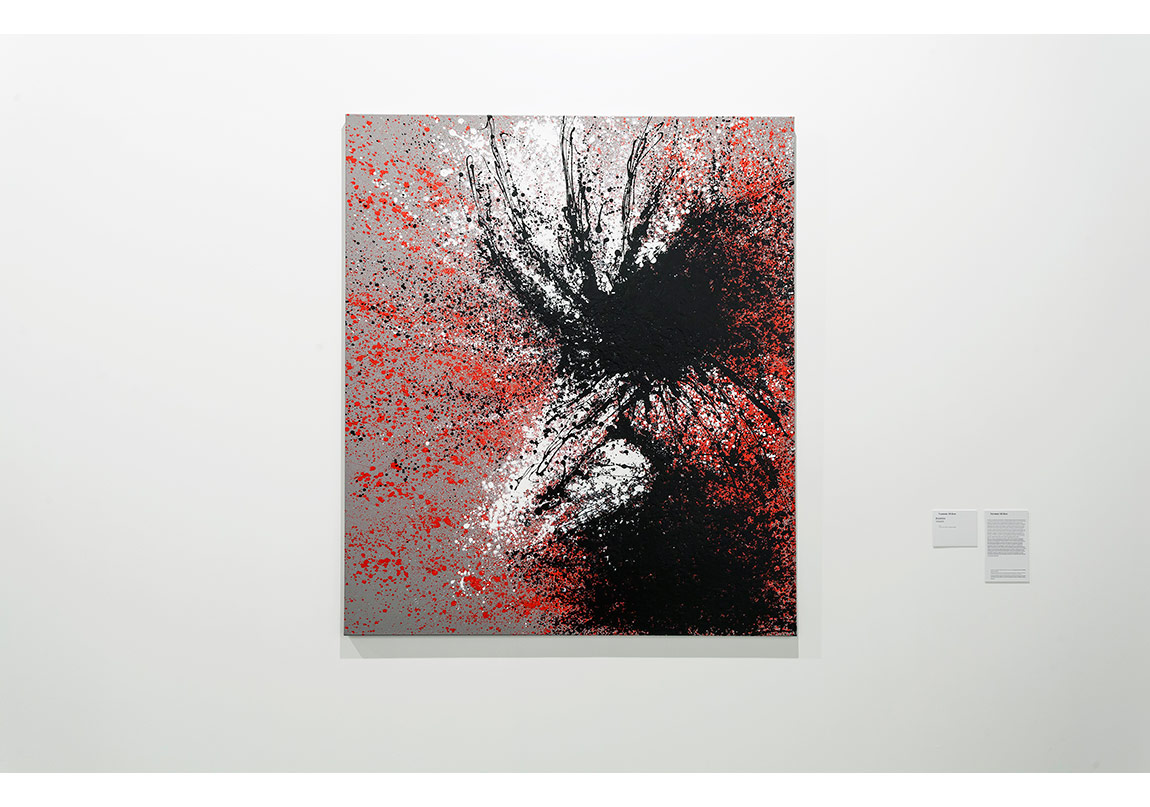
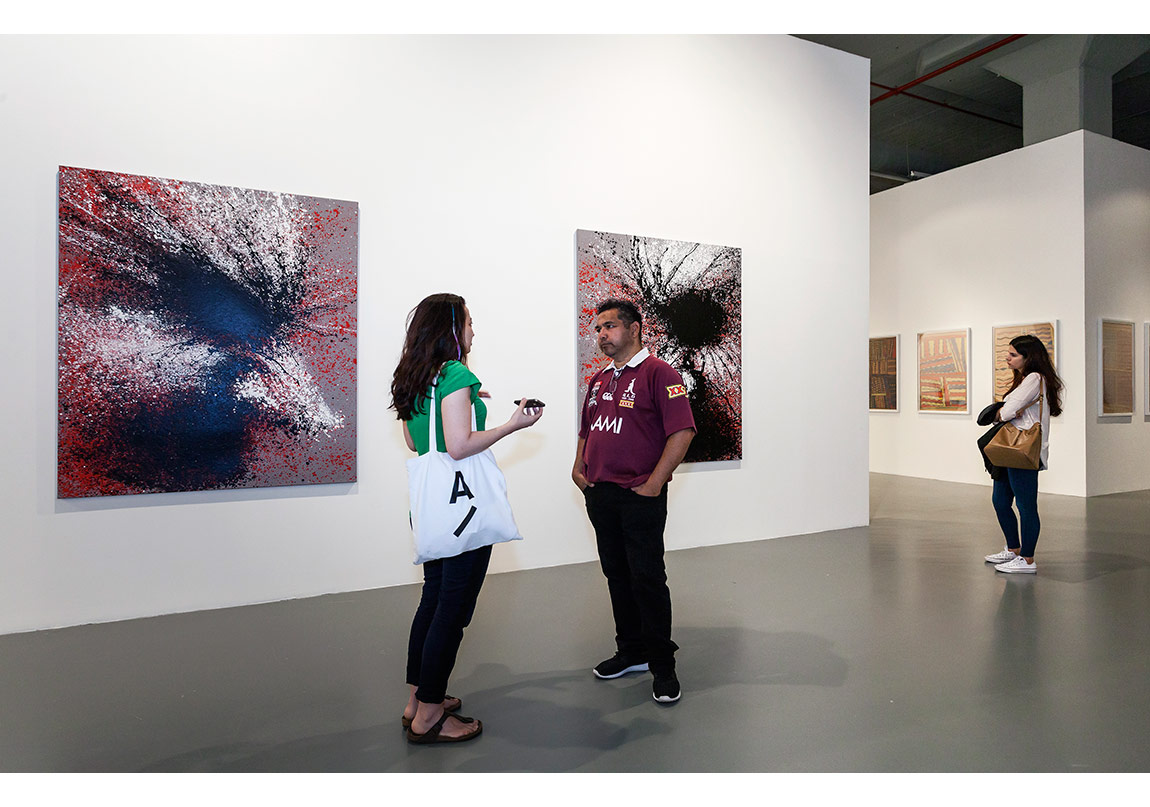
Yes, I was just doing a research about Anatolia and the Armenian massacre. And thinking about the context that Armenians exist now in Turkey. This is where they come from. But also in the context that Kurds exist, too. You know it’s extraordinary that everybody could exist together. I was thinking what happened to the Greek families in Turkey in 60s. The two countries had an agreement to exchange Greek and Turkish families. Nothing about those families moved from their homes in Greece was Turkish, and the same applies to the ones who have lived their lives in Turkey too. This is an example of what brutality is. These paintings reflect what happens to a person or a group of people or a society or even a nation when you chose brutality as your first best option when you engage with other people. So, rather than negotiation or diplomacy you just choose brutality as a form of communication. But when you choose brutality you have to set your humanity aside. So, what makes to rational, compassionate, kind, pathetic, happy or sad, all that is taken away when you commit yourself to being brutal? It’s a choice.
Having mentioned the different forms of brutality, this leads us to my last question. How do you reflect on the brutality of censorship toward art?
The original idea for this show was to have the paintings on the side and to paint the facing wall with something else. I came in early to do drawings of lynching. You would have the brute and the brutalized. So, that’s a show I would still want to do. But it’s this context that I’m familiar with that how things censored. With this idea of brutality and censorship, we will have the chance to idealize the power and the powerful and the brutality. I hope we realize that show sometime in the future.
;