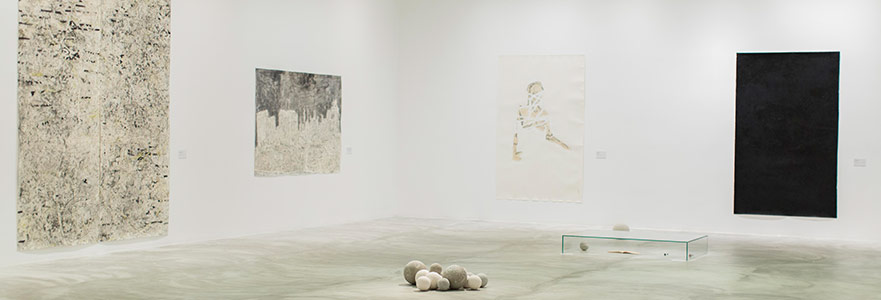
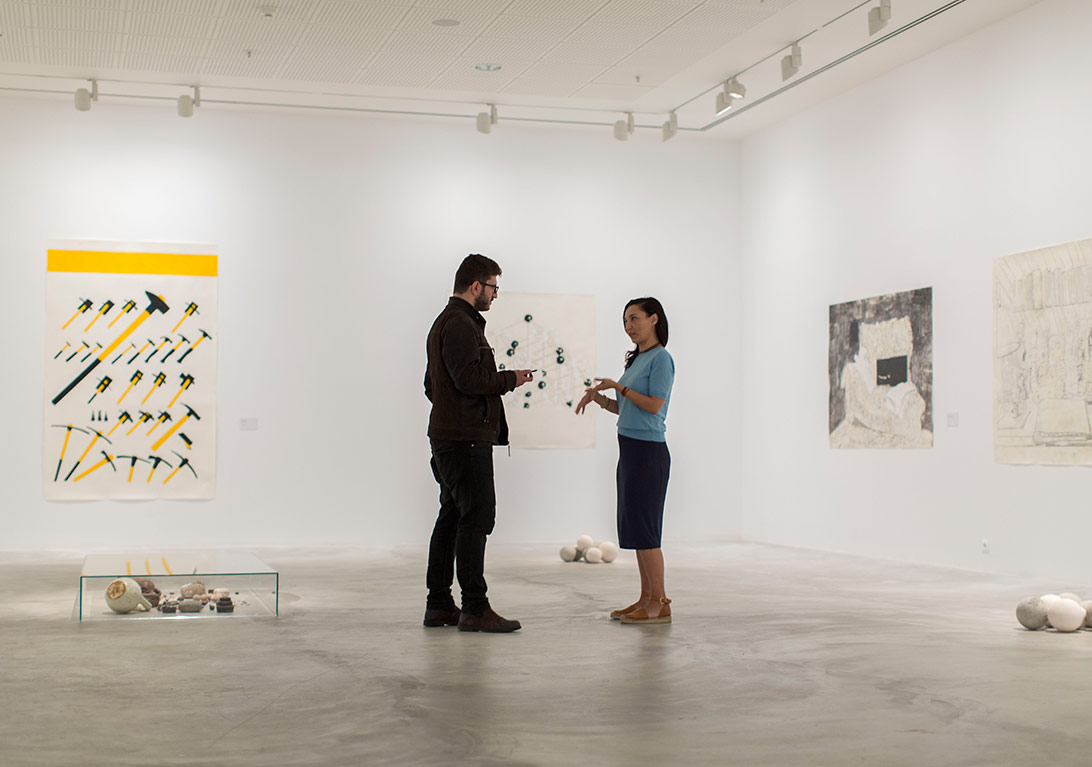
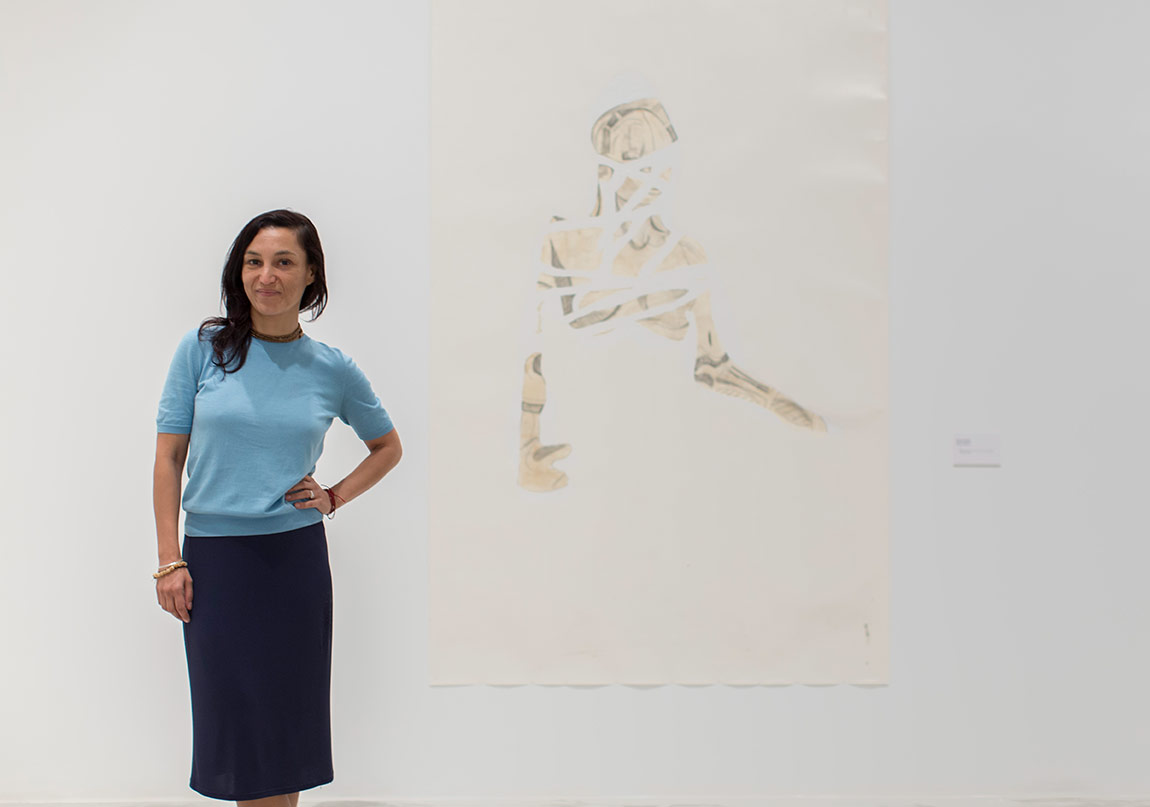
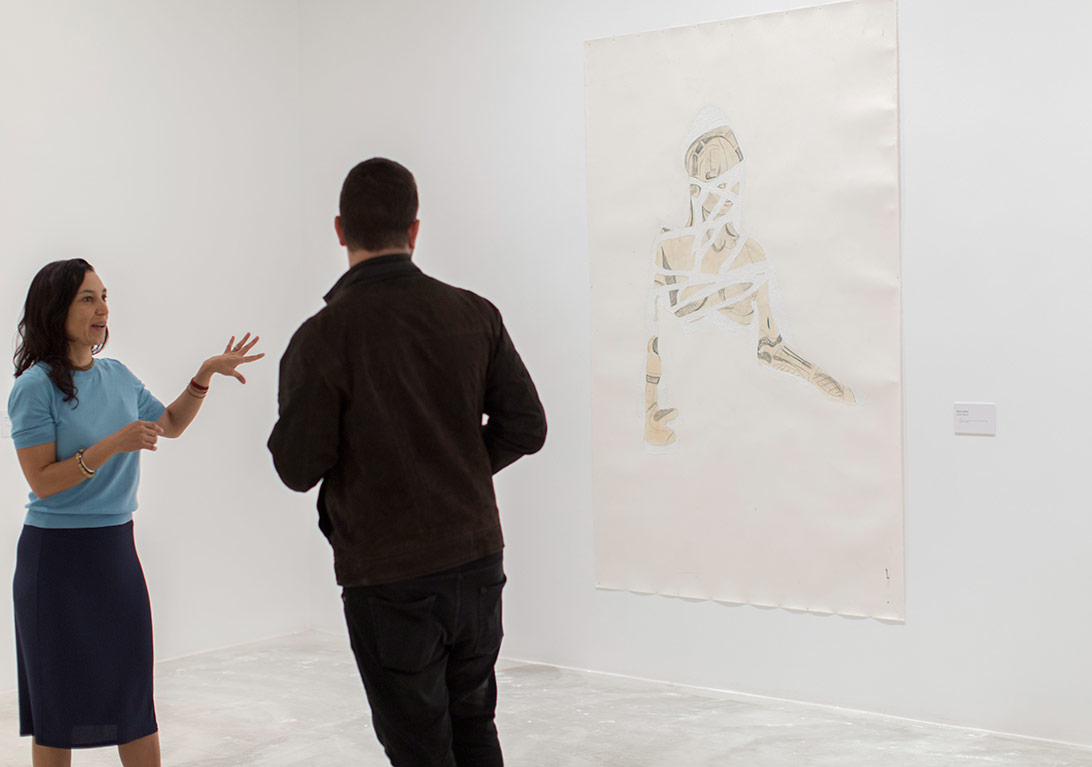
What can you say about your project for 14th İstanbul Biennial?
It began as an extension of a show I did in Basel about anthropology and exchange systems. In that installation I used objects from Oceania, pre-industrial tools from Europe and a large Buddha statue from Japan.
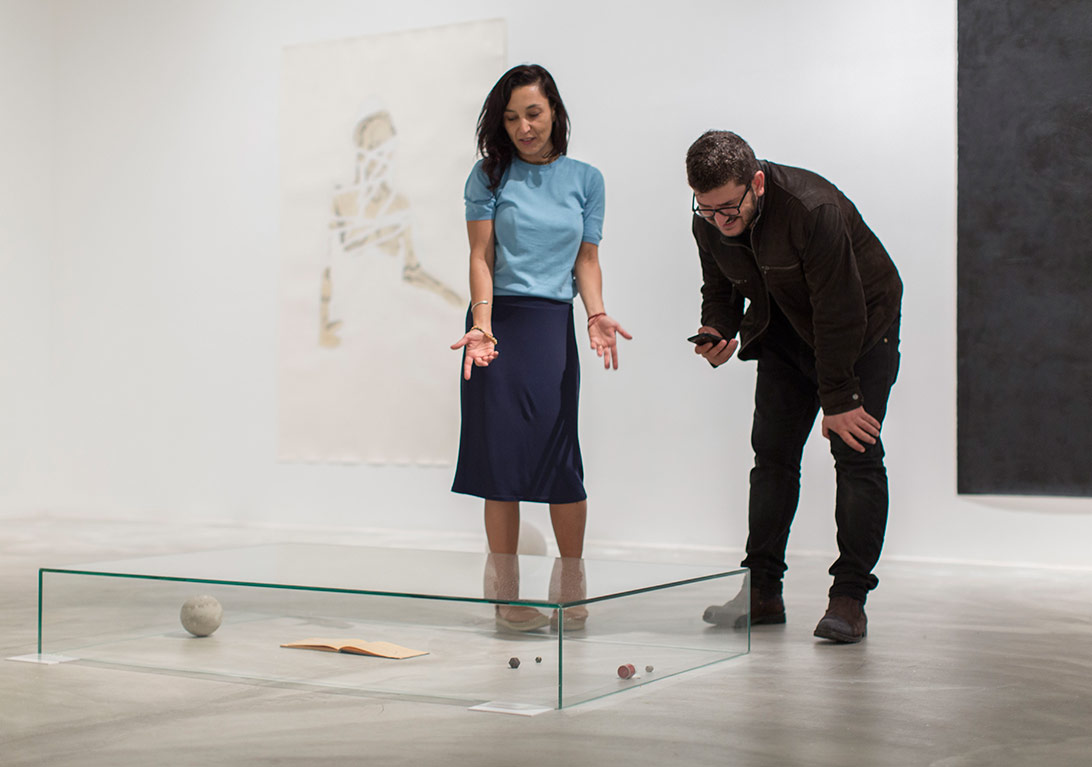
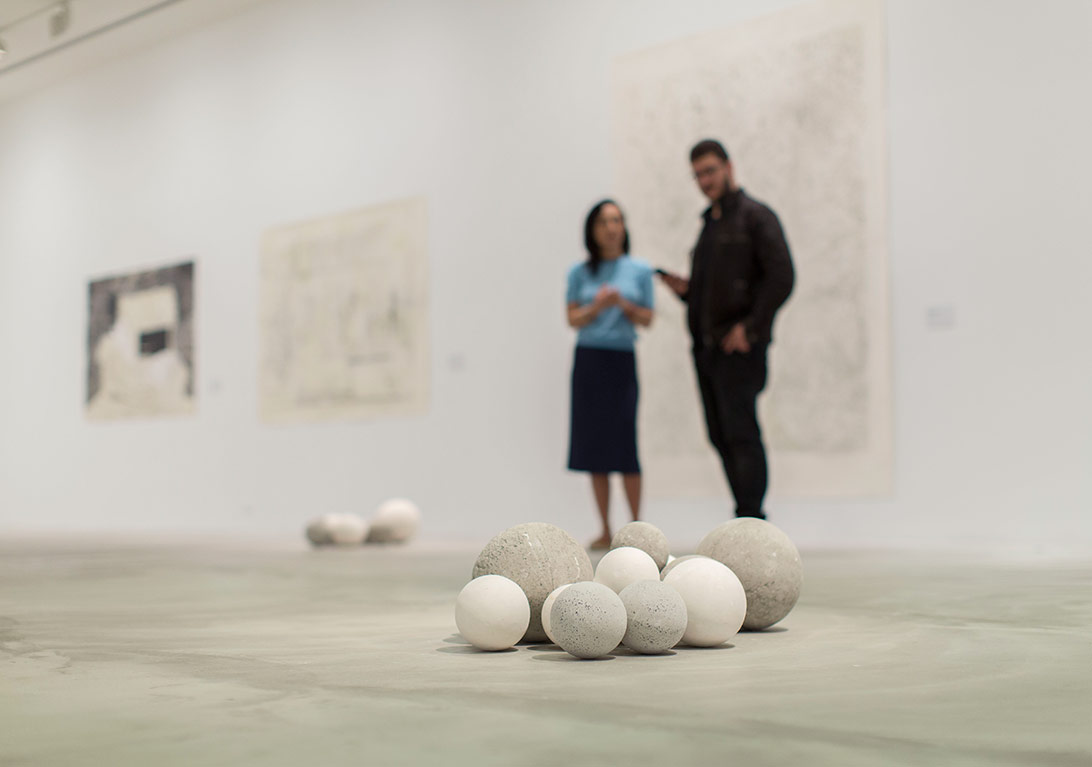
That show was about the making of objects at a social or cultural level. In Istanbul I wanted to undo the simple idea of an object, and ask questions from a scientific and psychological perspective. The question I asked is “How are objects related to nothing?” This may seem quite abstract at first but it is quite fundamental to our sense of being in the world.
How can you relate your exhibiton in Pera Museum with C.C. Bakargiev's conceptual construction for Salt Water-themed Biennial?
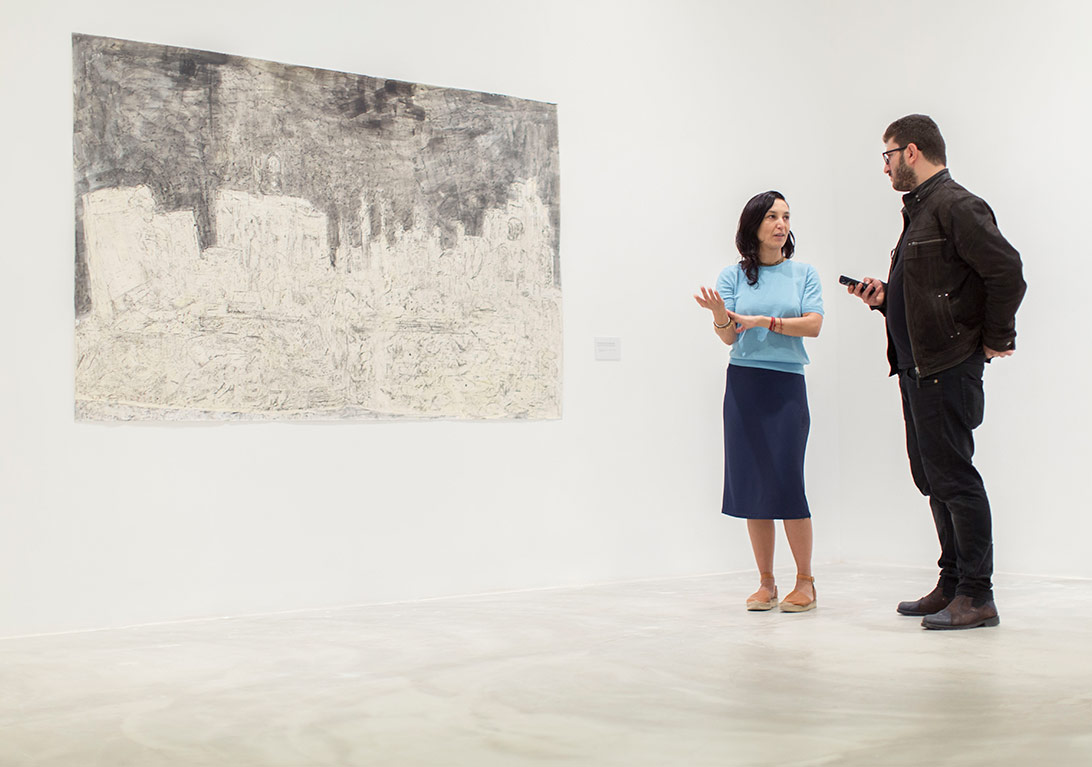
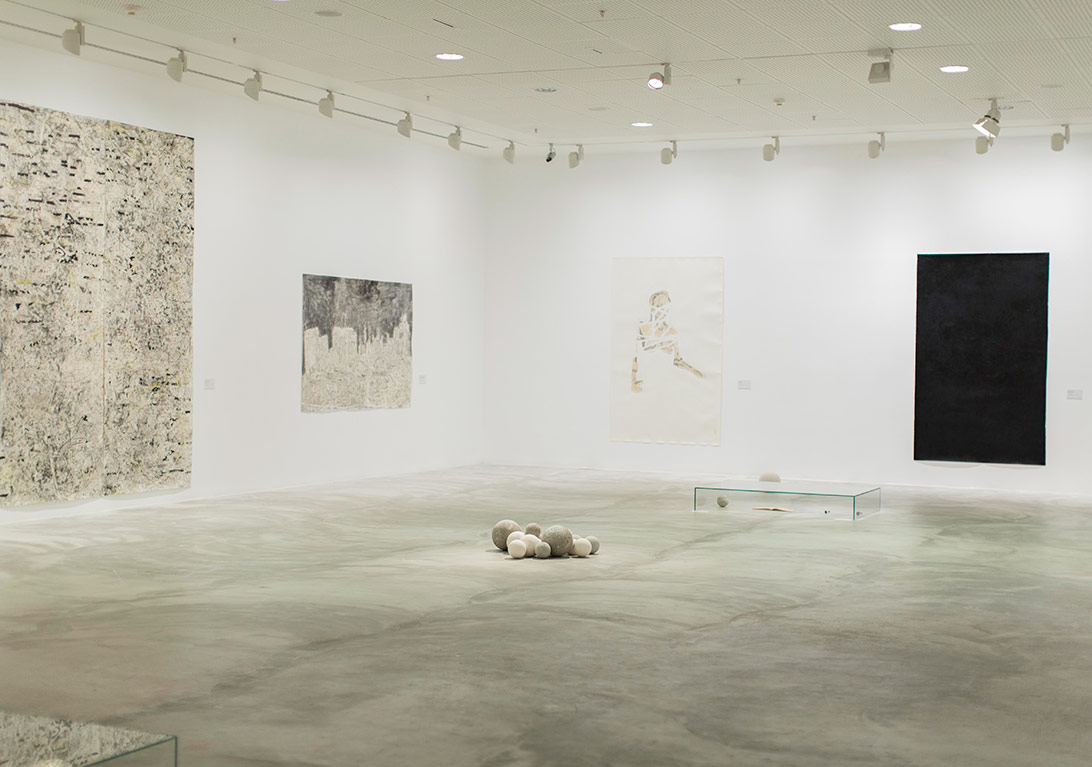
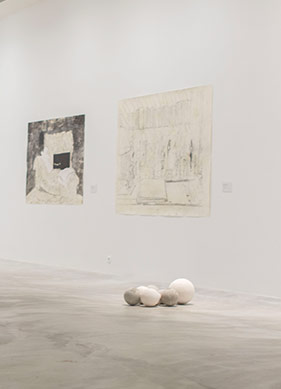
My work relates much more to the subtitle of the Biennale, so to “thought-forms.” I was not directly thinking about salt water as much. My drawings are the result of a conceptual process that works with the unconscious. So I pick a theme or topic and then let things appear without too much interpretation, and let these images form a network of meaning. So the drawings are representations of a thought process.
Some tools you used for your exhibitions are weighing objects, from Pera Museum collection. How it effects when a historic object meets contemporary exhibition practice?
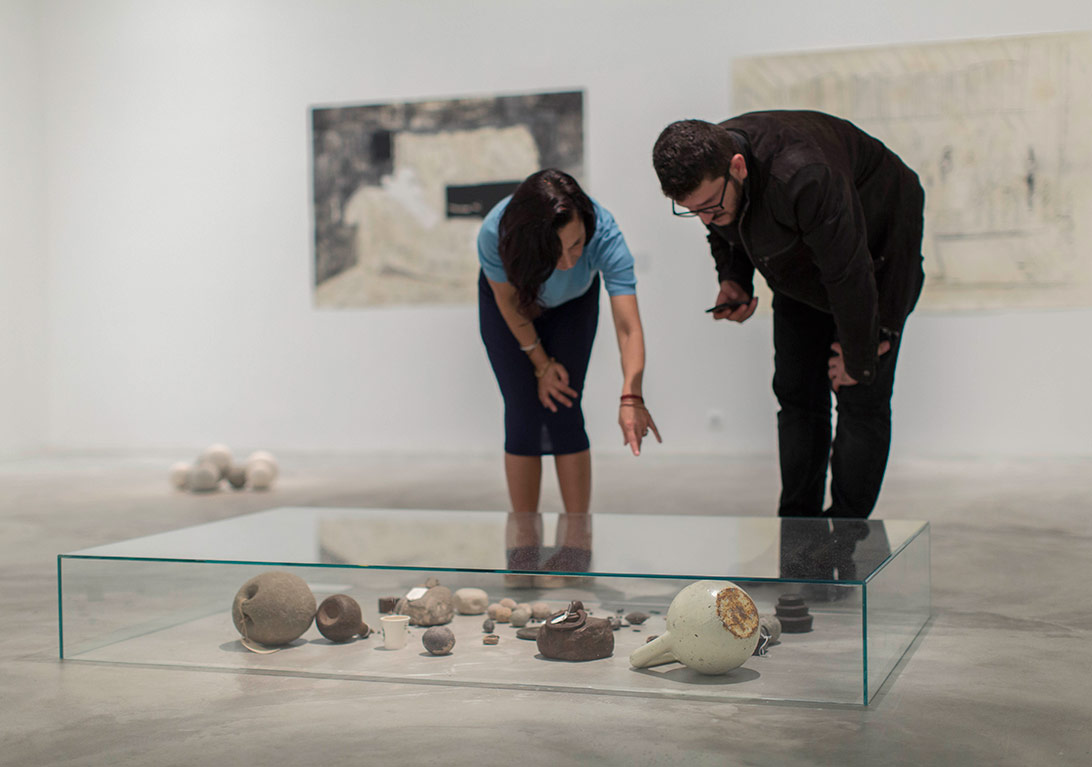
Paradoxically I work with historical objects to think about the future. There is a feeling of inevitability about the present that I want to suspend by connecting the past to a sense of future possibility. Working with existing collections of objects helps me de-naturalize the present, to show it as something made and flexible.
At the Pera museum it was amazing to find a very contemporary connection between the history of humans weighing objects and the concept of nothing. The experiments going on right now at CERN, use a gigantic machine to split apart small parts of atoms. It has been natural for humans to imagine atoms to be solid like objects but in fact for over a century now we know that the basis of matter is mostly empty space. So these new experiments allow us to determine the weight of an object, if we can call it that, which experimentally proves the existence of an underlying field that allows anything to have mass at all. This is the particle that allows objects to exist, that creates the asymmetry or imbalance between forces, which we then experience as objects.
One of the aspects of contemporary existence is that we are sitting on this mountain of knowledge that is being produced all the time but we have not mentally as creatures caught up with it yet.
The exhibition includes both abstract and graphic languages. Although it seems to have two different production practices, modernism brings these two pratices together. What do you think?
Yes it is all about perception and how we perceive things. Obviously we all perceive a world full of objects, in which we also are also objects to the perception of others. Its a very specific setup which Lacan makes much of, that in order to understand and heal the mind we have to begin at the beginning and ask some basic questions about perception and the conditions of existence.
At that level something abstract and something representational are not different; it is a question of how we read things and how we connect them. This is a problem of living in a world of a massive production and consumption of images; we see violence next to fashion pictures, watch cute animal videos but eat industrially produced meat, and a friend’s vacation pictures next to images of refugees. All of these things in a temporal sequence creates a feeling of disconnect as well as a distracted unease, as if we were missing the point somewhere. This is a reality most of us share. I don’t think the point is within abstract art but it has a very important message in this context, this absence of image, though in itself it is not enough. It is about connectivity that is not just random sequence. We need to connect the dots.
What is your opinion on the suggestion that modernism builds its own presence on the hierarchical class system?
One of the things that I found really striking while doing research on this project, is a statement by Robert Thurman, a scholar of Tibetan Buddhism, where he says that the West created external modernity, while the practices and philosophy of the Tibetan monastic system created internal modernity.
For me this connects to the statement by Michel Foucault about micro-fascisms and really paying attention to the love of power in everyday life as we live it, and not only to politics on the scale that we are used to thinking about. And modernity does not really provide the tools for that except in psychoanalysis—but that is limited and does not go far enough. It is about recognizing that the self is a representation and being able to inhabit a more basic level beyond that, like abstraction does.
Again I think both are important—the social aspect of coming together to work against an unacceptable political and economic reality, and paying attention to the production of the self. I think a lot of amazing work in the Biennial responds to politics directly, like Rene Gabri and Ayreen Anastas’ Centre for Parrhesia—they are actively working to build social spaces for people to come together.
Thinking in terms of futurology, we have not yet invented a post-digital institution, a kind of flexible architecture that, like for example the university, the museum and the monastery before it, would allow something new to happen. We as artists operate somewhat uncomfortably and resentfully within the old museum structure and try to break it apart or break out of it. But now there seems to be a general desire to build something new. The question of imagination comes up here; how can we communally imagine and eventually build something that would move things forward in a way that is so badly needed? I think the Biennale as a whole also asks this question.
What is next for the coming period after this project?
In the next few months I am working on producing a book about the recent work, which will include semi-fictional texts that establish a network between the drawings and objects. Like weaving a web. I will also be working with dance archives in Salzburg for a show at the modern art museum there—my work will involve abstractions based on historical dance notations.
And in the longer term I will be doing research in Paris for a large project combining the legacy of Rococo excess with so called indigenous objects that were gathered during colonial times. I will work with changing ideas of money and value as manifested in objects and our relationships to them.
;