We had seen concrete and flowers at your first solo exhibition in BAP Istanbul. Why are you combining such opposite materials?
There is a relationship between the crude and the fragile both in our culture and in our daily lives. It is such that these two oppose each other, but they also can't resist going hand in hand. I'm interested in this crooked relationships. This relationship is reflected on us by being repressed, submitted. Submission feels sudden and harsh to me. Repression, on the other hand, is quieter, including the reaction of the repressed. One is more crude, the other more fragile. I use concrete and flowers, because I believe the combination of the two represent the physicality of submission and the quietness of repression. At BAP Istanbul, I had exhibited works primarily from the series "And the face of the house was strained"; I have been working on this series since 2013.
What was the departure point for this series?
I started this series after trips I took to Krakow and Matera. I went to Poland to see the camps and my first stop was the Majdanek camp, which destroyed me. Two kilometers of camp, you are on your own, there is nobody, no guide, no tourists, nobody. You smell like death afterwards. After two kilometers, you arrive at a mausoleum, walking around the ashes of 40 thousand people; there is a graveyard behind you, next to you is a crematorium, in front of you is the return trip of 2 kilometers. This experience was really heavy for me. After this, I went to Krakow with tremendous fear and tension, to Auschwitz and I was struck by what I saw. It was like heaven. There were green trees everywhere, flowers of all colors. Nature seemed to have blossomed to cover up the wrongdoings of the human kind. It was beautiful and to feel that Auschwitz was so beautiful made me nauseous. I saw in Matera that what was a roof for one person was a tomb for another. In Matera, fascism is imprinted in concrete. You walk on top of bodies of people that were laid into the concrete. Under your feet are traces of repression and this grave is the roof for somebody else. I started laying in flowers into the concrete after these experiences, observations.
What does it mean to lay flowers in concrete?
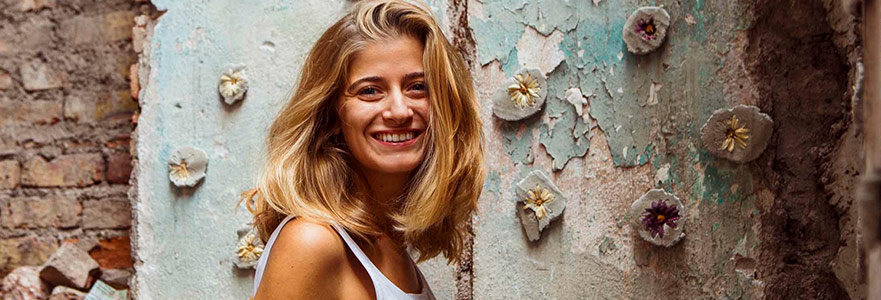
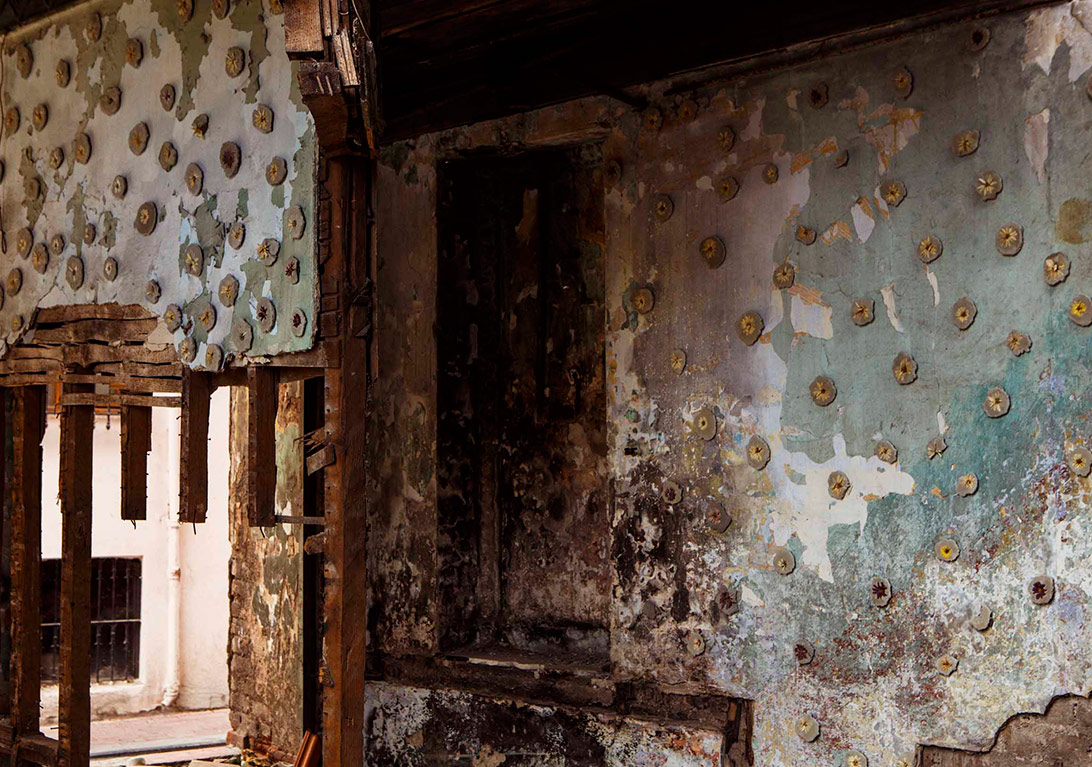
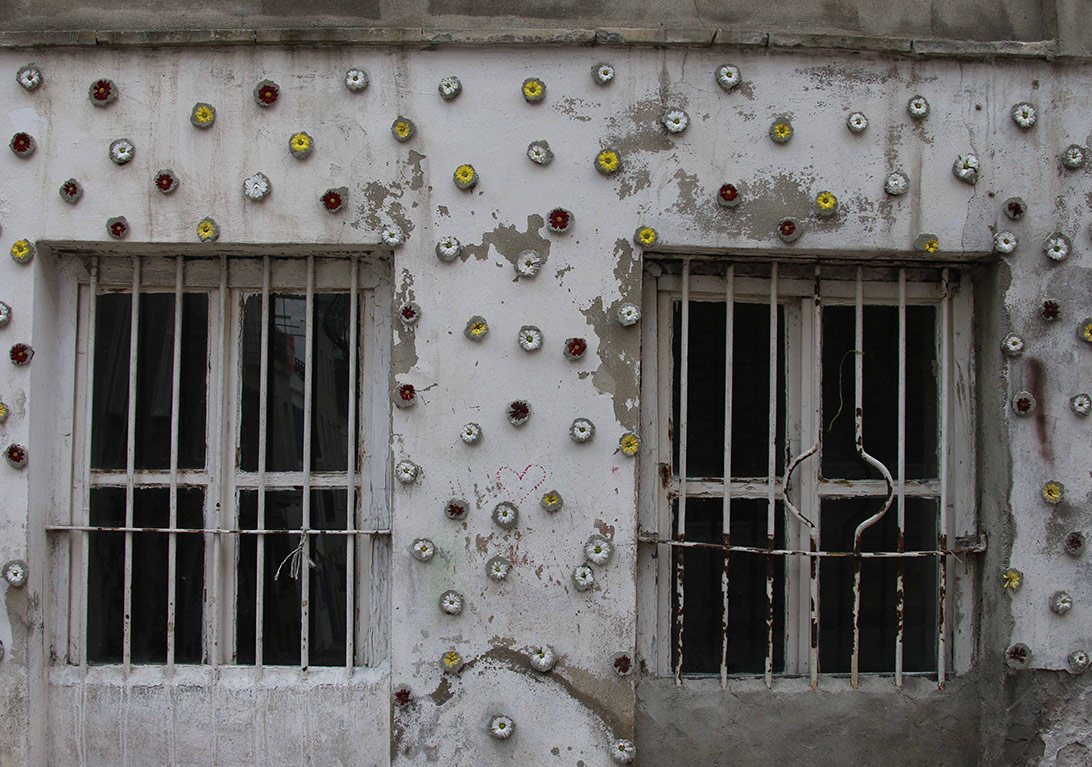
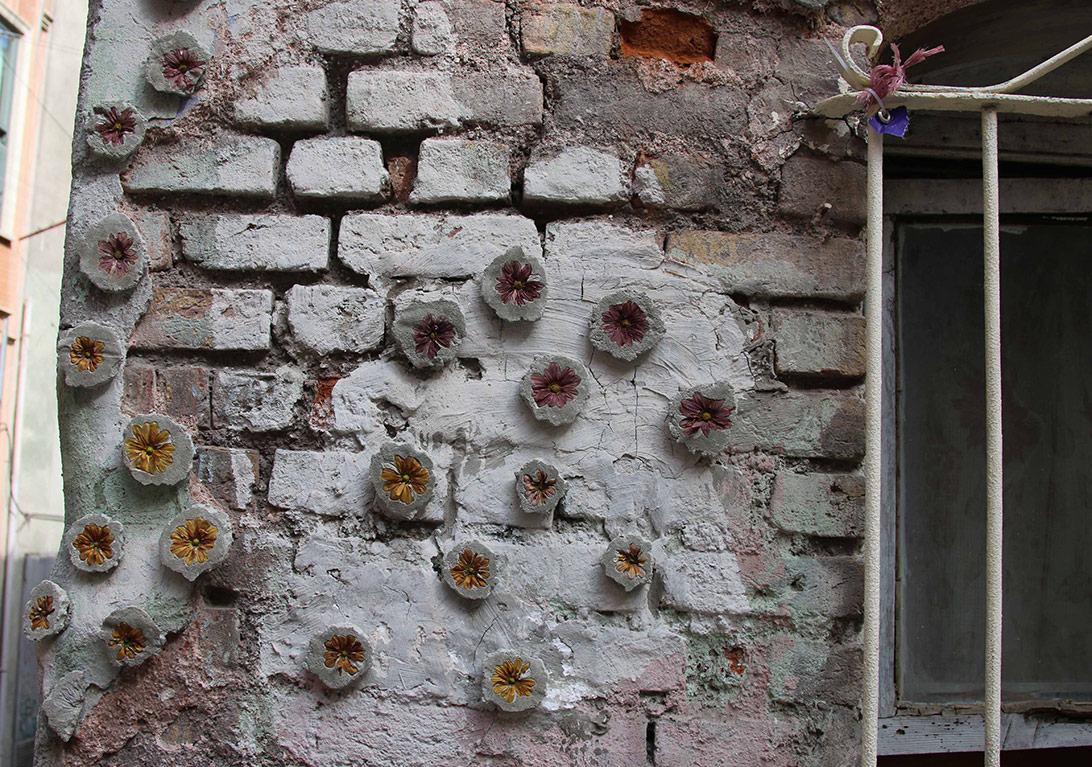
When I lay flowers in concrete, three actions are realized: Killing, hosting, preserving. The flowers that are placed in concrete do not die immediately. It is possible to observe their death. They become weaker over time, but this mode of death enables them to retain their colors. On the one hand their lives are taken away, but at the same time, they are immortalized. This action is a mode of fossilizing—the concrete's hosting of flowers enables them to freeze in time. The weak and fragile material of the flower being able to leave an imprint in concrete, which is crude and hard, for flowers to permanently remain in concrete, produce a quiet environment in which the works exists. None of the flowers give the same response when they are placed in concrete. I observe that they struggle to live, but they can't oppose gravity—they want to get out, but most cannot succeed in escaping. After the flowers are laid in the concrete, I do not interfere with the process; the rest is a dialogue between the concrete and the flower. I define this process as "Sickening of the beautiful." This is also the title of the video that Berlin Art Projects made about me. This set of words, awkwardly constructed, carry the meaning of sickening the beautiful and what appears to be beautiful, to make them ill. It is very important for me to have my experience of the process (what I see, what I feel, what I think) to be reflected in the process of the material. It is this reflection that enables people to access my work.
Could you talk about your work Wallpaper that you will exhibit during Contemporary Istanbul?
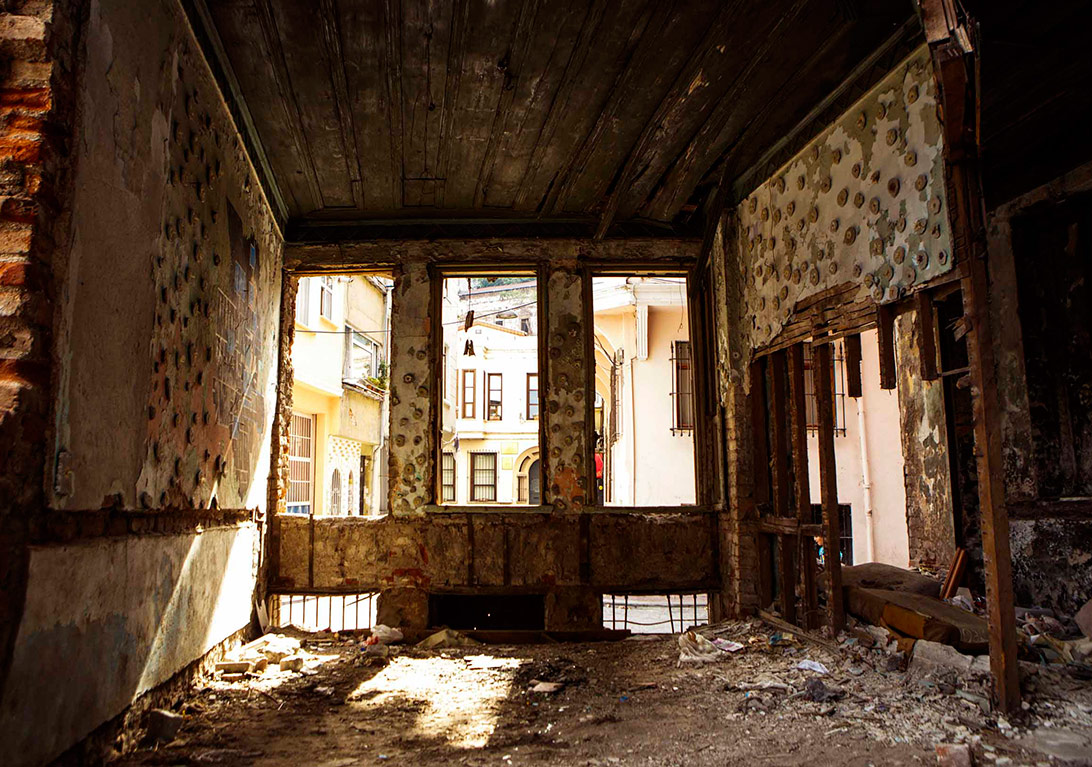
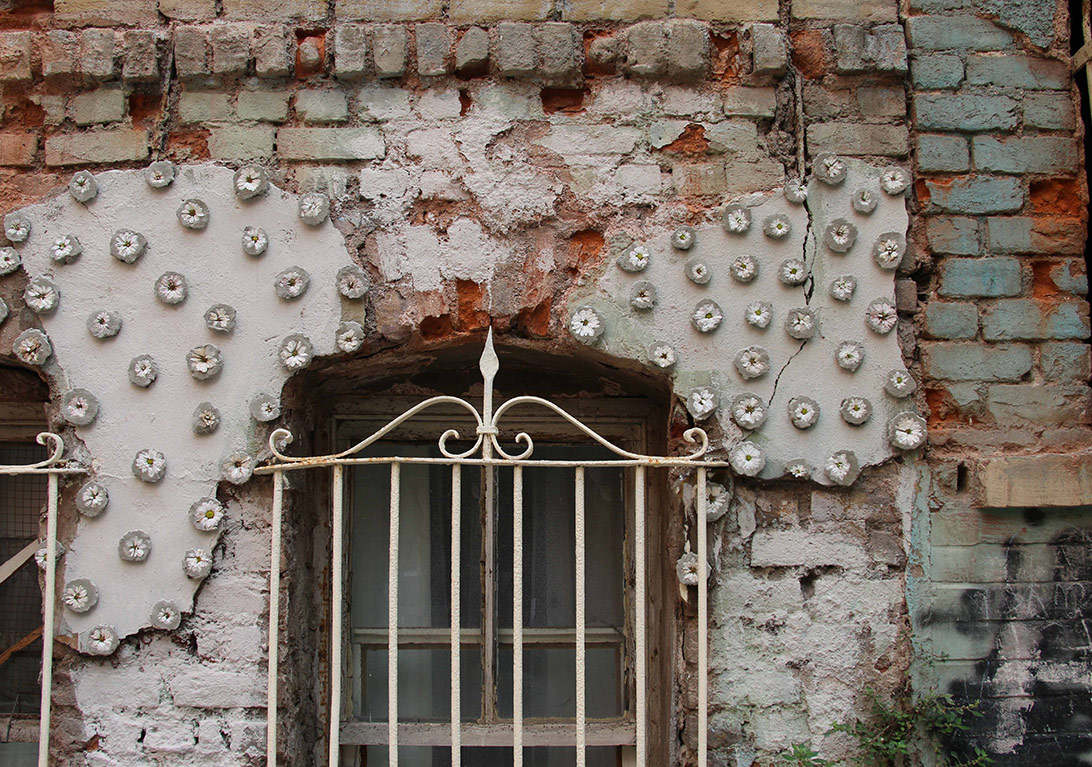
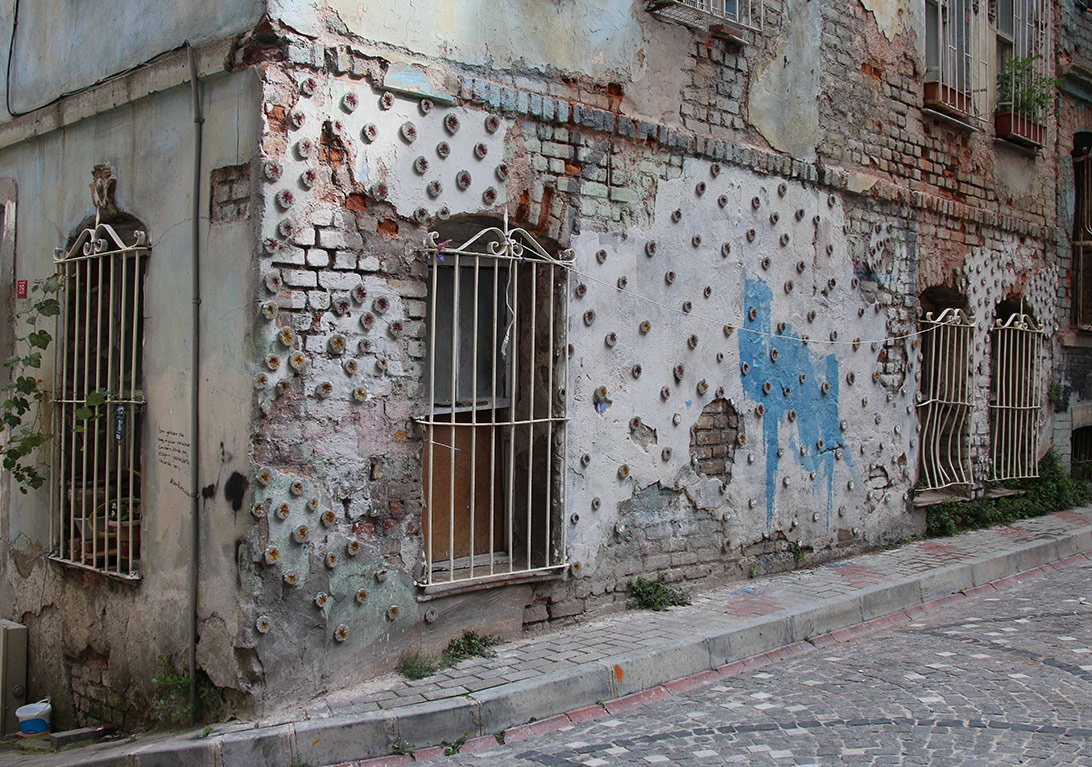
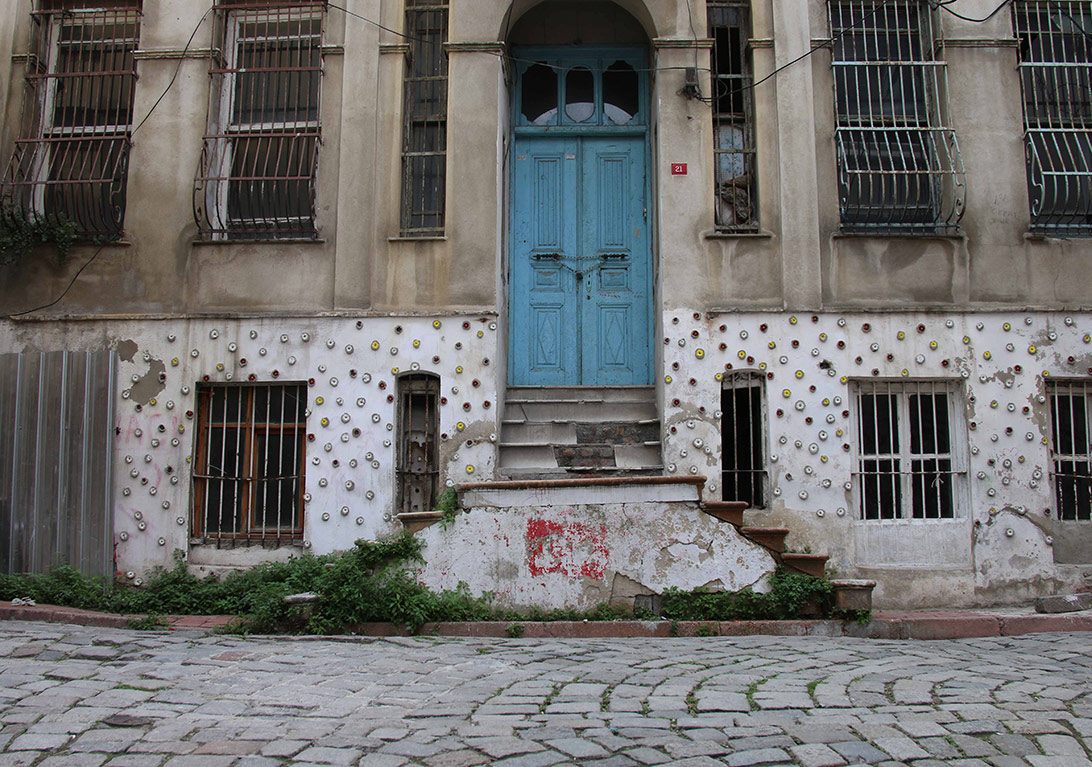
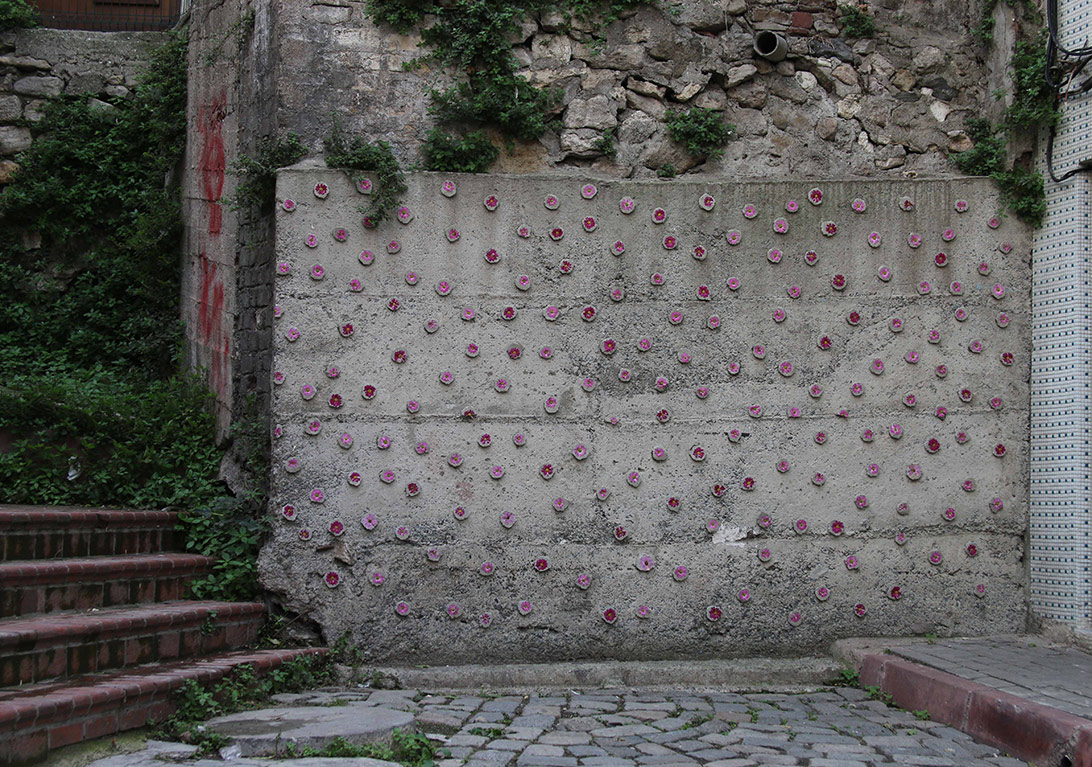
I'm going to exhibit Wallpaper, my wallpaper that was constructed by laying flowers in concrete. My dream with this wallpaper is to cover interiors and exteriors to the point where the wallpaper becomes a part of us. To the point that the wallpaper becomes invisible, so that we are desensitized to its presence. This wallpaper deals with the concept of beauty through the elements of repression and submission, offering a contrast and togetherness that we are not even aware of.
You installed this work in Balat. You said that Balat was a playground for artists and for entrepreneurs...
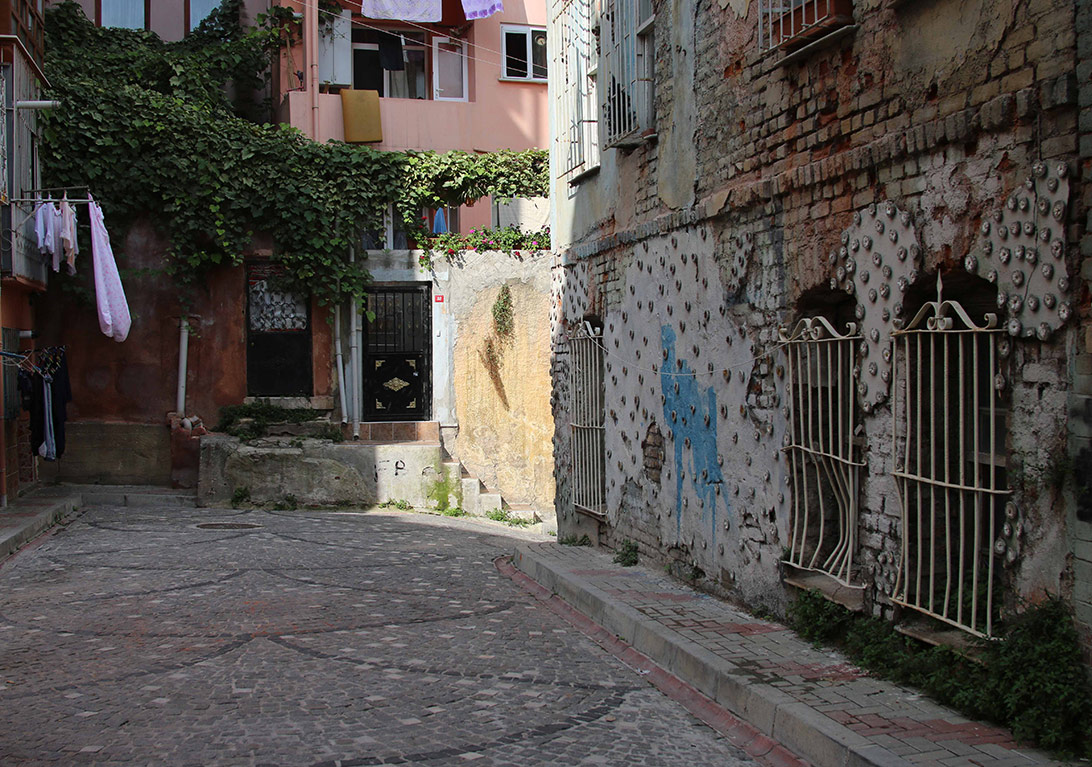
I think that Balat is a playground for artists and entrepreneurs in a good way. Because Balat is like a building that is beautiful but dilapidated; it can be dragged in any direction. This is why it is fragile and delicate. And this is exactly why we have to be careful with the game we are playing. This is exactly why I care that my work feels like it's already been there. In other words, the feeling of belonging.
How does it feel to place a work on the street? I mean, in our country, it is possible that your work will no longer be there the next day. For how long will Wallpaper stay there?
Balat is my first experience of placing work outside; I had never installed in the public space before. I had to start somewhere and with its destroyed buildings, broken walls and houses, Balat was the most appropriate place. I wanted to install here as if this wallpaper was always there and I left it to the city, to be able to listen to the city. I placed my wallpaper first on a few empty walls on Yıldırım Avenue and later inside a destroyed building. It is very easy to find this building. This is one of the buildings where JR realized his "Wrinkles of the City" project—you know the building that the police painted over after JR left Istanbul. This is why this building is particularly important for me. The building already has been destroyed, it's already broken and then the police repression was applied to it; they painted over JR's work! This phenomenon of repression became a silent friend to the already-existing submission of the building. They could destroy my work, they could harm it, anything can happen. An artist makes a work on the street accepting this, they can destroy it, anything can happen, knowing that perhaps in the evening of your installation, and nothing might remain. If you are lucky, there is also the possibility that it might stay for a while. So I'm not able to answer the question of until when the work will be seen. It has not been destroyed yet; actually, it has become a part of the neighborhood and was embraced by both the locals and the visitors from elsewhere. For me, what was most important during installation was how people would react, independent of for how long it would remain there—whether they would take ownership or not. I follow what's happening through hash tags and I encounter very interesting comments. For example, some people think that this is an old Greek tradition—when they ask around, this is the answer they get. This feedback shows that the work has really become a part of the place. There was a comment saying that it appeared to have always been there. I recently applied the second phase of the "Wallpaper" installation in Balat on the road going up from Yıldırım Avenue, on the side and back streets. I again received very positive feedback from the locals and from tourists. However, it is hard to estimate for how long this installation will remain there without being harmed. I'm going to continue to make these outdoors installations. There is Yeldeğirmeni, Kadıköy, Moda; I'm going to slowly cover our surroundings with this work and after a while, the works will feel as if they were always there and they belong there. That's when the work will be successful.
;