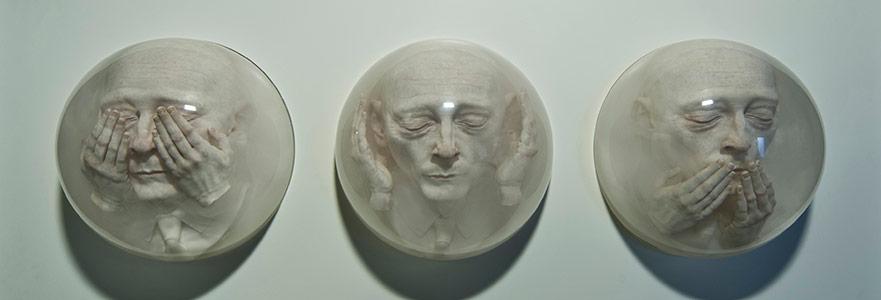
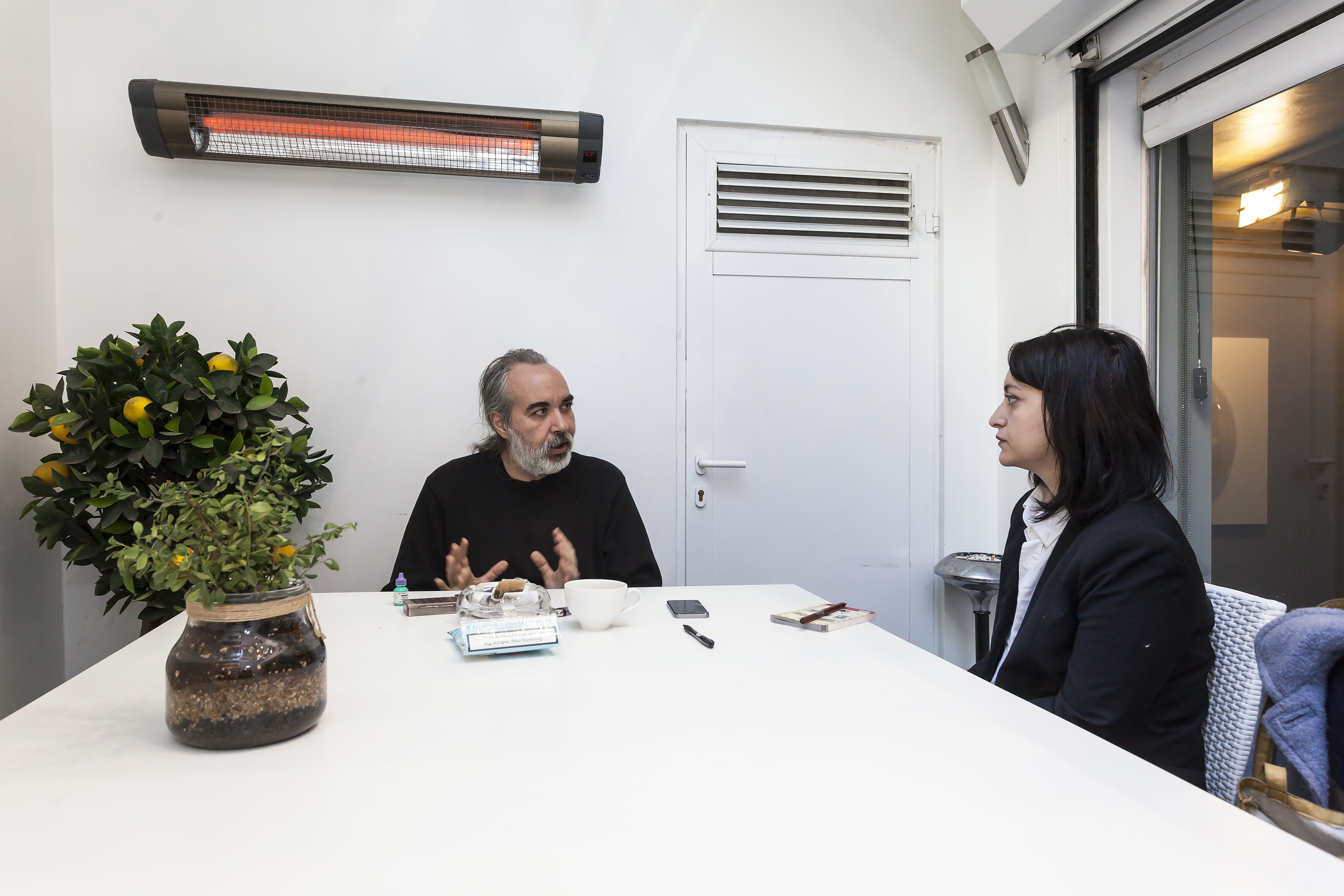
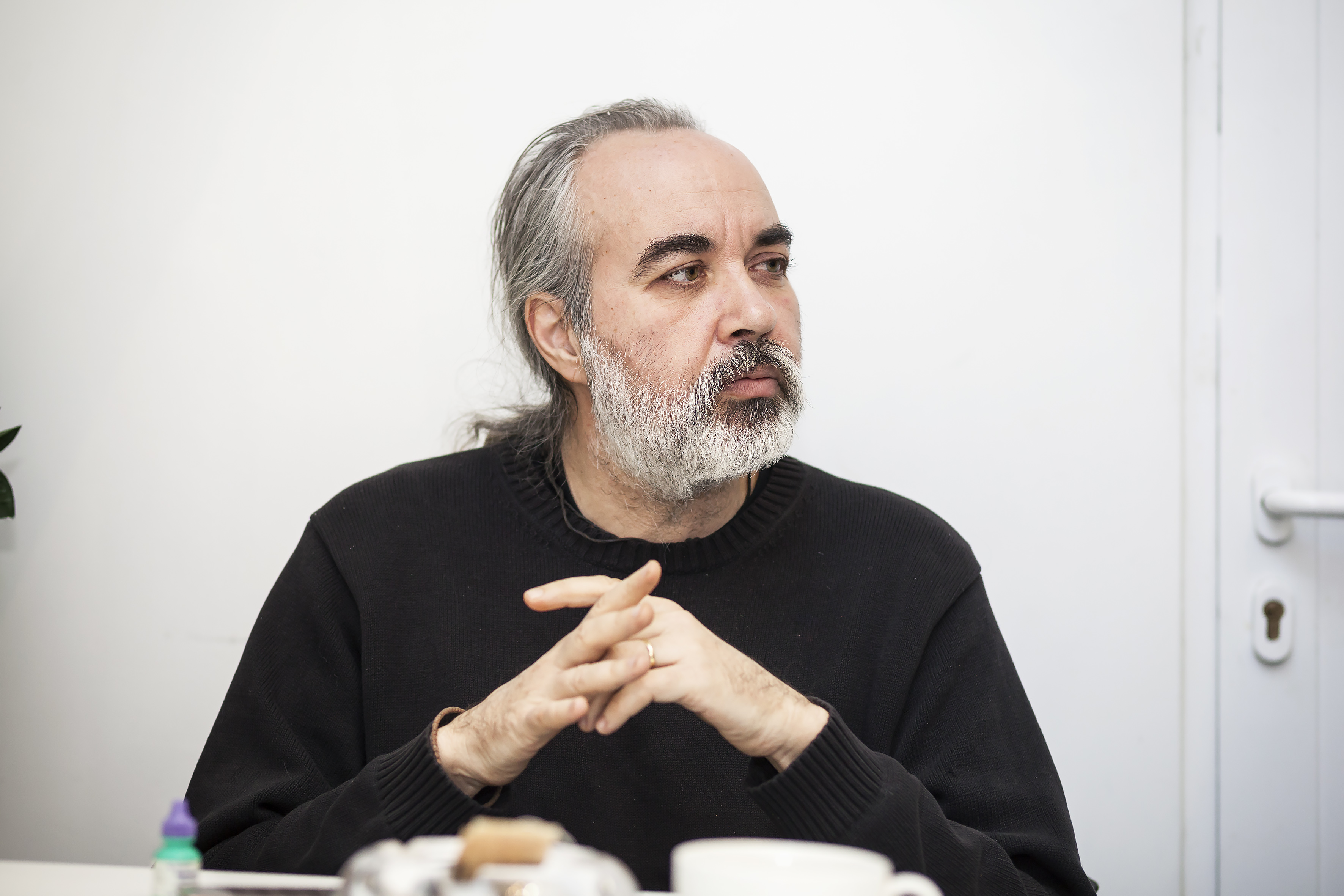
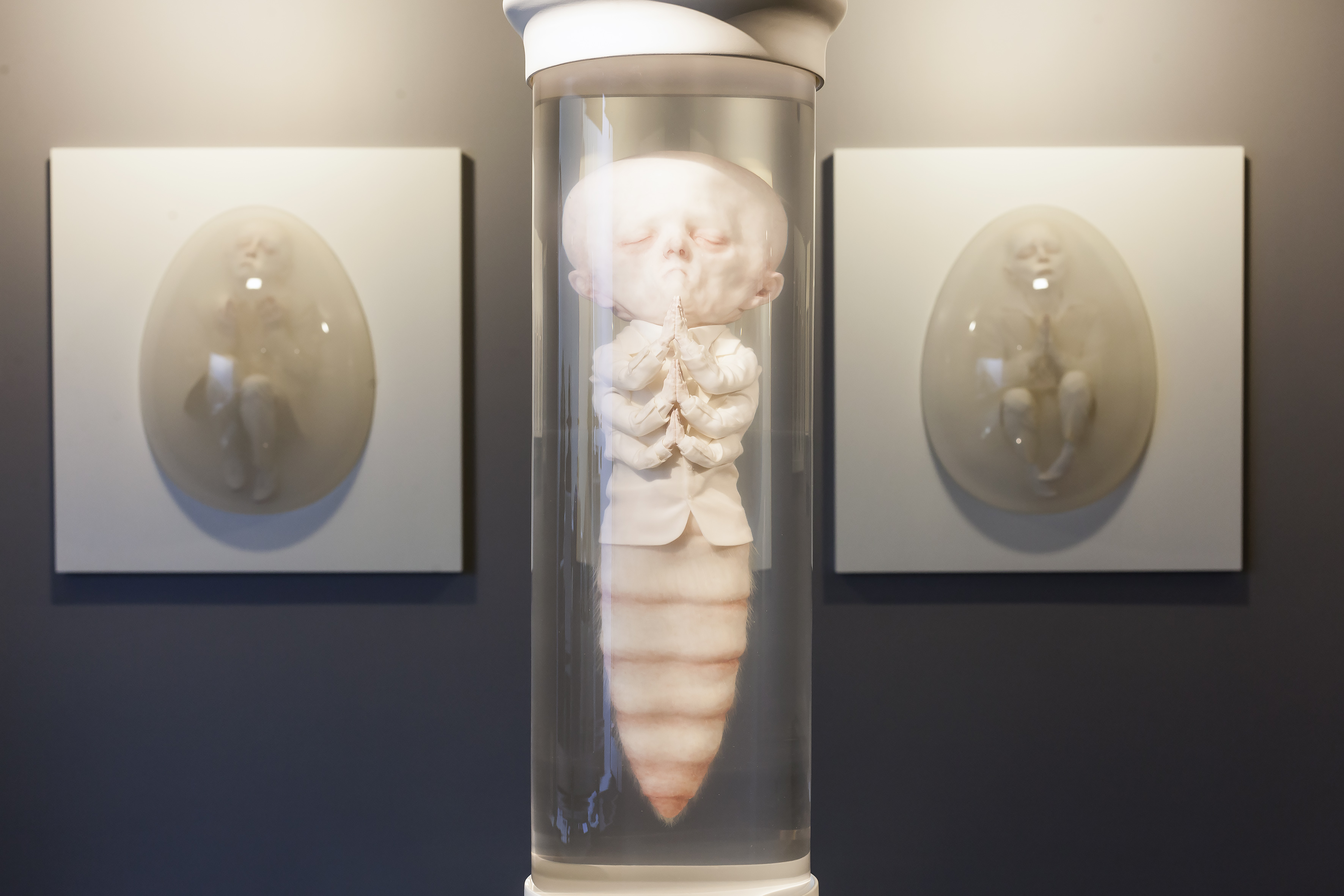
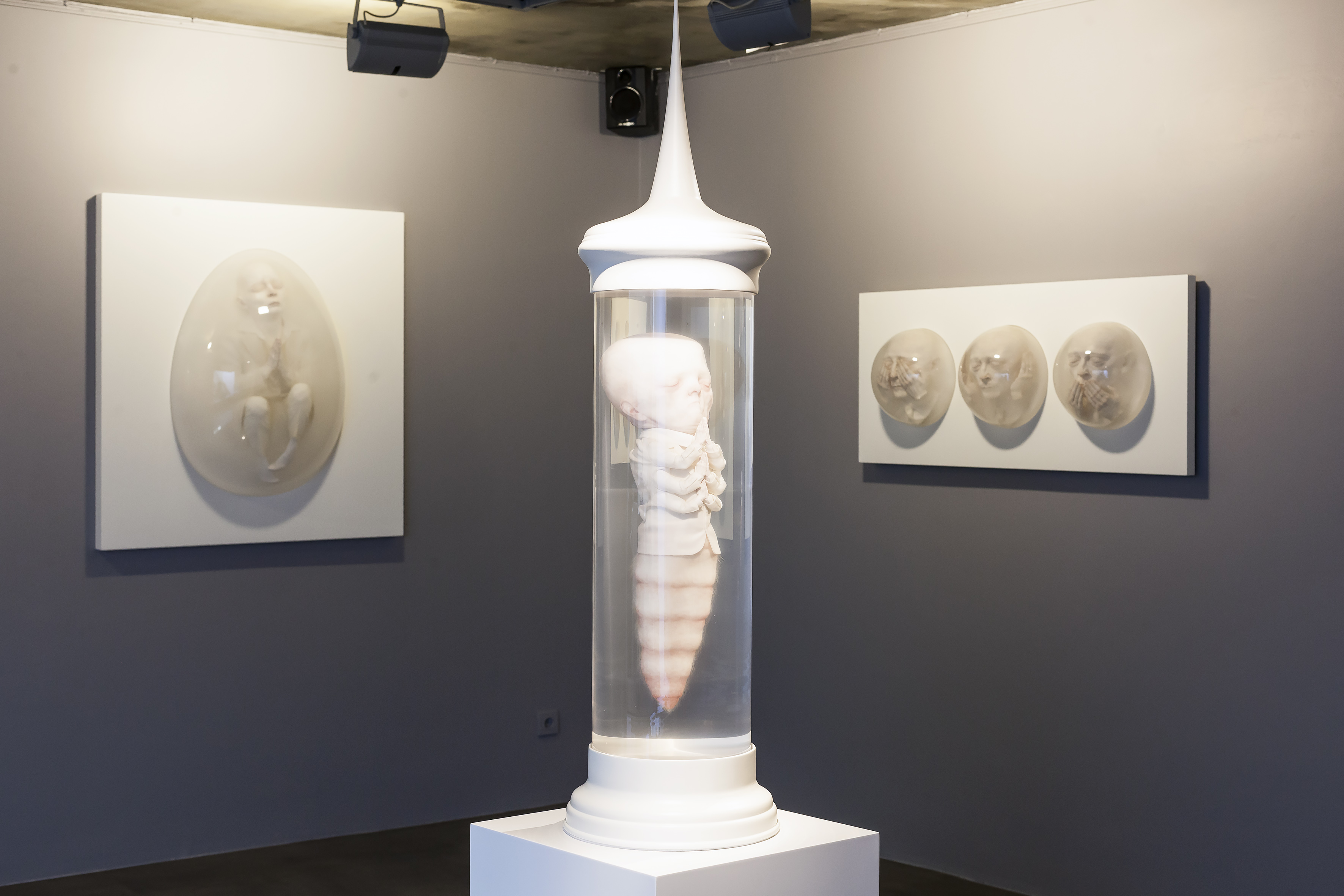
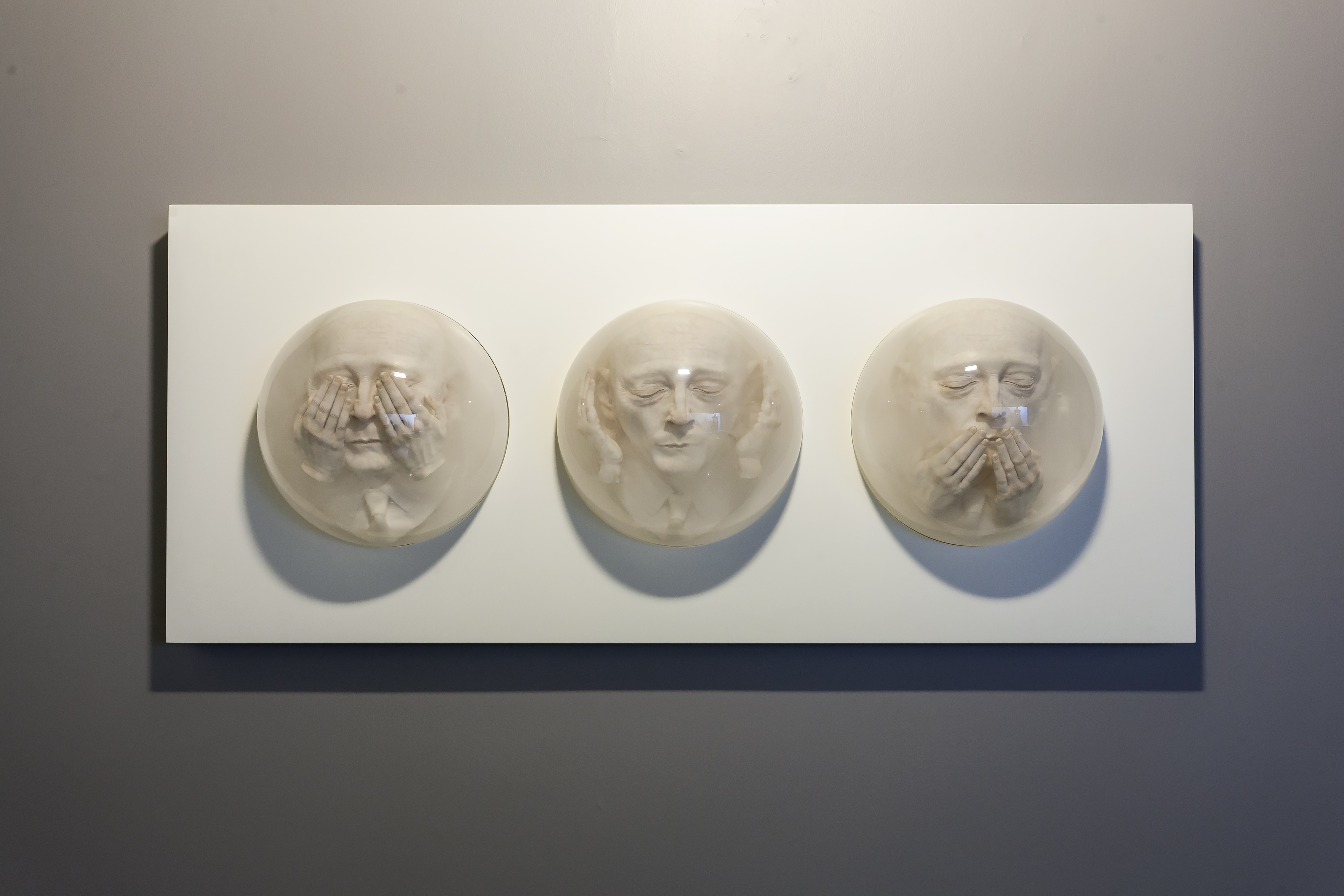
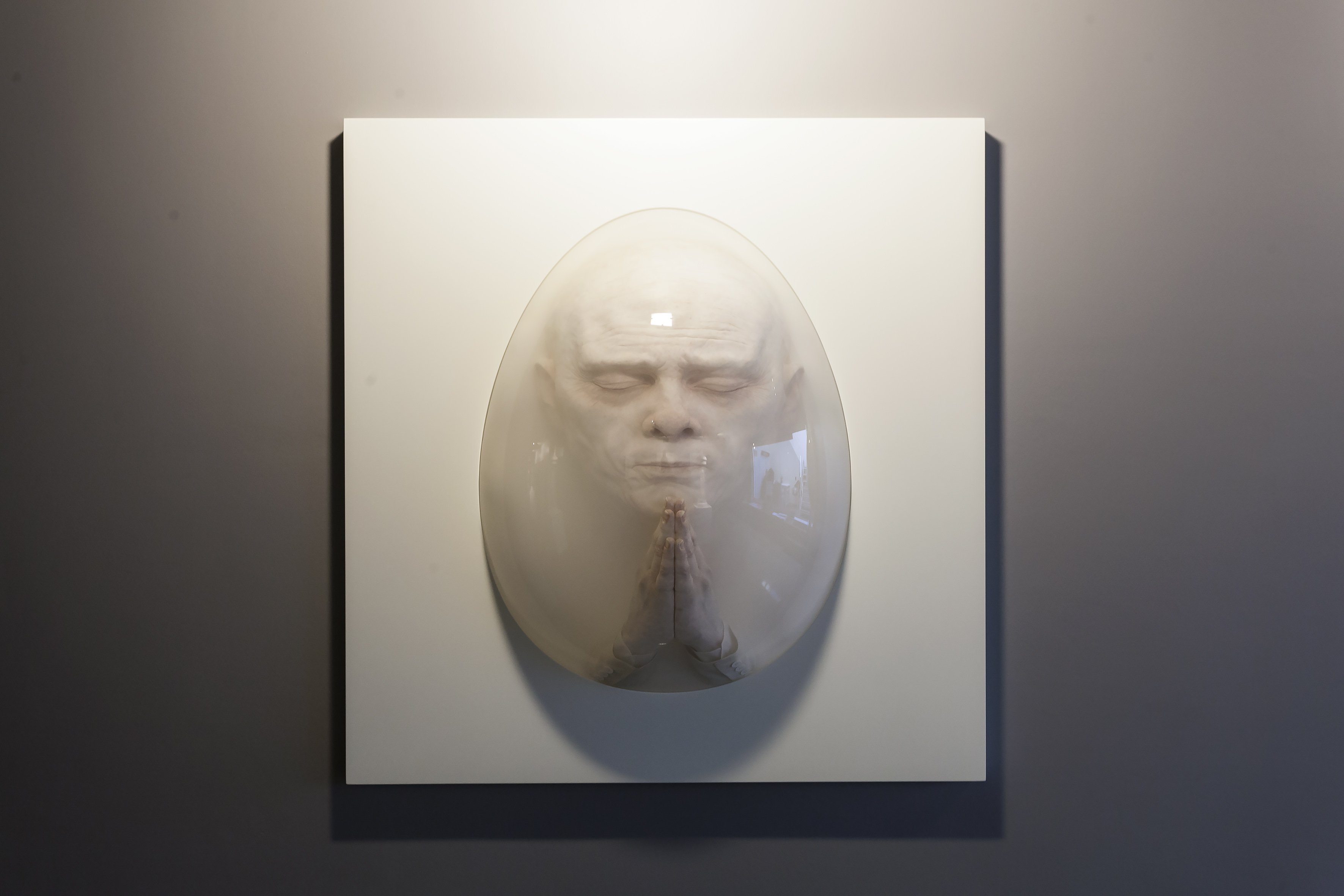
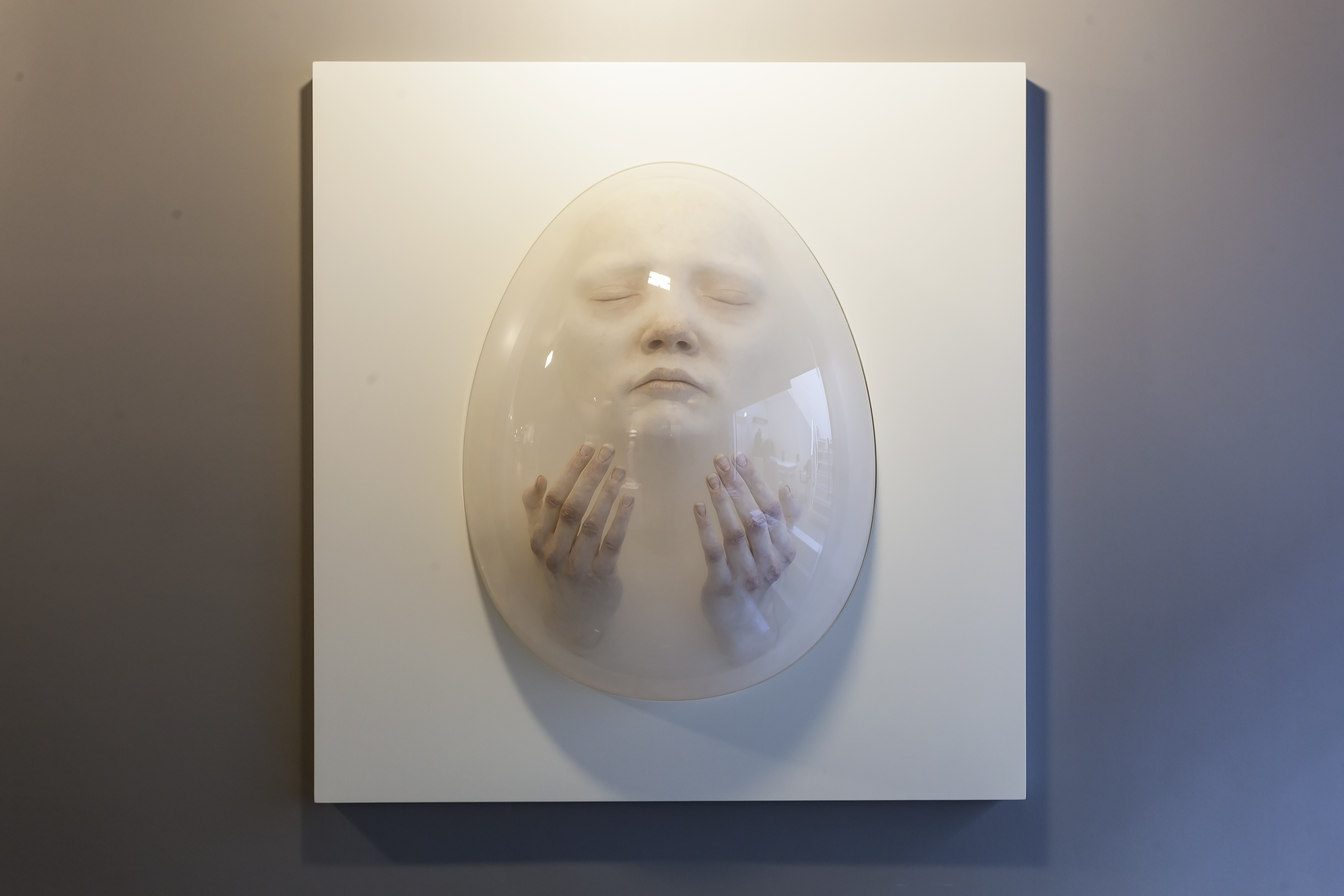
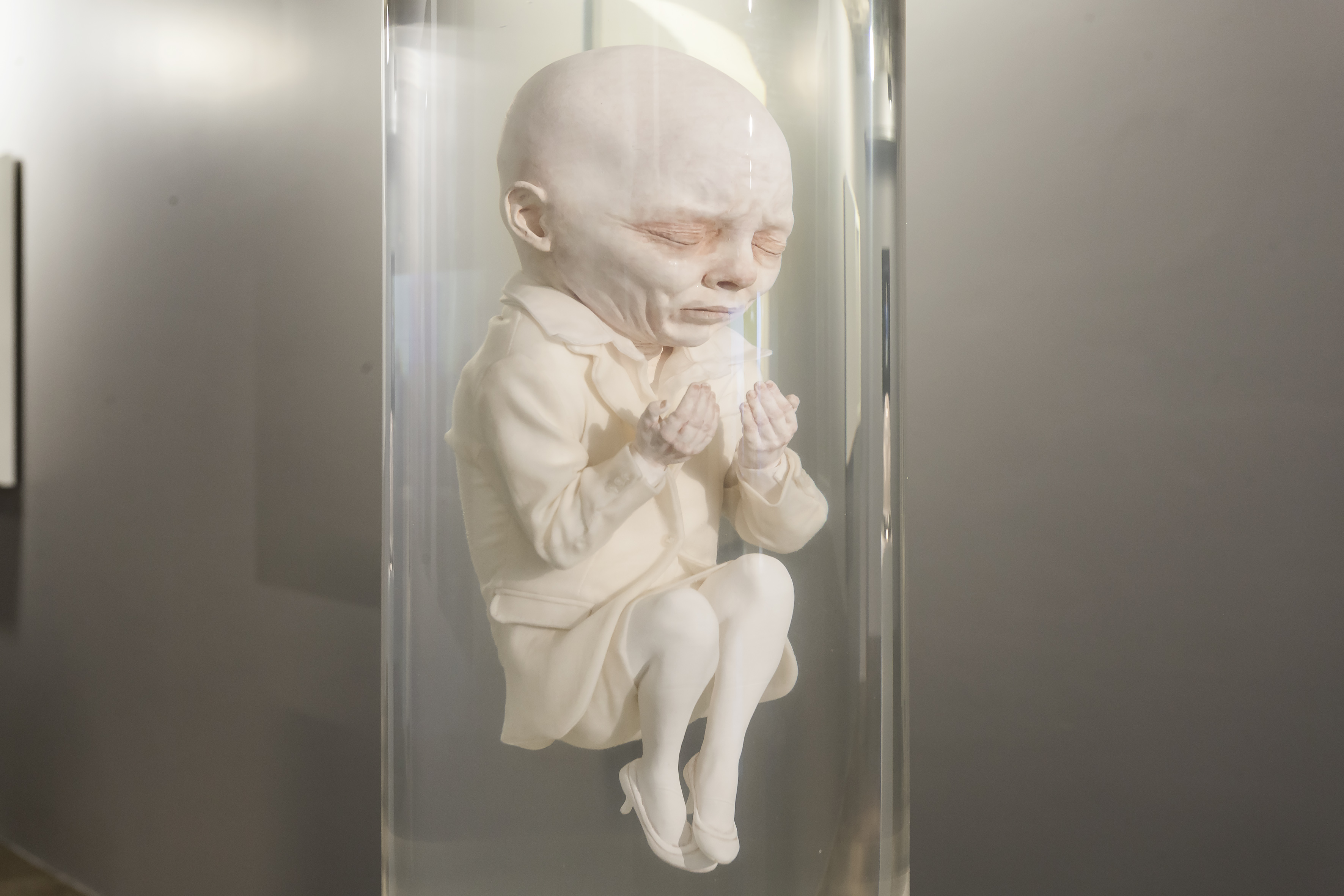
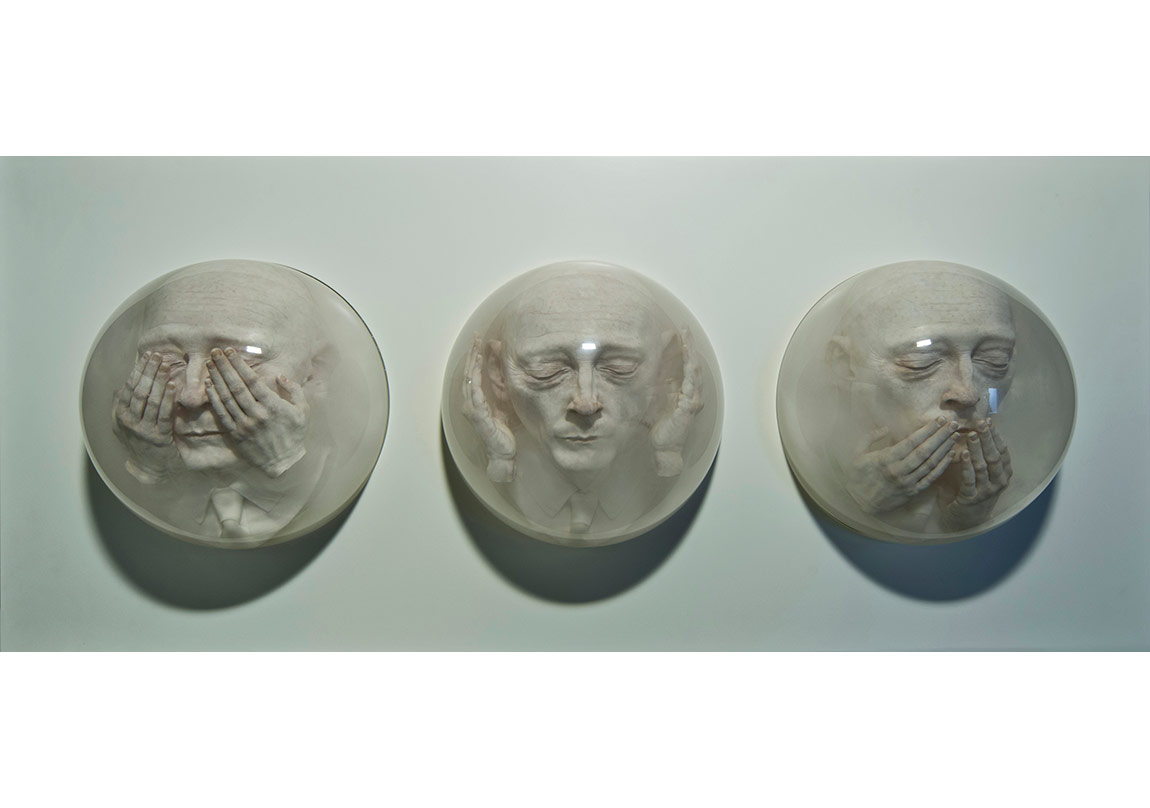
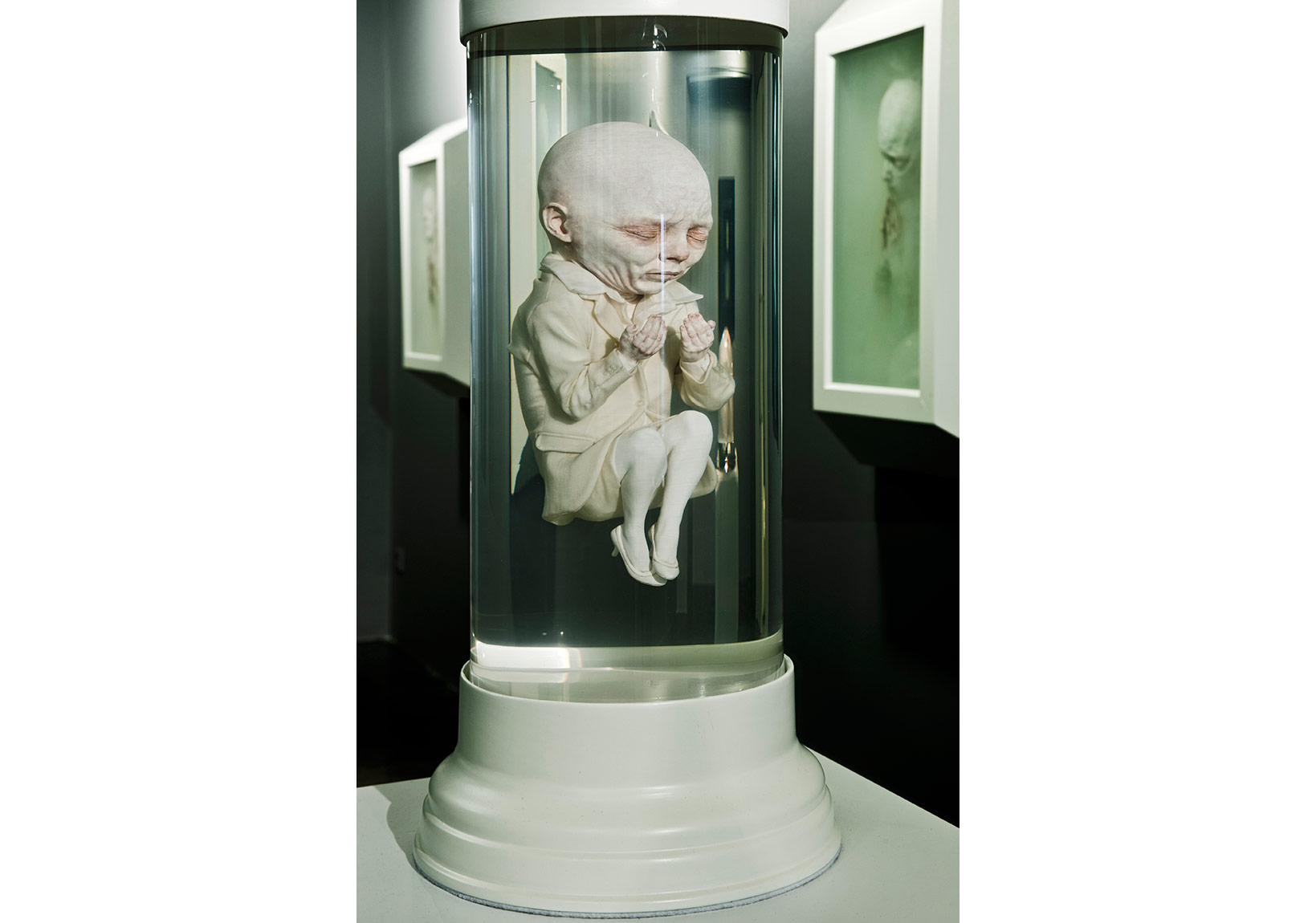
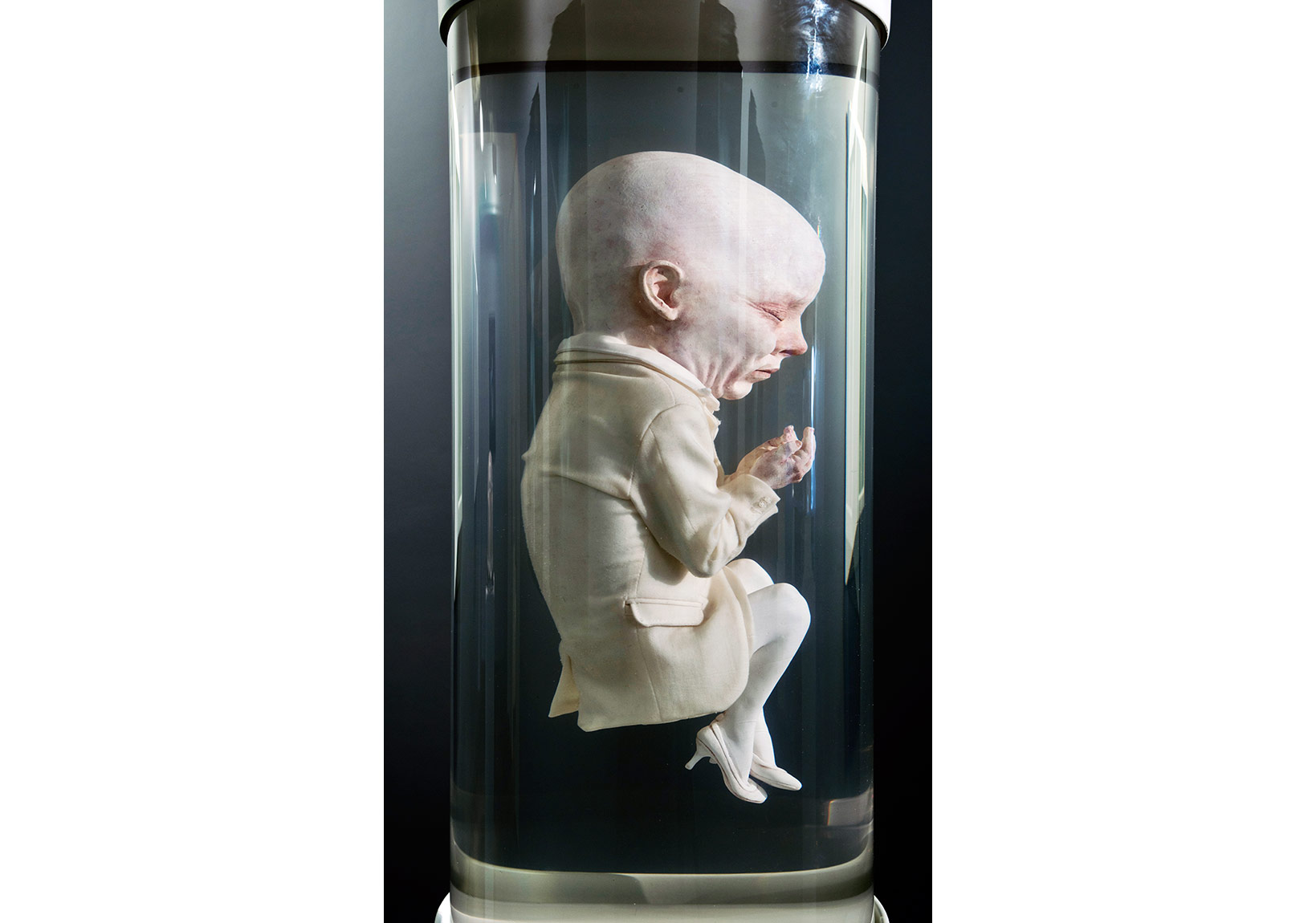
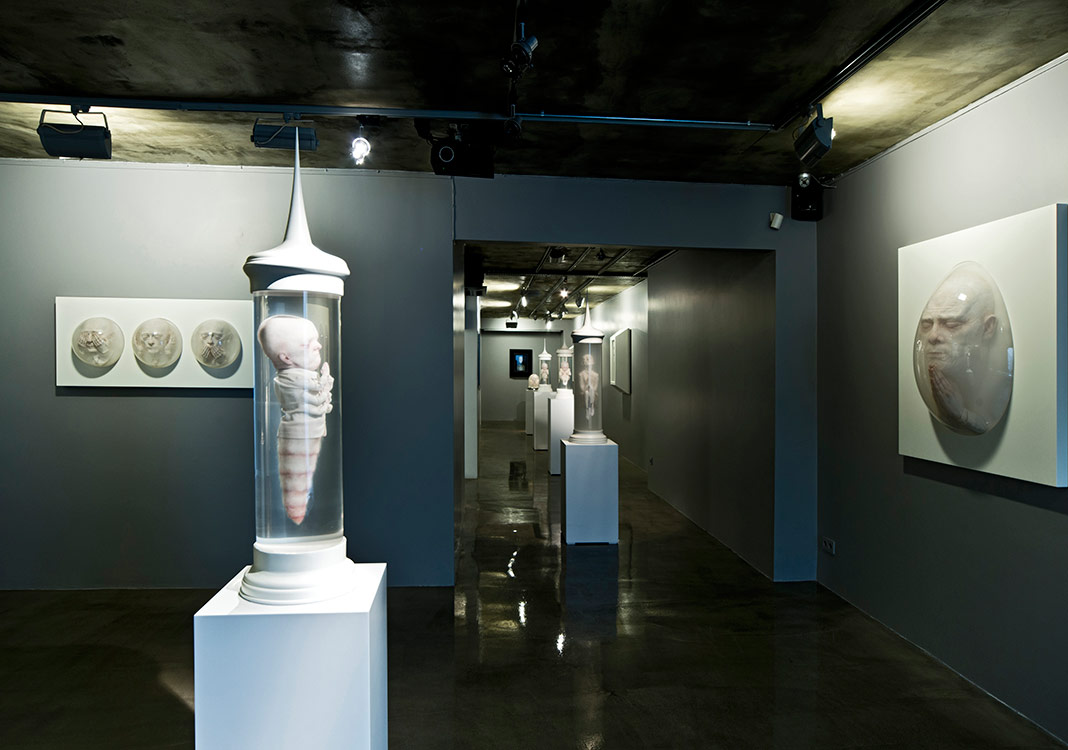
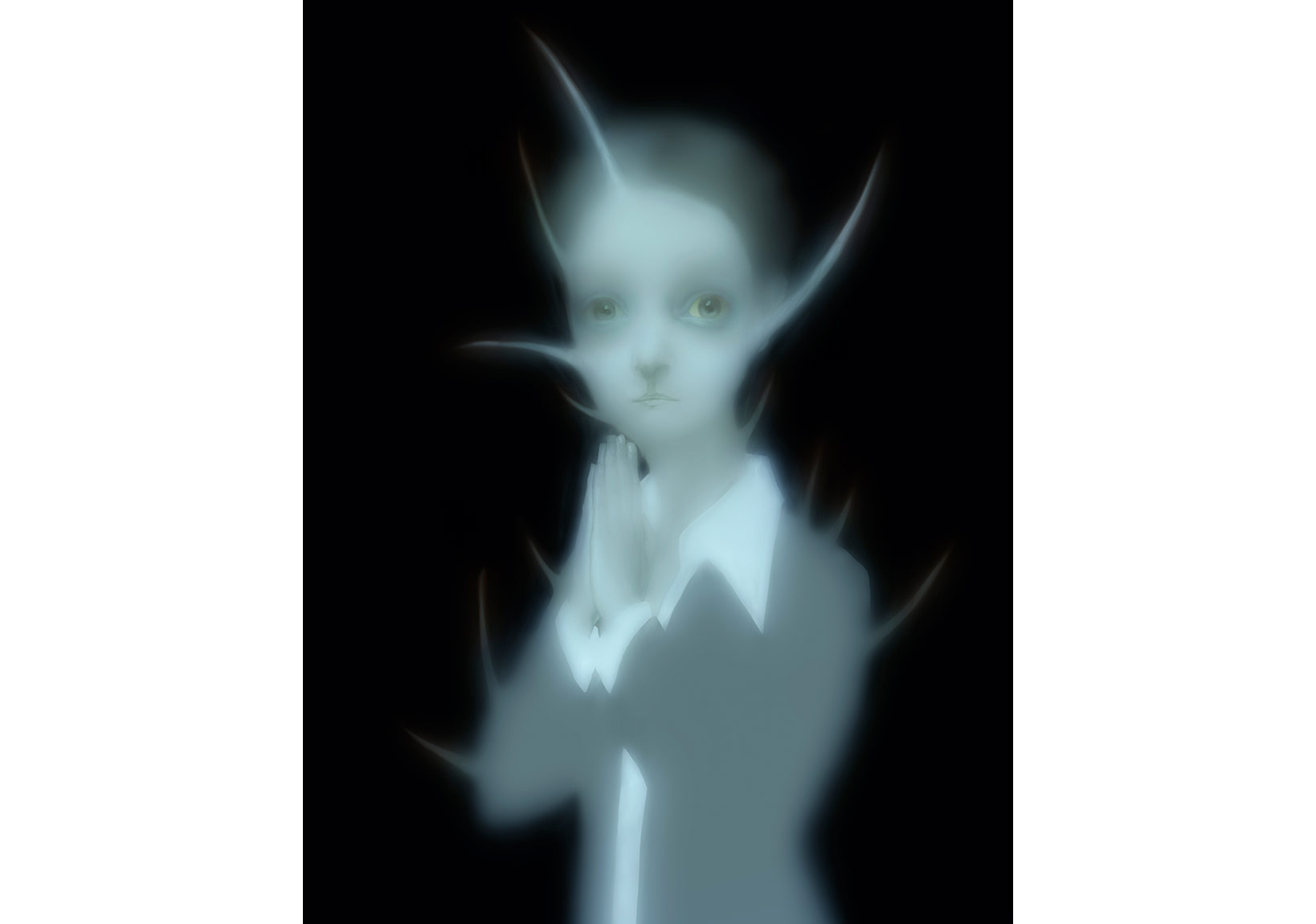
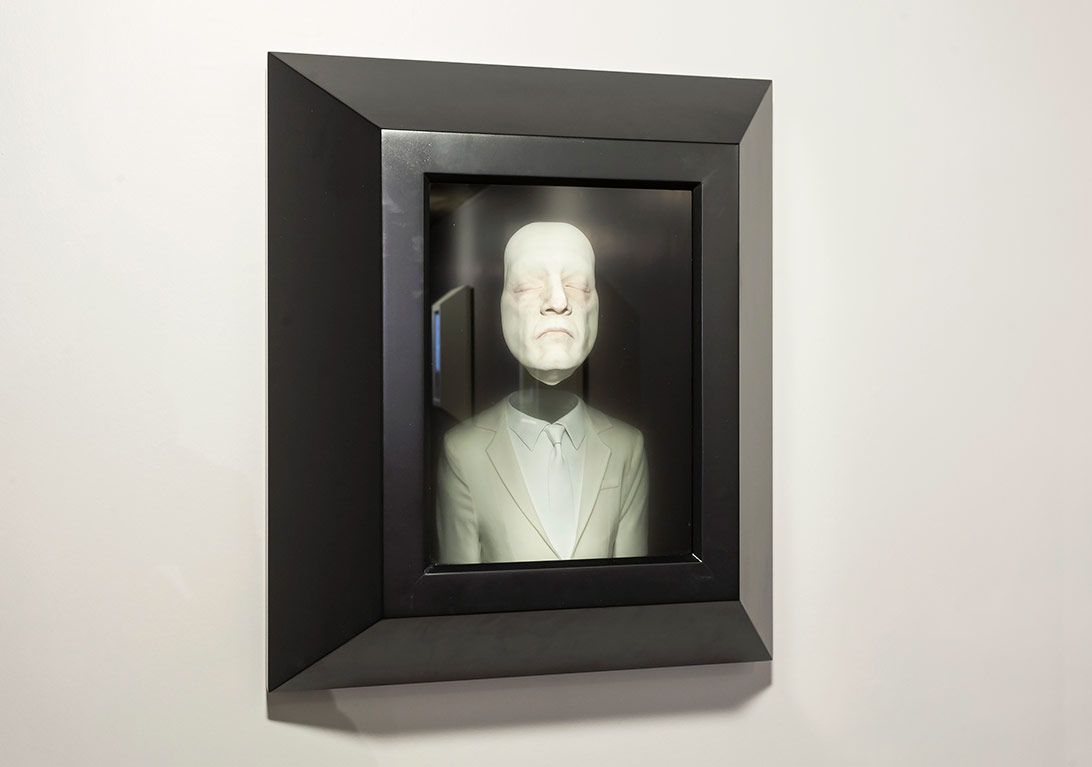
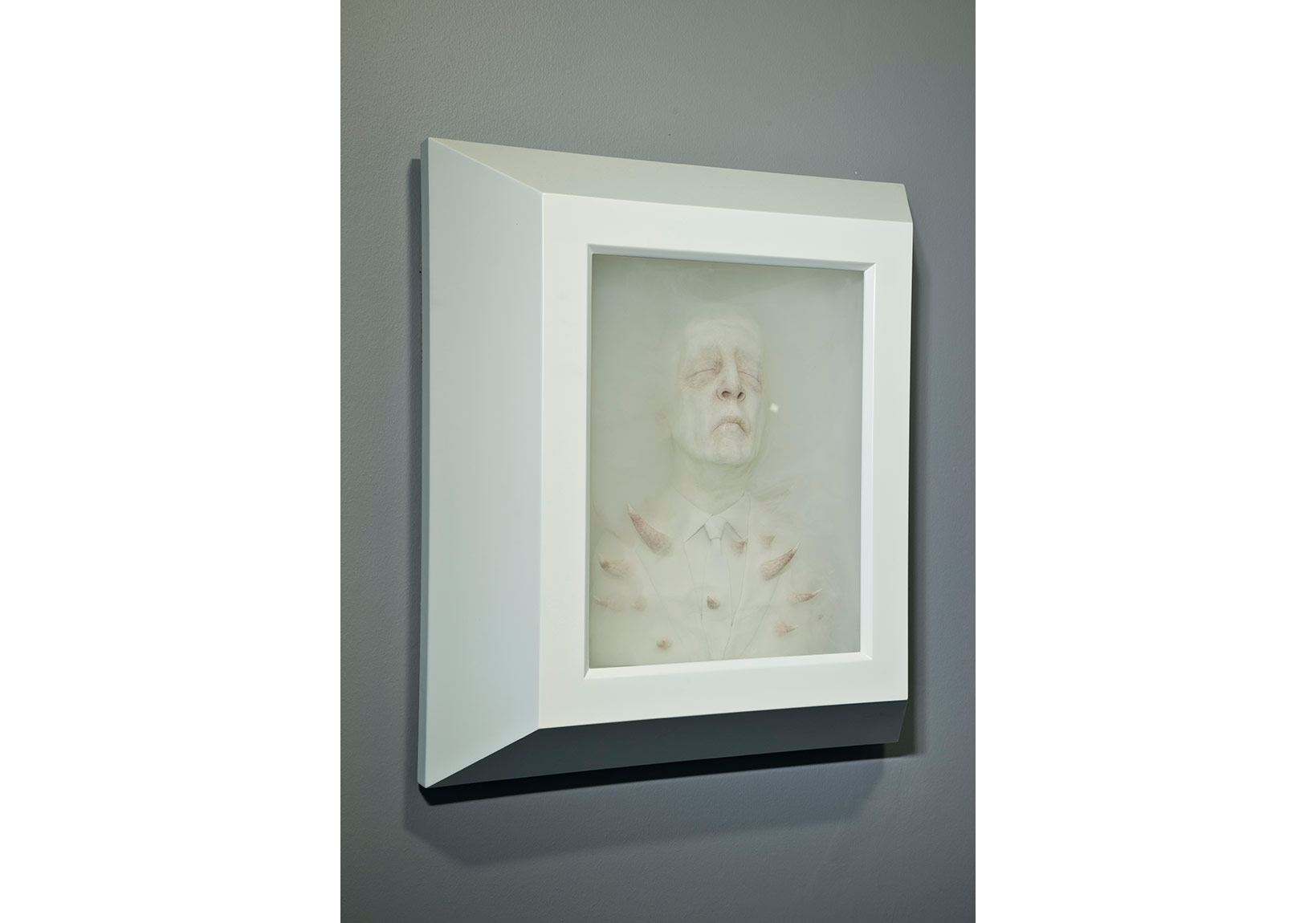
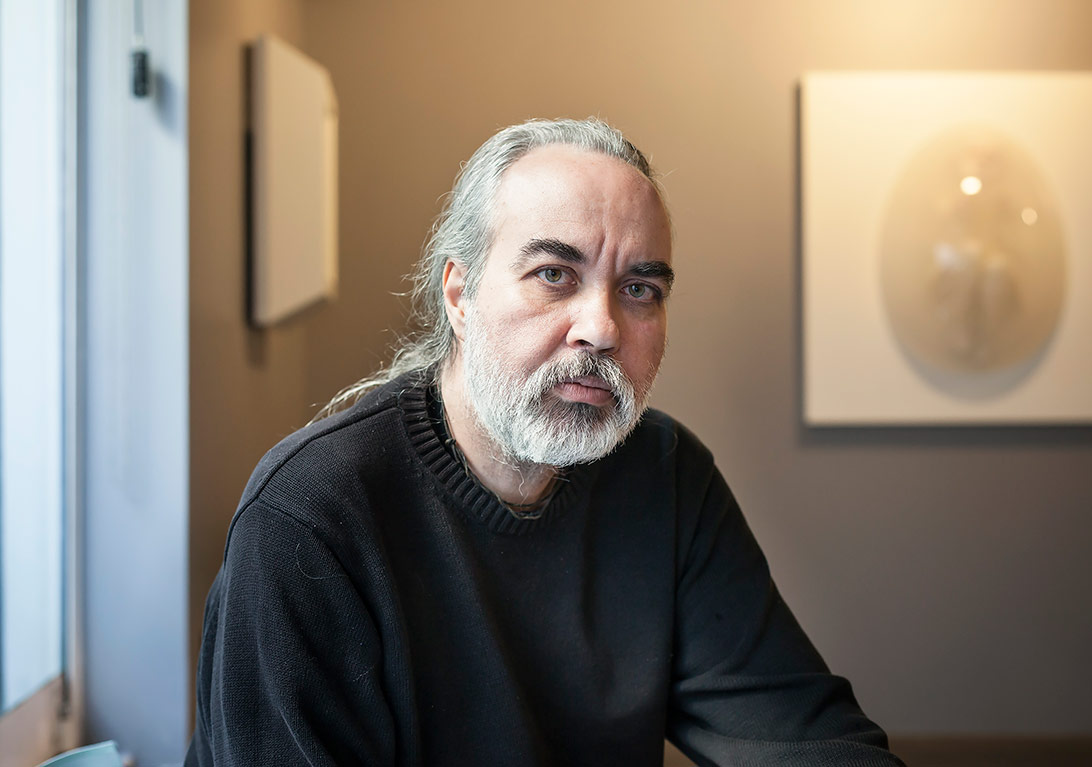
Men and women who are begging with their hands open, eyes closed, frail bodied, suspended in a transparent liquid, trying to move although their movements are limited, wearing white clothes… Bahadır Baruter, whose caricatures were featured in many magazines for years, is at x-ist Gallery with his latest solo exhibition “Fatality.” The artist had looked at the processes of starting a family and a home in his exhibitions, “Your Family Is a Lie Dear" and "Home, Sweet Home.” Now, he is looking at those crushed under the pressures of the corporate world. The artist presents a series of sculptures for the first time. We talked about the figures, his production methods, and his perspectives on life and art.
In your solo exhibitions so far, you have interpreted characters within certain institutions or groups in society. Now, you are looking at the corporate lifestyle. How did you come to focus on this? What was the process like?
Perhaps, this is because of the critical perspective, social sensitivity and interpretation of your surroundings, which are habits of drawing caricatures—these are excitements that come from within to show something taboo from another viewpoint. I don’t enjoy making things that are personal. After looking at family, domestic life, consumption conformism, next is corporate life and people from corporate life. I’m going to work more with the concept of power in the future. Perhaps this is because I have been working in caricature for the last 25 years. I’m like a caricaturist when making paintings and sculptures or maybe I’ve imitating painting and sculpture while drawing my caricatures.
Those 25 years were not spent just drawing caricatures, I suspect. What was your relationship with painting and sculpture during those years when we did not see your works in galleries?
As a caricaturist, I always acted like a painter, perhaps because I was educated in fine arts. I always approached my composition like a painting, creating a voluminous, deepened space. This is how I was motivated, this is how I derived pleasure. I always pushed volume to its limits, as if I was making sculptures. I wanted to emphasize the illusion of three-dimensionality.
This is the first time we see sculptural works, what does that feel like?
I used to make sculptures as a child before I started painting; there was a time when I used to only play with PlayDoh all the time. That was silenced at one point, stopped, fizzled out maybe and now it’s making a comeback. Maybe my childhood’s energies are coming back with middle age. Making sculptures was something that I postponed when I was painting. On the other hand, the thing I wanted to talk about with this exhibition was something that we had to encounter as an object, with its volume, something that we could look at from above, from below. There is still a painterly depth to the works. These are not works that are touchable. To be honest, things I make become caricatures, paintings, sculptures very suddenly. This is how something sincere emerges. Naturally, by itself… I’m trying to be as honest as possible with what I have. I don’t say, “I should do something like this,’ but rather “There is something inside me that wants to do this, let me help that emerge.” This is why I have a sincerely interested relationship with the things I’m interested in. I think the viewers receive that and like the works for this reason, which makes me happy.
You said that some excitements returned with middle age. For many artists, the production that happens after this time is very different. How do you see the relationship between your age and your production?
Sometimes, people slow down, get tired and withdraw at my age. The exact opposite happened with me. Perhaps, it’s the result of a child-like spirit, a child’s approach. The things that I have been postponing are shedding their weight and emerging. It is like baby teething. Maybe, this is also the result of being honest.
What does it mean to be honest to your production? What does it mean to be not honest?
For example, trying to draw a career line under the market’s conditions could be horrible. Something being sold or not sold, calculations of what the eye looking at the work feels—these are all very negative things. Of course it is there, there is no saving yourself from it, but the more careful we are, the better. While we try not to chase out the realities of the market, we try to keep it on the threshold somehow.
Isn’t it necessary to just throw it out completely?
This is a reality as clear as not being able to walk on the street naked. It is like the boundaries of the answer to the question of, “how free can we be on the street when we disregard society?” The market is something that can dictate, influence, and repress creativity; it is the biggest danger in our midst. The ability to listen to your internal voice can overcome this.
Is there a difference between your circles when you were drawing caricatures and the circles that you are in when you exhibit these works?
Actually, nothing has changed, because I’m not in the art circle. My group of friends are not from the art world. I’m still friends with caricaturists, because they are present when they are together, they always play a team game. This is a preset condition of their profession. Artists, on the other hand, are present individually, unlike my circle of friends. The artist is alone, maybe this is what is necessary for art, but the humorist is never alone. Everybody draws their caricatures in the same room, works are next to each other, next to my corner is somebody else’s writing. There is a fire that could only be lit when together. The art world doesn’t have this.
Contrary to what you are describing, there are also artists who make works together, who share works in art history. What you are describing seem to belong to today’s circumstances. These conditions that isolate the artist actually isolate all individuals in society. At this point, could you talk about the social impact on the figures that we encounter in the sculptures included in your exhibition, precisely from this point-of-view?
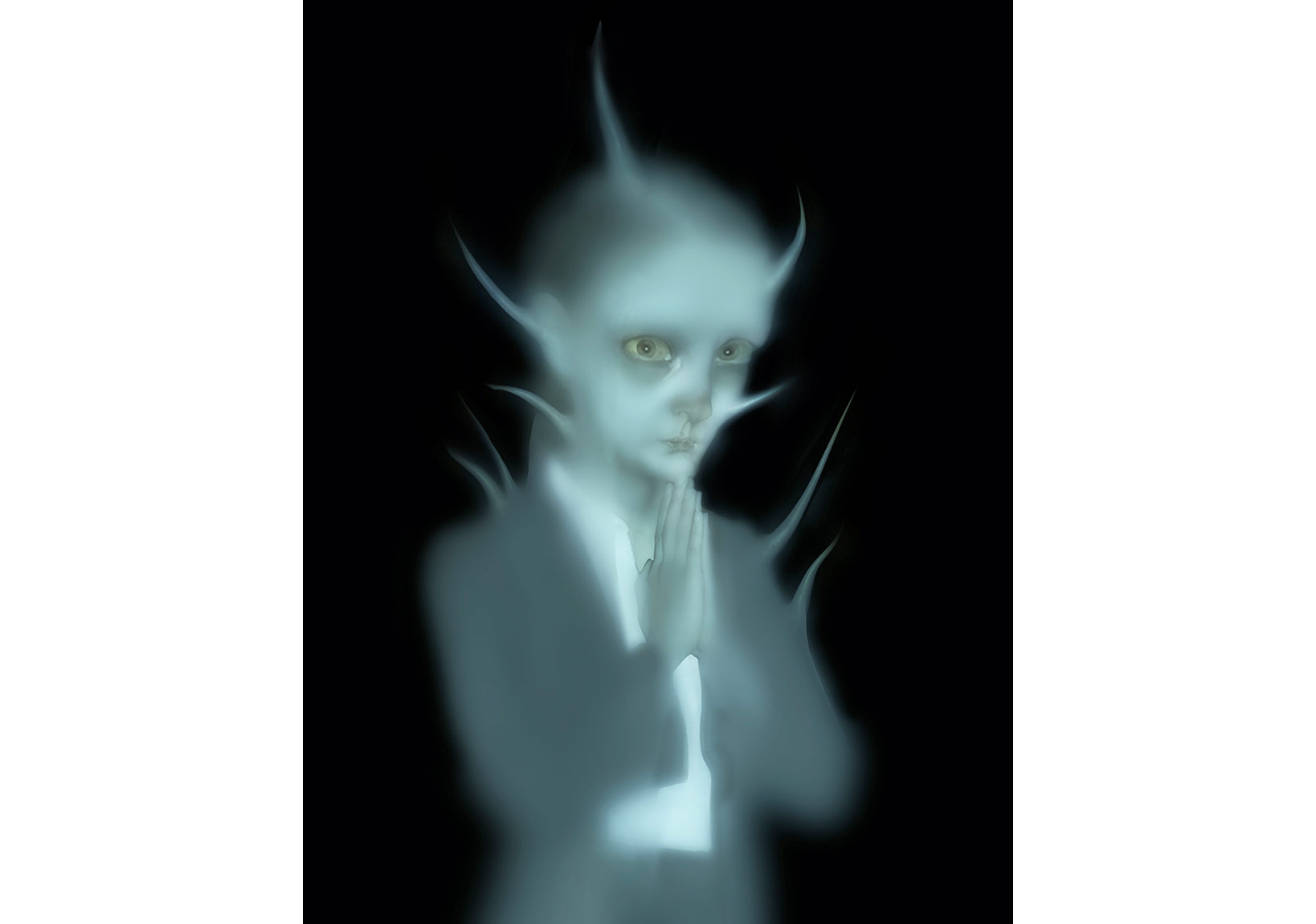
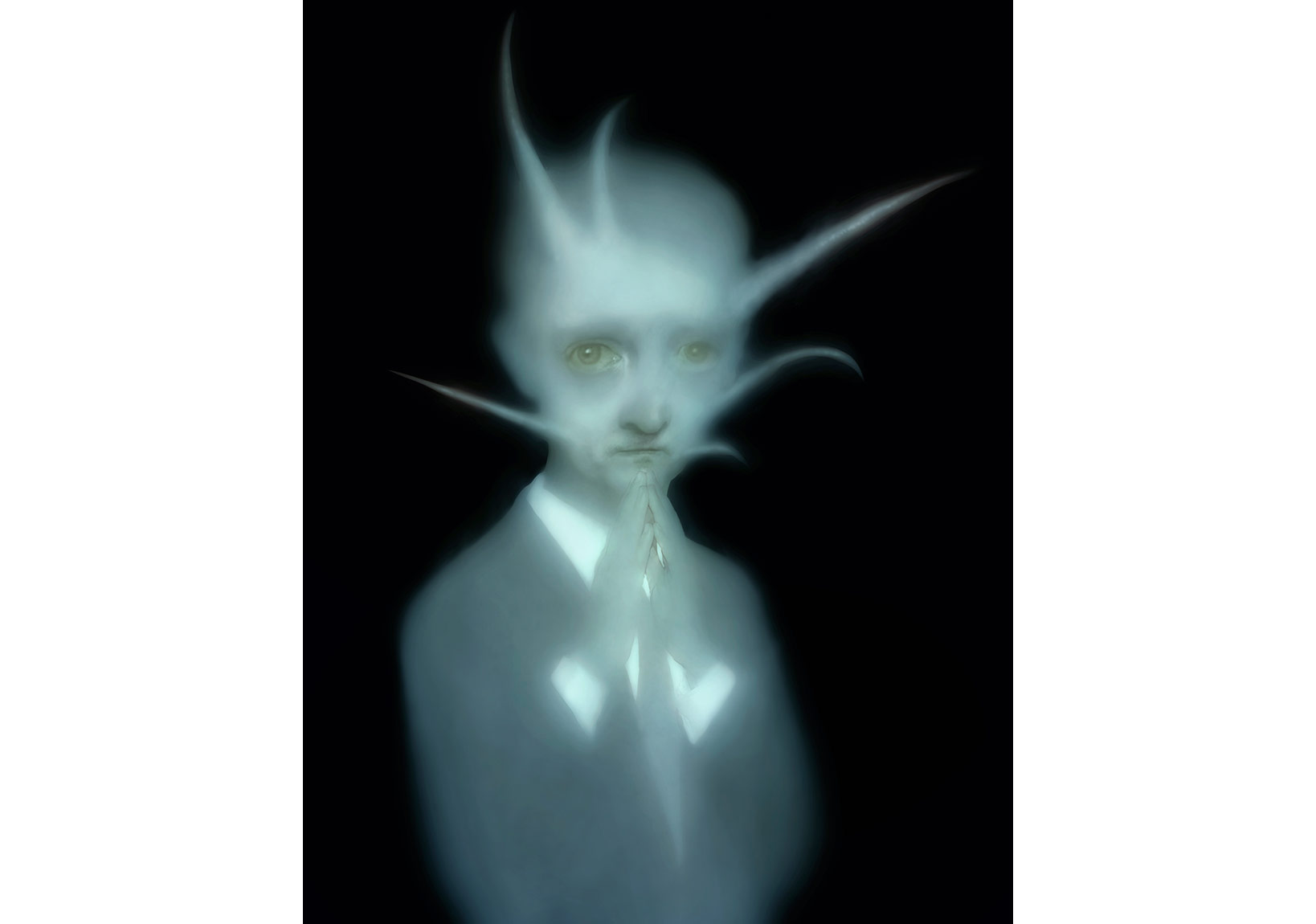
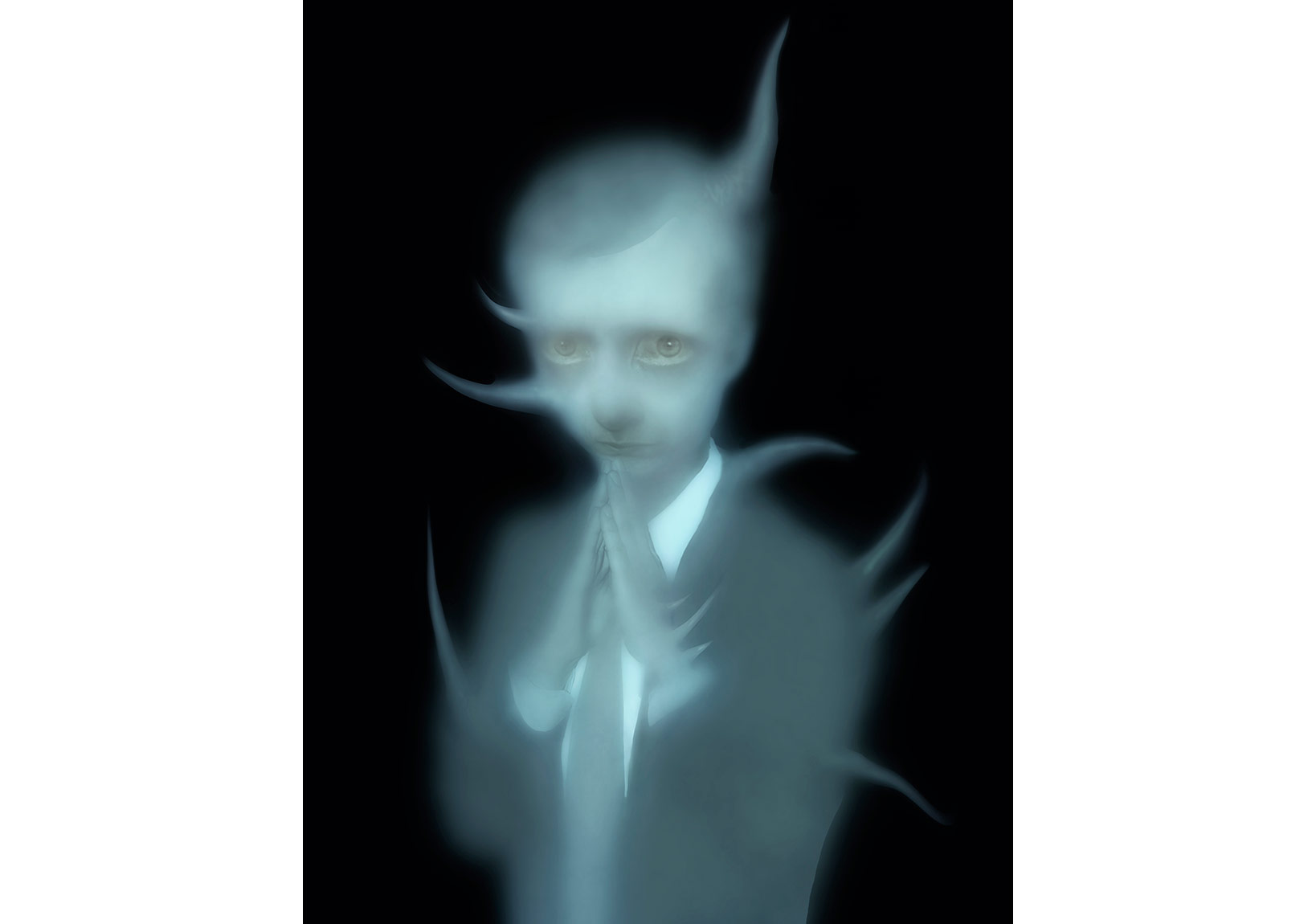
They could be tradesmen, white-collared, journalists or artists; people who appear to be free in their professions, although they are not able to fully express themselves and are actually not free at all. The working class of our day actually. Repressed people constitute that fabric governing all of society. Everybody has opinions and thoughts about these people. I’m not saying anything special; I’m more interested in how this can be expressed artistically. When stereotypical impressions are combined with an aesthetic approach, this becomes art and this stereotype opens up new horizons within the stories, asking questions and the artist is also confronted with their own product, containing something that they were not able to identify before, enlightened themselves. I encountered them in my process of making. Visual expressions can encapsulate things that would not fit into many sentences, both to me and to the viewers. What captures the things you cannot verbally articulate become art. This is what is enchanting, not what I can say about it.
You present an image of the working class, often found in art works in the 20th century—looking up, eyes gazing into the future, large hands, a strong working class. Here, we see the opposite of your past representations of the working class—small hands, closed eyes, figures that appear to be in the mother’s womb, desperate. This appears to present where humanity has come to.
The strong, muscular, powerful person with large hands is replaced with a person who has returned to their original form as a fetus. It is exactly like this. On the one hand, they are becoming slaves, pushed down, begging, returning to themselves, very weak and helpless. Perhaps, this is also reminiscent of death.
You mentioned at the beginning of the interview that you were going to deal with the concept of power in your future works. Could you talk further about this, how do you deal with the concept of power, how are we going to see this in your works?
I’m dealing with the concept of power critically. On the other hand, I have been in positions of power in my professional life. I was an editor, I was a publisher, I was an older brother… I looked at power both from the inside and from the outside. I think there is something inevitable yet jarring about it. Power is the name of the bridge quickly constructed between the strong and the weak. It is a form of reality that we know is engrained in our nature, that seems to be on its way out and yet we know it will always be there, a reality that we are constantly fighting with. Politically, my thinking is more similar to philosophical texts with anarchic undertones. I try to position myself as such despite knowing that I’m not like that. If I have the instrument of art, which is a privilege, I can evolve it, subvert it, which makes me feel lucky.
;