While the title Till It’s Gone implies that nature and people are both on the verge of destruction, the exhibition itself is not trying to make us afraid or to pull us into pessimism.
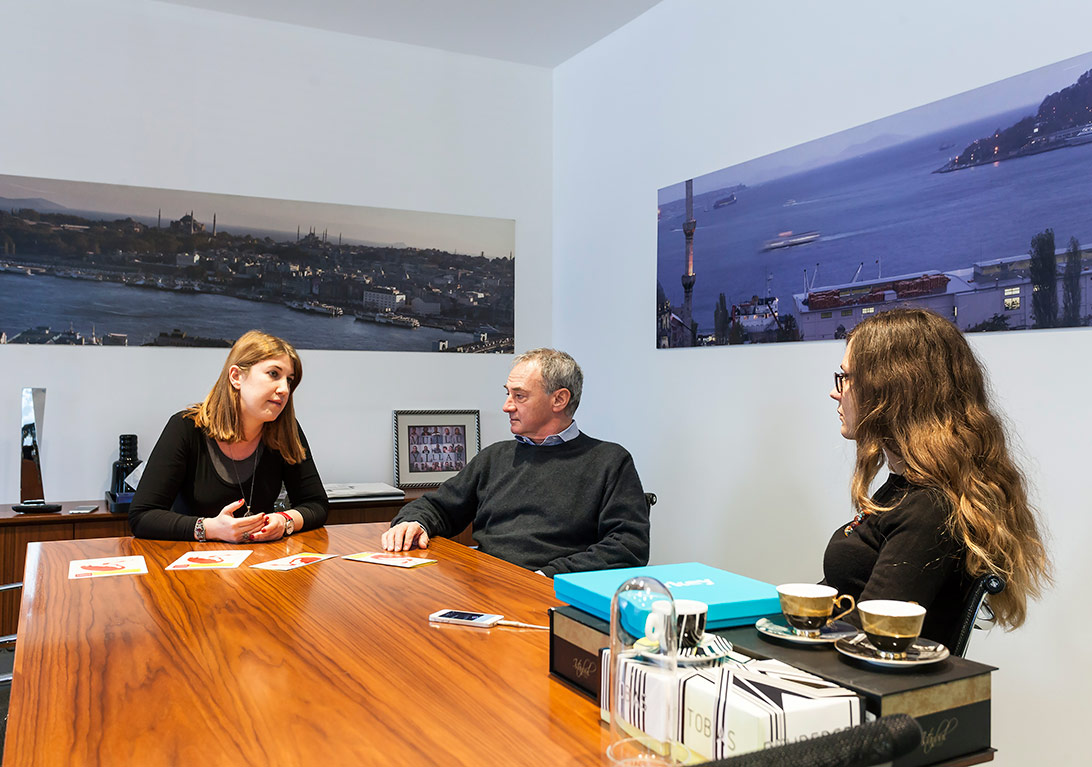
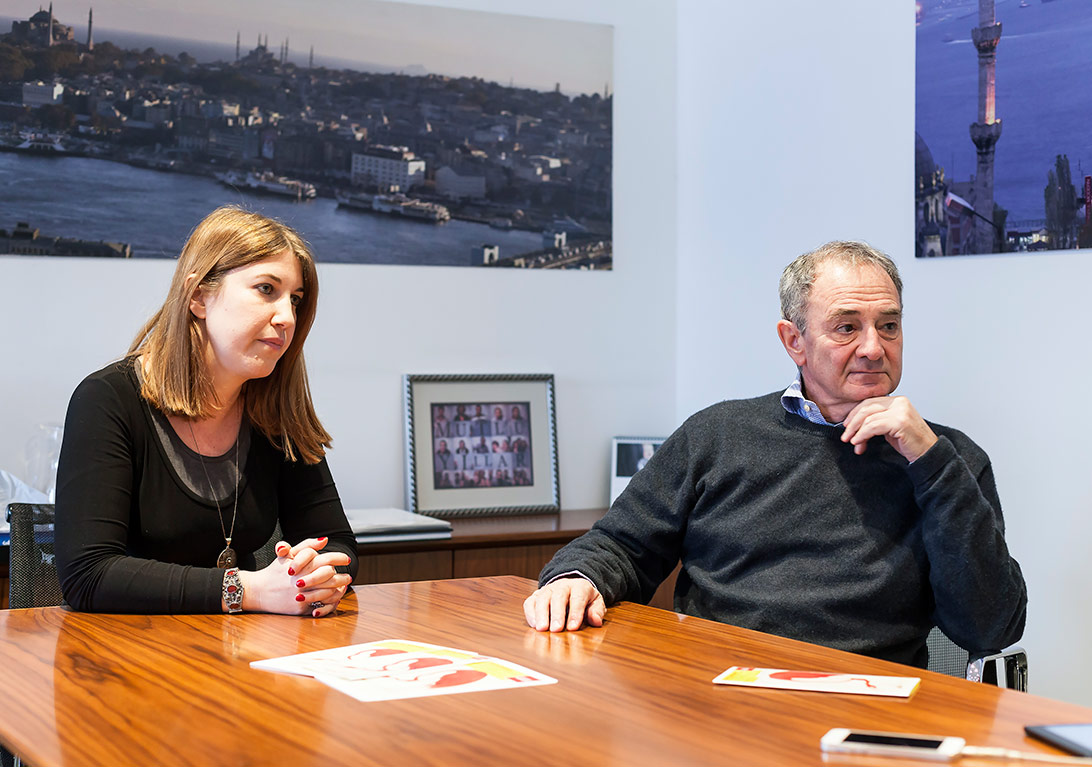
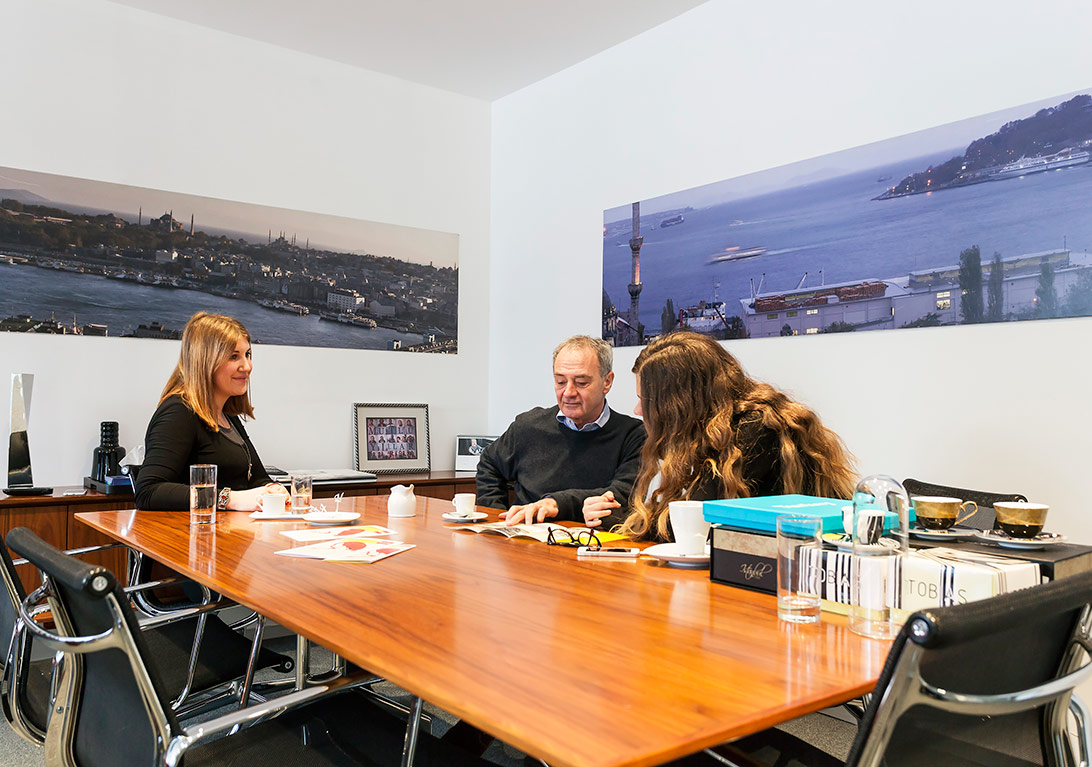
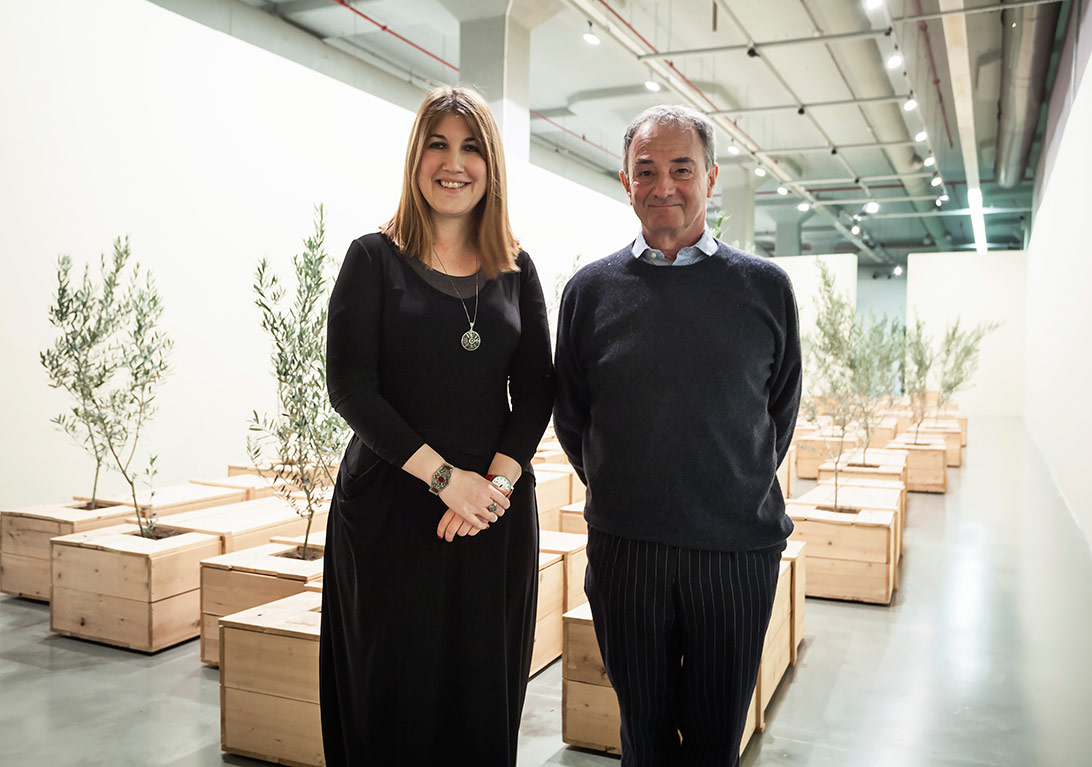
The exhibition is co-curated by Çelenk Bafra, who has been the head of the curatorial department at the museum since 2011, and Paolo Colombo, who has been the international art advisor of the museum since 2008. We talked to Bafra and Colombo about the exhibition and the process leading up to the exhibition.
Till It’s Gone is more of a project than an exhibition, with a before and an after. How did the steps of this project develop?
Çelenk Bafra: Climate change and the destruction of nature have rapidly become issues that we need to dissect with great urgency. We preferred to look at this issue from an artistic perspective; perhaps the strongest aspect of contemporary art is its ability to look at contemporary notions and issues.
Istanbul Modern was planning to organize an exhibition on nature and sustainability for some time now. From the museum’s perspective, Till It’s Gone is like a continuation of the exhibition, Lost Paradise, that Levent Çalıkoğlu curated with Paolo Colombo in 2011. Lost Paradise, as you can tell from the title, regarded nature as an already-lost paradise and the focal point was the relationship between human beings and nature, which changed form through the developments in technology.
Till It’s Gone goes to the root of this issue. The perspective offered here is more on how nature is dealt with in visual arts, critically looking at how people perceive nature and how nature is presented to people. The photography exhibition we opened in December, Habitat, is again open to interpretations of nature and sustainability. Another piece of the programming that will converge with the theme of Till It’s Gone is the last exhibition of VitrA Contemporary Architecture Series. The exhibition will be looking at the issue from the perspective of architecture, housing complexes, social housing and urbanization. We can thus say that in the first half of 2016, all of the exhibitions and activities on the lower floor of Istanbul Modern, where temporary exhibitions take place, will be in dialogue with each other.
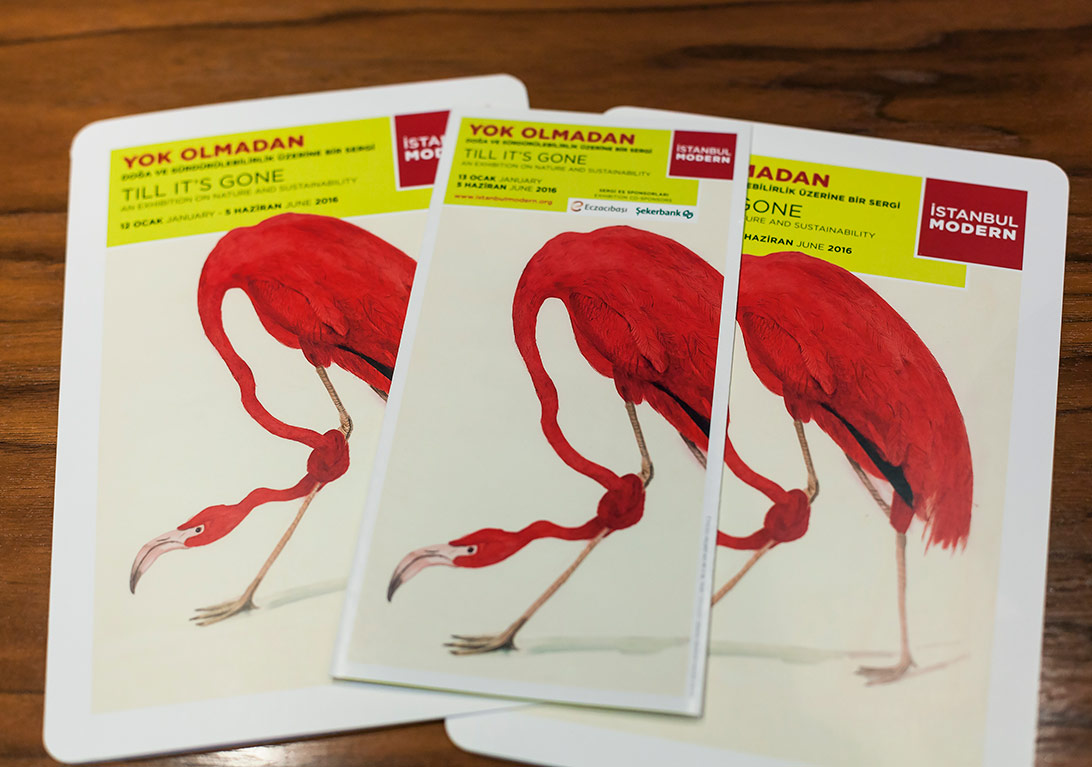
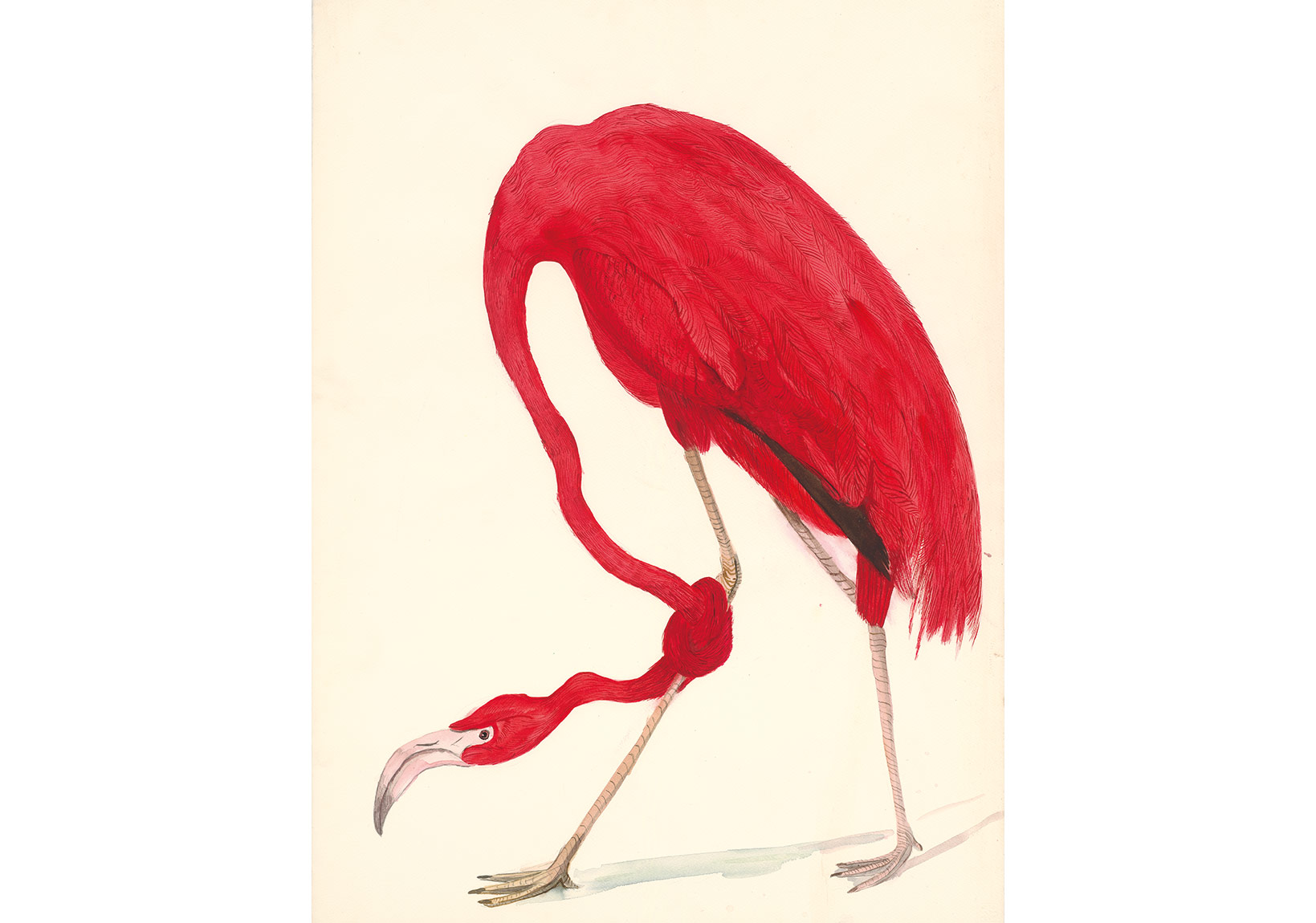
Paolo Colombo: While there are parallels between Lost Paradise and Till It’s Gone, there are also some fundamental differences. There was a nostalgic thread in Lost Paradise and all of the artists participating in the exhibition had produced works which dealt with technological benefits. Till It’s Gone doesn’t carry such nostalgia, because issues around nature are becoming more pressing not only with every passing day, but with every passing second. It becomes crucial in this framework to be able to identify the situation and to position ourselves. The desperation flamingo that was used in the posters and invitations of the exhibition refers to this urgency.
Why is the flamingo desperate?
P.C.: It is desperate, because the damage we are making on nature is going to inevitably come back to us. The flamingo can’t take a step, it can’t breathe, because its neck is intertwined with its feet. There couldn’t be a more iconic image of the situation we’re in. Another important point to make is that humans are the only organism that can stop the damage. If we can find a way to do that, of course.
Ç.B.: Yes, we are the flamingo. The flamingo in the image is reminiscent of both the world and the human being. If the flamingo is the world, yes the legs are intertwined with the head, but this didn’t happen by itself. We did this to it. If we are the flamingo, we have become tangled up by ourselves and this means that we shot ourselves in the foot. We are, in a way, still a part of that nature that we caused damage to and we are entering a dead-end that we cannot come back from.
P.C.: It’s true, the human is an animal too—actually a much more vicious species than the flamingo.
How do the works in the exhibition relate to the theme?
P.C.: Till It’s Gone is a metaphorical exhibition. The title of the exhibition is from the chorus of the famous song “Big Yellow Taxi” by Joni Mitchell from the 70s. Mitchell was also a painter and one of the first representatives of the 68 generation who articulated their concerns about the exploitation of nature. She was the first person to say out loud that nature could be destroyed and she was able to have people hear her through the power of music. We can’t thank her enough for this wake-up call.
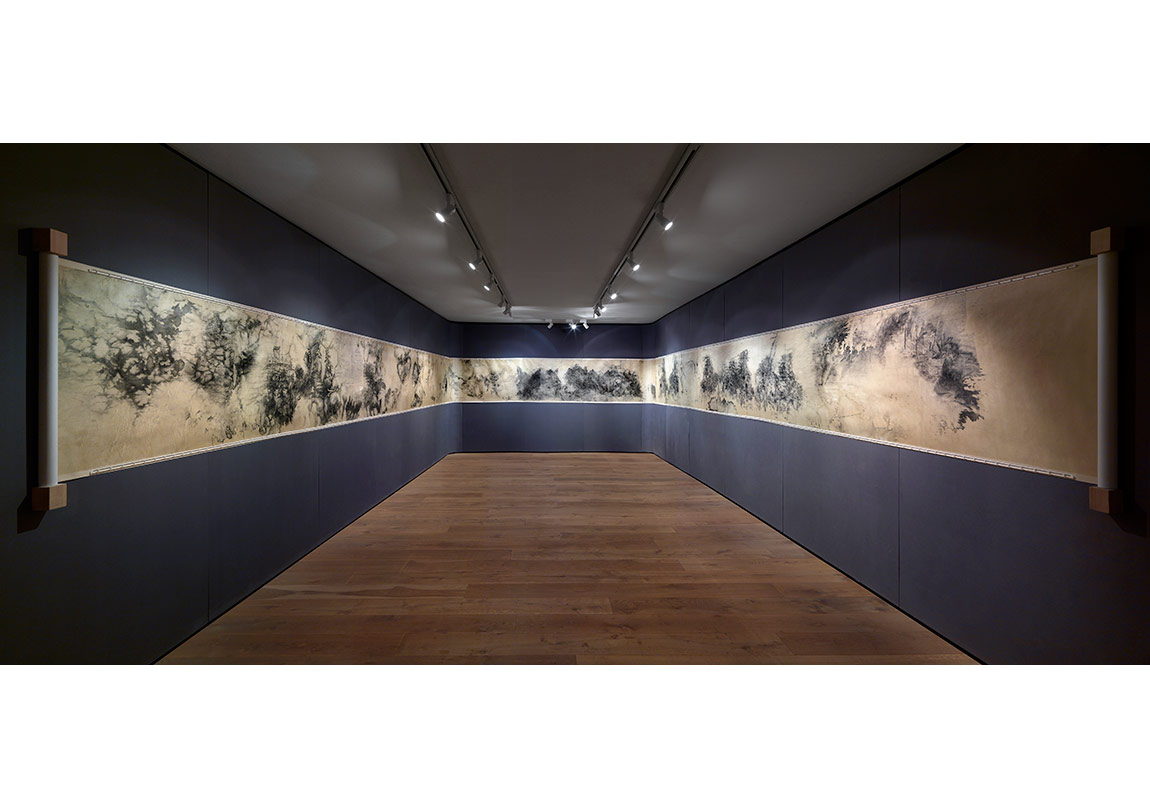
The exhibition brings together artists from different geographies. Bingyi’s work, which reflects on China’s perspective on environmental issues, includes color explosions on large surfaces. The artist throws ecologically conscious paint bombs on large surfaces from helicopters. When the paint explodes and spreads across the surface, the artist makes amazing drawings, referring with his work to the thin line between controlling and not controlling in production. Imagine paintings based on natural disasters!
Dealing with ecological matters in China is different from dealing with these matters in Los Angeles. I find the exhibition meaningful because of its ability to lay bare these differences. The common denominator is the earth, yes, but because of cultural differences, everybody deals with it differently. There is more self-consciousness in Los Angeles to protect nature—it makes sense that science-fictions about the future of the human kind are produced there. An example is the diaries of The First Person Born in Space by Jasmin Blasco, which takes place in the near future.
Hamish Fulton produces works inspired by animal species that migrate at certain times of the year, putting “walking” at the center of his practice. He thus relates to nature in a more sincere, simple way.
Roger Ackling passed away two years—he is the only artist I know who did not leave a carbon footprint on the world with art works. He didn’t even use pencils for his art work, not a piece of paper, nothing of the kind. He would collect the pieces of wood that drifted to the shore with the waves and draw on them using a magnifying glass. His very small but incredibly poetic works would be realized after hours of work. He would make works that would show what kinds of beauties you could produce with materials offered by nature, without leaving a carbon footprint. With these works, Ackling is not telling people to wash their clothes with ashes instead of laundry detergent. But seeing that it is possible to make art work without leaving a carbon footprint can direct people towards alternatives.
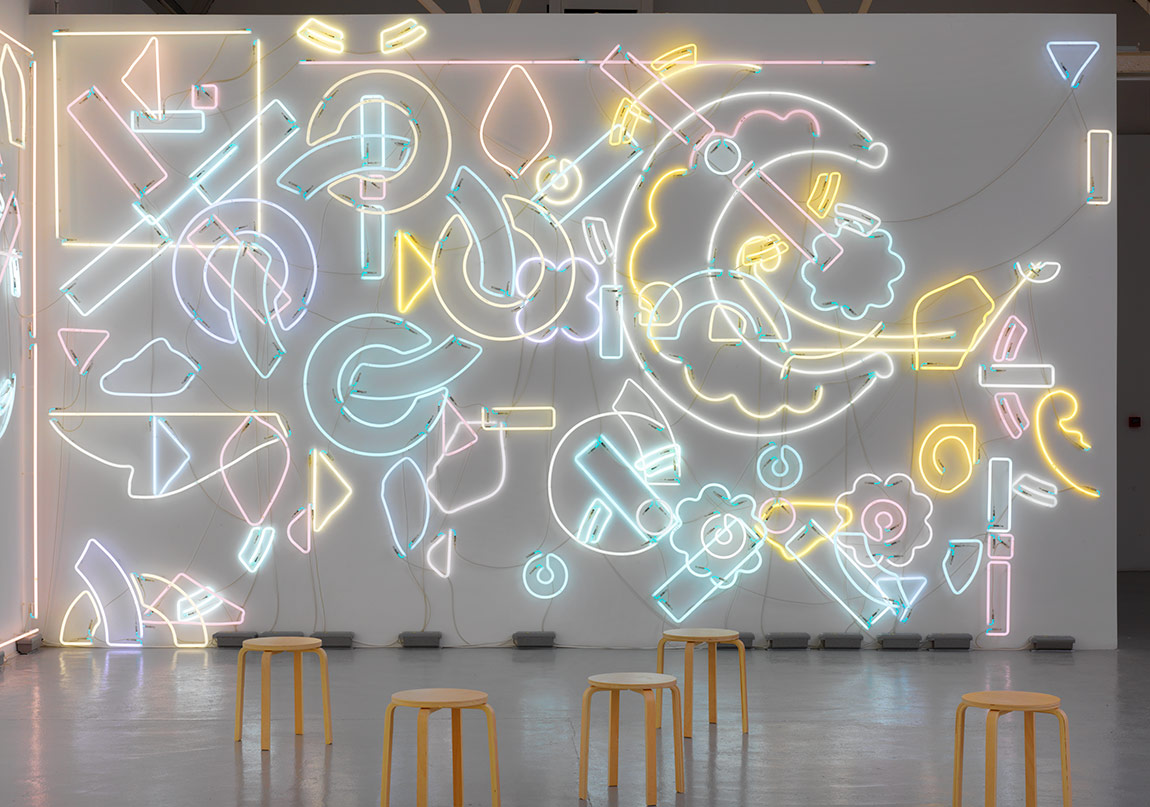
Pae White was inspired by the London subway system for her work. The subway system is something that carries thousands of people from one place to another all day, high-intensity and a bit depressive, because at the end of the day, you are underground. The work that White produced for this exhibition is about objects that are believed to bring luck, such as the crescent, horseshoe, four-leaved clover. These objects are produced using different colored neons. The neon light that White uses resembles daylight and this type of light increases the level of serotonin in the blood, making you feel happier. You can think of it as light therapy.
Ç.B.: There are two doors directing you to the exhibition from the foyer. You can use these doors to enter or exit the exhibition. We designed a tunnel atmosphere through one of these doors and White produced the neon installation specifically for this space. Thus, if the viewer is filled with realist, negative feelings about the future, they still leave on a positive note or they start the exhibition in a positive note and then walk through the exhibition.
Light therapy is used by a lot of people, especially by people in Northern countries where there is less daylight to fight off depression. We don’t have the time for depression or pessimism any more; we need to analyze our situation and past mistakes in a realistic manner and then put on a positive and constructive attitude.
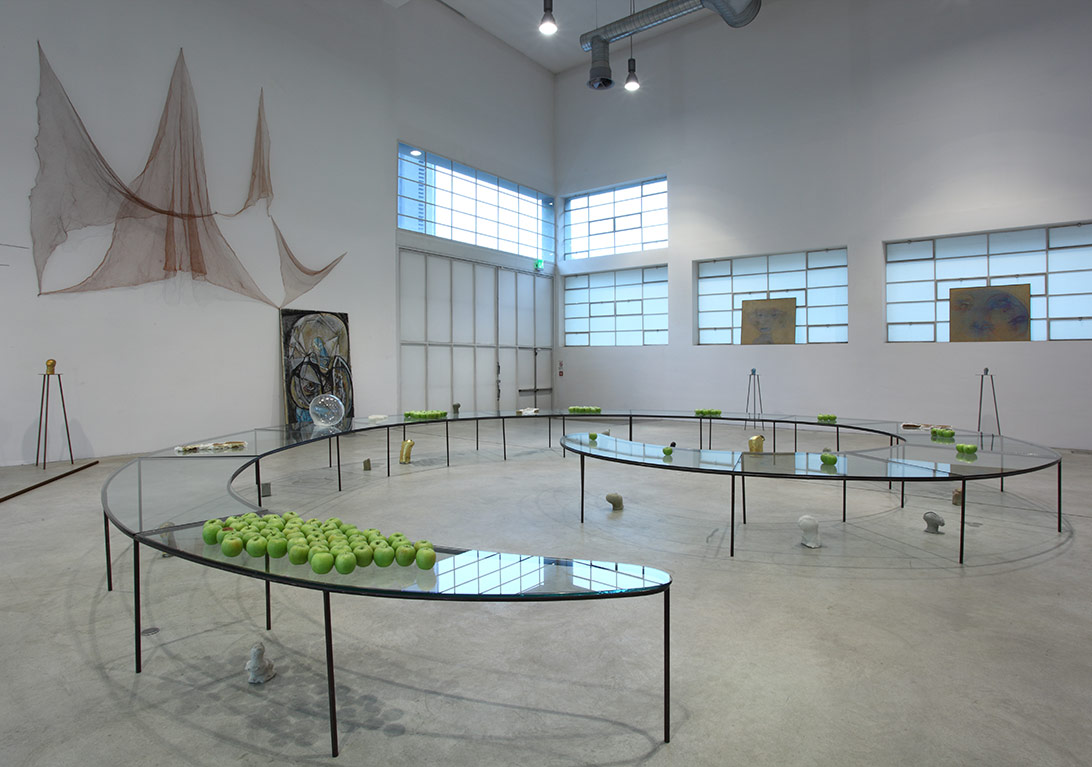
P.C.: Through the other door is a work by Bas Jan Ader on gravity. Right behind is Mario Merz’s spiral table and his apples. We are aware of gravity today because one of those apples fell on Newton’s head. You see, another example of the parallel between the human being and nature.
Are the works all commissioned?
Ç.B: Works from different periods are side by side in this exhibition. Works range from the 19th century to post-WWI and the 1970s, which was a particularly important point of reverence for us. Thus, some of the works in the exhibition were ready; they were actually part of art history already. Some of the works are produced by the artists who were invited to make works specifically for this exhibition. In addition to Maro Michalakakos, who made the red flamingo, all of the artists from Turkey, except for Canan Tolon, made new works. Tolon is one of the pioneer in art for having dedicated her artistic practice to nature. This is why we have two of her early works included in the exhibition.
How did these works emerge in Turkey, as sustainability and environmental consciousness are not so well-known?
Ç.B: Camila Rocha is a Brazilian living in Istanbul for the last ten years. She makes works presenting the flora and gardening culture of Brazil. She is further influenced by the local culture in Turkey and puts that in her work. She is interested not only in form, but also philosophy of nature. We constructed the flow of the exhibition starting and ending with the lower-floor foyer of the museum. Camila Rocha produced a domestic garden here live plants, artificial flowers and paintings and print on canvas. The hanging garden, swing, plants in pots on tables and stools are meant to produce a shared thinking and living space in which visitors can talk, rest, hang out.
There is also a work by Elmas Deniz in the exhibition—you might remember Deniz from the Istanbul Biennial. Elmas Deniz’s room combining video and sculpture is on view for the first time. Deniz uses drone technology for this work. She is pointing to the complicated competition and relationship of power between the human being, bird, nature, and technology.
Alper Aydın is an artist from Ordu and his experience in the nature of the Black Sea plays a role in the way in which he conceptualizes his works. The stones that the artist collects from different regions each have their own story, their own idiosyncrasies, value, and function. Alper Aydın produces a monument using these stones, dealing with issues including tracing nature, collecting, accumulating, organizing, archiving, and documenting. If I say it simply, he presents these stones to us as a “library,” before the stones “disappear.”
Do the exhibition design and installation contribute to the story?
P.C.: How and where we exhibit the works are very important questions. What we are trying to do with the exhibition is breaking the ideology of the white cube. Let’s pretend that you see White’s works in a sterile gallery environment, the work would probably be a lot less powerful. These works should not just push the viewers towards contepmlation, but should rather activate them and for them to interact with the works. Some of the works will of course have viewers spend time there and look, but we also wanted to have works like White’s that directly interacted with the viewers.
Ç.B.: This exhibition does not draw a pessimistic framework that leaves no space for hope. While there are implications that we have done bad things to the world and that the end of the world is near, the artists are able to express this in a nuanced and poetic way. Thus, there are always open doors to alternative thoughts, new perspectives and exit. I find this proactive and solution-oriented attitude particularly important.
P.C.: Yes, actually this exhibition is a photograph showing how Çelenk and I look at these topics. It is not a document that aims to deal with this issue from every angle. This is why there are historic works as well as productions that make new proposals as well as projections of what might happen in the future. On a topic where it is not possible to have a single voice, we tried to bring together an exhibition that brought many different voices.
Ç.B.: This is exactly why Till It’s Gone is not a nature and sustainability exhibition, but is rather an exhibition on nature and sustainability. This a selection and an exhibition of things that the two of us are able to do at this institution, now, with this budget.
Where do you place Yoko Ono’s installation in this equation?
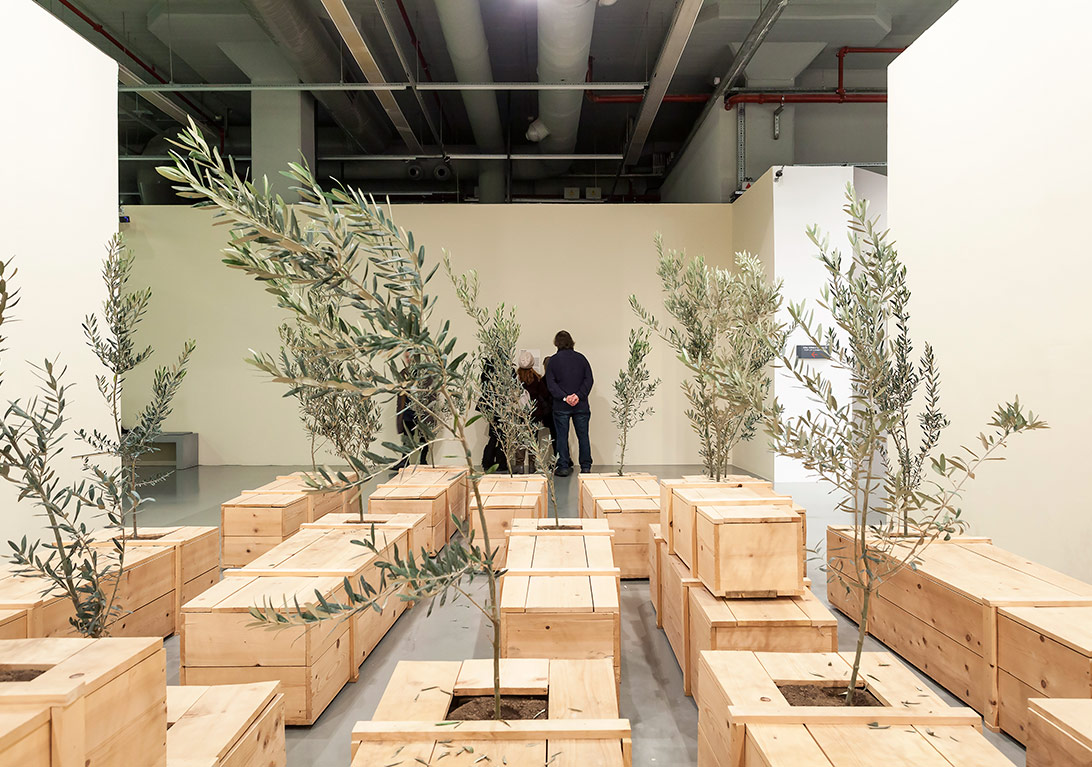
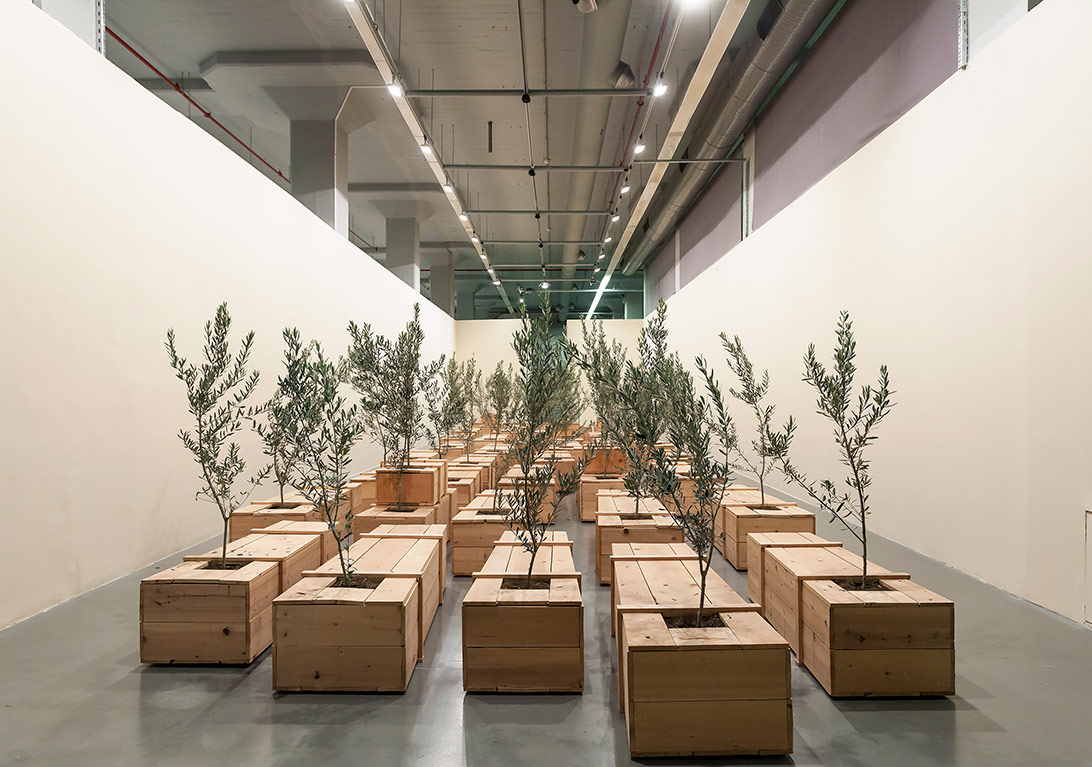
Ç.B: “Ex It” is a very precious work that Yoko Ono donated to Istanbul Modern. It will be on view from December 23 to March 20. The artist started on this project in 1997 and the version that we have was completed in 2007. Different versions of the work were exhibited on different scales in different parts of the world. The installation consists of trees that emerge from wholes in the women’s, men’s, children’s size coffins where the head would have been. What is wonderful for this rendition is that the version we have includes the olive tree, which was incredibly meaningful for this geography for centuries. We found the relationship between nature and sustainability very meaningful for our exhibition and we conceived “Ex It” as the epilogue or like the last song of the exhibition.
Could we say that “Ex It” is the key work in the exhibition?
Ç.B: No, there is no work that is at the center of the exhibition. Yoko Ono’s work included. All of the works in the exhibition are relational and they are all in dialogue with each other. The scenography of the exhibition reveals the connections that we built, but we would like the viewers to make different connections and associations as they walk through the exhibition.
P.C.: Perhaps a good example of the relational way in which we dealt with the works and that there is no central work is while there are a lot of large-scale works in the exhibition, we used Maro Michalakakos’s flamingo in all of the print materials.
To put a work at the center and to form the exhibition around it would be at odds with the message you are trying to give, I think.
P.C.: Yes exactly, this exhibition is not a hierarchic presentation. It doesn’t say that there is one way to look at issues of nature. In line with this thinking, there is no work that is superior to another in the exhibition.
You are realizing an large-scale exhibition, working on an immense topic —were there institutions or organizations that you collaborated with?
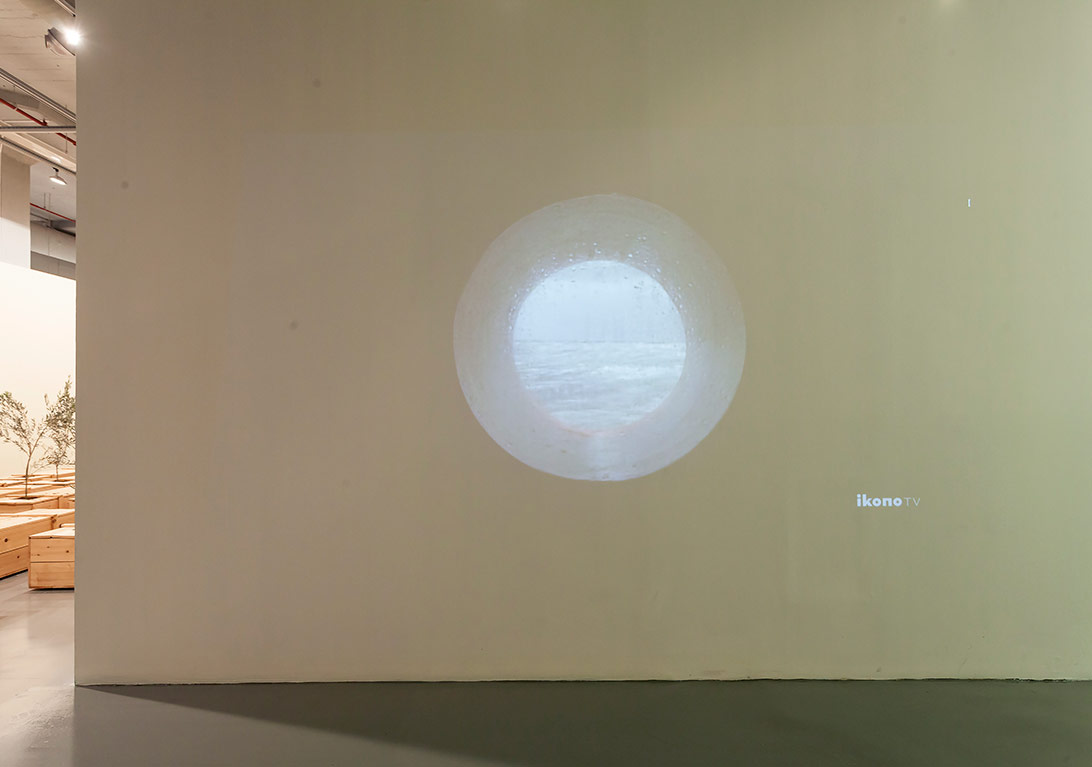
Ç.B: For the exhibition catalogue, we asked for an article from Richard Heinberg, who is an environmentalist, thinker, educator and activist. It would thus be important to touch on the Post Carbon Institute in Los Angeles, where Heinberg has been doing research for a long time. We’ll be working with initiatives, non-governmental organizations, and collectives who will participate in the presentations, talks and meetings that we will host during the course of the exhibition. We would like them to come on their own as well, meet at the foyer, to think together, to criticize us and to discuss the topic, in addition to our invitations. But our most important collaboration is with the digital art television, ikonoTV. ikonoTV’s video that they launched at the Paris Climate Summit in December, which was a combination of a curatorial selection and an open call, “Art Speaks Out”, will be at the preview of the exhibition on January 13, in addition to Yoko Ono’s installation. The 15-hour video is focused completely on activism. It brings together video art, experimental film, and silent documentaries.
P.C.: Showing a 15-hour video means that visitors who come to the exhibition over and over again encounter something different each time, strengthening the exhibition’s proactive aspect.
Is there a reference in the exhibition to the constant change and transformation of nature?
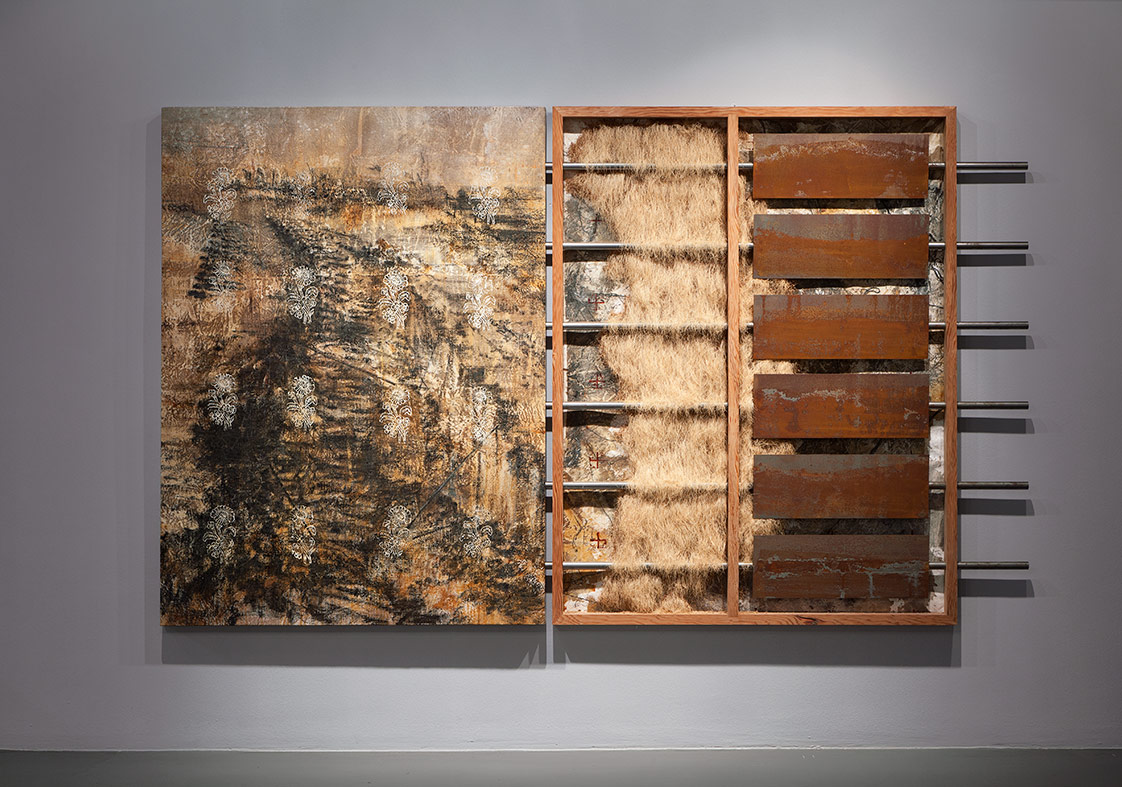
Ç.B: Yes, for sure. Canan Tolon’s living landscapes, Camila Rocha’s garden, Yoko Ono’s olive trees, Mario Merz’s green apples on the glass table will blossom, rot or transform over time. The viewers can also watch different parts of the video program. This is a constant environment of constant motion, just like nature.
Till It’s Gone combines alternative perspectives and is not documentary in approach. What are the solutions that it offers for ecologic problems?
P.C.: The first step towards solving a problem is to acknowledge its presence and to identify it. All of the works in the exhibition offer solutions, even if they are metaphorical, but the exhibition does not offer a schema of solutions as a whole.
Do you often listen to the song “Big Yellow Taxi,” which gave the exhibition its title?
Ç.B: Paolo and I are from different generations, but “Big Yellow Taxi” was covered by a lot of different groups over time and thus always remained contemporary. Paolo thought of the song while working on the exhibition and I found the title of the exhibition from the lyrics of the song. We were inspired by the music and art of the 68 generation, which we see as the departure point for the exhibition’s framework. Their creative minds were good for us. They represent not only protecting nature, but awakening and awareness in many different areas of life and offering togetherness as a political position to achieve, influencing us as well as many generations.
Till It’s Gone is not the first exhibition on nature. Were you inspired by any of the similar projects?
Ç.B: I would say no. We focused mostly on artists working both individually and collectively rather than on exhibitions. We looked at literature, music, art history, artistic movements and critical thinking.
P.C.: We looked at artists’ practices and we tried to represent a cross-section that corresponds to looking at who does what and where. When you are doing an exhibition dealing with nature, you don’t want to be the only one of your kind. Projects realized by other institutions empower you. In a similar vein, works in this exhibition are not limited by a specific discipline. The range is from music to art to politics to activism. We are both obsessed with music, we are interested in performance arts and the impact of these things is obvious in the exhibitions we produce together.
Will there be parallel programming in the other departments of Istanbul Modern?
Ç.B: Yes, of course. During the course of the exhibition, our education and social projects department will lead guided tours as well as various workshops for kids. Our cinema department will show a selection of films with animals as the protagonists in May. The museum shop worked on sustainably produced design products in addition to the exhibition catalogue. The library will host various resources on the artists and the relationship between nature and art.
;