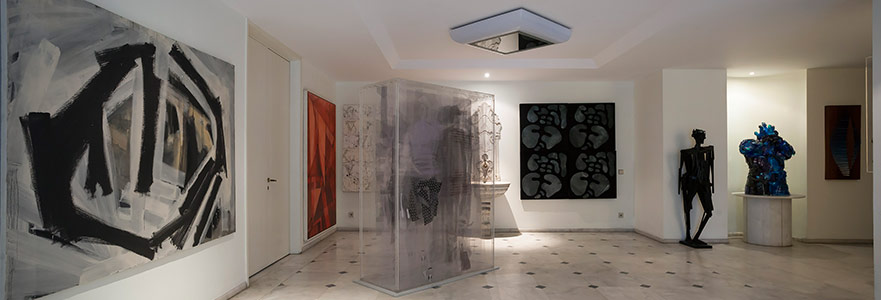
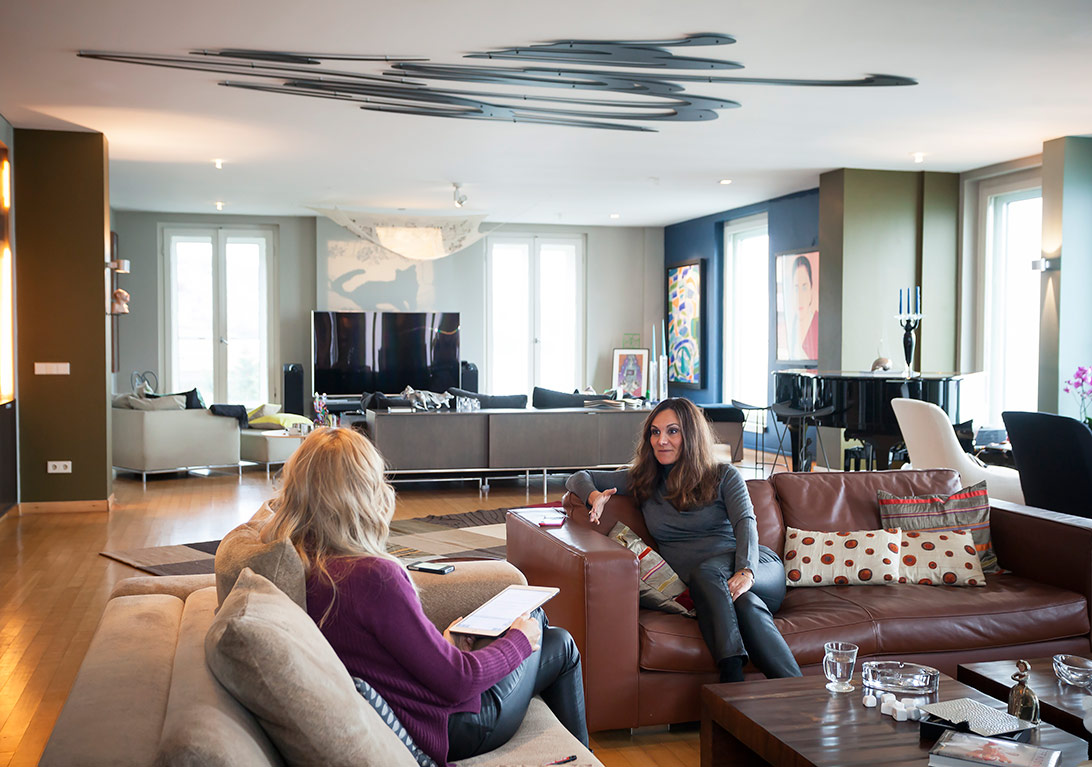
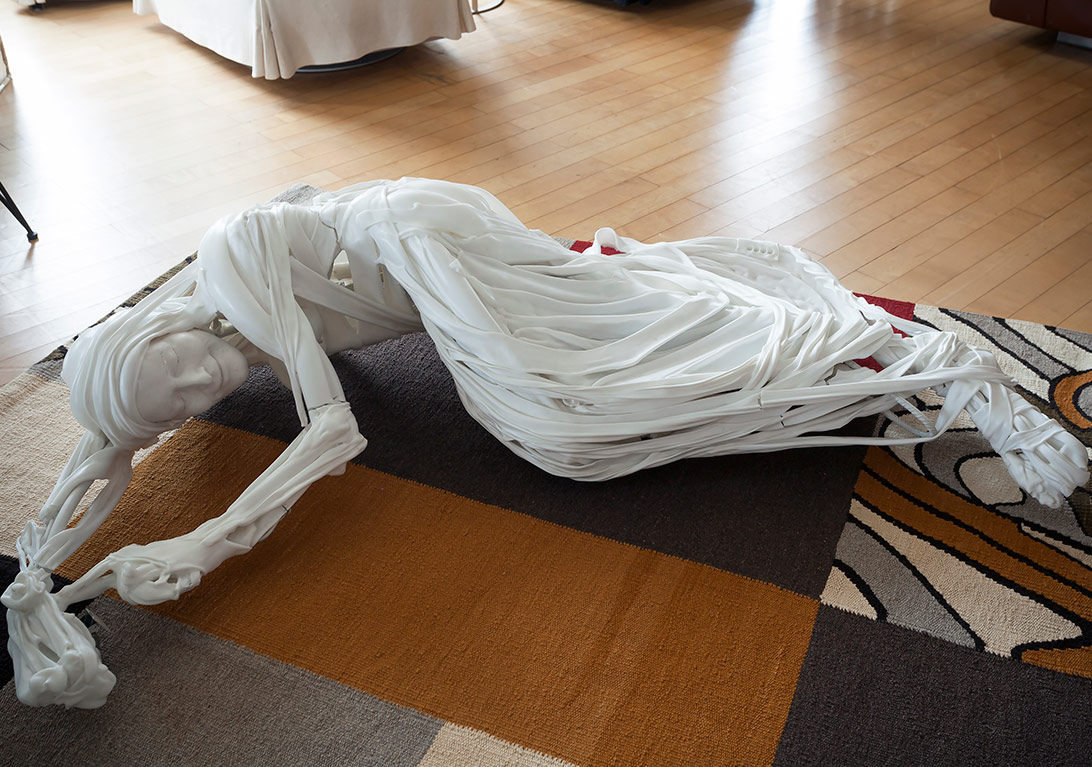
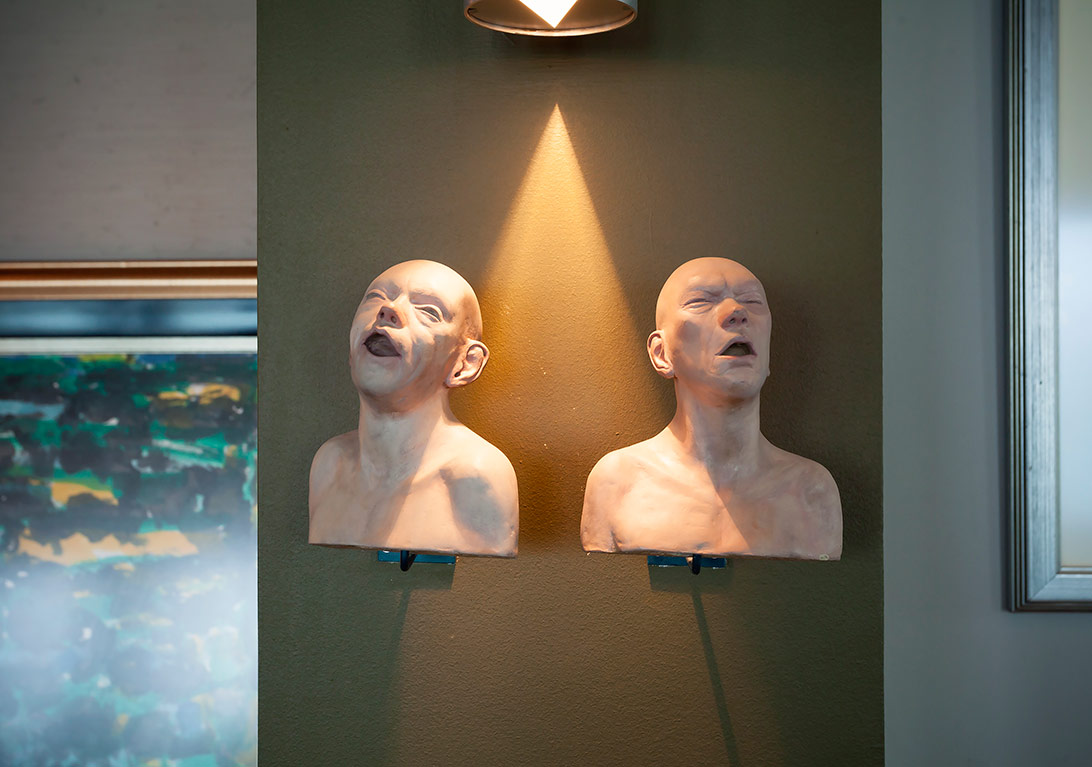
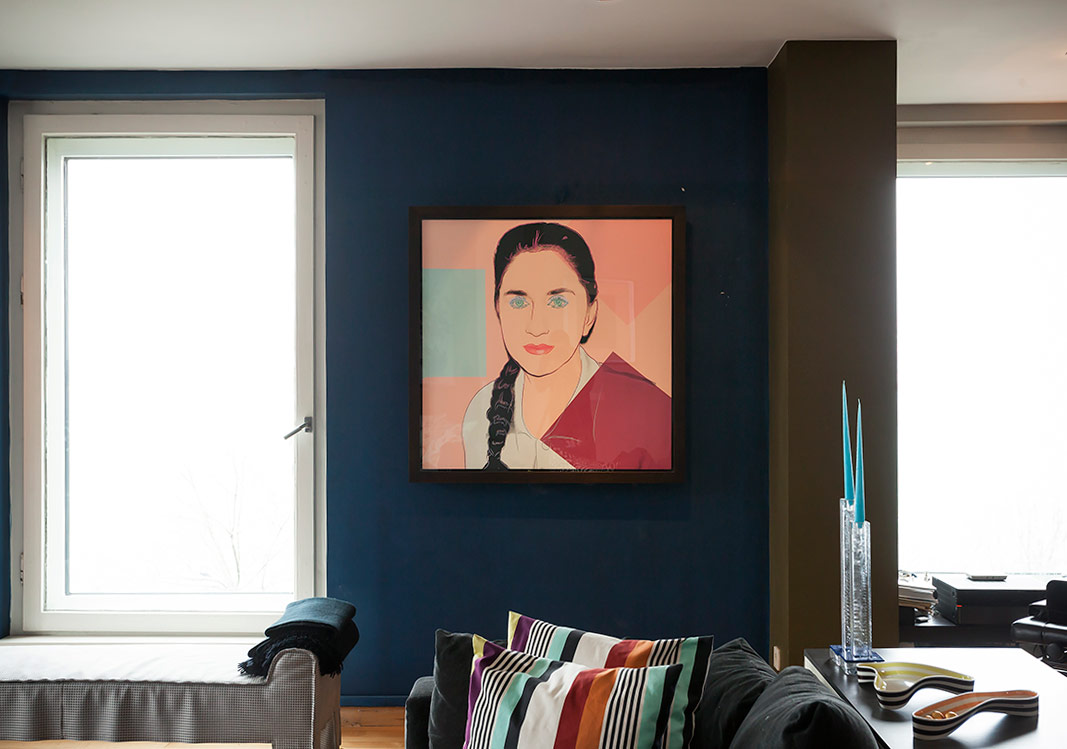
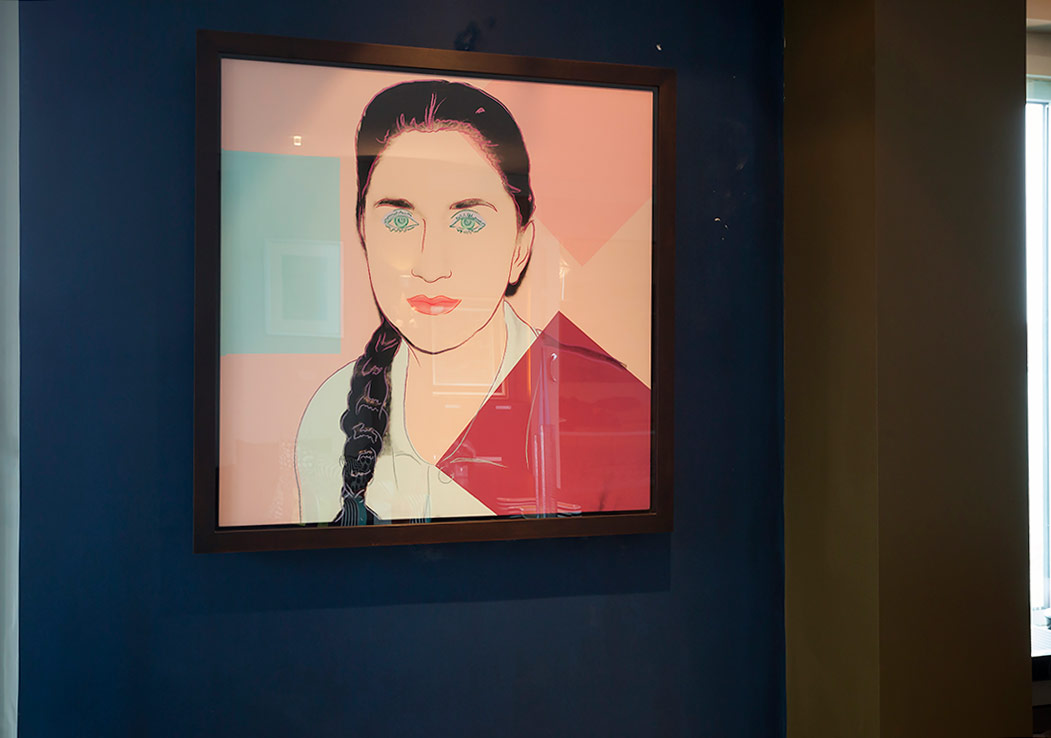
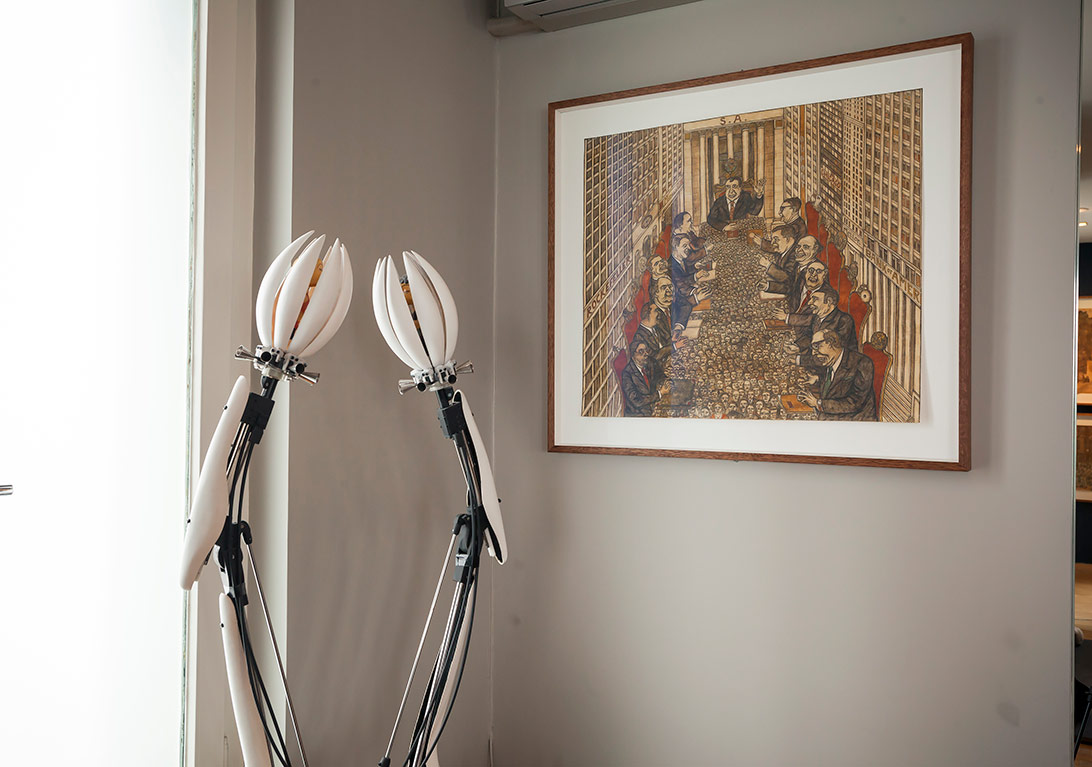
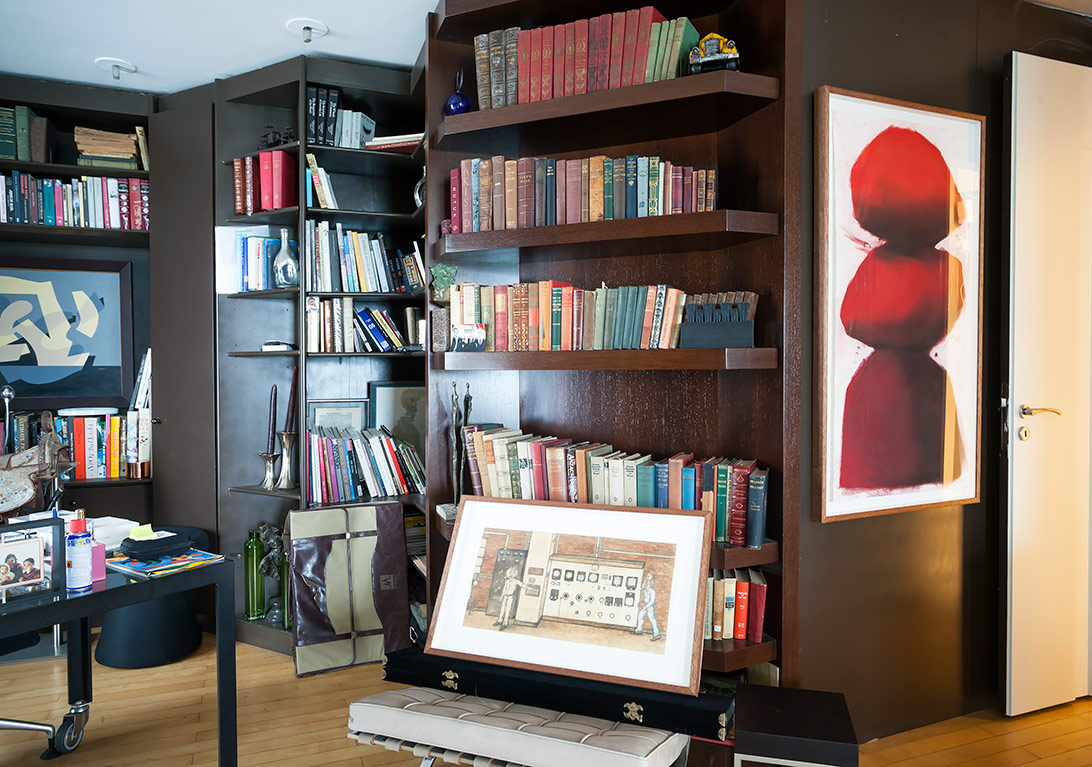
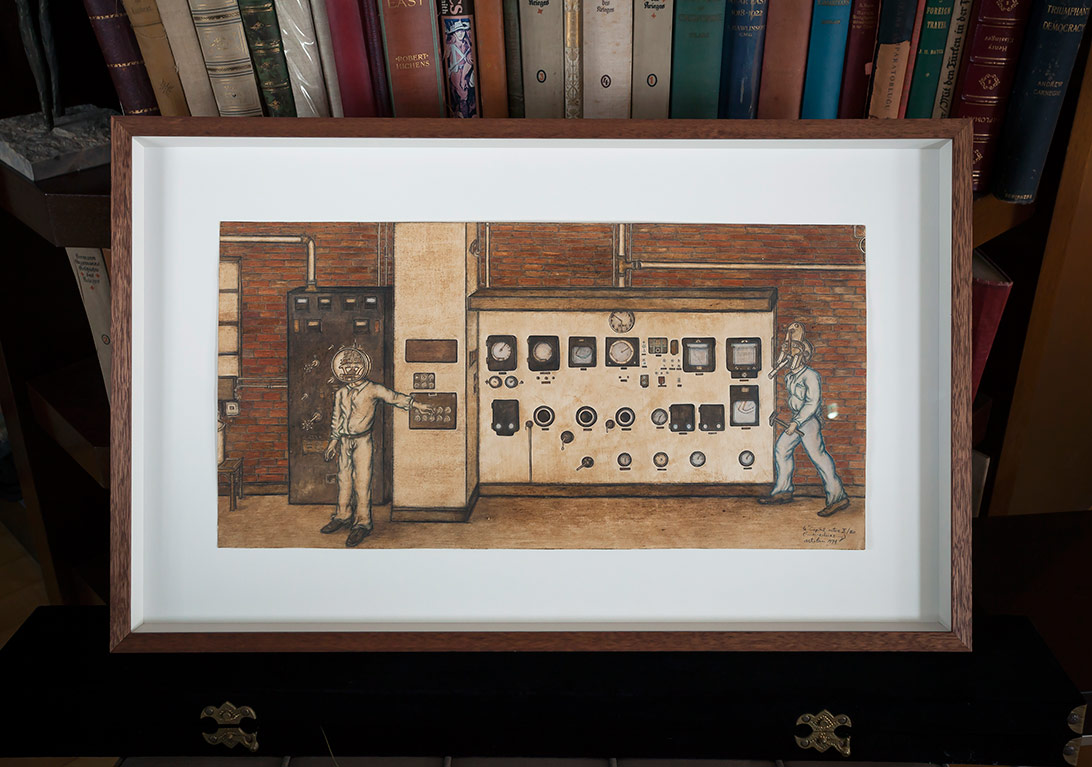
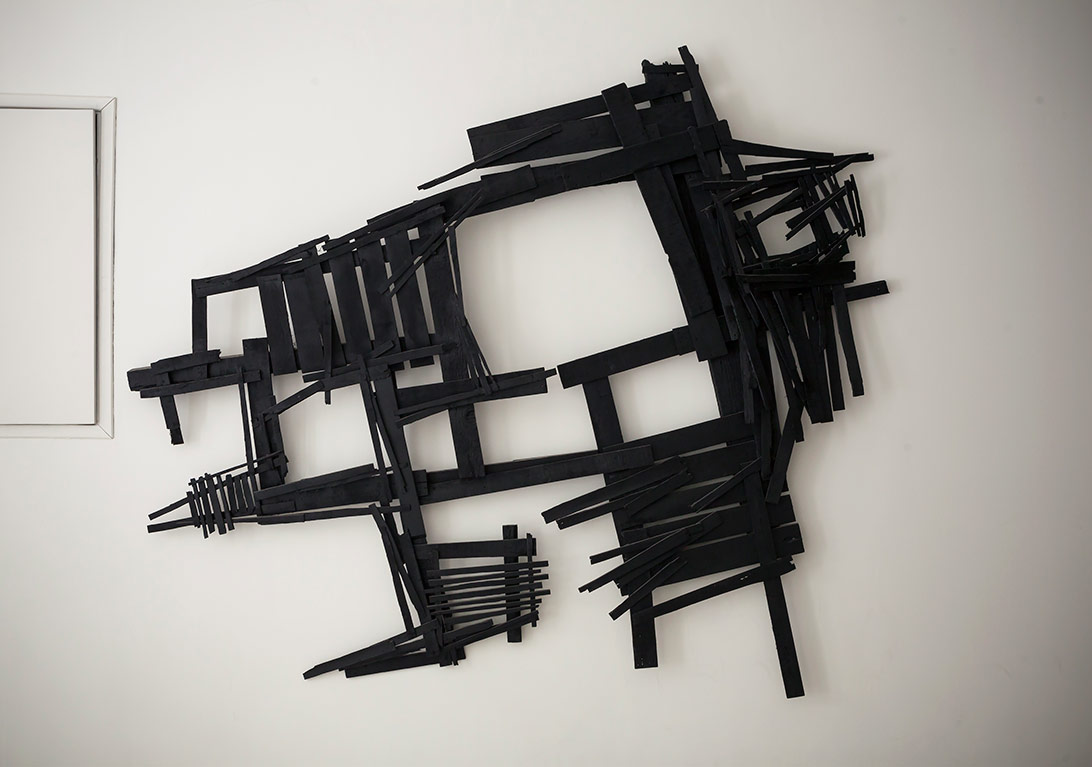
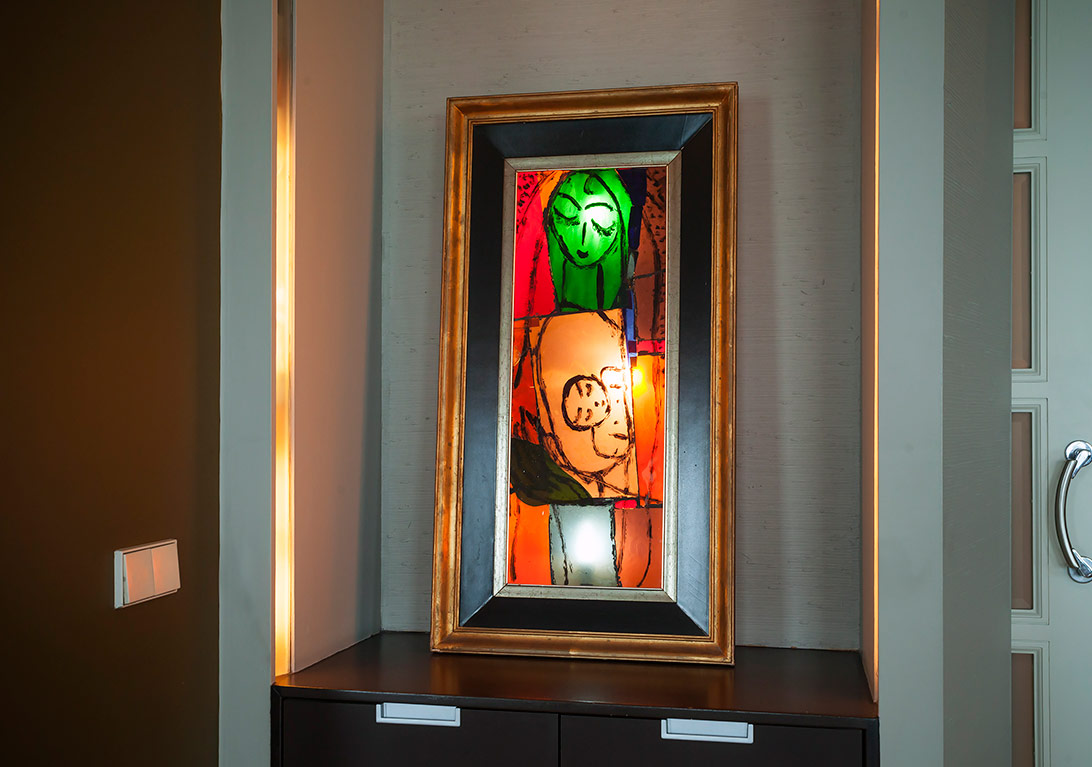
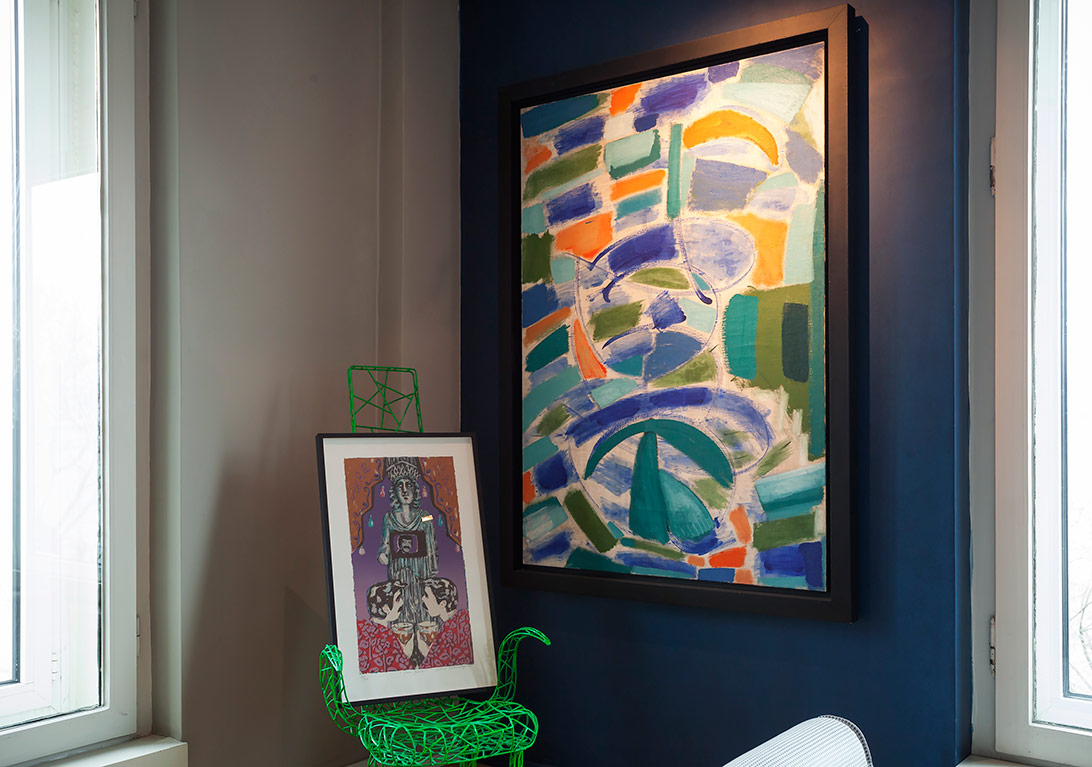
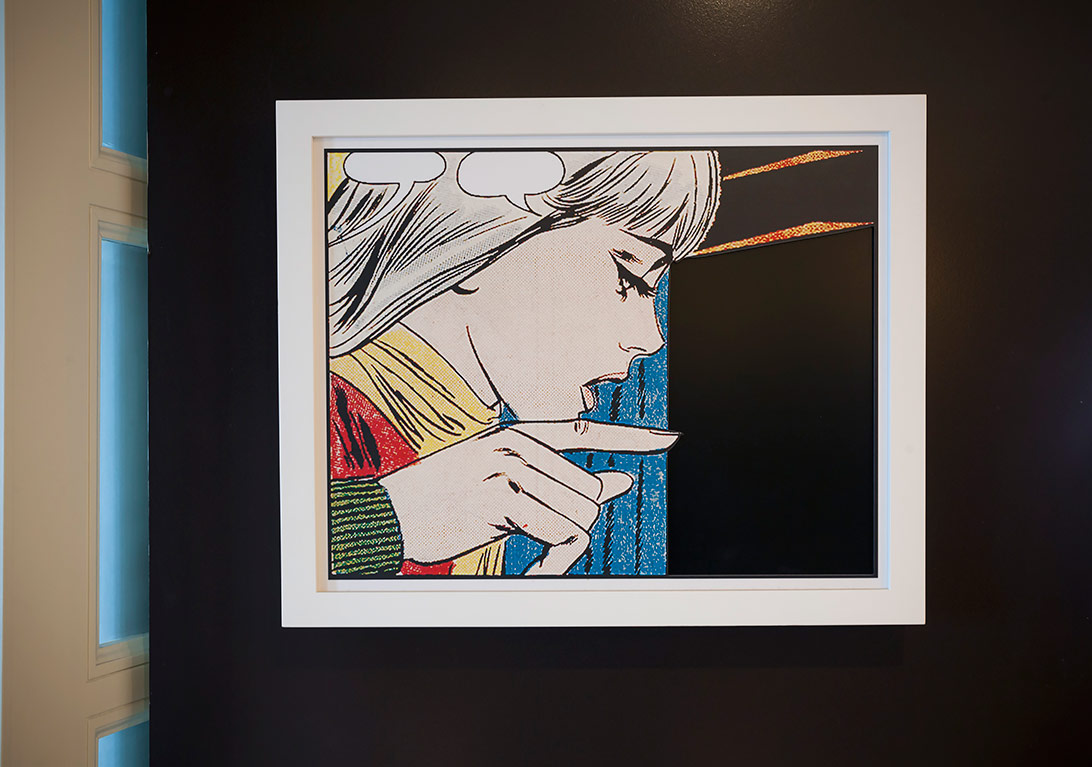
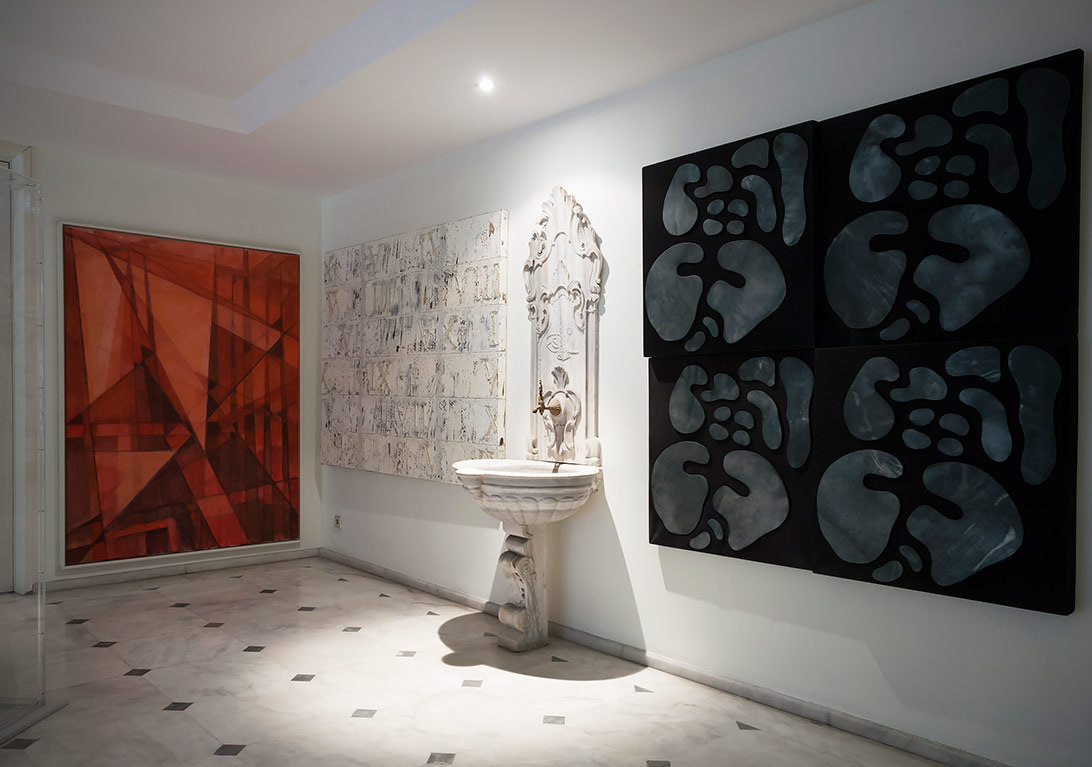
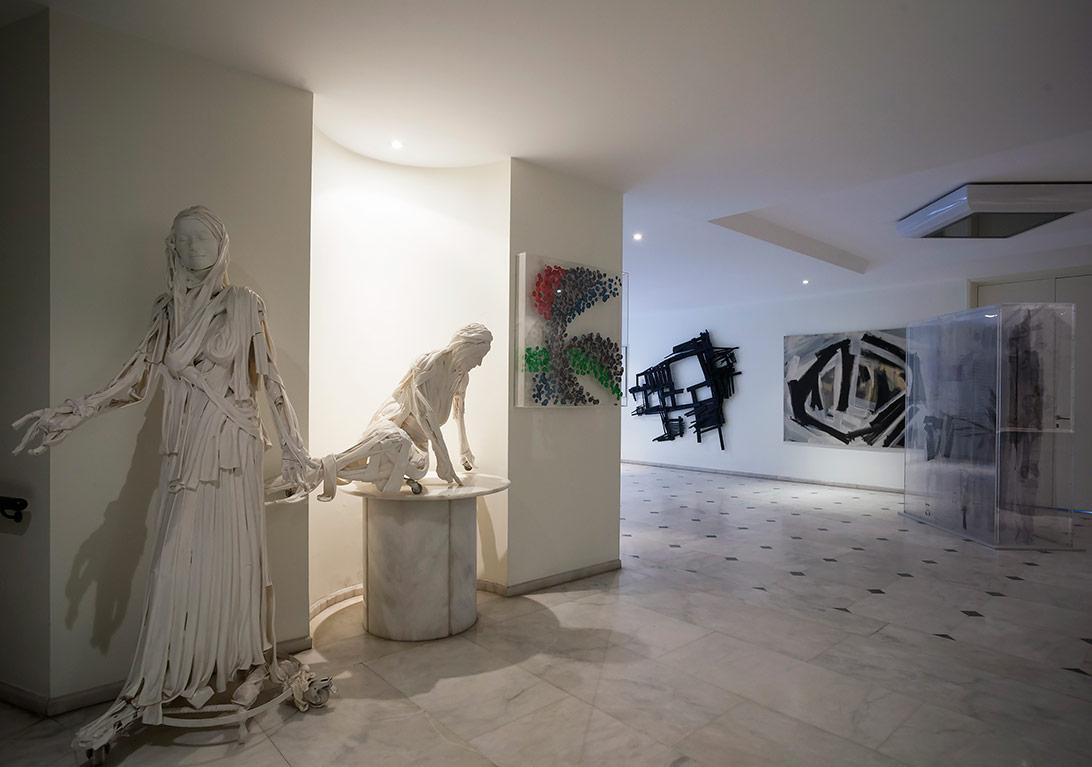
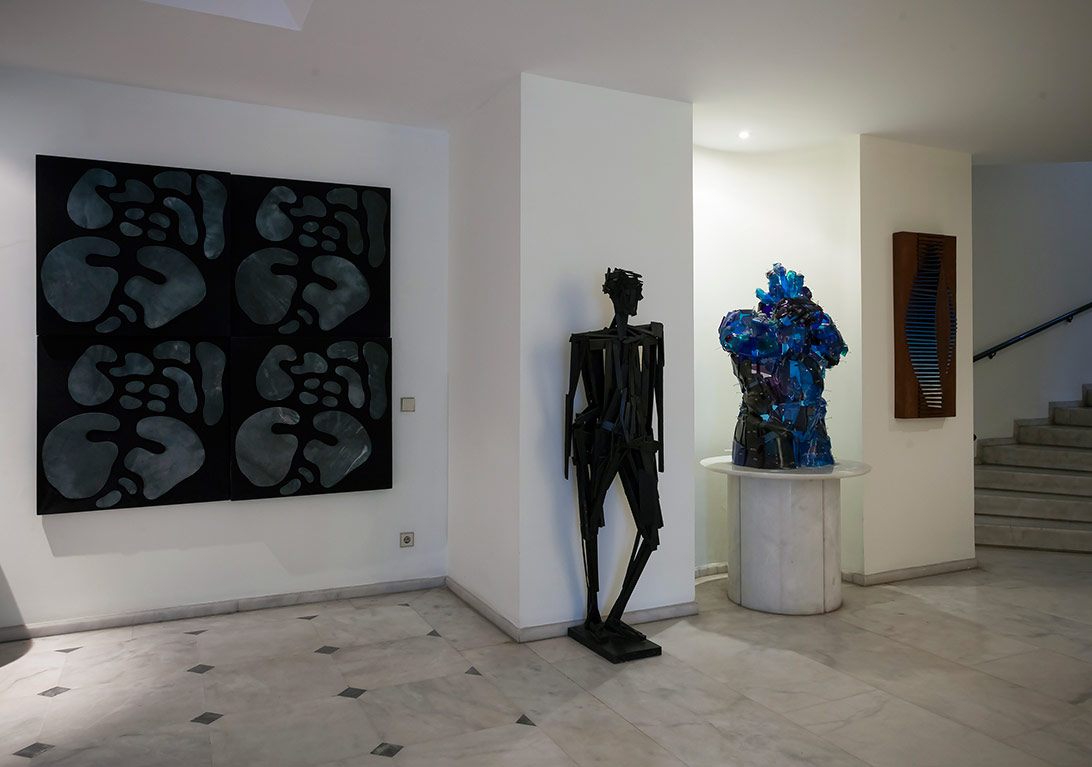
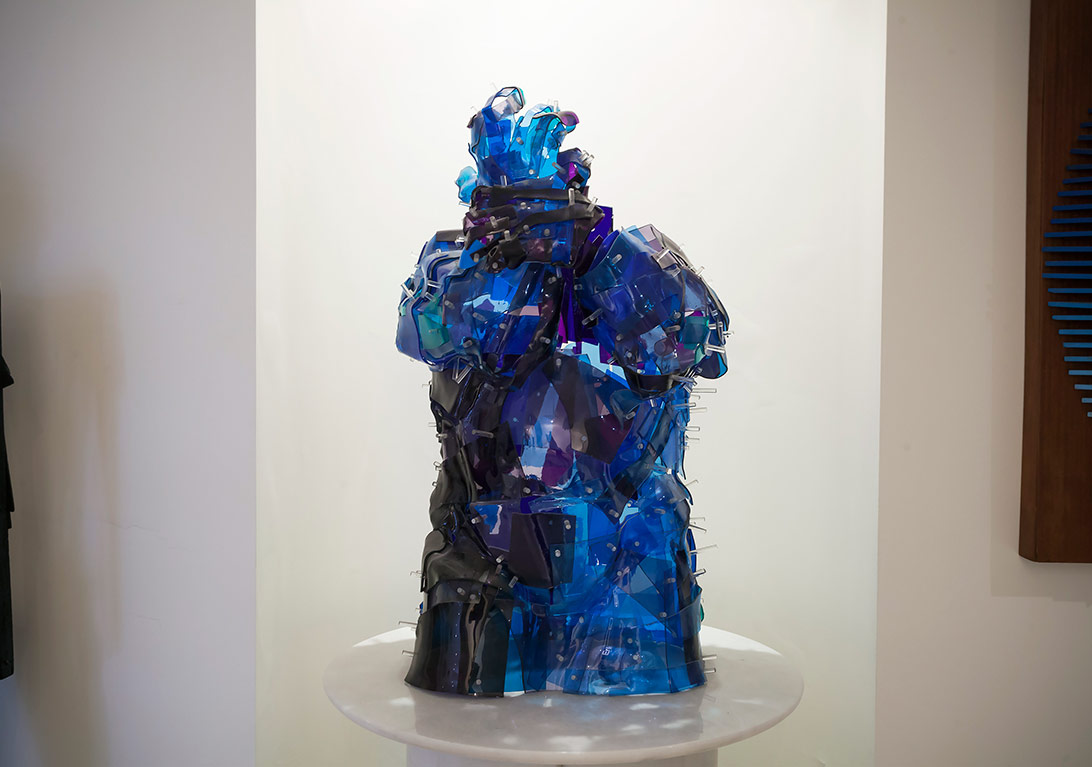
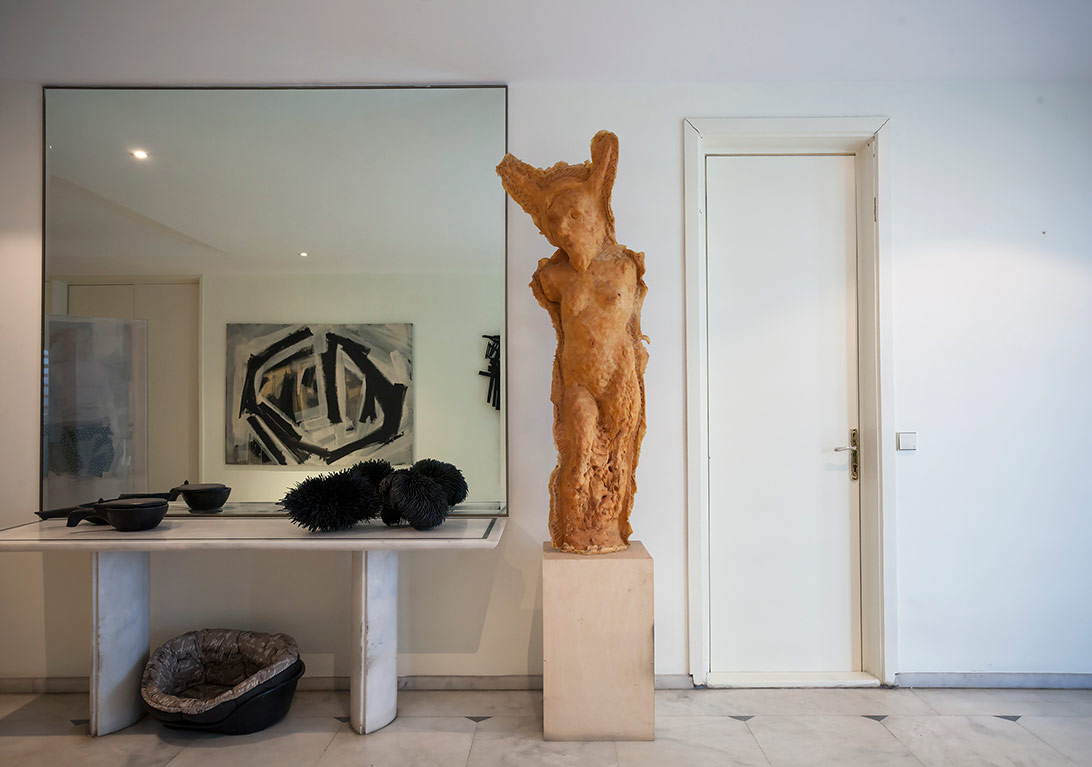
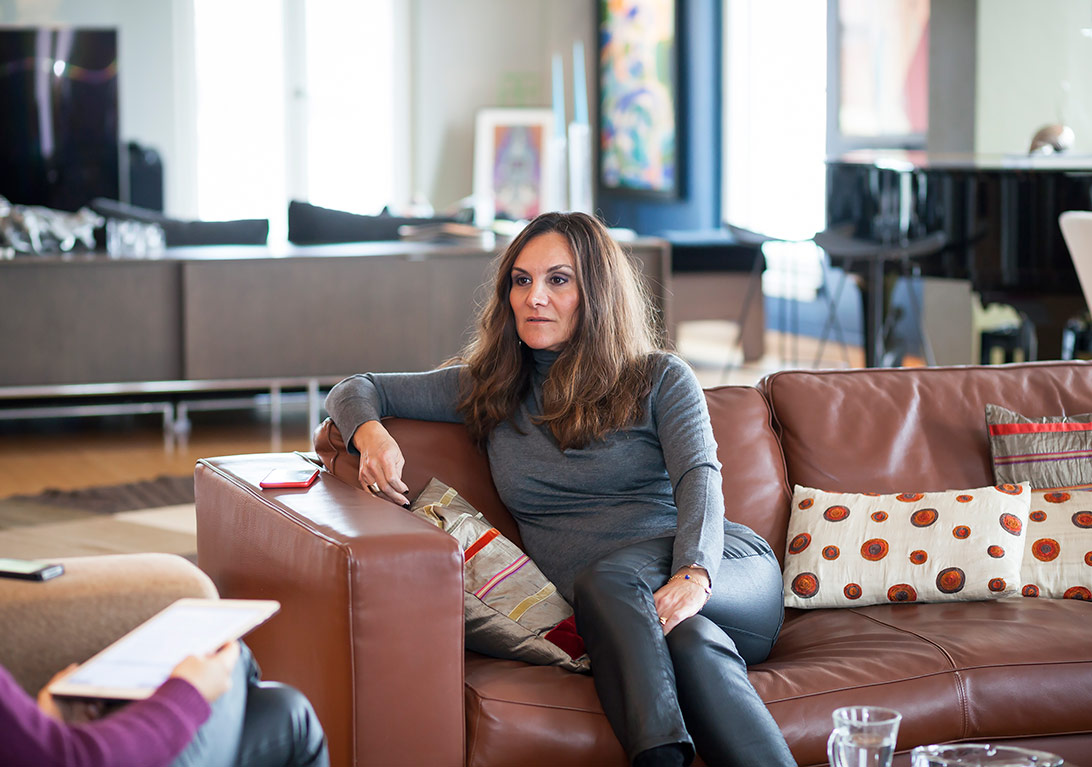
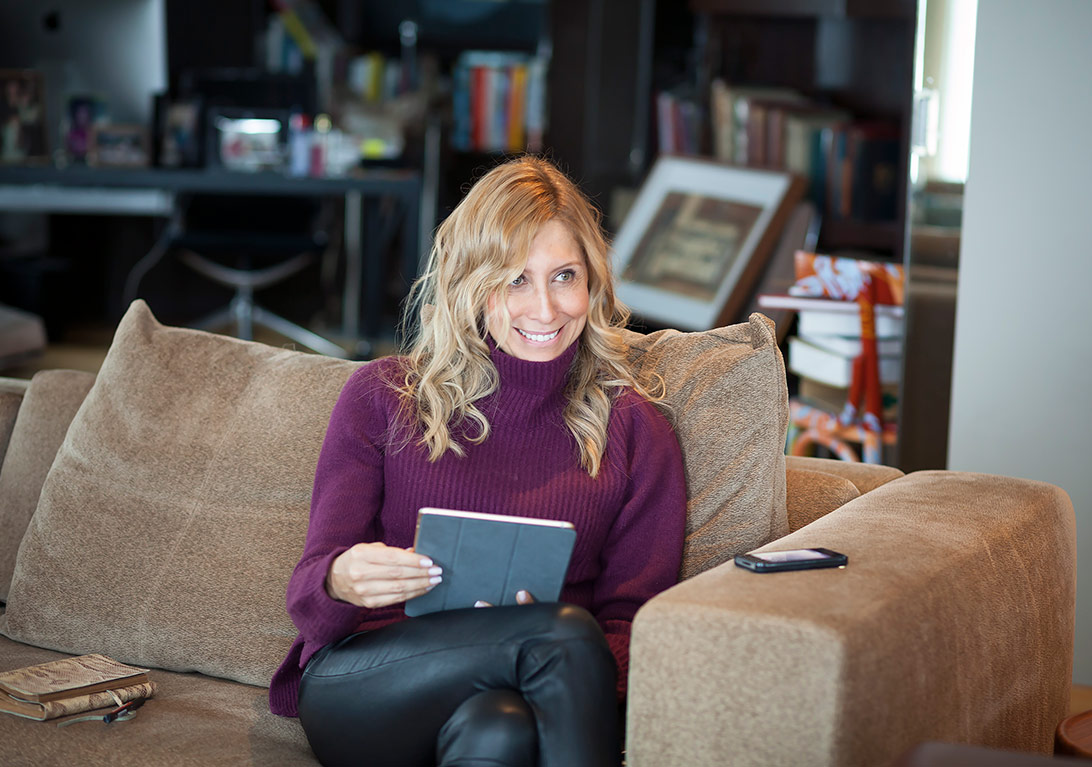
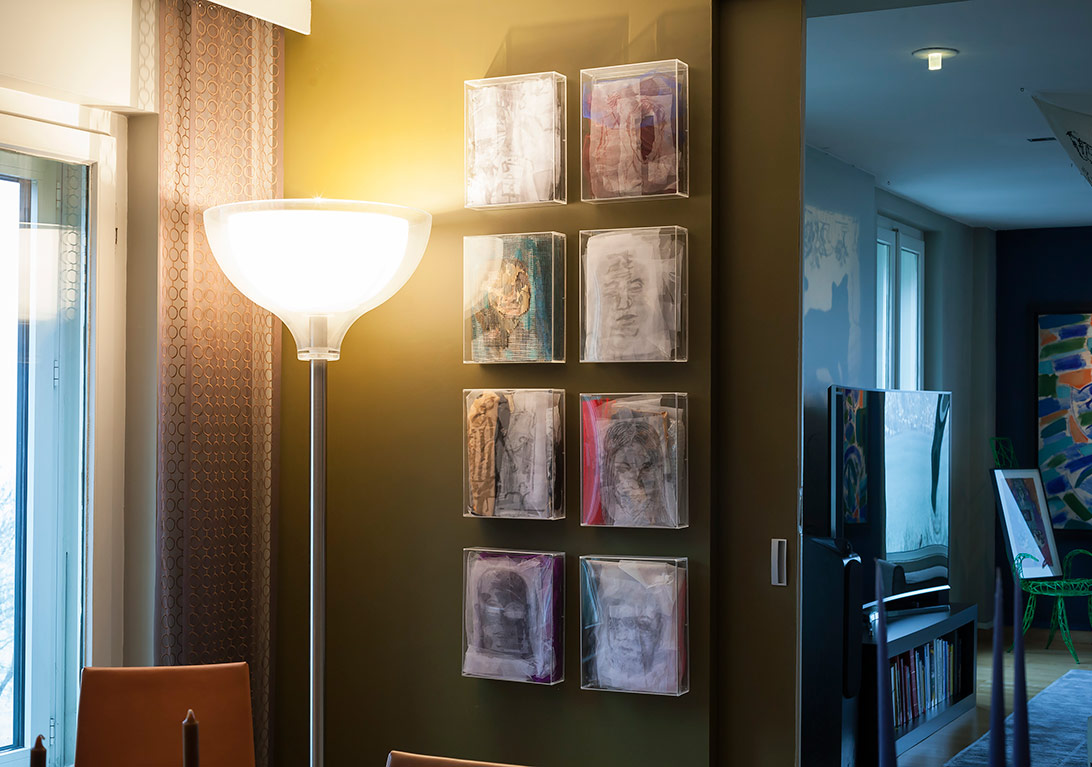
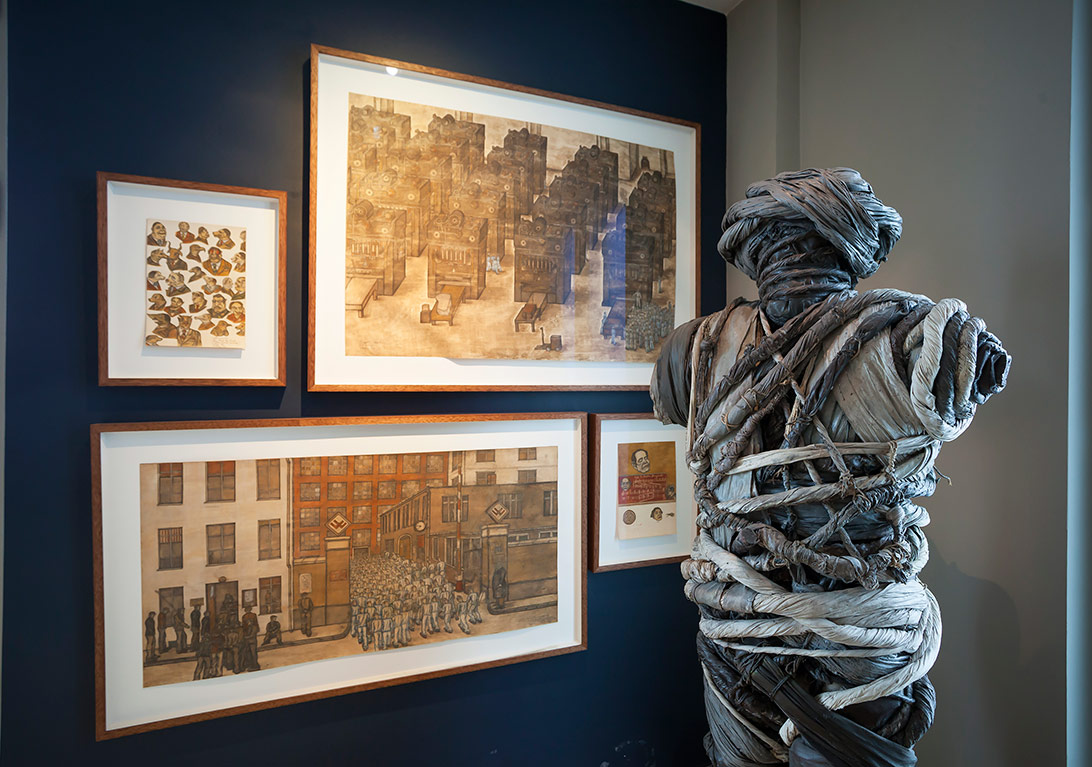
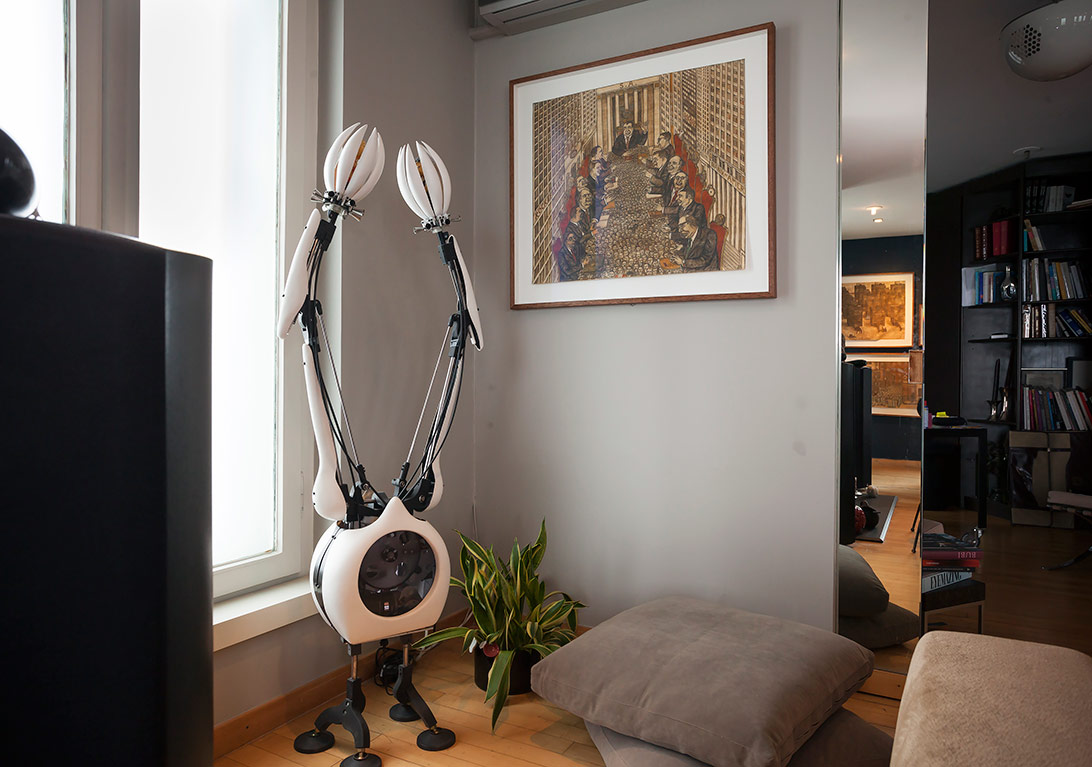
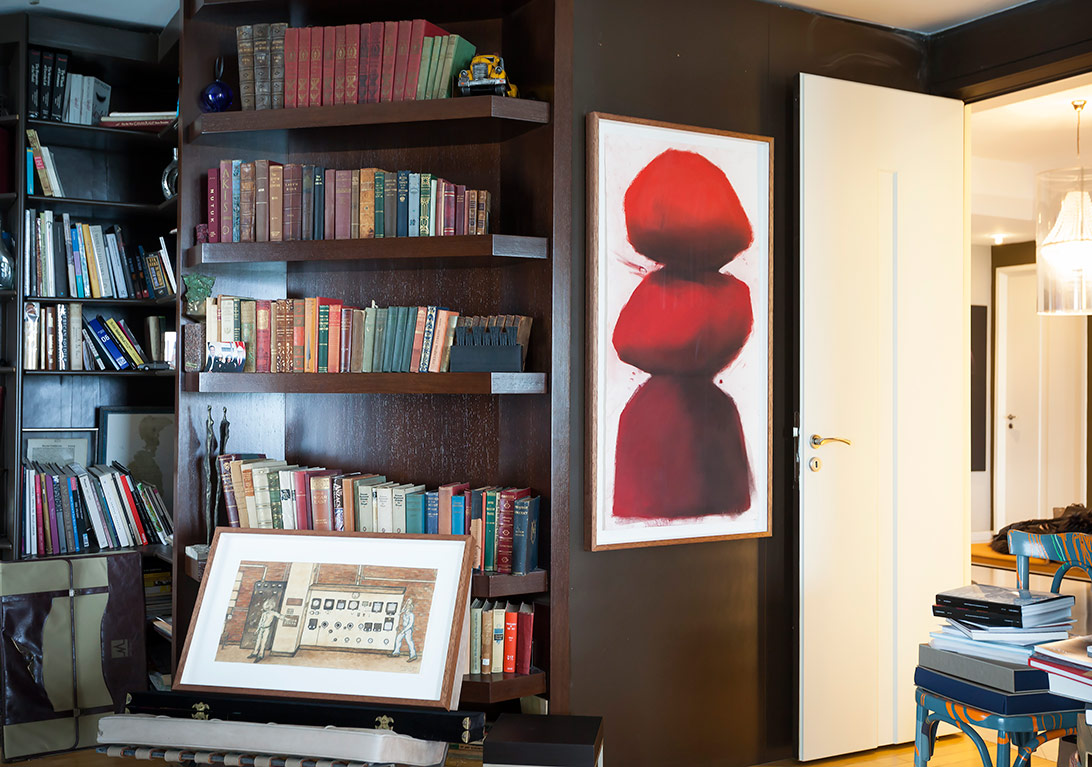
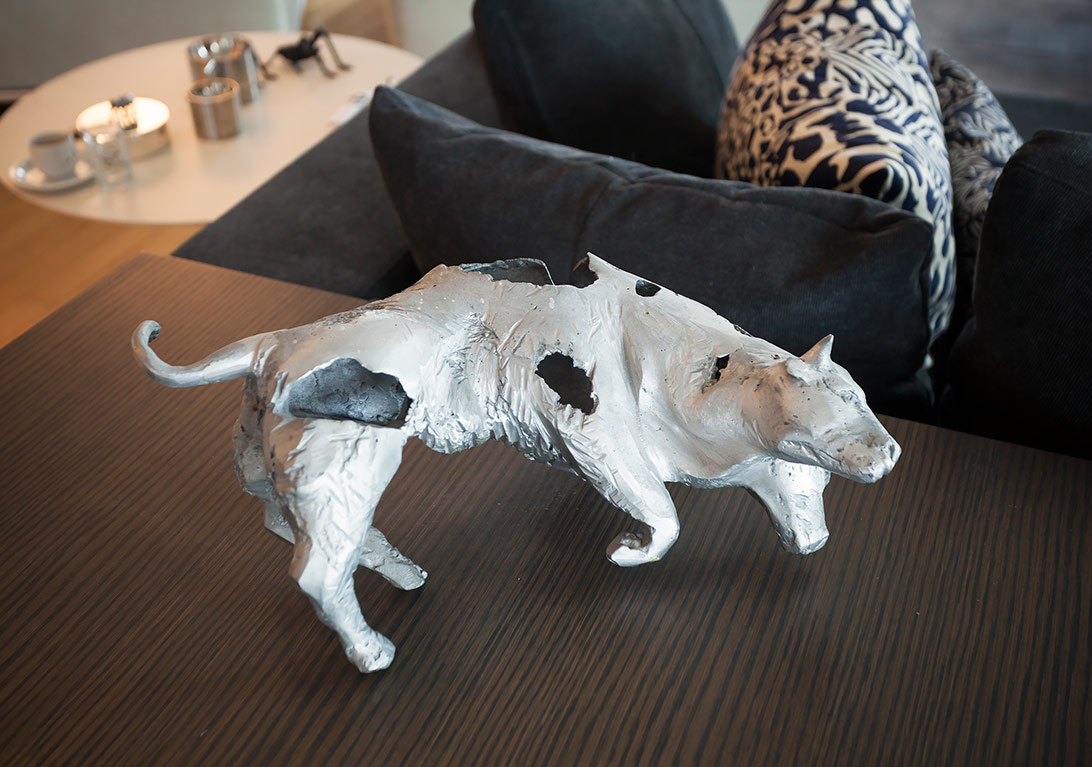
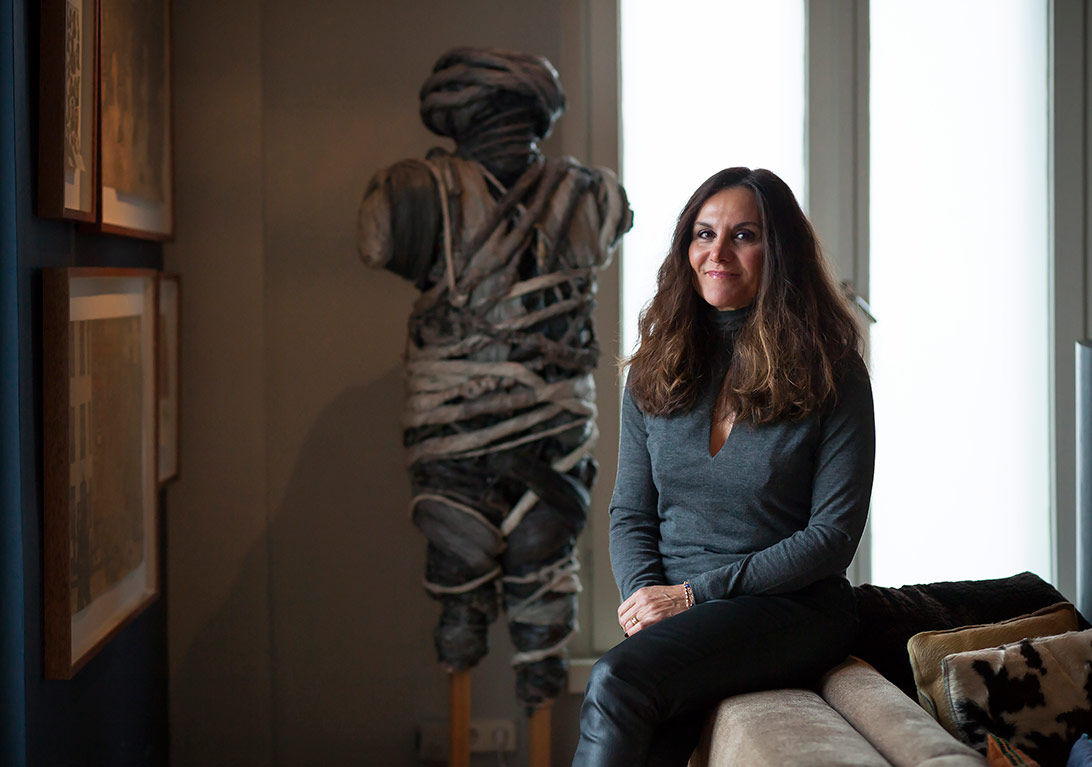
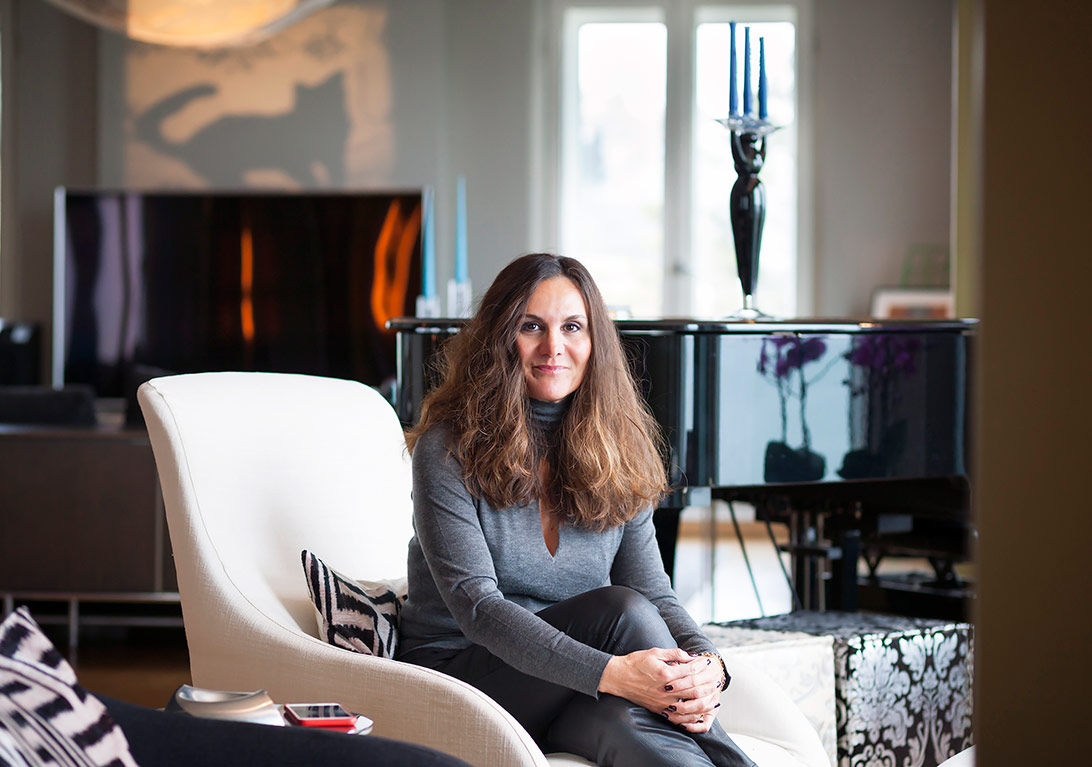
As Fahrünnisa Zeid and Nejad Devrim look over the Bosphorus as mother and son, a Yüksel Arslan is settled in the study, making everybody who steps through the door feel his philosophy. Another corner of the living room includes an Andy Warhol, in a snobby dialogue with a Gülsün Karamustafa, sitting on a chair like a lady of the Republic. İrfan Önürmen has withdrawn modestly to a corner of the dining room.
You come from a family who has always appreciated art. When did your interest in art begin and how?
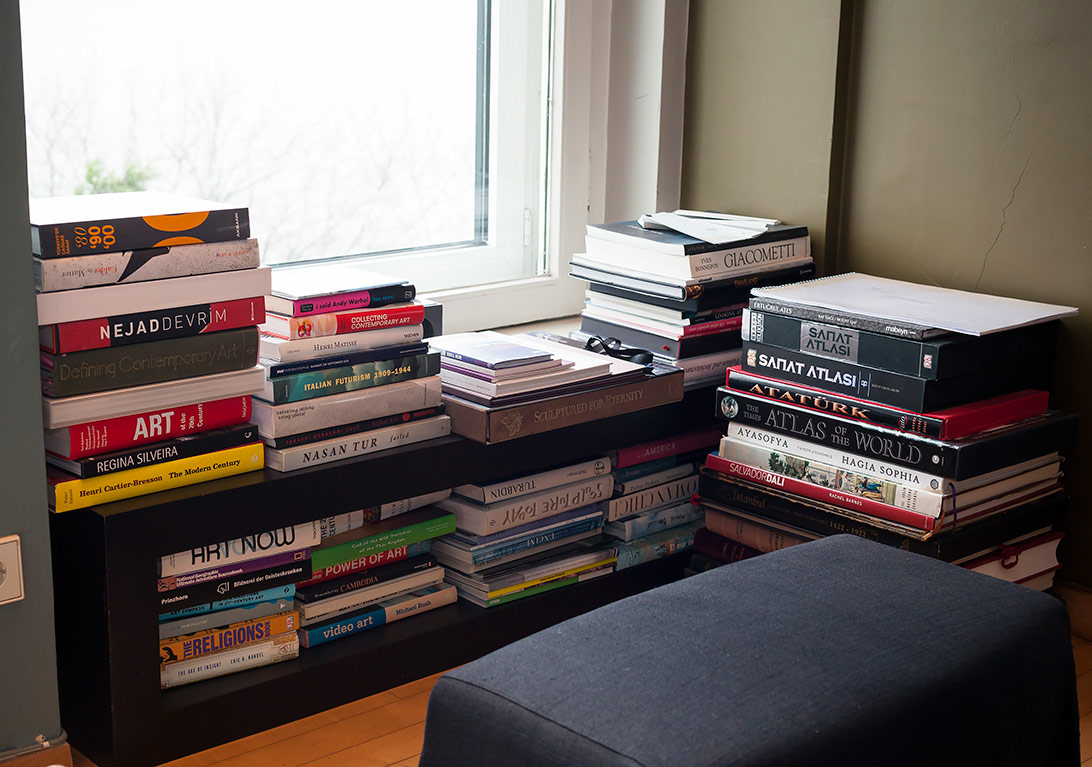
I could say that we started to educate ourselves in this realm approximately 25 years ago. I used to take classes in art history when I was younger. Over time, my husband and I started reading about art and we educated ourselves by following art on our trips. We shared this passion with our children and our friends and since we shared this excitement, it grew exponentially over time. As we collected more, we enjoyed it more, we became more excited and curious and this situation directs you. The ideas shifting over time was also exciting for us. We started to read more, to educate ourselves more and to constantly research.
What does art give you? Did the answer to this question change over time?
I find this question to be very important, because art gives a lot of things to people. Its contributions to people is indescribable. Most importantly, it enables people to change and to transform. We need to constantly shift our perspective to be able to understand art, to renew ourselves and to find something new every day. This is something that really helps someone develop and to change.
Since when do you perceive yourself as a collector? There is a process to it, right?
For the last 15 years. I actually still don’t call myself a collector. We meet such important collectors and view so many great collections. We started off with Turkish artists who were living abroad and who were not well-recognized in Turkey. For example, Yüksel Arslan. We were very excited by Yüksel Arslan’s works and we added his works to our collection one by one. Five years ago, we were asked to loan works to an exhibition that was traveling across Europe. We were motivated for knowing the artist himself and for our artist to be recognized abroad. We tried to find other works by Turkish artists that were breaking moments. Collecting is tracing something. You understand what the journey is when you are inside it.
You become part of the artist’s journey.
Is there an art movement that you are influenced by?
I was influenced by many movements around the world. As I said before, this is about tracing and going after thing. You see that all developments contribute to different perspectives with small nuances. I was really influenced by Fluxus. Artists who went into contemporary art despite the lack of means in Turkey was very impressive, although their efforts are underappreciated. At a time when there were not any publications, Sabri Berker finds out about small-scale painting. These efforts are very important. We did not follow a single movement for our collection.
I think art is in the genetics of your family. Your sister Fatoş Karadeniz is a painter, your daughter is a young and successful jewellery designer. What are the characters of creative people like?
What I saw from my family is that it is important to understand art rather than to collect it. Since I was very young, I was surrounded by art books in my family home. I later realized that they actually educated us. The new generation had different means, they went abroad, but I think that both were able to retain their personalities within our family tradition. They were able to do what they wanted without being pressured. Art does not happen through pressure. Our daughter chose this path while we were expecting her to work in a more corporate position. Hopefully, she’ll develop her character on this path.
It’s great that you encourage the values of your family alongside being free and unique.
Your husband being interested in art enables you to have this experience together. Because you need to really set aside time and to travel in order to really follow art. This helps, right?
Of course, this really helps. In our free time and on our trips, we go to museums and galleries. Our being able to talk about this topic; what we find out, what we read, being able to share these is something that holds us together. We share a very beautiful passion that is not just based on going out for dinner and going to the movies. Contemporary art is something that holds people together, it is very fun. We discuss things, everybody sees something different and then we talk about it. These are things that help people develop. I’m hoping we’ll be able to set aside more time to these things when we are older.
Last year, you organized an exhibition by the German collector and sculptor Ackerman at Tophane-i Amire. Could you tell us more about the story behind this exhibition? Do you have future exhibition plans?
Heinz Ackerman is recorded in history as an important collector, but he is also a good artist and had never organized an exhibition for his own work. With our encouragement, he made this exhibition in Istanbul. I didn’t know how complicated it was to organize an exhibition before. The Germans’ perfectionist attitude of course made the process more difficult, but it was a great experience for us. The preservation of the works, the installation, the insurance are all different areas of expertise, which we learned about. The artist was also encouraged to participate in exhibitions elsewhere after this one, which made us very happy. From now on, I want to support the projects of young artists who are not able to present their works.
What do you think is different in contemporary art when compared to the traditional arts?
Contemporary art is an artistic perspective created to break down boundaries. I support the use of contemporary art to teach how to be more efficient in companies and I’m thinking to do this in my own company and I’m working on it. People have a hard time arriving at the perspective, “there is no one right answer, there is no reality.” This was achieved by contemporary art and not the traditional arts. Of course, contemporary art could not exist if traditional arts did not exist and contemporary art is inspired by the traditional arts. But contemporary art added a new perspective, to be constantly searching for something and for people to have the freedom to say what they think. Now we need to go even further. I think that even contemporary art is in the past now. We are expecting young artists to develop new languages, philosophies, and perspectives, because contemporary art said what it needed to say twenty years ago.
Two years ago, there was a course at Elgiz Museum that we brought called Art for Business, aiming to talk about creativity in business. There is a lot that contemporary art can offer especially to help them solve problems. Looking at something from an artist’s perspective presents new viewing points and proposes different solutions. Contemporary art never defends one perspective; it is important to be able to pose questions rather than answers.
Yes, contemporary art directs people to ask questions, to research, and to be brave.
As you mentioned, creativity is very important for executives today.
Even an accountant can do their job differently after encountering contemporary art and understanding that it is possible to say something new every day. I wish this was implemented in schools as a mode of education.
Do you think a good collector is a good curator? When you view these artists and when you install their works in the space that you live in, are you creating a new harmony, a new narrative?
Actually, forming a collection means that you are forming a new concept; the artists that you are following have been influenced by each other and they continue to be impacted by each other at your home. When you place a work that was made a hundred years ago next to a contemporary work, you portray it as a continuation of a journey, as if they are in dialogue with each other. Curating is of course a very sophisticated thing, but I find it very positive that the collector within a certain framework.
At the end of the day, collecting is not just about setting aside a budget and buying works; it is a journey and every work that you follow is in dialogue with the before, the after, and also with its contemporaries.
When you acquire a work, you become a defender of the idea that the artist exhibits. But when you place this work in your collection, you add your own interpretation to it. Are there works that you cannot place within this narrative?
Of course there are such works; it is possible that you buy a work based on pure excitement. I try to really think before buying a work, because something that you are really excited by might not be part of a system. You then want to see the work by itself perhaps in your study or in your bedroom and that’s how you install that work.
It is very nice that you do not exclude this, because it is a part of your emotions and it reflects a mood, right?
Exactly, you could perhaps continue on that path and acquire works in the same vein, because life does not revolve around a single concept and if you think about how a perspective shifts over time, it is important to be open to different experiences.
Which spaces do you use to live with the art works?
We usually live with the works at home. But I don’t like making frequent changes at home, because the lighting and the walls are not always appropriate for every work. So we have storage spaces, there is the office and we also have a small house where we put some special works. In the future, I’d love to be able to have a space dedicated to exhibiting the works if we have the means.
If we ask you which Turkish artists you like the best, what would you say? Especially from the young generation.
I really like Cevdet Erek from the new generation. I appreciated the Turkish artists on view at MAXXI Museum in Rome, I appreciate their efforts. I like the work of Fatma Bucak. The new generation is very well-educated; they develop themselves by studying philosophy, psychology and other disciplines. I like Ayşe Erkmen’s work a lot. Füsun Onur is a very important artist from the previous generation, İnci Eviner, Ali Kazma, Erim Bayrı… There are a lot more obviously, but these are the first names that come to my mind.
We also know that art is effective in the field of social responsibility. You’re one of the supporters and members of SAHA since the day it was founded. What are you aiming to do in 2016?
SAHA Is a very valuable and special group of people; I think it is an organization that is unrivalled in the world. It is helping all of us develop ourselves, inspire artists and it is a very important resource for Turkish art to be recognized abroad. Whenever we do social responsibility projects as a family, I’m going to try to give exhibition opportunities to young designers and artists.
Is there a fair or a biennial that you go to every year?
We try to go to the Venice Biennial, Art Basel in Switzerland, ARCO, London Frieze or New York Frieze. There are so many art fairs that you can go to one almost every month. And this is a very educational experience.
I see that a lot of collections are formed by the collectors’ own tastes and personalities. When you look at it from this perspective, did your collection help you discover something about yourself?
This is a very good and unique question. First we were behaving in a more personal and emotional way. We were collecting Fahrünissa Zeid and Nejad Devrim together for emotional reasons; we wanted the mother and the son to be together. Then we thought that the art needed to be strong and this should be sufficient. So even if we were not connecting with the work psychologically, the work being very strong would be enough. Füsun Onur’s works are very emotional and it is possible to connect with her works.
What would you suggest to new collectors to get to know more artists?
People are scared of the word collection. I suggest to new collectors to set aside a budget, as if they are going to buy, making selections, tracing things first. That would enable them to first increase their know-how. There is nothing preventing someone from making a collection in their mind, in their imagination. They can then realize this dream as their financial situation changes. We can set aside resources depending on our priorities.
Biennials and the artists’ own publications are very effective in getting to know artists. I follow many artists online, looking at how they define themselves. Galleries, auctions are of course important, but first, I suggest them to research and to read.
What is the art collector’s role in art history?
Since the Renaissance, large families commissioned works from artists and helped important artists to be recognized. Today, the context is different, but collectors can help artists have confidence and enable them to experiment and to move forward. So the collector is an important support mechanism both financially and personally.
My last question. I ask this question to all collectors. What shows quality for you in an art work?
I actually often ask myself the same question. The works being technically strong is very important, but only after many years pass, you can finally appreciate a work. When you first buy a work, you might have been influenced by popular culture, but years later, some stand out, “this was a good decision, I did well with this one.” Those are the best works.
;