Growing with the dreams of its young directors, the simple and hospitable gallery has hosted many local artists ranging from Setenay Özbek to İbrahim Örs to Bilal Hakan Karakaya and numerous foreign artists ranging from Jacques Tange to Bert Stern to Ruth Biller. Art 350 fit many things as well as music into its short history is an inviting, quality enterprise that promises a social environment to te art viewer with its unique structure combining the piano that greets at the entrance, art works that wrap the white walls of the gallery section, the modest library and the inviting meeting table. Thus, we were curious about Art 350 with its different concept on Bağdat Avenue and we interviewed its young time for Artful Living's readers.
First let's get to know you.
Ferhat Yeter: I'm Ferhat Yeter. I was born in Berlin in 1981 and I grew up there. After completing my studies in International Media and Informatics in the University of Applied Sciences, I worked in the art and media sectors. I have been involved with the art sector between Germany and Turkey since 2006 and during this time, I developed my connections. Since 2013, I have been managing Art 350 Art Gallery with my sister Binnaz.
Binnaz Gül Yeter: I was born in Berlin in 1989. I graduated from the Art History department of the Mimar Sinan Fine Arts University and I worked at various art institutions while studying. I have been managing Art 350 Art Gallery since 2013 with my older brother Ferhat. Since September 2014, I have been continuing the Curating and Collections graduate program in London alongside managing the gallery.
Gizem Gedik: I was born in Istanbul in 1990. I graduated from the Art History department of the Mimar Sinan Fine Arts University, ranking second in the class, in 2013 and afterwards, I completed the graduate program at Edinburgh University in Modern and Contemporary Art: Curating, Criticism, and Art History. As a student, I gained work experience at various art institutions and I wrote articles and critical essays in Turkish and English. I was involved as a manager since September 2014.
How did Art 350 emerge? Could you talk about the process of founding Art 350 and your story?
Art 350 was founded in 2012 by Anna Laudel. Ms. Laudel came from Dusseldorf and under the influence of the art environment there and the interest that stemmed from having studied art and textile and her presence in the art world, she wanted to support artists in Turkey, where she had been living for business, with such an enterprise.
What are Art 350's art and administration policies?
Art 350 is a gallery that aims to support unique, modern and contemporary artists who produce both in Turkey and outside of Turkey and contributing to the contemporary art world in Turkey by developing international relationships. Everybody who has a say in the administration come together to discuss, to make suggestions and as a result of these discussion exhibitions, managing style and distribution of tasks, decisions are made. Our most important goal is to foreground the names and works of the gallery's artists and for the gallery itself to be a catalyst.
What are the criteria in the processes of choosing artists or exhibitions in Art 350? What are the exhibitions that you prefer to hold?
One of the most important goals of Art 350 is to bring together both local and foreign artists, to develop relationships, and to make sure they are participating in the art world in Istanbul. We realize exhibitions both with established and famous artists as well as emerging, young artists. In this field, we are focusing more on sculpture, painting, and photography. In a sense, we are working with artists who working in a large spectrum. The exhibition program is usually determined a year in advance and the details are considered in this timeframe. Our roster of artists who work with us realize exhibitions every two years. First, we get in touch with the artists, the collection and theme that they want to exhibit is determined. Later, these pieces are brought to the gallery and an exhibition is designed in the space.
Then how do you reach out to artists or how do they reach you? How do you connect?
Usually, we reach out to artists. There is also a lot of artists who stop by and who want to connect. With the help of people we know and our research, we usually reach out to artists ourselves. If we can agree on a common idea, then we realize the exhibition.
What are your most important exhibitions? Let's talk about the exhibitions and artists who best talk about Art 350, who best express Art 350.
Of course it is not possible to compare exhibitions, because the concept of "important" could change from person to person. Does that mean more famous, better works? And what are the criteria for that? Does it mean more unique? These are all questions with different answer. Thus we can say that our young artists are really in the foreground because of their potentials to follow the rapidly changing urban life and culture, as well as the contemporary and the times. For example, we could talk about Ekin Su Koç, Bilal Hakan Karakaya, Görkem Dikel and Emre Doğrusöz in this regard. However, on the other hand, our artists with an established style are cornerstones of our gallery with their signature and positioning. From Turkey, İbrahim Örs and Ercan Yılmaz; from abroad, Elvira Bach, Alfredo Garcia Revuelta and Bert Stern could be recounted as examples. As we have said, the gallery is just a space; it cannot be completed without artists and works. Our goal is to make them visible and to promote them. Thus, exhibitions do not express the gallery, the gallery takes on an identity through the exhibitions.
Art 350 is positioned away from the center of the art market by being on the other side of the city. Could you talk about the relaitonship between your location and the gallery? What are the advantages and disadvantages of this position?
The European side is at the center of a rapidly growing gallery sector since the beginning of the 1990s. Especially, Tophane-Karaköy-Taksim and Nişantaşı-Teşvikiye for the last ten years, art centers that have both alternative and commercial activities, bank galleries and private galleries, open initiatives and establishments are everywhere. Istanbul Modern Art Museum is the largest contemporary art center in the country, which means that people who enjoy the arts on the Asian side have to cross to the other side and in order to follow the cultural activities, they always have to be on the European side. Thus, while their daily activities might be close to where they live, in order to experience art in a museum or at a gallery, they cannot do that. In reality, the European side is not an art center, there are just art spaces in certain neighborhoods and they are focused on a particular line.
We should be considered as such. Our being on the Asian side brings art to a community that lives on this side and we gain viewers who are different and new instead of those who are already regulars. Actually, there is already an audience here and galleries' physical locations should not affect their relationship with the art market. Unfortunately, in Istanbul, certain areas are more sensitive to the arts and art spaces are there; this is not about continents, but rather about the centers and cultural sensibilities.
What is the experience of managing an art gallery on the Anatolian side?
Being on the Anatolian side does not make a difference in terms of managing the gallery; we are only a catalyzing space. Our selection of artists, our installations and other such topics are not related to the place that we are in; it depends on what we are able to offer art lovers and artists, how we can correspond to their expectations. Thus, yes, sometimes we struggle with traffic issues or with receptions, openings, and events on the other side, but our management style, our perspective and our daily workings in the gallery are not affected.
How do you assess this new situation in Istanbul with the art market and fairs? As a result of your observations and assessments, how do you situate Art 350 in all of this or how would you like to position Art 350?
The Istanbul art market has become more dynamic and has more of a momentum especially in the last ten years with the support of the private sector, the opening of Istanbul Modern, Contemporary Istanbul Fair's founding in 2006 and the opening of Art International in Istanbul for the first time in 2013. Contemporary art is not only a strong investment area, but also a tool with which people can open up to the international art market. On the other hand, the Istanbul Biennials since 1989, very important, successful curators come to Turkey and help the establishment of the art world. International Art Fairs such as Art Basel and Frieze London and parallel art fairs that take place show how quickly the art market is growing and how much contemporary art is invested in. We are young as a gallery and also our team is young. Thus we do not think that we are positioned in the Istanbul contemporary art world in a stable position yet. But as we were defined by Contemporary Istanbul Fair during our participation, we are "young and upcoming", growing and securing our position.
Are you collaborating with galleries or art institutions abroad?
Our connections abroad are very strong both through our team and through our founder. Everybody on our team has lived or has been educated abroad at one point. Knowing a foreign language and being in dialogue with other cultures is thus a big advantage for us. At the moment, we are in touch with fairs abroad; we already have connections in Berlin, Amsterdam, London, Edinburgh both with artists and with art institutions. We already realize exhibitions with four to five foreign artists throughout the year and we give our writing and promotions to magazines abroad.
What are your upcoming projects?
First of all, we are very excited about our upcoming exhibition. In April, an artist from Spain, Alfredo Garci Revuelta who realizes very interesting works, will come. We are realizing an opening event in collaboration with Cervantes. In addition, we have plans for a group exhibition in the summer. Starting in September, we are going to start planning exhibitions and fairs abroad. We would like to offer pop-up exhibitions abroad to our artists from Turkey. On the other hand, we would like to have activities, interviews and workshops in the gallery space.
There is a bar at the entrance. Let's talk about this. Is this bar always open or is it open only during the exhibition?
Our gallery opens at 11am and might stay open until 2am or 4am. But the gallery section closes at 7pm. The bar section is busier. There is live music three days a week, Thursday, Friday and Saturday starting at 9 or 10pm. We have hosted artists such as Kerem Görsev and İlhan Gencer. Jazz groups performed. We prepare programs that are monthly and weekly. When there is an artist that we really like or when we receive positive feedback, we continue to work with them. We also host new groups in addition. Our approach is more centered on hosting groups or bands.
Does the bar play an encouraging role for people from the area to come view art?
People who see the bar and come in—and this is a question that always comes—are confused and they ask, "Is this a gallery?" We say that this is primarily a gallery. The bar is a section that makes the space more enjoyable. This concept is seen very often abroad and the fact that there are not such spaces make it more striking. The contribution that this makes to us is for increased visibility and enabling the gallery to be a more enjoyable and social environment. Because people are intimidated by galleries if there is not a social environment. Here, there is always a lot of people, transforming the space into an enjoyable place. The bar has steady music programming and usually, the music included appeals to everybody.
Did the bar and the gallery open together or was the bar included later?
The bar always existed, but we made it slightly larger.
Did the bar's existence affect the art sales?
Yes, people see the works in passing and buy.
Did your presence here encourage other people interested in the arts to initiate things, what are your observations on this?
Galeri F and Olcay Art were here before, Galeri Ark just opened. Pop-art Galeri opened, but unfortunately closed later. Here, things do not develop the way it does in Tophane-Karaköy through encouragement. There are people who are initating galleries in the area, but it is not through people.
Bağdat Avenue, just like Nişantaşı, is an economically privileged area. Your presence there is promising. Can you see a gallerification here with you being one of the founding actors?
That would be difficult, they are not used to it here. Even if they like it, they are not used to seeing an art center here. I don't know if that would change in the future. But for two years, the presence of this space for those who like art is very beautiful and meaningful. At the end of the day, a person could want to go to an exhibition or to a museum once they leave their house. On the other side of Istanbul, everybody can do that. Here in this area, as people are not able to do it, having a few galleries is a big advantage. There should be even more such spaces.
There is now a lot of establishments in Kadıköy. The most important, in my opinion, is the dynamicism in Yeldeğirmeni. When we consider your physical proximity as a gallery in Kadıköy, are you thinking about collaborating with other establishments there to strengthen art activities on the Anatolian side and saglamlastirmak the relationships in the area? Or do you have projects in the area?
As we are a very young and new gallery, first we are trying to secure the structure within us. We can see such collaborations as the next step. Of course, we have artists such as Bilal Hakan Karakaya who are connected to there. For example, he lives and produces there. We are following what is happening, but for now, we are trying to put our own work in order and we can support them at a later stage.
I'd like to talk about the exhibition that's at the gallery right now. What is the topic of this exhibition?
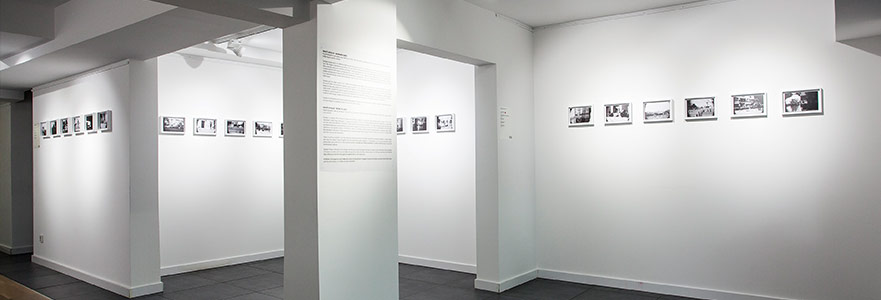
Currently, we are hosting the photography exhibition of a Dutch artist Brigette Spiegeler. All of these photographs have been atken in different cities of various countries. The artist goes from one space to another, seeking the soul o the place and at the same time, tracing the "non-places." All of the photographs have been taken with pinhole cameras. No zoom, just as they are. It is not important what the cities are where the photographs were taken. Because in the "non-place" concept, there are stations that people pass through, squares, hotel rooms. The artist captures these; these are spaces that people communicate with, but that are not foregrounded as places. There are both small-scale and large-scale photographs in the exhibition. There is also an image from Istanbul. The artist sometimes works from the ground level and sometimes from the air. These also vary a lot.
Do you seek help during the installation of the works? How does the decision-making process work here?
We don't get external support, we install the works ourselves. Since all of us have a background in art and we are interested, we are able to make decisions on where to hang which work.
Are there events in relation to the exhibitions?
We always invite the artists. We organize a dinner, inviting collectors. When we are working with artists from abroad, we talk with the consulates to see if we can do anything together.
How do you develop your communication strategy?
We use social media tools including Instagram, Facebook, Twitter. We research who we can be in touch with and identify certain people, who we reach out to e-mail, phone, and sometimes by mail.
Is there an event being held in relation to this exhibition?
We are going to have a cocktail that relates to this exhibition on March 24, 2015. We'll most probably have a question-answer interview with the artist during this event.
There is a last detail that strikes me, the artist catalogues. Do you make catalogues for every exhibition?
Yes, we first place the artist's biography and then an essay on the exhibition. We place images of all the art works in the catalogue including the caption information.
;