Do you remember how your relation with art works started?
I grew up in art I remember that my parents used to look at a painting and talk about it for hours. They used to choose the pieces in the collection meticulously and they used to keep them in the best way possible. Being an art collector is a term that goes through art loving. It is an issue on body of works and culture. Therefore, if I didn't grow in this culture, maybe I could have been an art lover, but I don't know if I would be a collector.
When and how did you start buying artefacts? Who or what conduced to this?
Starting in 2000s with Islam and oriental art artefacts, my passion for art consolidated with modern art. My interest in contemporary art came out after I started to collect furniture and objects of 60s and 70s, which can be defined as 'period', in the beginning of 2007. This kind of development process is very common and typical among the collectors. In this development process, I started to form my collection with the help of my kins.
What was the first artefact you bought? Could you tell us what that artefact made you feel then and now? Is it still in your collection?
The first artefact I bought in the name of contemporary art belongs to Hakan Kırdar. I bought it from my friends Azra (Tüzünoğlu) and Halil's gallery Outlet in 2008. I loved the perfection in detail and technique in the work. Those were 15x20 cm in dimension acrylic landscape paintings on acetate. It was as if there was a huge unity reflecting the reality one-to-one in that smallness. This purchase was like a lesson for me to percept art; educate my eye and heart, to push me into thinking and developing my collecting in that direction. Yes, these artefacts are still in my collection.
What is the period of the artefacts in your collection; what kinds of artefacts are forming your collection? Why?
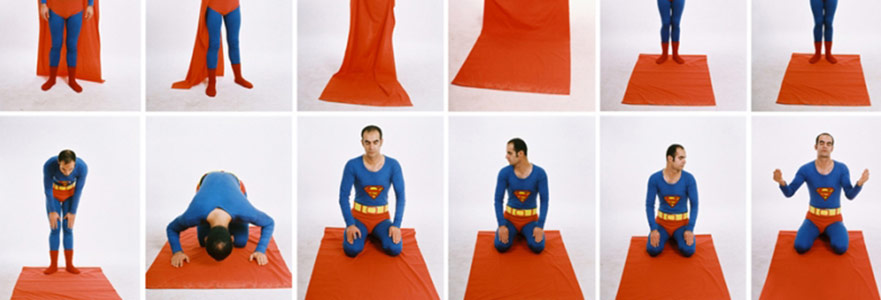
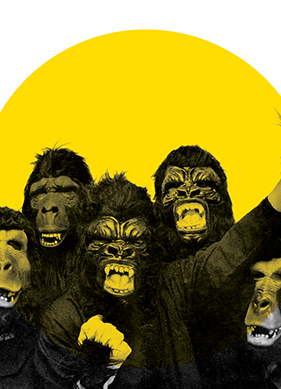
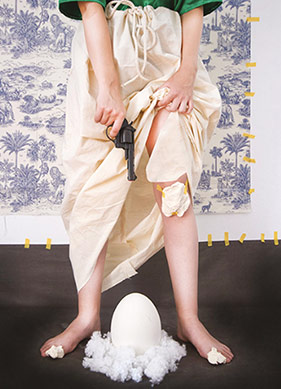
The feminist movement and the female artists of 1960s and 70s as well as the Fluxus movement are affecting me quite a lot. But, I am more focused on contemporary art in my collection. I am mostly following the art of which I am a part of. Thematically my collection is concentrated on urban transformation, gender, spiritualism and art with social context.
Do you have any special preferences as period, material or type when you are collecting?
I have a collection that is constantly growing in small steps. There exists works from different mediums such as painting, video, photography, sculpture, installation and artist books.
What kind of development, change do you observe in your aesthetic taste since you started to purchase artefacts? Have changed your collection in this direction as well?
Initially I liked artefacts more and so I was purchasing them. Now I started to be pickier. This happened as my knowledge on contemporary art increased.
Are there any instances such as you didn't like or you found it ridiculous when you were young; but it started to look good for you as time went by or vice versa?
It is hard to understand or digest the mediums except painting and photography -especially installation and video works- at first. Your interest to these mediums gets more as your collector practice improves.
From whom do you get advice from when you are purchasing artefacts? Do you have special consultant?
I don't have consultant; but I have got a lot of people in my art environment. I pay attention to ask and get advice all the time. I believe that the education I had and am having, is effective as well when I am buying the artefacts. I do also attend most of the courses in SPOT. You find yourselves in the contemporary art agenda with the courses given by expert curators and artists in their fields. The reading materials in the files given during courses are helping the knowledge enhance gained in courses. As the training reinforced by field trips, as one gets to meet with or talk to artists, curators, gallery directors, you start to develop a style. The selections are made in that direction.
What is the latest work added to your collection?
I purchased works from Candan İşcan, Tamara Henderson, Ali Taptık, Ahmet Polat, and Mehmet Ali Uysal within the last six months.
So, how do you define your collection when it is asked?
I tell them 'It is a unique, risk taking and kind of collection that is not worried about the market'.
What are the galleries and artists that you follow specifically?
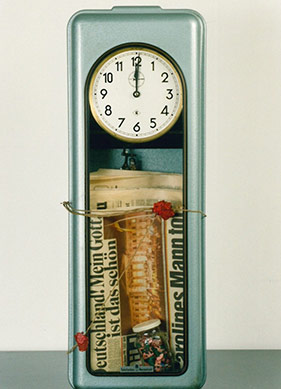
I like Cengiz Çekil, Gülsün Karamustafa, Halil Altındere, Nil Yalter, İpek Duben, Hale Tenger, Nilbar Güreş, Gözde İlkin, Güneş Terkol, Koken Ergun, Burak Delier, Ali Taptık, Cengiz Tekin, Aslı Çavuşoğlu, Extramücadele, Şener Özmen, Fikret Atay, Hüseyin Bahri Alptekin, Emre Hüner, Leyla Gediz, Yusuf Sevinçli as Turkish artists. Basim Magdy, İman Issa, Cao Fei, Endre Tot, Mark Dion, Atilla Csörgö, Allan Kaprow, Trevor Paglen, Mario Rizzi, Walid Raad, Yto Barrada, Valie Export and Melik Ohanian are among the artists attracting my attention.
Do you visit artist workshops? How often does this happen?
I get a chance to visit artist workshops during the trips within the scope of SPOT.
What are galleries that you particularly follow abroad? Why?
Gregor Podnar, Vitamin Creative Space, Chantal Crousel, Sfeir-Semler and Lehmann Maupin are among the galleries I follow. These are the galleries which I have close relation.
Are there any fairs that you do definitely go?
Although it changes year-by-year, Venice and Istanbul biennials, Basel Art Fair, Frieze London and New York, FIAC, Art International and Contemporary Istanbul are the main art organizations I follow.
What would you advice for the one who will start to be a collector?
I think collectors’ love for art should not be only find expression by art. One of the most important features of being a collector is to know that a collector is also responsible for artist. A good collector is a person, who knows that he/she is a protector, supporting artist to produce work for him/herself or for exhibitions in inland / abroad. In the end this support reflects onto collection: to be a part of production process and be close to artist's creative process is a fact that is not lived in a bought art work. Sharing this production state with the artist also fomrs very important reference points for collector's next choice.
;