Can you tell me about yourself. How did you decide you wanted to be an artist?
There is an old dull story about this question: many artists just say: "because this is the only job I can do". Someway there is some truth in this statement for me. "Being an artist" is a sort of benign illness (or vocation, depends from the point of view) that entraps one's way of looking, thinking and living. For me all started, I was 16 years old, reading a book of Paul Klee: "Voyage to Tunisia". I promptly decided: "I must be an artist". Emotionally I feel still very close to this little book.
I know that you use varied techniques while producing your artworks; painting, sculpture, design, photography, installation and video-games. Which material do you prefer? Which one do you think reflect your messages better? What would you like to tell me about your artworks in general?
Like a Florentine artists of the Renaissance (I apologize for the apparently egotistic approach...) I do consider the so-called "project" the most important point in any artistic creation. So I do believe in the main central idea/concept that, everytime, should be declined and shaped using the proper media and technique. Every mental creation has its own and specific way to become "epiphania"( akin: to became real and visible). Does not matter if ceramic, drawing, glass, ready made, video, new media, painting, or whatever else, is the way.
In this ever changing world, do you believe there is a type of art will always remain contemporary?
In a high technological time, like this present one, probably the most traditional techniques are those with less obsolescence. Drawings and paintings paradoxically could be considered today the most reliable and resilient techniques because not too affected by the frequent quick technological turns.
How did you decide to take part in the Biennale? How do you feel about its conceptual framework?
I decided because I knew the curators and they were for me a definitive guarantee for a serious curatorial work and a good organization. And I was totally right.
Geography and History this year arranged a very special meeting in the Dardanelles Strait. Something absolutely unavoidable and unmissable. Not just a "celebration" of war memories but, instead and foremost, a survey about how contemporary art may think and "play" with historical (troubled and controversial) events. Non-rhetoric, instead with witty humor, sharp views and dramatic feelings.
Do you think biennials obtain their targeted aims and reach the right type of viewers?
I would say it is for sure successful in terms of artistic aims. Everything in Çanakkale Biennale is very substantial and informal at the same time. In the perfect spirit of today's culture. No stiff or formal attitude, just the core of the stuff and an enjoiable "light & smart" approach to the venues and places.
Of course I can not know how many viewers like the Biennale and how many people visit it. Ehat I can say is Çanakkale has been for me a great and amazing surprise for many aspects.
Have you ever shown any of your artworks in Turkey before?
Yes. in Istanbul at BORUSAN Foundation, "ENGAGED IN RECREATION", in 2005 and at Elgiz Museum "THE DAWN OF TOMORROW, in 2008. And at the first SINOPALE (Sinop Biennale), in an amazing former Ottoman prison on the shore of the Black Sea, in 2006.
Can you tell me about your artwork that will be on display at the Çanakkale Biennial: 'Elegant War'.
My project "ELEGANT WAR (WITH SPONSOR)" consists in six big drawings inspired by the headgears used by the soldiers involved in the slaughters that happened there in 1915. His eccentric approach is about the visual appeal of violence, riots and war on the various media. The virtual presence of a financial supporter (a corporate brand) in wars should not seems so irreal or bizarre, rather it would be pretty logic (in terms of media and business). The celebrated aphorism "L'argent est le nerf de la guerre" is sadly and famously true: war is always looking for huge financial resources.
Your artworks in general?
In a nutshell: I try, as an artist, to focus public attention on the "Symbolic form of our time" (quoting Panofsky): a spread and unstoppable sort of intellectual ambiguity affecting and entangling all the levels of visual production and fruition. I mean with "ambiguity" the blurring of the traditional borderlines of what is "good" and what is "evil". The fabulous high tech GPS is not able to work (alas) as a "moral compass", and we have to be aware of that.
Do you think art today cares for the past or the future?
I am afraid more able to deal with the past that with the furious and hectic future. Future seems a difficult and tricky matter even for Contemporary Art.
How would you describe the evolution of art in the world. Is it where it should be? Has it fulfilled its ontological purpose ?
Art is one of the most ancient sort of "social contract". So it is not something existing in a "platonic context" independently from human beings, not at all. It is instead a kind of deed inside every specific society, like religion, finance, and all the human affairs. For sure a formidable compaign for humankind, sometime spirited and cool, sometime less brilliant and (apparently) waning. There is not the "right art" there is only a continuous and controversial array attempts and efforts desperately trying to interact with the human adventure. A comfortable - maybe even uncomfortable - witness.
How would you define aesthetics in our era? Is it as valued as before or are there other concerns today?
Most of "aesthetic traffic" today is online and on our smartphones. Contemporary art should be accustomed to this matter of fact. It is of course a challenge for all the people (like me) that come from a different kind of artistic education and formation. In 1996 I made a video-game as an artwork, ITALIANI BRAVA GENTE, to explore this new media.
What is the most important feature of your work? What kind of aesthetics do you pursue?
To keep to be a sort of aesthetic "watcher"/"sentinel" in order to keep alive attention about the toxic coalescence of Aesthetic and Ethics. By any means.
What kind of messages do you intend to give to the viewers?
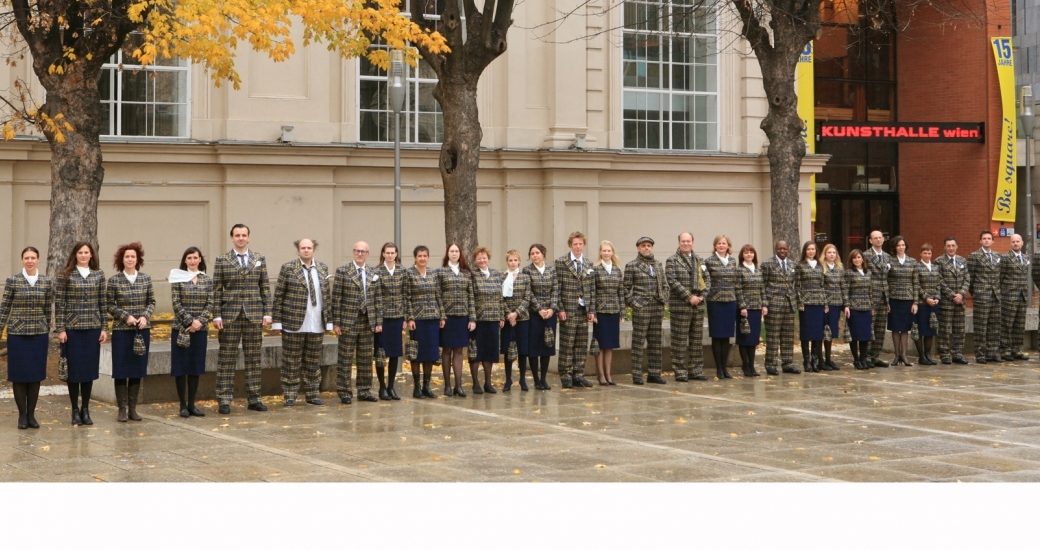
I am very proud of the "work in progress" project BE SQUARE!. It concerns the "invisible life" of the Art Museums: the human factor (the museum staff). I am used to design some fabrics and some outfits for the whole museum staff, transforming the people in a sort of long last collective and spontaneus performance. An artists should be usually much more attracted by human affairs than by things or architecture. And "artistic uniforms" may be an interesting visual way to think about art, identity and art institutions. I did this project at Baltic in NewCastle/Gateshed, at Kunsthalle Wien in Vienna and at GAM in Torino.
Do you believe in the master & slave dialectic of Hegel?
Not at all. But I consider contemporary art a sort of cool instrument of contemporary geopolitic. Art is not useless, is extremely powerful (at least in some contexts).
What kind of power does the viewer have when observing or judging your artwork.
The viewer should not have a special power. She/he has just to know that art is one of the forms by which power show itself. Power is usually invisible, odorless and not touchable. Arts allow it to become someway more real and "materialized". Art and power are often just different aspects of the same thing.
;