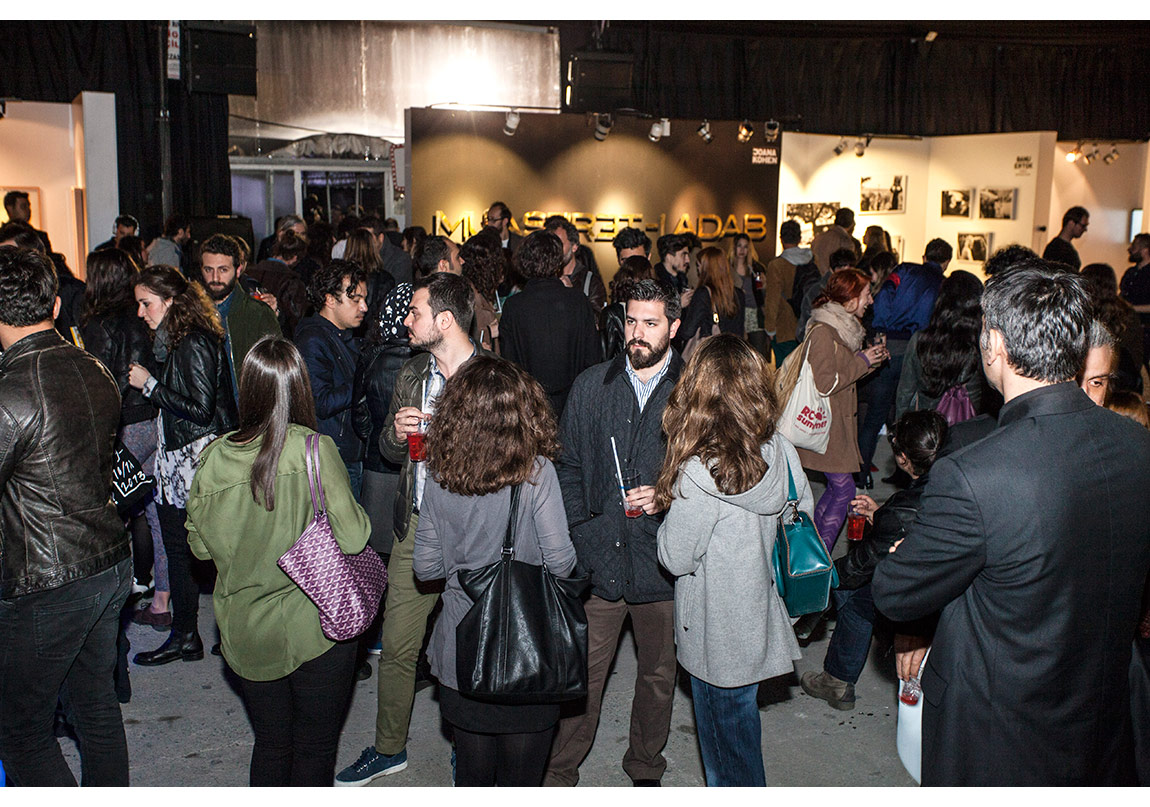
It’s Mamut Art Project’s third year. How is this one different to the previous ones, what has changed?
Actually there is no real change in the format, but since it’s been promoted much more than the previous ones, we received approximately one thousand applications and there are more participants from abroad.
The greatest difference this year is that Mamut has a sponsor. Akkök’s aim is to enlargen Mamut, therefore its not an ordinary sponsor, but a collaboration. We are very lucky. For instance, we advertised Mamut for the first time, which had the effect of reaching a wider crowd and was a very valuable working effort.
If we take a look at Mamut’s general format, as I said, we did not change anything. Quite the opposite, Mamut has a very clear delineations and we want it to stay within those lines. We have gained some real experience given the relationships with artists, pricing, applications, being able to evaluate artists’ curriculum vitaes and able to transfer this to the jury in the most correct way.
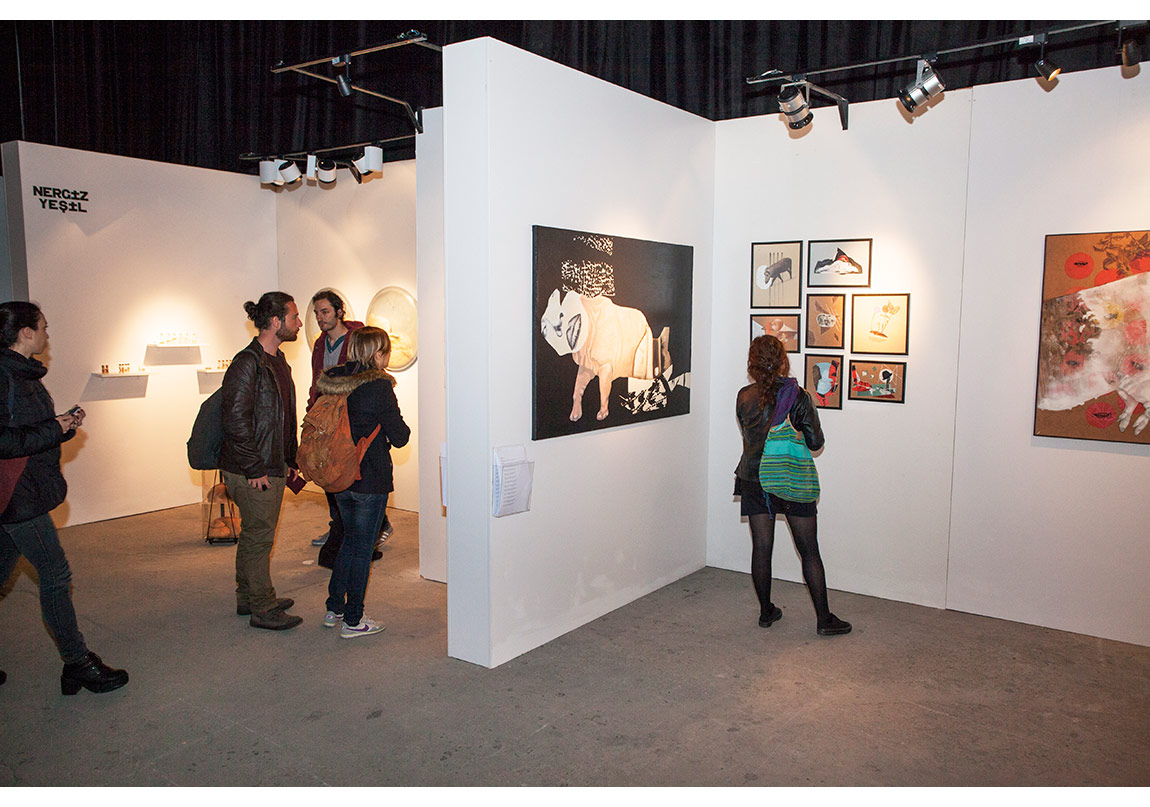
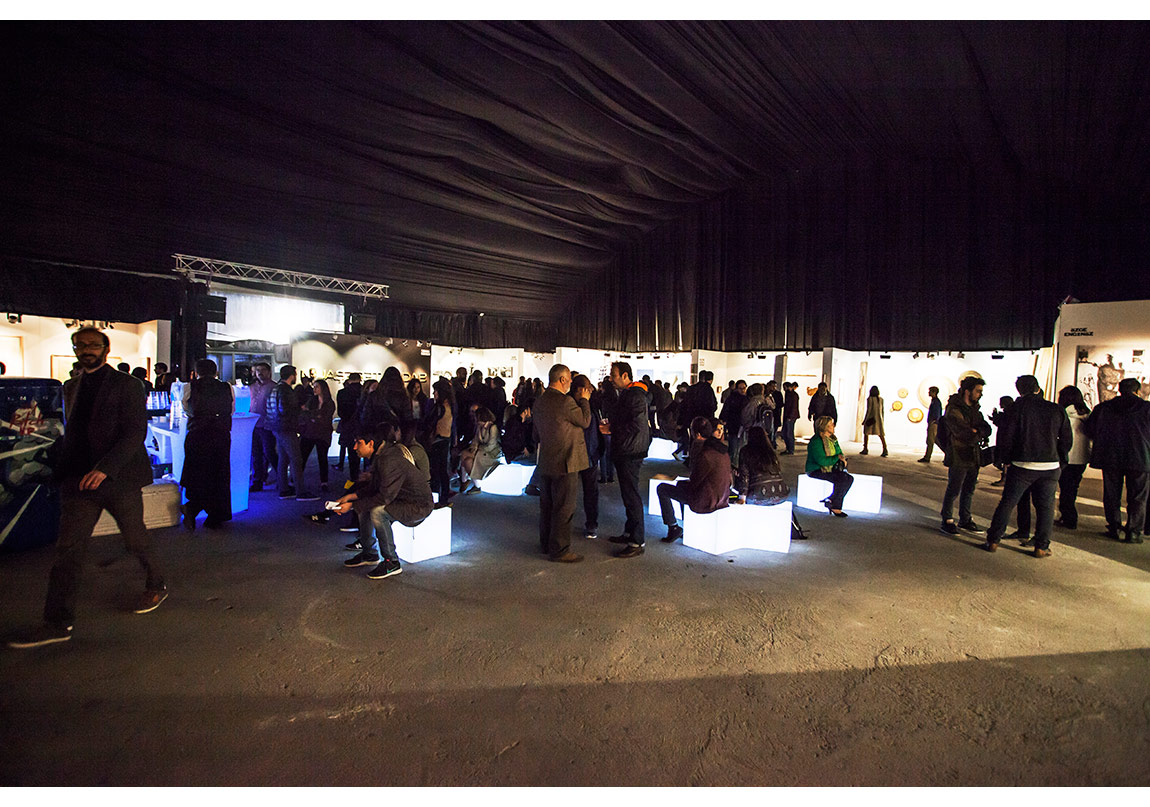
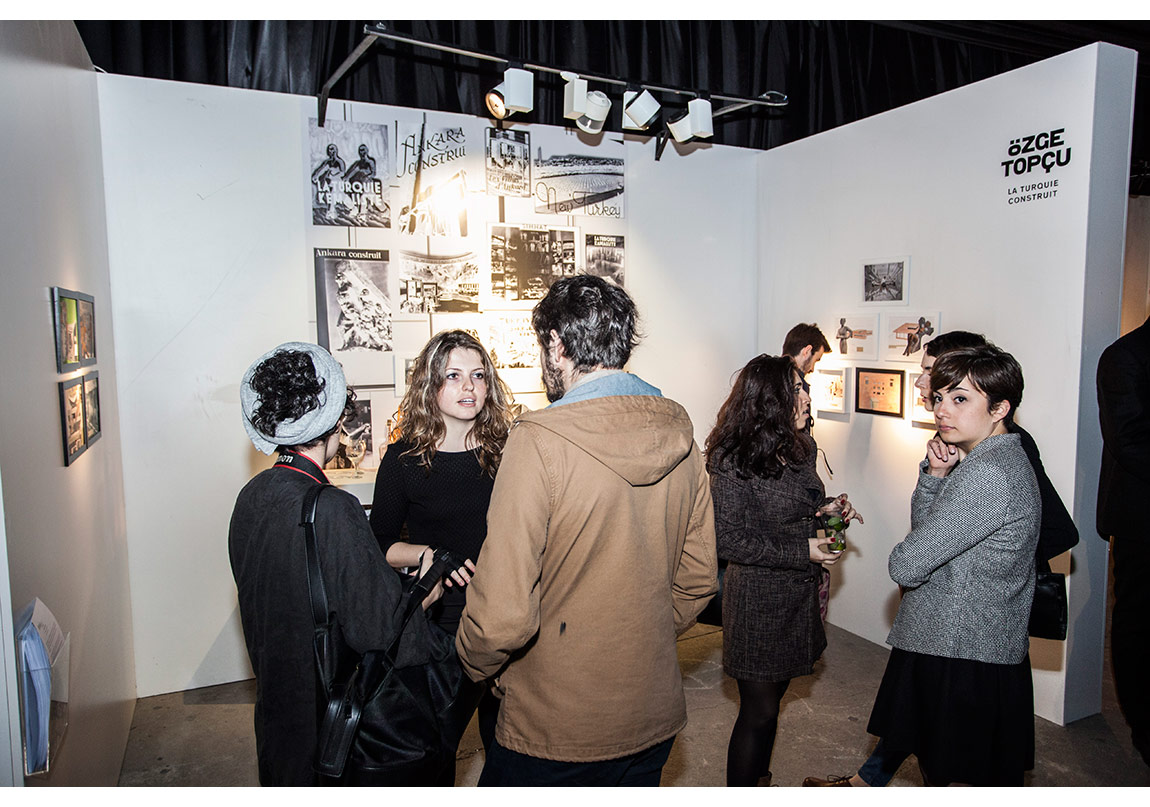
As a pose to the previous years, in terms of the organisational aspect, we have spread our programme to the whole year. We will be having seminars, workshops, parties all year round. We want to do everything in the most professional manner, but to be the core spirit of it amateur. That’s why we declined subsidiary sponsorships that ask for remuneration in return. At Mamut, we aim to present an environment where as a space, our exhibition manner, the relationship we have with artists and collectors is one that lives and breathes art and is genuine.
So what do you think of the applications this year? What do you do for promotion?
During the application period we only share posts on Facebook, but somehow these reach a very large crowd. Our website and applications are in English and Turkish. Artists interested in applying can find out details about the application process and details via our website and Facebook.
Our applications increase gradually every year. As Mamut is in its third year, more people know about it and I believe this affects the rise in the number of applications. Additionally, we protect the artists’ rights during the process at Mamut. This is very important to us. We would like artists to develop awareness in this point.
Just as a remind, what are the terms of application?
We actually organise Mamut Art Project for beginning-of-career talents. However, artists who have previously taken part in mixed exhibitions and work with galleries have been selected for Mamut Art Project. In the coming years, we are going to tighten our application terms. Our aim is to give and enable artists who have not yet met gallerists and collectors the chance to do so.
An important criteria for the jury is that the person who has applied continuously produces art. For instance, if an applicant last had an exhibition in 2009, has not created anything since and sends this to Mamut, the jury obviously does not evaluate this positively.
In general, where was it the most applications came from? I am curious, what is the ratio of photography applications.
We received applications from Istanbul, Ankara, Izmir and thirty-four provinces. Apart from this, this year we received applications from eight – ten other countries. We did not just receive applications from people who live or come from these countries, but people from Turkey who went and live there, or from foreign artists who live in Istanbul. But it is important not to forget that Mamut is a project that was realised to support the local and here. Later on Mamut Art Porject might exist abroad, but it should always be local. For instance, if it is to be in London, then it should be discovering artists in London. The fact that there are artists included who are not Turkish but have established a life here is related to the fact that they live there.
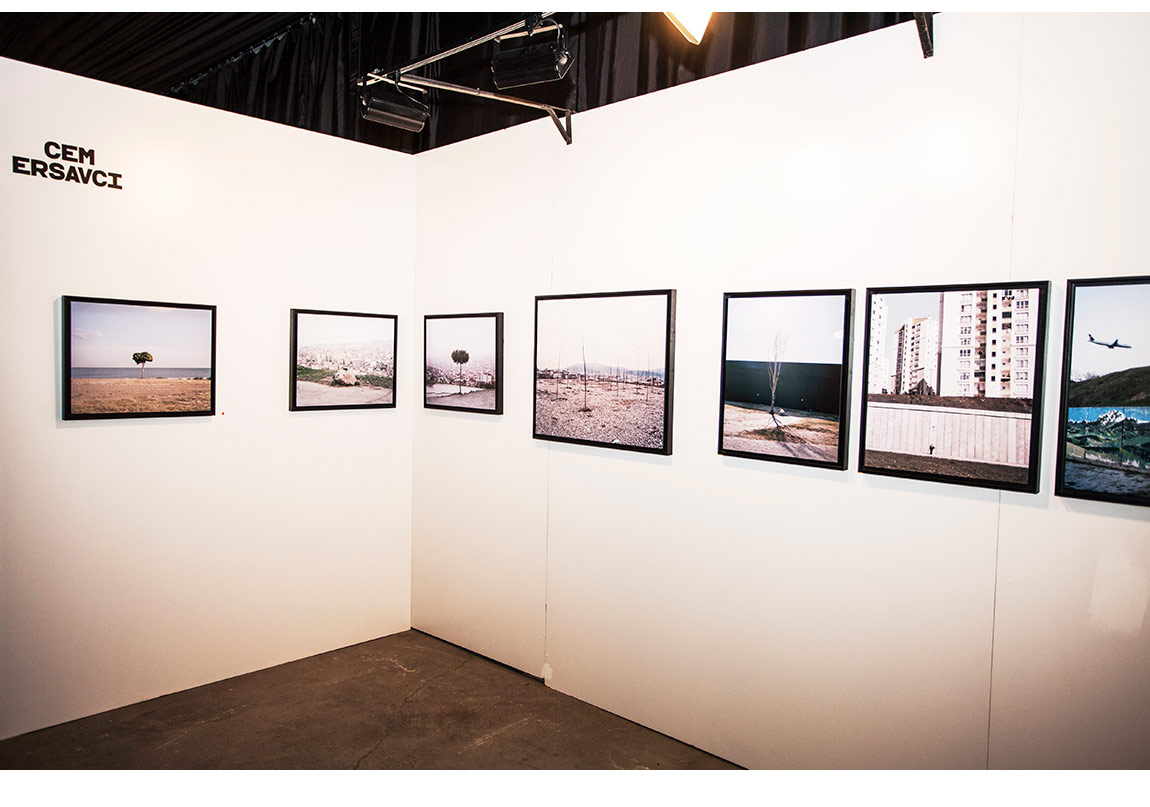
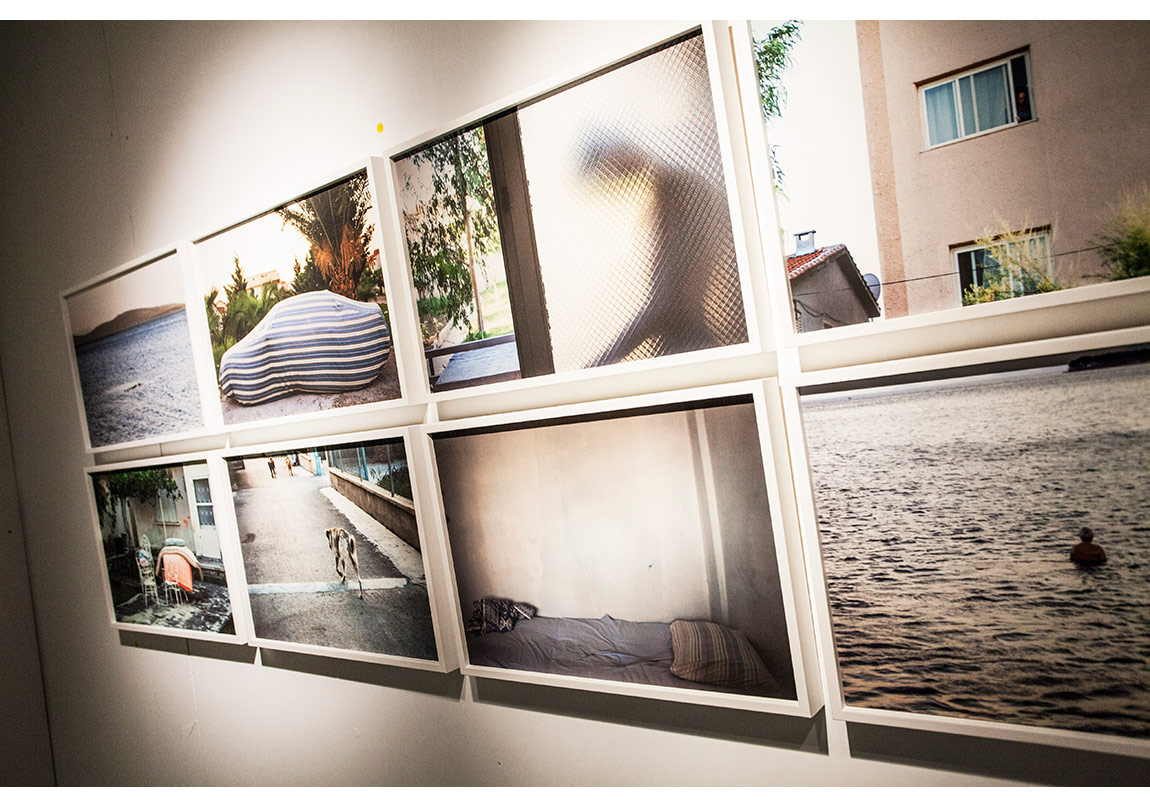
There is a lot of photography this year at Mamut. You can see photography in fourteen of the fifty-six stands, there’s photographic intervention and lightbox.
What criteria do you base your selection of the jury / advisory committee each year?
The jury at Mamut consists of people from different categories, different fields. Artist, art consultant, collector, writer, curator, academic... We have a pool of people from different fields who who can be part of the jury. We generally go through this pool.
When choosing these names, we pay attention to different points. For instance, there definitely has to be both men and women. On the other hand, an important part is whether they will be compatible, as in will there be differing viewpoints. This year, for the third time, there is a jury with very varied viewpoints and in evaluating the works in the same ratio.
We try to work with conscious collectors, otherwise it is not going to be very fair. The curators we have worked with so far are amazing curators and this is how it will continue. When we evaulate the artists we are going to select for our jury, we especially pay attention to them working with differing mediums. In the first year, the artist was Nil Yalter, in the second, it was Ali Kazma. For instance, with Ali Kazma we received quite a few video applications. This year with İnci Eviner we received more applications based on drawing and design and very little video. We always want to have an artist that works in different mediums in our selection for the jury.
It is not so difficult to make a decision due to the existence of important names and the pool we have created.
This year our jury consists of İnci Eviner, Osman Erden, Eda Kehale Argun, Başak Şenova and Agah Uğur.
What is the step after direct contact with the artists and with art lovers?
What we offer and do not offer the artist is specified in our terms of condition, therefore the artist knows what we present from the start. We do not interfere in the production process, we try to be as helpful as possible regarding the transportation to collectors and costs etc. We are talking about fifty-six artists and an initative here. It is impossible for us to take over all the production costs. We take 33% as commission. We try to be as fair as possible to the artist, the collector and Mamut.
In regards to the procedure and post-procedure: if need be we even help the artist prepare their portfolio during the application process. After that our relationship continues. Artists who participated in 2013 still call us today and enquire about offers they have received, and to receive ideas about projects. As well as this, for instance, a curator or a gallerist says “we are going to make a mixed exhibition”. We recommend artists from Mamut, some artists want the contact details of artists, we are definitely helpful.
Also, this year, to meet and greet, we arranged an artists’ gathering for those who participated in 2013 and 2014. We follow and share exhibitions and projects of artists who participated Mamut. In fact, we plan to publish a publication, newsletter, as there has been significant career development and we of course want to show this. One of our dreams is that we create a database on our website that is continously updated and people can follow these artists.

So with Mamut Art Project hold parallel events? What are the plans for the future?
During the previous Mamut, we organised a seminar. However, as seen at the fairs, parallel events, seminars etc. at widespread organisations such as these are always lowly frequented. No matter how important and valuable the event is, these can be overseen at large organisations. Therefore, in order to remind people about Mamut and to organise participation in a more planned manner, we have decided to spread our events across the year. We want to organise seminars free-of-charge directed towards students regarding subjects such as; preparing portflios, what is to be taken into account in agreements, what to take care of for and how to prepare exhibition projects.
We have a plan for a party each year. We want to keep that young energy vibrant, always. We thought there could be a Mamut event during the Biennial, to be able to promote the artists to the collectors and hosts that come to the Biennial.
One on hand we have started international research as to whereelse Mamut could be. We are going to a look at this after the upcoming Mamut Art Project...
;