Honourable Captain and Naval Museum Commander İlyas Gültaş, before interviewing you on the history and collection of the Naval Museum, may I kindly ask you to introduce yourself?
I was born in Istanbul in 1968. After completing my primary and secondary education in Istanbul, I entered the Naval Military College. I graduated from the Naval Military College in 1989 and for 10 years, I performed duties in the Naval Forces as ship branch officer, section chief and ship commander. In 1998-2001, I fulfilled my duty as company command in the Naval Military College. After 2001, I began to perform duties in the field of museum studies. In 2001, I was appointed to the Naval Museum Commandership Museum Directorship Department. After this, I was responsible for the project of the foundation of the country’s third naval museum, İskenderun Naval Museum and became the museum’s first Commander in 2009. After 5 years at this position, I returned to Istanbul as the Commander of the Naval Museum.
Could you tell us about the museum’s foundation and history?
The Naval Museum was founded as the “Museum and Library Administration” in a small building in the State Shipyard in 1897 upon the permission of Sultan Abdul Hamid II., following Admiral Naval Minister Nazırı Bozcaadalı Hasan Hüsnü’s orders and the great efforts of Admiral Hikmet Paşa and Major Süleyman Nutki. At the outbreak of World War II, the works were shipped to Anatolia for safeguard. In 1946, after the war, the museum was moved to the Dolmabahçe Mosque in Istanbul. Under the administration of the museum director Haluk Şehsuvaroğlu, the museum was opened to the public again in 1948. Later on the museum had to be moved again and was finally transferred to its current position in Beşiktaş in 1961. In 1971, the “Historical Caique Gallery”, which stores and exhibits galiots and sultanate’s caiques in the museum collection, was opened to the public. In this space various problems regarding the works’ exposure were faced. Due to spatial constraints, necessary adjustments and the construction of multi-functional exhibition spaces for the care, exhibition and security of works did not reach the desired level. In order to overcome these problems, a new museum building was constructed in the given area and a national architectural project competition was opened in 2005. In 2008, the bid for the new museum was finalised and a historical caique gallery, cultural site and open-air exhibition space was built as the museum, within the modern understanding of museum studies. Construction and exhibition adjustments were finished in 2013 and the museum was opened to visitors in October. At the moment, the Main Exposition Building is being restored and is planned to open next year.
Istanbul’s Naval Museum is Turkey’s largest museum in the maritime field and is home to one of the few collections in the world, could you tell us about the museum collection?
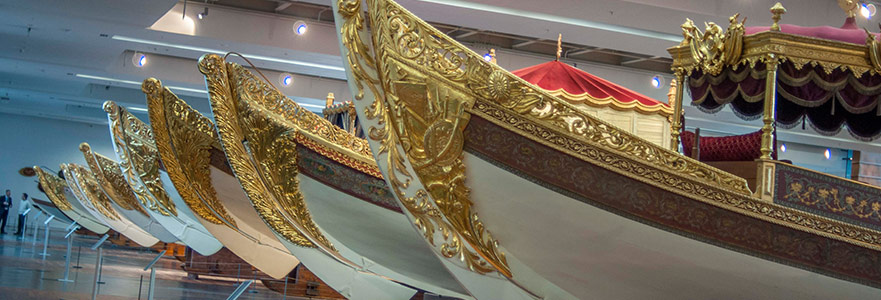
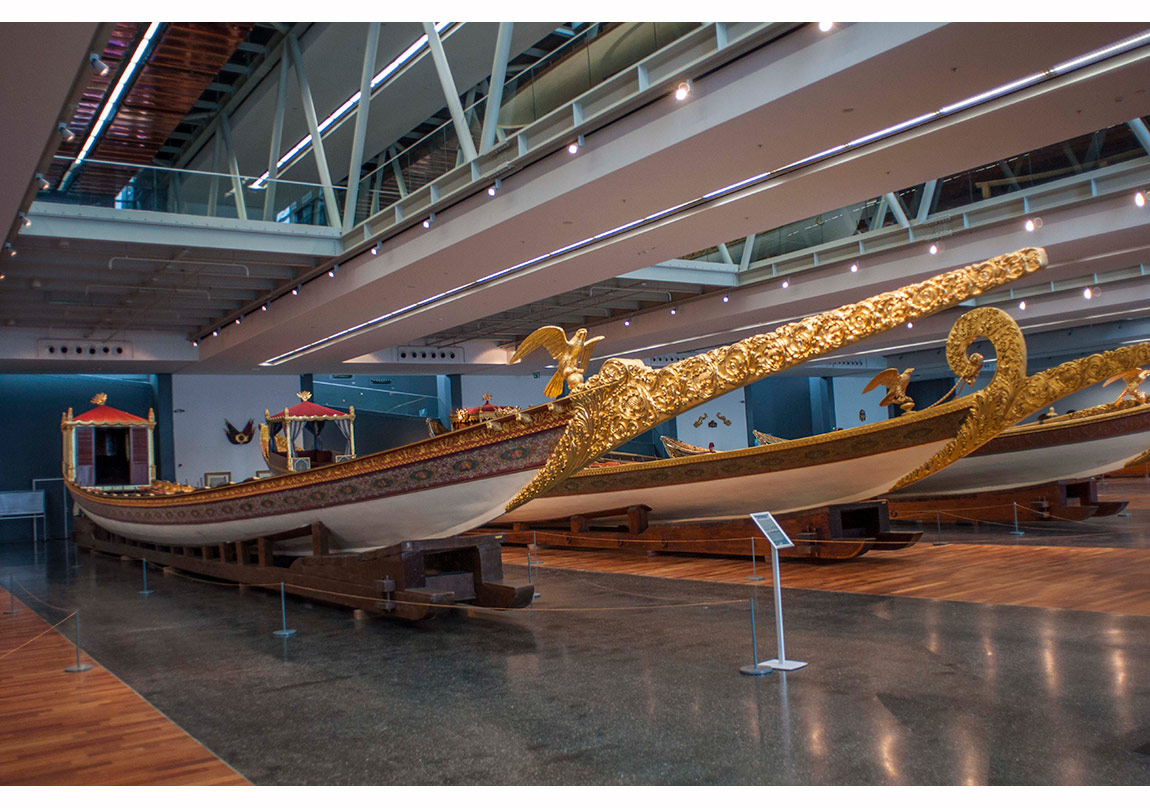
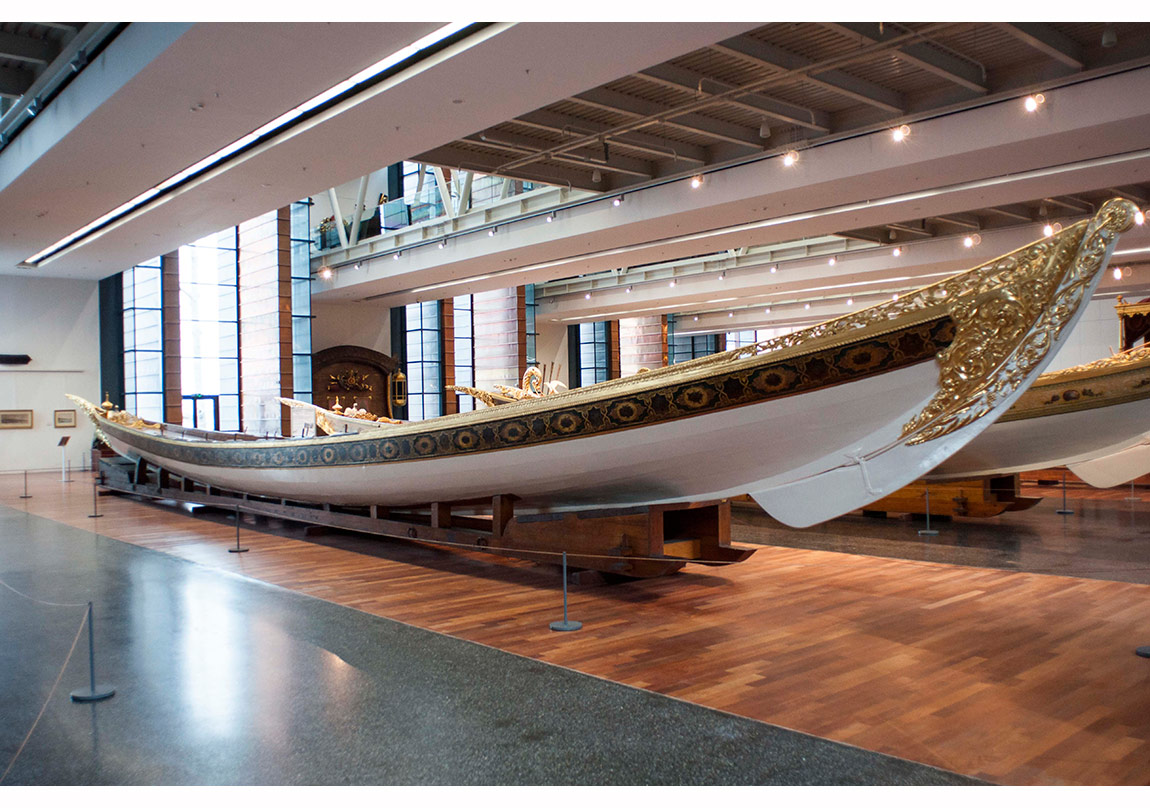
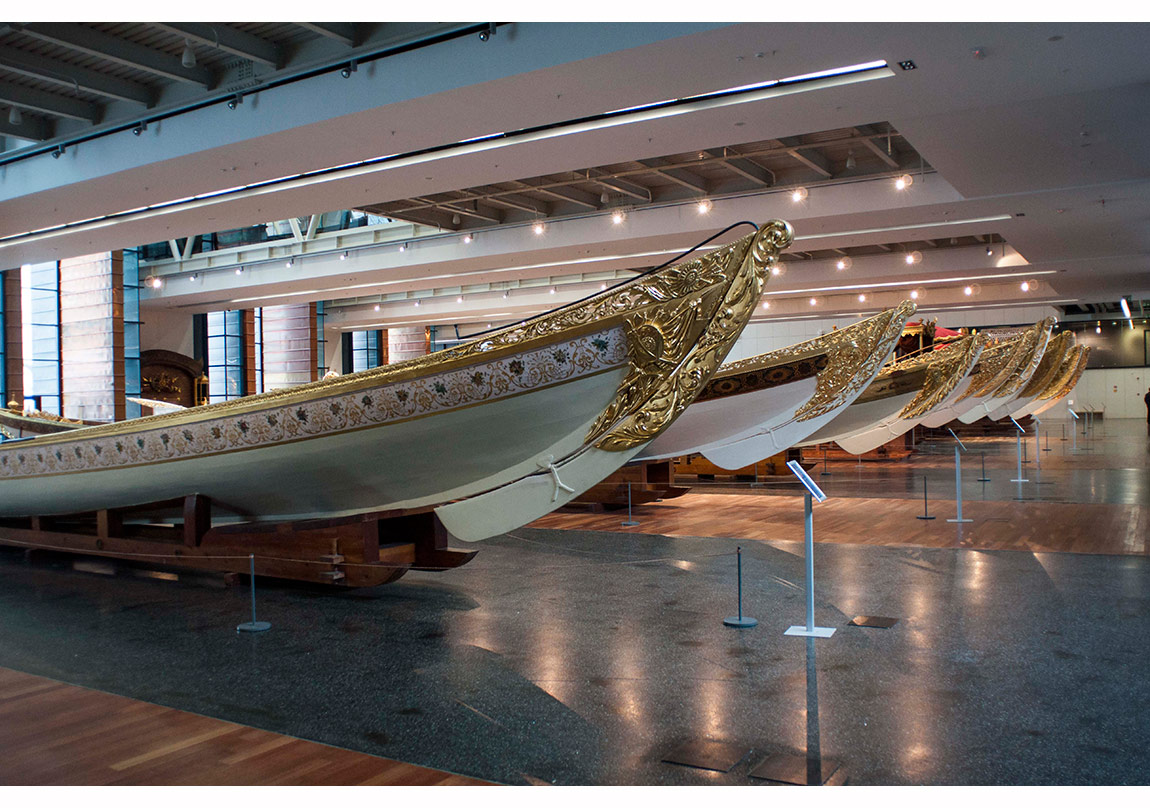
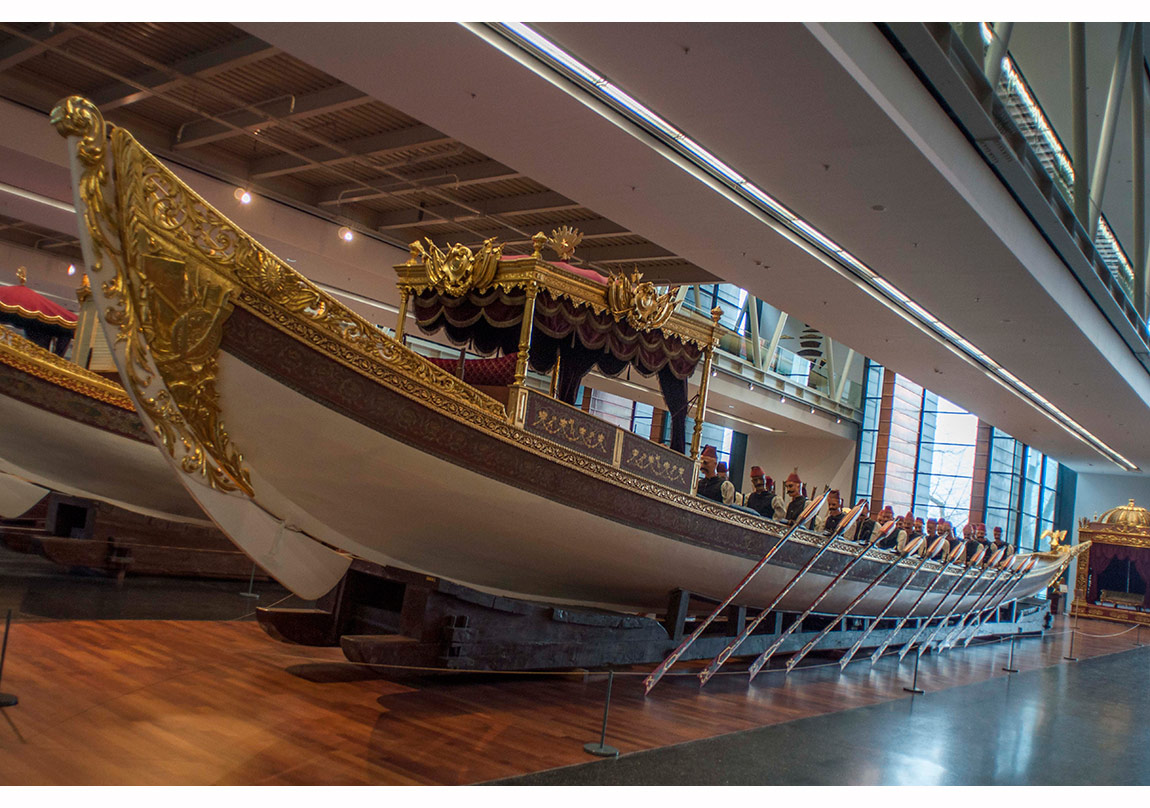
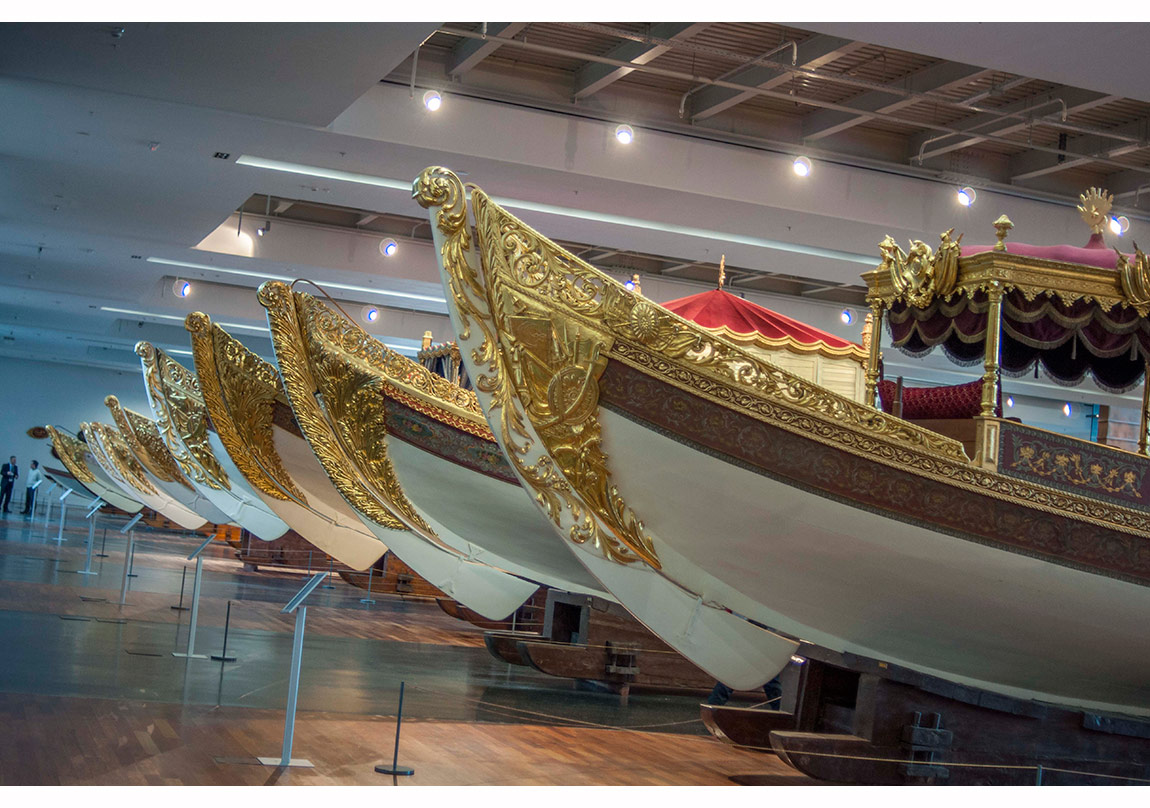
The Naval Museum houses a rich collection and exhibits a wide array of various cultural assets. In the museum collection there are about 20.000 objects, where one comes across Atatürk’s belongings, historical caiques, paintings, model ships, guns, maps, coat of arms and tughras, navigation instruments, lights, uniforms, medallions and devices, coins, stamps and seals, photographs, flags and starboards, sepulchral monuments, epitaphs, lithographic print moulds, charter, mandate and manuscript works, figureheads, furniture, watches, amphoras and diving sets, ship components, plaques and bells. The Naval Museum houses fourteen of the world’s sultanate caiques and therefore owns the largest collection of these in this field. There are a quite a few historical caiques in the collection; an old, original galiot that is dated to the period of Sultan Avcı Mehmet (1648-1687), but has been attributed to an earlier date and is considered the oldest of its kind in the world; fourteen Sultanate caiques the Ottoman Sultans had used during their Bosphorus tours, which are embellished with the most beautiful examples of 19th-century handicrafts; the three caiques Mustafa Kemal Atatürk used in the Ankara Gazi Ranch and Florya Mansion.
Could you inform us about the imperials caiques that are being exhibited; which period they are from, by whom they were commissioned, their motifs and what the represented dragon and bird symbolise?
The sultans and their relatives used the Sultanate Caiques during daily Bosphorus tours, Friday divine serve prayers and ritual Ottoman sword ceremonies; the caiques exhibited grandeur and symbolised the power of the sultanate and the state. The lengths of the caiques range between 16 – 30 metres, of which the hull, especially the top and bottom are decorated with ornament and gold leaf. There are two different types of caique: one with a mansion and another without. One can see a variety of fine craftsmanship of techniques on these caiques from wood engraving, painting, chiselling and calligraphy, next to glorious sultanate arms, star and crescent motifs and bird figures. Caiques that belonged to the sovereign have war and armoury motifs on them, while caiques that belonged to the harem generally bear fruit, leaf and floral motifs.
I heard that there is a story to the galiot being exhibited. I would like to hear the story from you.
When the Yalıköşkü Caique House was destroyed, it was decided to move the sultanate caiques and galiots to the State Shipyard at the beginning of the 1910s. For this reason, the museum director Halil Ethem Bey visited the caique-boathouse and wrote about his impressions in 1914 in the Şehbal magazine. Halil Ethem Bey enquired about the galiot from the palace’s first oarsman Osman Ağa of Hasköy, who told him that the galiot remains in tact since the period of Avcı Sultan Mehmet Han and that it possesses certain intangible characteristics from tree bark used to prevent malaria, that oil-lamps were lit on it and many more fantastic stories. Halil Ethem Bey became so curious he decided to take a piece of the tree bark that prevents malaria from the caique. He went to see the galiot the next day and was in awe at the sight of it and its mother-of-pearl, ivory and other rare embellishments. He took some powder of the decayed wood as a form of malaria medicine. This rumour spread amongst the public. Rumour has it that since people believed this galiot possessed a number of intangible strengths and spread health, not even the oar of the galiot remains today.
Atatürk’s caiques are also in your collection, could you share what the differences are to the sultans’ sultanate caiques?
The caiques of the founder of the Turkish Republic, Mustafa Kemal ATATÜRK used in the Florya Mansion and Ankara Gazi Ranch bear a special place in the collection. The caiques Atatürk used himself were made out of mahogany tree in the superposition technique. As a pose to the Ottoman Empire’s grandious and glorious sultanate caiques, the Republic’s modest caiques are simple, bare and present functionality.
Another work exhibited is the thrown that belonged to the Bahriye School. This is definitively different to the other works. There is surely a reason as to why its on display here, could you tell us a little about this?
The exams that took place in the Marine School in Sultan Abdülmecit’s Shipyard on October 17th, 1948 harked back to a tradition from the Tanzimat Period (recalling Ottoman reforms made after 1839) where these were taken in the presence of the padishah. The padishahs would sit on their throwns during the exams at Heybeliada Marine School in 1851-1852. As the Main Exhibition Building is currently being restored, the thrown that is exhibited in its Caique Gallery will next be shown in the Marine School themed exhibition.
Which periods does the collection represent? Are new works being added?
There are many works available in the collection from different periods. Some that come to mind are 3rd-4th century B.C. amphoras, astrolabes from 1222-1223, a map of the Mediterranean from 1461, a galiot used in the period of Sultan Avcı Mehmet (1648-1687) which has now been recognised to be from an earlier period, sultanate caiques from the 19th and 20th centuries. New works are added to the collection. Every passing day our collection is enrichened with donations, suitable pieces to the collection that are acquired at auctions, and pieces of ships that are out of service.
If we were to evaluate this within the framework of cultural heritage, which would be the most valuable piece?
There are quite a few objects from different periods and of varying quality that are testimony to Turkish Naval History in our collection. It is difficult to say one is more valuable than the other. However, it can be said that the Sultanate caiques are the most valuable works when evaluated in terms of the finest Turkish craftsmanship, one of the most important pieces of naval heritage. The Historical Galiot is the world’s oldest, original galiot and significant in terms of cultural heritage.
How was this collection acquired and where were these pieces stored before the opening date of the museum in 2013?
Before 1897, a core collection of military assets was formed by the personal efforts of high-ranking marines and officers in charge of the museum’s foundation during its installation. This core collection was published in the Navy or Marine Museum catalogue that Ali Sami Boyar prepared in 1917. Later on the sources for works added to the collection were soldiers and their families, military institutions and ships that were out of service.
And this is how the historical caiques collection formed. Historical caiques that were used by Ottoman padishahs, grand viziers, princes, sultanas and other palace courtiers were conserved in various palaces, and summer palaces’ in caique houses. In 1931, it was decided that all caiques in the palace caique houses should be brought together at the Naval Museum collection by decree of the Ministerial Cabinet. As the Yalıköşkü Caique House collapsed, the galiot that was kept there was also transferred to the State Shipyard in 1912. The mansion was brought to the Dolmabahçe Mosque in 1948. Finally, the parts of the galiot and mansion were brought together again in 1971 by being moved into the now Historical Caiques Gallery. After the national architectural project competition that was opened in 2005, all the caiques were moved to the constructed temporary storage. As soon as the construction of the new Historical Caiques Gallery was completed, the caiques were taken out of storage and placed here.
How does the museum’s decision-making mechanism work? How are the exhibition and event selections made? Do the decisions taken need to be confirmed by the Northern Sea Area Command, the Naval Forces Command and the General Staff?
Our museum consists of 5 units: museum branch, archive, Piri Reis research center, supply unit and security service. The designated staff of each unit determines the task and accountability. Within this frame the staff and the commander holds consultations and takes decisions. Decisions and suggestions are forwarded to the Northern Sea Area Command and the Naval Forces Command. Following their confirmation we take actions.
The exhibition work and events are taken care of by the museum staff and decisions are taken during consultations. Small-scale events are taken care of within the museum, more comprehensive events require confirmation through the Northern Sea Area Command and the Naval Forces Command. If we organise events in collaboration with foreign institutions or international symposiums, we ask the above authorities for confirmation.
“The mission of the museum entails the development of the collection of historical objects and documents, the provision and preservation of new objects and documents that should be transferred into the future, as well as opening the archives of naval history”. This vision is very important for our country. Could you tell us about your work for this?
As I mentioned before, the enrichment of our collection is granted by donations, purchases at auction and de-commissioned vessels. For this purpose, our staff follows auctions and takes care of the harmony of new acquisitions with the collection. We preserve our collections in our storages under the most appropriate conditions and present our pieces in the air-conditioned exhibition halls, providing the best possible information to visitors.
We are undertaking comprehensive research in the field of archiving. Our historians and archive staff first make a rough classification, then create digital copies of the documents via microfilm and preserve them in this way. Hereby access to the archives is easier for researchers. We use archive material in exhibitions and offer information to our visitors.
“To research the historically important results of objects from the past to the present during Turkish naval history, to publish these results and transfer these to future generations correctly” is a very valuable mission! Could you give us some examples about related research and published results?
Important personalities, famous ships and key events in Turkish naval history are investigated and published as books. Beginning our mission in 2006, we presents quite a few books that have been published on “Ships, events and personalities that have had an impact on Turkish Naval Military History”. Some examples are about the mythical galleon “Mahmudiye Kalyonu”, Gazi Hamidiye and the “Akın Movement”, the great Turkish Naval Commander Kemal Reis, the Life of Piri Reis, Hıs Work and A Selection of His Navy, the role of Yavuz in Naval History. Apart from this, research related to our exhibitions and exhibition catalogues are prepared. An example is the catalogue on stamps and seals of the Ottoman Navy, Paintings from the Naval Museum, and the Maps catalogues. Publication and exhibition-related research will continue in future.
Do you believe you receive enough support from the Ministry of Education for your mission of “transferring history to future generations correctly”? Do you think that these institutions take this commitment seriously? Do schools take their students to the museum?
Museums are spaces that can be used as multi-purpose learning areas for basic education and life-long learning standards. Museum education is the result of being able to use the museum in the most effective way for this necessity. Museum education aims to provide ideal learning spaces for everyone to develop interpersonal communication and interaction. The Naval Museum agrees that museum education has an important function by contributing to the general education of society and carries out work within the framework of its possibilities. The museum contacts and shares information with schools, provides guidance for appointed groups and information via interactive displays.
Given the museum’s collaboration with these schools, the Naval Museum encourages schools to visit the museum and for this, it creates a convenient environment. We send invitations to the Ministry of Education and School Directories. And we see that school groups’ interest in our museum is encouraging. Of course, there is room for the number of visitors to increase and we can make the visits more effective. We do our best in this field.
How do you take care of archiving? What does your library collection consist of?
In our Naval History Archive, which is one of the country’s most important archives, there are documents that cover the period of the 18th century until 1928. The museum classifies and creates microfilms of the existing approximate 25 million documents. During the so-called rough classification of files and books, documents are marked according to the designated units of the Navy. Work in terms of digitalising documents from microfilms and transfering these to the existing automation programme are ongoing.
Local and international sources about naval history can be found in the Navy Specialisation Library in the Archive Branch Directory. Beside local books, there are books printed in Ottoman, the international ones are in English and French, also Italian, Russian and Japanese. In the library collection, there are also manuscripts about the Navy and an archive of 1120 maps.
The Istanbul Navy Museum is the first military museum in Turkey, it undertakes the mission of protecting a great cultural heritage and with its understanding of modern museum studies sets an example for other museums. What difficulties do you face by being the first?
Of course we faced a few difficulties. Being a pioneer museum of this mission, you have to be one step ahead in terms of commitment towards exhibition, conservation and research, planning these specifically and carefully. The museum has a task of responsibility in any case, while serving society with its activities and services.
At the same time, being a role model for other museums by guiding them was a difficult period. We were aware of our commitment at that time, as well as now. Following the developments in the field of modern museum studies and technology, advancing our services and activities in that direction and being aware of our commitment by doing these has been, and will be a very important factor for us.
After Istanbul, in which provinces were naval museums founded? Which other naval museums exist?
After Istanbul, naval museums have been established in many key cities. The active ones are: Çanakkale Naval Museum Command, İzmir Museum Ships Directorship, Kocaeli Naval Museum Command, İskenderun Naval Museum Command and Mersin Naval Museum Command.
How is the conservation, care and restoration of works realised?
Our main principles are to prolong the life of the works, to transfer them to future generations and adhere to international conservation/restoration principles. In our museum there are three restoration workshops where experts do their work according to their profession. We have workshops to restore wooden works, leather and metal objects and manuscripts. Restoration, active preservation and protection applications of objects in our collection are carried out in our workshops. The conservation of pieces is made completely by using natural and old materials, innovations in this field are followed and applied.
The ‘Museum Studies Symposium’ which was first held by the Istanbul Naval Museum first and interrupted for a while is going to take place again. Could you provide some information on this? What is the subject? Do you think that participation will be high?
As the Naval Museum we have always been considered an arts and cultre platform serving society in this matter as our mission. The Naval Museum already began holding symposiums on museum studies. Due to a lack of space it took place in the Military Museum and Cultural Site Command until 2004, after which the symposiums were interrupted due to reasons beyond our control. However, after the renovation of the Naval Museum was completed, we got our conference room and speeded the organisation of these events.
Since we have moved to our new building we have organised many events. For the time-being we are working on the organisation of the “Museum Studies Symposium”. Within the framework of the “Museum Week” held each year between 18-24 May 2015, the ‘National Museum Studies Symposium’ will be realised during 20-22 May 2015. This smyposium has been announced, summaries of the announcements have been collected, assessments by the Science Committe have been finalised and we are ready to ask participants to send us their complete texts. This year’s symposium is bassed on “Museum Studies in Turkey: New Concepts and Practices” and will be one of the most comprehensive symposiums to take place to date. We trust that participation for this year’s symposium will be high, interest in the symposium so far is quite satisfactory. This year’s symposium will not be the last, we will do our best to regularly organise symposiums on an international and national level on museum studies, archiving and naval history.
What are your thoughts regarding the museum’s thirteenth painting competition? Were you satisfied with the participation, the works; in short, the competition?
We organise the Traditional Painting Competition every other year within the framework of the arts and culture activities of the Naval Forces Command. Our aim here is to endear the sea and maritime to society, encouraging the painting of maritime motifs and transferring these to future generations, supporting art and artists, and gaining special works for the Naval Museum. This year the third contest on “Human Beings and the Sea” will take place. We already announced the contest.The works will be delivered to us between 1-18 September. The competition brief is open to the public since 26 January. Given the number of people asking for the competition brief we can say that interest in the competition is going to be quite high. As the application deadline approaches, we believe there will be a significant rise in interest.
Do you have collaborations with naval museums abroad? Is our country and heritage being represented?
We take collaborations with international naval museums very seriously as these are important to represent and promote our naval history, culture and related works from the museum’s collections, and establish platforms for future joint collaborations with naval museums. The Naval Museum is fully a member of the Association of Mediterranean Maritime Museums (AMMM) since 2008, and the International Congress of Maritime Museums (ICMM) since 2013. The Museum Command is an active member of the board of directors of the Association of the Mediterranean Maritime Museums since 2013. We take part at symposiums of the Association of Mediterranean Maritime Museums, which performs yearly activities and are in continuous communication with the International Congress of Maritime Museums.
Our plans for joint exhibitions with institutions abroad continue. We are working on an exhibition with museums abroad which we plan to hold at our museum next year. We continue to work on the Vikings Exhibition and in collboration with the French Anatolian Research Institute (IFEA), the National Library of France (BNF), Istanbul Universtiy (IU) and the International Association for Maritime Studies (IAMS) we are preparing the exhibition “Between Three Seas: 17th to 19th Century Ottoman and French Maps on the Bosphorus”.
As the Naval Museum, we have undertaken a mission to represent our marine heritage and culture internationally, and most importantly, we are aware of the importance of this mission.
What are the goals and plans for the Naval Museum in the future?
As mentioned in our mission, our main goals are to further our cultural heritage, to develop our naval heritage, to preserve the collections under the most appropriate conditions and make sure to exhibit them, to present the rich source of information of our collections and archive to the public, to transfer our heritage to future generations and to work to reach these goals. As an internationally active museum, we aim to represent our cultural heritage, our navy and our country in the best possible light. As of now and in the future, we aim to be a pioneer institution in organising arts, cultural and scientific activities. We will advance to be a unique source for the country and an outstanding institution abroad.
;