To make a biennial in a city that overlooks the Mesopotamian ocean and to develop and sustain this for the third time. How did the story of making a biennial in Mardin begin?
Ferhat Özgür: Your question is important to understand the process of the progress of the biennial in Mardin for its third rendition, since we are witnessing how seeds that were planted in the past are blossoming now and becoming one with Mardin. I can say that the first spark is at the public space exhibition called "Far Away from Here," which we realized with Döne Otyam at the Ankara Train Station, based on Charles Baudelaire's poem. Döne Otyam and I wanted to pull art into the street and to the city rather than the art world, as the art world had become increasingly sterile, often stuck in spaces of galleries and fairs. It was an unforgettable experience for me. It could be said that we received such a momentum from this exhibition that the proposal of realizing an international exhibition in Mardin followed. The support of the Mardin Mayor at the time, Hasan Duruer and GAP Administration Director Sadrettin Karahocagil, were very important. In our later meetings, we realized that what was demanded of us was more of a biennial than an exhibition. In order to step towards a biennial in the enchanting city of Mesopotamia, Mardin, in which Suryani, Arab, Armenians, Turkish, and Kurdish cultures come together, we needed to plant seeds there. In other words, the real ceremony was a prelude that was based on a more flexible ground, which was not squeezed in a formal and conceptual structure. In 2009, the success of the 15-person prelude, "I received your invitation, thanks!" evolved into the 1st Mardin Biennial in 2010, "AbbaraKadabra." The first biennial hosted 61 artists, selected by Döne Otyam, Ayşegül Sönmez, and myself. The second biennial was realized under the curation of Paolo Colombo and Lora Sarıaslan with 29 artists, "Second Look." And as you know, the Kobane events of 2014, which happened right before the opening, led us to the decision of "postponing", which was mistakenly perceived in the public as a "cancellation." Now another dream has been realized. We saw in this process that the city has become one with the biennial and the biennial has become one with the city. These are the primary stops of the story.
Since you mentioned the postponing—you had stated, "We are postponing the 3rd Mardin Biennial to bring further visibility to the painful events taking place right next to us." A very meaningful press release was disseminated back then. Do you think it was received well? This biennial, giving endless peace messages, could not have been realized among cries for war.
Fırat Arapoğlu: The reception of our decision to postpone by the art public including viewers, curators, artists, and writers, was very positive. Most of the feedback we received was that the collective decision of Mardin Cinema Association, Done Otyam, Ferhat Özgür, Fırat Arapoğlu, Mehmet Baran, Sait Tunç, Mesut Alp, Fikret Atay, Hakan Irmak, Ferhat Satıcı, Hülya Özdemir, Claudia Segura Campins, Canan Budak and Can Bulgu, was very appropriate. To pull ourselves to the side and to let the voice of Kobanê be heard was meaningful. Thus, we were able to give messages that despite many authorities and those in power becoming deaf, including Europe and the USA, the hope inside of us would be sustained. A few people reacted saying, "you should have done it, it would be better if you had not postponed." While we respect their positions, theoretically and practically, realizing the biennial at that time was impossible and even meaningless; we made a collective decision.
This year, you did not identify a curator and worked with a large team that also included people from Mardin. Should the attitude and approach of this year's biennial that moved forward in a collective structure be retained? I have always thought that this kind of collectivity is more democratic as there is no centralized power.
Döne Otyam-Ferhat Özgür: We would like to respond to this question together as the two of us decide what the model of each biennial is. We do not propose a model in which there is an absolute, permanent, and "this is what it is" form. We cannot say what the next biennial will be like. Every model has missing elements and none is perfect. We believe that the term of "democracy" should not be used in the system of art. In a subjective field like art, the term of democracy is useless. The "democratic model without centralized power" that you mentioned is not the case for any biennial. In situations that rely on collaborations, centralized power is diminished and melted away, but it never disappears. At the end of the day, even though we do not have a desire to produce centralized power, we become a decision-making body as the whole team.
The conceptual framework of the 3rd Mardin Biennial is "Mythologies", with a reference to Ali Artun. When I came to visit, I saw that all of the artists participating in the biennial brought out the stories from their own drawers and combined them with the stories of Mardin and the region. What I saw was not the art of the west being hosted in the east. I encountered silent words that often go unmentioned, giving rise to what is inside the east already. How were the works selected or how were they produced?
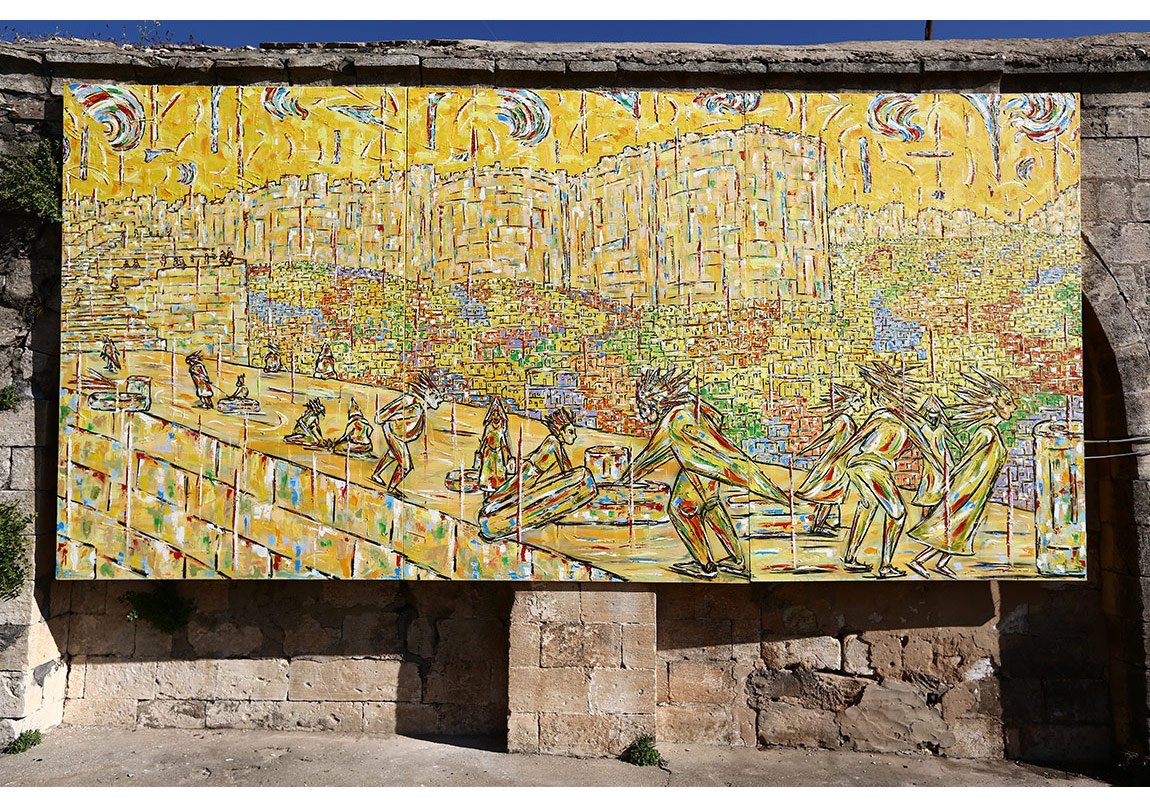
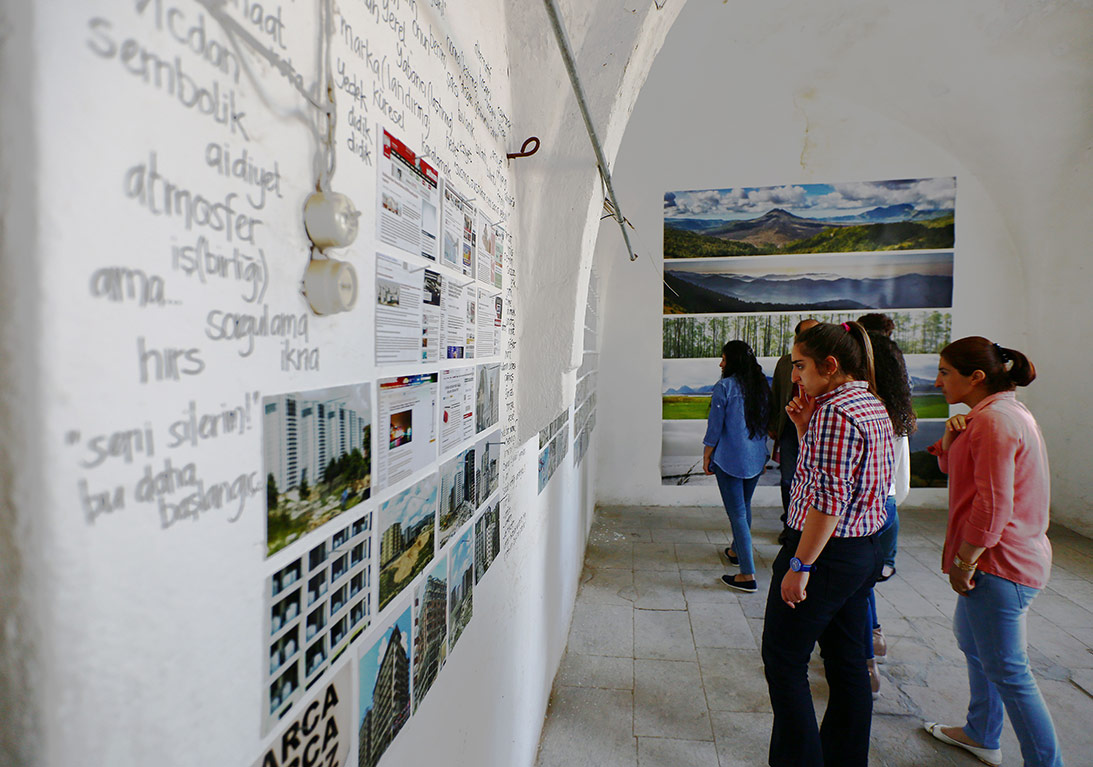
Ferhat Özgür: In 2014, we met as a group in Mardin with Döne Otyam, Fırat Arapoğlu, Claudia Segura Campis, Ferhat Satıcı and Hülya Özdemir. At this meeting, we tried to make decisions about both old works that would be included in the biennial as well as commissioned works that would complement the conceptual framework. We selected artists who would be able to stay in Mardin and conduct their research for different lengths of time, such as Stuart Brisley, Romain Kronenberg, Thierry Payet, Elena Bajo, Lena Von Lapschina, Hakan Kırdar, Dilara Akay as well as artists who focused on the concept of "Mythologies" such as Sait Tunç, Özlem Günyol-Mustafa Kunt, Yavuz Tanyeli, Ursula Mayer, Isabel Rocamora and Aysel Alver, adding on to each other organically. It was as if the magic of Mesopotamia, its narratives, talismans, and oral histories became a force by itself, connecting them to each other. This exhibition in a way visualizes our natural need for stories and narratives through the vantage point Mesopotamia.
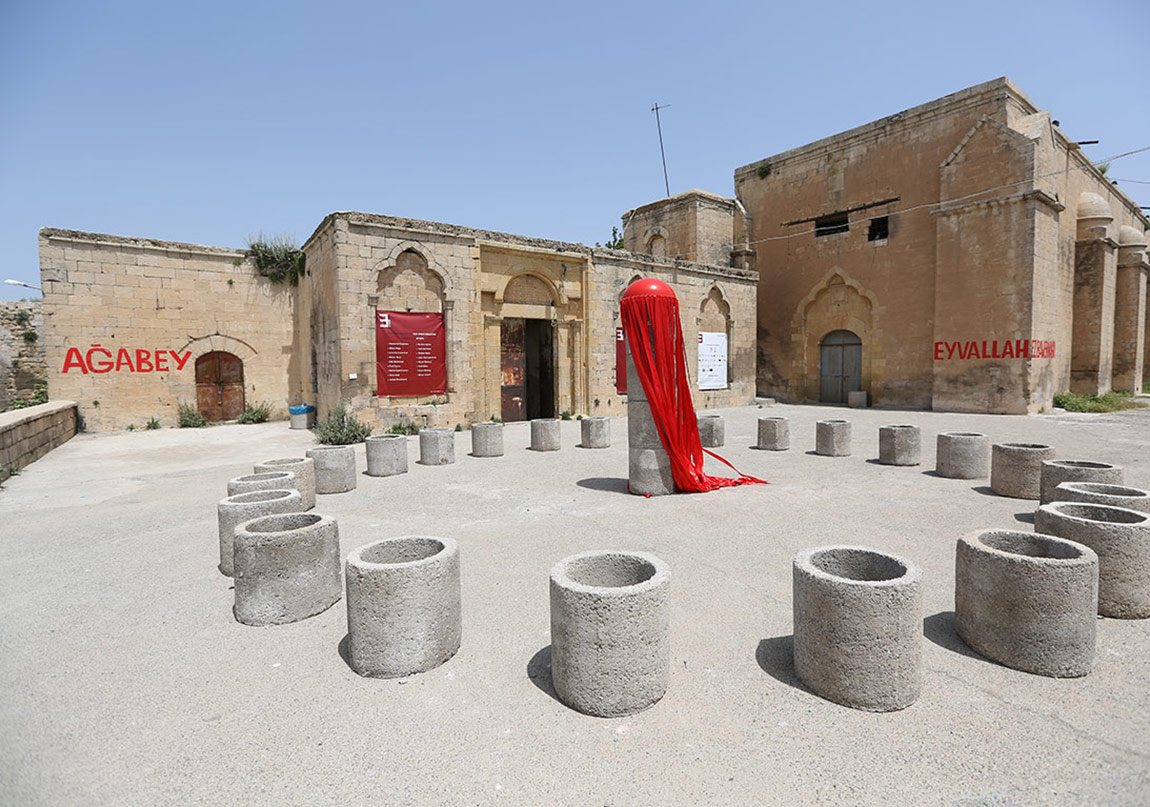
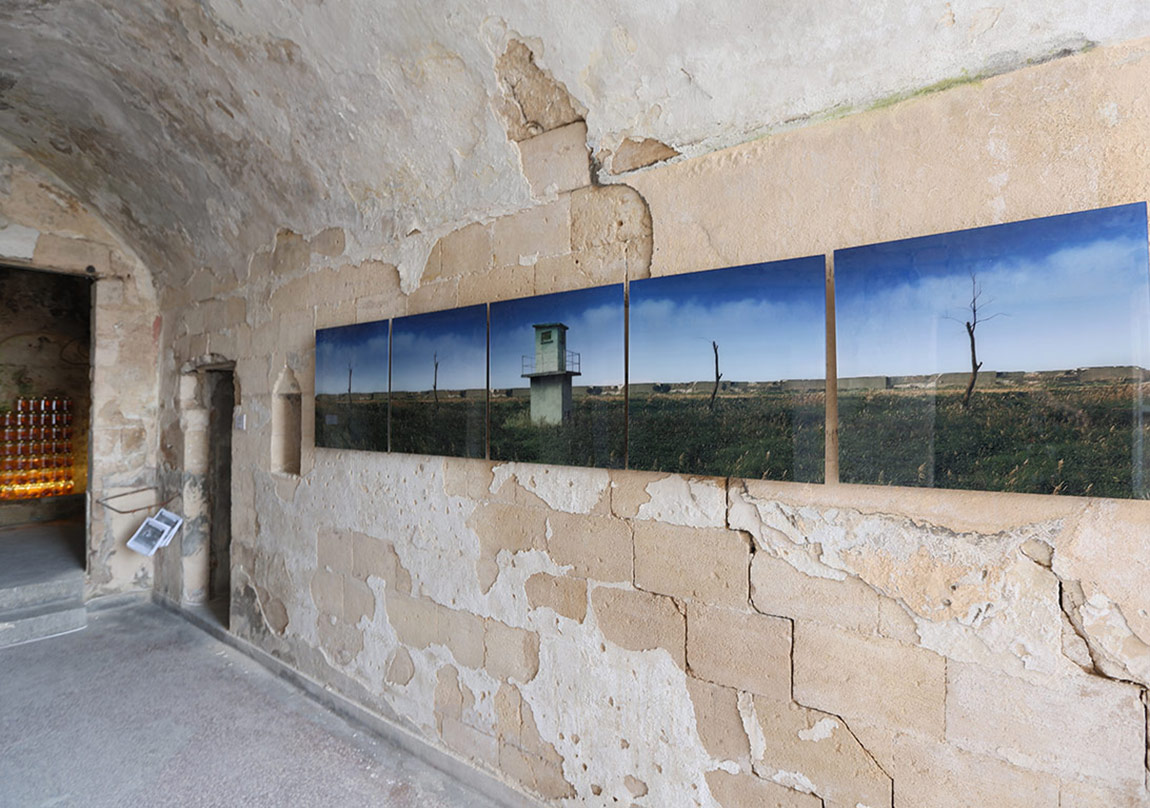
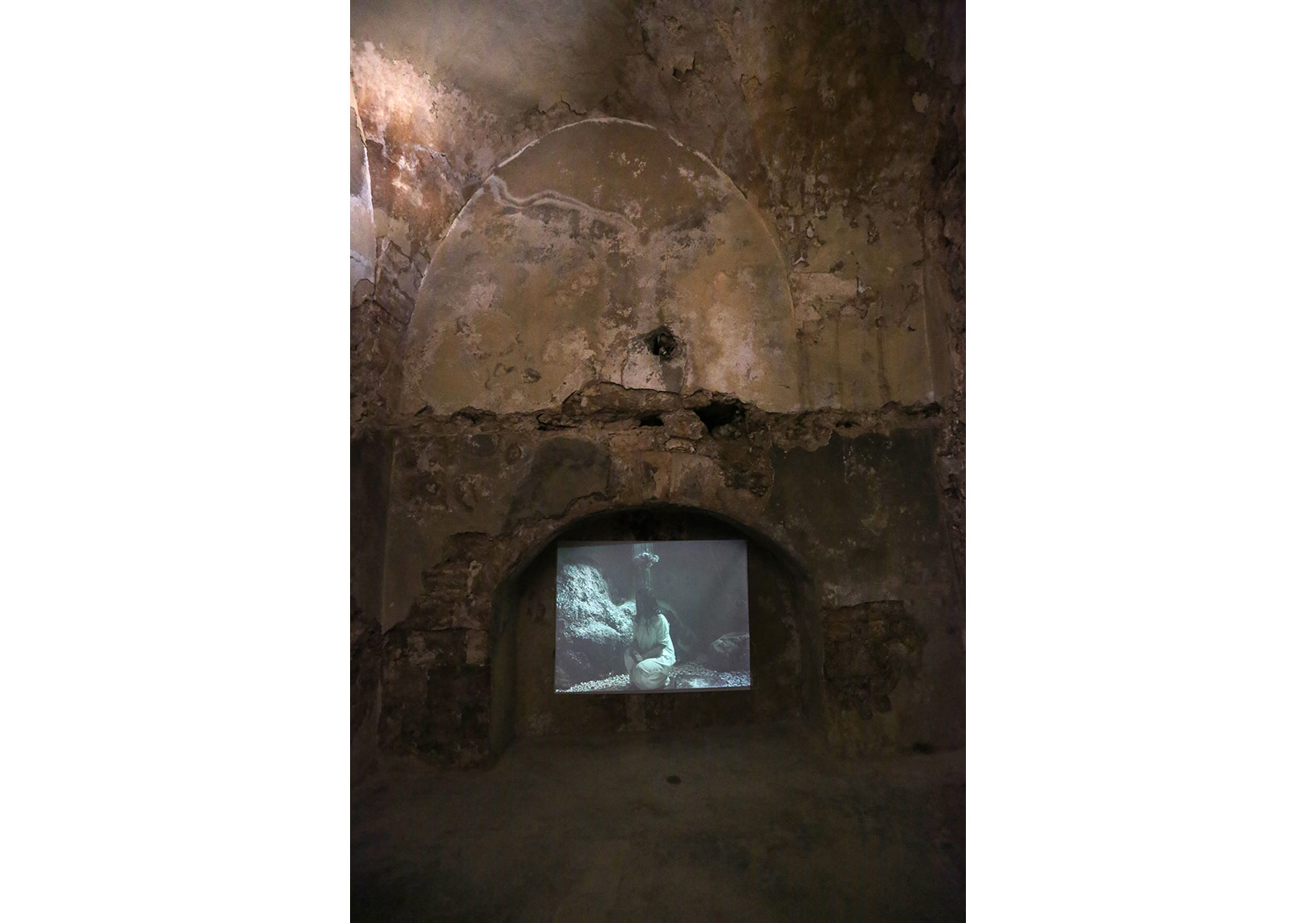
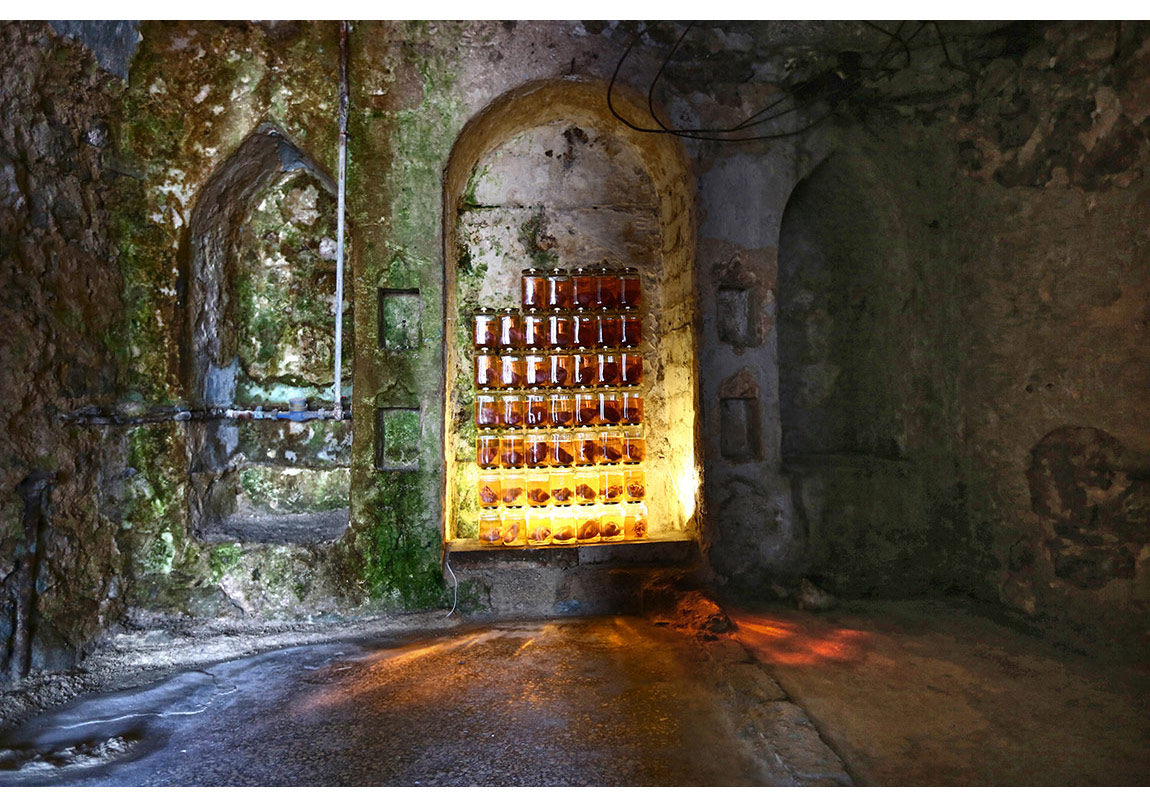
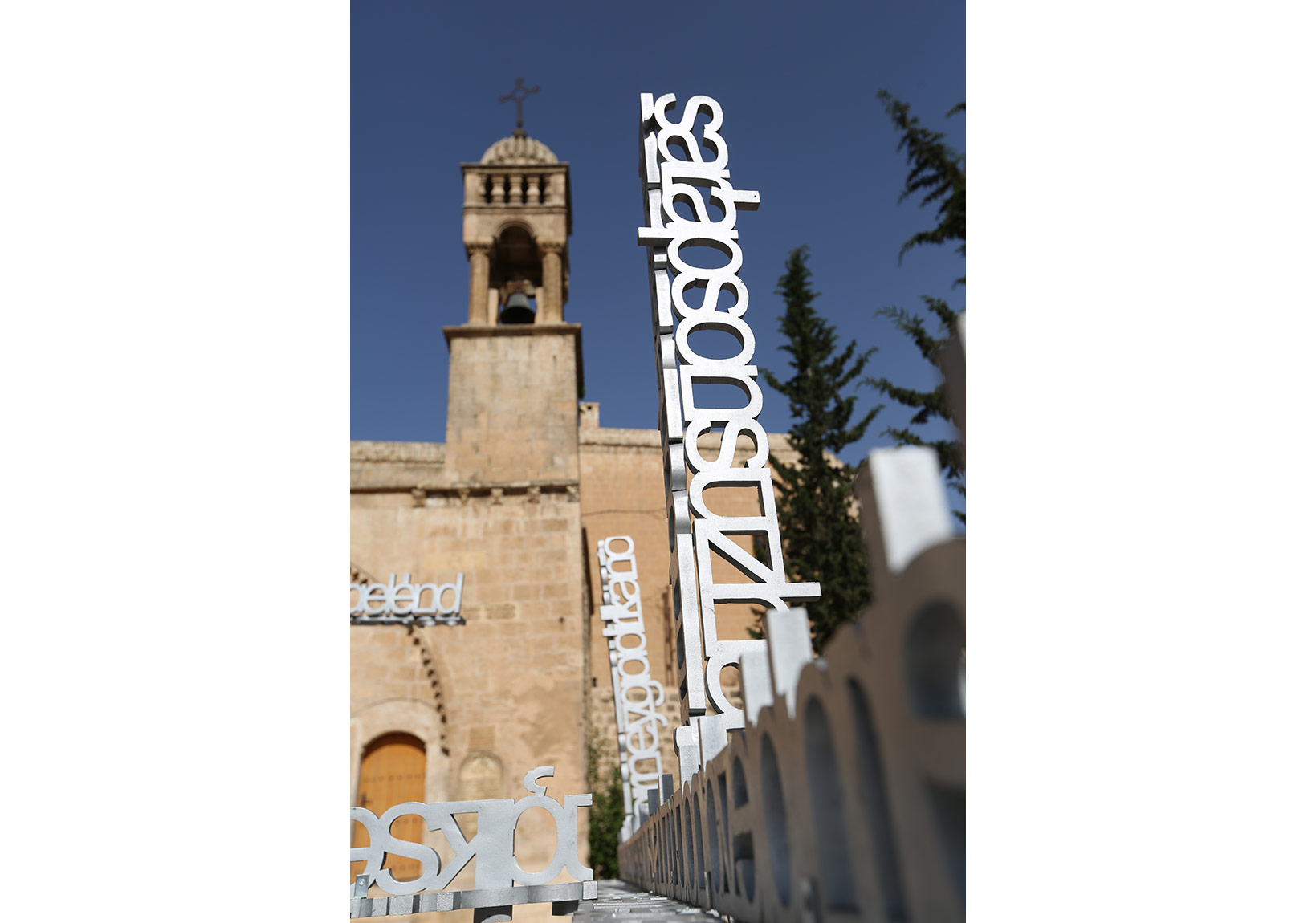
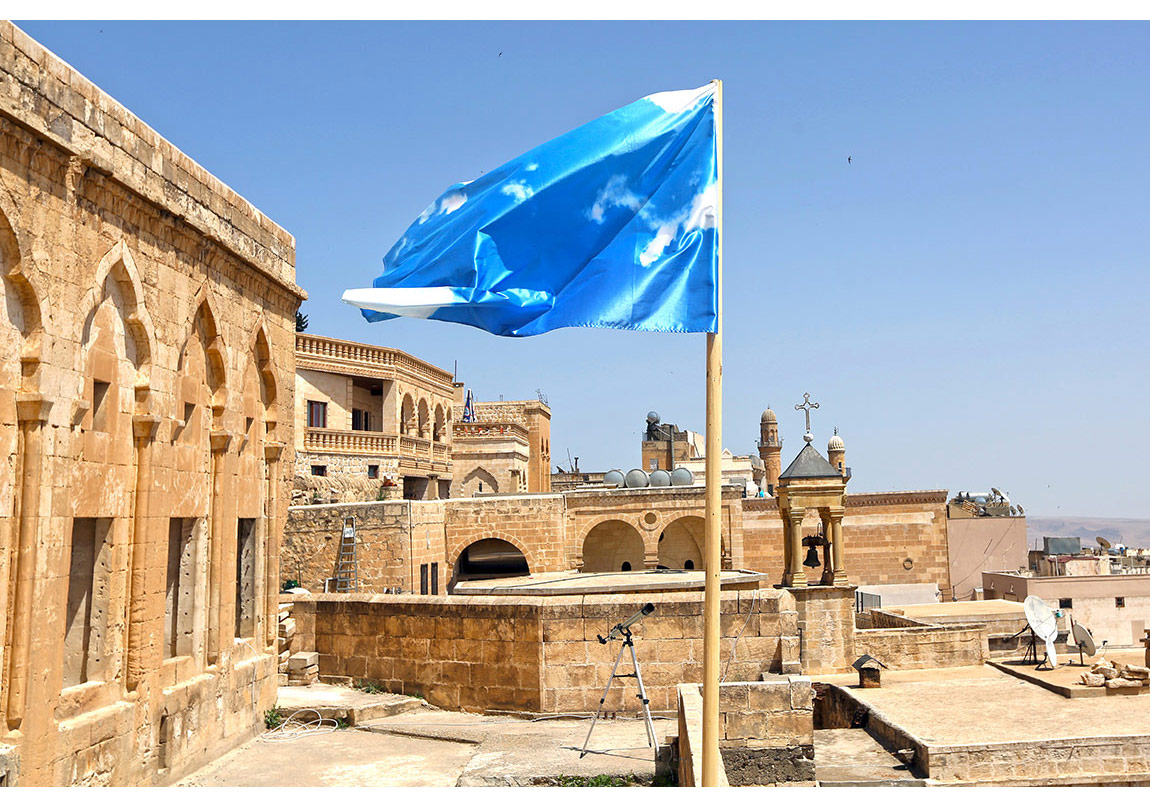
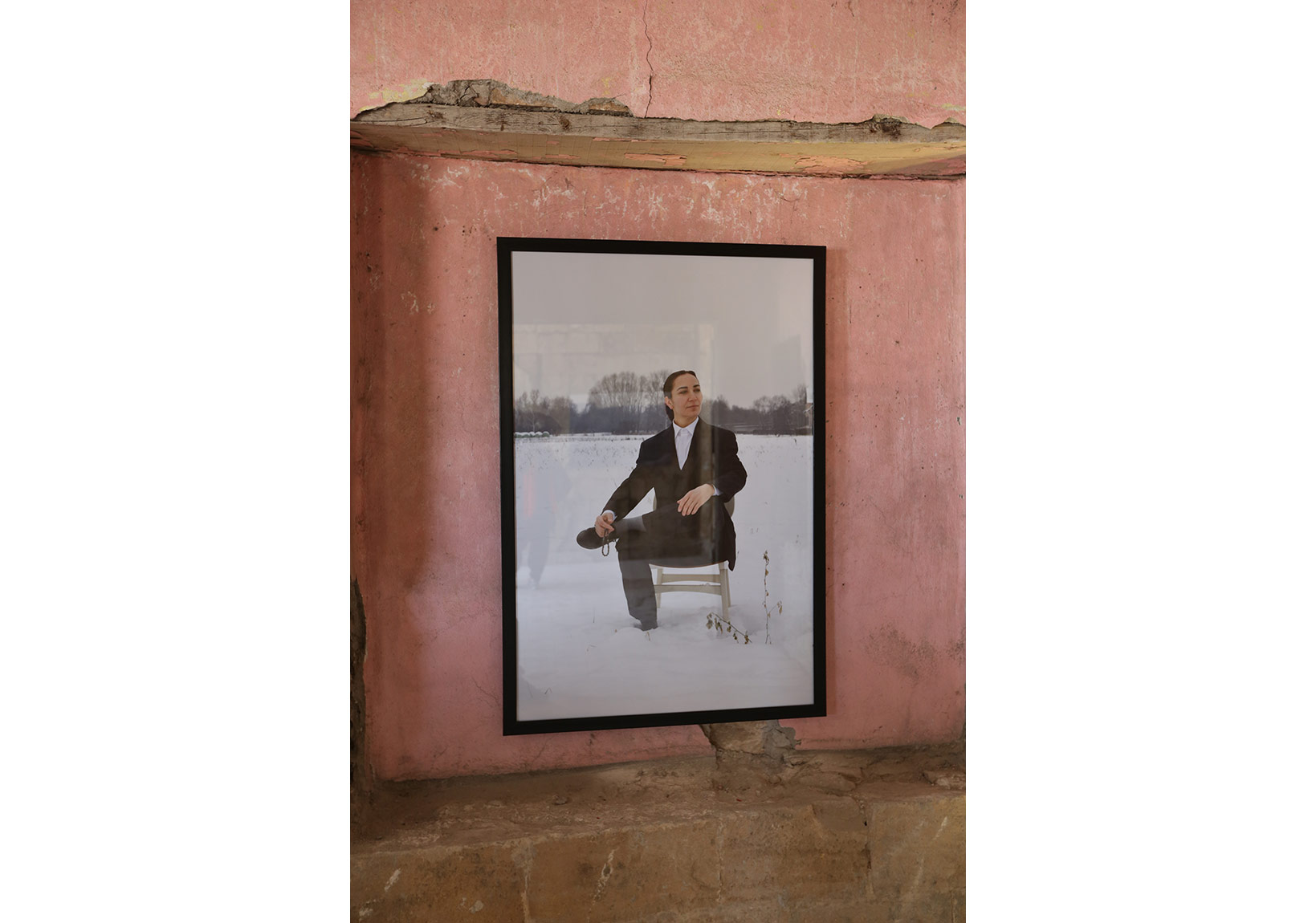
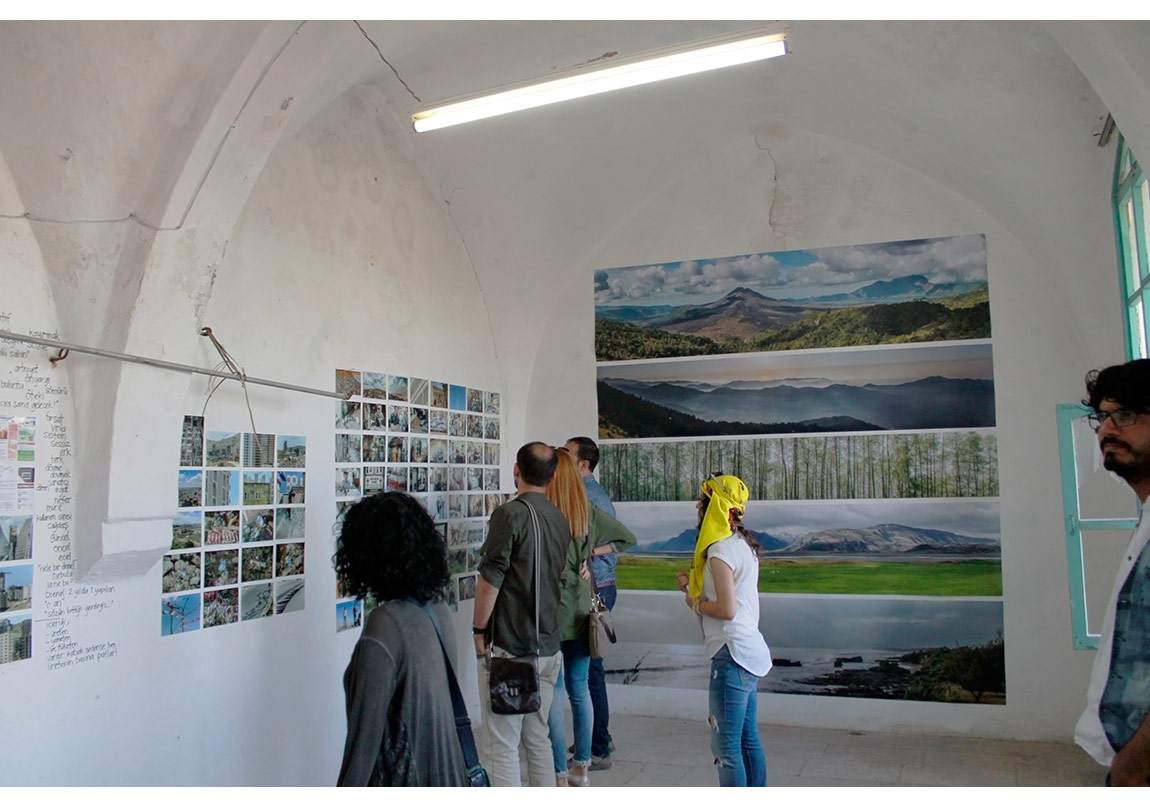
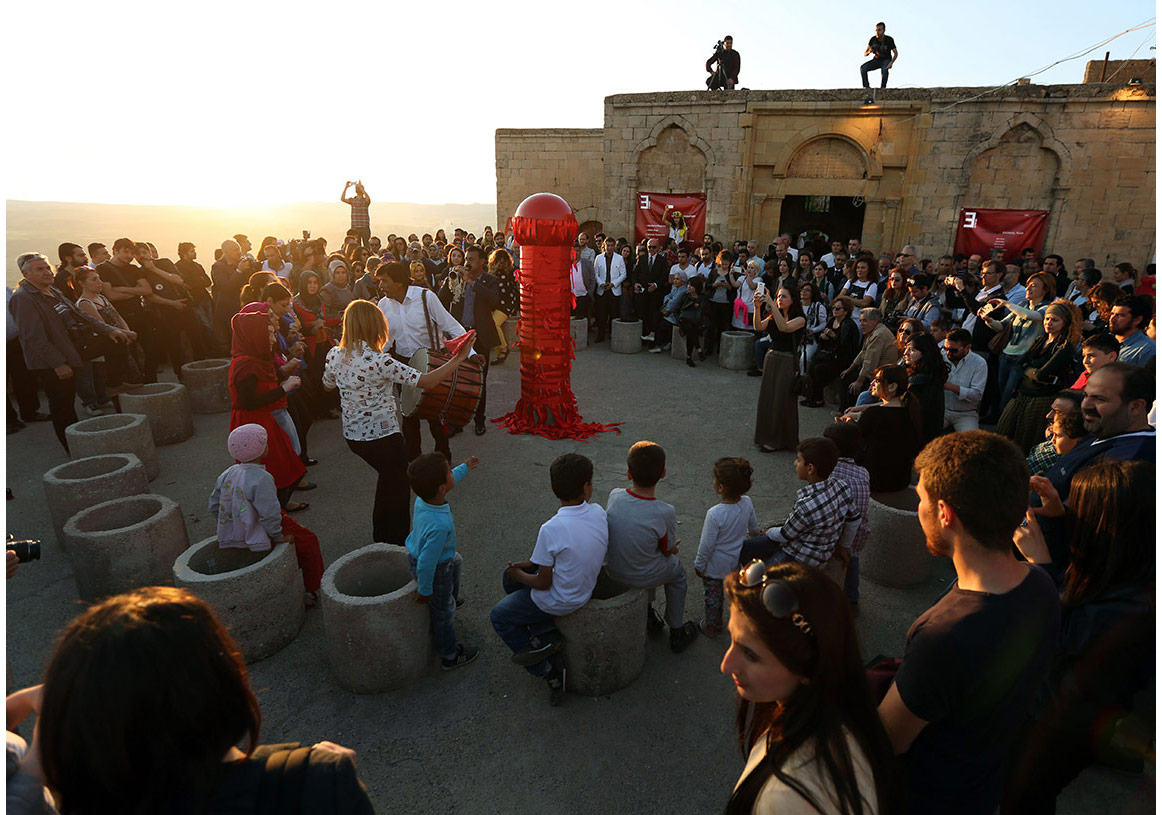
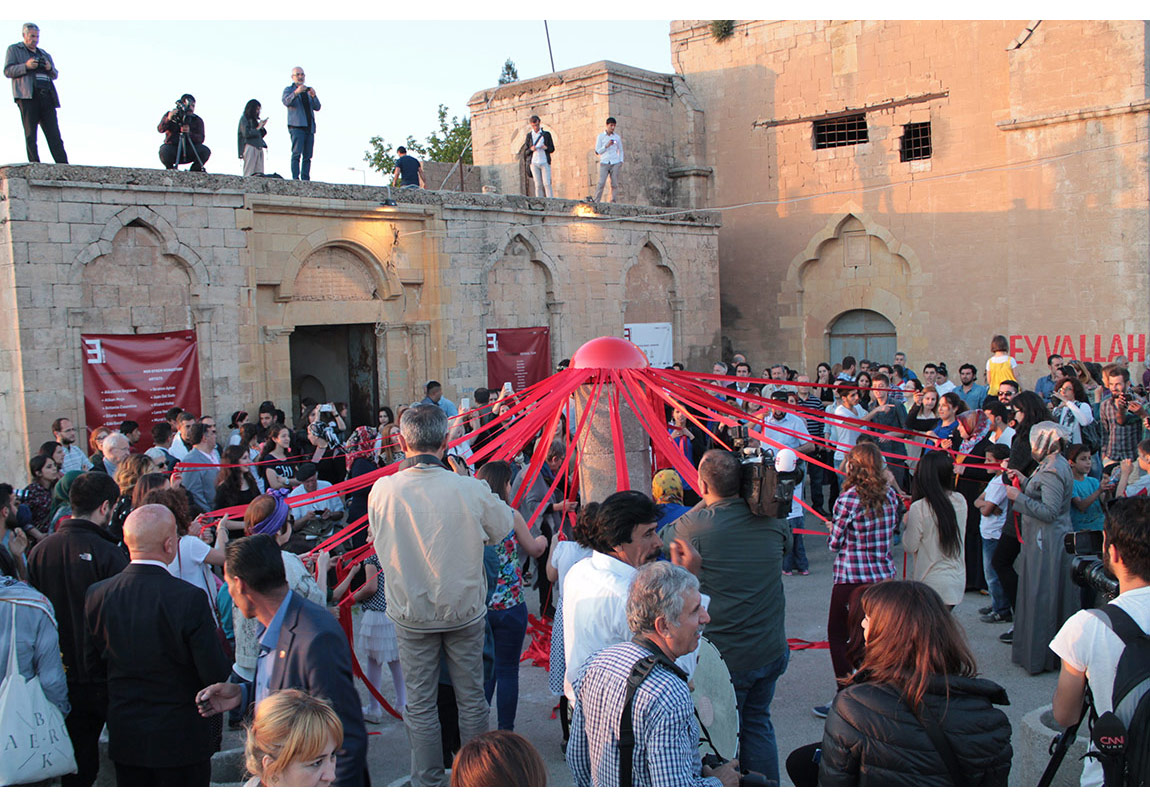
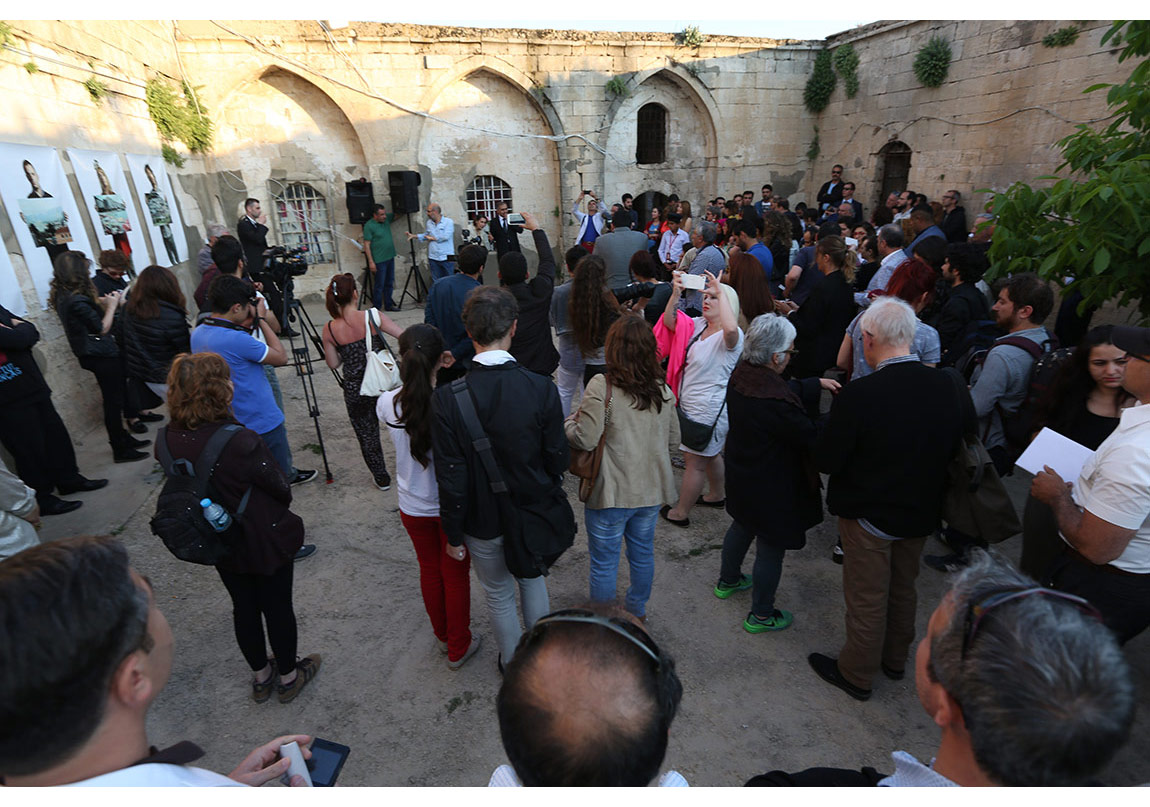
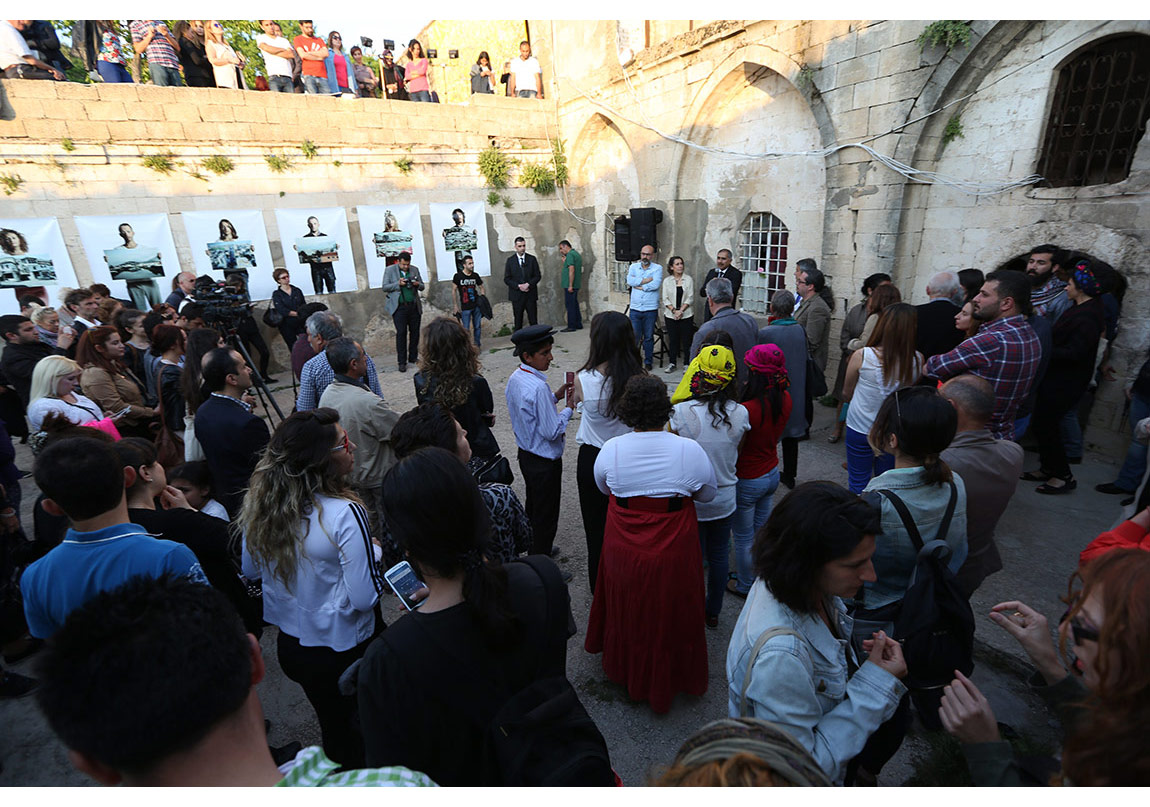
The works can be seen in spaces including Mor Efrem Convent, German Quarters, Keldani Church, Mardin Museum, Videoist, Cun Cinema, Mardin Bazaar. When placing the works, what were your priorities? This question is very important as the works evoked a feeling of having been there before.
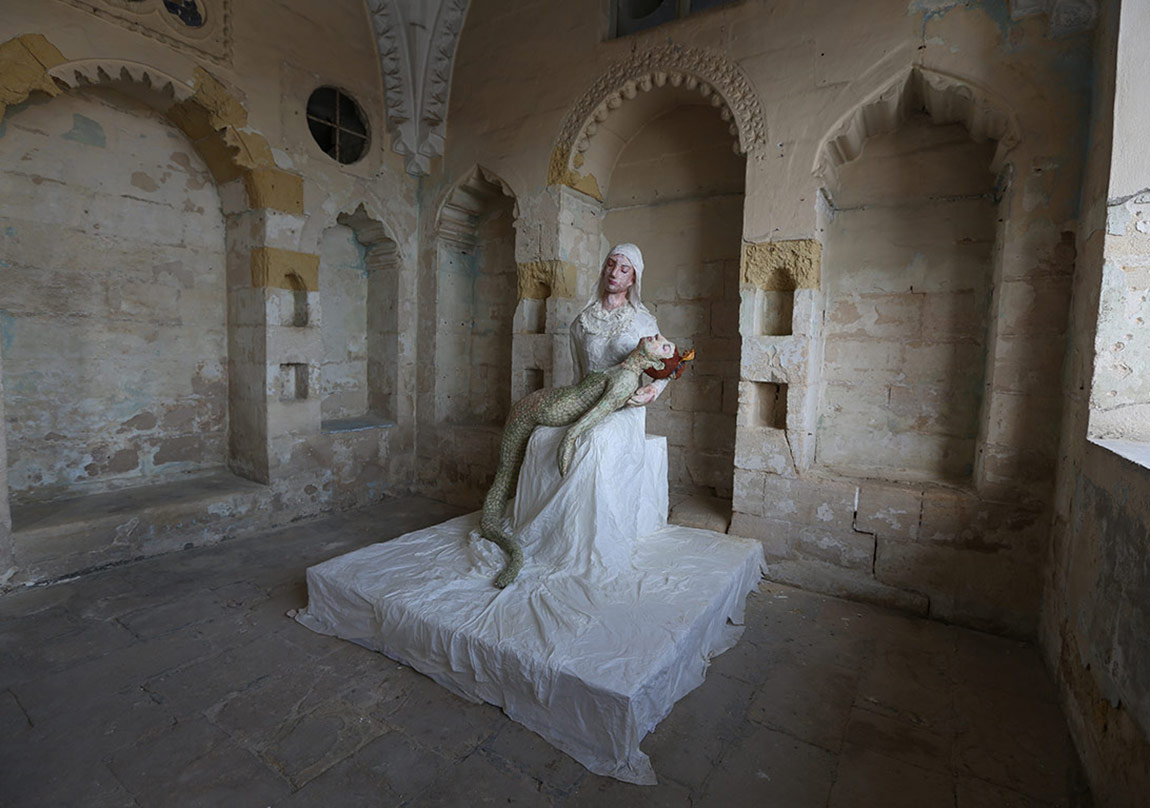
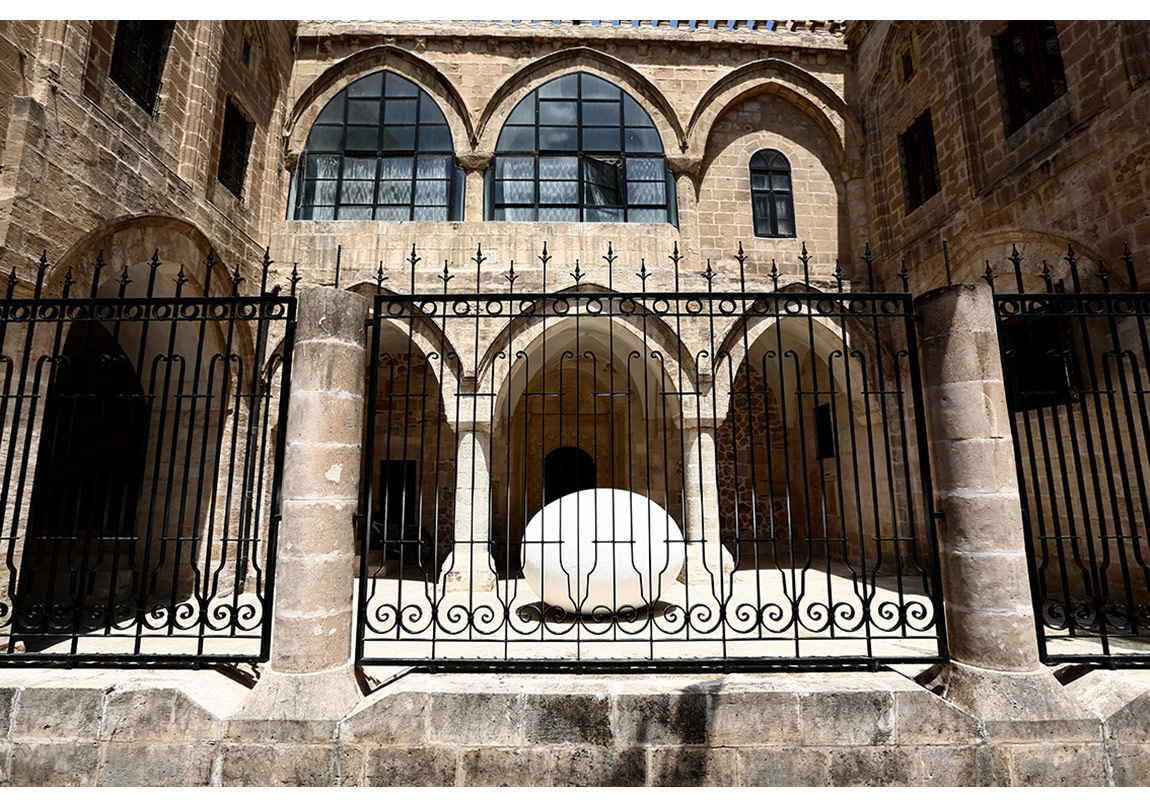
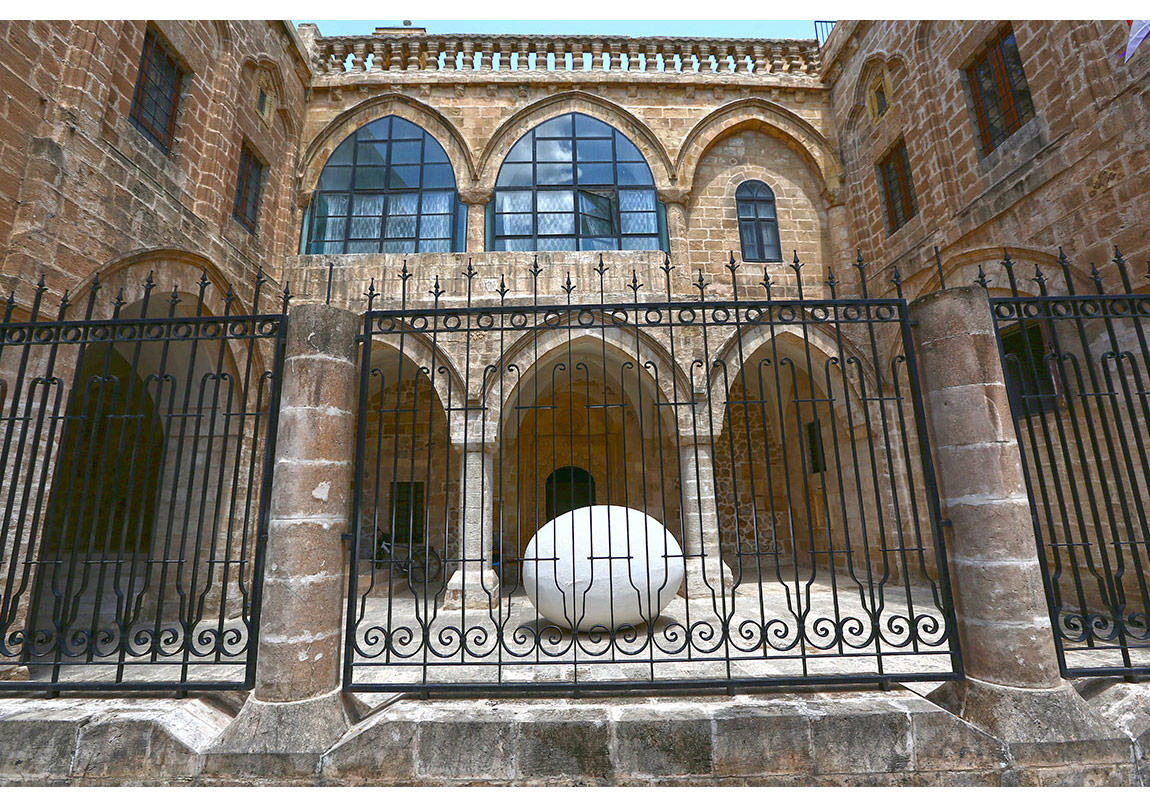
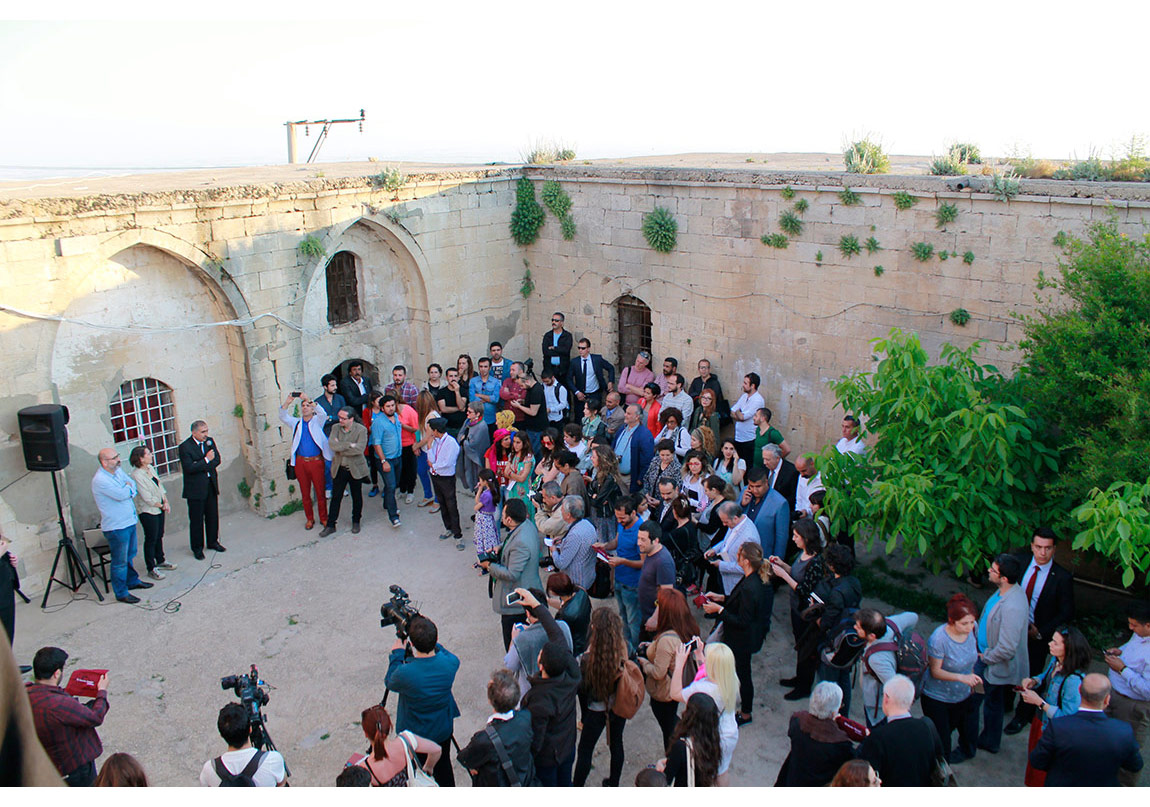
Döne Otyam: I am very happy to hear this from you since the works really did become one with the spaces we used. We worked on the installation for approximately six months before the postponement. When the biennial was postponed, we kept working and when the actual installation began, we did not make that many changes. The spaces were very difficult. At first, we confused the two main spaces while working on paper, but once we internalized the works and the spaces, we meticulously placed each work. With the help of our team and our graphic designer who lives there, Hakan Irmak, and artist Canan Budak, we achieved the result that we wanted. As they knew Mardin and the spaces really well, the placements of the works were very accurate. Sometimes, we found a space for the work and then got in touch with the space owners. The most important aspect of exhibition was the security of the works. We kept this in mind, but perhaps due to the magic of Mardin, we had strange encounters. For example, we wanted to exhibit Yaygara's large-scale egg sculpture "Kuluçuka" in an open space. Keldani Church was exactly what we wanted. This site would also help with securing the work. When we found out that the ceiling tiles of the Keldani Church were pasted on with egg whites and the sculpture resembled an easter egg, I believed that the work found its own site. Yaygara gifted this sculpture to the church.
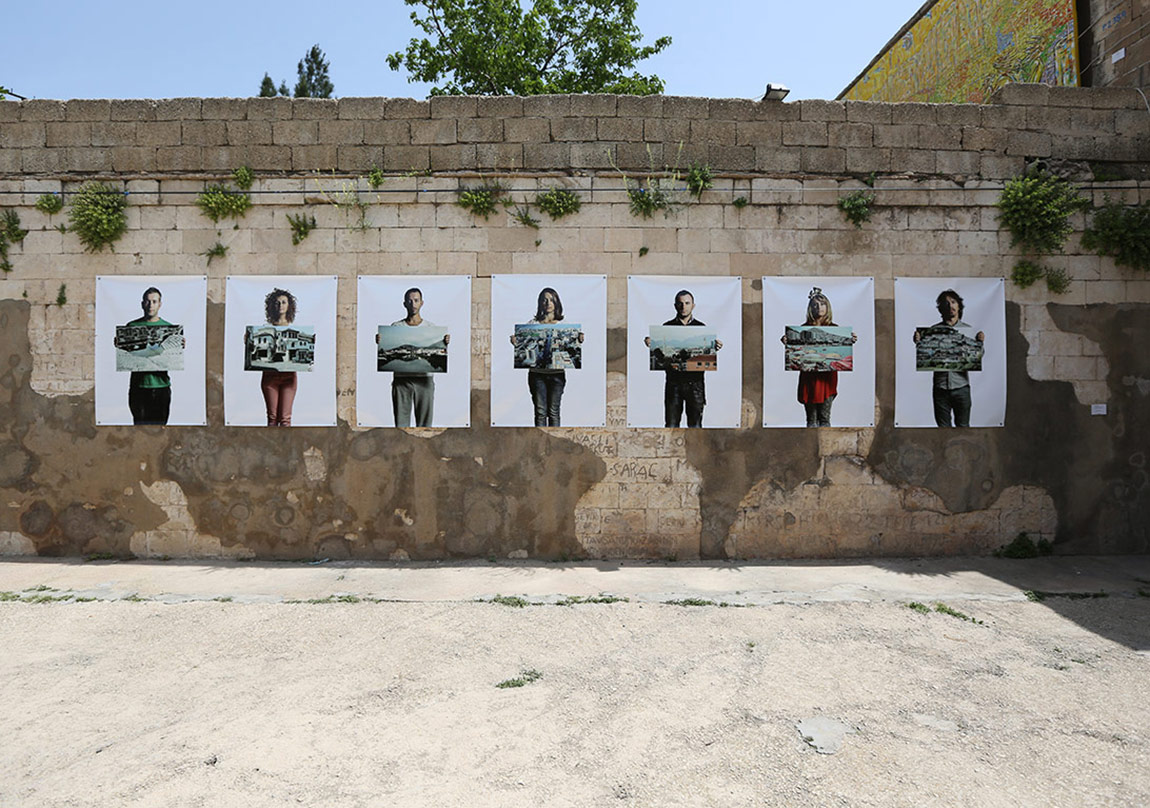
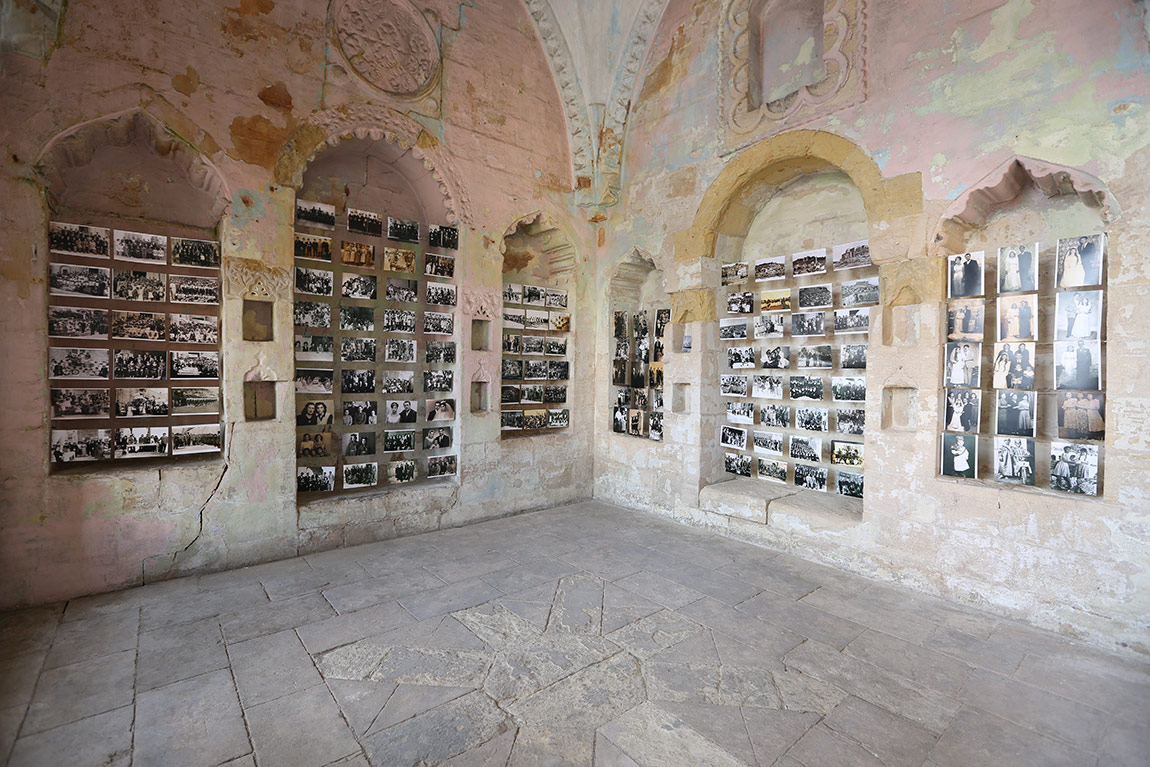
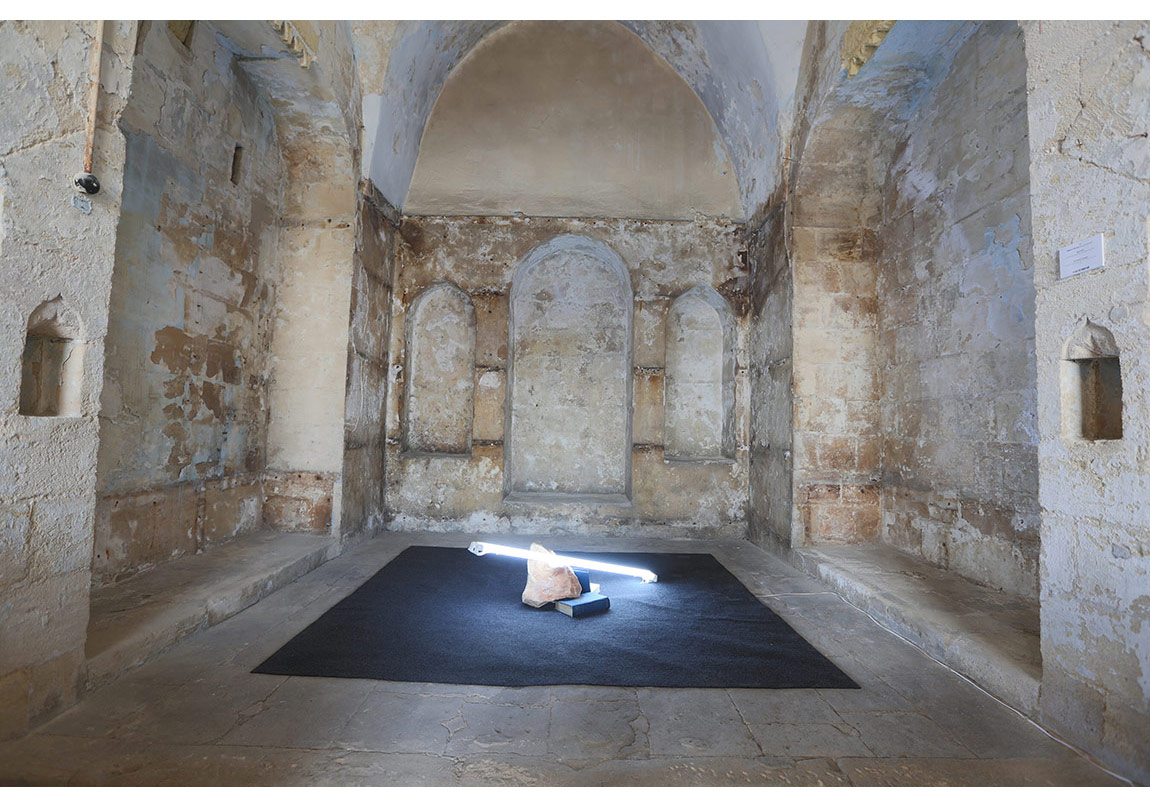
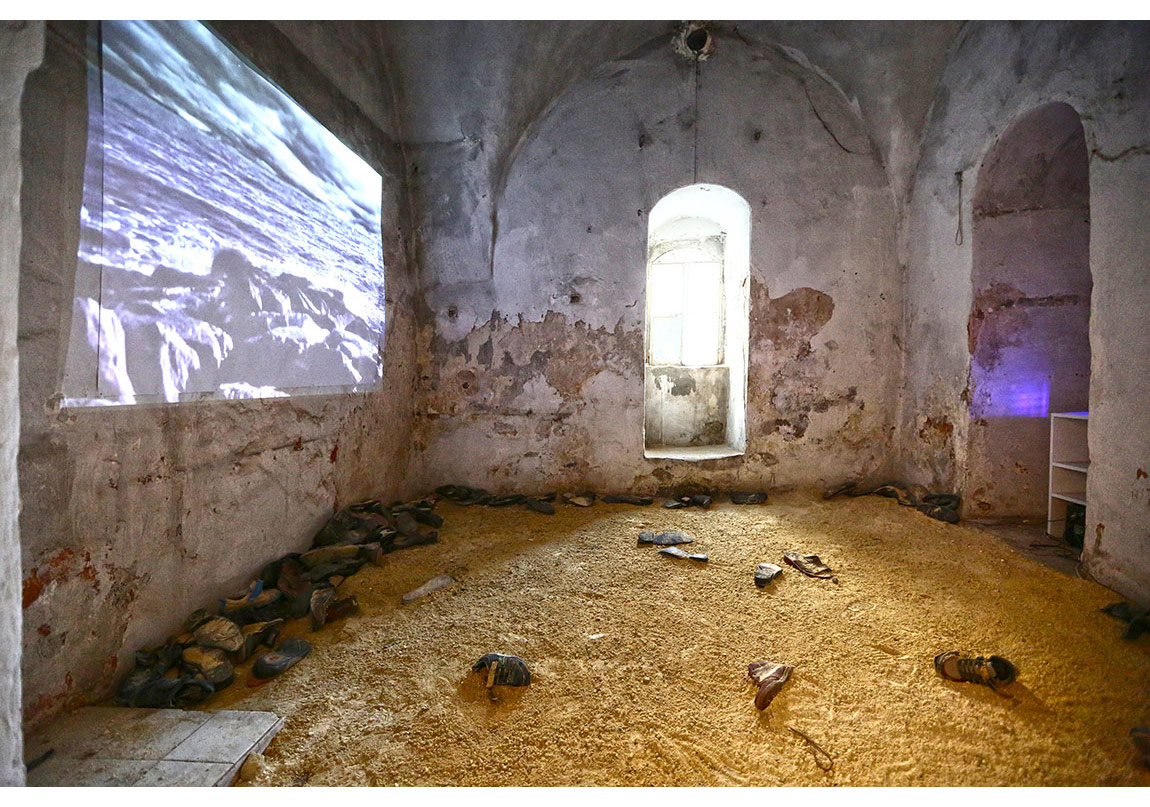
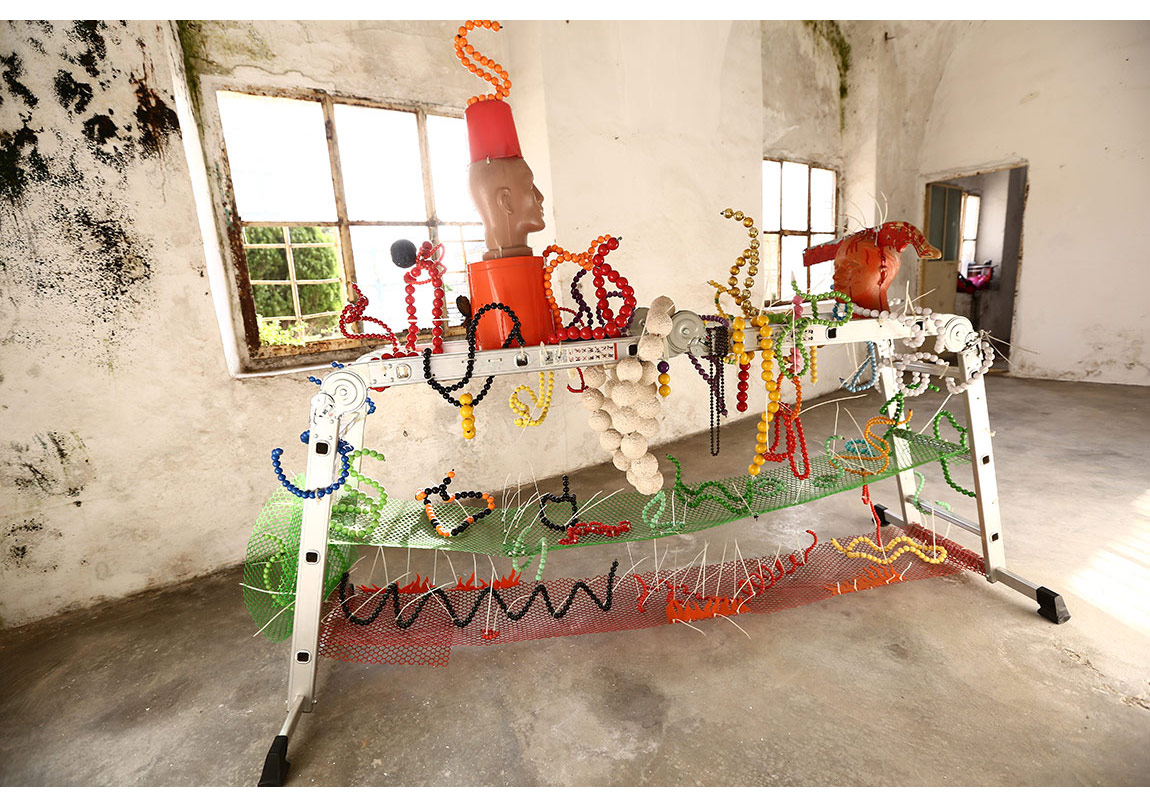
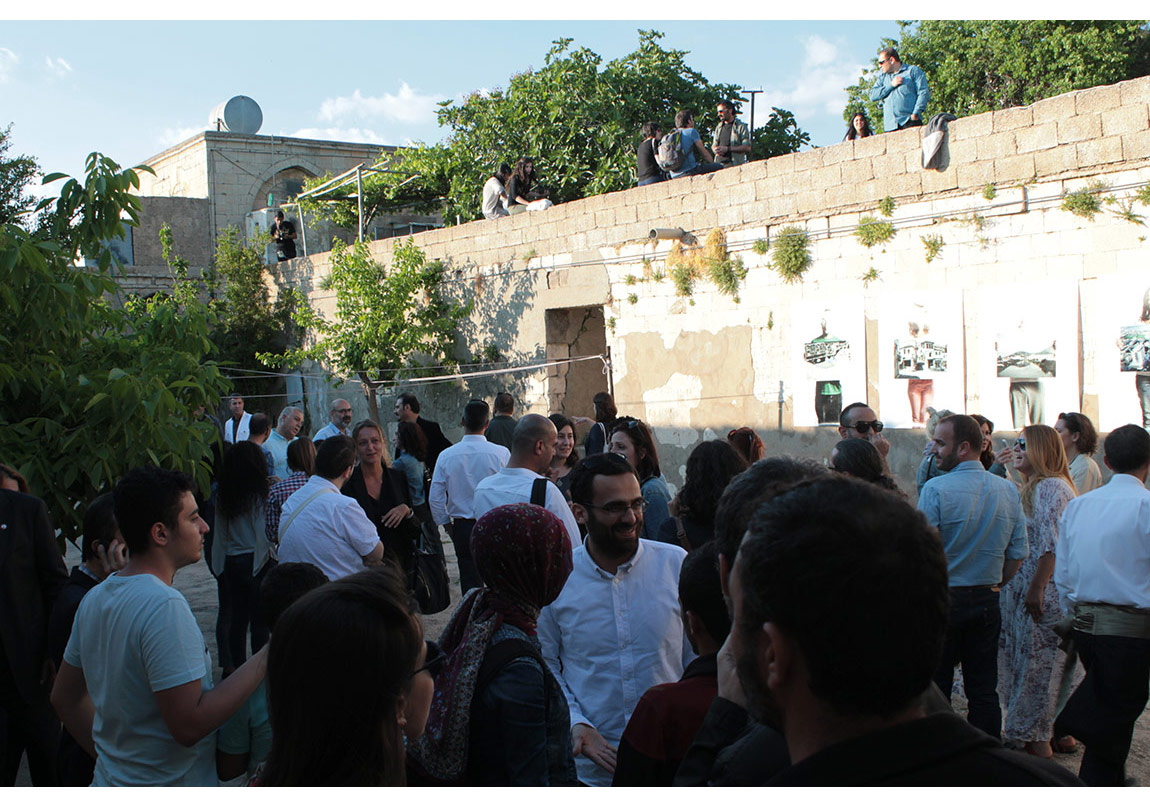
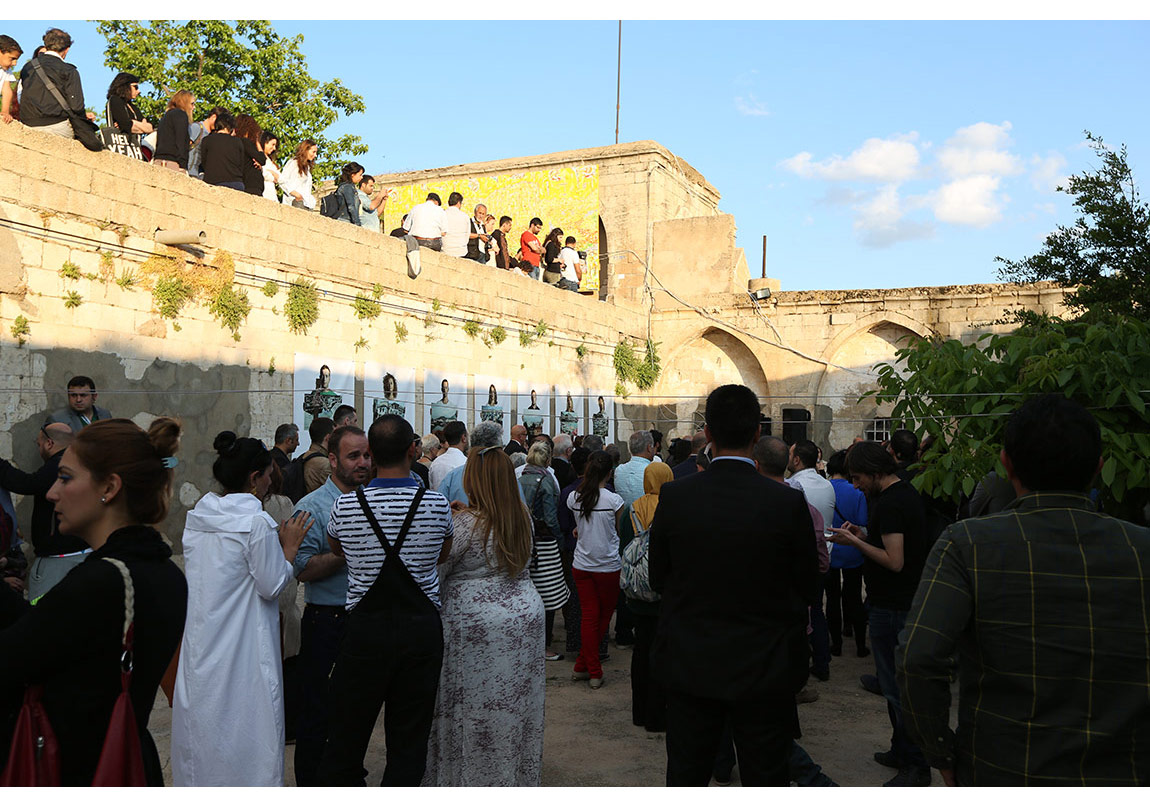
When we exhibited a small section of the invaluable photography archive of Sait Tunç at the German Quarters, we experienced a similar situation. As you know, this archive consists of photographs of the Mardin community. This archive is a testament to a period of time in Mardin; the owner of the German Quarters found the photograph of his mother here. What is even more interesting is that the photograph was exhibited in his mother's room out of all the rooms in the Quarters. Nadi Güler wanted to exhibit his hat in a plexiglass display case. In the room that we had set aside for him in Mor Efrem, there was a very old hook that we used instead. For the video works, some of the artists decided to use the stones in the spaces to make seating for viewers. In some cases, we used the already-existing nails in the spaces. For example, with Deniz Aktaş. Dilara Akay, Elena Bajo, Juan Del Gado, Stuart Brisley and many other artists related sand, debris, other discarded materials through small interventions into the space.
The 3rd Mardin Biennial is organized by the Mardin Cinema Association. Should we talk about the affinities and contributions of the association within the context of the biennial?
Döne Otyam: Mardin Cinema Association has been with us since the first biennial. I had met them through a coincidence and since then, we have realized all of the biennials together. If I hadn't met them during the first biennial, we would not have reached today. If you do not seek out local support in this kind of large-scale organizing, you cannot be successful. Throughout the last six years, we have professionalized and the biennial is now theirs. It is up to us to now give them our support, the way they supported us at the beginning. Our roles are switched now.
What I viewed at the 3rd Mardin Biennial proposed a future that is not only read with the whole city, but that also brought together rather than separating and organizing. All of the pains, deaths, abandonments remain in memory, but the biennial, through the works that it marks, is able to transform these pains with craftsmen and with life into poesis. Your weaving with memory is very tight. Could mythologies be a hope for the future?
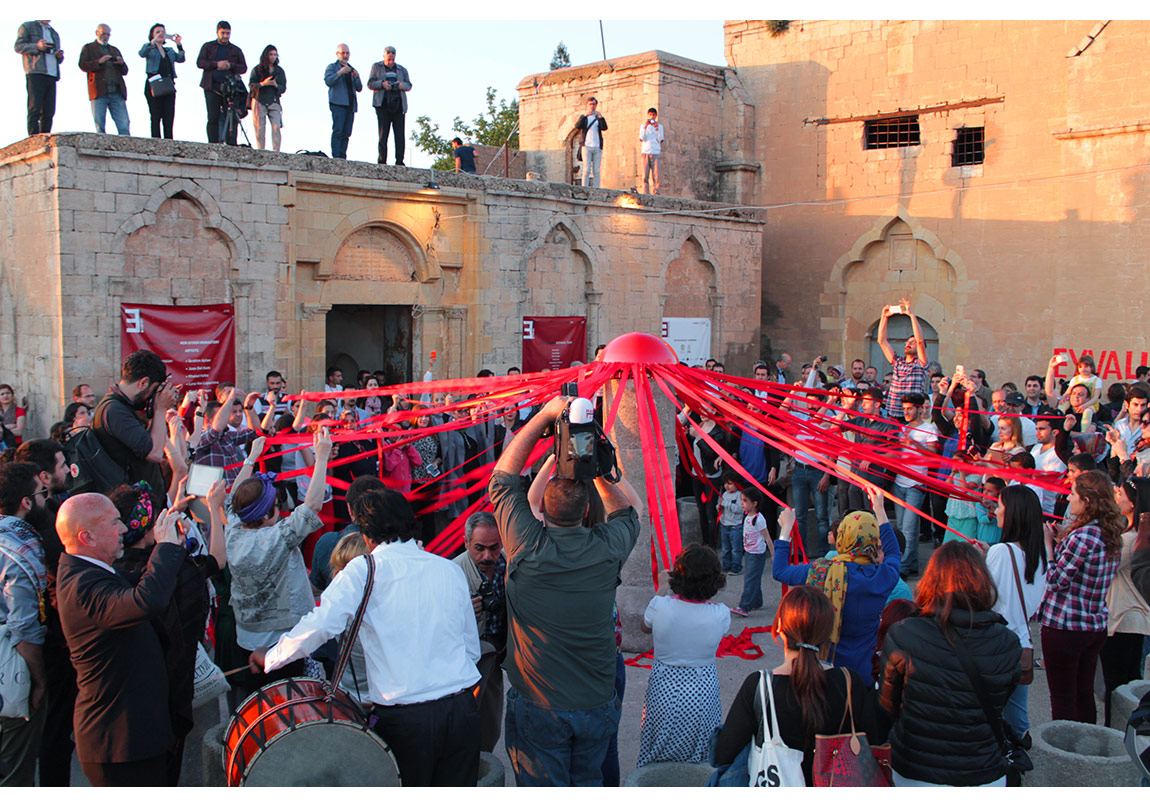
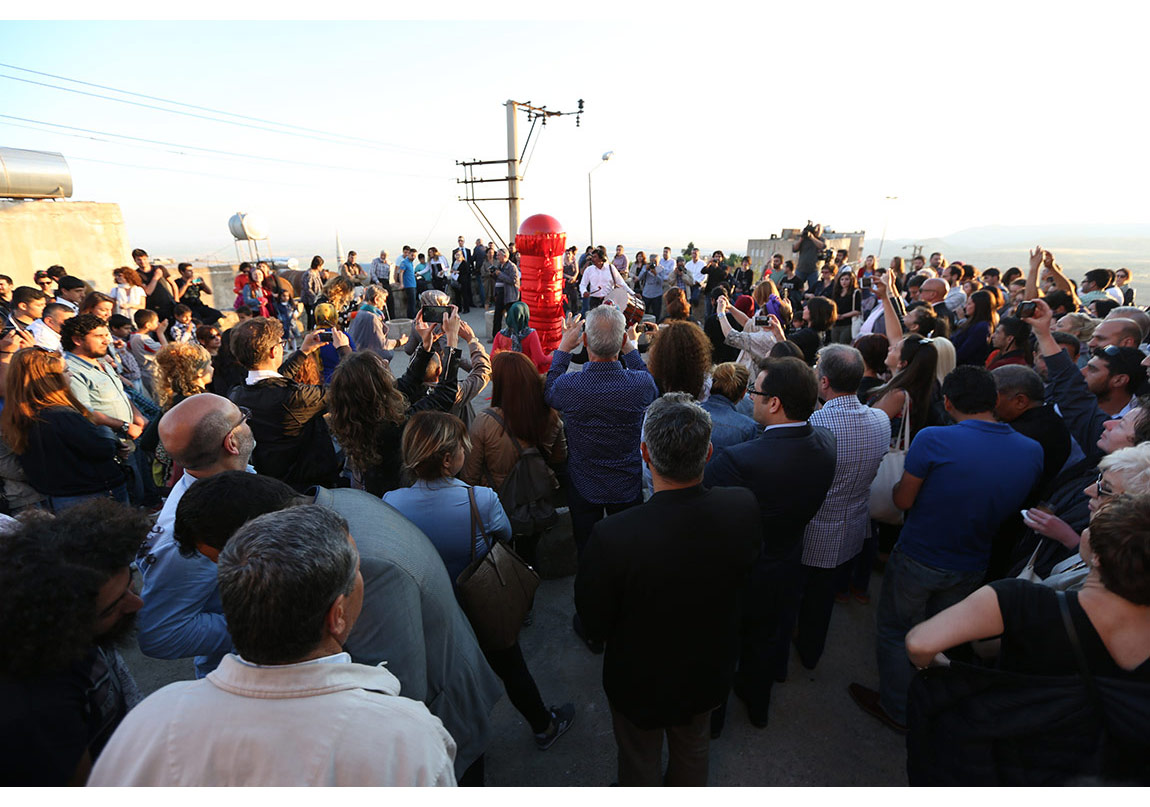
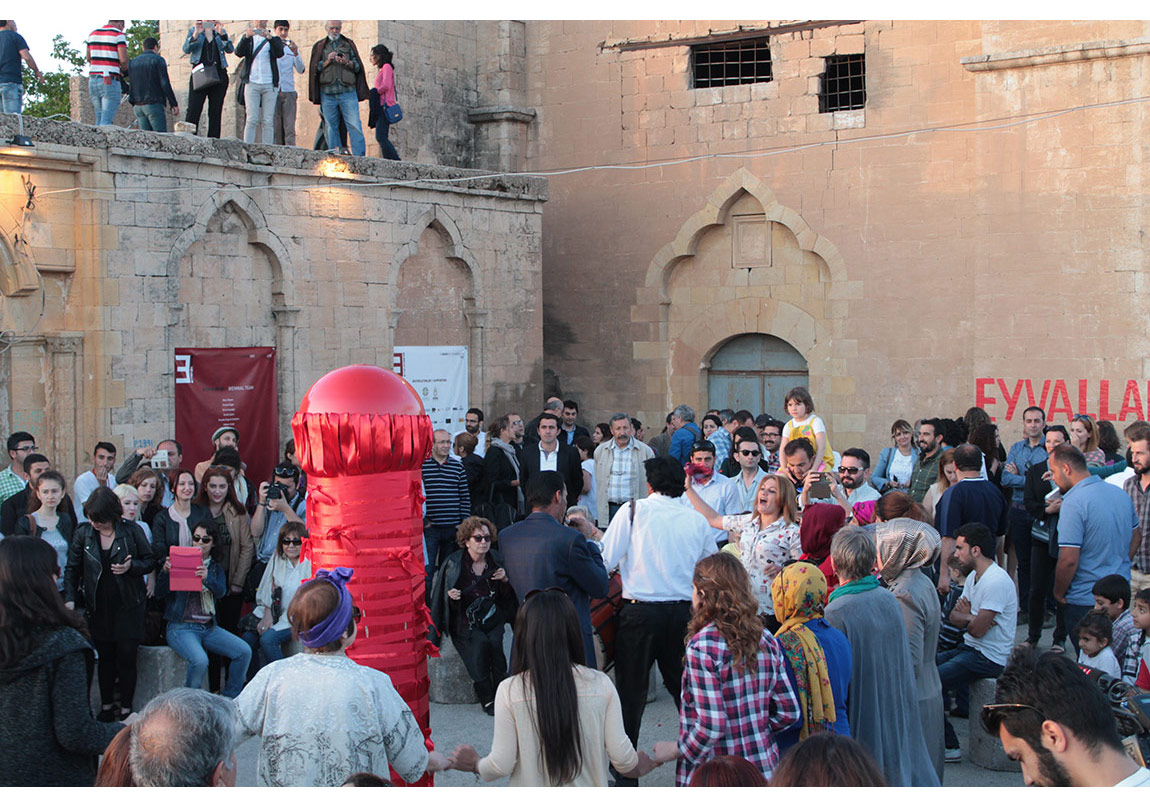
Fırat Arapoğlu: Here, a counter alternative to the dominant biennial model was proposed. The cultural atmosphere, the architectural and all other urban details being reduced down to the funds for a large-scale exhibition, against an exhibition that is "culturally elitist," imposed on the community in Mardin are resisted. The branding of Mardin through an "autocratic" curatorial design was rejected and instead, the biennial became a Mardin feast, a festival that took as its basis collaboration. In this organization, there is works based not only on mythology, but also on contemporary history, minor narratives, craftsmanship, real politik, culture, gender. When we say mythology, that includes contemporary myths as well, right? This, in and of itself, is filled with hopes for the future.
;