First of all, can you introduce yourselves briefly?
We are Caitlind r.c. Brown + Wayne Garrett, artists and collaborators living in Calgary, Canada. Our practice often consists of large-scale, light-based installations, frequently built from re-contextualized domestic objects. Through our work we explore themes of public interaction, social effects of light, community collaboration, and play.
You are using lights and reflections that give illusion effect to amaze the audience… You create for people to have an extraordinary experience. Would you tell us about your other works - Cloud, New Moon and Solar Flare?
Many of our past works focus on universal imagery – CLOUD, NEW MOON, and SOLAR FLARE all reference naturally occurring celestial forms (clouds, moons, and suns). While whimsical and even cartoony, these forms are easily recognized by people all over the world, transcending language barriers, cultural differences, and geographic distance. Similarly, our initial attraction to light as a medium was based on the intuitive allure of shiny objects: physiologically, human beings are drawn to light as moths to a flame. Many of our works use familiar forms and attractive mediums as an opening for more intimate social exchanges between strangers, creating gateways to a shared experience that we hope will ultimately contribute to stronger and more connected communities.
It seems that you give people an opportunity into a world that is mysterious and full of light. How did this idea come about? Was is a co-decision? Do you always work as a team?
As our practice has developed, we’ve grown naturally in the direction of light-based work. Our first collaborations were film-based, incorporating crystals and mirrors to manipulate the way that projected films could be seen (expanded cinema). The idea of creating a more expansive environment is our attempt to engage the public, creating space for epiphanies and a critical shift of perspective. When you invite the audience to physically enter the work, it creates a strong connection, empowering the viewer to become an integral part of the art – a performer of sorts. This applies to our interactive artworks (CLOUD, NEW MOON, etc) as well as works where we are inviting viewers to engage in the process of sourcing materials (like eyeglasses, lights bulbs, wine bottles, and so forth).
We work regularly as a team, though we both have separate projects and areas of focus as well. Because we have divergent backgrounds (Wayne as a musician and machinist, Caitlind as an artist and curator), we initially began working together because of our differences, not our similarities. After several years, we’ve realized that we’re more the same than we are different – but our differences are still our greatest asset.
Do you design your work according to venues (places, spaces) or once you develop an idea do you adapt it to possible venues afterwards?
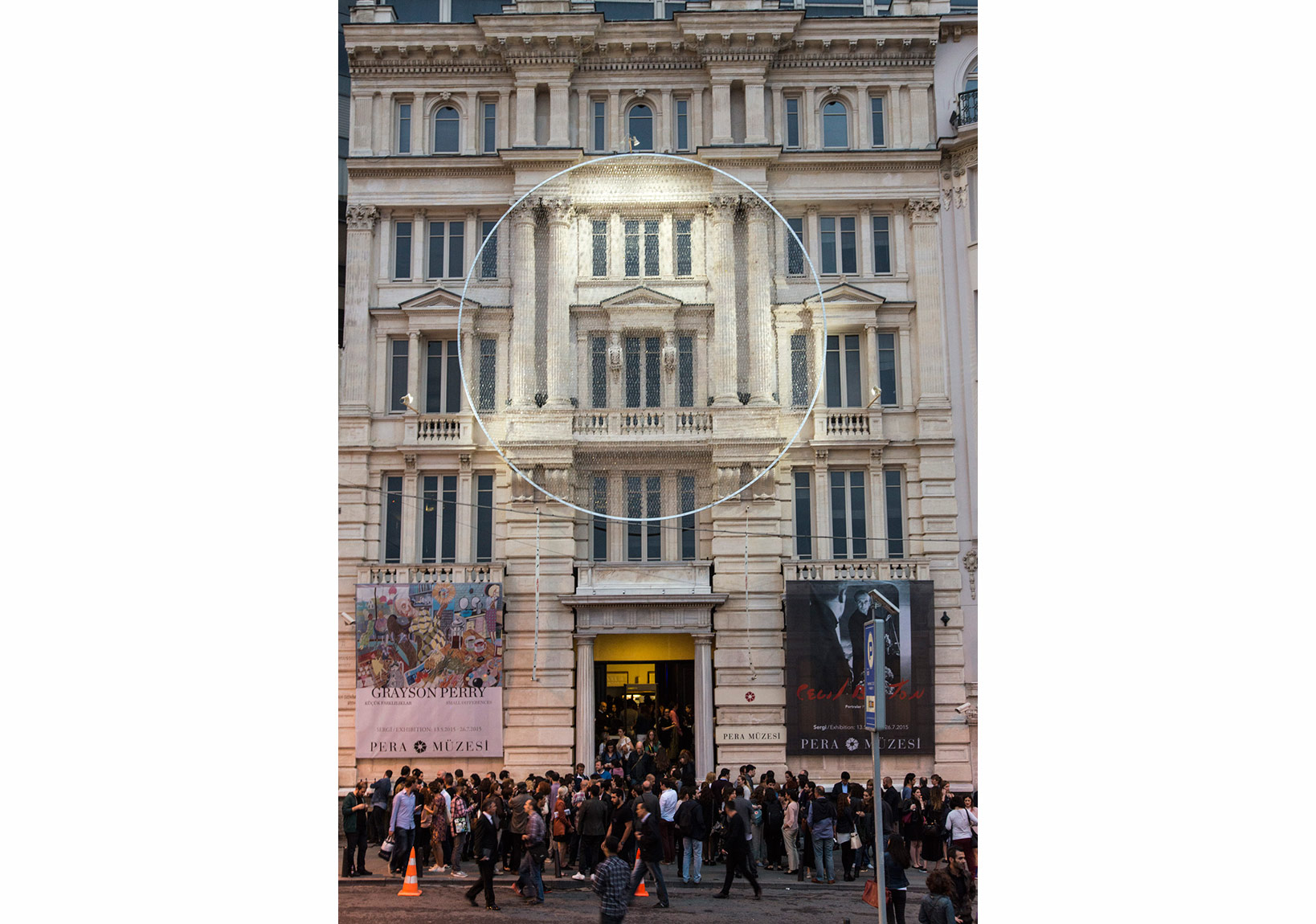
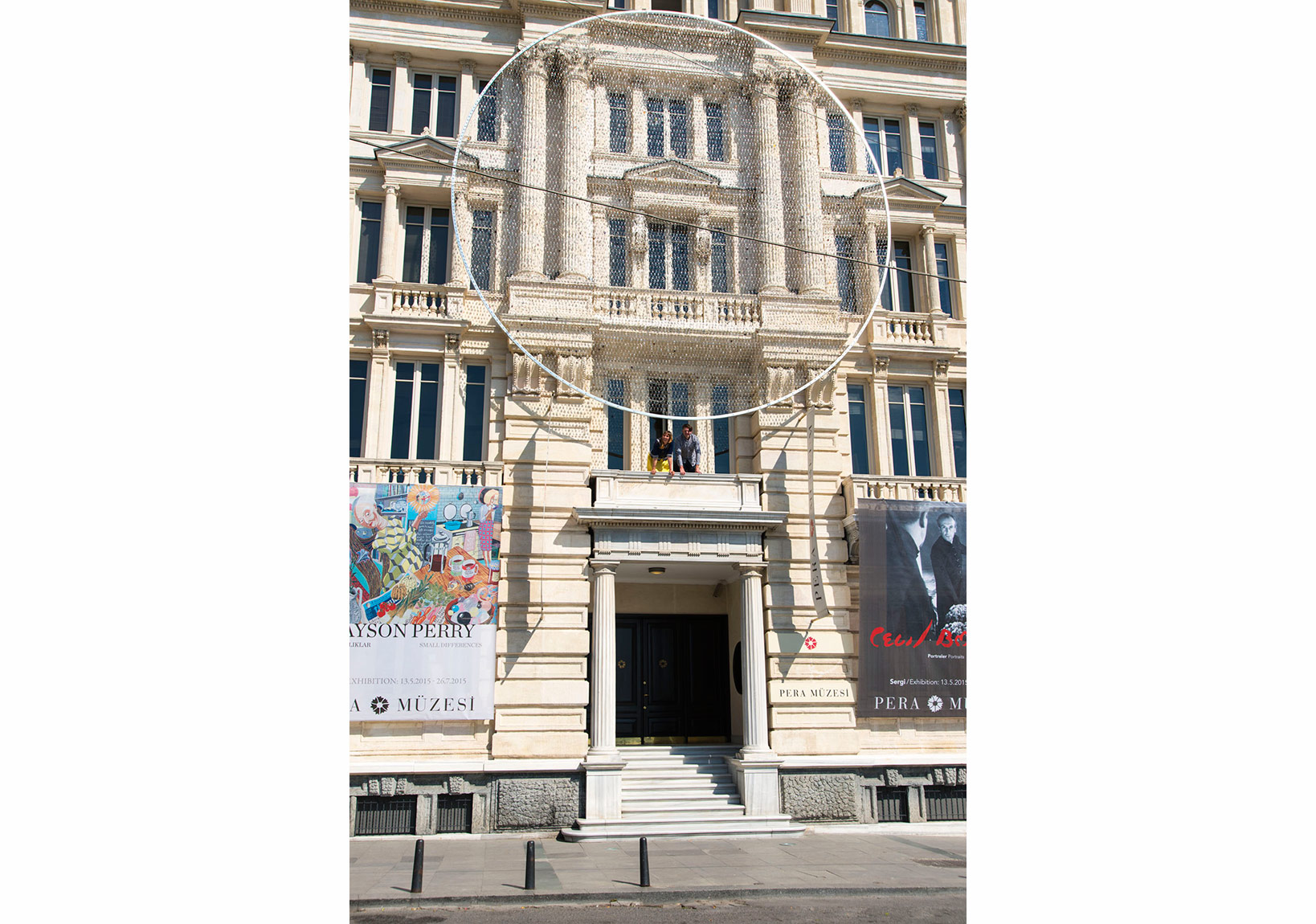
It depends on the circumstances. When making new work, we prefer to work site-specifically, reflecting on the particulars of a space and context. With Pera Museum for example, we were granted the luxury of visiting the museum a year in advance, observing its architectural forms, social purpose, geographic location, and environmental conditions before beginning to design sea/see/saw. This became integral to how we imagined the sculpture. Imagination is boundless and benefits from some grounding. We find that the limitations of designing site-specific installations creates the essential infrastructure for our shared imagination, and once those limitations become evident, it’s easier to conceptualize different hypothetical artworks.
Of course, not all our work can be site-specific – CLOUD, for example, has toured to over a dozen different nations – but with interactive work, the audience is implicit and the sculpture inevitably changes in response to the surrounding people.
How did your path come across with Pera Museum?
Pera Museum reached out to us about a year before their 10th anniversary to see if we would be interested in creating a new work to commemorate that milestone. We were excited about this opportunity, and had many discussions with their team to see what might be possible. We were already scheduled to exhibit a different work in Jerusalem in June 2014, and so we spent a few days in Istanbul on our way home – our first direct experience with the city.
You made this special project for Pera Museum’s 10th anniversary. Where does the title "sea/see/saw" come from?
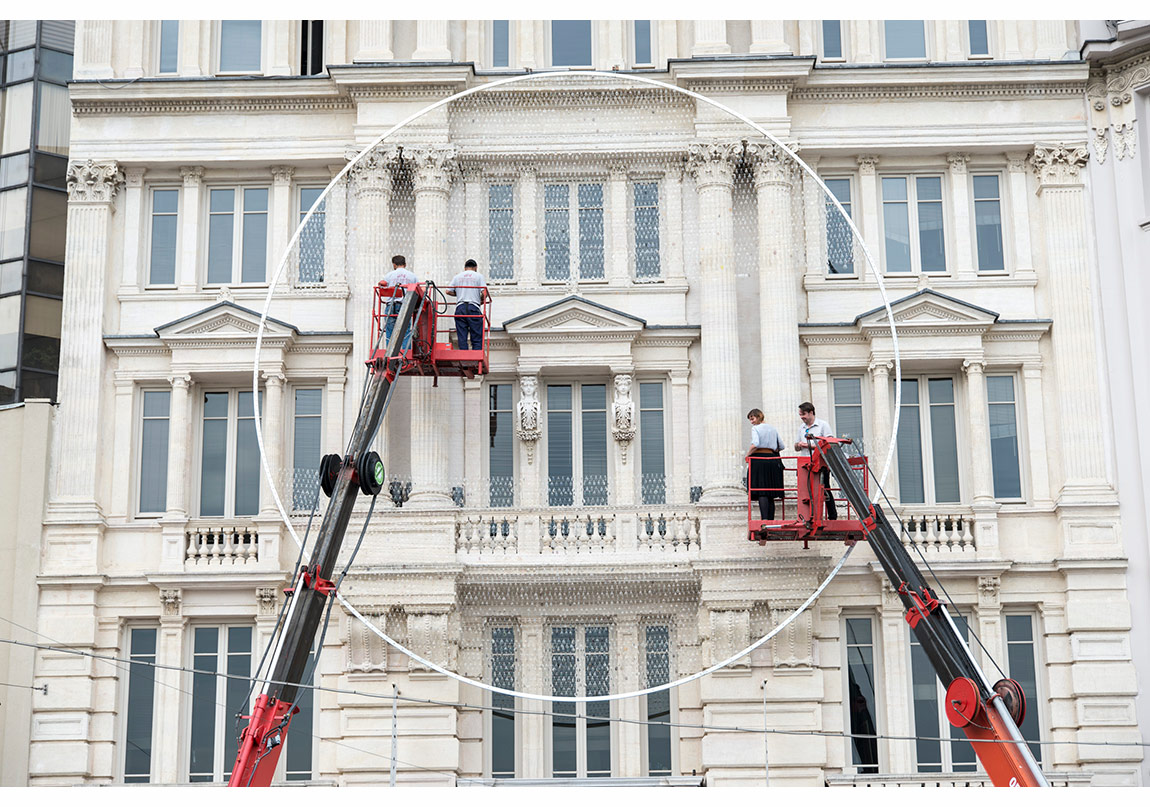
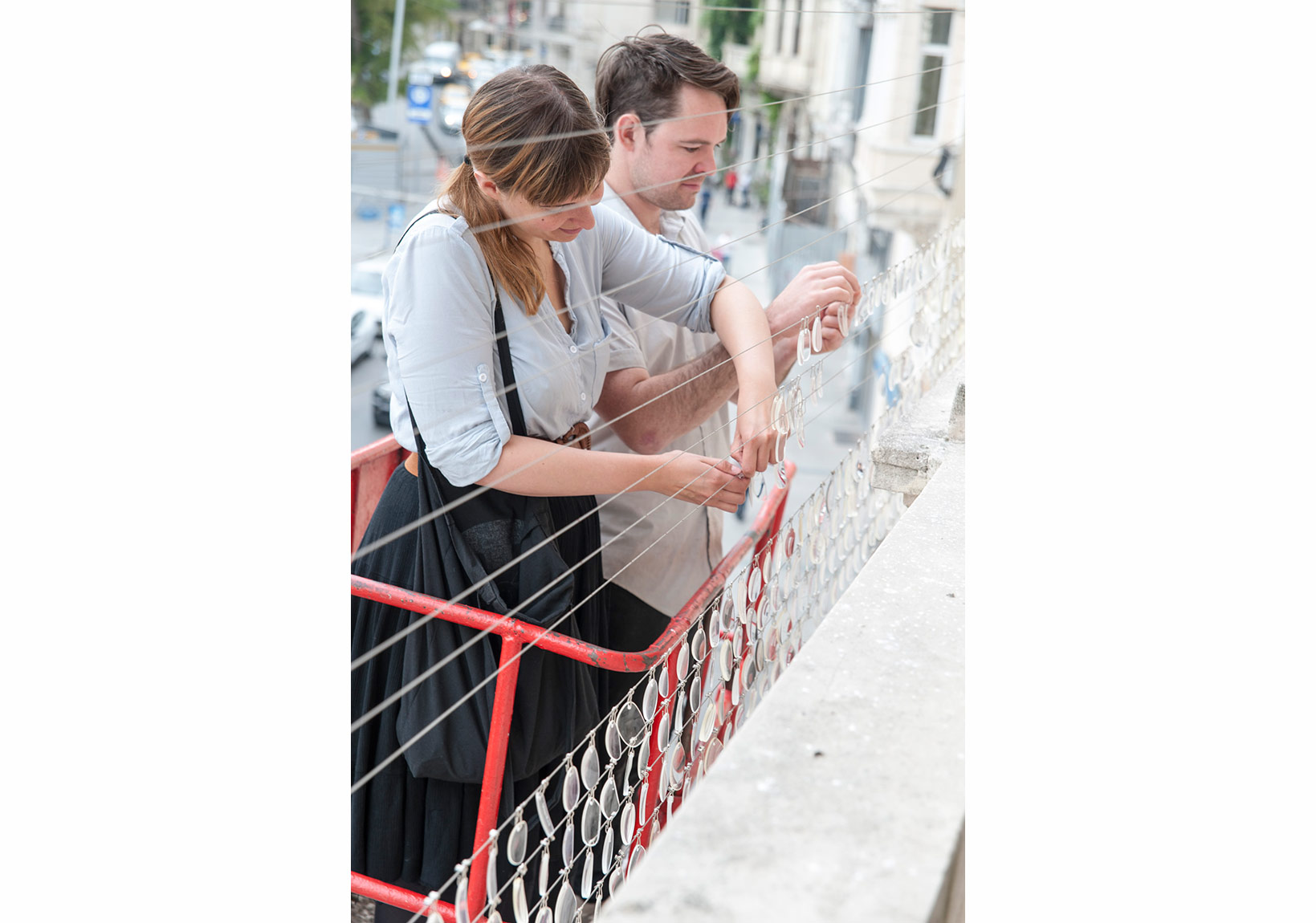
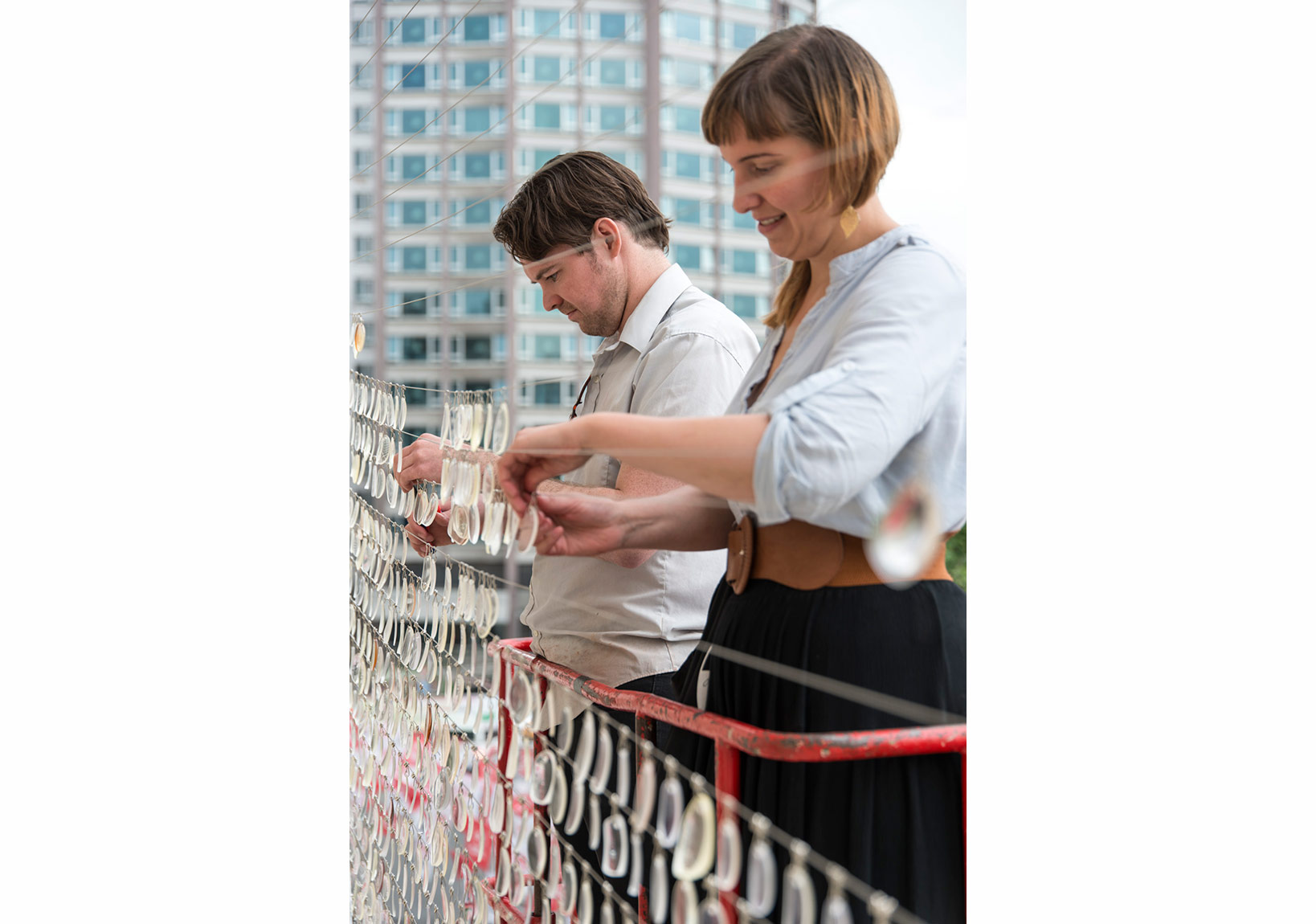
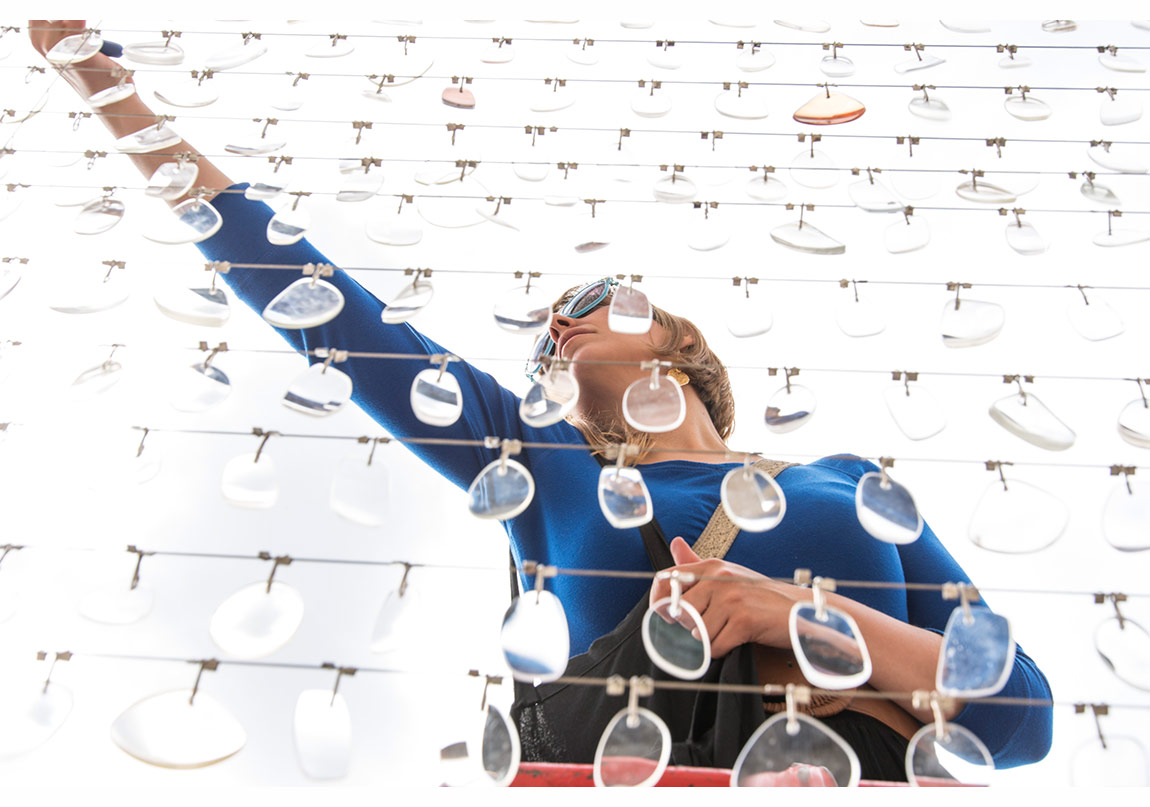
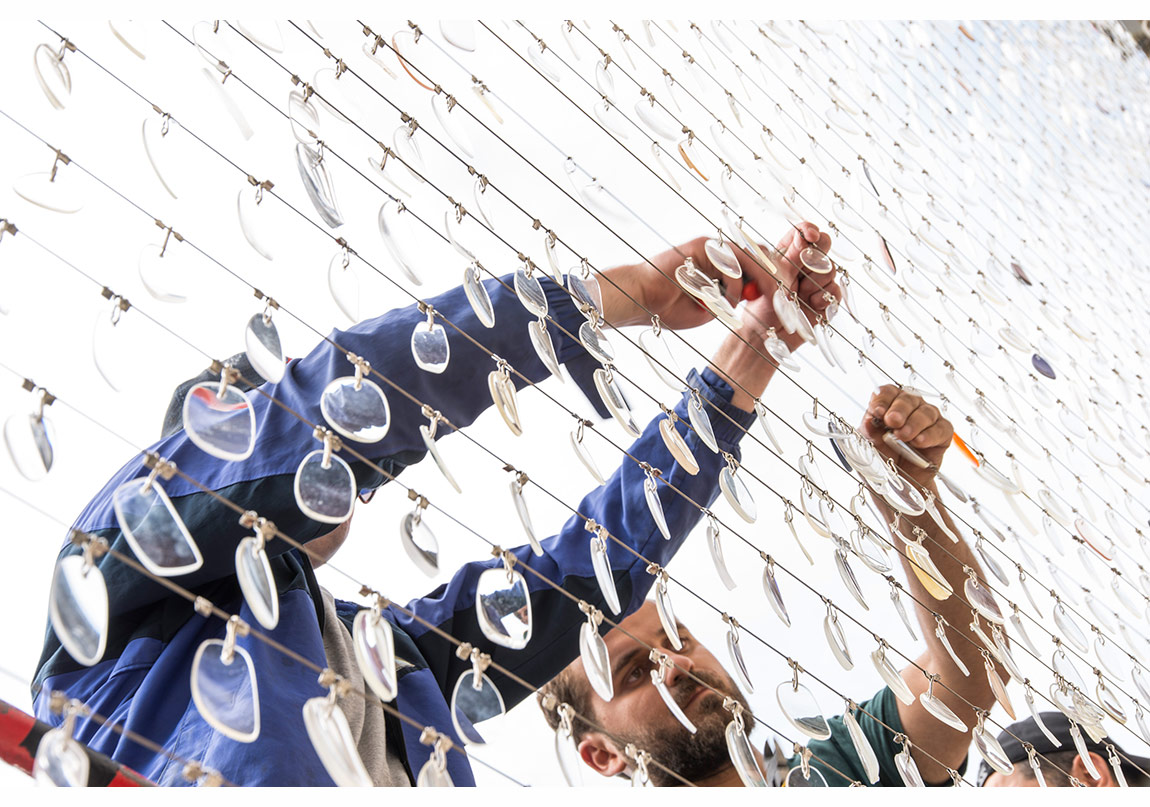
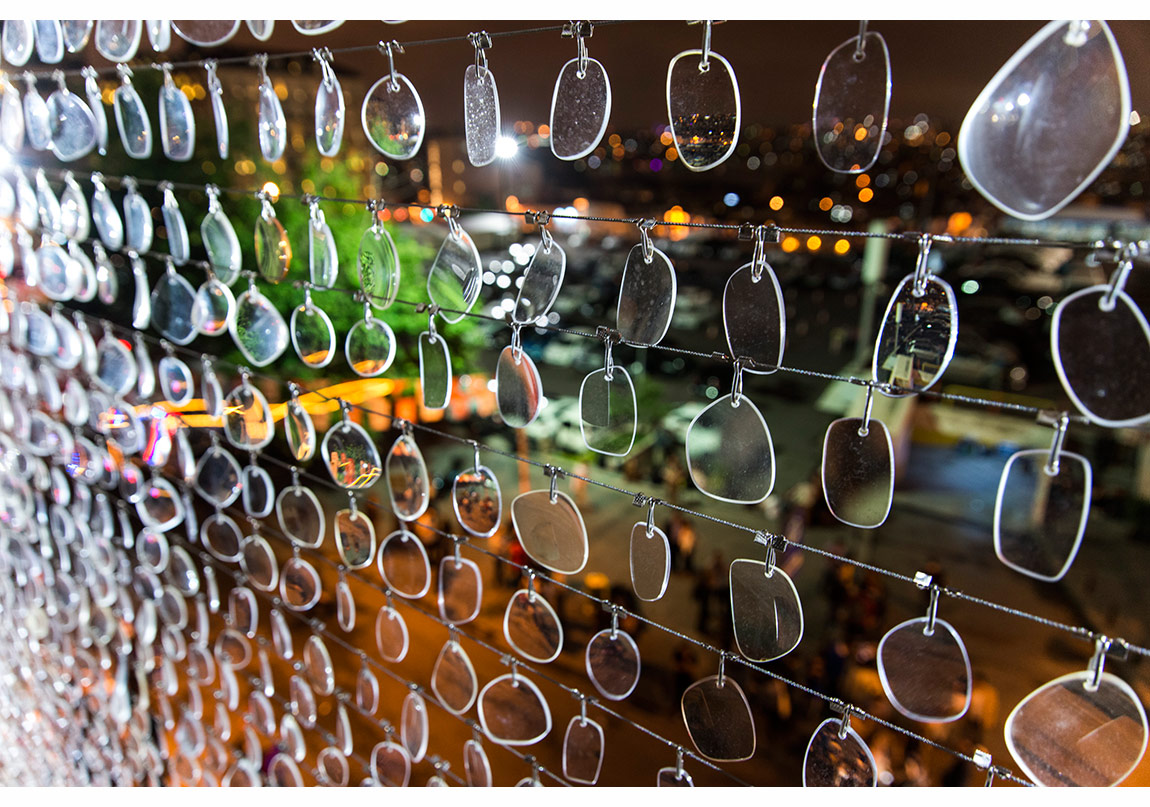
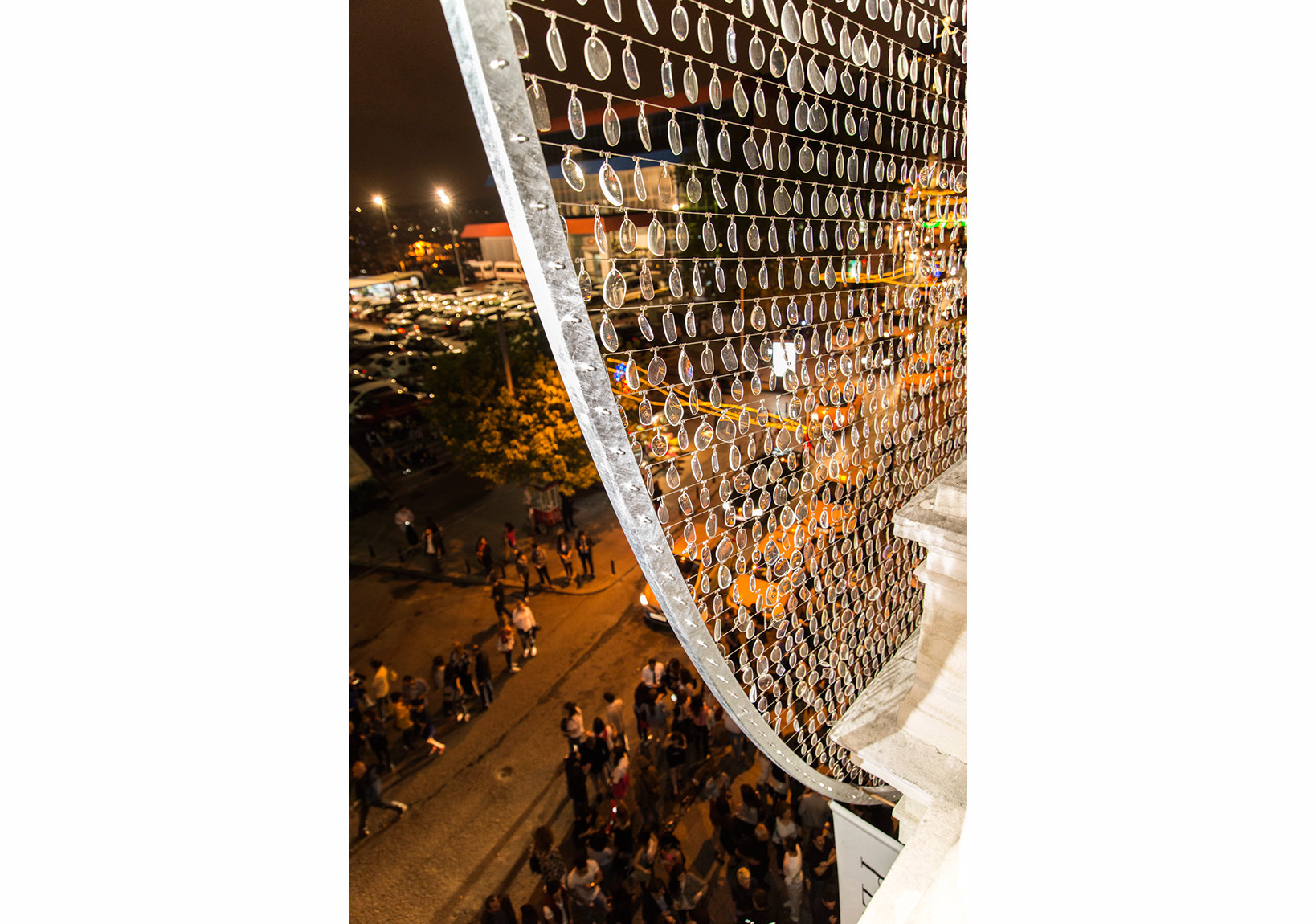
sea/see/saw is part word-play, part material reference, and part conceptual clue. For this sculpture, we wanted to capture the subtle motion of water (more about that below), and that’s where the “sea” part of “sea/see/saw” originated. We view “see” as a reference to the materiality of the work, which is made from 14,000 utilitarian eyeglass lenses, objects ubiquitous with focused sight and clear vision for a huge portion of the global population. “saw” comes from the idea of reflecting on what we see and thinking about perception, perspective, and consciously processing our vision. “see/saw” together reference the motion of a see-saw (the childrens’ playground equipment), which is similar to the analog motion of the lenses in the wind. But “see/saw” also acknowledges the movement of sight from present to passed-tense, a subtle way of implicating the history of the glasses and the people that used to own these utilitarian objects.
How did you conceive of reflecting the shimmer, the flickering light of Haliç onto the façade of the Museum? How did this work come out? Can you tell us the progress of the work?
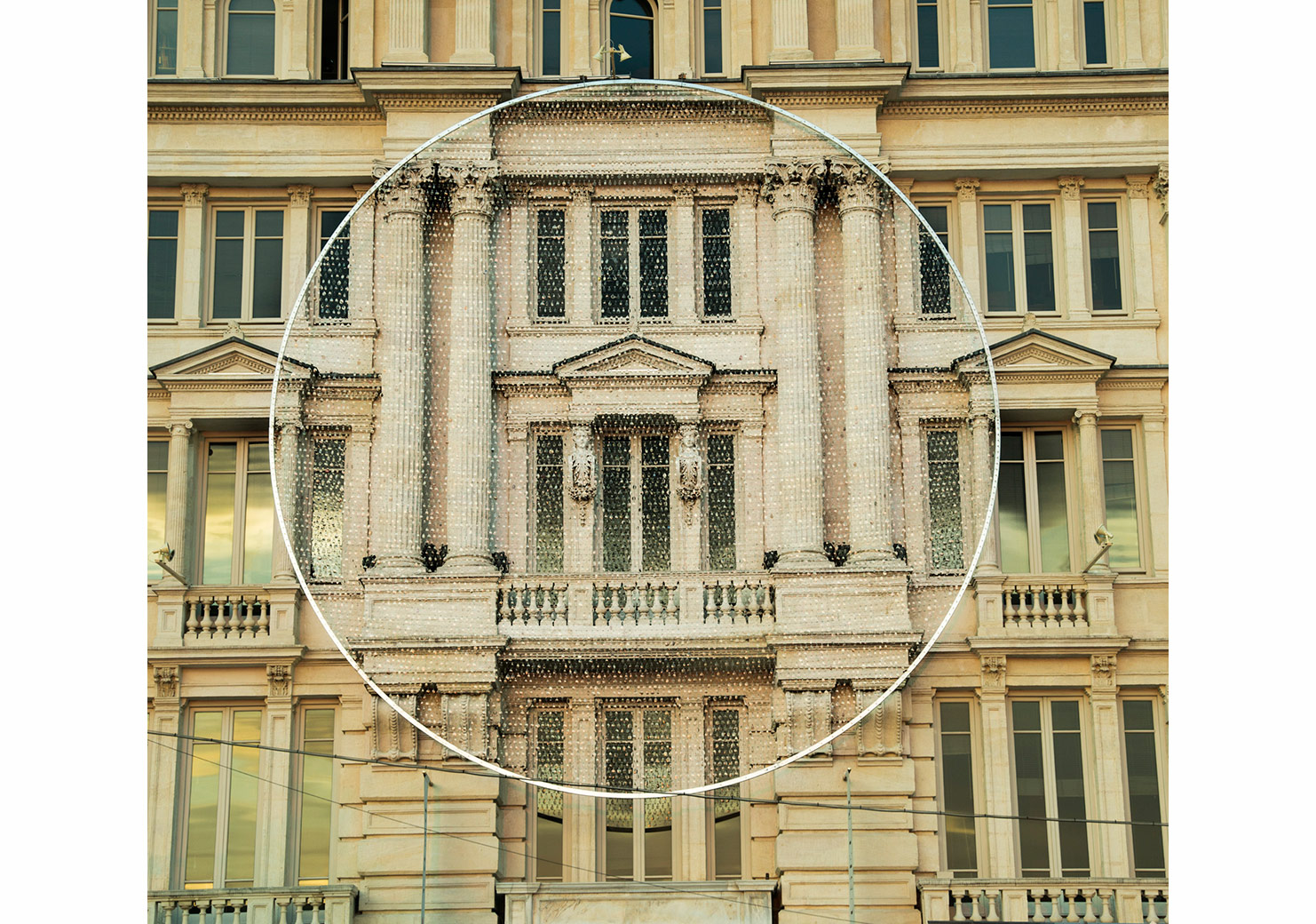
When we first visited Istanbul to see Pera Museum, we found the city overwhelming, maximal, rich, colourful, multi-sensory, gorgeous, gritty, inviting, and terrifying, all in one breath. We found respite in the beauty of the Golden Horn – the gentle rippling on the surface of the water provides a calm and peaceful escape from the constant activity and movement of the city. We wanted to simulate that natural effect and give viewers a chance to lose themselves in the motion. While we toyed with building an interactive piece, we settled on a simple kinetic work, wherein the wind would animate motion on the surface of the piece. When we returned to Canada, we made some small maquettes to test the motion, but they weren’t large enough to observe complete waveforms in the wind. The effect created in the final sculpture is varied, depending on the environmental conditions. It ranges from a delicate sparkle to substantial waves created by the wind. As the individual pixels are translucent, the effect is subtle, but this also allows the details of the façade to twist and shift as they are reorganized through the moving lenses.
How did you manage to get people donate unused eyeglasses, especially in Istanbul?
In all honesty, it was much harder to source used eyeglasses in Istanbul than Calgary. This is mostly because we are more familiar with Calgary and the hidden networks that can offer strange materials in bulk quantities. Calgary is also a much smaller city (population: 1.1-million) and just happens to be home to the Canadian Lions Eyeglass Recycling Centre (CLERC), an organization sourcing used eyeglasses from across Canada, refurbishing them, and shipping them to vision-impaired people in 79 countries internationally. We found CLERC with a little detective work, and were delighted when they agreed to exchange a small donation for thousands of eyeglasses that they weren’t able to salvage.
In Istanbul, Pera Museum did most of the legwork, putting out a Call for Glasses and placing a donation box in their lobby. A small community donated glasses. It became a cross-cultural material exchange, and we were grateful for support from both cities.
What do "eye-glasses" symbolize for you as a metaphor?
In this context, we think of eyeglasses as a literal symbol of shifting perspectives and collective vision. Glasses are deeply personal relics that have previously been used as a way of seeing the world. For us, this speaks to the role of cultural institutions like Pera Museum that offer a diverse range of perspectives through varied exhibitions. When multiple perspectives are offered, the public is given a chance to be transformed and to see things from a new place. While each lens is somewhat unique, these thousands of perspectives come together to create a larger movement, something that can only be achieved with great numbers. This concept ties into our experience of Istanbul, where there is an authentic diversity in every facet of the city; the essence of the city is born as a result of the combination of all these disparate elements.
French author Marcel Proust said “The real voyage of discovery consists not in seeing new sights, but in looking with new eyes.” Would you agree with him? What are your thoughts?
We think a lot about re-discovery – the idea of skewing familiar spaces, places, and objects just enough to gain a clearer perspective. For us, these moments of clarity often arrive through ruptured familiarity, re-contextualized everyday items, viewing ordinary life from a new angle, or allowing something to be disassociated from its regular function. It could be as simple as re-imagining the use of a light bulb, or as complex as re-inventing the potential of a forgotten or abandoned building. It’s hard to gain these critical shifts in perspective without acknowledging the disparate vision of others: how can we access the collective vision? What is the role of blurriness, of focus, of clarity? How do we re-see what’s around us all the time, and empower ourselves by doing so? When we combine our many divergent perspectives, do we gain a clearer big picture? Maybe this is what Proust meant when he spoke of new eyes – “to behold the universe through the eyes of another, of a hundred others, to behold the hundred universes that each of them beholds, that each of them is.” (Marcel Proust, The Prisoner [and] The Fugitive: In Search of Lost Time)
;