You find old boxes from forgotten corners of Tabriz and transfer your soul into them. You have an extraordinary style of production. Would you like to tell us about your practice of production?
Thank you for the interest you have shown in my work.
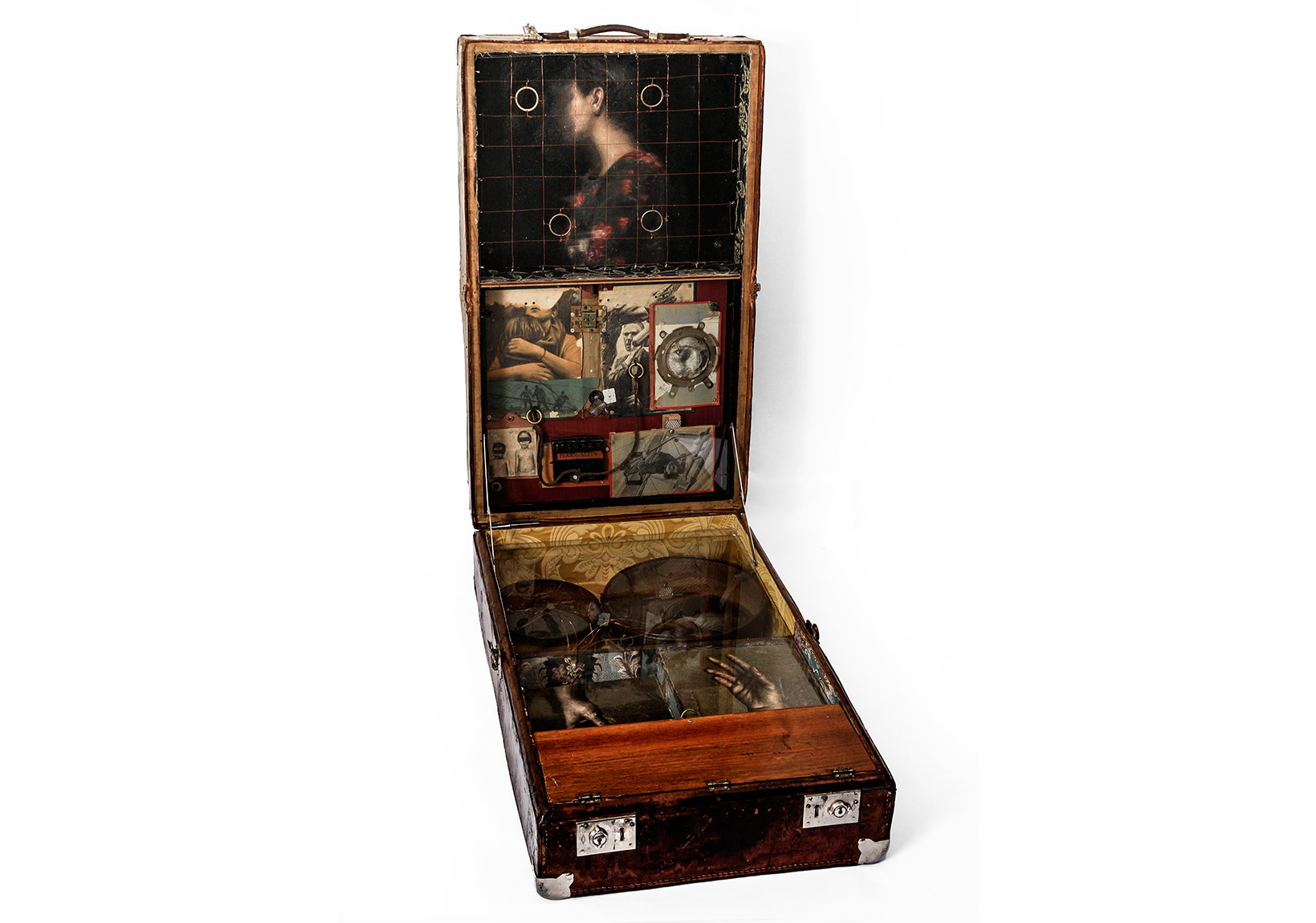
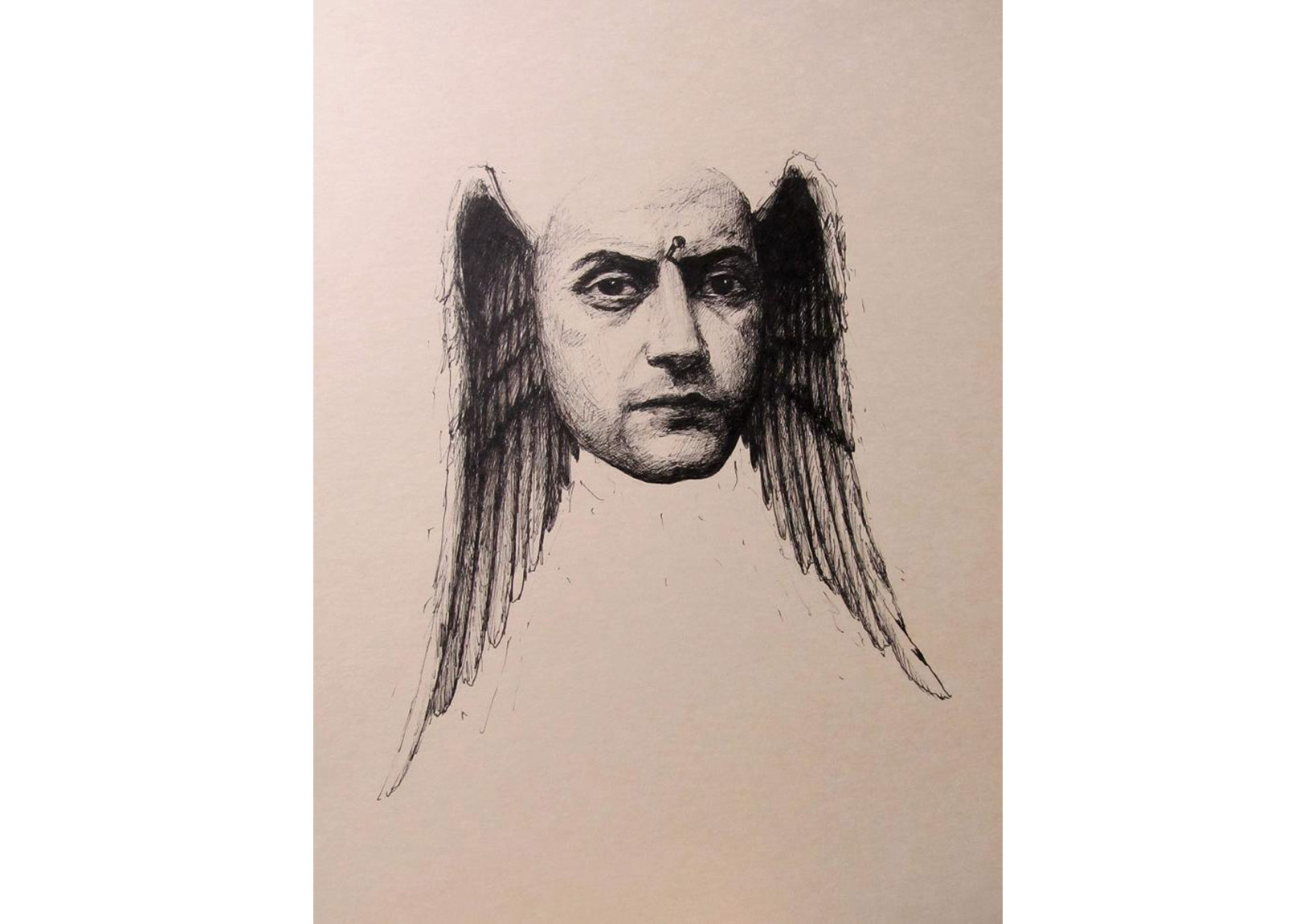
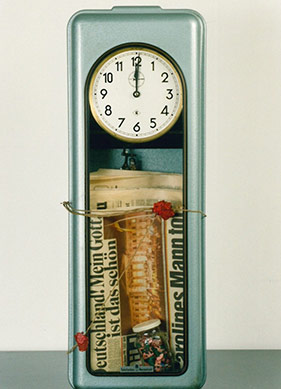
I collect bits and pieces of my puzzles from different sections of society; like every other culture, we consume products and objects that with time lose their importance and those are the objects and products that I am interested in. The boxes and other objects that I make include images that I find in newspapers, books and magazines. And depending on my concerns and subjectivity, I make choices and paint them. They are basically about psychoanalysis, the attitude of humans and their behavior both internally and in interaction with society. Conceptual art helps me define myself and I walk on its periphery.
I see people, whose backs are turned, in your paintings. Why do they turn their backs instead of looking into our eyes? What are you trying to tell us with this pose?
Besides the power of speech, humans have body language to express themselves with and we might be using it unconsciously. I believe everyone evaluates and reacts to their surrounding world with their faces and body. When you come face to face with people, the face carries the message and that effects our perception and understanding of each other. In that series of works, I tried to come close to people, without making myself known to them.
On the other hand these day humans are alienated from each other and there is less interaction, and many prefer to live in their own cocoons. Many times both sides do not want to have closer contact than they need to, and you can feel it. It is not longer easy to express yourself and to connect with others; it is as if we look at each other from a distance.
Your last exhibition took place 6 months ago in Aaran Gallery. Would you like to tell us your exhibition called "Accumulated Memories- Collective Reflections"?
The exhibition was the result of three years of work. I was investigating myself and the world around me. It was an extremely successful exhibition both in terms of critical acclaim and commercial success. I owe it to the expertise of Ms Nazila Noebashari, of Aaran Gallery and her crew, who worked closely with me and was instrumental in the success of the exhibition. The works were about people’s beliefs and the images that are inherent in each society. It was collective reflections; what we remember and what we imagine within our society, like time capsules I was trying to leave images of our times for next generations to see. The result was like holding a mirror to the people and their perception of realities of our lives.
Contemporary Istanbul is celebrating its 10th year in 2015. As far as I know, this is your first time attending this fair. What are your expectations from the fair?
Every Art Fair follows certain mentality and the presence of different countries and particularly neighboring countries is very important in having a better impact and bringing art closer to the people. And yes, it will be the first time my art work will be shown at the Contemporary Istanbul.
We will have the chance to see the art works of outstanding artists from Iran in the Focus section, which is one of the prominent sections of the exhibition and will be realized under the name Contemporary Tehran (Contemporary Art in Tehran). You are one these artists, who is attending the fair with Aaran Gallery. What kind of change do you think the “Focus” section will bring to the fair?
Focus on Iran will show parts of the scene in Iran, and I believe with the present climate and the tensions and violence that we are witnessing in the region, presence of Iranian art with all its strength can prove positive and fruitful.
With which work of yours will you be attending the fair? Could you please talk about it?
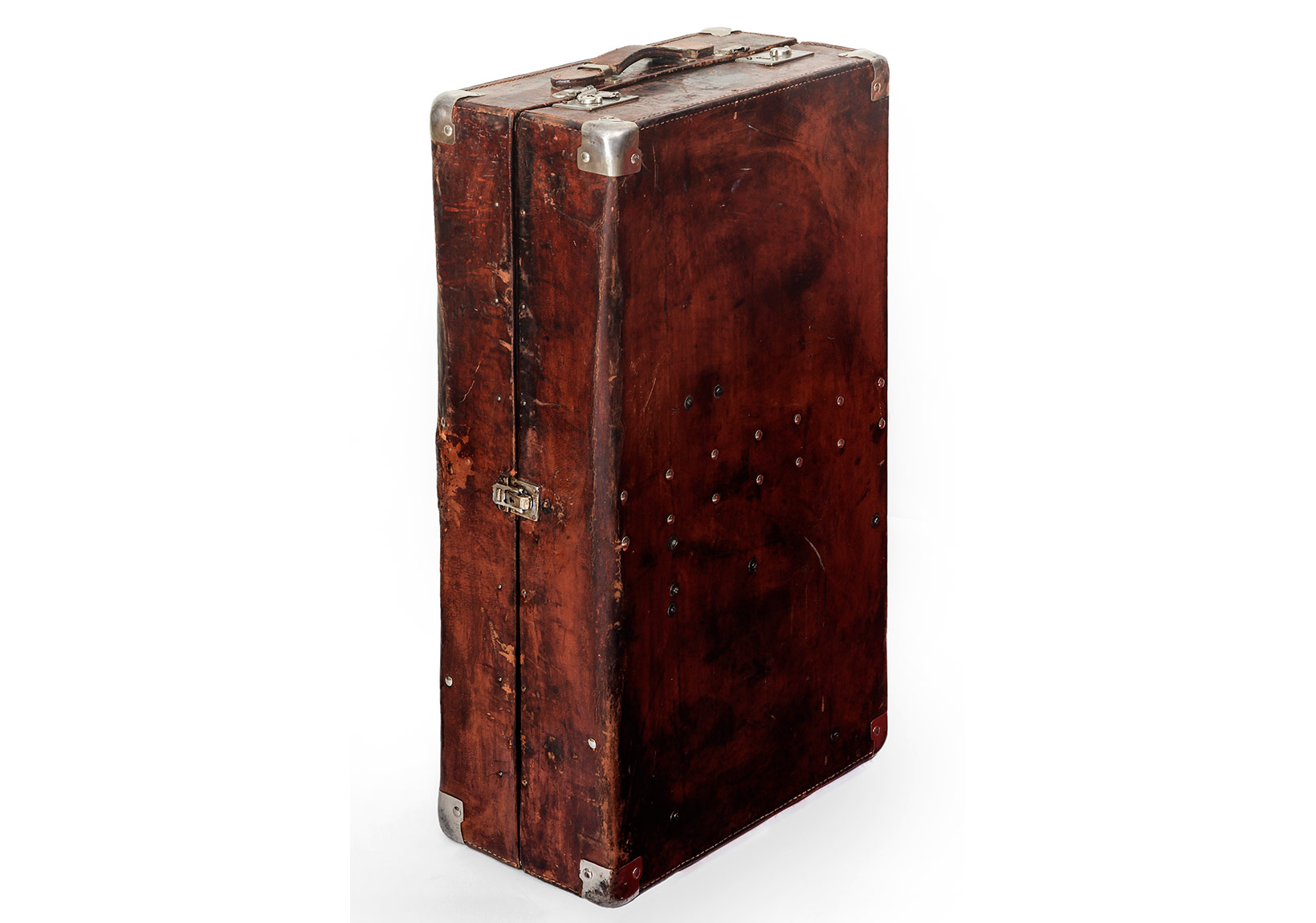
There will be five works from me, all in the shape of suitcases. What is happening in the region and the heartbreaking news and images of the refugees is reflected in these suitcases. It is unbelievable that in this age and time people are forced to carry a “life time” and their whole livelihood in bags and suitcases, and to walk in to all kinds of dangers in pursuit of safety.
What are your thoughts on Istanbul art market?
The potential must be remarkable, and we hear of amazing private collectors who are open to the art of the world and hopefully they will embrace Iranian art and enjoy the benefits.
So, what is the contemporary art environment is like in Tehran? Could you please tell a bit about it for the ones who don’t know too much about it?
Iranian contemporary art, despite all the limitations that the young generation has had to endure, is strong and progressive. The young generation and the private sector (galleries and collectors) are supporting it and it is moving forward. Hopefully with a number of political issues that are being resolved, we will see more enthusiasm for Iranian art and its strength will become known even more.
What are your new projects? Do you have a new exhibition that you are currently working on?
My works are connected to each other and so I am just following the flow and continue with same approach and subjectivity. Basically I am concerned with collective memory of our societies; images related to time, death, and morality.
In November, my work will be shown along two other Iranian artists work in Rouge Gallery in New York.
I will be participating at group exhibition “Suspended” at Aaran Projects in December 2015 in Tehran and we are planning my second exhibition at Aaran Gallery in May 2016.
;