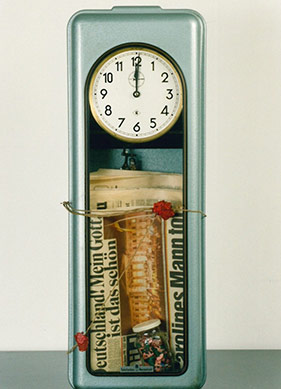
You’ve been involved in artmaking for a long time across different mediums including free standing sculpture, wall pieces, drawing and installation. What drew you to art making?
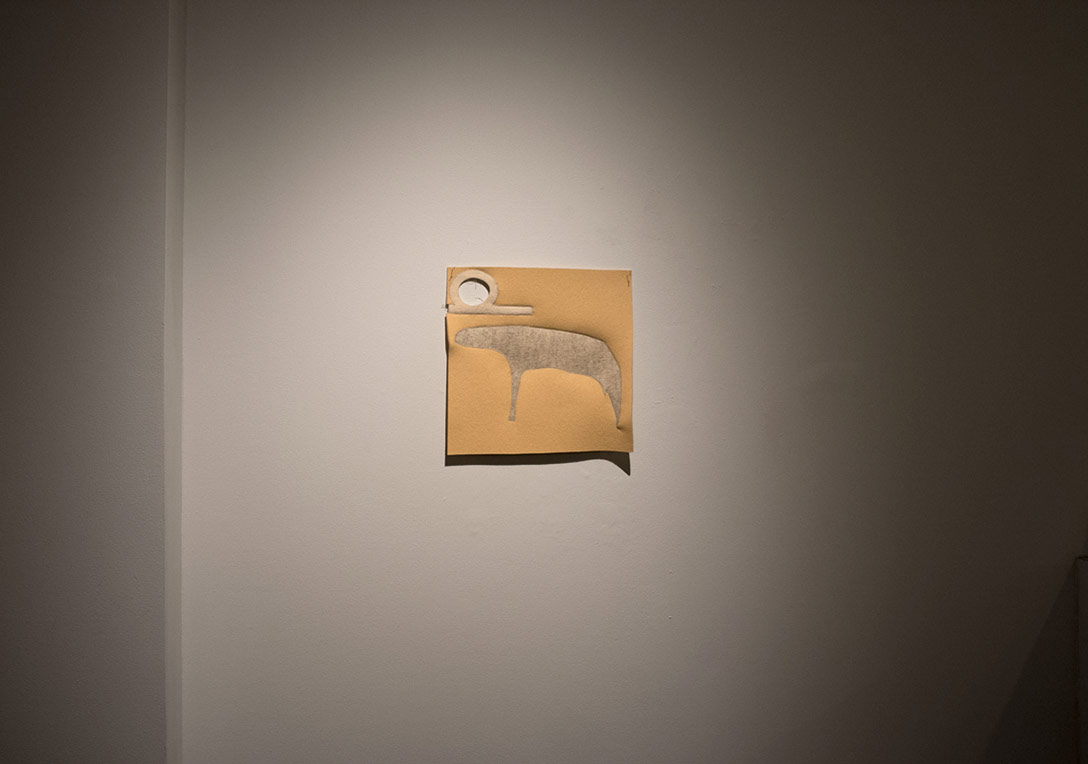
I identified myself as an artist when I was pre-kindergarten age, 2 or 3. I spent an awful lot of time alone. I had a little alcove-playroom off the kitchen. I thought of it as my studio. I don't recall making those messy, colorful, typical-kid paintings. I was more interested in observing things. But I also really liked to use a scissors—and I still do. I like the cut. I used to take pieces of construction paper when I was really little, imagine the shape of a creature and cut it out of the paper without drawing it first, just cutting. Cutting it out was like setting the creature free, and I really liked doing that. For me cutting is like drawing, or is drawing. Cutting is a significant gesture, it feels purposeful to me. When I cut now—paper or felt—I always do it with a scissors, though it would, in some ways, be easier with a knife. But there’s something about the scissors and the difficulty of cutting fine curves— especially through thick material—with a scissors not made for this purpose that feels like the right challenge.
Matisse used to draw with scissors too. Who are some of the artists you are influenced by? I know Gertrude Stein is a huge influence.
Yeah, I love Gertrude Stein. I feel all is right with the world when I read Gertrude Stein. My inclinations keep shifting and changing depending on what I’m doing and what I’m seeing. Philip Guston, Agnes Martin, Barnett Newman. There’s just endless stuff that I love, really. Yves Klein just came up in my mind. Rothko, Giacometti, Korean pots, cave art.
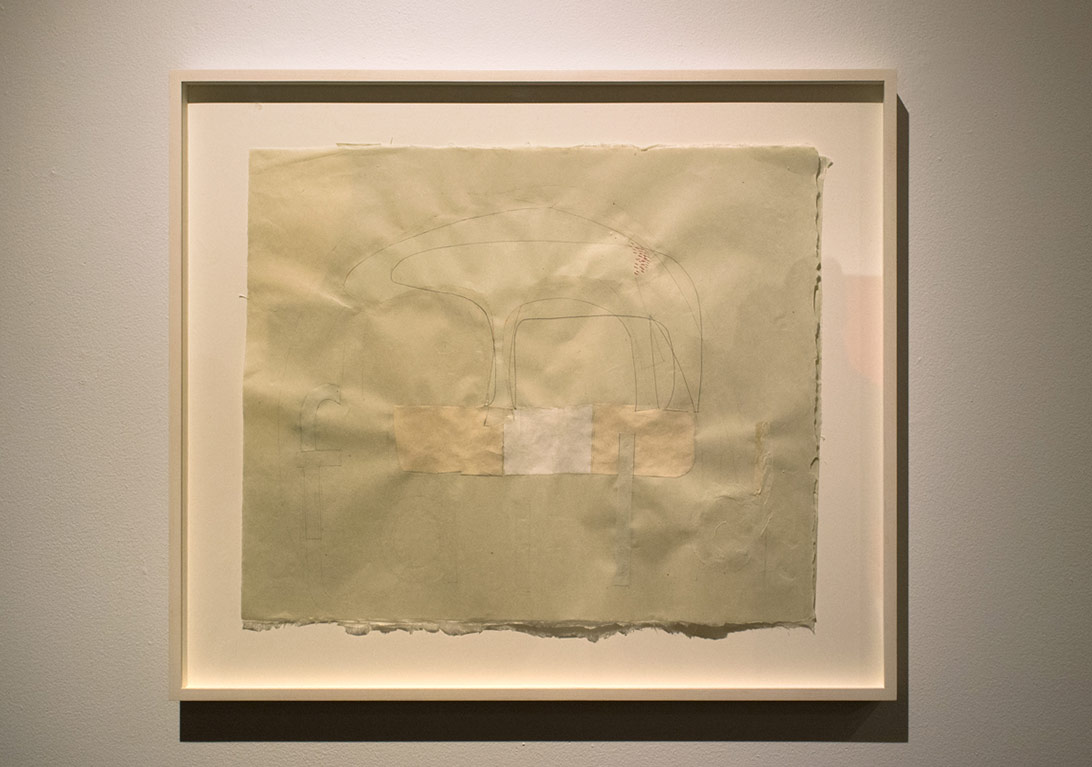
In your work you cut, glue, stitch, make marks, erase, efface, smudge, paint, puncture, take apart and put back together. How do you place this physicality in your work?
I love to move! I really do. What I know is in my body so it comes out in my gesture. I observe what happens as a result of my movements. I just about always know if a mark I made has weight to it, or has a feeling of intention about it or if it will stay there because of the way I feel in my body when I make it. I know without looking. I am going back to the first question to say that a significant artist for me is Clyfford Still. An important painting teacher of mine was a protégé of Still's, and it was the mark that mattered and the physical gesture of making that mark. This concept resonated with me.
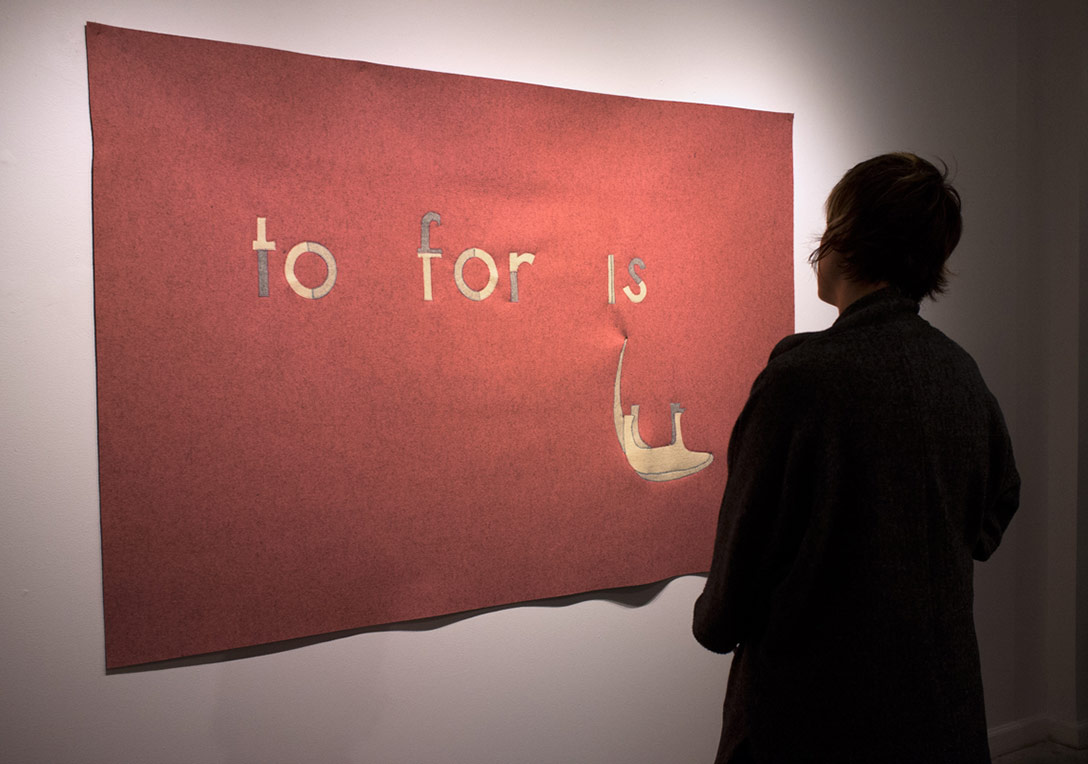
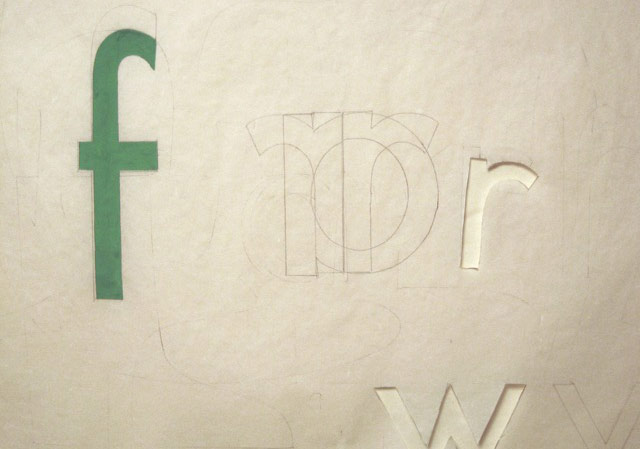
You often use letters, language and evocation of sound a lot in your work. There are hard to pronounce words or letters like ‘ff’ and ‘rr’, and sounds alluding to cold or heat like ‘brr’. Is that something that’s an indispensable part of your work now?
It's become so. It’s a mystery how that really happened. I guess it must have been always there because when I look back I see little hints of it. It just needed space and time to grow. One of the reasons I like Gertrude Stein’s writing is the physicality of it. It provokes the reader to think about what it takes for your mouth, tongue and teeth to speak her words. That thrills me as a physical fact. I like words a lot. I also like animal sounds. There’s a creature aspect to these hard to pronounce words. They are like sensations or feeling states and I have certainly had close relationships with creatures. We talk.
As a viewer looking at your work I have an experience of finding out again what a sound is like , explore what language is. How playful it is, and all these different things it might mean..
I think the shapes that appear in my work are pictogram-like—so that’s language. And then my whole life I am and have been developing my own language. Of colors and forms and materials. And I should also point out that felt is a silencer. That's a contradiction! I both want sounds and I also want to quiet sound. Maybe I want to quiet certain kinds of stuff so I can hear other stuff. It's hard to say.
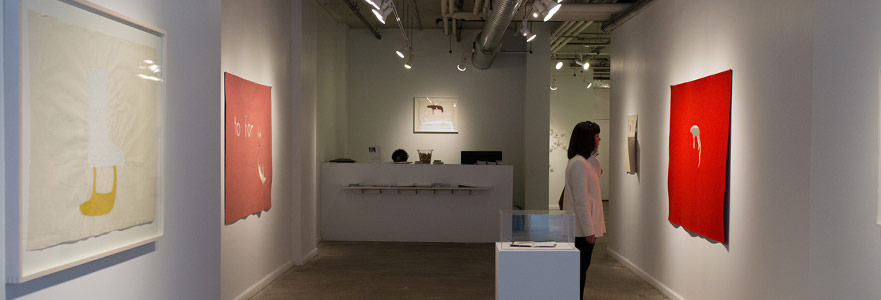
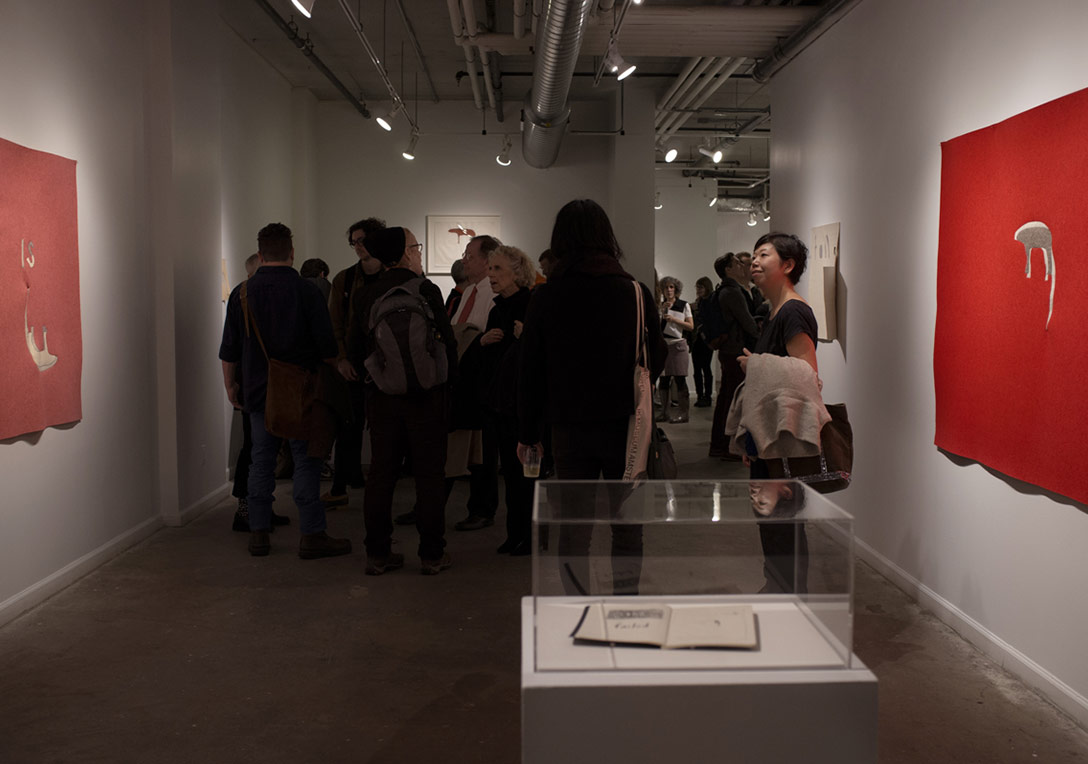
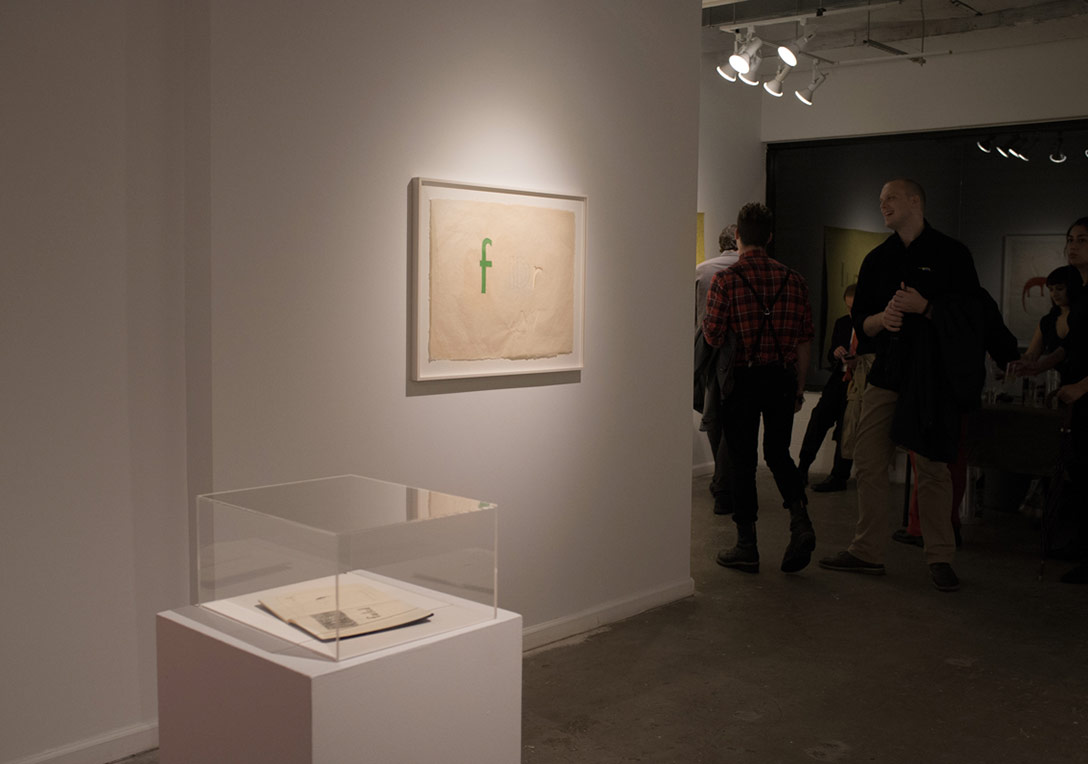
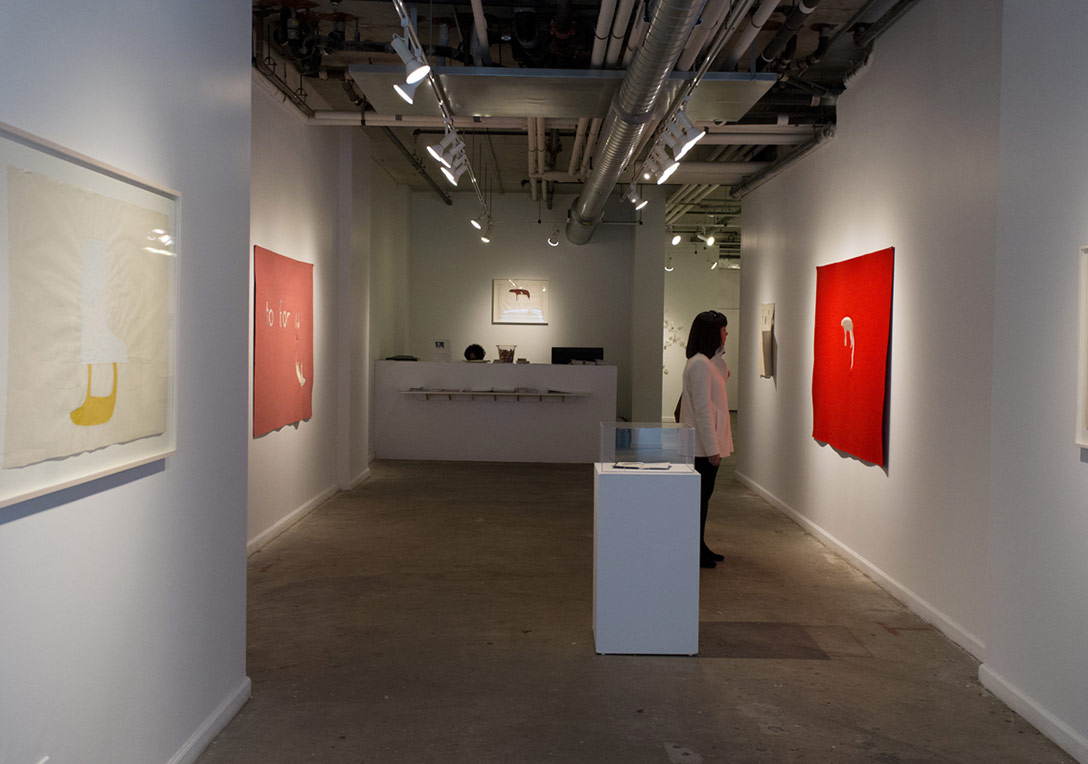
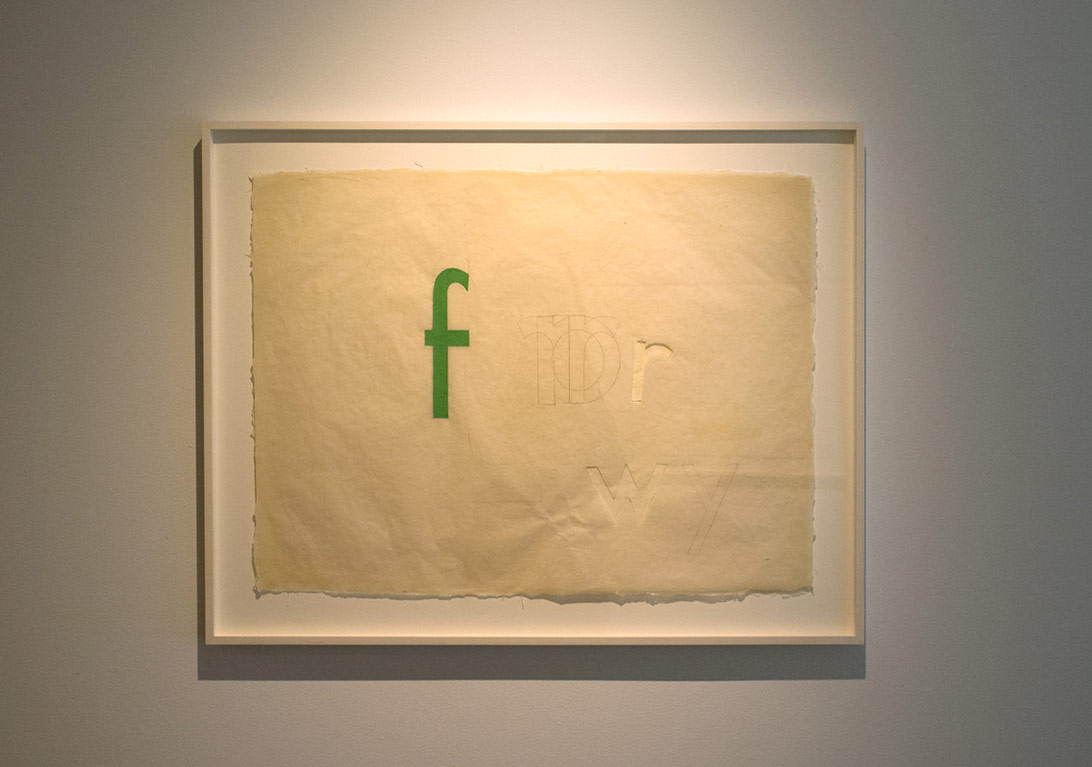
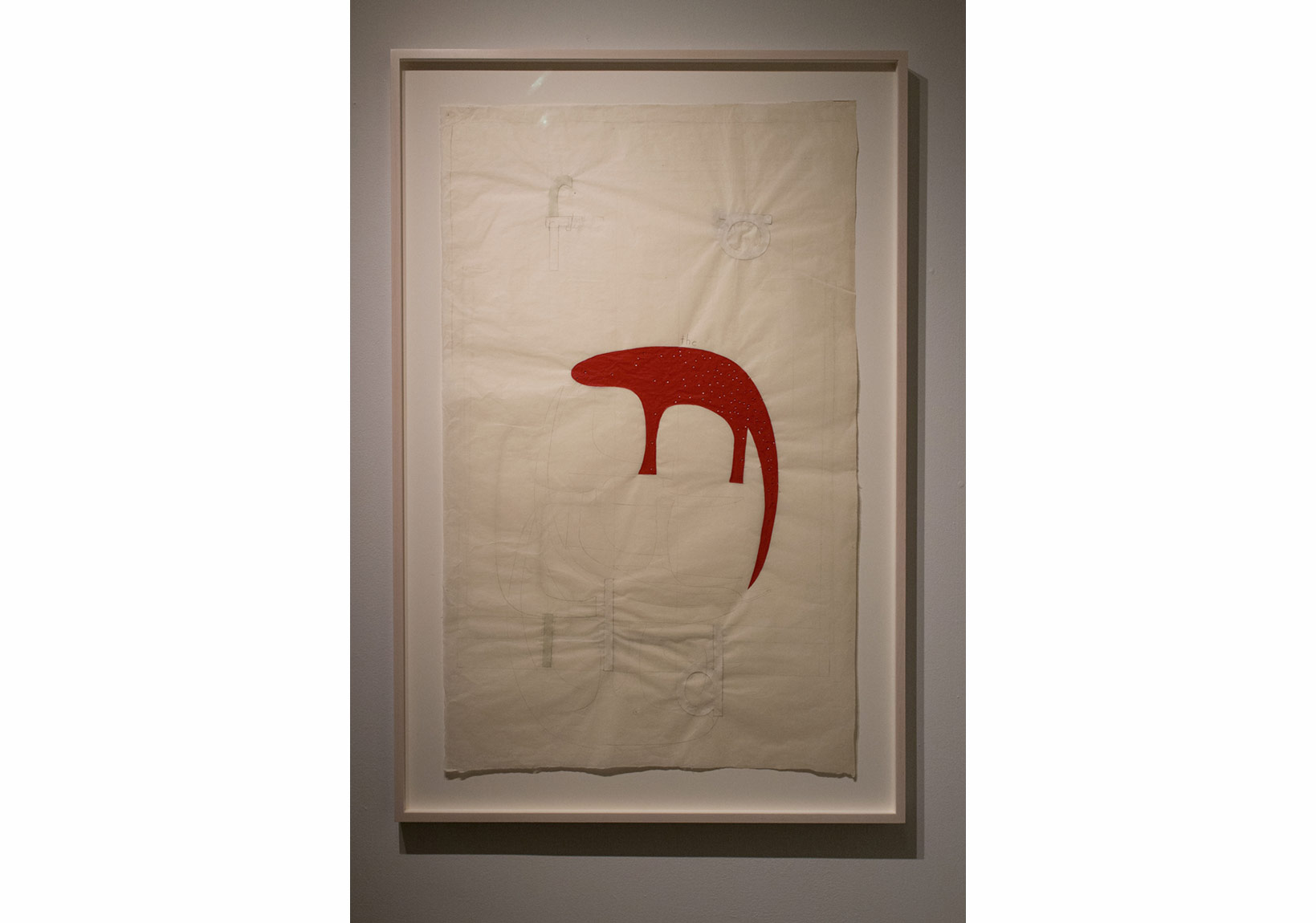
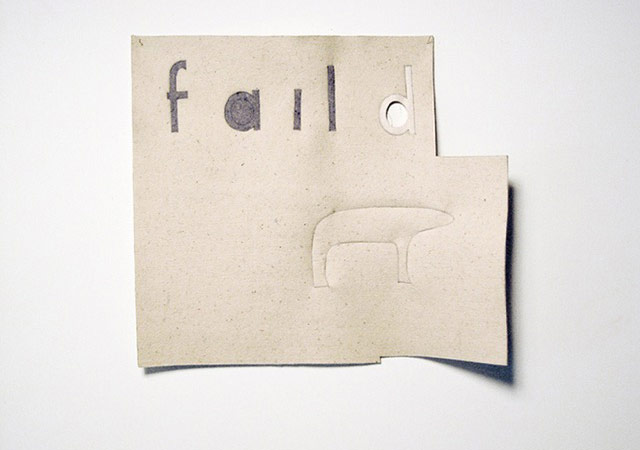
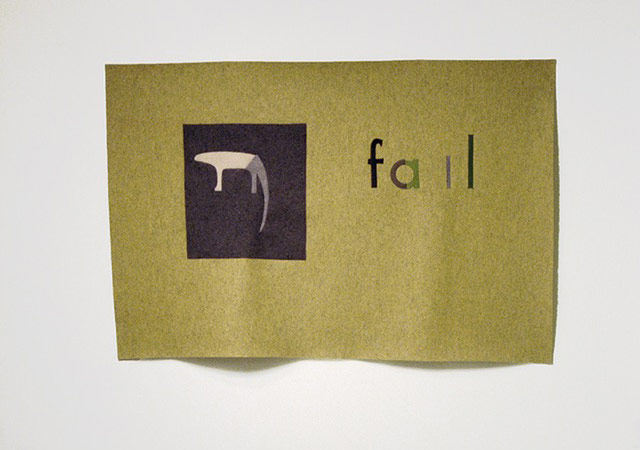
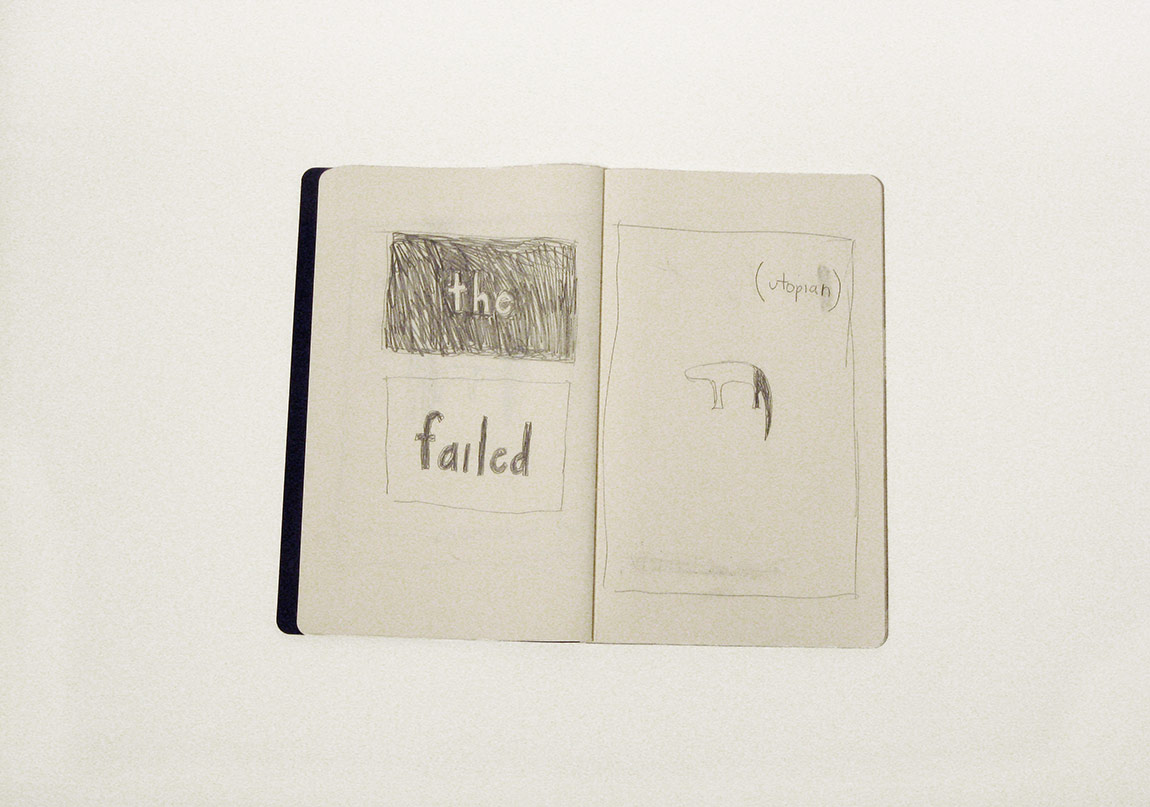
This exhibit is a part of ‘ the failed utopian series’, it includes felt wall pieces, works on paper and a book ‘why winter’ which includes your writing and reproductions of your work. In your artist statement, you mention that this series began as questioning of the cliched notion of the failed version of modernism, and you mention Masaccio’s fresco “Expulsion from Paradise”. You state that since Adam and Eve, failure remains as a part of lives both as a challange and as something we go through daily and you pose the question whether failure can be met with enthusiasm. This is a very interesting way looking at the question of failure, because it takes judgment out of it so its no longer a positive or a negative notion. Rather its something confronted and lived through. What kind of resonance does this idea have in you?
I was thinking this morning, actually, that if I have any preconceptions of what I’m looking for a work to be, and if what I end up with is what I had thought about in the first place, that’s so not interesting! If I fail to meet my own preconceptions, now that’s great, because I have found something new. I like to make messes so I can fight my way out of them. Is the mess a failure or is it an opportunity? So that’s the edge I'm on. Whatever I make is a failure to be anything else but itself.
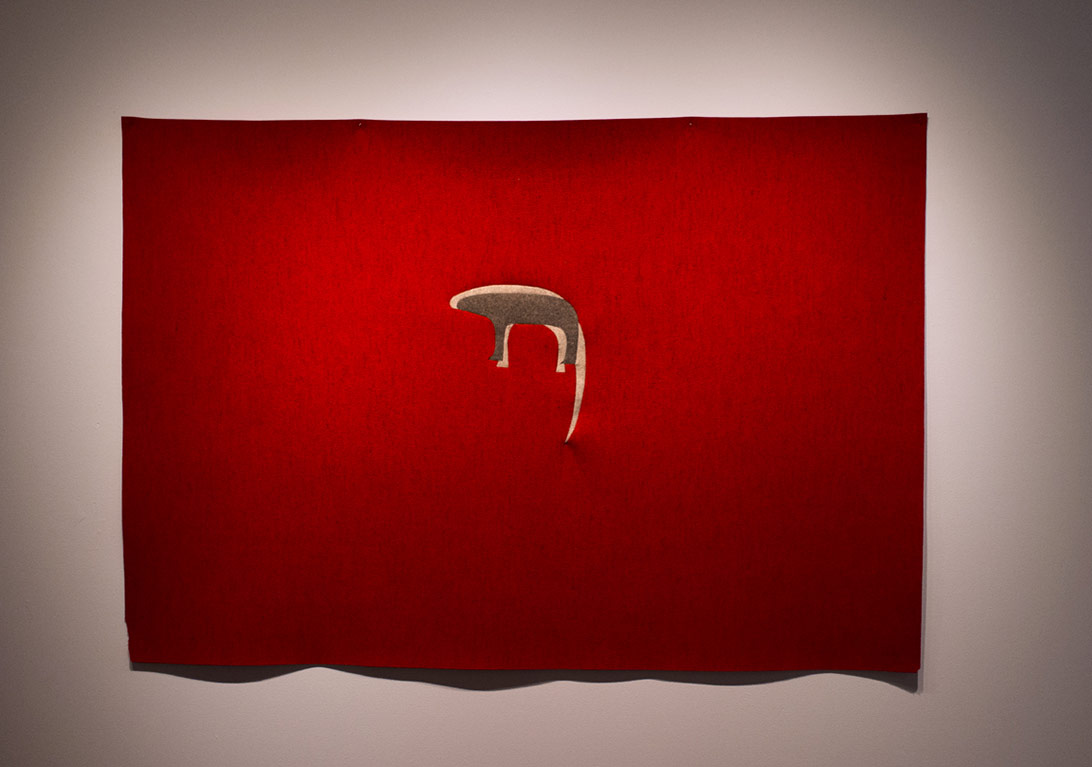
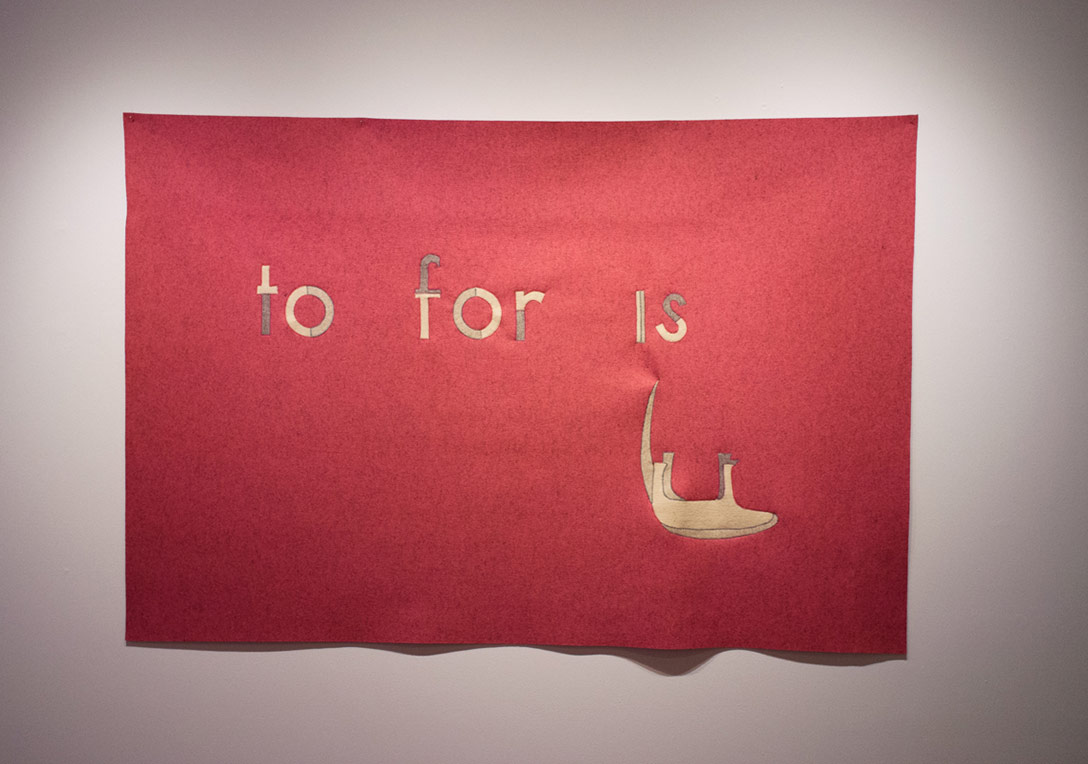
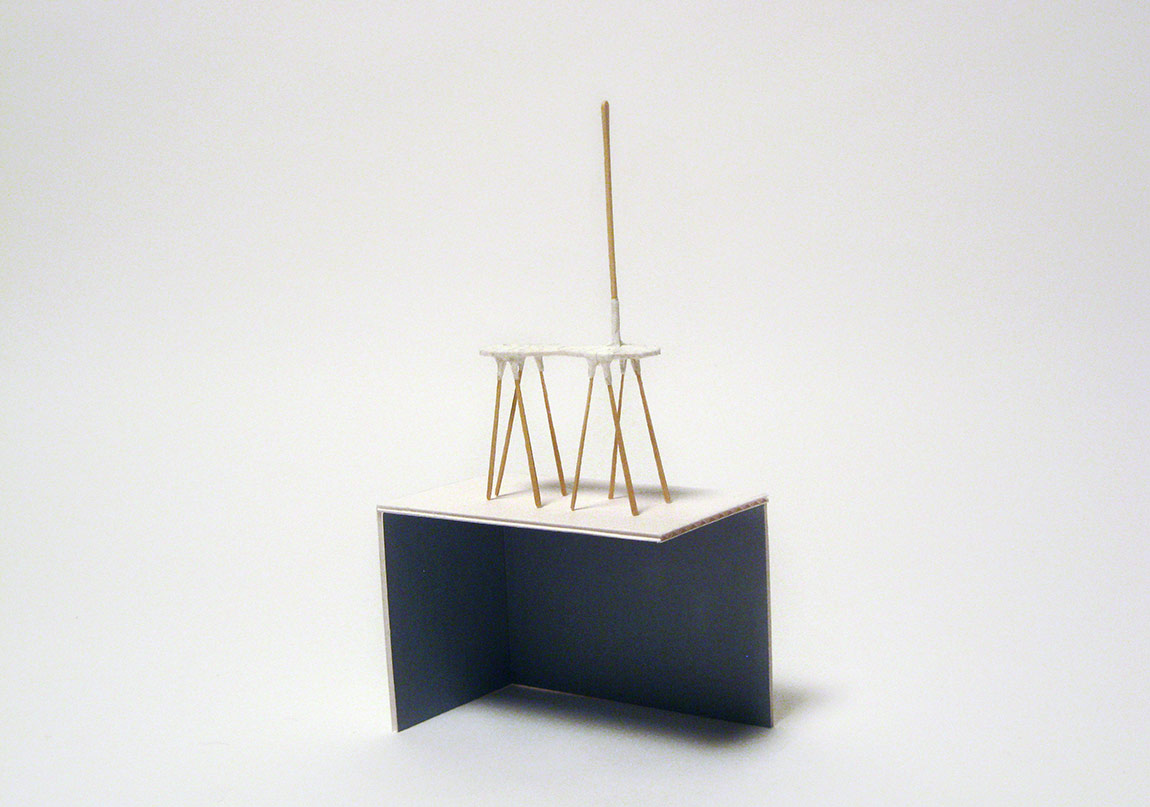
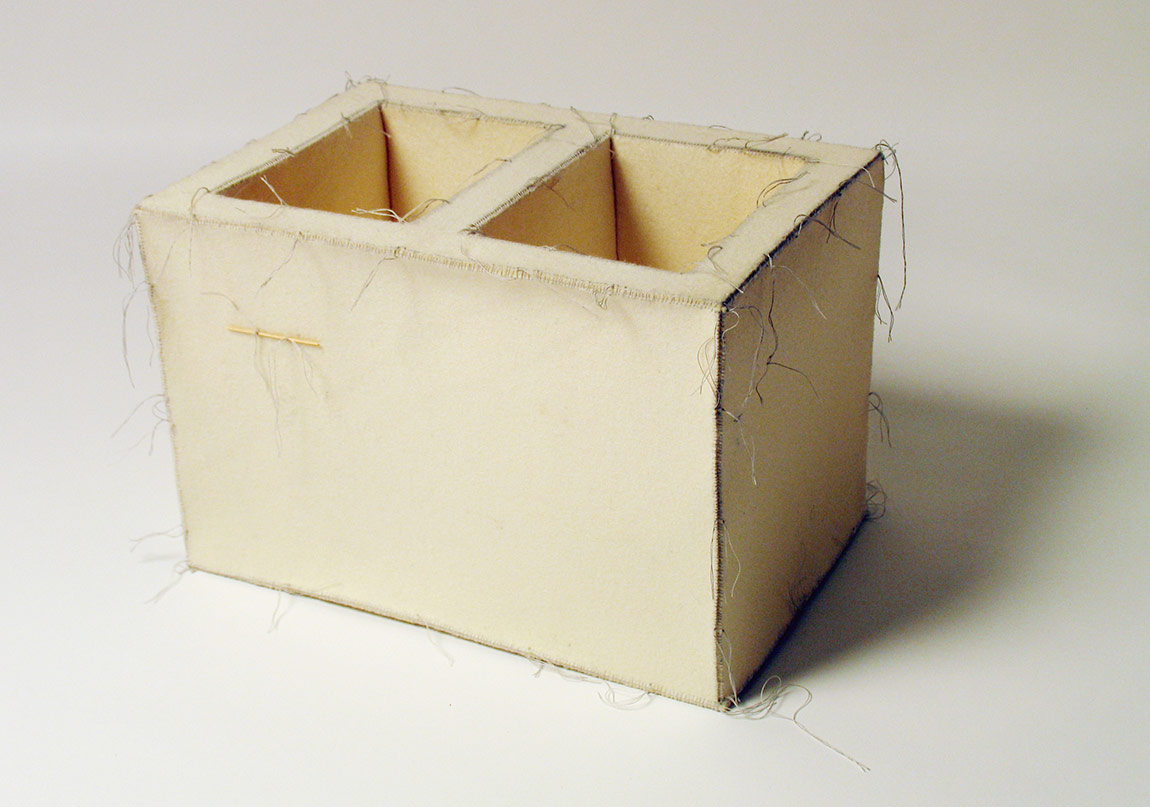
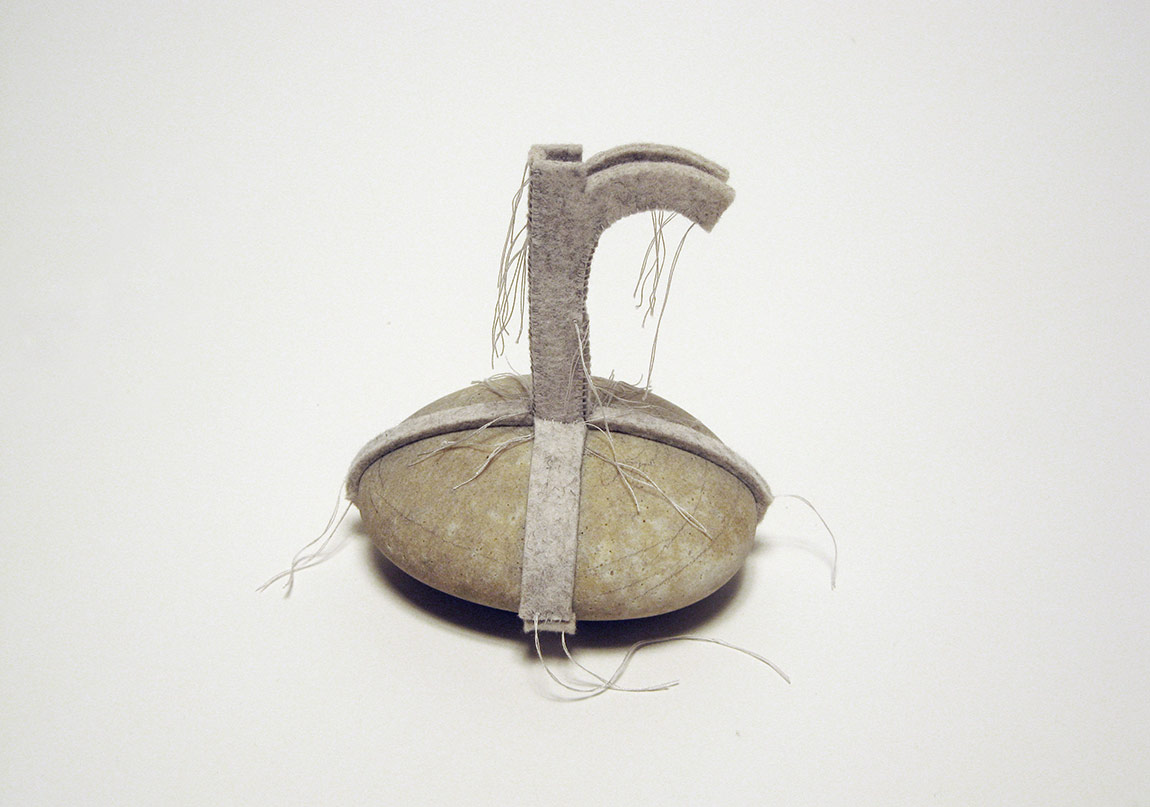
When you draw, or you cut, you add and you take out, there’s a search for bringing something into existence that has been there, or in you and its coming into existence. Your felt sculptures, I am now thinking ‘Tomb’ from warm snow series, and felt wall pieces here also, they stand on their own, solid and firm and take up physical space in a very definite way but they also seem like they’ve been through a lot, they are morphed and changed by your stitching. This creates a resistance in the work. The resistance in your work is something very palpable. Is felt a material something that suits this process?
Well it works that way for me. I don’t know if it would work that way for anybody else, and it's specifically what I’ve chosen to do with felt. Because I work with it in a ridiculous way that stresses it out. It doesn’t 'like' what I'm doing to it. I am returning to what you said about something coming into being but feeling like it had been there all along. Because, if I’m really finding something, there’s a feeling of inevitability. It's as though it were always there to be freshly re-discovered. Simultaneously new and very old. The greatest!
That brings up the aspect of time. What is time, if it has always been there, and if it is hapenning now. What is new work and what is old work so to speak?
That’s exactly right. That’s one of the things I love about looking at ancient art. I don’t look at it in any different way than contemporary art. It’s so terrific to feel a connection to and an empathy with someone who lived hundreds or thousands of years ago. It's the same impulses, and that compresses time. Because space and time are inseparable, it seems relevant to say that I learned to see three dimensional space in my 40s. I had no idea that I was only seeing two dimensions before that. Now my eyes can see 3-D, but my brain still organizes in a 2-D way. It’s complicated. I like stuff that alludes to 3-D— I want to breathe, I want space, but there's a thrill I get, or it feels right to me, when there's a tension between these dimensional qualities. I can’t really help it, it's just true to my experience.
Ancient figues, like faun, which is half human half goat, appear in your work. Is this from a similar place?
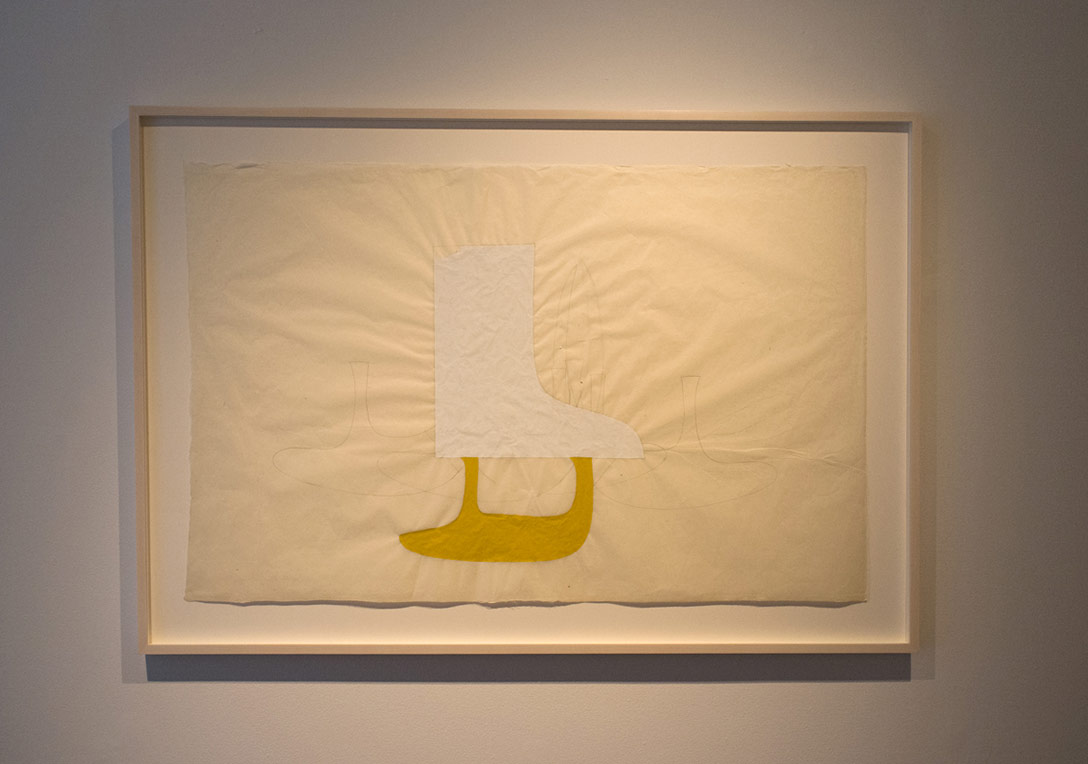
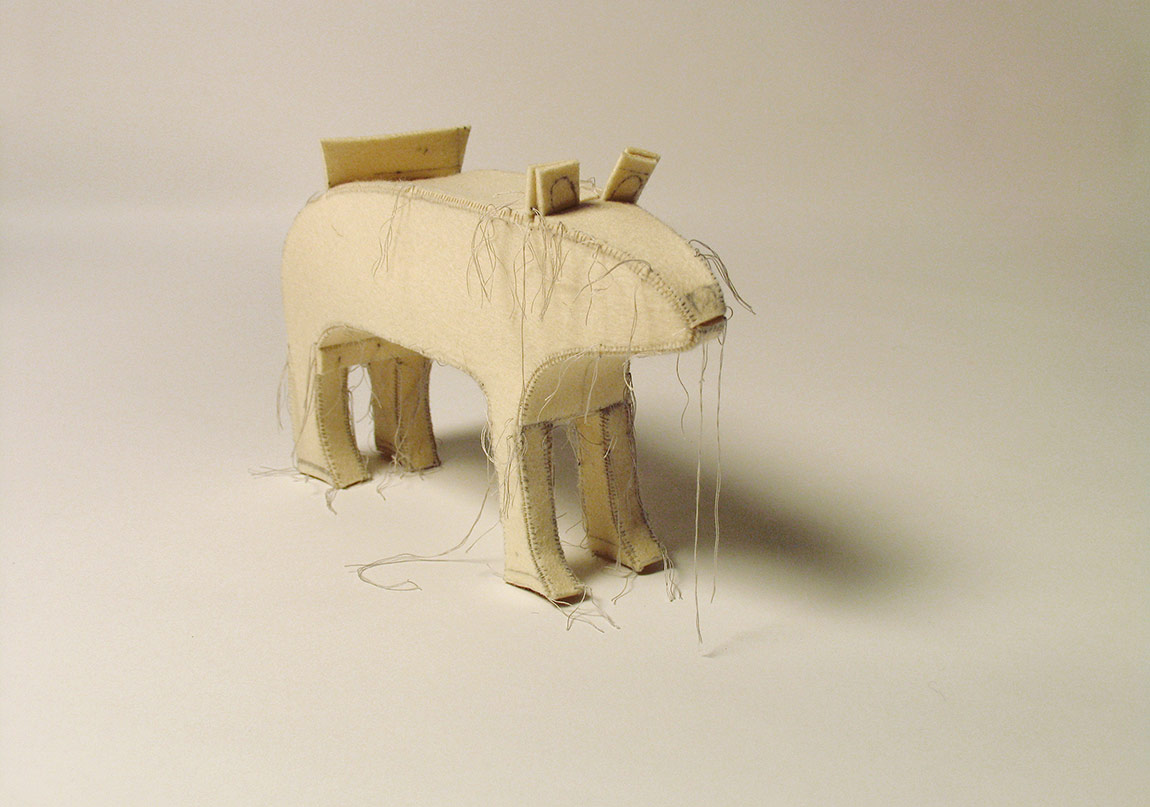
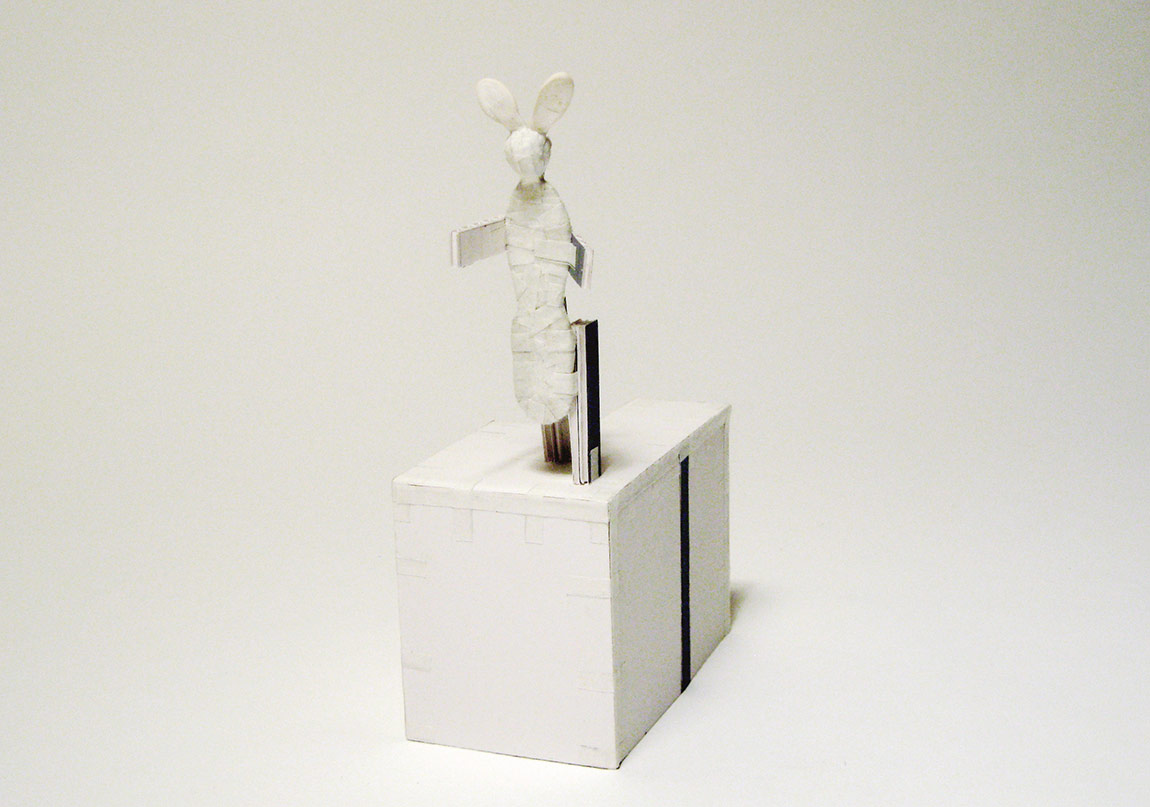
Some of these references come out of messing around with materials. It’s as though that’s what the materials want to be. And then after I make something, it's so gratifying if it has the look of something from ancient cultures or from mythology. I don’t want to use bears or boots just because that’s what I do, and I always question it, but sometimes I just can't ignore the impulse. I’m not done with it. I have also had the experience of being done with something for a while. But then it has to reform inside of me in some way. Many years later it comes out slightly altered. I am not aware of the relationship, but other people see it—and point it out to me. Other people saw the connection between the peanut, the wooden ice cream spoon and the iconic female figure that recurs in my work. The consistency is reassuring.
When you use found objects, is there a correspondance between you and the object, then it becomes a part of your work in a natural way?
Its like photography. When you take a picture, its something about what you're seeing that's in you, and it's not all ‘you,’ it's not all ‘it’. When I was picking up the wooden ice cream spoons on the street, they just 'wanted' me to do that. I couldn’t ignore them. There was something they were doing for me, and I was doing for them. I keep stuff around. Sometimes I use it right away, sometimes years later when it’s the right moment. I say to myself that impulse makes sense now. It was just ahead of its context.
;