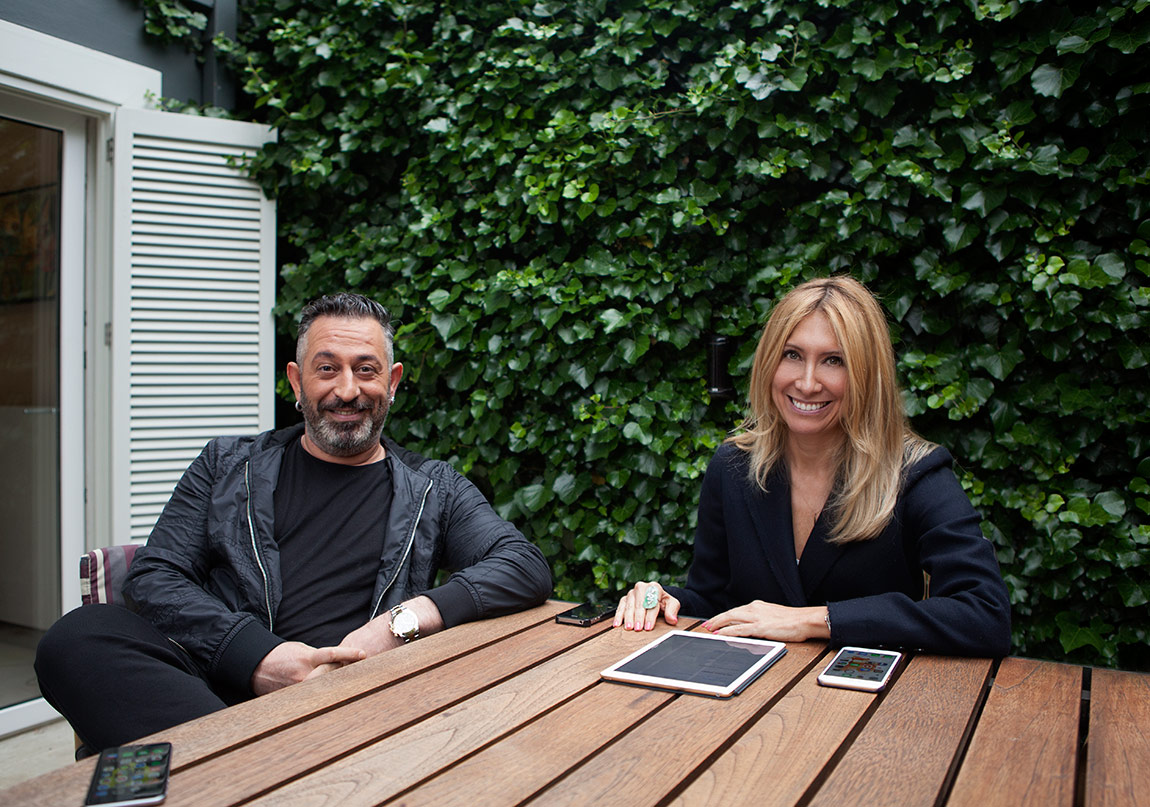
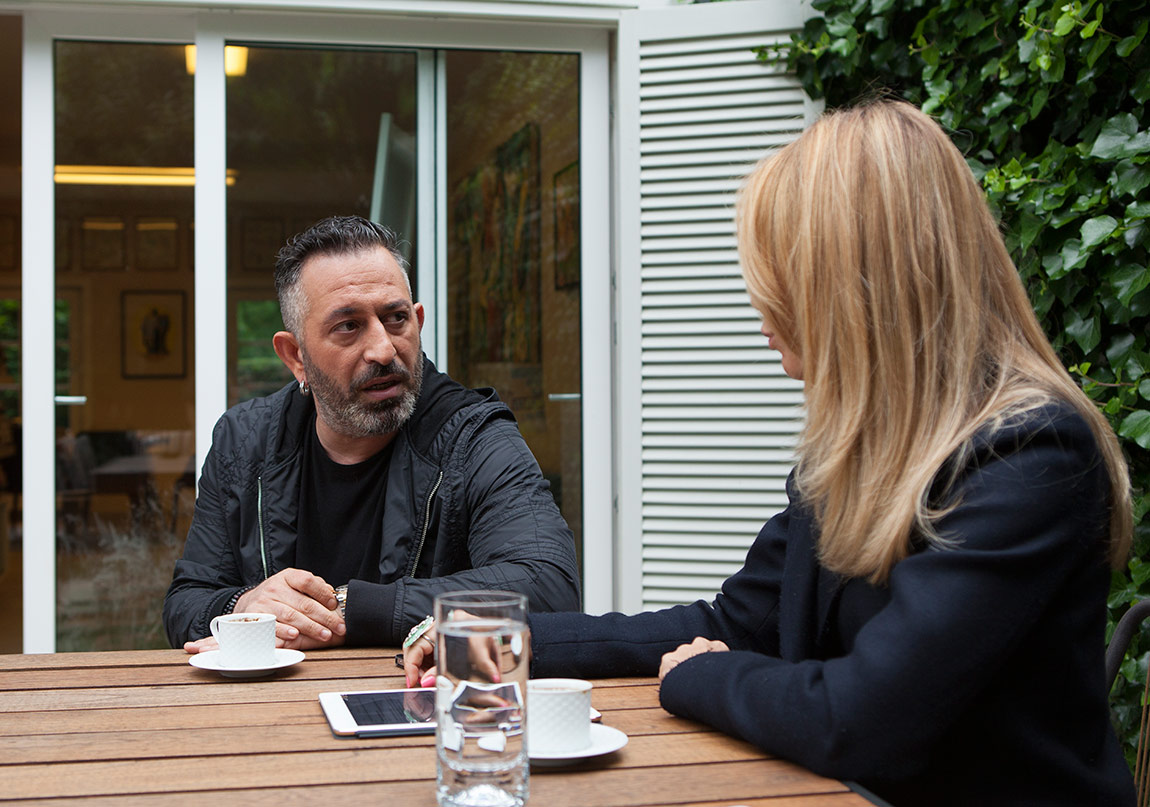
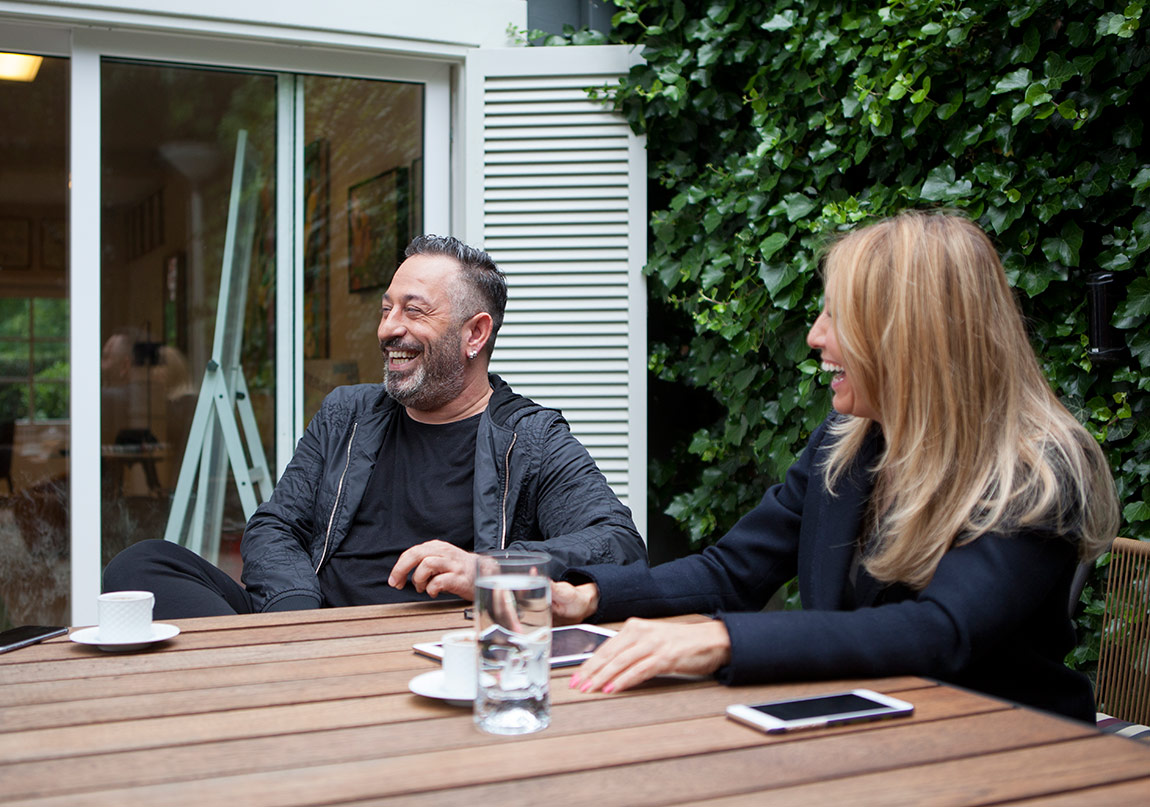
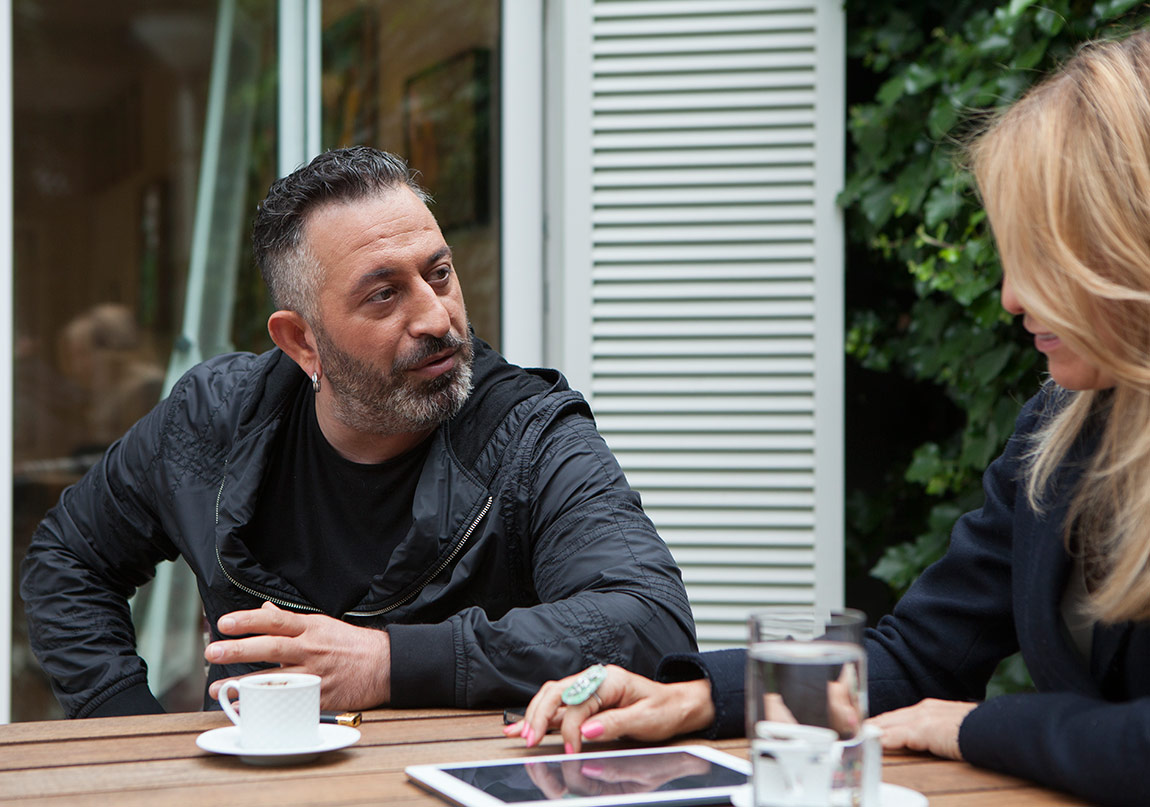
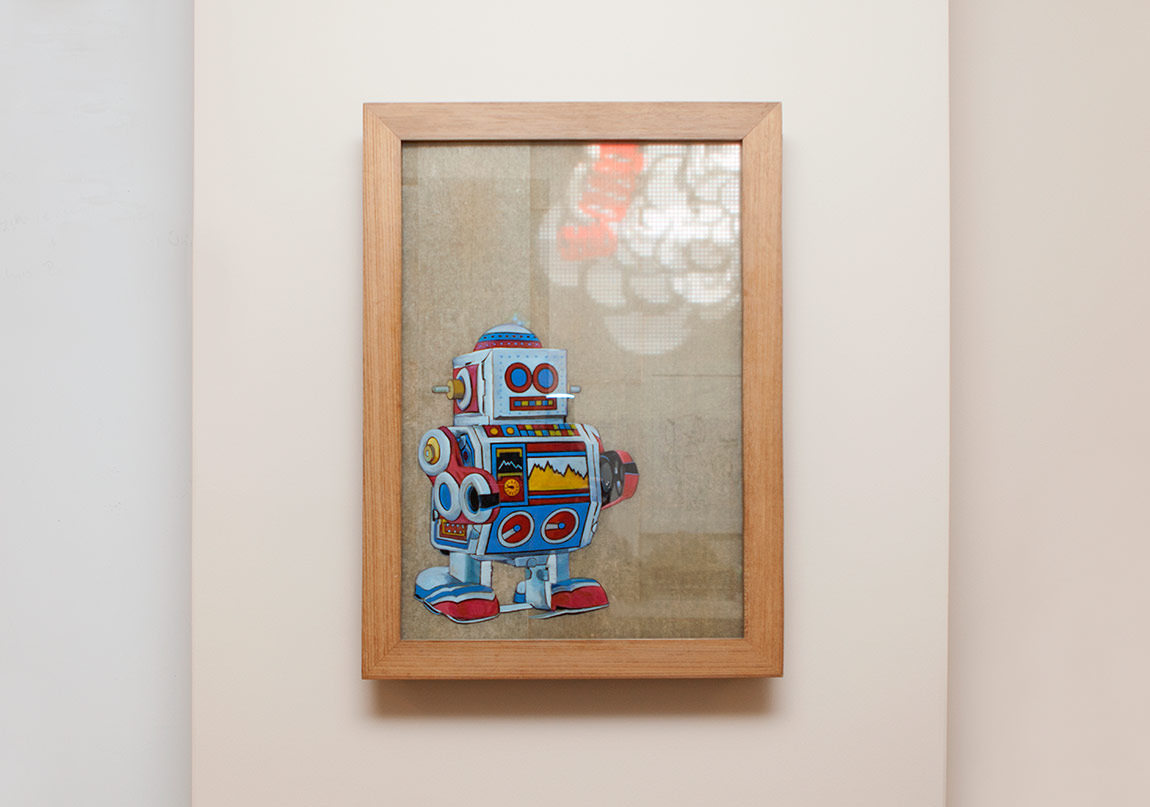
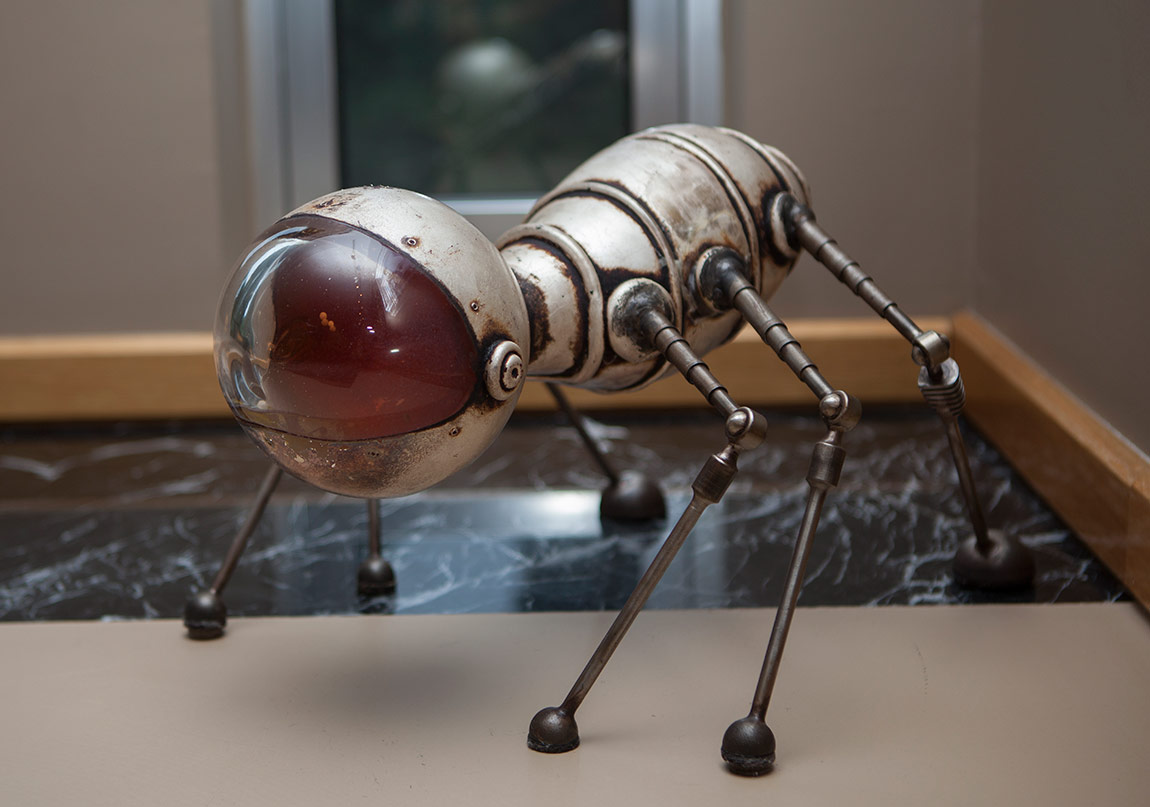
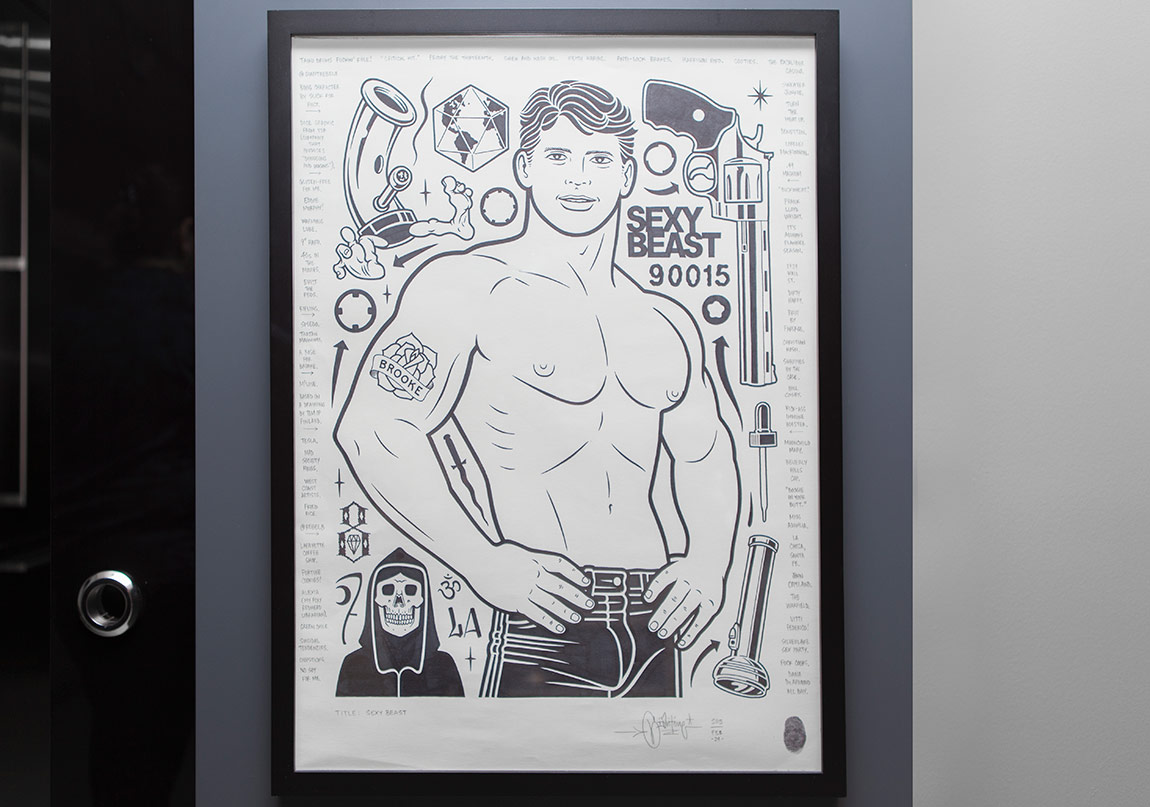
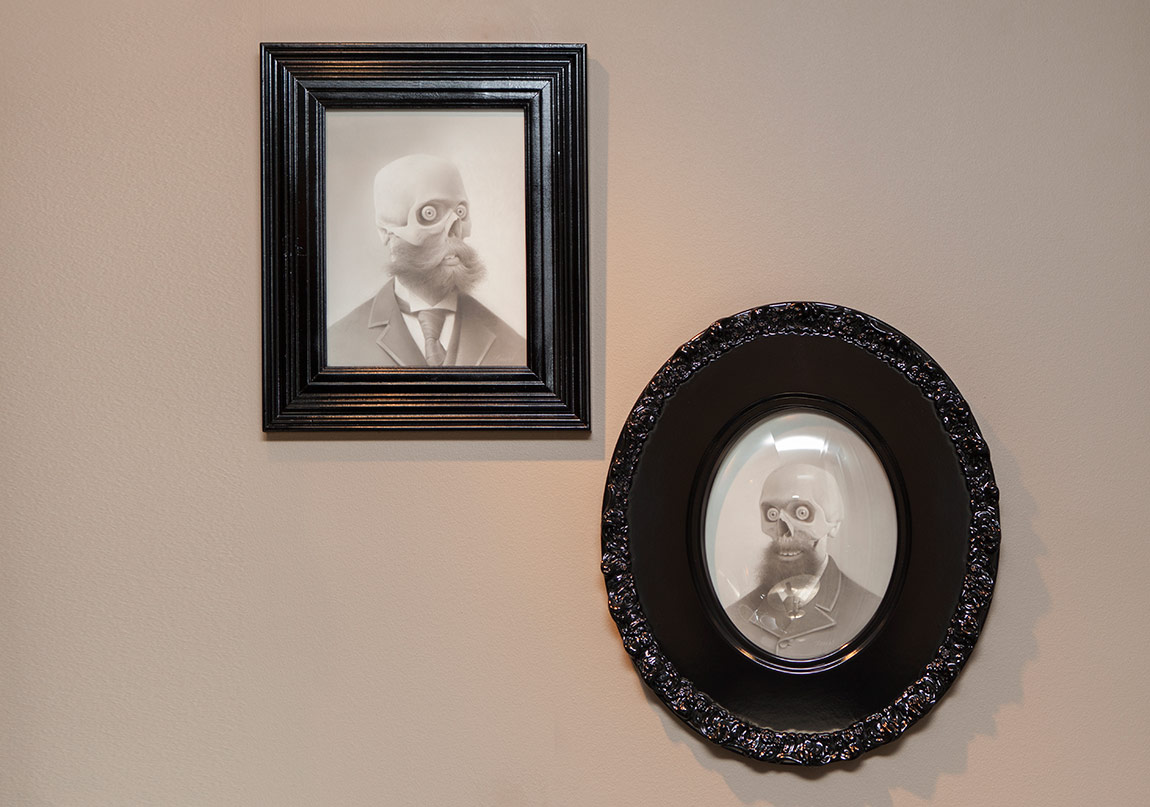
Cem Yılmaz primarily seeks persistence and craftsmanship in art works, as his background is in caricature. The idea is very important for him, just as much as the effort to capture perfection in application. He is always after the feeling of sincerity, naivete and the infantile in art.
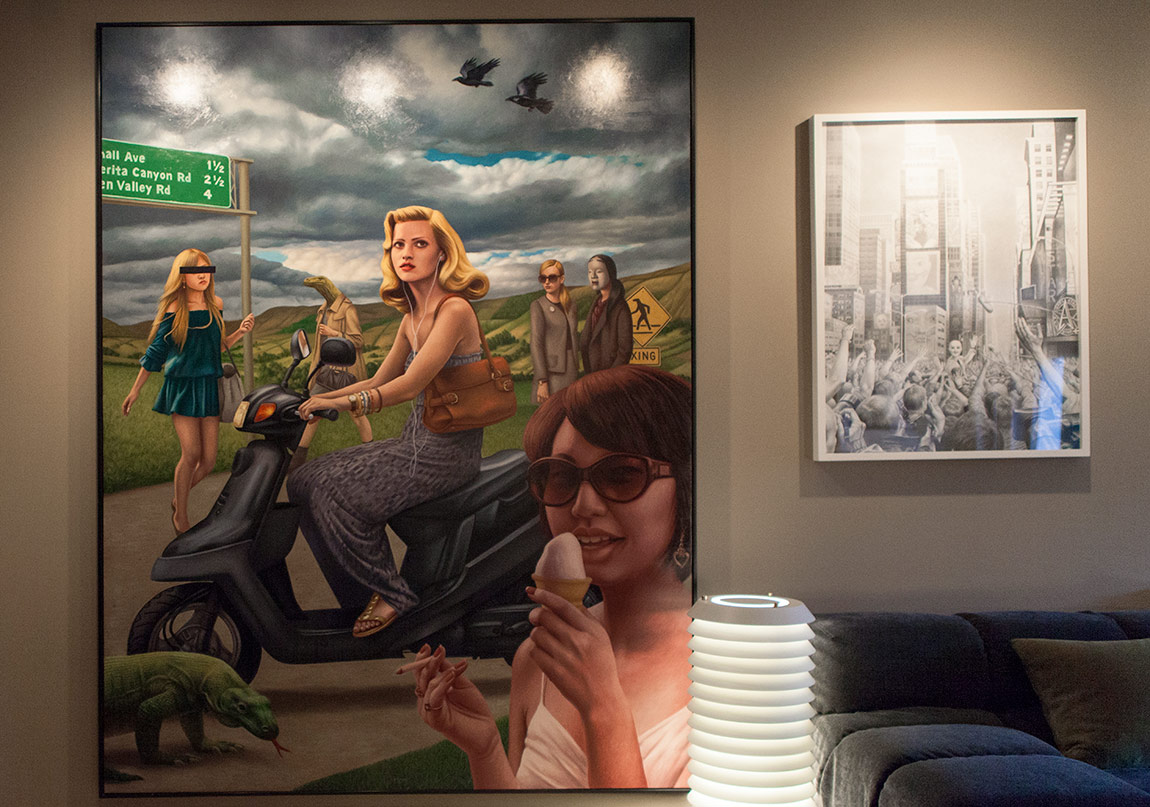
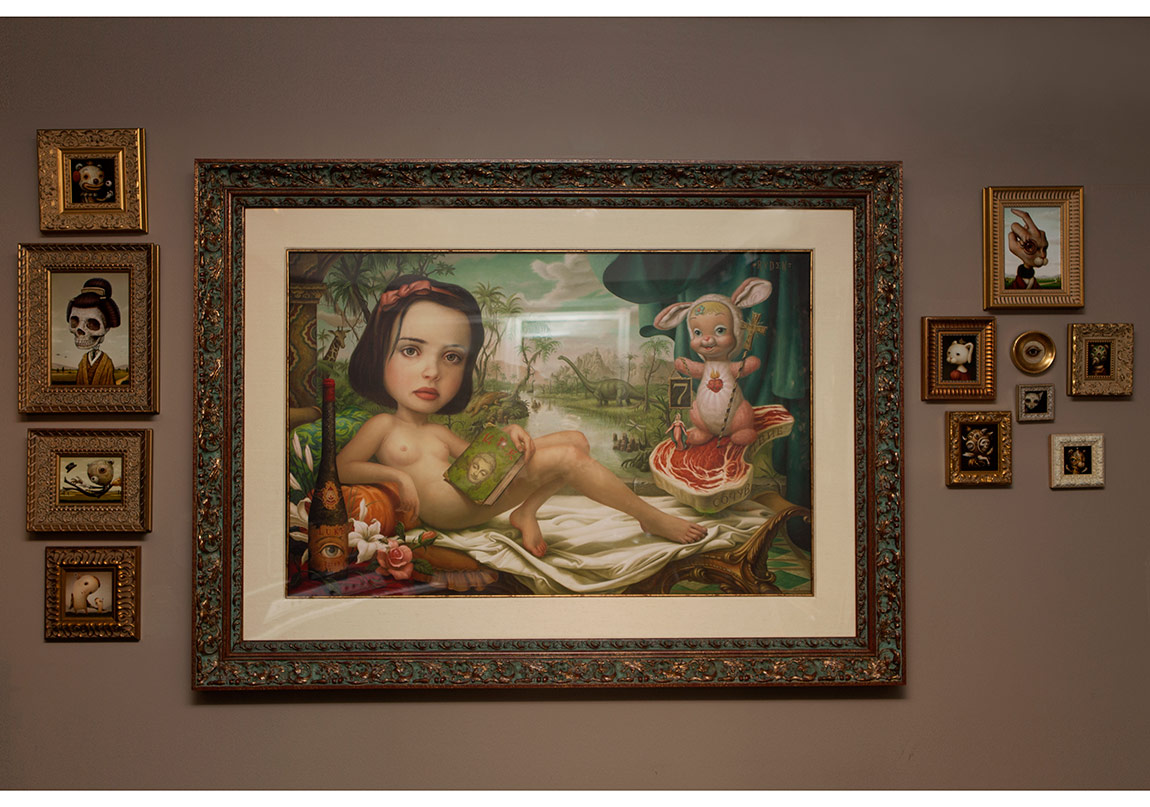
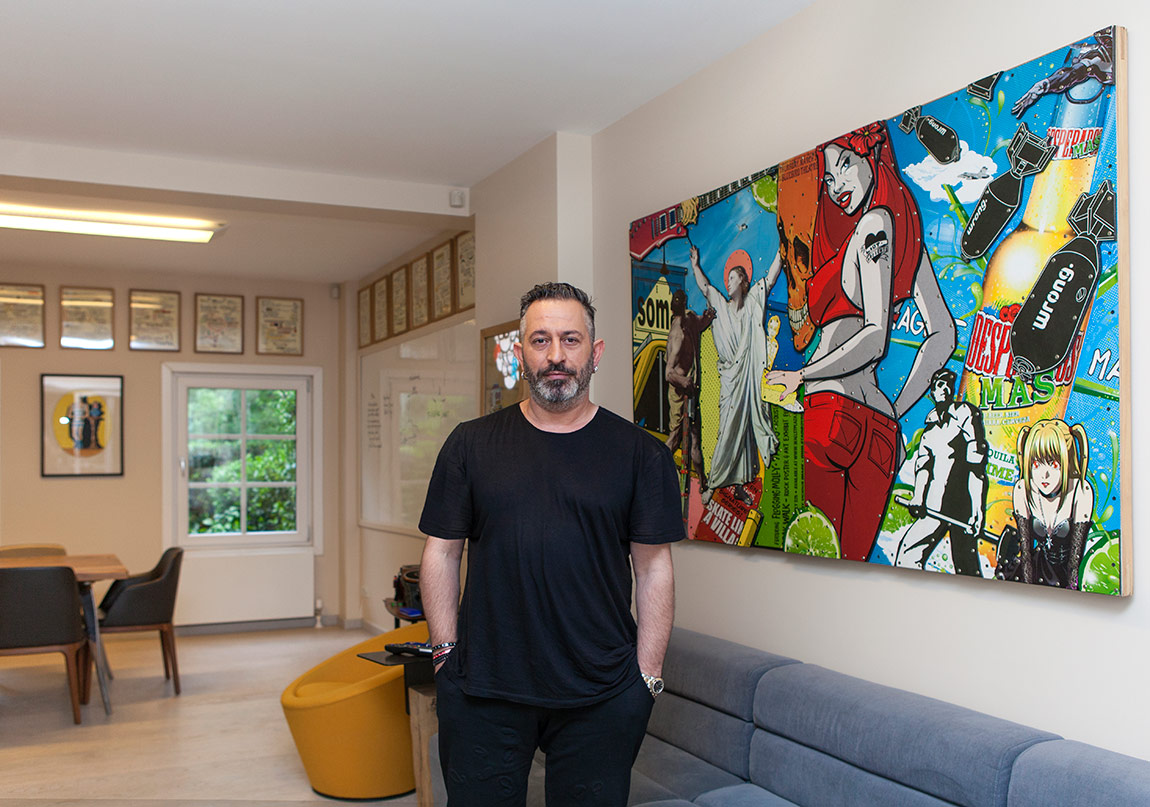
The spaces that he works and lives in are temples that combine the street with the academy, hardcore caricature with high art. This temple that makes you think of Alice in Wonderland take the visitor from the Renaissance to today’s digital age, at times strange, mischievous, scary, but always with a unique attitude and position, converging elegance with harmony.
Art is already an indispensable part of your life. When did you become interested in painting? When did you become a collector in this evolution?
To define me as a collector is too much; let’s just say I’m an enthusiast. Because of my background in caricature, I was always interested in drawing and lines. As someone who is interested in the production as well as the collecting, I became part of certain works with the feeling of “If they’re selling it, let’s buy it :)” The content is very important, but I’m most interested in the stages of production. In other words, the idea, the innovation, the application, the craftsmanship. And of course, there is that interest in me for art: music, painting, literature…
I want to avoid the definition of being a collector because of the caricaturized criticisms. There is the common perception that these people do not understand nor appreciate art, but are collecting for one reason or another. “There is a three-meter gap on my wall, what should I buy to cover it?” is something we hear often. This figure has also been featured on film. There is this film that Julian Schnabel made about Basquiat’s life and even in this film, there is a collector who comes over and asks whether they have a certain Basquiat work in blue. There is such a figure. But it is important not to generalize this; a lot of people collect with love, they share a lot of feelings with the artists. They don’t just put it on the wall or put the work away in storage.
Was there anyone in your family who pushed you towards the arts?
Yes, there is such a figure, my older brother! (Can Yılmaz) He said “It was a big necessity, I’m glad you bought Vik Muniz.” :) Our house hosted people who were respectful to different tastes, choices, who were sensitive to beautiful things. I always asked for sheets of paper from my father when I was little. He would bring me a big tomar of paper and I would immediately use up all the sheets with my pencil drawings and ask for new ones. There is no one who was educated in the arts or who had manual skills, who was interested in painting. But there is also no one who said, “I could also draw this!” when they looked at a Picasso. We don’t hang out with such people . Even if they are relatives, we don’t meet with these types!:)
You ventured into collecting contemporary art 15 years ago, right?
What was the first work you acquired? What does it mean for you?
The first work I acquired in Turkey was from İsmet Doğan. At the time, he was making riddles, collages, and mirrors. I was interested in his colors, ideas, the artist himself.
What kind of works are you interested in?
I’m interested in artists who do things I couldn’t have done myself in terms of the craftsmanship, patience, their skills in applying the idea and persistence. You could conceive a sculpture, asking yourself “How do I bring metal and marble together?” You could say, “the front should be bronz, the backside should be wood.” But what is important is the desire to make the application perfect and it is this adventure that matters. This is why artists experiment with a lot of things; I know artists who work like a chemist or an engineer. This is my feeling about cars too. Some cars are like meticulous sculptures, they are beautiful even if they don’t move.
I encountered art websites such as Artnet, Artprice about 10 years ago. First I was using them to get information, just like looking at an introductory book to philosophy. Renaissance, modern art, painting, sculpture etc. With viewing, one’s taste and eye evolves.
Your collection includes a lot of international works. Is there a specific reason behind this?
The main reason is that I found works I liked abroad. While the world was talking about pop art, we went from adoloscense to maturity. After that period, our peers or those who are half a generation older started to produce. This is when I started to have more means and I tried to buy works from artists my age. I of course also acquired works from artists whose works I relate to emotionally, such as the work of Basquiat. But of course when we were that age, it was almost impossible to buy a Basquiat painting. In 2000/2001, the Basquiat Foundation brought out a set of lithographs, an edition of 8. I chased these first.
I think Basquiat is your favorite artist?
Yes, I don’t know why. I was really struck by his film. The story of his life, the fact that he produced when he was very young and his early passing… One of the reasons I don’t like Andy Warhol is Basquiat, actually. I don’t feel anything towards Warhol. He is someone who caused more damage than benefit to those around him. Maybe I’m mistaken but…
That is true about Warhol’s personality, but what do you think of him as an artist?
At the end of the day, the final work is beautiful. It would be possible to buy his work for historical reasons or to say “I have a work from that period.” I sometimes get those feelings. Banksy is someone that I appreciate, whose ideas I like. But I never intended to buy a Banksy. I was always skeptical towards that notion of the mystery and I never bought lithographs of his work. I don’t have that many works from that period, the 80s. I bought a Keith Haring lithograph much later from Art Basel Hong Kong—you were there.
What kind of artists are you interested in? Do we not have these types of artists in Turkey?
There was a time when the street came together with the academic, back in our day. For example, someone is a tattoo artist, but then they start painting or someone starts putting mosaics of Space Invaders, the French computer game, on the street. These people are my contemporaries, I was interested in them first.
We also have such people in this country, but the consumer doesn’t support them. And because they are not supported, these artists don’t survive. There is a big difference in terms of the struggle to survive between someone who lives in a major city like Los Angeles, New York, or a capital of Europe, or someone who was brought up with comic culture versus someone who is trying to make their own comic. These people are appreciated in their own countries. And as the gallery owner is also from the same generation and spirit, they want to promote them to other likeminded people.
What are international galleries that you acquire works from?
I buy from Jonathan LeVine, Corey Helford, Low Brow in New York, Roq La Rue in Seattle. Jonathan LeVine collects very beautiful things; although all his artists are from different disciplines, their practices have a common, beautiful thread.
Did you find these galleries online?
Yes, you start following the work of an artist and by looking at the gallery who represents them, you find other artists that you like. When you are shopping online, you receive the message “We think you might like this one,” and then you start tracing this chain. When I look at the past, I see that I was loyal to the galleries who represent my taste.
How would you define your style? Is there a specific movement that you follow?
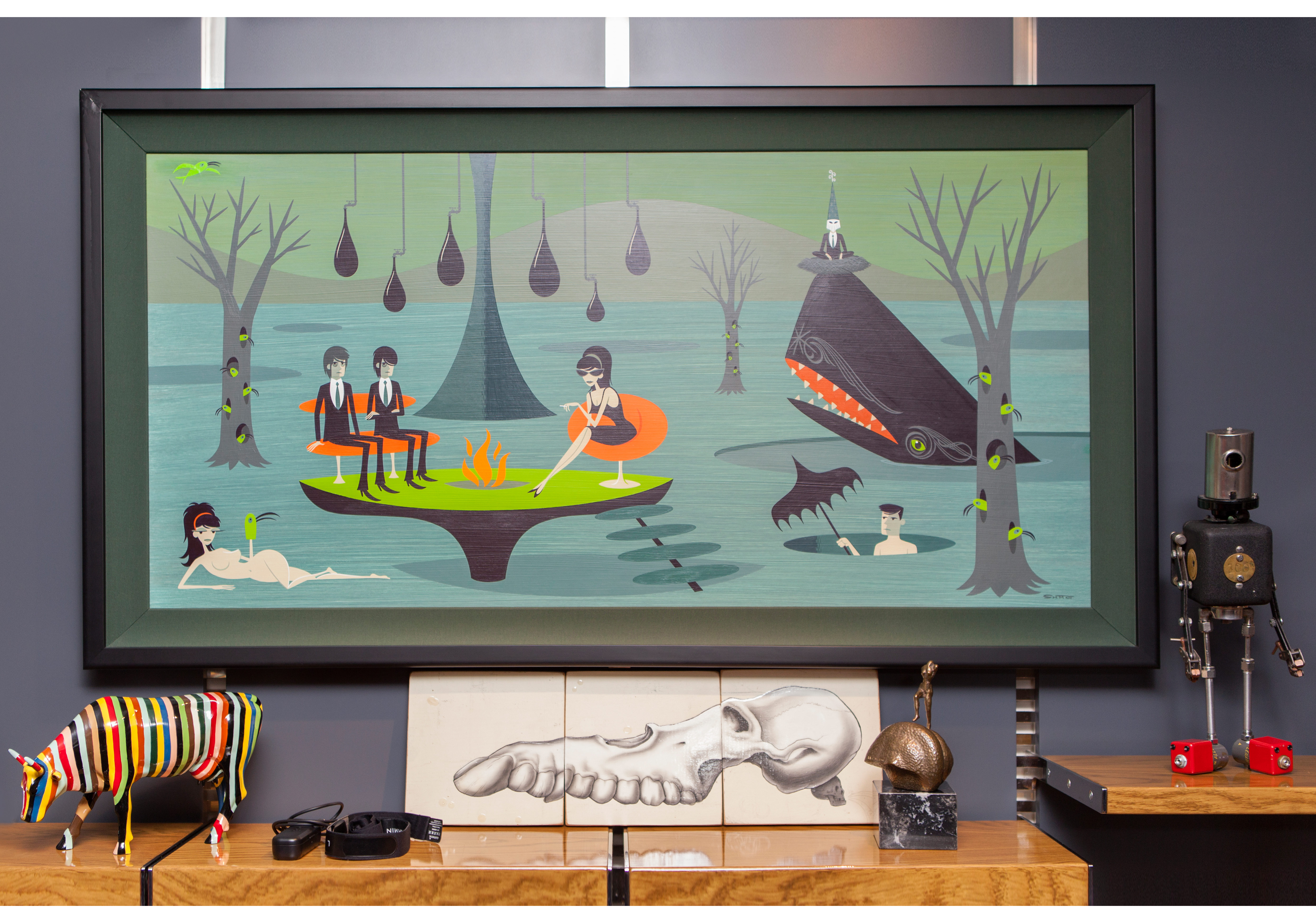
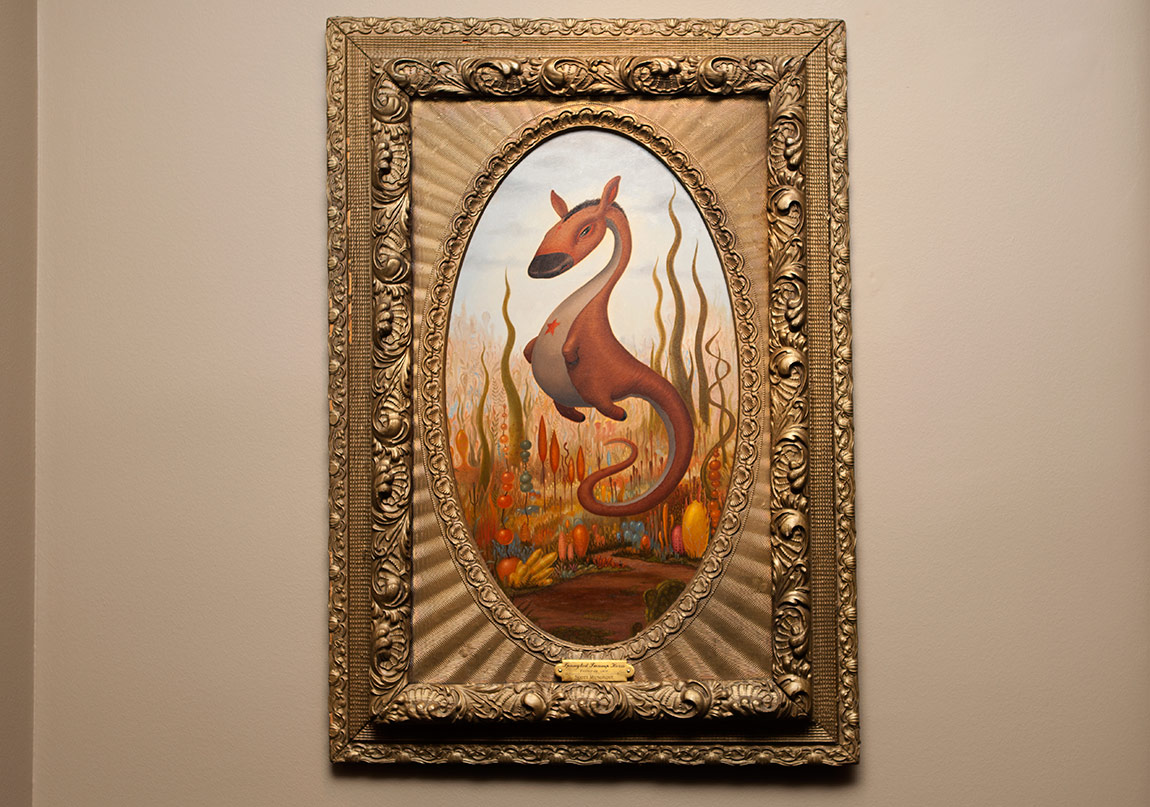
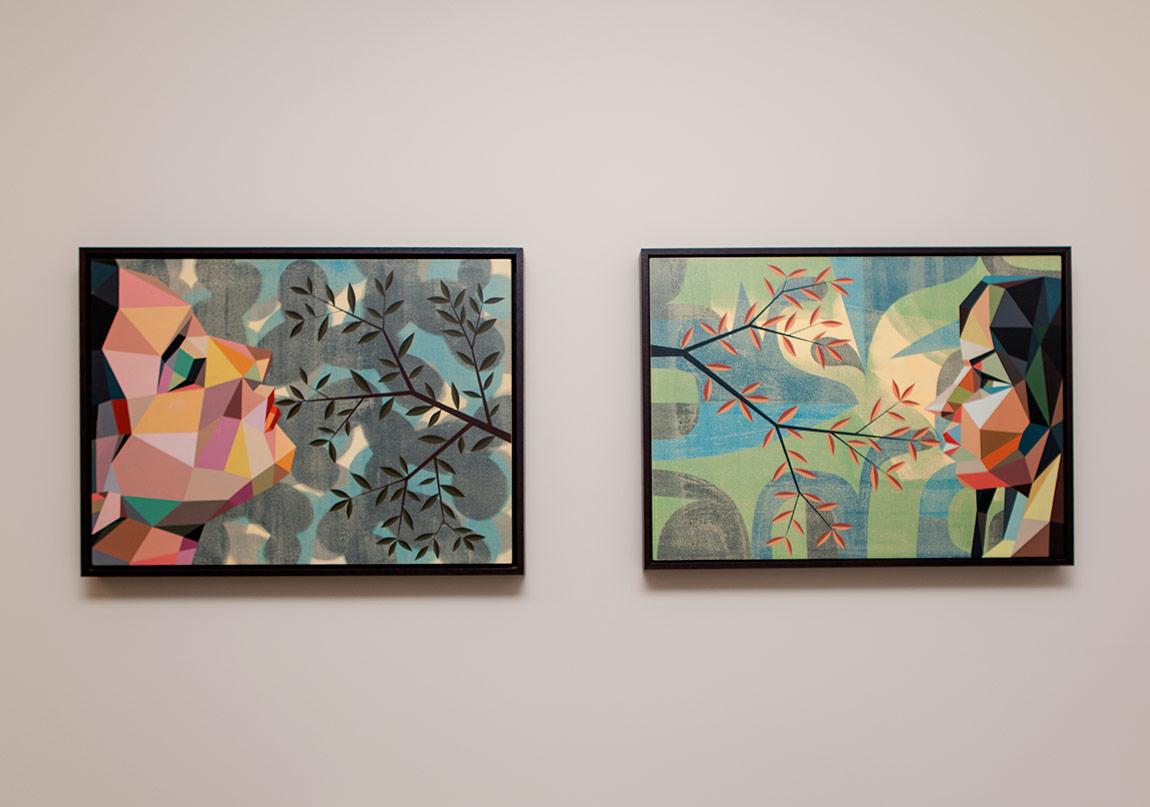
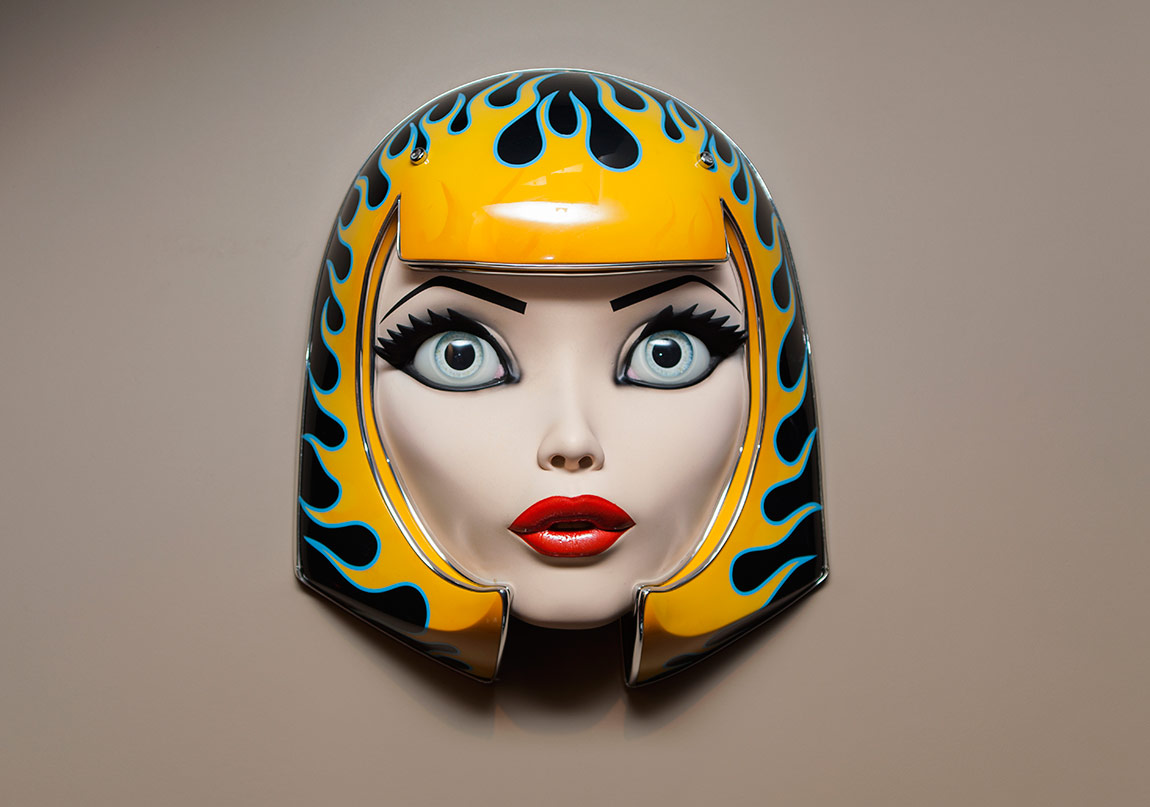
When I look at my collection, I see that I like works of a certain line. Most of them are very well-executed, but this is not related to whether or not a work is expensive. Because of my background in drawing and caricatures, I like works that are close to graphics. I like graffiti and street art. I follow the movements of pop-surreal and lowbrow movements. I’m interested in works that combine hardcore caricature with high art.
I’m also interested in the American culture of signs. Sign-making is something that is no longer practiced here, but I’ve been interested in it since I was a child. During the era of advertising in the United States, when marketing became huge, it was very important to have hand-painted signs with different fonts. For example, I really like Stephen Powers’s sign works.
Among the older works that I have are caricatures and pencil drawings by Cemal Nadir, which I bought from an auction. Most of the caricaturists in Turkey are academy-trained painters. Bahadır Baruter, who draws for magazines, makes oil paintings and actually now he makes amazing sculptures.
Is there a main idea behind your collection?
The main idea of my collection is: “Stop when your money runs out!”:) There is this guy Long Gone John in the art world; he is the biggest collector of Lowbrow’s small objects. He is crazy, his house has become uninhabitable, it’s a crazy house. Mark Ryden, who became famous after making Michael Jackson’s Dangerous album, whose works are a million dollars now, has a work in Long Gone John’s bathroom.
My collection is very homogenous. There is a consistency in terms of the ideas behind the works. I never bought a work because somebody else has it or collectors like it. Most of the works in my collection are not well-known in Turkey. This might be natural. I also respect people who collect as investments, but I don’t buy anything I won’t hang in my house.
The works in your collection all have an aspect of humor, right? Is it political humor or more pop?
Of course that’s true. What you call an artist emerges with a position; when you look at it, everything is political. This doesn’t mean that it has to be the politics of the day. I don’t understand guerilla style art that the masses would accept. My favorite Banksy work is “Looking for an idiot to pay a million dollars for this.” We are watching the existence of such a person with admiration.
But Banksy is always a question mark. On the one hand, he appears mysterious, but on the other hand, there is a commercial agent that represents him and what he does it not ethical.
Maybe. Artists become shy when money is involved. I wouldn’t say what could be said about me to Banksy. I won’t criticize him for this.
What about international artists that you are following and whose style that you like?
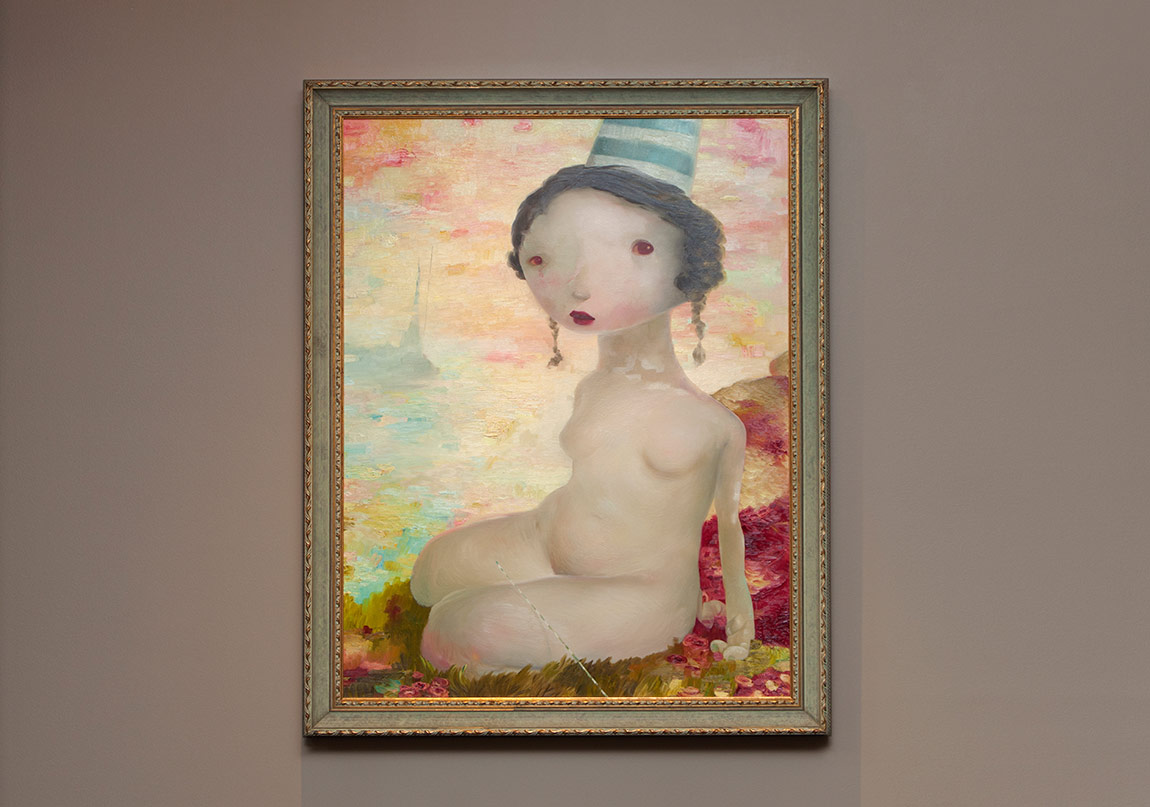
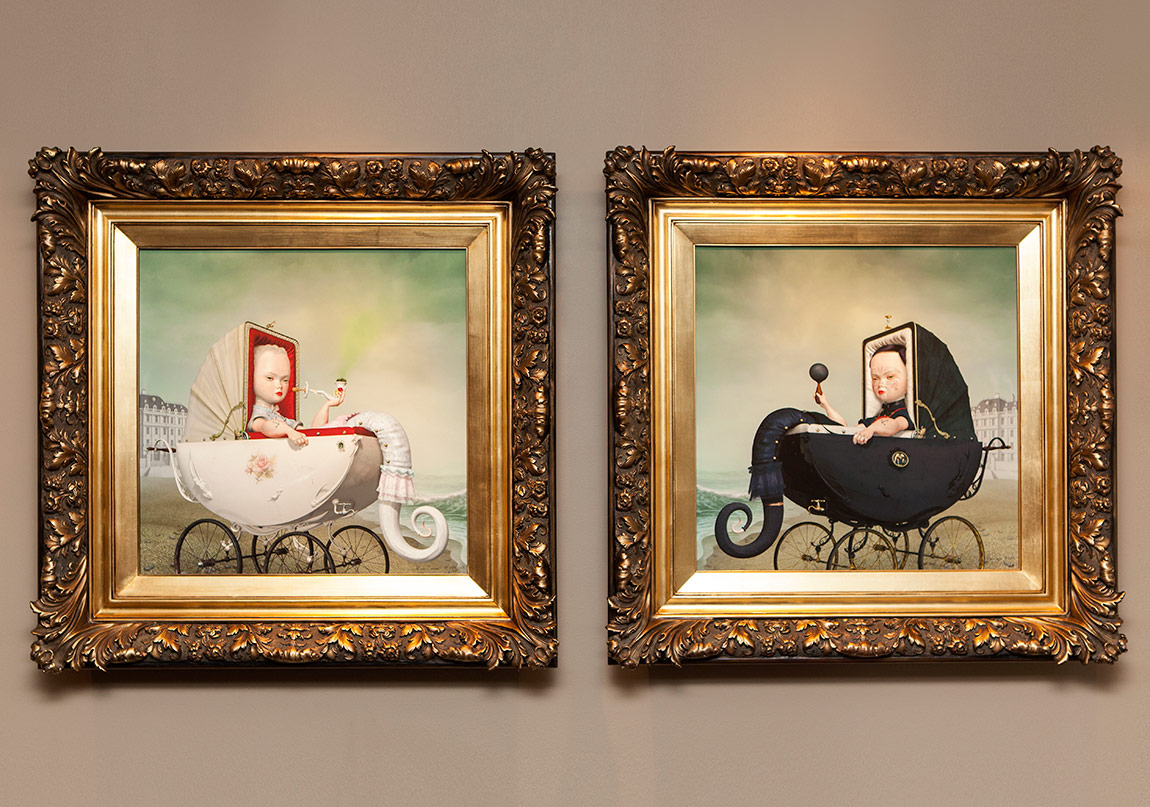
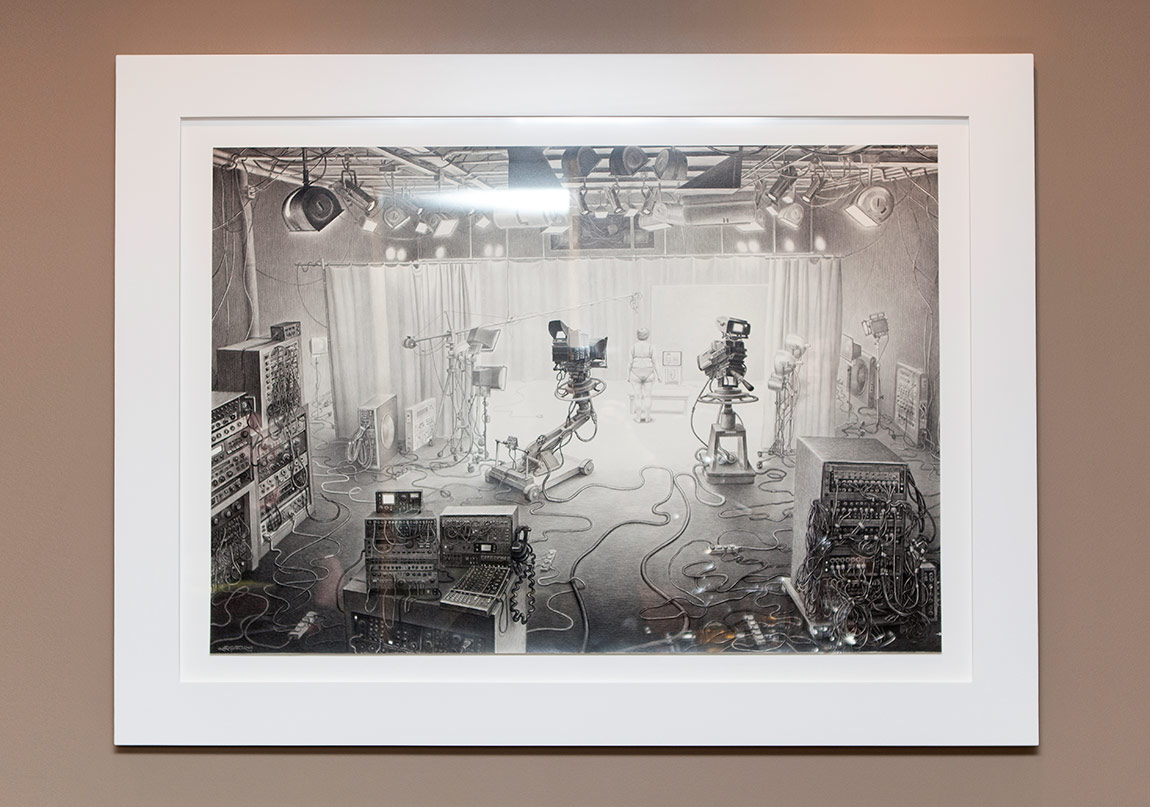
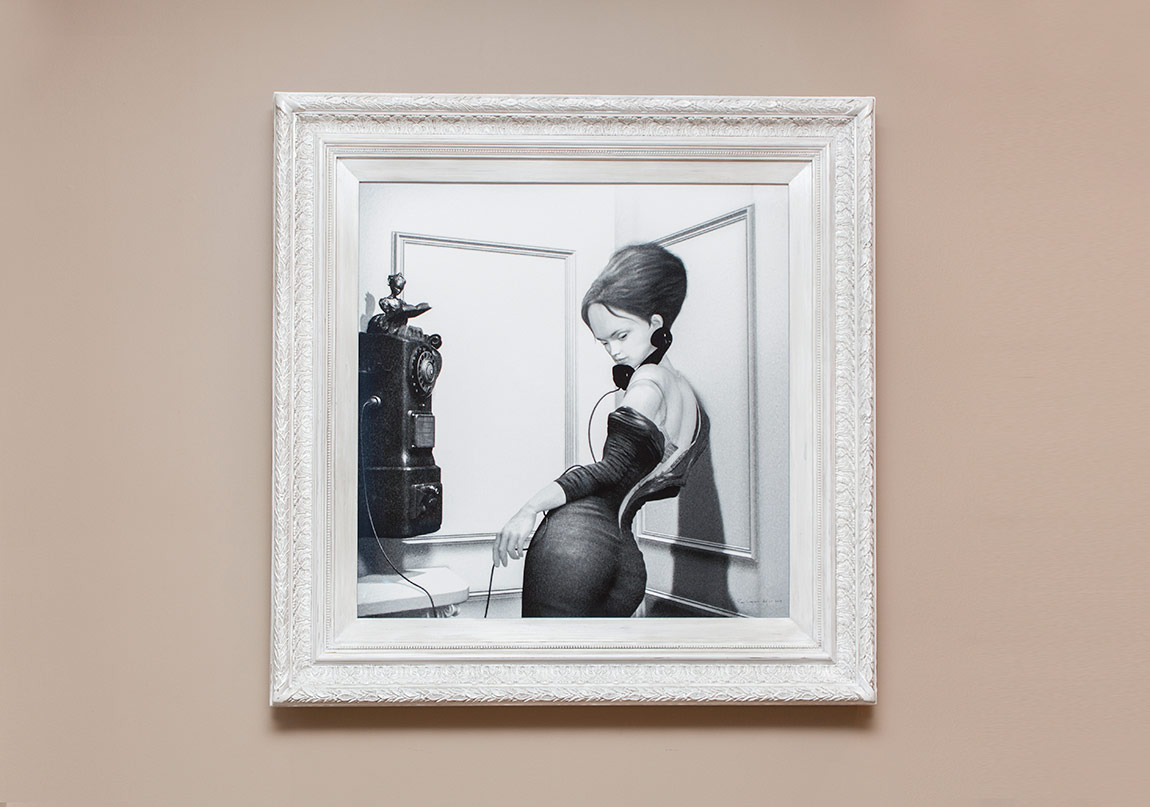
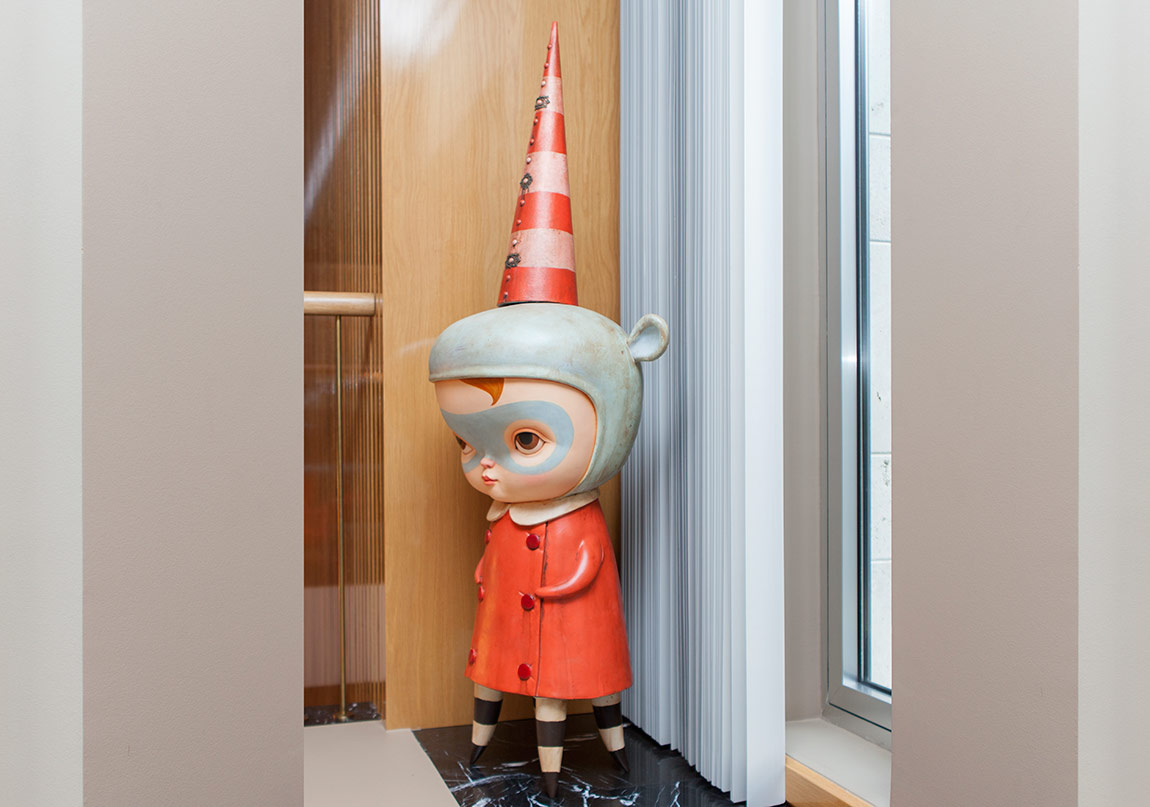
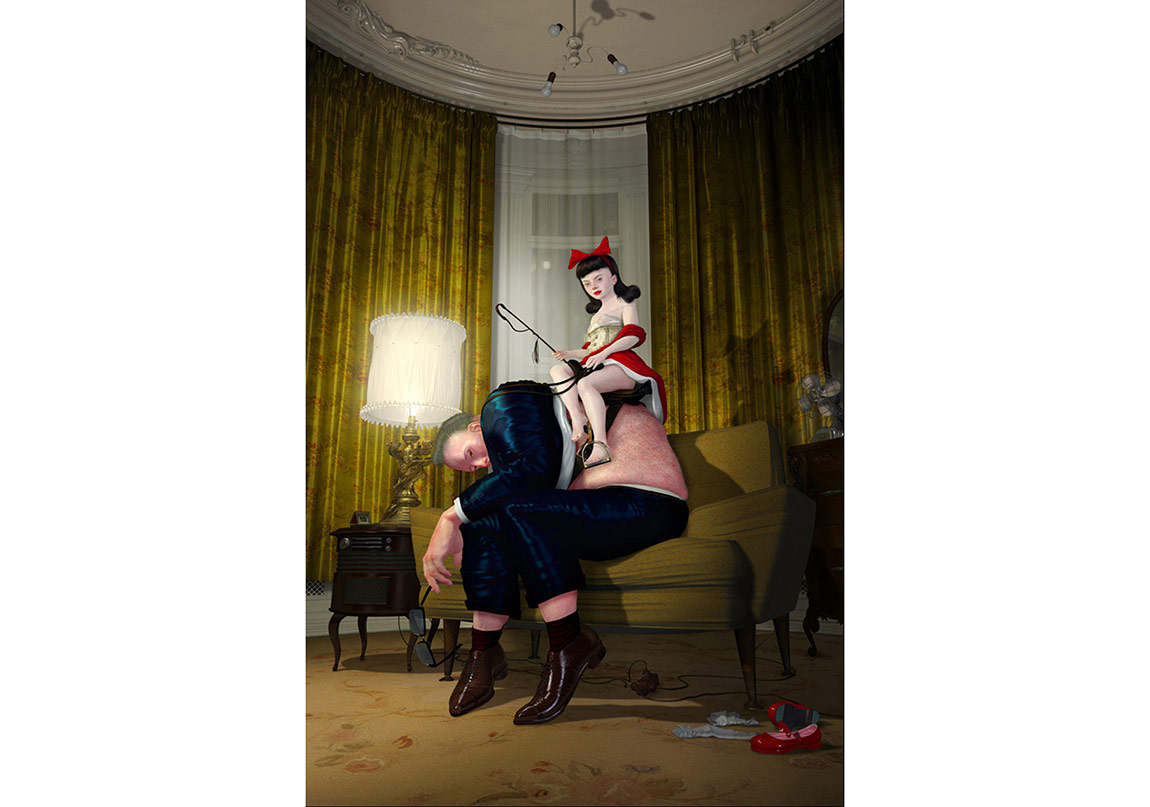
I like strangeness. There is this guy Ray Caesar. His work reminds me of the Renaissance period, but the content is very different. The texture and the composition appear to be old, but the work that he makes is digital and very contemporary. Mark Ryden is also an artist who works in a similar way. His works are a bit scary, but very unique. Chris Cooksey makes very detailed works. I also have a lot of works by Shepard Fairey.
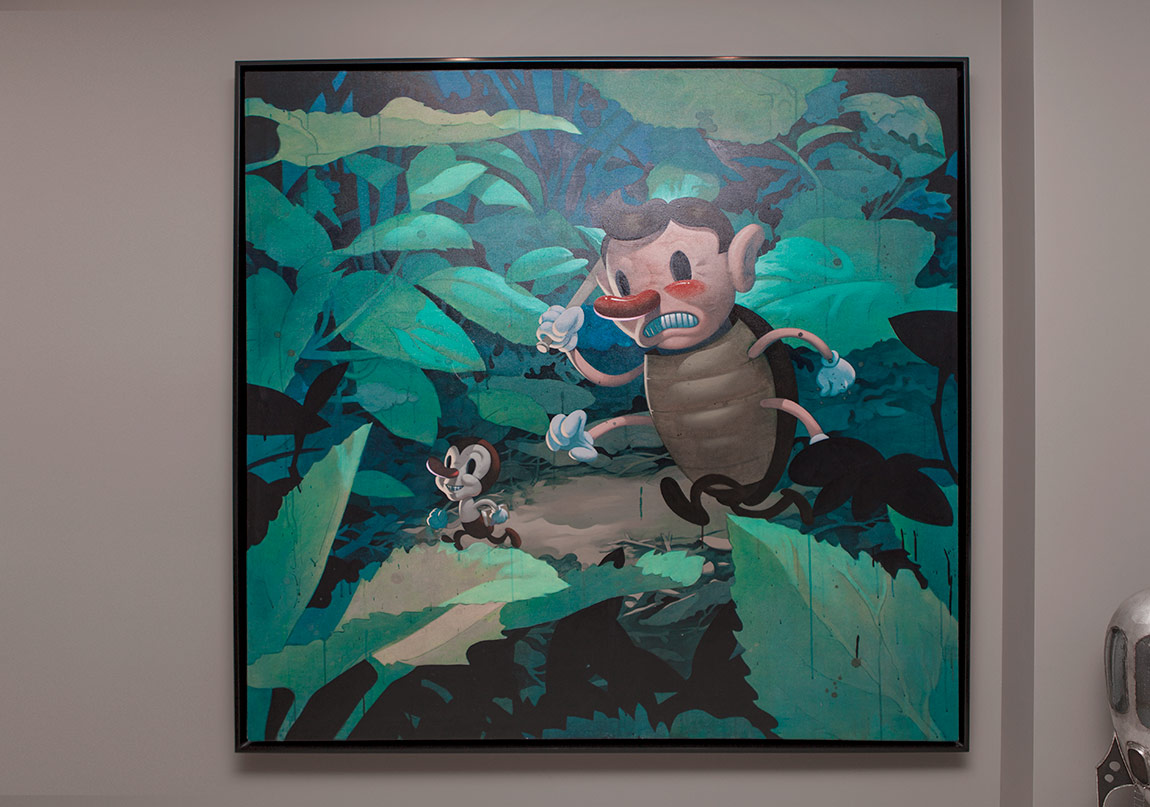
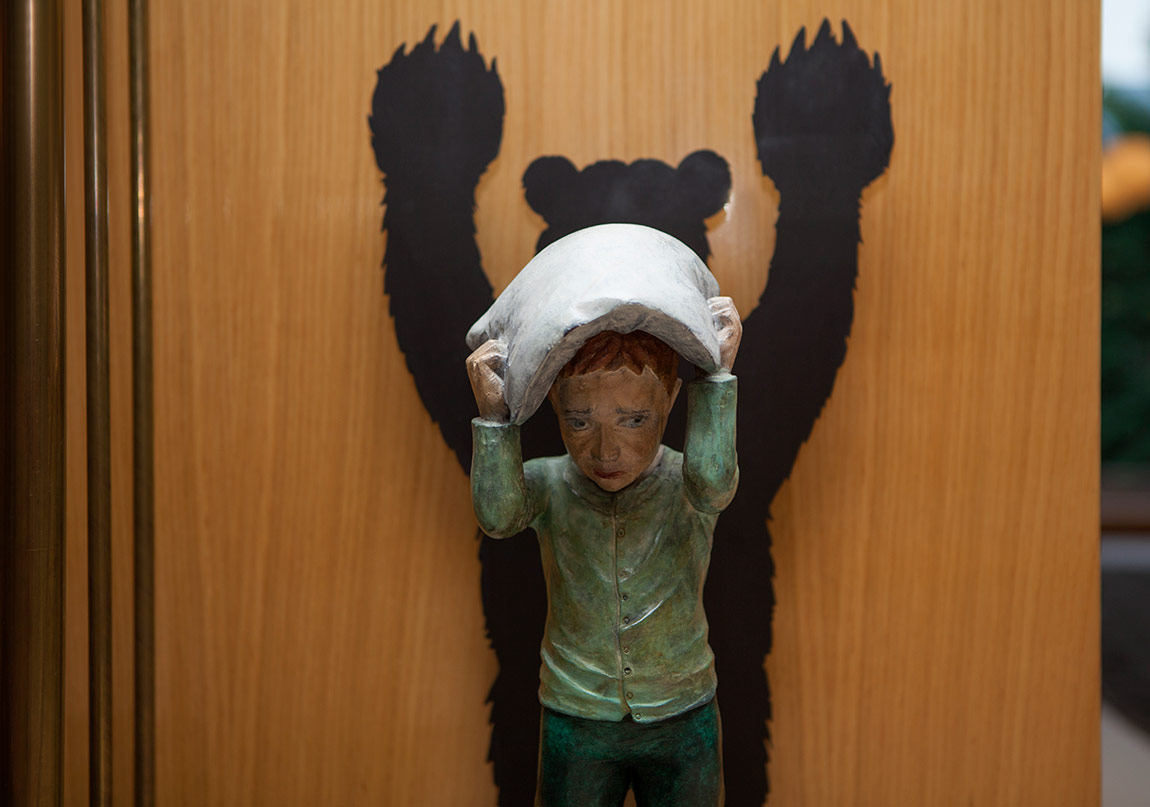
Victor Castillo is a very good caricaturist. He is from Chile, coming from a background of street art and he has a fairy-tale like narrative. I had bought a few works by him when my son was born four years ago. Two bugs in the forest; the big bug chasing the small bug, the colors are very bright. I related to those works in a special way back then and I still like it a lot. There is also Laurie Lipton, who is not from my generation. She makes pencil drawings, her works are really beautiful.
What do the artists in your collection have in common?
They all loved G.O.R.A!:) I have e-mail exchanges with many of them, I talk to them. Some of them google my name, so I have to tell them what I do for a living and then we have fun dialogues. They say, “I looked you up, you’re very funny!” You venture into an adventure together, that’s what’s fun. Sometimes the artists wants to know where I’m going to hang their work; these kinds of exchanges make me very happy. Recently, I installed a very precious work by Laurie Lipton and I sent her a photograph of where I installed the work. She saw another sculpture in the picture and said, “You hung my painting across from AJ Fosik’s work, I love AJ’s work!” I sometimes jokingly ask, “I’m hanging your painting across from Basquiat’s, what if that overwhelms your painting?”
I witnessed at Art Basel Hong Kong that you don’t negotiate prices. This is the opposite of what international galleries think of Turkish collectors.
Of course there is a commercial aspect to this and people are very polite to me. I just started to realize that I need to negotiate prices. I don’t think it’s right to negotiate prices with the artist themselves. But if there is an in-between party, I’ll brutally ask them, “You’re saying 50?”
Did you buy art works as a form of investment?
I never bought works for commercial reasons and I let go of very few works that I own. I buy all the works I own with passion, I pick them myself and I don’t feel the need to turn them into money afterwards.
Do you trust your instincts?
There are a lot of works that I bought without doing too much research, but to be honest, I haven’t had regrets. I pay what I pay with love. I very rarely did a painting exchange. Perhaps at the most three. If I don’t want to see something any more, I gift it to someone. If you receive a painting gift from me, you’ll know why. Jokes aside, I happily gift paintings to friends.
What do you think about video art? It has become very popular recently, but collectors are still hesitant to buy video art.
I had a friend who mentioned that he had a certain work. I asked him where the work was. He told me in it was in the safety box as a DVD. I’m slowly more interested in video art. I’m not too far from it because of my interest in film. But I haven’t bought video art yet.
How much do you care about the originality and the technique of a work?
Very important! I stay away from works that pretend to be. I find simplicity meaningful, but I also respect detail. Let’s talk about it without giving names. I had bought a sculpture by looking at a photograph of it in Turkey. In reality, the material used was so horrible. This material does not hold the idea. It’s a shame for the idea!
Recently, an artist created a cloud in an environment. It’s a brilliant idea, what a beautiful thing to watch, you encounter a real cloud. You can’t just use cotton and say that it is a cloud. Because we’ll all see that it is a pile of cotton. I find that people who just find an idea and who realize this idea without experimenting are amateurs. This could be an idea: “I’m going to make a shield of butterfly wings and you’re going to keep it for life.” “But this might dry up, what is your manifesto?” you say. They say, “This is what I’m talking about with my work. This is my manifesto.” Fair enough. It is like the invisible costume of the naked king.
It is impossible not to talk about Bedri Baykam’s empty frame, but your manifesto is important. “Empty frame!’ So what? No, it’s a bad idea. It might be bad for you, but might be a great idea for someone else. Is he giving you just an empty frame? No, he realizes his promise. But if they tell me that something is a solid sculpture and when that thing is not able to stand on its own, this is a wrong idea. This is not art.
Maybe their budget was not enough for the material required by the sculpture? Of course, this is no excuse.
Let me speak about this as a filmmaker. I wrote a very good Bond story, everything is in my head and I have a handycam. This doesn’t work! There are works that make you feel like art is desecrated. People have dedicated their lives to this, they sacrificed their eyes for this. You don’t think Michelangelo had a bad back after painting the Sistine Chapel? With all technological advancements, “I couldn’t do that,” is not art. This is a matter of ethics! You could be a villain in your private life, but not in your art. I like people who are hard-working.
Which fairs do you go to?
Due to my fast-paced work, I’m not able to dedicate as much time as I’d like to to art fairs. I receive invitations from art galleries that I buy from in the United States. I’m not able to go, but I always follow what is happening. If the participating galleries have interesting things, I get notified in advance. I went to Art Basel Hong Kong this year and I’m thinking of going to Switzerland.
You said that you have become uncomfortable at art fairs in Turkey, that you were not able to wonder around freely.
I don’t want to put blame on people; it is about my status here. People got upset when I made this statement, but this is the truth. I don’t like being pulled in different directions, “come here, look at this.” We are not buying rugs from the Grand Bazaar. Even that was over in the Grand Bazaar in the 80s. I want to look at art works with love and passion. This is a moment of celebration, the work is done, people are happy, artists are out there with all their vulnerability. Let some things remain intimate! You get annoyed when somebody whispers into your ear. “Do you know why this dog is red?” In reality, everybody knows that this is silly, but they cannot keep themselves from doing it. You can ask, but I can’t understand explaining without being asked.
Because perhaps contemporary art calls for an explanation, not like the traditional arts.
But exhibitions are not where people should exhibit how knowledgeable they are. The work is there and an explanation should be made if there is a demand for it. I don’t understand it otherwise. “Hey you, walking towards the next corridor. Come here and look, I’m going to introduce you to someone from the Turkish Contemporary world.”
Do you have a defined budget?
I do, but I always exceed it. Buying is of course a financial matter. I don’t tend to buy expensive works, I try to have a limit within my means. I buy lithographies of artists that I really like, but whose prices are above my budget.
What did you think about Hong Kong Art Basel?
It was important for me. It was nice in terms of diversity.
Did you buy works from this fair?
I bought a bronze bust sculpture from the Chinese artist Yang Maoyuan. The artist has combined the traditional European technique of sculpting with the round lines of Asia to produce a unique style. I was really struck by the works of the Indonesian painter and sculptor Yunizar and I bought a sculpture and an oil painting. I also bought lithographies from Pace Gallery by Keith Haring, whose work I love and the famous Yue Minjun, well-recognized for his big-mouthed, smiling Asian faces. I had previously bought works by Victor Castillo from Jonathan LeVine Gallery. It was a big surprise to see a gallery from Chile who brought this artist to Art Basel Hong Kong’s Art Central section. I also bought small works from there.
Were there Asian artists in your collection before?
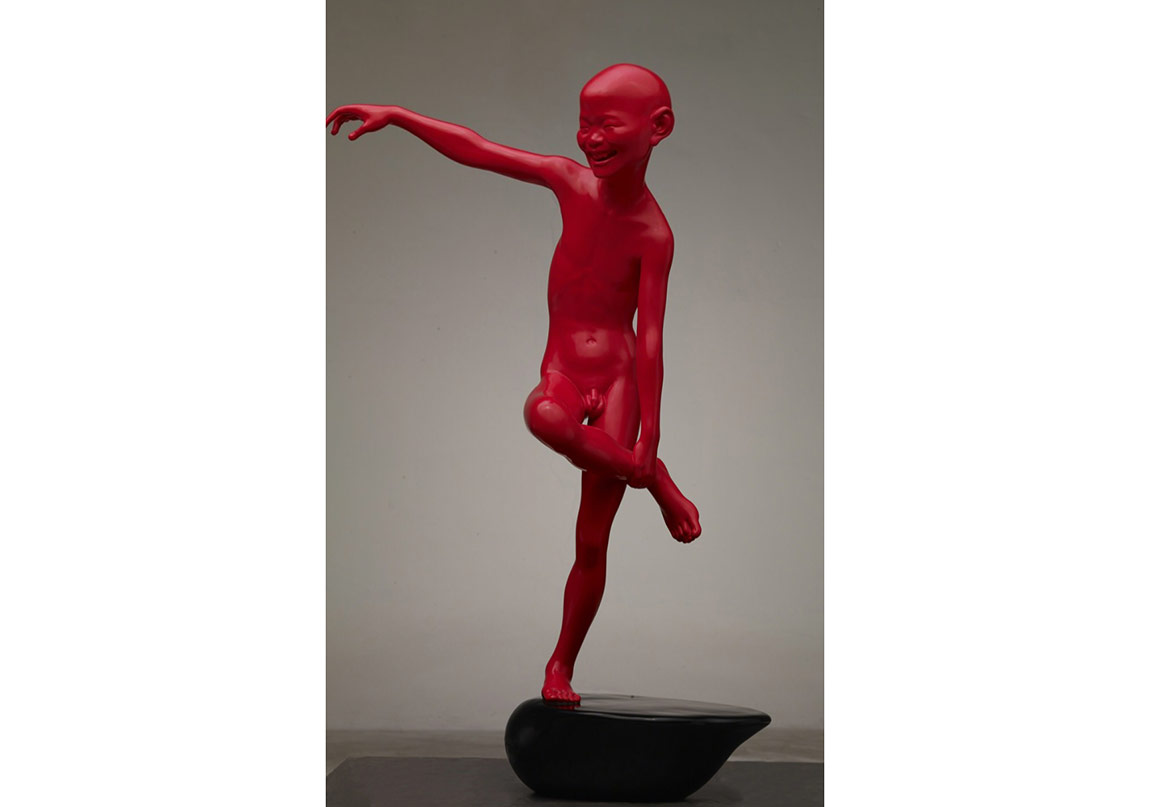
I had bought a red sculpture by the Chinese artist Chen Wenling two years ago. When I found out that a Turkish gallery is going to represent him at this fair, I was surprised. I enjoyed having discovered the artist before them.
What constitutes quality in a work of art for you?
Sincerity. We say, “this singer is singing with their heart, this novel was written in blood.” The idea might be innocent, but you might screw up the application, cunning elements might intervene. It is important that the artist remains innocent. If somebody who does pole jumps is kidnapped by aliens and is tested on, the aliens might think that we can jump six meters with poles. But none of us can jump six meters, only Sergei Bubka can. To be aware that a Picasso or a Monet exists and that they are from the same species as us, to be able to say, “There is someone called Dali and he is a human being!” This gives us pleasure.
I also remember that you said that the artist needs to have a hand that is decisive.
That is of course the beginning, but I’m particularly sensitive on this matter as I’m interested in the line. In other words, the pencil needs to make one mark and not be hesitant. It is very important for me to see that the artist has a way of doing things; when you ask them to draw a dog, it doesn’t matter whether their drawing resembles a dog—it matters how decisive they are in making the drawing.
What does art mean for you?
I talked about this at a university the other day. The only thing that will remain even if all of civilization is demolished is art. Even if we return to the era of the homosapiens, art will continue to exist, because it is immortal. It is as old as the human need to seek shelter, to warm up, to eat and to drink; the act of drawing an ox on the cave wall is as natural as the need to find fire to get warm. These are all things inherent to human beings. These details, the gaze, empathy. Ranging from the most radical to the toughest to the most aggressive to the softest, the most mellow to the most serseri, all of them have a naive, infantile aspect. This is very important, this is what attracts me. Why does one make a drawing, write poetry, transform their ideas into a work of literature instead of hitting someone on the head? Because they have hopes about humanity. This is what art is. There is a saying in Turkish, “Beautiful Arts,” which corresponds to “Fine Arts” in English. I think the Turkish version is a lot better. Art is beautiful.
;