ÖNCEKİ
15 ARALIK, PAZARTESİ, 2014
SONRAKİ
When the name Ali Elmacı is mentioned, the first characteristic qualities that come to our minds are ironic language, symbolic expression, characters looking directly into our eyes and a critical approach. But, 'who' is Ali Elmacı with the aspects that we don't know about?
I am a very disciplined person. If I am intensively working on a project, I don't have a holiday or leave my atelier - in short I don't do anything literally before the project finishes. I have got an atelier in Kadıköy and I continue my work regularly. I have been working non-stop both for this exhibition (Onu Öldür Beni Güldür (Kill Him; Make Me Laugh)) and for the project space that I realized for Contemporary Istanbul. And I think they were all worth it.
It seems like there are things that you wish to say in the details of your pictures. Do you like to talk about your artwork or else, audience discovering that a secret language in your work gives you more of a pleasure?
I like the audience interpretations. Frankly, I don't want them to understand what I am expression or mention literally. For instance, a viewer of mine has written an interesting comment the other day: "When I look at your pictures, I feel like going into a morgue." I laughed to this comment. When I asked to this person, he/she told me that he/she feels weird, yet he/she likes this situation at the same time. This was one of the most interesting comments that I had ever heard.
Although it has been two years since "Ateşinle Koru Beni (Save Me With Your Fire)" and we still couldn't have shaken off the impact of the characters, you have appeared with a new exhibition "Onu Öldür Beni Güldür (Kill Him; Make Me Laugh)". According to the comments in social media after the opening, the exhibition created an excitement and admiration. Could you please tell us a bit about the exhibition for the people yet to visit?
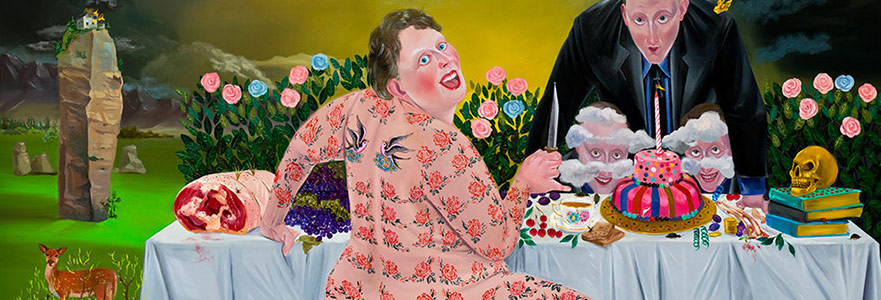
"Onu Öldür Beni Güldür (Kill Him; Make Me Laugh)" is an exhibition on government and education politics. It is formed of three series called "Onu Öldür Beni Güldür (Kill Him; Make Me Laugh)", "Büyü de Büyü (Grow and Grow)", "Senin En Güzel Halini Bilirim (I Am The One, Who Knows The Most Beautiful State of Yours)". All three are related with each other. I would be happy the people who haven't visited the exhibition to go to the exhibition as well.
What kind of a preparation period did you have before the exhibition? Did you have specific sources that you were nourished from or event?
In fact, there wasn't a single source or event that I was nourished from. The methods that the government in Turkey has started to apply especially with its second term forced me to do a series as such. Surely, this situation is also valid for each authority and government except this one. Everyone is intervening first to education in order to sustain their political continuity, continue to rule their power and to provide the infrastructure for themselves. Education is not individual or liberalizing for individuals; contrary it is a system that is forcing and practising allegiance culture. All the schools and courses are being transformed, and monotype education is being forced upon. These are the situations that effected me the most. Government is transforming the education politics into a monotype system and forcing allegiance culture and especially an Islamic education.
Almost five thousand schools in Istanbul have been transformed into İmam Hatip . I am not against these types of schools; anything is possible in line with the requirements. Yet, no government can force people to this situation. We are left with no choice. Finance gets involved in it, and the children of the families with insufficient funds are left with not choice, but to comply with this enforcement.
News reports are also another area, where I get nourished from when I am painting. I can say that news reports nourish me the most. They contain almost everything upon my paintings.
We come across with an impressive name in this exhibition as we did with "Miras Babadan Oğula Geçer (Inheritance Passes From Father To Son)" and "Ateşinle Koru Beni (Save Me With Your Fire)". Possibly you come across with this question a lot, yet I can't help myself asking you this: where does the exhibition get his name from?

"Onu Öldür Beni Güldür (Kill Him; Make Me Laugh)" is a political rhetoric. I surely caricatured this discourse. I, again wish to underline that I am not only talking about this government, but my discourses are valid for all governments and authorities. Power of authority is trying to diminish the differences and unevenness in us and shape us according to the typology of they desire to have. It is making the masses no different from each other in order to apply mass manipulation more easily. It is annihilating that controversial side inside people.
When I am saying "Onu Öldür Beni Güldür (Kill Him; Make Me Laugh)", the government is actually saying that "Kill your controversial side; obey only to me and we live happily in the way I wish it to be." I chose the name as such due to the effects I have just counted. Surely I want my exhibition names to stick in minds and attract attention. But, my exhibition names are always related to the subject. I specifically think about this issue and spend a great deal of time choosing name.
What was the direction of the comments you received on the exhibition?
Frankly, all the reactions were positive. The ones, who visited, congratulate me and told me that they enjoyed it. But, it is early to evaluate these comments. We will look into what it is written about it and see.
Could you please tell us about your project in Contemporary Istanbul? I don't think this project reflected the media so much. So I would like to hear it from you.
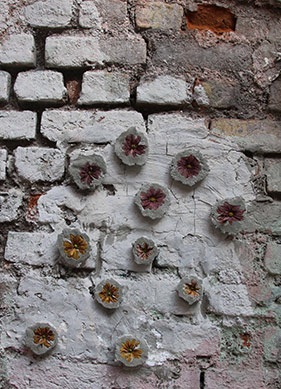
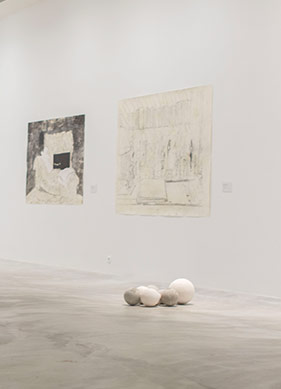
I worked on this project called “Beni Aradığın Yerde Değil Unuttuğun Yerde Bulursun (You’ll Find Me Not Where You Were Looking, But Where You Forgot)" in Contemporary Istanbul. This is a wallpaper I have done myself, and it had patterns on it. Also, three of my sculptures took place in the project as well. All the relationships were completing and supporting each other, yet they were all individual by themselves.
Media are reflecting a negative situation sourced by the government and power by manipulation through filtration. On the other hand when there is a criminal event, media reveal all the details of the event with its total reality. We can give Münevver Karabulut' s murder as an example to this issue - even the forensic reports are on the internet. But, we don't know anything about Ali İsmail Korkmaz, Berkin Elvan or the miners died in Soma. The project is formed of a series of patters, which I have made based upon from these issues. Doing such work satisfied me.
We meet with canvas, pattern and also a sculpture in the exhibition. DO you think there is a possibility that we will see you in other disciplines in the future?
In fact, I want to. I can't say for sure right now, but it is definitely in my plans.
What are your projects and plans after the exhibition?
;