Brigitte Pitarakis ends her article, “Strengthening the Healing - Materials, Senses and Rituals”, with an anecdote from Saint Artemios's Miracles. Here, the story of the Saint curing an ill men by placing a gold scalpel first on the sacrificial table and then tracing an "O" three times on the sick organ is relayed. The medical tool of the scalpel placed on the sacred sacrificial table and the "holy trinity" in Saint Artemios's action are the elements that facilitated the cure. According to Pitarakis, the positioning of the church ritual within surgical intervention is a striking example of the experimental medicine and faith-based healing. Actually, this story of healing by Pitarakis can be seen as a summary of the hybrid medicine culture that she portrays through her curation of the exhibition “Life is Short Art Long: The Art of Healing in Byzantium” at the Pera Museum.
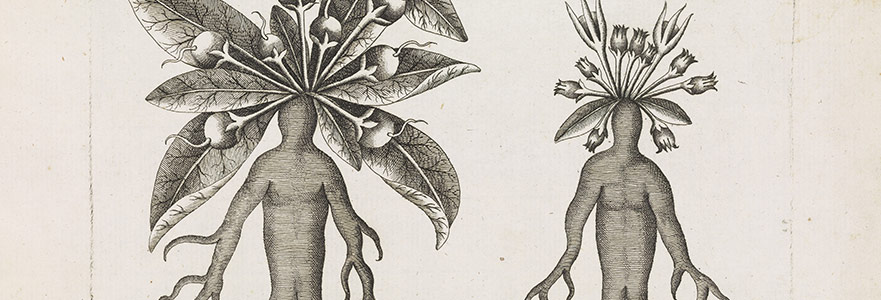
In this adventure spanning from the Antiquity to the Byzantine era, the notion of getting better or healing was related to faith on the one hand and rational medicinal science on the other and these were never separated with sharp lines. Thus, being healed is always related to the kinship between the physical and the spiritual. The exhibition at the Pera Museum shows icons depicting Jesus and Mary, representations of saints and religious imagery, next to the medical heritage ranging from the world of Ancient Greece and Rome where the founders of rational medicine Hippocrate and Galen were living in to the inclusion of botanic research and plant-based healing in medicine as well as astrology, mythology, wizardry and all pursuits of healing, both religious and not religious. The exhibition brings together many objects selected from various museum and library collections, showing the multi-layered structure of the concept of healing for the Byzantines. Through this perspective, the objects both build the historical and cultural story of the exhibition by being next to each other as well as inevitably and perhaps most often strike viewers with their individual allure, de-contextualized. What are the objects telling us? How do objects heal us? While the former is the textual question of the exhibition, of exhibiting, the latter is the age-old question of the humanity's quest for longer life on earth and for healing.
The ominous bronze snake head that is a part of the Column with Snakes from the Constantinople Hypodrome from BC 5th century; strange objects such as the foot-shaped lamp that is related to the healing cult related to the healing god and goddes of Egypt, Isis and Serapis, and amulets representing King Suleiman and numerous others show how healing made art possible through painting/image production. A practical reason, a necessity triggers aesthetic production and thus life produces art. Zira all monotheistic religions, especially Christianity, and all polytheistic religions, performed aesthetic production on the axis of faith, relayed to us through history of art and architecture; while life perishes, art continues. Perhaps this is best summarized by the Hippocrate's saying, also the name of the exhibition: Ars longa vita brevis.
Ranging from hand-written manuscripts to medical tools to amulets to healing herbs to relics, these objects ostensibly reveal the cultural potential of the geography that we inhabit and without doubt, our particular city. The exhibition is prepared through collaborations with various museums and libraries from around the world, as well as the Archaeology Museum in Istanbul, Greek Patriarchate, Heybeliada Aya Triada Convent Library, Yeniköy Panayia Greek Orthodox Church and School Foundation, proving that we are really living on top of a huge cultural heritage of the Byzantines. However, we also need to admit that the relationship with this cultural heritage is marked with such a lack of knowledge, estrangement and without doubt, a desire to erase and destroy that it is inevitable that every time we encounter ghosts of history, our eyes open wide. While it is possible to see the remnants of this vast cultural heritage in some private collections or at the Istanbul Archaeology Museum, there is still no Byzantine Museum in Istanbul, which would trigger research on this vast empire and its culture—a big gap in the city. If we think about how rarely exhibitions of Byzantine focus are organized, Pitarakis's exhibition focusing on a specific field is an important opportunity to encounter Byzantine culture. The meticulously prepared book that accompanies the exhibition and the series of panels in March push the discursive borders of this work.
Hippocrate, the major medicinal expert of Ancient Greece, looked for the roots of illness in four primary bodily fluids: yellow gall, black gall, phlegm, and blood; the relationship that he established between these fluids and four primary elements: flame, soil, water, and air; the treatment as being through the hot, cold, humid and dry were seminal in the history of healing. Rational medicine, associated with him over history, intersect with practices of religion, mythology and wizardry and which functioned together with them, health as being associated with beauty and order and illness as being associated with horror and chaos, revealed in the exhibition “The Art of Healing in the Byzantium”, portray how the Byzantine culture was in interaction with not only the Greco-Roman world but also Mesopotamia, the Mediterrenean, Arabic, Persian, Jewish, and Egyptian faiths and cultures. Thus, through the story built on healing is transformed to correspond to the construction of history and the journey of exchange from a vast range of geographies and cultures.
Together with all of these ideas, an emphasized point in the exhibition is the relationship between healing and water. From Ancient Rome to the Byzantine, the water that people drank or touched from the spring, taking baths in hammams or in other words the encounter between the body and holy water, were believed to have a healing impact. Water, as can be seen through the examples of the Panagia Pege Church in Silivrikapı or at the Panagia Koumariotissa Church in Yeniköy, was always seen as a source of healing for the Byzantines. Through this axis, it is also possible to see that the scene of Jesus healing a blind man with water, one of Jesus's healing miracles relayed in the Bible, has been depicted many times throughout art history. “saying to him, "Go, wash in the pool of Silo'am" (which means Sent). So he went and washed and came back seeing." (Gospel of St. John 9,1-41). Jesus's healing powers were later taken on by saints. Saint Kosmas, Saint Damianos, Saint Eustratios, Saint Artemios, Saint Nicholas, Saint Demetrios are only of the healing saints. Over the course of history, people swarmed to where these saints were, believing that they will heal their illnesses. Furthermore, these travels, stays and returning with healing souvenirs triggered the emergence of healing tourism.
In the article “Constantinople: City of Miraculous Healing”, Alice Mary-Talbot ends with a quotation from the account of Saint Athanasios's miracles, "To heal such an incurable disease, the oil from a tomb lamp should be mixed with faith and applied to the wounds; there is nothing more beneficial." These words (religious or not) articulate what a strong role faith plays in finding a cure. And thus shows itself as a miracle; the miracle of art and healing rub off on each other.
;